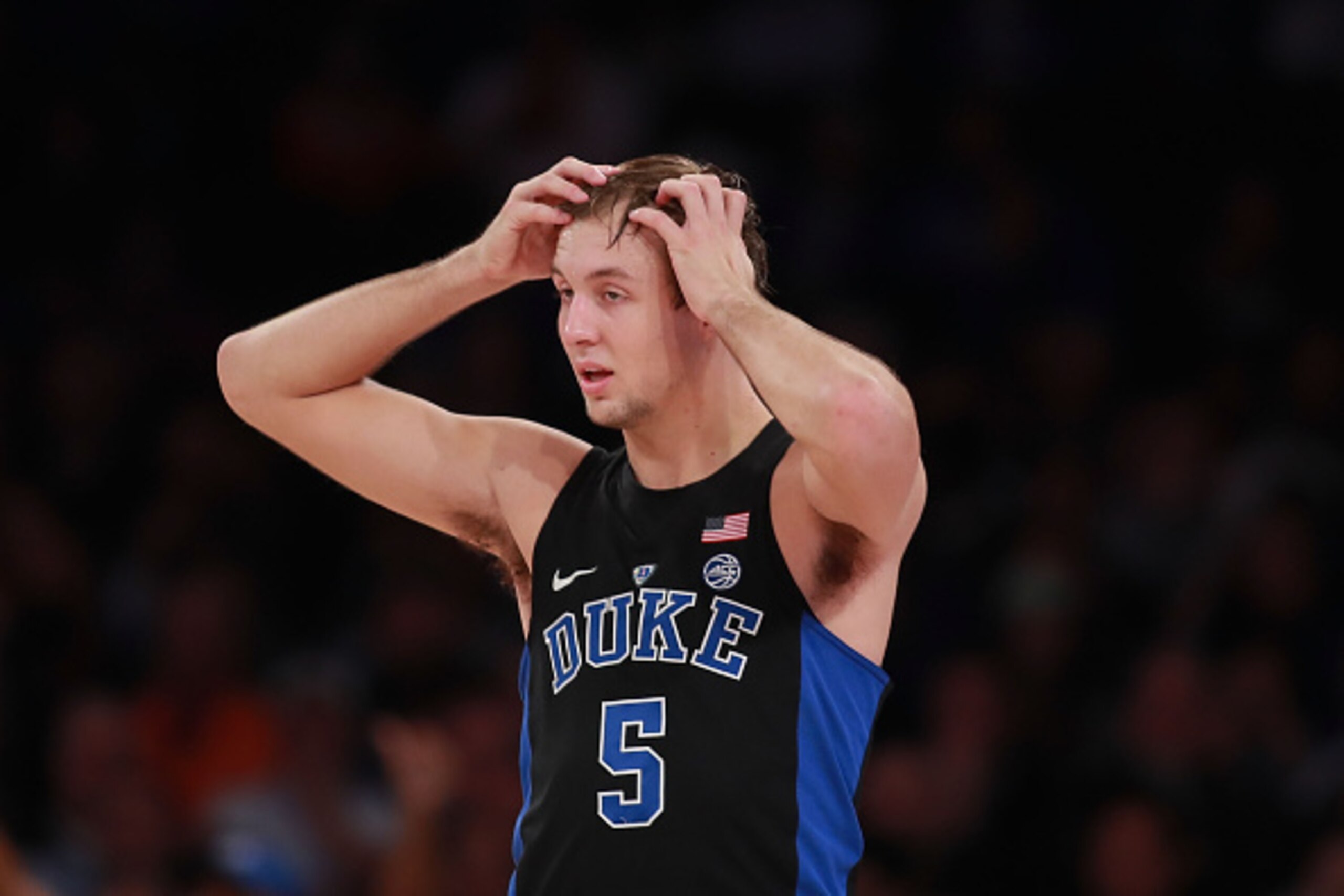


Try as we might to predict the future, no one saw Luke Kennard's scoring, Indiana's turnover margin or North Carolina's three-point shooting coming.
Four weeks into the 2016-17 men's college basketball season, every team in the AP Top 25 has (at least) one surprising statistic that no crystal ball could foresee.
Some of them are team-wide advanced metrics. Others are basic individual counting stats.
Some are good numbers that might get these teams into the Final Four if they can keep them up. Others are concerning data points that need to be addressed before we can even consider endorsing squads for the Sweet 16.
Come along for a journey through the numerical weeds of the first month of the season to find out what aspect of your favorite team is shocking us the most.
Nos. 25-21: Iowa State-Florida
1 of 17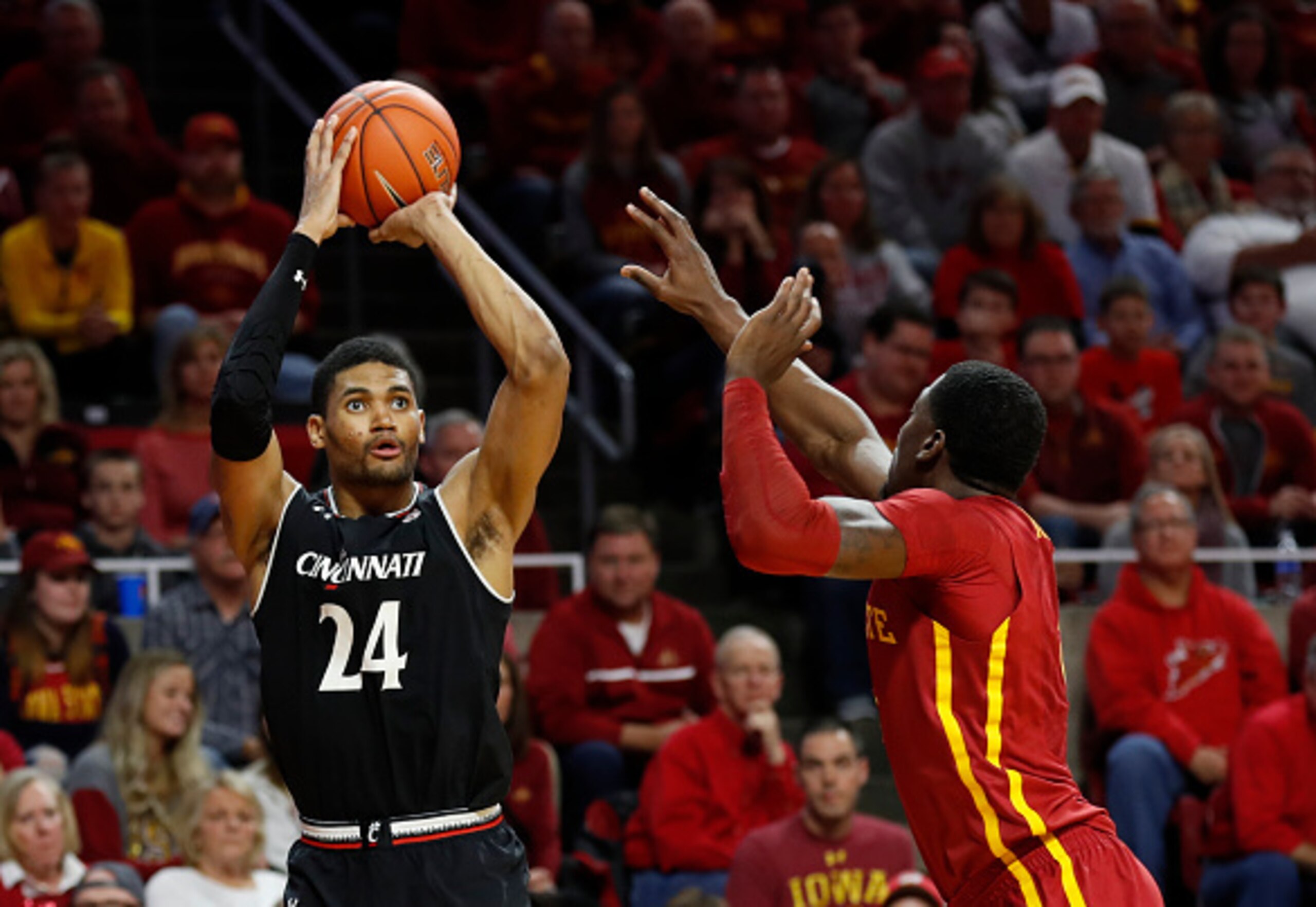
25. Iowa State Cyclones: Free-Throw Percentage
Iowa State is one of the most guard-oriented teams in the country, so you'd think this team would be pretty lethal from the free-throw line. But despite losing Jameel McKay's 53.5 percent one-point stroke from last year, the Cyclones are one of the worst major-conference teams in that department, dropping from 70.2 percent to 63.1. Newcomers Darrell Bowie and Merrill Holden are killing them at a combined 30-of-58 (51.7 percent) while ranking first and second in attempts.
24. Oregon Ducks: Offensive Turnover Percentage
Despite finally getting Dylan Ennis on the floor, the Ducks are coughing up the ball nearly 15 times per game. Big man Jordan Bell is responsible for 3.0 of those—quite a few of which are offensive fouls—but the guards have not been crisp, either. They were 45th in offensive turnover percentage last year, but they're sitting in the 275 range right now.
23. Notre Dame Fighting Irish: Defensive Turnover Percentage
In addition to an efficient offense that avoids turnovers, one of the staples of Mike Brey's tenure at Notre Dame has been defense that doesn't force them. The Fighting Irish ranked 258th or worse in defensive turnover percentage in 14 of the last 15 years, including several years ranked in the bottom 10 nationally. But they're 124th right now thanks in part to a 15-turnover game against usually sure-handed Northwestern.
22. Cincinnati Bearcats: Kyle Washington's Scoring
Annually one of the slowest-paced teams in the country that doesn't shoot well from the field, high scorers and Cincinnati do not typically go hand-in-hand. Sean Kilpatrick's senior season was the one exception to the rule, and the Bearcats didn't have a single player average better than 9.9 points per game the year after he graduated. But N.C. State transfer Kyle Washington has been dominant in the paint, averaging 17.3 points per game, increasing his points per 40 minutes by more than 10 points since we last saw him with the Wolfpack.
21. Florida Gators: Defensive Rebound Percentage
Florida is one of the best shot-blocking teams in the country and does a fantastic job on the offensive glass, but it has not been able to end possessions with defensive rebounds, ranking 311th in defensive rebound percentage. In Michael White's final season as the head coach at Louisiana Tech, the Bulldogs had a similar issue on the defensive glass, but that team didn't crash the offensive glass, either.
Nos. 20-16: Arizona-Butler
2 of 17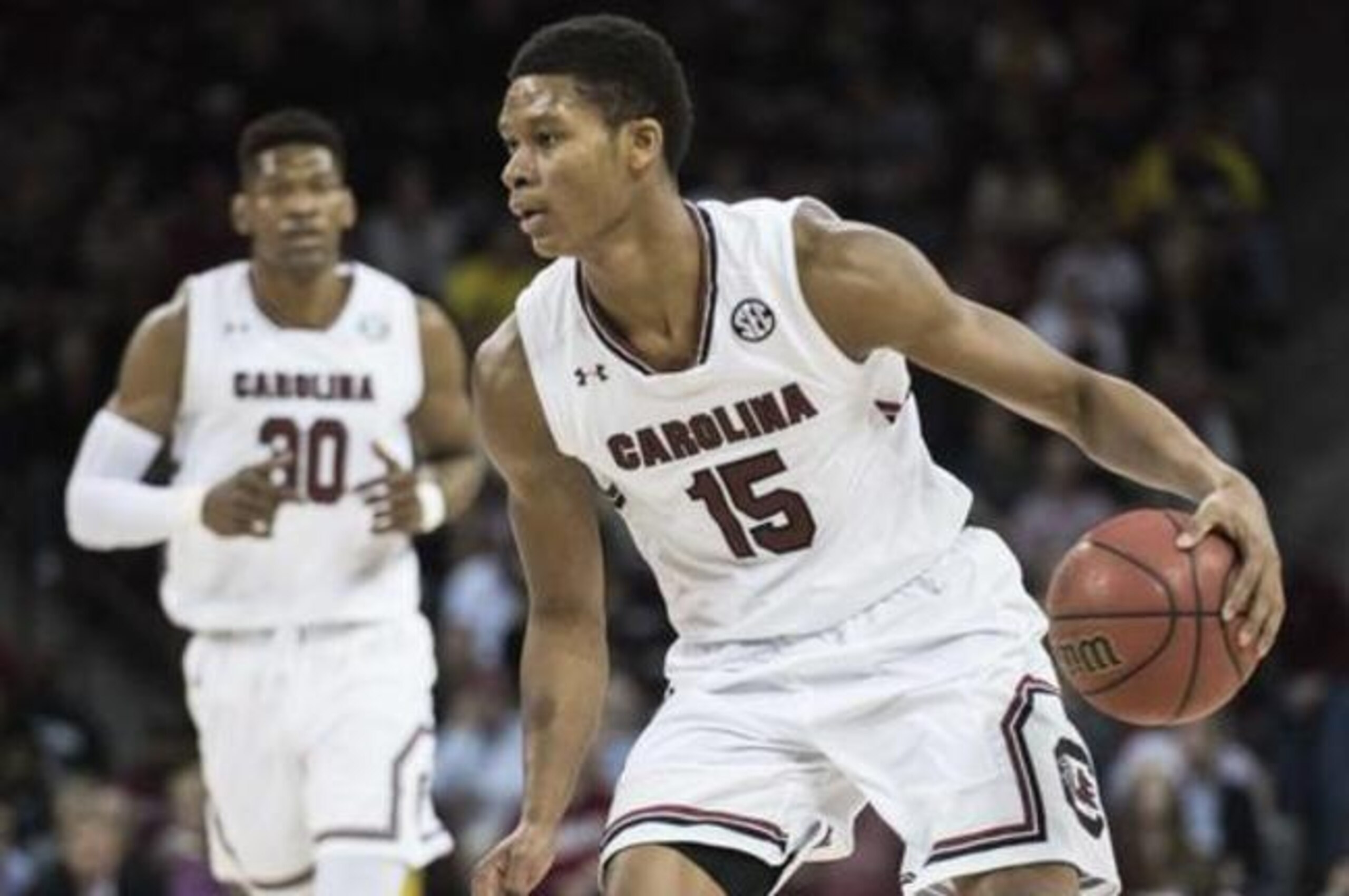
20. Arizona Wildcats: Allonzo Trier's Minutes
Aside from reports that he is finally traveling with the team, we haven't heard a doggone thing about Allonzo Trier in months. No one is saying why he's out and if or when he'll be back, and the Wildcats haven't been quite the same without him. They're hanging in there, led in scoring by three freshmen, but this team could be a real contender if Trier ever reappears on the court.
19. South Carolina Gamecocks: PJ Dozier's Three-Point Percentage
From Dec. 18 through the end of February, PJ Dozier played 364 minutes and shot 0-of-26 from three-point range. Through eight games this season, the sophomore is 13-of-29 and has doubled his three-point percentage from 21.3 to 44.8. That's one heck of a turnaround for a guy whose best asset is still his defense. (Dozier ranks ninth in the nation in steal percentage.)
18. Purdue Boilermakers: Three-Point Reliance and Percentage
Between Isaac Haas and Caleb Swanigan, one would think Purdue does most of its damage in the paint. Instead, the Boilermakers are shooting more and better than ever from the perimeter. Led by Dakota Mathias at 55.8 percent, Purdue is shooting 44.8 percent from three-point range and attempting 42.4 percent of its shots from the perimeter. Each of those marks is at least 4.7 percentage points higher than any other season in the KenPom era.
17. Wisconsin Badgers: Two-Point Percentage
With Nigel Hayes struggling to find his stroke, Wisconsin's team two-point percentage (46.6) was well below the national average. But Hayes has improved to 50 percent, Ethan Happ has spiked to 70.7 percent and Bronson Koenig somehow went from 39.5 percent to 66.0 percent on two-point attempts. No one other than D'Mitrik Trice is shooting well from beyond the arc, but at 57.8 percent inside it, the Badgers are once again one of the most efficient teams in the country.
16. Butler Bulldogs: Turnover Percentage
Defense was a major issue for Butler last season, but Kamar Baldwin is single-handedly fixing that. The freshman is averaging 4.6 steals per 40 minutes and has the Bulldogs ranked 10th nationally in defensive turnover percentage. As a result, they're allowing an impressive 61.7 points per game.
15. West Virginia Mountaineers
3 of 17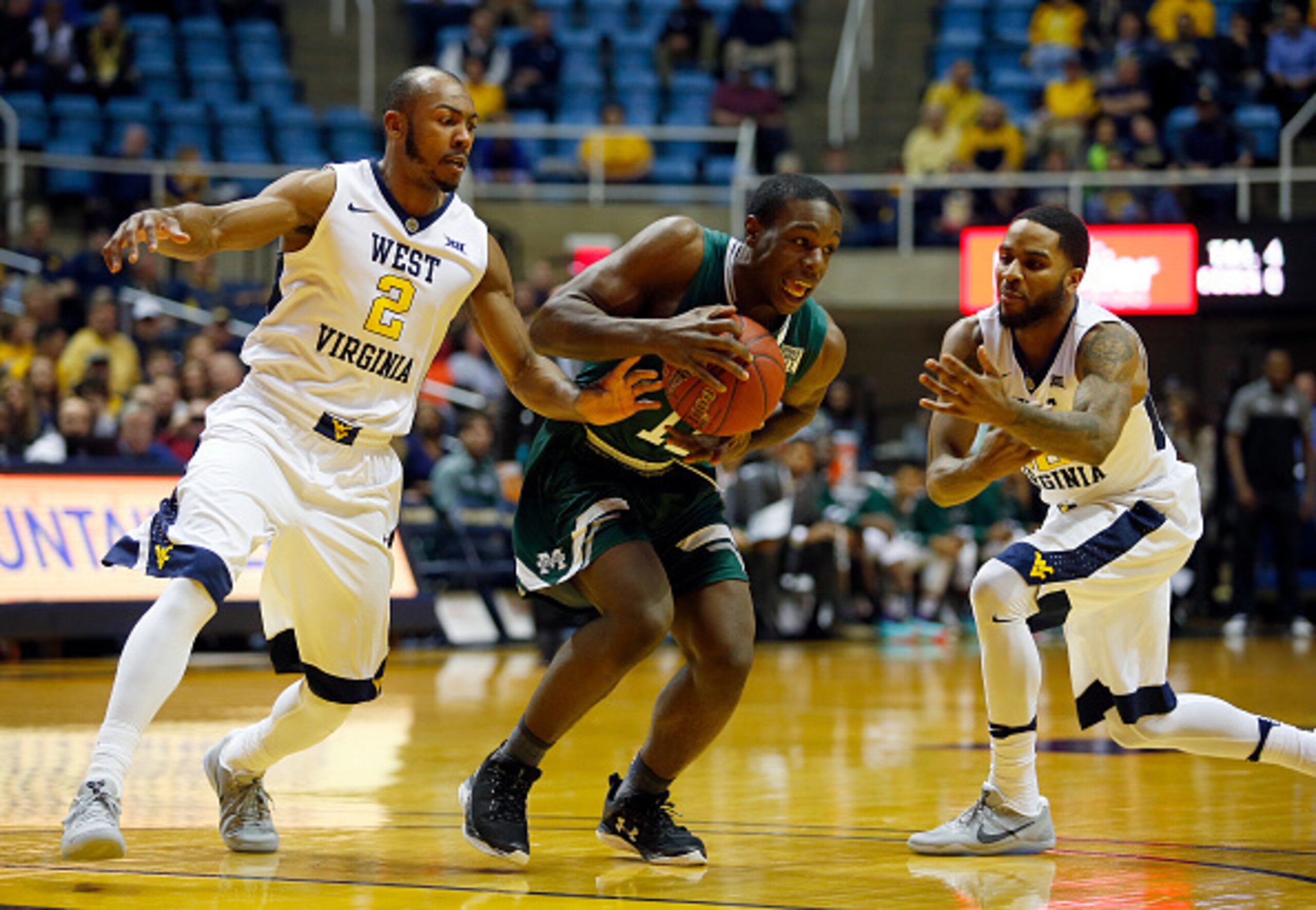
Surprising Stat: Turnovers Forced
You know how Stephen Curry was already undeniably the best three-point shooter in the NBA before last year, and then he went out and absolutely annihilated the old record for triples made in a season?
Well, that's what Press Virginia is up to thus far with its smothering defense.
It shouldn't be a surprise that the Mountaineers are forcing a ton of turnovers, considering they comfortably led the nation in steal percentage in 2015 and again in 2016. But what they're doing right now is downright insane.
You have to go back to 2002 to find the last time a team had a defensive turnover percentage of 30.0 or higher. That was the year Alabama A&M led the nation in steal percentage and tempo, winning 19 of the most chaotic games of college basketball ever played. Desmond Cambridge individually averaged 5.5 steals per game and is the only person in at least the past 24 years to go higher than 4.5 for a season. No team should even be in the same ballpark as AAMU's 30.7 turnover percentage.
Yet West Virginia is at 35.1 percent.
The 'Eers have forced at least 19 turnovers in every game except for the one against Virginia, and they still forced a season-high 14 turnovers by the Cavaliers. Press Virginia has forced at least 26 turnovers in half of its games, has gone over 30 three times and even forced Manhattan to cough it up 40 times.
According to Sports-Reference.com, in the past six seasons, there were 24 games in which a team committed at least 30 turnovers, the highest of which was 35 by VMI against West Virginia two years ago. For one team to do three times in one month what has happened only two dozen times over the course of approximately 35,000 games is unbelievable.



14. Virginia Cavaliers
4 of 17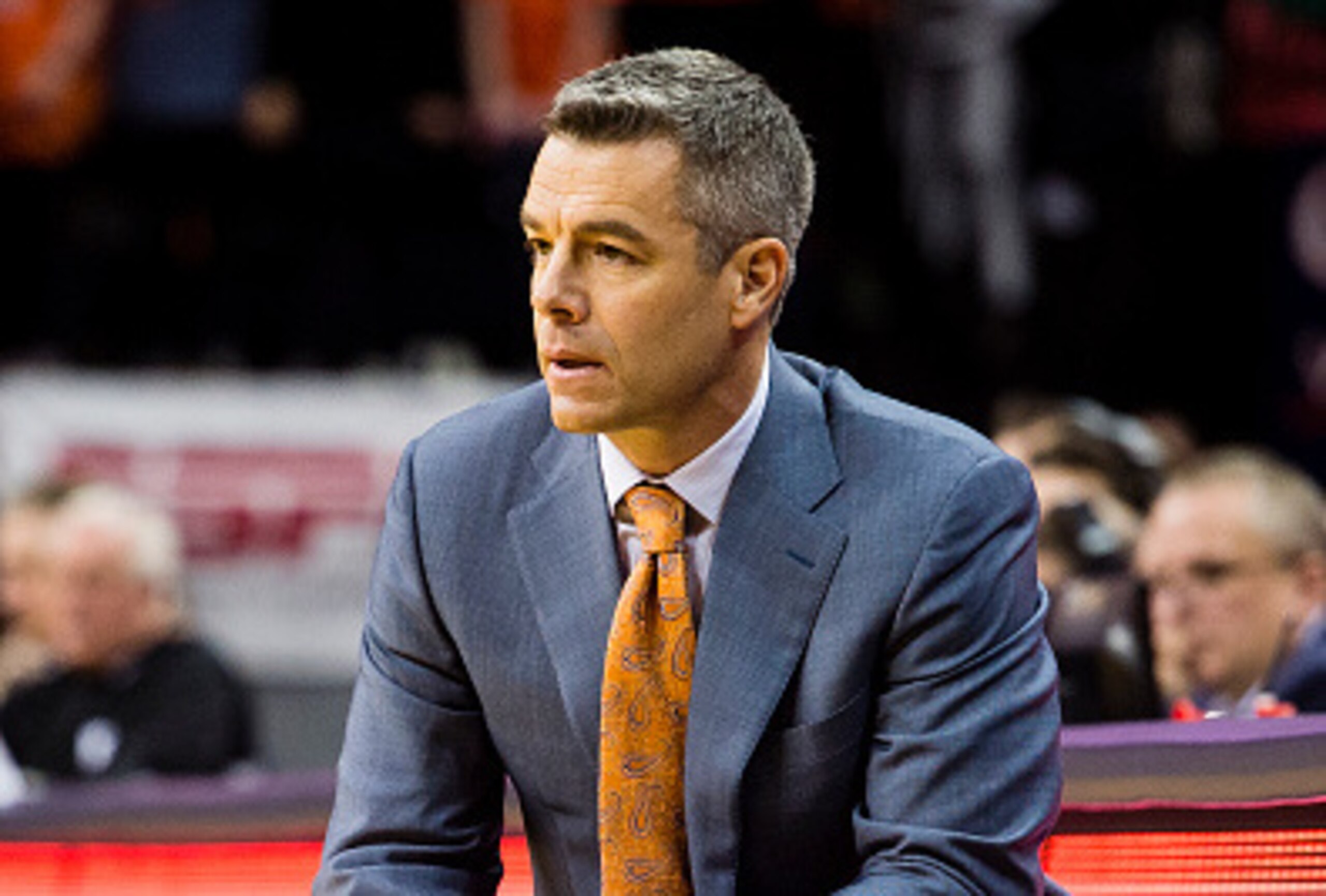
Surprising Stat: Steal Percentage
Since Tony Bennett's system had the chance to take root, Virginia has consistently had one of the best defensive units in the country. The Cavaliers are second in the nation in adjusted defensive efficiency, which is their fifth time in six years in the top seven in that category.
But it has always been a containment defense, allowing opponents to make their own mistakes while keeping them from getting any open looks, then owning the defensive glass. Turnovers had never been a big part of the equation. Coming into this season, the highest the Cavaliers had ranked in defensive turnover percentage in any year in the KenPom era was 121st.
At the moment, though, they're sitting at 15th in that category and 23rd in steal percentage.
Those numbers aren't artificially inflated by one or two outliers against terrible opponents, either. Virginia had a combined 18 steals and 37 forced turnovers in wins over Iowa and Ohio State and had eight steals against a Providence team that has otherwise done a fine job of protecting the ball.
Both Marial Shayok and Isaiah Wilkins have been more aggressive on the defensive end while playing more minutes, and freshman shooting guard Kyle Guy has chipped in with some quality on-ball defense of his own. The Cavaliers may have lost defensive aficionado Malcolm Brogdon, but they're holding down the fort on that end of the court without him.
13. Xavier Musketeers
5 of 17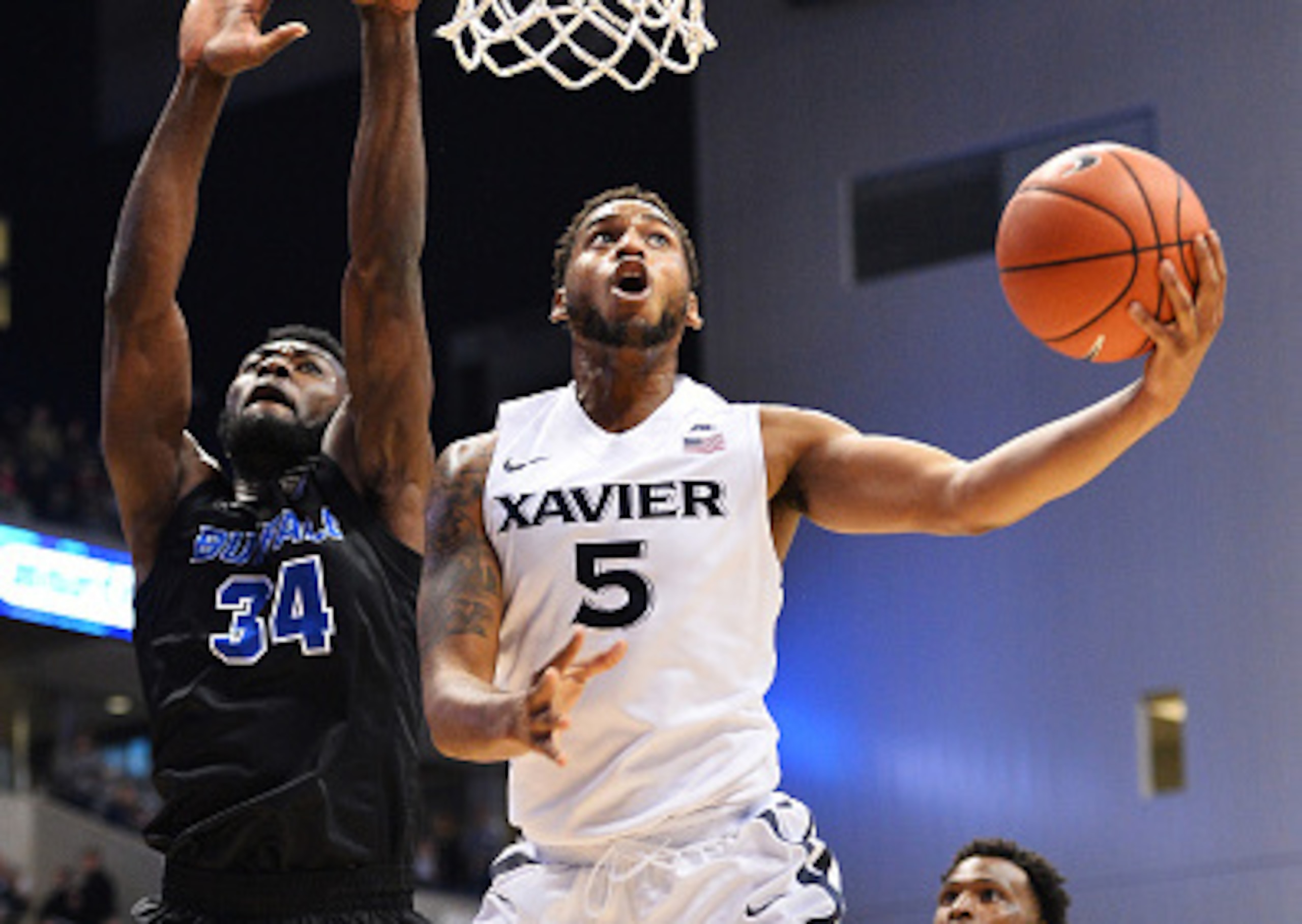
Surprising Stat: Rebounding Margin
Xavier was one of the best teams on the glass last season. The Musketeers weren't nearly as dominant in that regard once they got into the rigors of Big East play, but they were able to go 12-0 in nonconference play by owning the boards.
Their best rebounder (James Farr) graduated and their second-best (Jalen Reynolds) declared for the NBA draft. Makinde London only played 95 minutes before transferring to Chattanooga, but he was one of their better rebounders and would have been expected to contribute in a big way this season.
As a result of all that loss in the frontcourt, the Musketeers were supposed to take a step backward in that department. Instead, their rebounding margin has increased from 7.3 to 10.4 per game while even playing at a slightly slower pace than last season.
Newcomers RaShid Gaston and Tyrique Jones have been animals on the glass, averaging 15.0 and 14.1 rebounds per 40 minutes, respectively. Kaiser Gates has also been solid in limited minutes, particularly on the defensive end, where Xavier ranks sixth in the nation in rebounding percentage.
Having a 6'6" point guard doesn't hurt matters. Edmond Sumner doesn't do much offensive rebounding, but his 4.4 defensive rebounds per 40 minutes have been an overlooked asset for the past two seasons.
12. Saint Mary's Gaels
6 of 17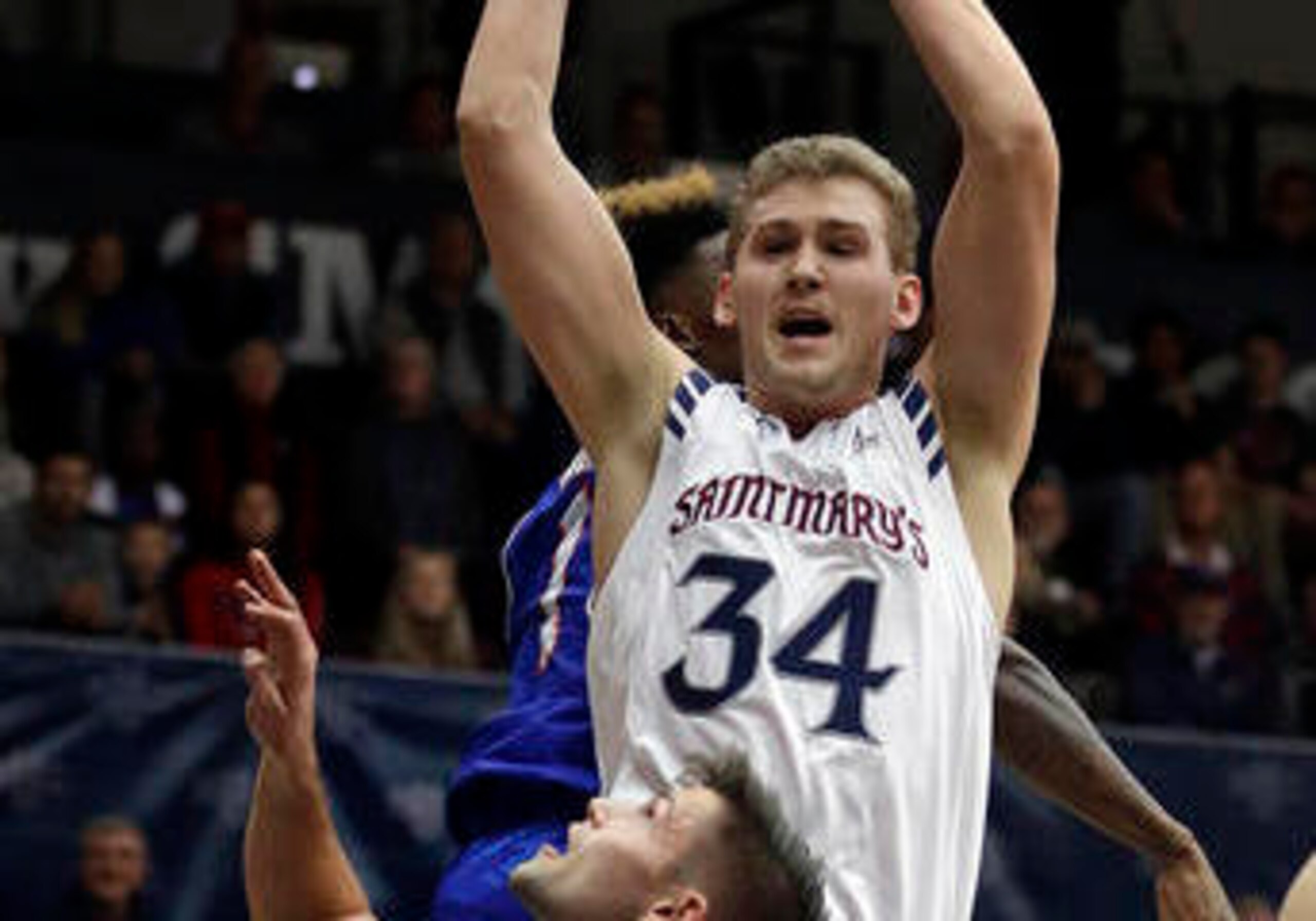
Surprising Stat: Offensive Efficiency vs. Texas-Arlington
Heading into Thursday night, Saint Mary's had one of the most unstoppable offensive assaults in the country.
The Gaels play at a snail-like pace, so the points-per-game average was nothing special. However, they led the nation in two-point percentage, ranked second in effective field-goal percentage, ranked third in adjusted offensive efficiency and ranked fourth in free-throw percentage.
But against Texas-Arlington—which allowed 84 and 85 points in losses to Minnesota and Florida Gulf Coast—the Gaels looked completely helpless on offense. They shot 30.2 percent from the field, 29.6 percent from three-point range and 64.7 percent from the free-throw line while committing 15 turnovers in the 65-51 loss.
With the exception of going 1-of-2 from the stripe in a win over Stanford, it was their worst performance of the season in all four categories by far.
Maybe it was "just one of those days," but Saint Mary's hasn't struggled like this since its loss to Portland in the 2015 West Coast Conference tournament.
11. Louisville Cardinals
7 of 17
Surprising Stat: Jaylen Johnson's Impact
Louisville was the toughest team to pinpoint for this list, because there's nothing surprising about what the Cardinals are doing.
Per usual, they have one of the most dominant defenses in the country, and they're crashing the offensive glass to make up for the fact that this isn't a good shooting team. They have a slightly lower steal percentage than we're used to seeing, but the numbers otherwise aren't all that different from the team that won the 2013 national championship.
But Jaylen Johnson is having one heck of a junior season.
Johnson started 22 games last season and averaged 17.5 minutes per game, but he didn't do a ton with them. At 11.5 points, 8.1 rebounds and 0.7 blocks per 40 minutes, his overall impact was similar to what Darryl Reynolds did as Villanova's backup center.
Through nine games this year, Johnson is up to 17.3 points, 15.4 rebounds and 2.1 blocks per 40 minutes while also logging a few more minutes per game. He had 19 points, 14 rebounds and three blocks in the season opener against Evansville and put up nine points, 10 rebounds and six blocks Wednesday night against Southern Illinois.
We assumed breakout sophomore years were coming for Donovan Mitchell, Deng Adel and Ray Spalding. With Mangok Mathiang returning from injury and expected to be Louisville's primary big man, though, no one had Johnson penciled in as the team's most important player.
10. Creighton Bluejays
8 of 17
Surprising Stat: Field-Goal Percentage
Just a few years ago, Creighton had one of the most unstoppable offenses we've ever seen.
In three consecutive seasons, the Bluejays shot at least 41.4 percent from three-point range, at least 54.7 percent from inside the arc and ranked either first or second in the nation in effective field-goal percentage. Doug McDermott was the well-known star of that attack, but guys like Ethan Wragge, Grant Gibbs and Jahenns Manigat were just as crucial to keeping the team-wide percentages at an elite level.
Incredibly, this roster has been even more lethal through nine games.
Creighton is shooting 43.9 percent from downtown and 59.1 percent from two-point range for an effective field-goal percentage of 61.5. In all three categories, it's a significant improvement from where this team was three years ago on offense.
Three starters (Mo Watson, Khyri Thomas and Cole Huff) are shooting better than 50.0 percent from three. Another starter (Justin Patton) is shooting 82.5 percent from inside the arc. And Marcus Foster is leading the team in scoring while shooting 59.4 percent from two and 40.4 percent from three.
For as lethal as these guys are from the field, they rank in the bottom 100 nationally in free-throw percentage, which is kind of comical. Huff (93.8 percent) and Thomas (86.7) stroke it well from the charity stripe, but Patton (40.7) is a black hole, and neither Watson (71.0) nor Foster (68.0) is particularly good for a main ball-handler.
Those missed one-pointers haven't stopped the Bluejays from averaging 89.2 points per game, though.
9. Indiana Hoosiers
9 of 17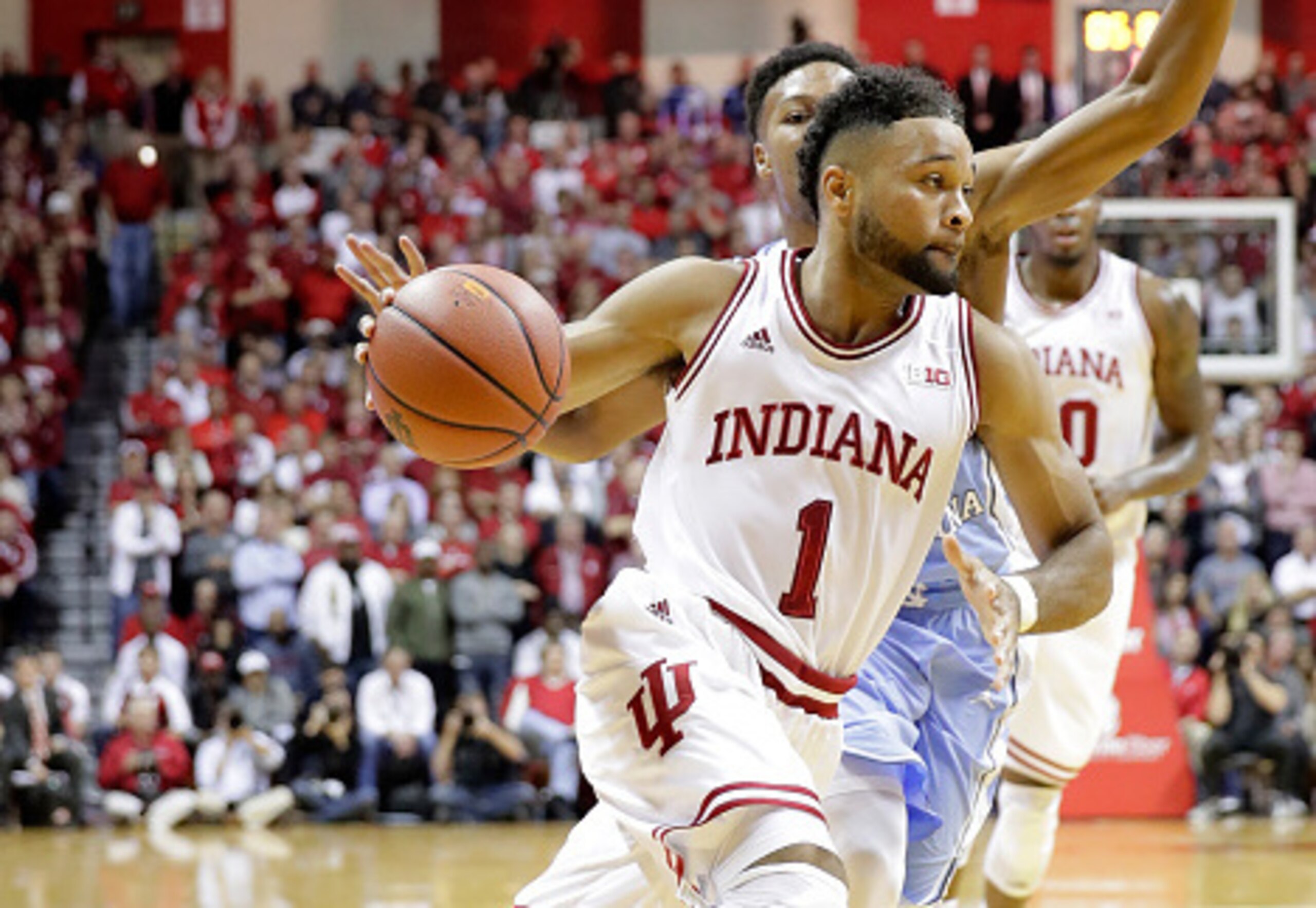
Surprising Stat: Turnover Percentages
Save for the loss to Fort Wayne, Indiana's offense is still running like a well-oiled machine. The Hoosiers rank 13th in the nation in adjusted offensive efficiency, are dominating the offensive glass and are shooting 49.3 percent from the field as a team.
Take one look at their turnover percentages, though, and it's pretty clear they're missing Yogi Ferrell.
The Hoosiers weren't exactly elite in the turnover departments last season. Even with Ferrell's veteran presence and savvy, they ranked 272nd in offensive turnover percentage and 123rd on the defensive end. They led the nation in effective field-goal percentage but hurt themselves a bit by finishing the year with 12 more turnovers committed than forced.
But after just eight games this year, Indiana is negative-44 in turnover margin. In terms of percentages, they're 330th on offense and 322nd on defense. Despite playing games against the likes of UMass Lowell, Liberty, Mississippi Valley State, SIU-Edwardsville and Southeast Missouri State, Indiana has yet to win or even tie in the turnover battle in a single game.
Aside from that, the Hoosiers have been surprisingly efficient on both sides of the ball, so the disparity in field-goal attempts hasn't been a major problem yet. After all, they do have wins over Kansas and North Carolina. Still, they need to clean up that sloppy play on the offensive end if we're to take them seriously as a national championship contender.
8. Gonzaga Bulldogs
10 of 17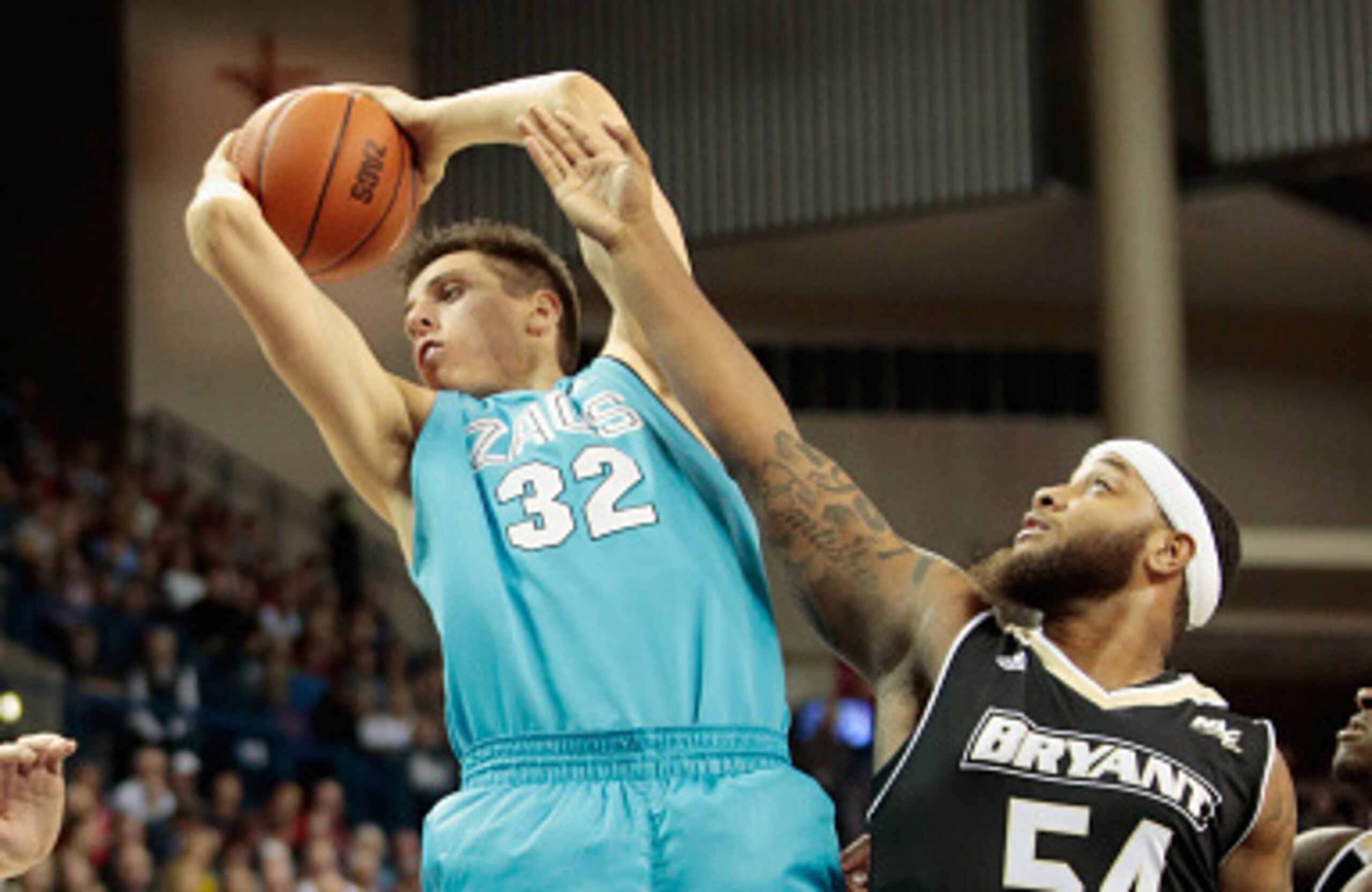
Surprising Stat: Defensive Rebounding
Aside from steamrolling through the West Coast Conference, one of the top annual staples for Gonzaga has been solid work on the defensive glass. In each of the past 15 years, the Bulldogs have ranked in the top 100 nationally in defensive rebounding percentage, including 10 years in the top 50.
After nine games, though, they rank 237th this year.
Granted, a lot of that can be attributed to one game, as they gave up 29 offensive rebounds to Washington on Wednesday night—the only thing the Huskies did right in the 98-71 blowout—but they also pre-emptively "broke even" with that game by limiting San Diego State and Quinnipiac to a combined 15 offensive rebounds.
The concern has come in the Bulldogs' close wins over Arizona, Florida and Iowa State, where they allowed their opponents to grab a combined 38.1 percent of offensive rebounds. Sustain that ratio for the entire season, and they'd rank 337th instead of 237th in defensive rebound percentage.
Given Gonzaga's rotation, this doesn't make a lick of sense. Four of the primary eight guys are 6'9" or taller, including 7'0" Zach Collins and 7'1" Przemek Karnowski. Oftentimes, elite shot-blocking teams will struggle on the defensive glass, but that's no excuse here, as the Bulldogs only block about four shots per game.
It's something to monitor the rest of the way. The Zags have had great field-goal defense thus far, but as a below-average turnover-forcing and defensive-rebounding team, they could be susceptible to an early exit from the NCAA tournament, even if they get there with an undefeated record.
7. North Carolina Tar Heels
11 of 17
Surprising Stat: Team Three-Point Percentage
Roy Williams is sick of hearing about his team's inability to shoot three-pointers. During ACC media day in October, he comically kept count of how many times someone wandered up to his table to inquire about North Carolina's fifth time in seven years ranking outside the top 200 nationally in three-point percentage.
Fortunately, guys like Kenny Williams, Joel Berry II and Justin Jackson are killing that narrative once and for all.
Berry was already a solid three-point shooter, as evidenced by his 4-of-4 performance in the 2016 national championship game. He made 38.2 percent of his 178 attempts last year, so it's no surprise that he's sitting at 41.9 percent thus far.
The other two were a bit unexpected.
Jackson entered this season a career 29.7 percent shooter. There were occasional games where he shot it well, but he couldn't seem to string together so much as two consecutive good performances from the perimeter. But he's shooting 39.3 percent this year after Wednesday night's 7-of-13 outing against Davidson. He's also averaging more than twice as many attempts per game as he had in his first two seasons combined, making for one heck of an impact.
Williams is the bigger surprise, though, draining 14 of his first 29 attempts after going 1-of-13 last season. Obviously, 13 is a minuscule sample size and doesn't give a guy much of a chance to get into a rhythm, but he has been an incredible asset who is playing more minutes than expected thanks to an injury that will keep Theo Pinson out of the lineup for the foreseeable future.
The Tar Heels are shooting 38.9 percent from downtown. That's nothing special for some teams, but it would be their highest team percentage since draining 40.3 percent en route to the 2005 national championship.
6. Kentucky Wildcats
12 of 17
Surprising Stat: Senior Minutes
At this point, it's a surprise when Kentucky doesn't start five freshmen, particularly considering it signed five of the top 27 players in this year's class. And with both Isaiah Briscoe and Isaac Humphries back as sophomores, the Wildcats could probably get by without playing a single upperclassman.
At any rate, it wouldn't have been the first time that seniors barely touched the floor for the Wildcats. Alex Poythress played a ton last year, but Sam Malone, Tod Lanter and Brian Long logged a combined 35 minutes in 2014-15. The year before that, Jarrod Polson and Jon Hood accounted for the 47 points seniors scored for Kentucky.
But head coach John Calipari is giving seniors a lot of minutes this year. Dominique Hawkins (18.0), Derek Willis (17.7) and Mychal Mulder (12.0) have combined to average nearly 48 minutes, accounting for 18.8 points, 7.9 rebounds and 4.4 assists per game. A few more rebounds and Kentucky's seniors would be doing what Ben Simmons did last year (19.2 PPG, 11.2 RPG, 4.8 APG).
Granted, the trio has done most of its damage in the seven games that weren't played against marquee opponents, but it's not like they were riding the bench against Michigan State and UCLA. They still averaged 34.5 minutes, 9.5 points, 4.5 rebounds and 3.5 assists in those battles.
They should continue to play a good number of minutes, because there frankly aren't that many options. Unless either Isaac Humphries or Sacha Killeya-Jones starts playing well enough to demand more playing time, the three seniors should remain the first three guys off the bench for the Wildcats.
5. Duke Blue Devils
13 of 17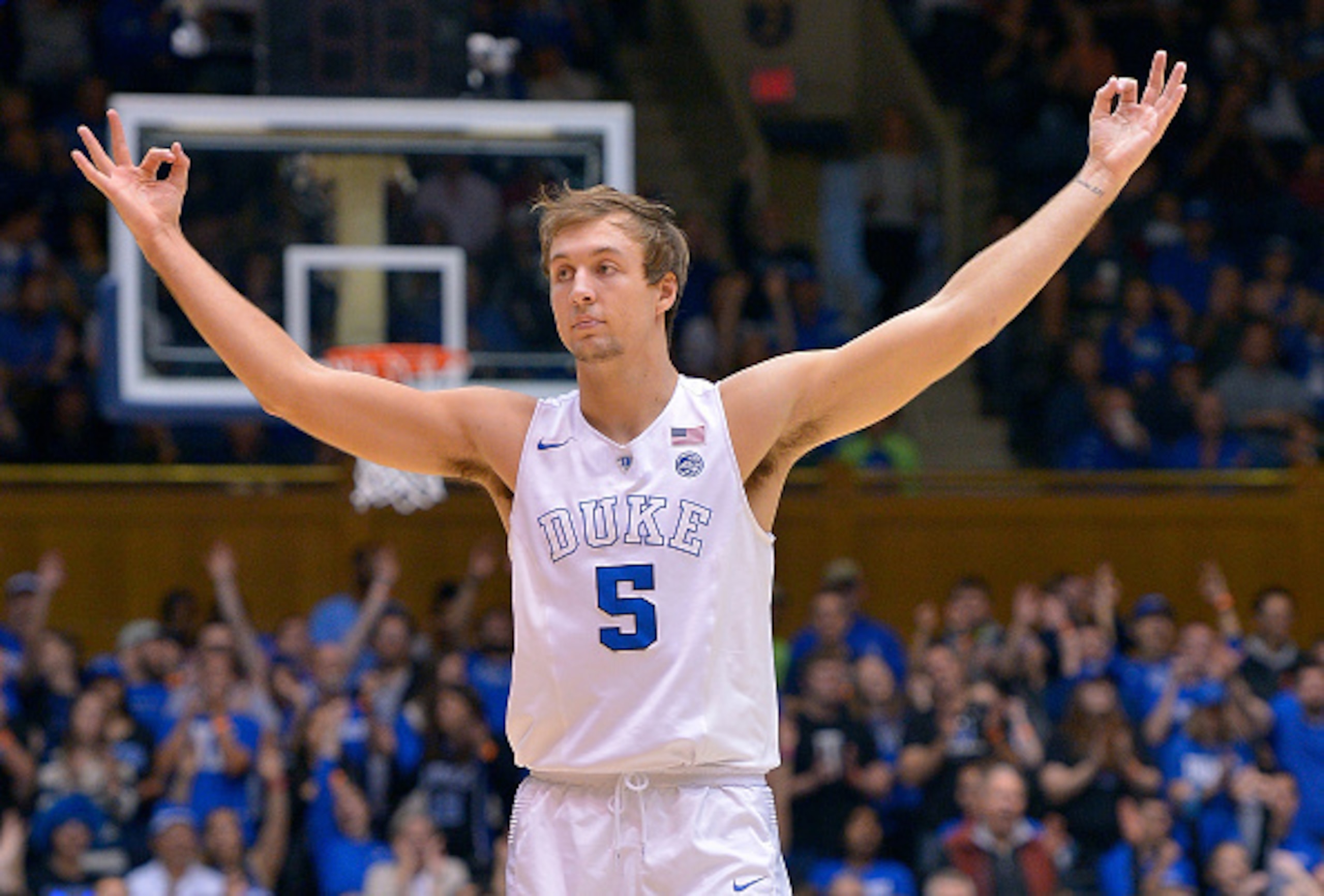
Surprising Stat: Luke Kennard's scoring
On this loaded roster, no one expected Luke Kennard to play 20 minutes per game, let alone score 20 points per game.
We'll never know how things would have gone, but when everyone was presumed healthy, Duke's projected starting five was Frank Jackson, Grayson Allen, Jayson Tatum, Amile Jefferson and Harry Giles, with senior Matt Jones and stud freshman Marques Bolden likely the first two guys off the bench. Of the primary eight-man rotation, Jones is probably the only one who doesn't have a future in the NBA, which made the breakdown of Duke's minutes and points one of the more intriguing debates of the offseason.
But with Tatum, Giles and Bolden all out for the first eight games, Kennard got all the minutes he could handle and became the sophomore scoring machine for this team that Allen was last year.
Kennard has scored in double figures in each of Duke's 10 games and has scored at least 20 in each of Duke's four games against Tier A and B competition, according to KenPom.com. He also threw up 35 points on 16 field-goal attempts against Maine this past weekend and is sitting at 20.4 points per game with 6.2 rebounds and 3.1 assists for good measure.
And for what it's worth, he's averaging 36 minutes and 32 points per game since Tatum and Bolden returned, so he's clearly still the focal point as the Blue Devils finally get healthy.
Allen was the runaway favorite for preseason Player of the Year as the top returning scorer for the best team in the country. Even if Kennard's numbers taper off a bit, the Wooden Award might be his to lose at this point.
4. Baylor Bears
14 of 17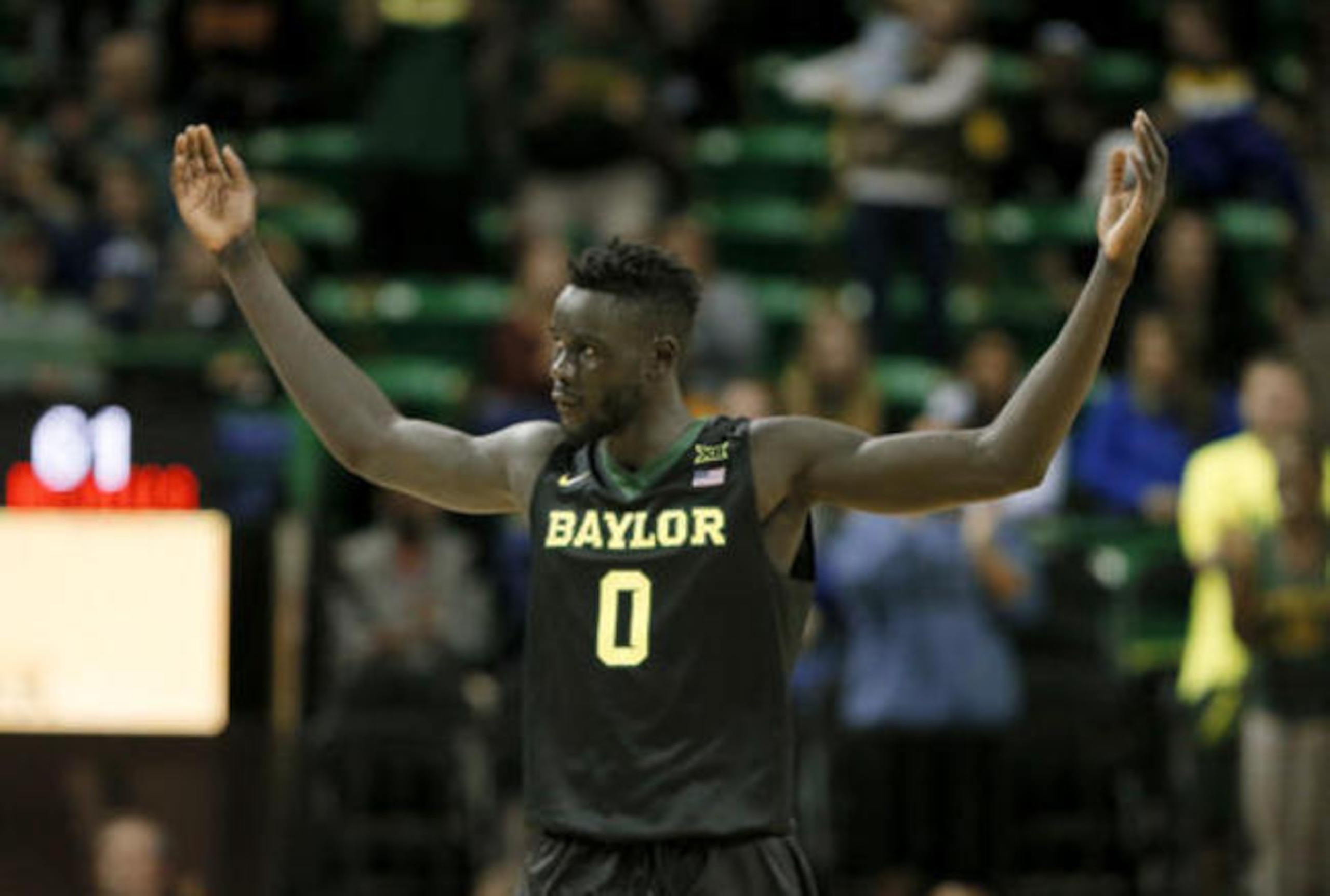
Surprising Stat: Quantity of Quality Wins
Even the staunchest of RPI supporters can tell you that the data is hogwash until at least mid-January, but at least the archaic rating metric has one thing right: Baylor is No. 1.
Since beating Oral Roberts on opening night, the Bears have ripped off seven consecutive RPI top 100 wins, including marquee victories over Oregon, Louisville and Xavier. And if you don't think that neutral-court win over Michigan State is going to look stronger by Selection Sunday, then you don't know the Spartans.
Johnathan Motley and Jo Lual-Acuil Jr. have been outstanding in the post, but the biggest "better than expected" star has been Manu Lecomte.
The junior put up solid numbers in his two seasons off the ball with Miami, but he has been a stud as Baylor's lead guard. Lecomte is doubling the steal rate he posted with the Hurricanes and is more than doubling his old assist rate while barely undergoing an uptick in turnovers. He has also blossomed into a more effective scorer in the paint, able to finish at the rim while drawing contact.
Their upcoming schedule—featuring home games against Southern, Jackson State, John Brown and Texas Southern—will inevitably undo some of the good they did by challenging themselves repeatedly for the last few weeks, but the Bears should still finish the season with the best nonconference resume in the nation.
In school history, they have yet to do better than a No. 3 seed. If things go well in Big 12 play, though, they'll have a good enough schedule to be in the conversation for a spot on the top line.
3. Kansas Jayhawks
15 of 17
Surprising Stat: Combined minutes logged by Svi Mykhailiuk and Lagerald Vick
With Frank Mason III, Devonte' Graham and Josh Jackson destined to start and play a ton of minutes for Kansas, it seemed Svi Mykhailiuk and Lagerald Vick would have to fight each other for scraps yet again. They played a combined 540 minutes last season (14.2 per team game), and the only thing that changed about the backcourt was Jackson coming in to replace Wayne Selden Jr.
What we didn't consider, though, were the changes in the frontcourt.
With Perry Ellis graduating, it was presumed that Carlton Bragg Jr. would become the primary power forward, playing close to 30 minutes per game alongside Landen Lucas in the paint. Thus far, that duo has only averaged a combined 33.4 minutes as Kansas embraces small ball like never before.
Vick and Mykhailiuk rank fourth and fifth on the roster in minutes played at 25.4 and 24.4, respectively. Each wing is also shooting better than 42 percent from three-point range and averaging just a shade under 10 points per game.
Those in the know always suggested these guys could ball and just needed to be given the opportunity. If they can keep it up while Udoka Azubuike continues to emerge at center, watch out. That season-opening, overtime loss to Indiana may rank among the Kansas losses we can count on one hand this season.
2. UCLA Bruins
16 of 17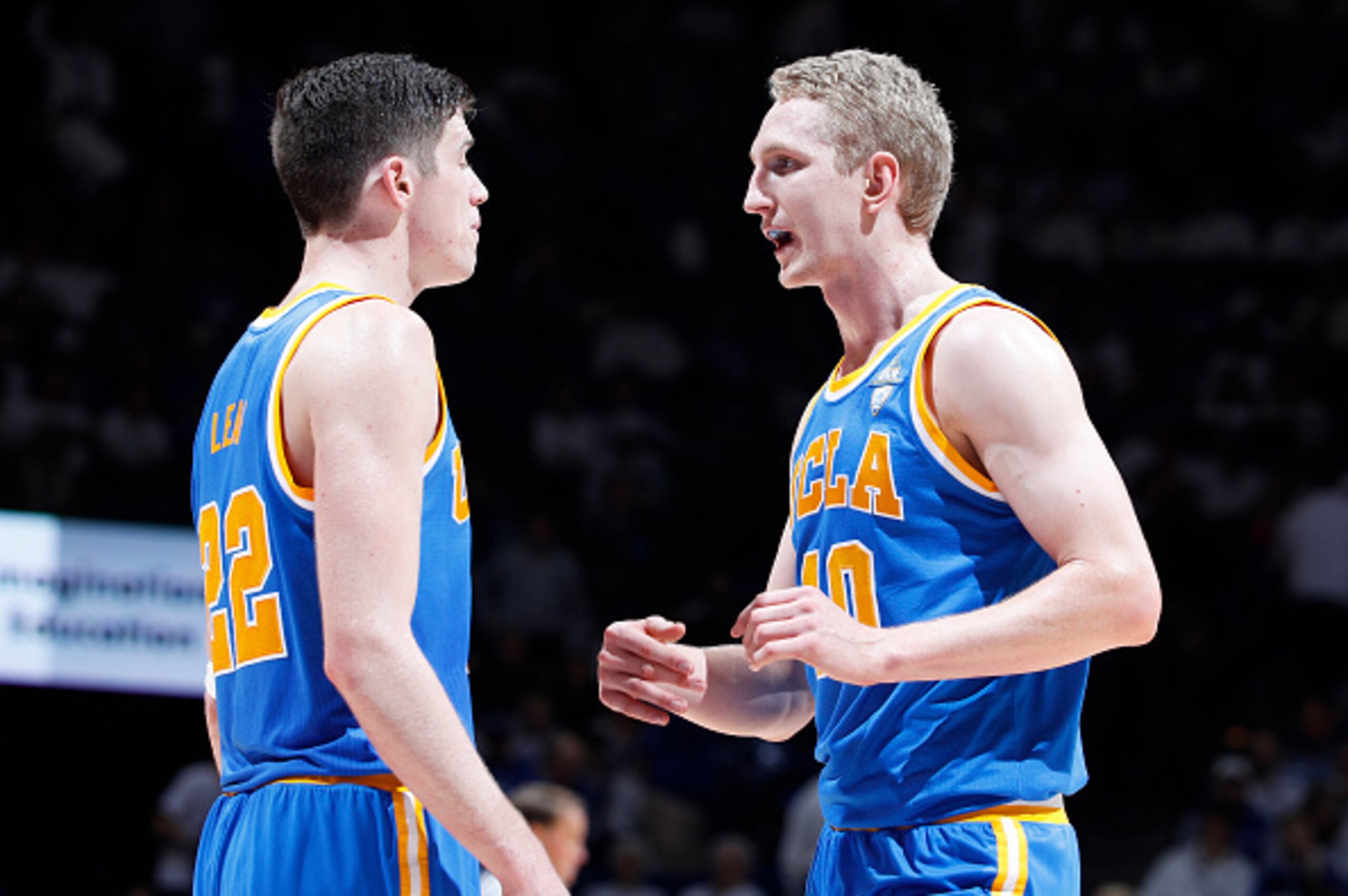
Surprising Stat: Defensive Efficiency
UCLA is a bit more unstoppable on offense than anyone projected, but it was always a distinct possibility the Bruins would have the most efficient assault in the country. They brought back four guys who averaged at least 10 points per game last season and added Lonzo Ball and TJ Leaf to an offense that had everyone buying stock in a team that went 15-17 last season.
The surprise that has helped put the Bruins at No. 2 in the AP Top 25 is their effectiveness on defense.
In 2015-16, they gave up an average of 76.7 points while playing at an average pace of 72.5 possessions. That sums out to 1.058 points per possession and gave them an adjusted defensive efficiency that ranked 119th nationally.
Despite losing their two best defenders from last season (Tony Parker and Jonah Bolden), they're allowing 0.962 points per possession and rank 58th in adjusted defensive efficiency.
Those might seem like insignificant margins, but over the course of 2,321 possessions (how many UCLA had last season), it's a difference of 223 points, or roughly seven per game.
Factor in their drastic improvement on the offensive end, and perhaps we shouldn't have been surprised when the Bruins went into Rupp Arena and knocked off Kentucky. On both sides of the ball, this team is night and day compared to where it was last year.
1. Villanova Wildcats
17 of 17
Surprising Stat: Team-Wide Three-Point Percentage
If we've learned anything about Villanova in recent years, it's that head coach Jay Wright loves the long ball. The Wildcats took at least 42 percent of their shots from beyond the arc in each of the last three seasons and are even more reliant on it this year at 45.7 percent.
But they're also making more of them than ever before.
As Villanova scorched its way through the 2016 NCAA tournament, it felt like every guard on the team was a 60 percent three-point shooter. In actuality, the only player on the roster to shoot 40 percent or better was scarcely used Patrick Farrell, who went 2-of-5 in 30 minutes.
This year, though, the Wildcats have five guys shooting better than 40 percent, each of which is averaging at least three attempts per game: Josh Hart (43.9), Kris Jenkins (43.3), Jalen Brunson (43.3), Donte DiVincenzo (42.4) and Mikal Bridges (40.7). Big man Eric Paschall (9-of-29) can also stroke it, and Phil Booth is a career 37.2 percent shooter who will make an impact from the perimeter if and when he returns from a knee injury.
All told, the Wildcats are shooting 40.6 percent as a team, and they're still heating up. They have shot at least 42 percent in each of their last three games, averaging 12 made three-pointers against their three recent Philadelphia Big Five opponents.
Stats are courtesy of KenPom.com and Sports-Reference.com. Recruiting information is courtesy of Scout.
Kerry Miller covers college basketball for Bleacher Report. You can follow him on Twitter @kerrancejames.
.jpg?w=2560 "Colts Football")





