

Remembering Chapecoense's Former Atletico Madrid Player Cleber Santana
“In every life I’ll get to live, I’ll love you all the same.”
And with that he was gone.
Tuesday morning’s plane crash in Medellin, Colombia, which killed 71 of the 77 people on board, per BBC News, including the vast majority of players and staff of the Chapecoense football team, claimed the life of club captain Cleber Santana, whose final Instagram post—translated above by ESPN Brasil—proved to be a prophetic one.
TOP NEWS
Sullivan, Hall Lead USMNT to Big Win 💥
Int'l Break Goals and Highlights 🔥
.jpg?w=2560 "Titans Giants Football")
OBJ Calls Out Giants After Release
Santana was 35, and although those of us in love with football tend to think of players as past their best by that age, he was a man who had his whole life ahead of him, until now.
He leaves a wife and two children, as well as the best wishes of everyone that all three can one day come to terms with this most tragic of accidents—a reminder that football, much like life, is never fair.
And Santana was a good footballer, one who followed the well-trodden path of Brazilians in so much as he wasn’t afraid to embrace new challenges and new cultures.

After coming through the ranks at Brazilian side Sport Club do Recife in the early part of this century, the central midfielder moved on to Vitoria in 2004. After one season, that sense of adventure took over, and he was off to play for Kashiwa Reysol in Japan’s J.League.
It was 2005, a time when Japanese clubs were beginning to embrace the qualities that Brazilian players brought to their teams. Santana was joined in the squad by former Brazil international Ricardinho, ex-Paris Saint-Germain forward Reinaldo and his strike partner, Franca, who had scored regularly for Bayer Leverkusen over the previous two seasons.
But that was only ever meant to be a stopgap in Santana’s career, and his qualities soon took him back to Brazil with Santos—one of the country’s premier clubs and then managed by Vanderlei Luxemburgo, who had just left Real Madrid.
With Santana as a key player, Luxemburgo led Santos to back-to-back Campeonato Paulista titles—with the Brazilian scoring a career-high 11 goals from midfield as the second of those was captured in 2007.
He felt ready to take on Europe now, and that’s when Atletico Madrid came calling.

Needing to rebuild after the sale of club icon Fernando Torres to Liverpool, Atletico spent big to remodel their attacking lineup as Diego Forlan, Simao Sabrosa, Jose Antonio Reyes and Luis Garcia were all brought in.
Santana was signed alongside Thiago Motta to shore up midfield, and although he wasn’t a regular in Javier Aguirre’s side, he still managed to make 38 appearances in all competitions as Atletico—driven on by the goals of Sergio Aguero—finished fourth in La Liga to qualify for the Champions League.
There was widespread joy at their return to Europe’s top table after 12 years away, but Santana wasn’t going to experience it for long.

With the club bringing in fellow South American midfielders Paulo Assuncao and Ever Banega, Santana was allowed to leave for RCD Mallorca on a season-long loan for the 2008/09 campaign. And with that he seemed to become a little less inhibited.
Suddenly he wasn’t surrounded by the stars who had been at Atletico, and his attacking instincts were indulged and not stifled. He was a regular in the team that finished in a more-than-respectable ninth place, patrolling midfield and becoming the player Atleti had wanted him to be since signing him.
In the space of one week at the end of his loan spell, Santana scored a late winner against Barcelona—after his team had come from a goal down—before a remarkable strike in a 3-1 win over Real Madrid at the Santiago Bernabeu Stadium.
Picking the ball up deep in midfield, he breezed past four Real challenges before clipping a fine effort over goalkeeper Iker Casillas and into the top corner.
It was the type of goal he’d have dreamed of scoring as a young player in Brazil, and exactly the type of stage that you’d want to score it on. It was football in its purest, most joyous form.
After that, it was no surprise he was wanted back at Atletico Madrid for the following campaign.
Quique Sanchez Flores was now the man in charge, and following a desperately disappointing Champions League group phase—in which Santana started all six of the matches against Apoel Nicosia, FC Porto and Chelsea—solace was to be found in another European competition.
Santana scored his only goal for the club in a 2-2 home draw against Almeria with a fine, measured finish, but those were the type of league results which were making Europa League progress all the more important.
Injury ruled him out of the latter stages of that competition, though, with Forlan’s two goals memorably beating Fulham in the final, and there was a sense that Santana would need to move on if he was going to blossom as a player, with competition for places so fierce in the Spanish capital.
With a young family to look after, he decided that a move back to Brazil was in his best interests, joining Sao Paulo in 2010 and kickstarting a rather nomadic period in his career when he moved from club to club in his homeland, often switching between Serie A and B, the top two divisions.
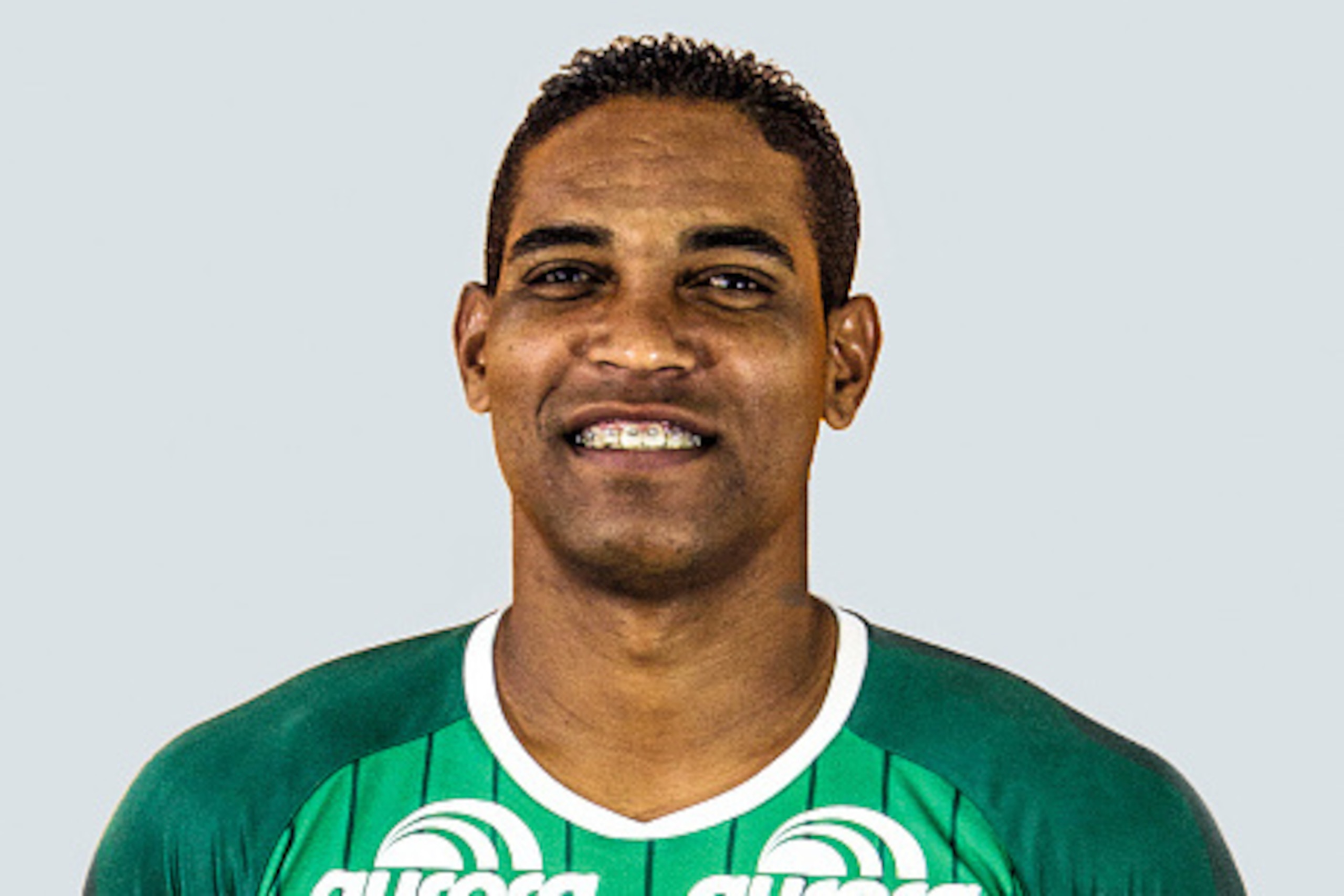
He would arrive at Chapecoense in 2015, via Atletico Paranaense, Avai, Flamengo, Avai again and Criciuma. His age and experience in Europe made him an instant choice to be the Chapecoense captain, and he led them to the Campeonato Catarinense in 2016.
And from there they earned qualification for the Copa Sudamericana—almost like a South American Europa League—with Santana leading them all the way to the final before his and the team’s tragic end.
As football continues to mourn and to try to understand what happened, Santana’s former team-mates can do nothing but pay tribute to him.
Luis Garcia shared a photo of himself and Forlan with Santana, while Manchester United goalkeeper David De Gea has spoken of how he used to share a locker with the Brazilian at Atletico before the two men’s careers—and lives—went off at different angles.
These days De Gea is Spain’s No. 1 and one of the best at what he does in the world, with Santana a cruel reminder how all of that can be so fleeting.
Playing football is just a small part of a footballer’s life, or at least it should be.
And after enjoying a fine career, the greatest tragedy is that Santana will never get to embrace what comes after it.

.jpg?w=2560 "Rap: Lions, LaPorta End Contract Talks")

.jpg?w=2560 "Report: Baker May Miss Up to 6 Weeks")
