
The Most Indispensable Player from Every Top 10 College Basketball Team
Which player's absence would adversely affect his team the most? That is the question being asked here as it applies to the top 10 teams in this week's Associated Press poll.
Typically, the team's best player is its most indispensable player, but that is not always the case. Sometimes another player supplies a vital service that, for whatever reason, cannot be provided by anyone else on the team.
Last season, Michigan State went into a severe slump when Denzel Valentine was sidelined with an injury, demonstrating how indispensable he was. But Indiana won the Big Ten title despite losing James Blackmon Jr. for most of the season, suggesting he was not a critical component for the Hoosiers last season.
However, every season is different, because the player combinations vary from year to year. A player who is not indispensable one year may be irreplaceable the next, as you will see on the Indiana slide.
Statistics are valid through games played Nov. 21.
10. Louisville: Quentin Snider
1 of 10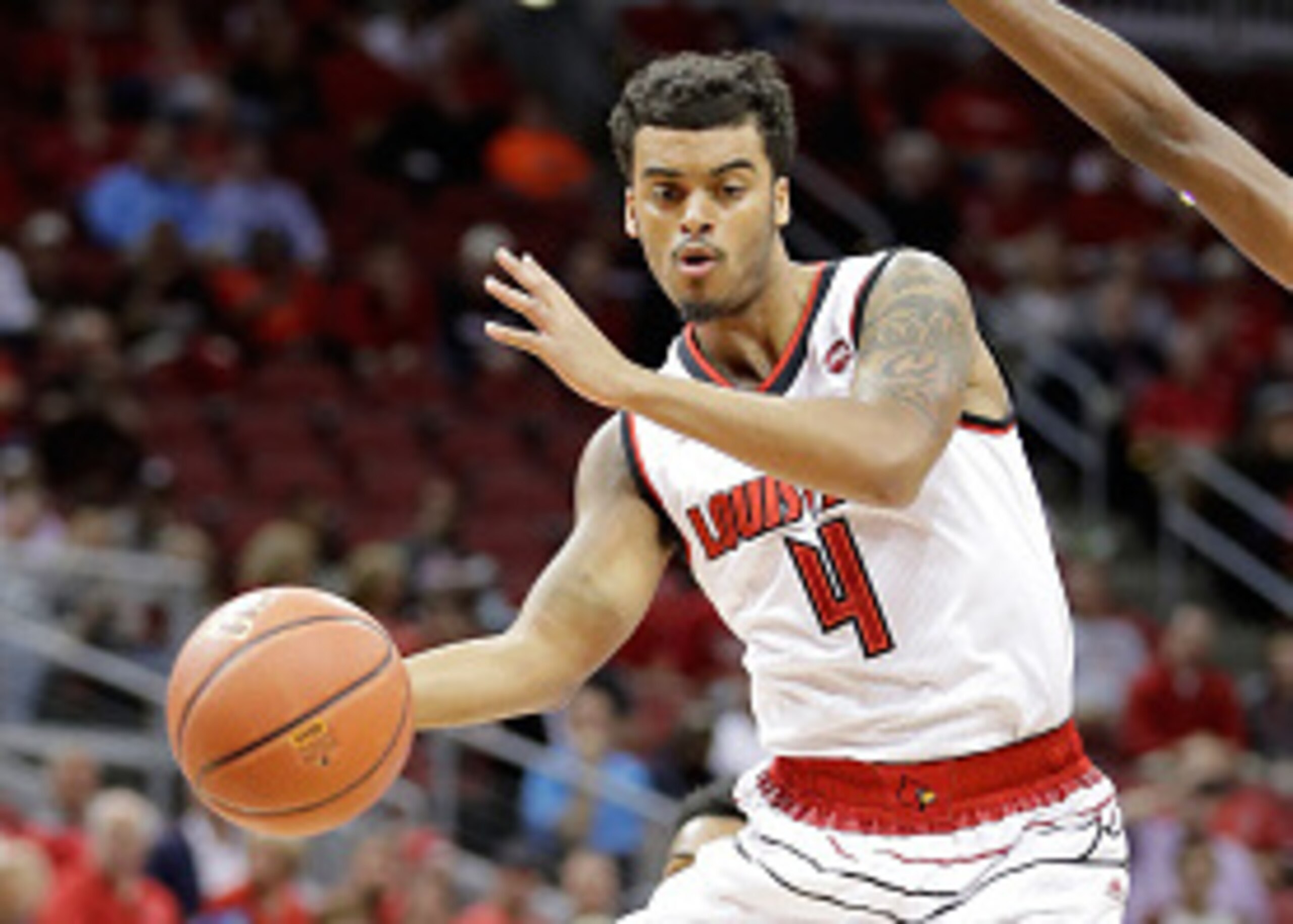
Louisville is like several teams on this list in that an indispensable player has yet to emerge.
The Cardinals are 3-0, including convincing wins over two teams (William & Mary and Long Beach State) that are expected to contend for titles in mid-major conferences.
So far, Louisville's best player, surprisingly, has been 6'9" forward Jaylen Johnson. He averaged just 5.0 points and 3.5 rebounds last season, but this season has those numbers up to 15.3 points (on 70 percent shooting) and 11.3 rebounds, as well as 1.3 blocks.
If he can continue to deliver those numbers he would become the player that coach Rick Pitino could least afford to lose. However, we don't expect Johnson to maintain his current pace when the level of competition rises.
Instead, we expect point guard Quentin Snider to be the irreplaceable player, even though he is off to a poor start. The main reason for choosing Snider is experience. He started 24 games last season and 10 two years ago as a freshman, and Pitino needs a steady hand at point guard to keep things in order.
However, Snider needs to pick up his game. After averaging 9.4 points and hitting 40.4 percent of his three-point shots last season, he is down to 6.7 points and 28.6 percent shooting from beyond the arc this year. His 1-for-10 shooting against Long Beach State is not going to thrill Pitino, but he also had five assists and just one turnover, which should be to Pitino's liking.
Snider has just four turnovers against 12 assists in the first three games. If he can maintain that ratio and get his outside shot in order, he will be instrumental in Louisville's bid for an Atlantic Coast Conference title.
9. Xavier: Trevon Bluiett
2 of 10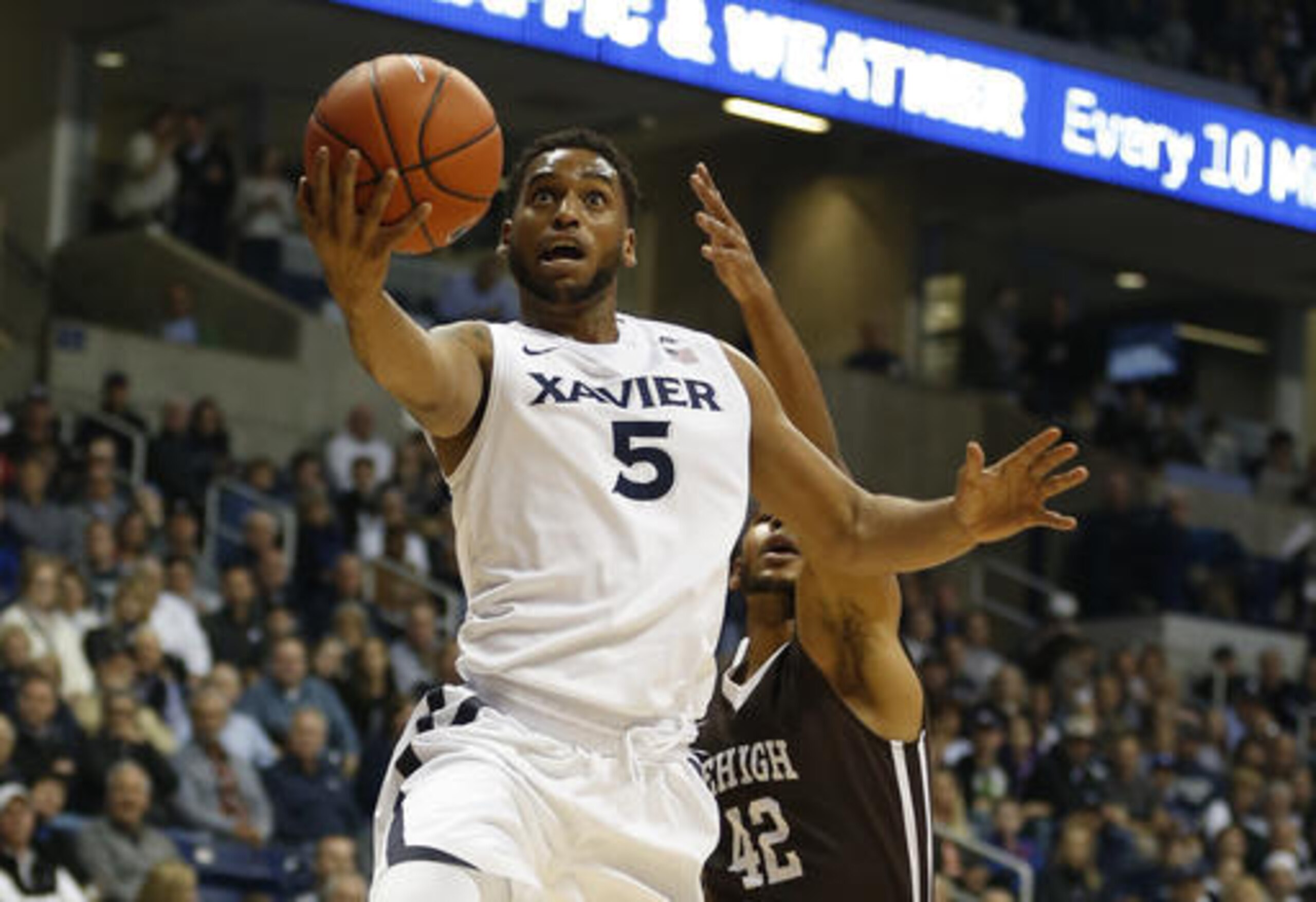
Coach Chris Mack has two players he can ill afford to lose if he hopes to challenge Villanova for the Big East title: Edmond Sumner and Trevon Bluiett, both of whom were preseason all-conference selections.
Both are 6'6" guards who can score and clear the boards.
Sumner is averaging 16.6 points and 5.2 rebounds, and his consistency makes him valuable. He has scored in double figures in all five games this season, and hit double digits in 22 of 31 games last season despite averaging just 11.0 points. He is also a playmaker, finishing second on the team in assists last year.
His one shortcoming is outside shooting, having hit just 26.8 of his three-pointers for his career, including just 1-of-11 this season.
That is the area that separates Sumner from Bluiett, and the reason Bluiett's presence is just a bit more important to the Musketeers' success.
Bluiett's shooting has been shaky to start the season, hitting just 8-of-33 (24.2 percent) three-point attempts through five games. But his 39.8 percent long-range shooting last season indicates his percentages are likely to rise.
Bluiett, a junior, is averaging 18.6 points and 6.0 rebounds this season and he averaged double figures in scoring as a starter each of the past two seasons as well. Bluiett has been even more consistent than Sumner, scoring in double figures in 31 of his 34 games last season and in 20 of 37 as a freshman. That experience and reliable scoring are almost impossible to replace.
8. Arizona: Parker Jackson-Cartwright
3 of 10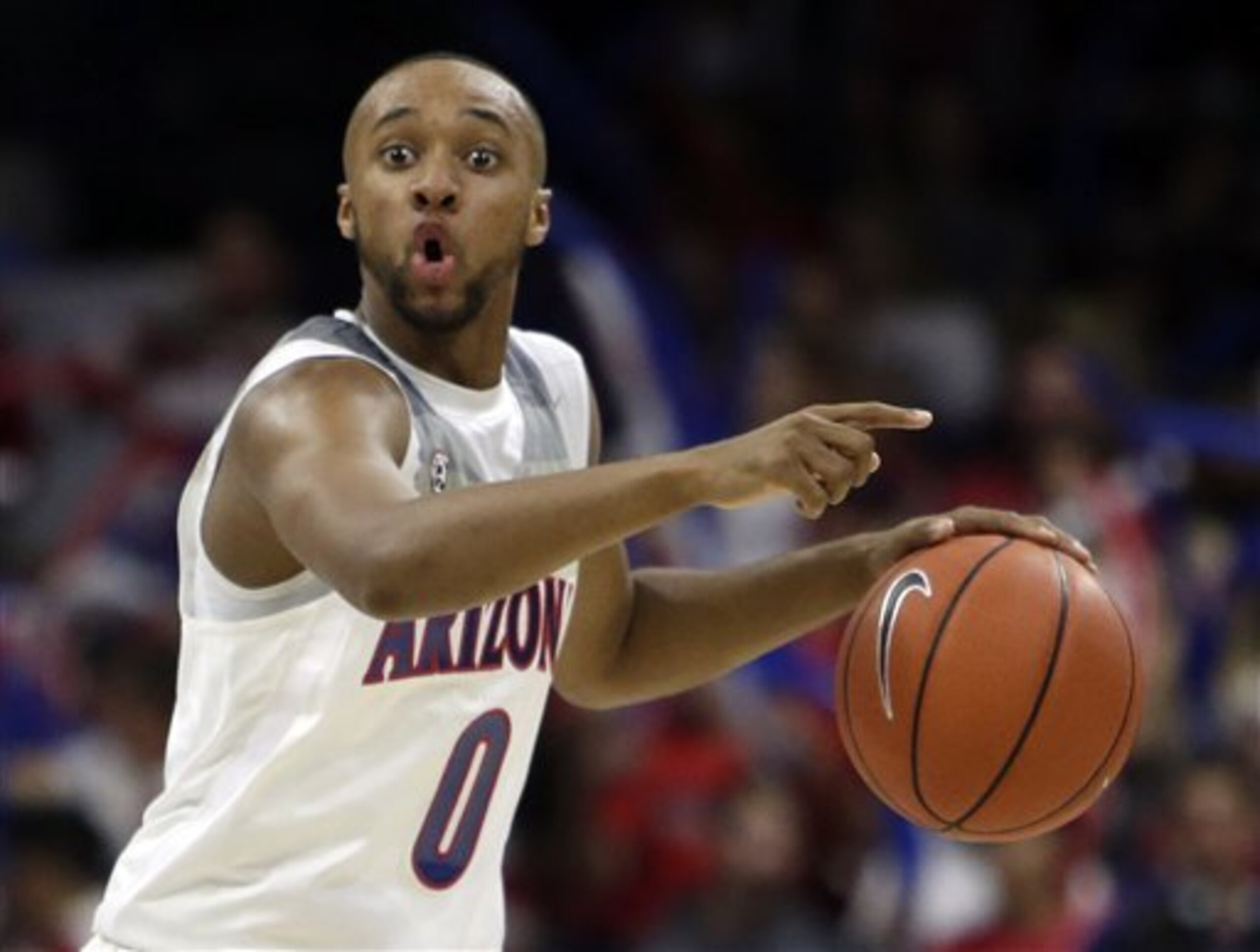
Allonzo Trier, perhaps Arizona's best player, has not played in a game this season, and it is unclear when or if he will return as eligibility questions swirl around the sophomore guard, according to Paolo Boivin of the Arizona Republic.
His absence and the knee injury that ended Ray Smith's college basketball career have left the Wildcats with an array of talented parts with no obvious star.
Three freshmen (Lauri Markkanen, Kobi Simmons and Rawle Alkins) are the team's top three scorers through four games, and Markkanen has been particularly impressive, averaging 19.5 points and 8.3 rebounds. Markkanen is one of two 7-footers in the Wildcats' starting lineup, pairing with Dusan Ristic to form one of the biggest frontcourts in the country.
However, the player Arizona can least afford to lose at the moment is 5'11" point guard Parker Jackson-Cartwright. He may not be the Wildcats' best player, but without him things would probably break down. He is averaging 10.3 points, but more significant is the fact that he has 23 assists with just five turnovers.
No other Arizona player has more than six assists, so Jackson-Cartwright's playmaking skills are essential to what coach Sean Miller wants to do, especially in the halfcourt.
Another indication of Jackson-Cartwright's importance is his playing time. He is averaging 32.8 minutes per game, behind only Markkanen, which shows that Miller feels he needs Jackson-Cartwright on the floor.
His one shortcoming this season has been shooting. Jackson-Cartwright has made only 3-of-14 three-point shots so far, but that figures to improve since he led the Pac-12 in three-point percentage during conference play last season at 48.6 percent.
A junior in his third year in Miller's system, Jackson-Cartwright has the experience and skill to be this team's floor leader, something the Wildcats can ill afford to lose.
.jpg?w=2560 "Titans Giants Football")
7. Virginia: London Perrantes
4 of 10
Point guard London Perrantes may have been Virginia's most indispensable player last season, despite the presence of ACC Player of the Year Malcolm Brogdon. This season, with Brogdon gone, there is no question Perrantes is the player the Cavaliers can least afford to lose.
Coach Tony Bennett's precision offense requires a steady hand at the point guard spot to direct traffic while providing a perimeter scoring threat. In Virginia's four NCAA tournament games last season, Perrantes made 13-of-25 (52 percent) three-point shots while recording 19 assists against six turnovers. His 6-of-10 shooting from long range against Syracuse was the only reason the Cavaliers stayed close in their regional-finals loss.
Perrantes is now in his fourth season as Virginia's starting point guard, and no one knows his role or Bennett's system better than him.
Perrantes is off to a bit of a slow start shooting the ball, making just 4-of-16 three-point shots through three games. But he has 13 assists with just two turnovers as the Cavaliers have steamrolled each of their first three overmatched opponents by at least 24 points. His value may not be noticeable until Virginia faces higher-caliber competition.
6. Duke: Grayson Allen
5 of 10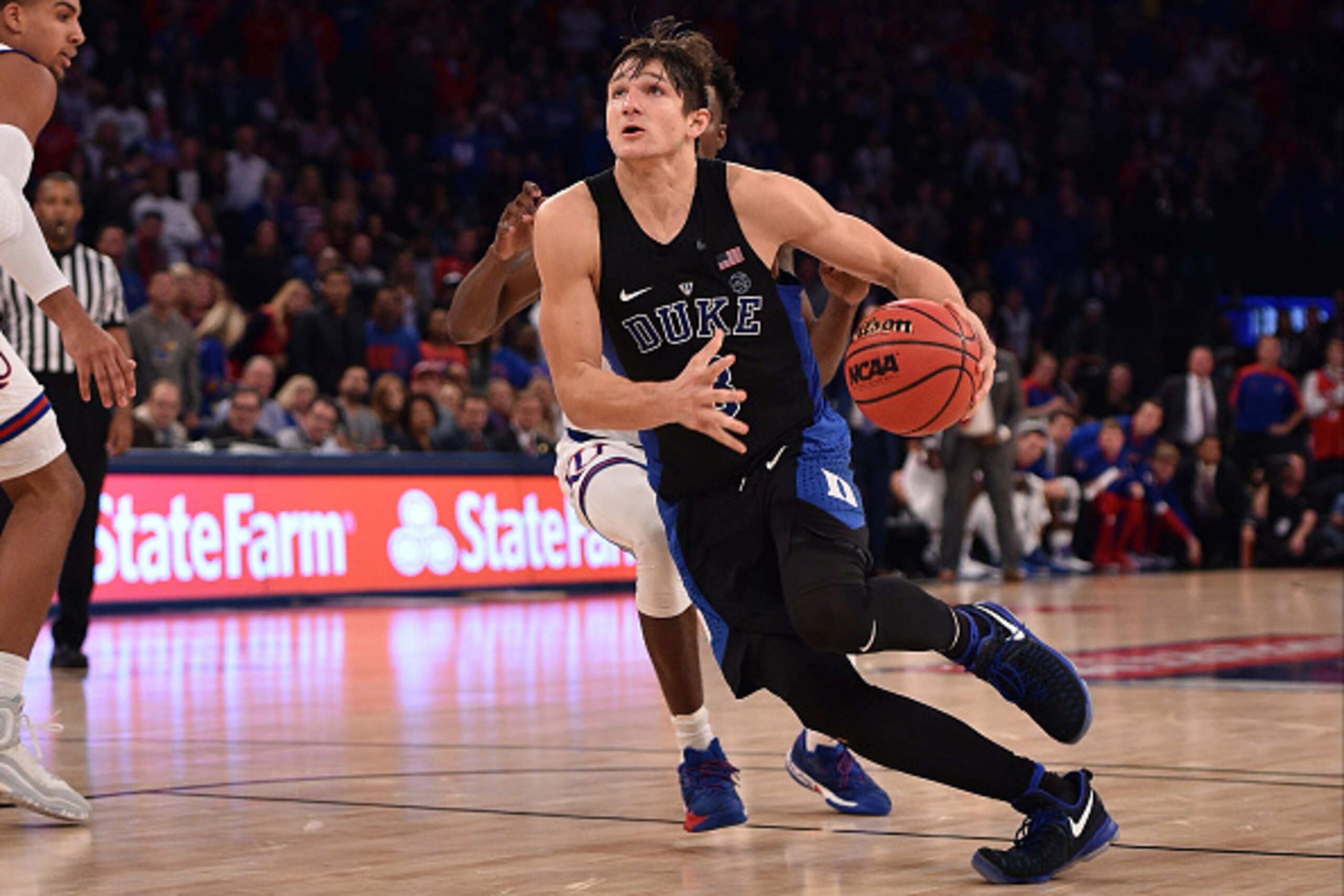
It is tempting to suggest that any one of the three highly touted freshman who have yet to play this season are the most indispensable, because the Blue Devils have not lived up to their No. 1 preseason ranking without Harry Giles, Jayson Tatum and Marques Bolden.
Freshman Frank Jackson was ranked as the nation's No. 18 recruit by Scout, lower than any of the other three freshmen, but Jackson is second on the team in scoring at 15.6 points per game. Logic suggests the return of Giles, Tatum and Bolden, all of whom are ranked among the top eight recruits, will fill all the gaps made noticeable in a two-point loss to Kansas.
But that two-point defeat demonstrated one other thing: Duke needs Grayson Allen to score to be successful. His 4-of-15, 12-point effort against the Jayhawks was a major reason the Blue Devils lost, but a closer look at his production indicated just how crucial his scoring is.
With 6:20 left in the game, Allen had five points on 1-of-12 shooting and the Blue Devils trailed by 10 points. Over the remaining 6:20, Allen went 3-of-3, including a three-pointer, and scored seven points as Duke tied the game with 16 seconds left.
Duke controlled its game against Penn State in a 10-point win, but the Blue Devils did not resemble a No. 1 team in a victory over a team that finished 10th in the Big Ten last season and lost to Albany this season. The fact that Allen scored just 12 points on 4-of-10 shooting was part of the reason Duke failed to blow out the Nittany Lions.
In last season's NCAA tournament loss to Oregon, Allen was just 4-of-13 from the field. The Ducks won by 14 points.
Allen scored just 10 points in the 10-point victory over nationally ranked Rhode Island, suggesting the Blue Devils have enough talent to survive without Allen putting up big numbers, but they can't make a habit of it.
So far, Luke Kennard has been Duke's most productive offensive player, averaging 18.2 points on 52.0 percent three-point shooting. Duke needs its offensive star to be Allen. He averaged 21.6 points last season, but he is averaging 15.0 points on 34.4 percent shooting through five games this season. The Blue Devils need more from their preseason All-American.
5. Kansas: Frank Mason III
6 of 10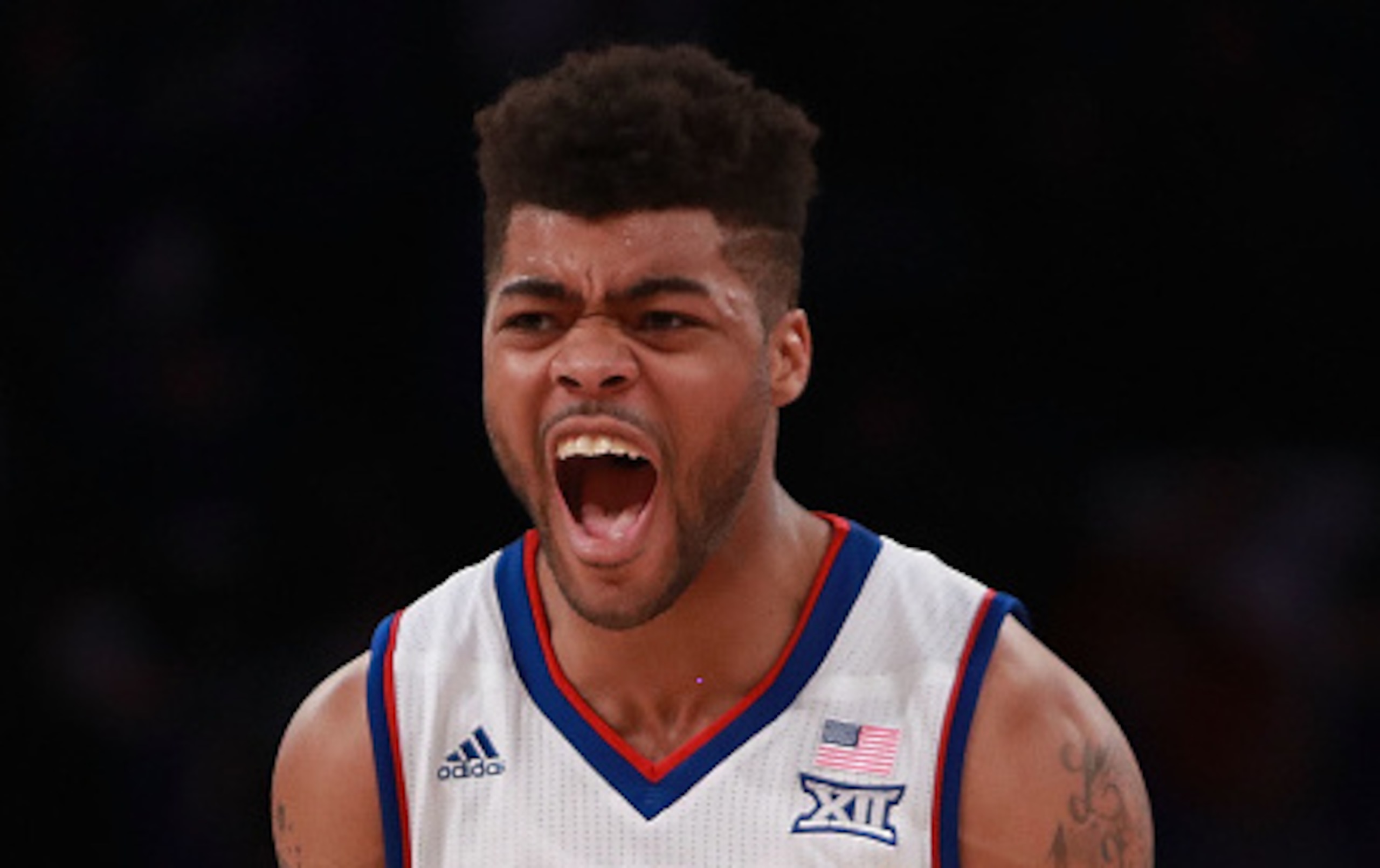
Kansas' 77-75 victory over Duke left no doubt that Frank Mason III is the Jayhawks' best and most indispensable player.
Freshman Josh Jackson—the nation's top recruit, according to Scout—may have more NBA potential than the 5'11" Mason, but without Mason Kansas would not be a Top 10 team, perhaps not even a Top 20 team.
Against Indiana, he scored Kansas' last 11 points of regulation, including two three-point plays, to send the game into overtime. But the Jayhawks lost in large part because Mason missed all four of his field-goal attempts in the extra period.
He followed that 30-point game with a 21-point effort in a win over Duke, and Mason seemed to be involved in every critical play. Mason was limited to four points and 15 minutes in the first half, which, not coincidentally, ended with Duke holding a five-point lead. He scored 17 points in the second half, taking the ball to the basket against taller players at every opportunity and enabling Kansas to take command.
When Duke rallied to tie the game with 16 seconds left, there was no doubt who would take the last shot for Kansas. Mason was the only player who handled the ball on that possession before he swished an 18-footer over Duke defender Matt Jones with three seconds left.
4. North Carolina: Joel Berry II
7 of 10
For North Carolina to play the style that made it successful last season, point guard Joel Berry II must play at an all-conference level.
Like last season, North Carolina relies heavily on its talented frontcourt players to overpower opponents in the paint, and 6'11" Tony Bradley, 6'9" Isaiah Hicks and 6'10" Kennedy Meeks are each averaging double figures in scoring.
Those three can be effective only if the Tar Heels have a distributor to get them the ball and an outside scoring threat to keep the pressure off them. North Carolina's mediocre 32.7 percent three-point shooting as a team last season often allowed defenses to sag back on North Carolina's big men. Berry was the team's best three-point shooter last season at 38.2 percent, and he has made 10-of-25 long-range shots this season through five games. It is Berry's responsibility to make defenses respect his perimeter game to allow North Carolina's big men to exploit opponents on the interior.
Berry improved so much from his freshman season that Marcus Paige was moved to the shooting guard spot to accommodate Berry's promotion to starting point guard last season as a sophomore.
Berry was particularly productive late last season, starting with the ACC tournament, when he averaged 17.0 points. He collected 10 assists in the national semifinal victory over Syracuse and had 20 points in the loss to Villanova in the national title game.
Berry is second on the team in scoring (14.8 per game) and leads the Tar Heels in assists (4.6 per game) through five games this season. He collected 18 points, five assists and one turnover while playing strong defense in the surprisingly easy 97-57 victory over a Chattanooga team that won 29 games last season and beat Tennessee in Knoxville earlier this season.
"He was MVP of the ACC tournament last year, so he was no slouch last year," coach Roy Williams said of Berry following the Chattanooga game, "but what he was doing up the court defensively was really helping us."
3. Indiana: James Blackmon Jr.
8 of 10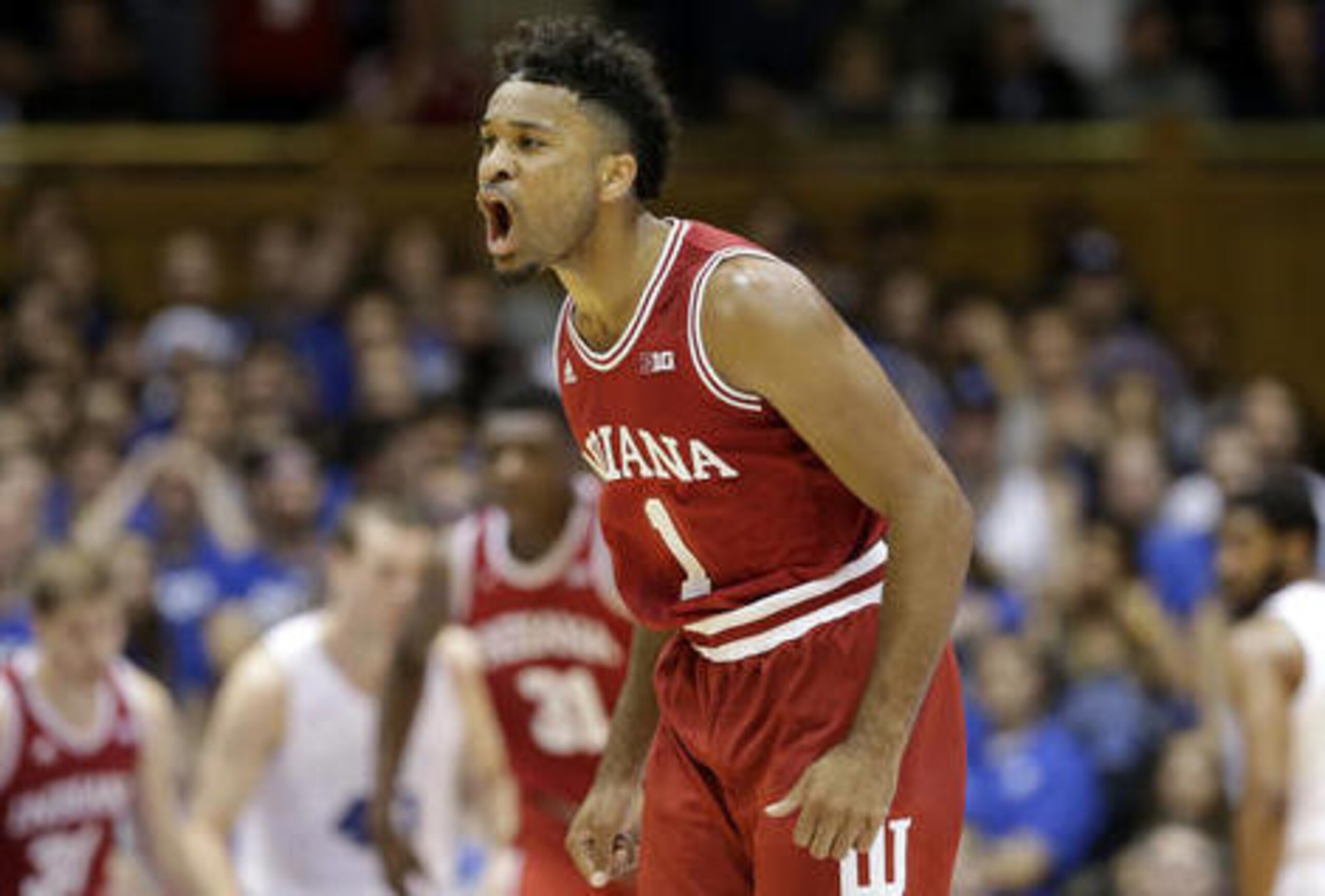
Center Thomas Bryant is the presumed star for Indiana. He was a third-team all-conference pick last season as a freshman, and CBSSports.com and NBC Sports both named him the preseason Big Ten player of the year this season.
He has played up to expectations, averaging 12.3 points and 6.0 rebounds, and his 19 points and 10 rebounds were instrumental in the overtime victory over then-No. 3 Kansas.
The Hoosiers might not have won that game without Bryant, but they certainly would not have won it without James Blackmon Jr., who has turned into Indiana's most indispensable player.
On its way to the Big Ten regular-season title last year, Indiana had a number of perimeter threats in the backcourt, including all-conference point guard Yogi Ferrell, Nick Zeisloft and Robert Johnson. Johnson is the only one of those three back from a Hoosier squad that ranked fifth in the nation in three-point shooting percentage (41.5) last year.
This season Indiana desperately needed someone who could score from the backcourt, particularly from long range, to take the pressure off Bryant in the paint. It was unclear whether Blackmon, who missed all but 12 games last season with a knee injury, could fill the sizable ball-handling and scoring void left by the departure of Ferrell.
However, he has done so admirably. Not only did Blackmon score 26 points against Kansas, but he produced nearly all the big plays. He scored the Hoosiers' final eight points in regulation to push the game into overtime, then hit the three-point shot that put Indiana ahead for good in overtime.
Blackmon made half of his eight three-point attempts against Kansas and is hitting 51.9 percent of his shots from beyond the arc (9-of-17) through three games, while averaging 23.0 points. Blackmon is taking care of the one aspect of Indiana's game that was in question. Blackmon is also chipping in 7.3 rebounds per game, which is a bonus.
2. Villanova: Josh Hart
9 of 10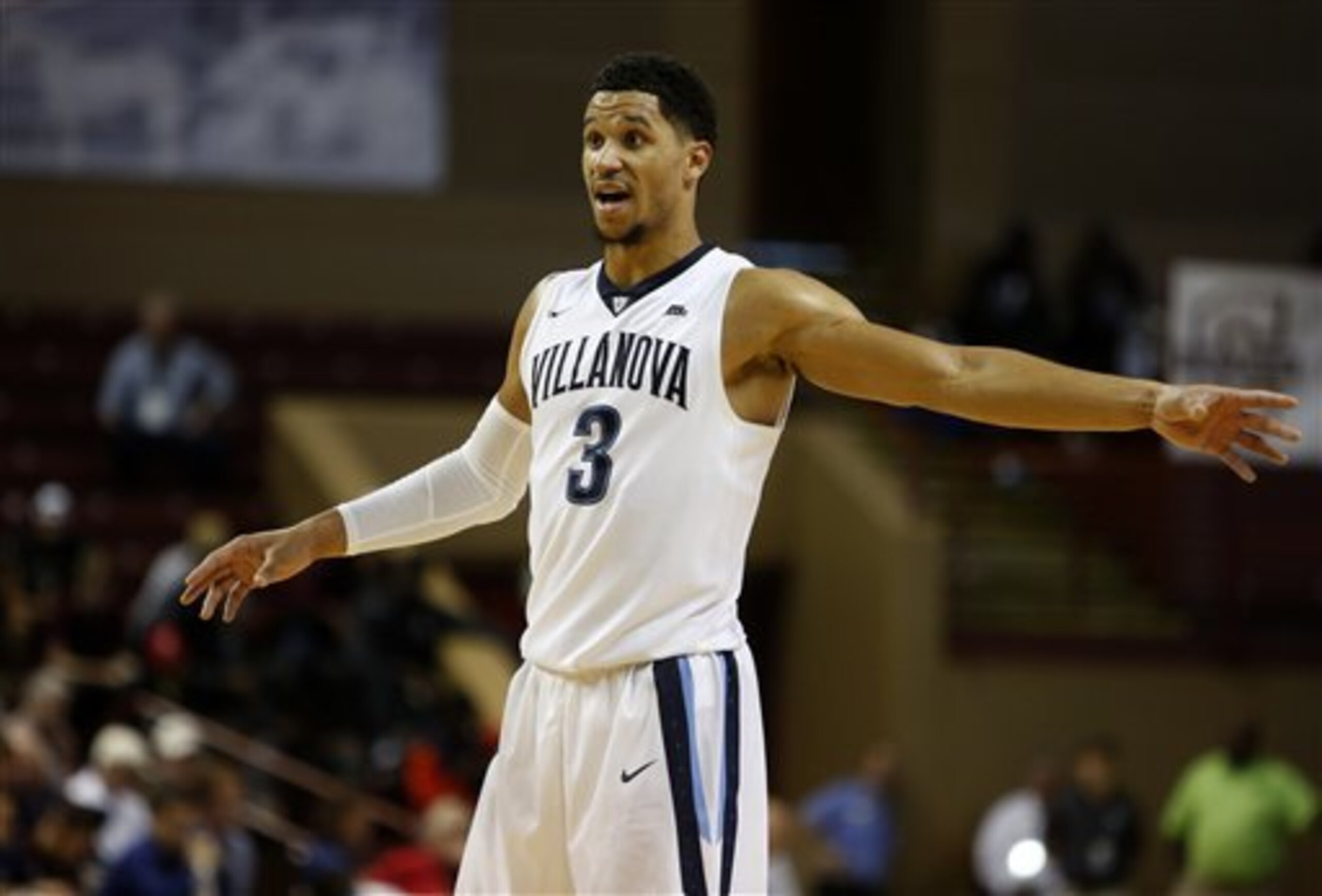
The choice of the most indispensable player is difficult with Villanova, because every player seems to fill a vital role.
At first glance, sophomore point guard Jalen Brunson seems like the player the Wildcats could least afford to lose because he is taking over the floor-leadership role Ryan Arcidiacono filled so effectively the past four seasons. But the presence of Phil Booth, who is expected back soon from a knee injury, gives Villanova a proven fallback option at the point.
Kris Jenkins showed his importance with his game-winning shot in the NCAA championship game, and the versatility of Booth and Mikal Bridges make them almost invaluable.
You could even make a case that 6'9" Darryl Reynolds is irreplaceable because he is the team's only legitimate big man and rim protector.
The bottom line, though, is that Josh Hart is the team's star and the one player the Wildcats can't afford to lose. He can play in the backcourt and frontcourt. He can score with physical inside moves and three-pointers. He can defend on the perimeter and can clear the boards.
The 6'5" Hart is a tweener who might have trouble finding a position in the NBA. But he is perfect for the college game.
Through the first five games, he is averaging 19.2 points, 4.8 rebounds and 2.0 steals while hitting 57 percent of his shots from the floor and 10-of-24 (41.0 percent) three-point shots.
Villanova has played a soft schedule so far, but Hart collected 30 points on 11-of-14 shooting (including 6-of-8 on three-pointers) in the 96-77 win over a Wake Forest team that came into the game 3-0.
"Josh has not just been playing well, but efficiently," coach Jay Wright said, per the Villanova website.
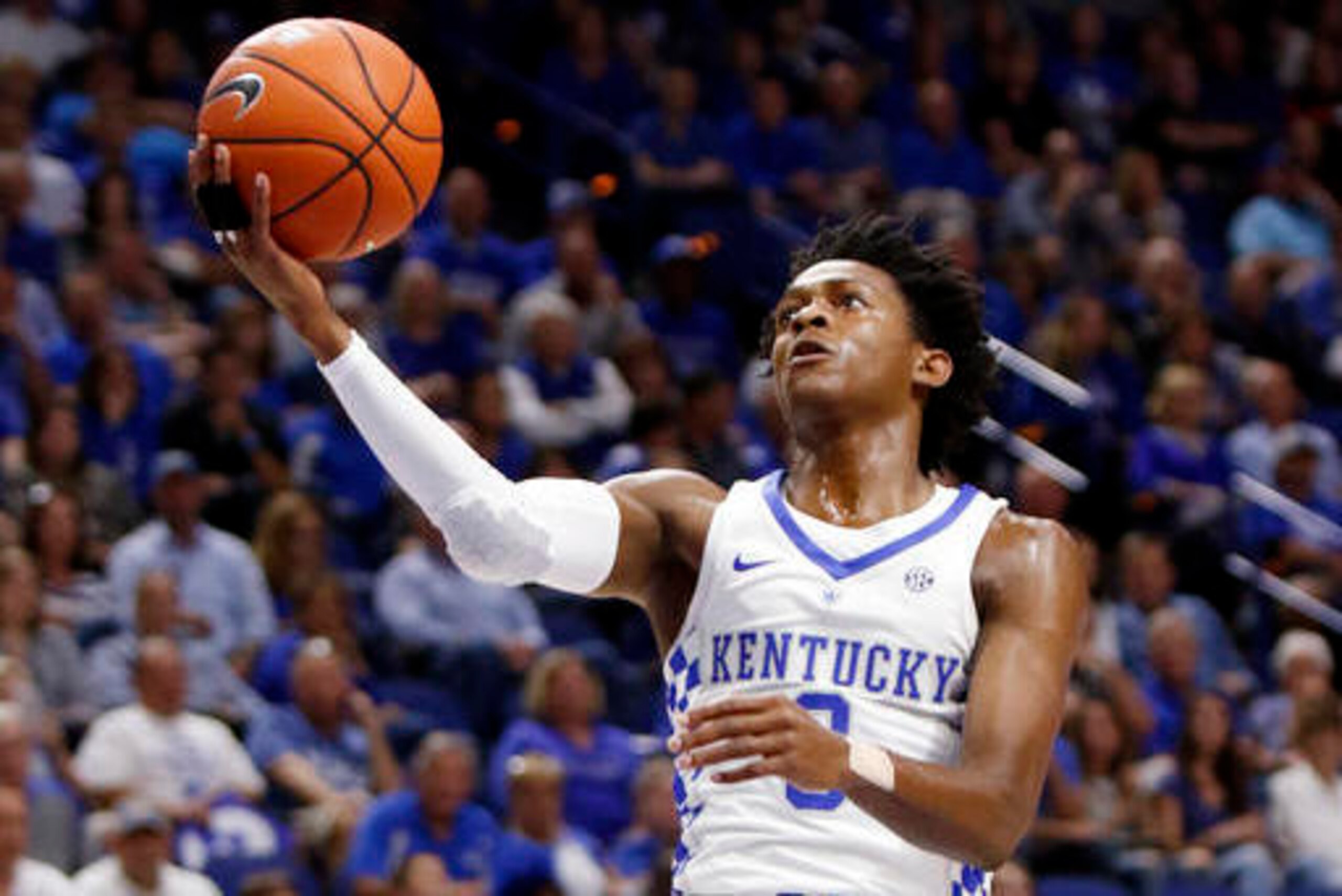
1. Kentucky: De'Aaron Fox
10 of 10
Kentucky's most indispensable player has yet to emerge from the pack of talented sophomores and freshmen.
Sophomore Isaiah Briscoe is the leading scorer through three games, averaging 18.0 points after collecting 21 points in an impressive win over Michigan State. Freshman Malik Monk looks like the team's best three-point shooter after making 7-of-11 from long range in a 23-point performance against the Spartans. Edrice "Bam" Adebayo, a 6'10" freshman, could become a monster in the middle once he gets settled despite averaging just 9.3 points and 6.3 rebounds through four games.
The key player at the moment, though, is freshman point guard De'Aaron Fox. The Wildcats desperately needed to fill the large void left when point guard Tyler Ulis, the Southeastern Conference's player of the year, departed after last season.
Fox has stepped into that critical role and performed admirably. Although he has not proven he can be a perimeter threat, Fox has shown he is a capable floor leader and distributor, which is exactly what this talented group of youngsters needs. He made his first three-pointer of his college career in the fourth game against Duquesne, although his six assists with just one turnover in that game were more important.
Fox is still learning how to best utilize his impressive speed, but he is averaging 15.3 points and 6.8 assists per game. You can expect his 2.3 turnovers per game to come down with some experience.
Fox follows a line of successful point guards who played under coach John Calipari, a list that includes Derrick Rose, John Wall, Jeff Teague, Brandon Knight, Eric Bledsoe and Ulis. Kentucky's success under Calipari always depends heavily on the play of its point guard. It is no different this season with Fox.

.jpg?w=2560 "Rap: Lions, LaPorta End Contract Talks")

.jpg?w=2560 "Report: Baker May Miss Up to 6 Weeks")
