

Main Events' Kathy and Nicole Duva Are Leading Boxing's Feminist Revolution
LAS VEGAS — Main Events promoter Kathy Duva sits in the heart of Las Vegas, in an unmarked secret compound at the sprawling MGM Grand Hotel and Casino. It's Wednesday night, and the biggest boxing match of the year between her top fighter, Sergey Kovalev, and the undefeated Andre Ward is just three days away.
Around her at a conference table are seven of the most powerful women in boxing—and poor, outnumbered Joe Rotonda, the company's only male employee, who is smart enough to speak only when spoken to.
These are women who have tread new paths and broken glass ceilings that have rarely been approached, let alone cracked. Women like Jolene Mizzone, with nicknames like "The Hammer," boxing's only high-level female matchmaker.
TOP NEWS
Later: Emanuel Navarrete vs. O'Shaquie Foster
Tebow Defends Arch Manning 🫡

Yaxel: Luka Not MJ 🗣️
And they are party planning.
Is that traditionally "women's work" in the very patriarchal world of boxing? Yes. But one thing Duva learned quickly on the job is there is no detail too small to get right.
There will be 200 invites to Kovalev's after-party at the "very European" and "very loud" nightclub. Who needs one? Who doesn't? How will they be distributed? These are the kinds of questions, left unanswered, that can turn an afterthought into a disorganized disaster in no time.
"By the way," someone asks, "can we get them Sergey's walkout music so he can make a grand entrance for his fans?"
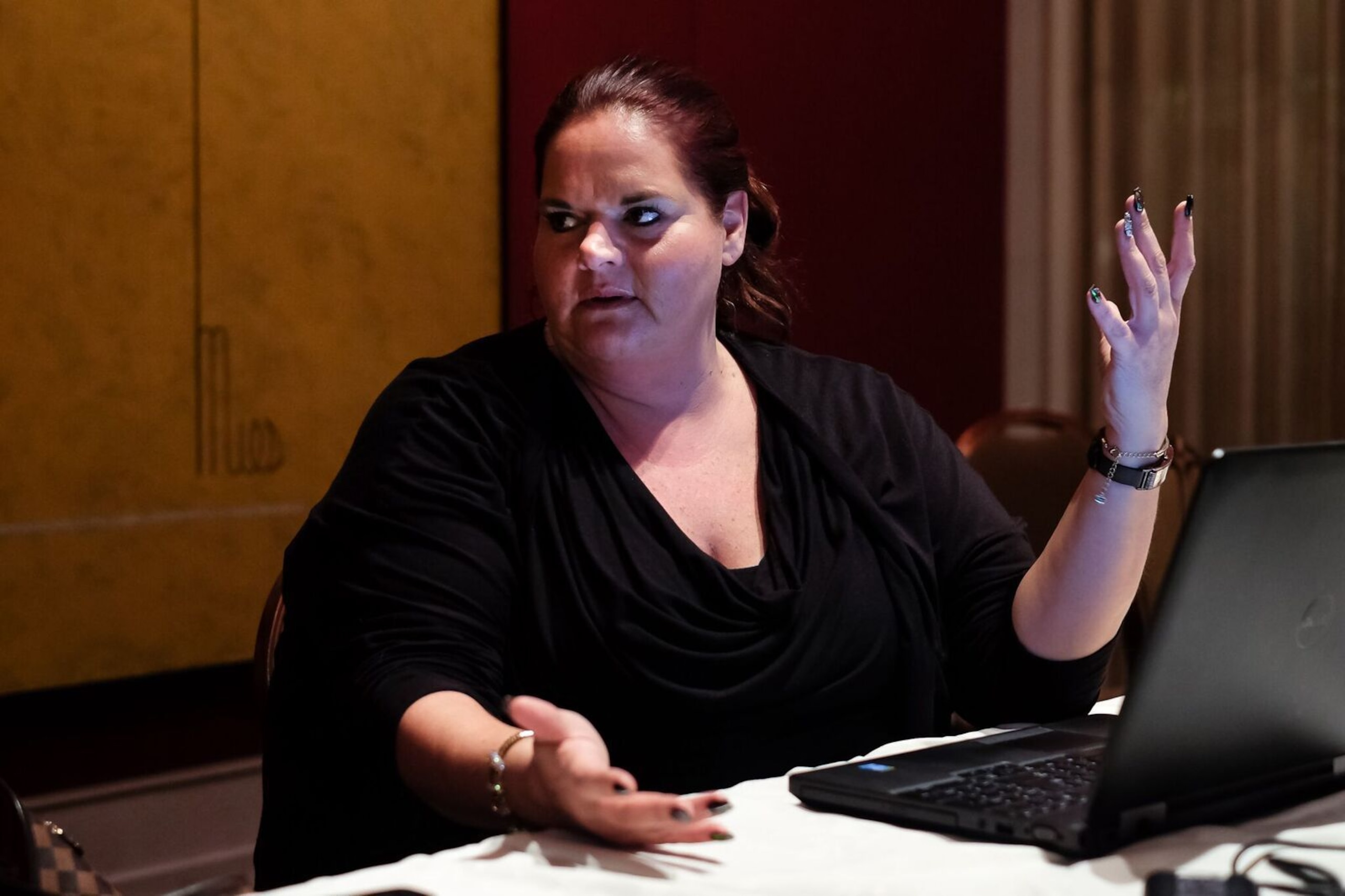
These are little issues in the scheme things. On Saturday night, Duva will put up three million of her own American dollars to launch Kovalev on pay-per-view against pound-for-pound great Ward (HBO PPV; 9 p.m. ET/6 p.m. PT). The stakes are high, like "can I pay my staff" high, and they don't need a meddling reporter to remind them of the pressure.
"It's five o'clock and the bar's open," The Hammer says at the very thought of what this event can mean for all assembled.
"We're very good at happy hour here," Duva deadpans in response.
But first there is the matter of the "God Pass," a credential that allows the bearer to make potentially cataclysmic decisions on the night of the fight. Things like rerouting security that could turn a carefully planned event into a dangerous debacle.
Roc Nation, Main Events' promotional partner in the event, wants six such passes. They come from the music industry, Duva explains, where credentials are king, where they are given as a courtesy to VIPs attending the event.
Perhaps VIPs like Jay Z, the rap superstar who Main Events would like to note that I brought up and who it calls "he who must not be named" because its contract with Roc Nation prevents using his star power to promote the event.
Main Events has already yielded on the issue once, allowing four instead of two. Now Roc Nation is back asking for more, just another indignity in a partnership that has been a nightmare from day one. That the Roc Nation team is led by Dino Duva, the brother-in-law who once battled Kathy for Main Events in court, only complicates a situation that is charitably described as "f--ked up."
"When the f--k is enough enough?" Duva's daughter, Nicole, the 33-year-old heir to the throne, asks. "This is not a special honor. It's a functional pass."
"They are sick people," Mizzone says, meaning it. Roc Nation, they believe, are dabblers in this business. For everyone around this table, boxing isn't something they're trying out. It's a way of life.
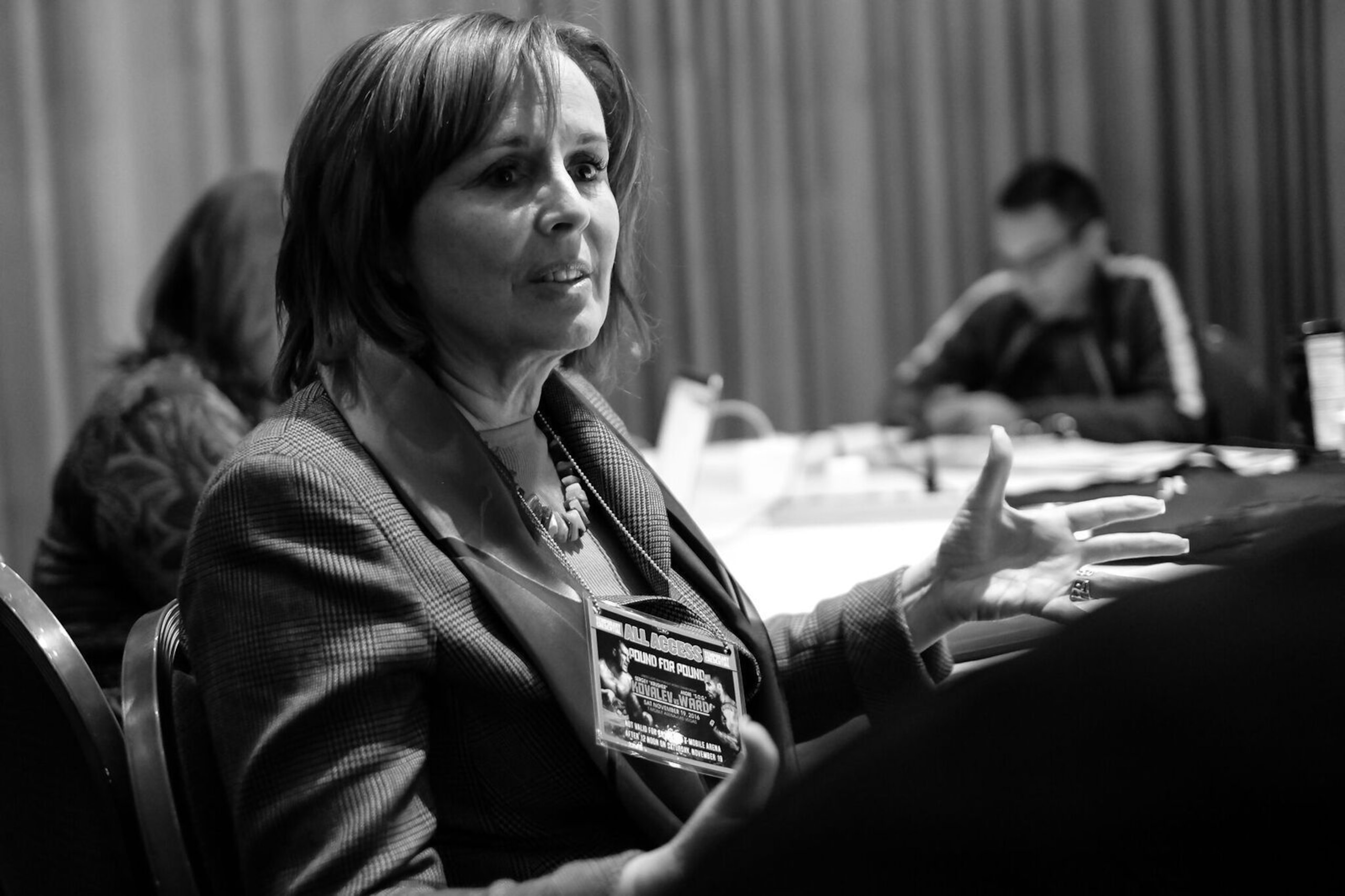
The dress in the room is casual. The language, as you may have noted, filthy. Strong voices are raised and strong voices meet them in return. Kathy, for the most part, sits and listens. Mizzone takes the lead in discussions, then Nicole. Duva has built this strong team of women to have a voice, not to be the passive recipients of her wisdom.
"The women here are incredibly capable," she says. "As good as anyone at what they do. I don't want to say they are as good as any man. They are as good as any human. The younger women on staff don't understand why this is such a big deal. And they're right. But I'm older and have lived through other times. I understand why people are interested."
Her husband, Dan Duva, had insisted on being in charge of every aspect of a show, from the catering to the posters. She tried that in her first days on the job after his death at just 44 and couldn't pull it off. The yelling and screaming that so often come hand-and-hand with the boxing business also just didn't quite suit her personality.
"I quickly found out I couldn't be Danny," she said. "When I gave myself permission to not be Danny and just be me, it was this wonderful liberating moment."
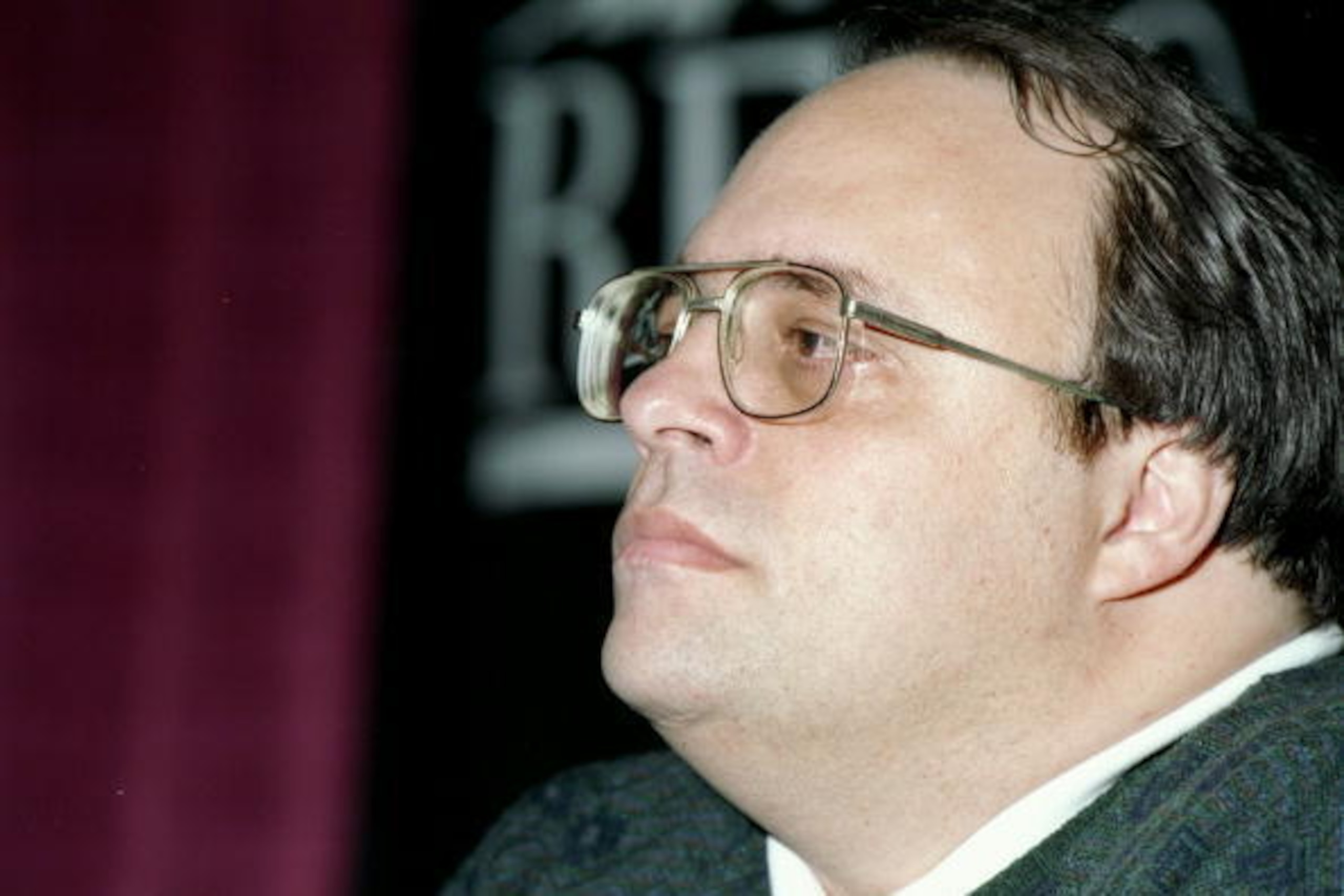
It would be unkind to say Dan Duva's ghost haunts Main Events, the company he founded in 1978 and led to great heights, eventually partnering with HBO in the nascent pay-per-view industry and bringing the world one-of-a-kind talents like Evander Holyfield and Arturo Gatti.
But his presence lingers.
Dan's death shook Duva to her core. Not only had she lost her husband and professional mentor, but she had also lost her identity.
"I realized that I was Dan's wife," she said. "Without him I didn't know who I was. This has helped me discover that, while also keeping him alive in a way."
The inner circle hears echoes of Danny these days, especially since Nicole jettisoned a promising legal career to join the family business as the vice president of marketing. Some of the women at Main Events have worked there for decades. And they say, in many ways, Nicole is Dan in a dress.
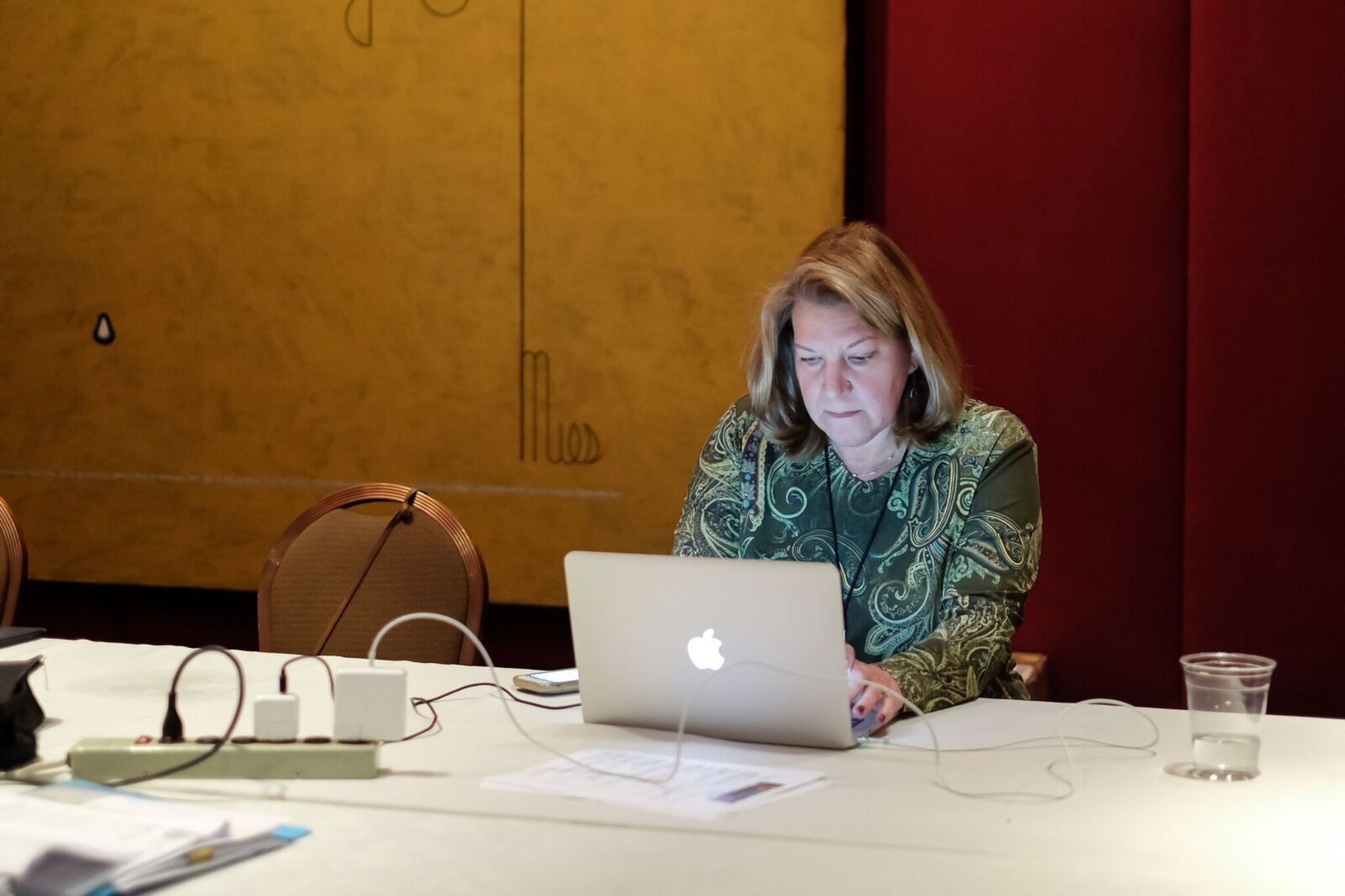
"I've worked for Dan and Kathy my entire life," Main Events Public Relations Director Ellen Haley said. "The similarities are so striking. Danny was so creative. He'd come up with stuff we thought were the f--king craziest ideas. But we'd take it and run with it and it would work perfectly. She's got that same brain. What she comes up with—her father would be so proud."
Nicole, like her mother, father, uncle and grandfather before her, was smitten with the boxing business. She started unpaid, let's say as a "worker" so as not to pick sides. She says "consultant." Her mother says "intern."
Either way, the resulting partnership took the two women back decades, to Dan's death and a 14-year-old Nicole's assumption of almost a co-parent role with her two younger siblings. The two worked well together then out of necessity. Coming back together with her mother as an adult was like putting on a particularly comfortable pair of old jeans.
"Dan and I worked together well because we didn't always agree on everything," Kathy said. "When we got to a place where we were both satisfied, we knew it was the right decision. She and I work together exactly the same way. I had found my happy place again. There came a point where I said, 'S--t. This is getting way too comfortable.'"
S--t because boxing is a hard life. And s--t because Nicole was on her own path, one that didn't include the family business. But at Main Events, she found the kind of autonomy, pressure and fun that simply didn't exist in the mergers and acquisitions department at a Manhattan law firm.
After all, once you've negotiated a series of 16 pay-per-view deals with regional Polish cable companies at a breakneck pace, drafting briefs just doesn't have the same appeal. Five years later, she has no regrets.
"I worked hard as a junior associate," she said. "But I wasn't in charge of anything. This was something. Up until then this had been a temporary thing. I had received another job offer as a staff attorney. But after that I was done. I was staying here. How could I do anything else?"
"I didn't want to push her into it," Kathy said. "But I was so happy when she came to me. We don't agree on everything. I'm ruled by my emotion and she's ruled by her brain. But we are fine challenging each other and making each other better. She's a natural-born leader."
Nicole helped bring a regimented approach to an organization that had lacked clarity and focus in the past. She's also a bridge to her mother, one the staff often relies on to deliver unpopular news or steer the ship in a different direction, the one who can step in and take away Kathy's cellphone before too much damage is done.
"I can be honest and real with her," Nicole said. "And she can be 100 percent sure it is coming from someone with the same agenda, which in this business is a real concern."
Over dinner at the swanky Craftsteak, where we debated whether potato puree is what fancy people call mashed potatoes, epic discussions ensued about Donald Trump, Scandal and Donald Trump's boxing scandals. Finally, two bottles of wine in, talk turned to being a woman in what is definitively a man's world.
"It's not easy for a woman to work in the boxing world. Of course, it's not easy for a woman to be an executive in the larger world, for any woman in a position of authority or leadership," Kathy said. "Think about it. The least qualified man in the world just won a Presidential election against the most qualified woman.
"I've worked with fighters where we had to pretend my lawyer ran the company so they would sign with us, because there was trepidation about working with women. There are certainly fighters and business partners who don't want to take our advice."
When you're a woman in boxing, you don't just have a hard job. You have a story too. Kathy learned that the hard way, when a seat-mate at the opera spent the entire intermission railing against the sport. She doesn't tell people she works in boxing anymore.
Nicole has an entire script that plays out whenever someone asks what she does for a living. That's if she's willing to tell them at all. When she just can't, she goes with the generic "attorney." When she does mention boxing, a telling pause and weird stutter often follows.
"That's when the blind date ends," Lisa Meyer, the director of business affairs, says, to unanimous acclaim.
The boxing business, Duva says, isn't easy for anyone. The margins are thin enough that Vogue would consider them for a cover shoot and your circle of acquaintances includes, necessarily, foreign oligarchs, bombastic billionaires and the kind of people who threaten to have you disappeared on the street one day.
That kind of thing doesn't even give them pause.
"What are you going to do?" Nicole asks, rhetorically. "Back down?"
It's hard being a boxing promoter—but try it as a woman. Worse than the loud threats from loud men, in some ways, is the quiet, persistent creep of paternalistic head-patting.
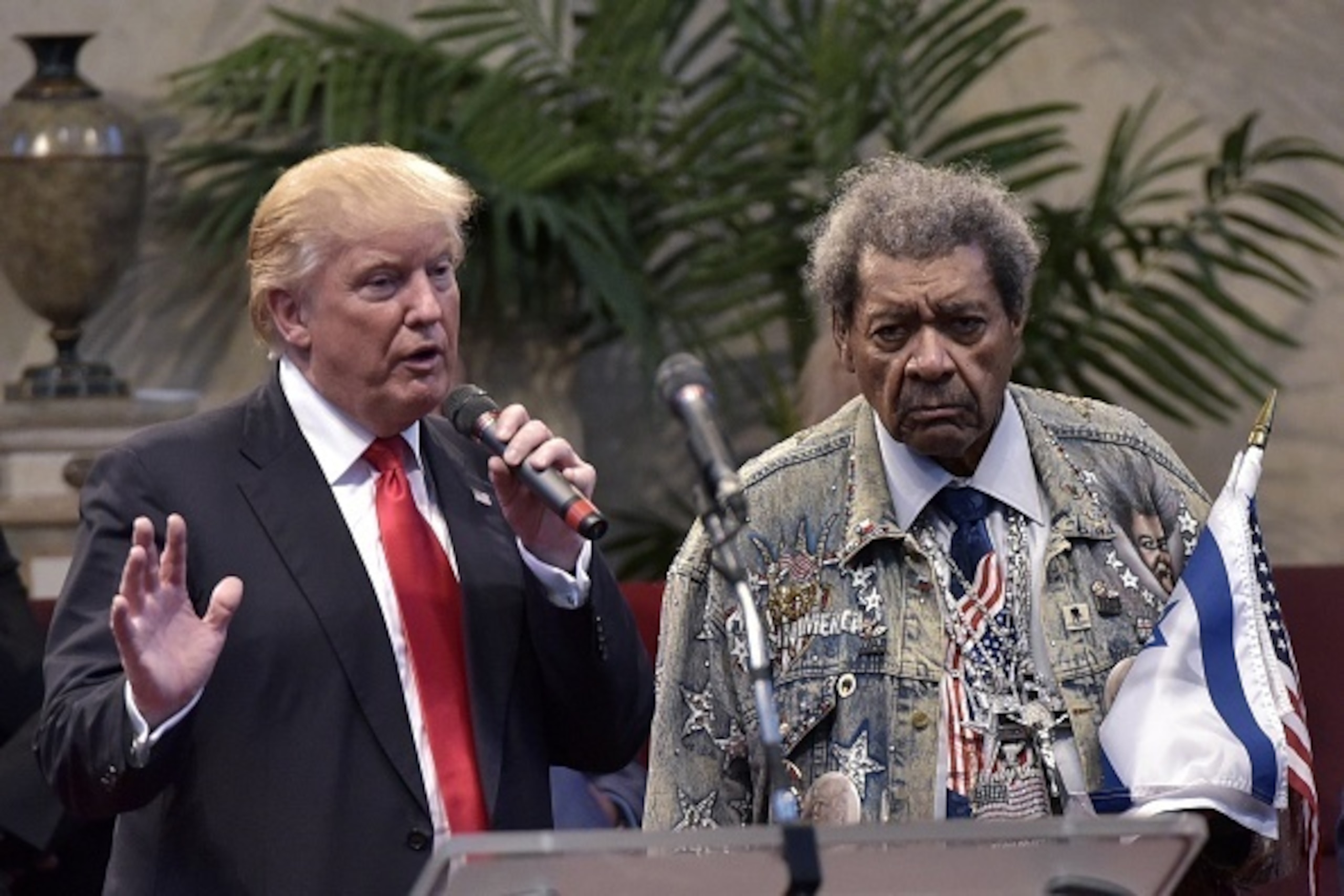
"The people you might think would be the worst, like Don King or Bob Arum, are in some ways the best. They'll screw me over just as happily as they would a man," Kathy said. "I kind of appreciate that. That's at least treating you with respect. I don't do well with people who don't give me respect."
In the end, you work with the people who want to work with you in this business. There are a number of promoters, weak and strong, and plenty of options for fighters seeking that increasingly difficult path to fame and fortune.
For a time, the list of those choosing to work with Main Events had dwindled dramatically. The promotion had stopped signing top talent, relying instead on existing superstars. Bigger promoters poached top attractions like Holyfield and Lewis, soon leaving Fernando Vargas and Arturo Gatti as the lone attractions keeping the promotion afloat.
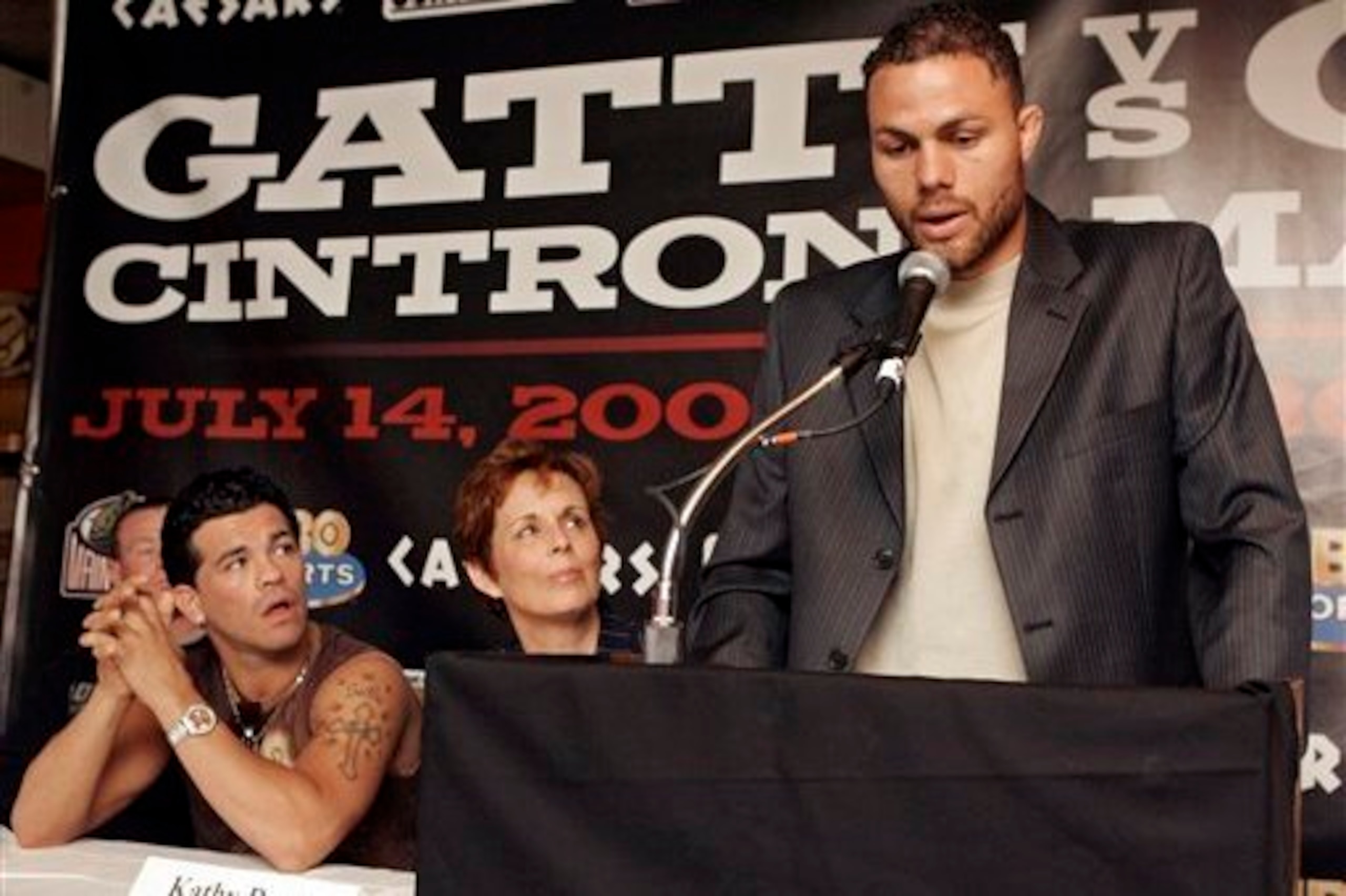
Boxing is a hard business, on the fighters most of all, and the line between a sensational star and washed-up has-been is often crossed in the blink of an eye. Within months in 2007, both Gatti and Vargas lost high-profile fights. Main Events, in turn, almost lost everything.
"I thought we were going to close the business down. I thought we were done," Duva said. "We were laying people off and down to just three of us at that point. I could have walked away a thousand times. But when you get bitten by this business you're hooked. There's no walking away."
Instead, a fighter named Tomasz Adamek was dropped in their laps in 2008, a lifeline that offered one more chance to rebuild. While Adamek was never able to crack HBO as anything but an opponent for bigger fighters, his success as a drawing card in his native Poland kept Main Events in business long enough to re-establish boxing on network television with Fight Night, a series of afternoon cards on NBC that lasted four years.
Soon, the promotion was strong enough to sign a number of fighters (they now promote 20, including four on Saturday's card), many of them foreigners who generated revenue through television deals in their native countries without needing a big name in the opposite corner.
Back on solid ground, when opportunity came knocking again, Duva was ready.
Sergey Kovalev was not a hot commodity when he found his way to the New Jersey offices of Main Events. Hot commodities have money tossed at them by Bob Arum, Oscar De La Hoya, Al Haymon and the other promotional giants who can afford to gamble, and lose, big on premium talent.
Kovalev's manager, Egis Klimas, had already taken him to every major promoter in the United States. None had bitten.
"They got down to the bottom of the barrel," Duva said. "And there we were."
Duva, and matchmaker Mizzone, were willing to give him a shot in the ring opposite Darnell Boone, a fighter who had pushed him to a split decision two years earlier as a young fighter. This time, Kovalev made an impression.
"He got in the ring and I saw this look in his eye," Duva said. "It brought back my memories of Ray Leonard standing across the ring from Thomas Hearns. Daggers coming out of his eyes. Lasers. He never blinked. And then the fight began. And he just decimated Boone. I went, 'Oh my God. This is it. He's the real thing.' I ran to Jolene and said, 'Sign this guy now before somebody else does!'"
Kovalev's had big plans for his career. World championships. Unified titles. Become a pay-per-view fighter—basically an impossible wish list for an Eastern European boxer in a sport that hadn't even been able to turn the dominant Klitschko brothers into pay-per-view attractions.
Duva, however, was determined to give it her best shot, reminding anyone who would listen that not so long ago, the idea of a flyweight Filipino selling out arenas and moving millions of pay-per-views would have been equally unthinkable. Enter Manny Pacquiao.
It's only considered impossible until somebody actually goes out and does it.
"He had the charisma, the ability to connect with every member of the audience," Duva said. "We told HBO, give us anyone you want. Any fight at all. Pay us whatever you want to give us. Just put us on HBO. The feeling was, I just had to let people see this guy."

Nine fights on the network later, the 33-year-old Russian is finally where he wanted to be. An anti-hero who loves going into an opponent's hometown and crushing hopes and dreams, Kovalev has finally become a pay-per-view headliner at last. Bigger than that, a victory over the highly respected Ward might just make him the best fighter in the sport.
"So many guys pound their chest and say they are the best, but don't really want to find out," Kathy said. "He could pick up a $3.5 million rights fee from HBO twice a year and make a pretty good living without ever challenging himself. But Sergey wants to know. With no guarantee that he's going to make more money than he would for that easy fight on HBO."
"He wants to find out how good he is. For himself. That's rare, not just in boxing, but in life," Nicole chimed in. "He thinks he might be the best in the world but needs to know for sure. That's his priority. Not more money for taking fights he knows he can win. He wants to know. I love that."
By the time Saturday night is over, we'll all know. And Main Events will rise and fall with the fighter it promotes. When that final bell rings, their work is done and it's Kovalev's turn to take care of business. That's the game—and after nine years on the sideline with no pay-per-view presence at all, Duva is just happy to be playing.
"It's frightening," she said. "But a good kind of frightening."
Jonathan Snowden covers combat sports for Bleacher Report.
.jpg?w=2560 "NFL Paris Football")
.jpg?w=2560 "Seahawks Chiefs Football")
.jpg?w=2560 "Jonathan Taylor Landing Spots")
