
Every Top 25 College Basketball Team's Biggest Question Mark in 2016-17
There's no such thing as a perfect team in college basketball. It doesn't matter how much talent is on the roster and how accomplished the coach and his staff are, when working with 18- to 22-year-olds, it's impossible to expect to put together a completely flawless team.
Otherwise, we wouldn't be going on 40 years since the last team (Indiana) went unbeaten in a college basketball season.
Every one of the 351 Division I teams has something about their makeup that is concerning. It could have to do with personnel, a certain aspect of their offensive or defensive approach, or something more philosophical. Whatever the case, they all have a question mark that could impact their season depending on how it's dealt with.
Using the latest Associated Press rankings as a guide, we've identified this area of concern for every Top 25 school based on their early results from the 2016-17 season and what we knew about them coming into the year.
25. California
1 of 25
The second interior spot
California easily won its season opener on Friday against South Dakota State despite not having Ivan Rabb because of a toe injury. The projected NBA lottery pick is expected to be a big part of what the Golden Bears do this year, so to have a 29-point win over a team that made the NCAA tournament last season is promising.
It will be even more heartening if the Bears' other big men can continue what they did in that opener and be part of a formidable frontcourt.
Kingsley Okoroh started and only had two points in 17 minutes, but he recorded four rebounds and four blocks, while Kameron Rooks had eight points and seven boards in 22 minutes off the bench. That pair combined for only 166 points and 218 rebounds in 901 total minutes last season.
24. Cincinnati
2 of 25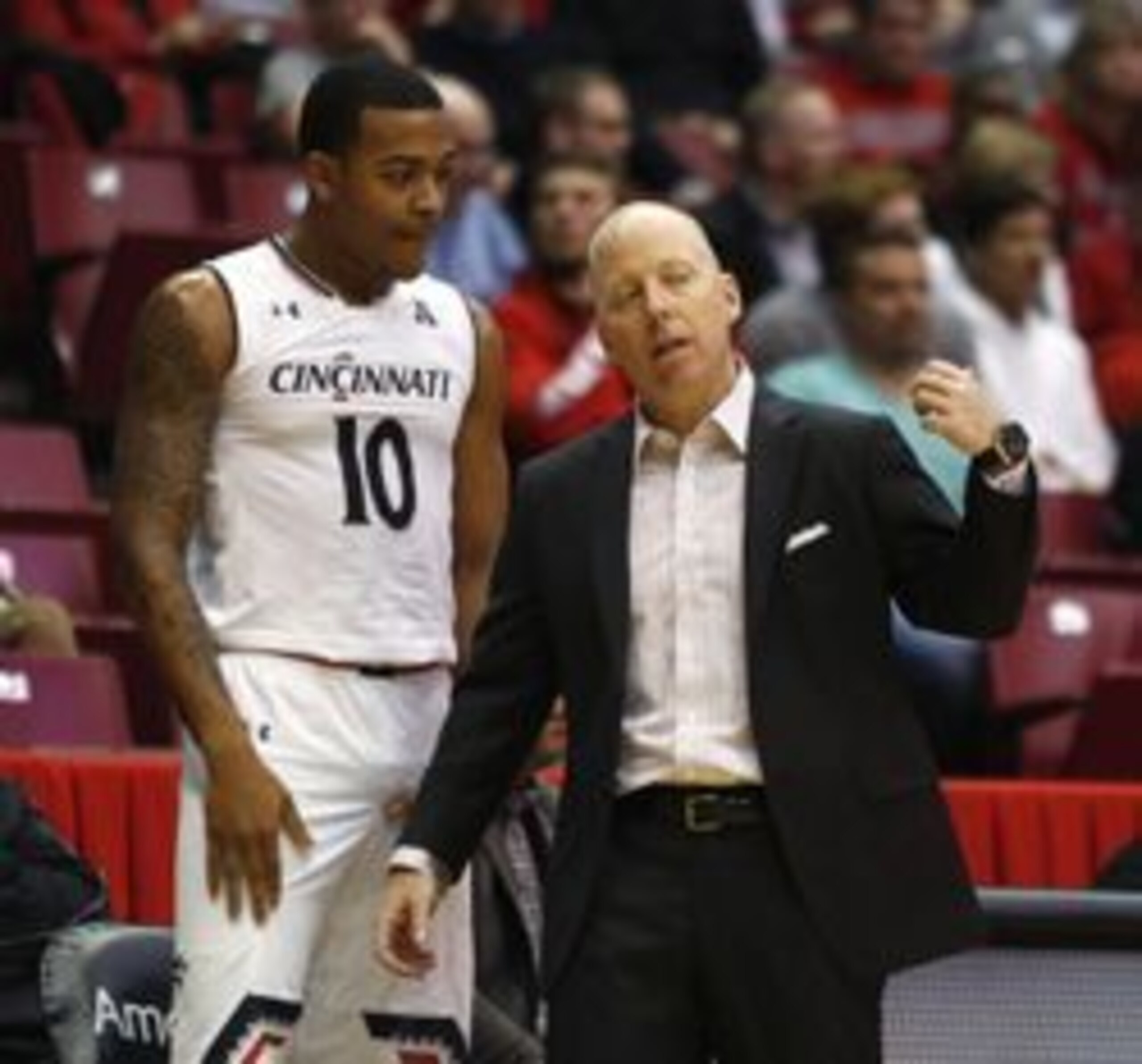
Three-point shooting
It only comprised about 31 percent of Cincinnati's scoring last season, but when it needed to make a three-point shot, there were multiple guys capable of draining one at a critical moment in 2015-16. Who that might be this season beyond Jacob Evans has yet to be identified through two games in which the Bearcats have gone 11 of 43 from outside.
Evans is 6 of 13 from deep, including 4 of 6 in the opening win over Brown. He shot 33.3 percent last season when Cincinnati had four different player with at least 40 threes.
It's helped that 50 of 75 two-point shots have gone in so far for Cincinnati so the poor outside efficiency hasn't been an issue. It will be at some point, though, if not during nonconference play, then when the American Athletic Conference schedule starts.
23. Texas
3 of 25
Body control
With three players in the rotation who are at least 6'8” and 235 or more pounds, Texas has the size up front to hang with anyone. That's assuming those big bodies can keep themselves on the court.
Foul trouble was a major issue for the Longhorns last season, and even with two-thirds of that big-man rotation made up of new players, it's going to be an area of concern again. Senior Shaquille Cleare started Texas' opener on Friday but fouled out in just 11 minutes, while freshmen Jarrett Allen and James Banks combined for six fouls.
Allen and Banks had another six fouls in 41 minutes in Monday's 21-point win over Louisiana Monroe, but Cleare managed to avoid being whistled in 22 minutes. It was only the 20th time in 104 career games he didn't committ a foul, and he's averaged less than 12.7 minutes per game over that span.
.jpg?w=2560 "Saints Lions Football")
22. Creighton
4 of 25
Defense
Creighton was good but not great on defense a season ago, giving up 72.4 points per game and having a defensive rating that ranked 108th out of 351 schools. Numbers similar to that in 2016-17 could help the Blue Jays contend in the Big East and make a return to the NCAA tournament thanks to the added offense it picked up in Kansas State transfer Marcus Foster.
Foster had a strong debut in the opener against Missouri-Kansas City with 19 points, including 4-of-9 shooting from three, but his 109.8 defensive rating left a lot to be desired. That extended to the entire team, as Creighton only won 89-82 against a Kangaroos squad that was 12-19 a year ago.
Creighton hosts Wisconsin on Tuesday, the first of many teams on its schedule that could be tough to beat without better effort on defense.
21. Rhode Island
5 of 25
Guard play
Rhode Island will take a significant step up in competition this weekend when it faces No. 24 Cincinnati and then possibly Duke in the Hall of Fame Tip-Off in Connecticut. That will be the first chance for E.C. Matthews to show he's completely recovered from the injuries that kept him out last season, and gives the Rams' other guards a chance to shine on a big stage.
The Rams were suspect in the backcourt last season without Matthews but still managed to finish above .500. With him back in the fold, the early results have been strong but haven't come against the best of foes, beating Dartmouth by 23 and Marist by 42.
Matthews is averaging 21.5 points per game and has made 17 of 22 shots, while Jarvis Garrett and Jared Terrell have combined for 40 points, 14 assists and six steals so far. If they're playing like that against tougher opponents, look out for Rhode Island not just in the Atlantic 10, but later on in the NCAA tournament, where it hasn't appeared since 1999.
20. Iowa State
6 of 25
Three-point shooting
Part of what made Iowa State so dangerous during head coach Fred Hoiberg's tenure was the team's ability to hit shots from all over, draining threes at no worse than a 35 percent clip in each of his five seasons. New coach Steve Prohm kept that going last year, with the Cyclones ranking 22nd nationally at 38.7 percent from deep.
The numbers so far in 2016-17: 28.6 percent after making just 4 of 16 threes in Monday's 73-55 win over Mount St. Mary's. Take away leading scorer Monte Morris' 4-of-6 performance so far, and the rest of the Cyclones are 8 of 36.
ISU was 5-5 in games where it made six or fewer threes last season, compared to 18-7 when making seven or more. It's part of the program's DNA, and improvement is needed to remain successful.
19. West Virginia
7 of 25
Lack of preseason competition
Making any assumptions about how good West Virginia will be this season based on its first two games would be like calling the presidential election for Hillary Clinton after voters in Dixville Notch, New Hampshire, cast their ballots just after midnight on Election Day. There's nowhere near enough relevant data to make an assessment.
The Mountaineers have won their opening matchups—against Mount St. Mary's and Mississippi Valley State—by a combined 69 points. That includes Monday's 107-66 win over MVSU in which they had their usual dominance via steals (16) and offensive rebounds (18, giving them 37 in two games).
There could be a lot more of that before Big 12 play comes about. While West Virginia will get a pair of decent games against Illinois and either Florida State or Temple next week in New York City as part of the NIT Season Tip-Off, beyond that a Dec. 3 game at Virginia will be its only other quality competition. The four teams the Mountaineers play right before conference action begins were a combined 46-76 last season, while the ones they've already played went a combined 22-56.
The Big 12 will be a gauntlet, and West Virginia could have benefited from better competition leading up to that. Absent of that, the Mountaineers might not have a real sense of how good they are until January.
18. Syracuse
8 of 25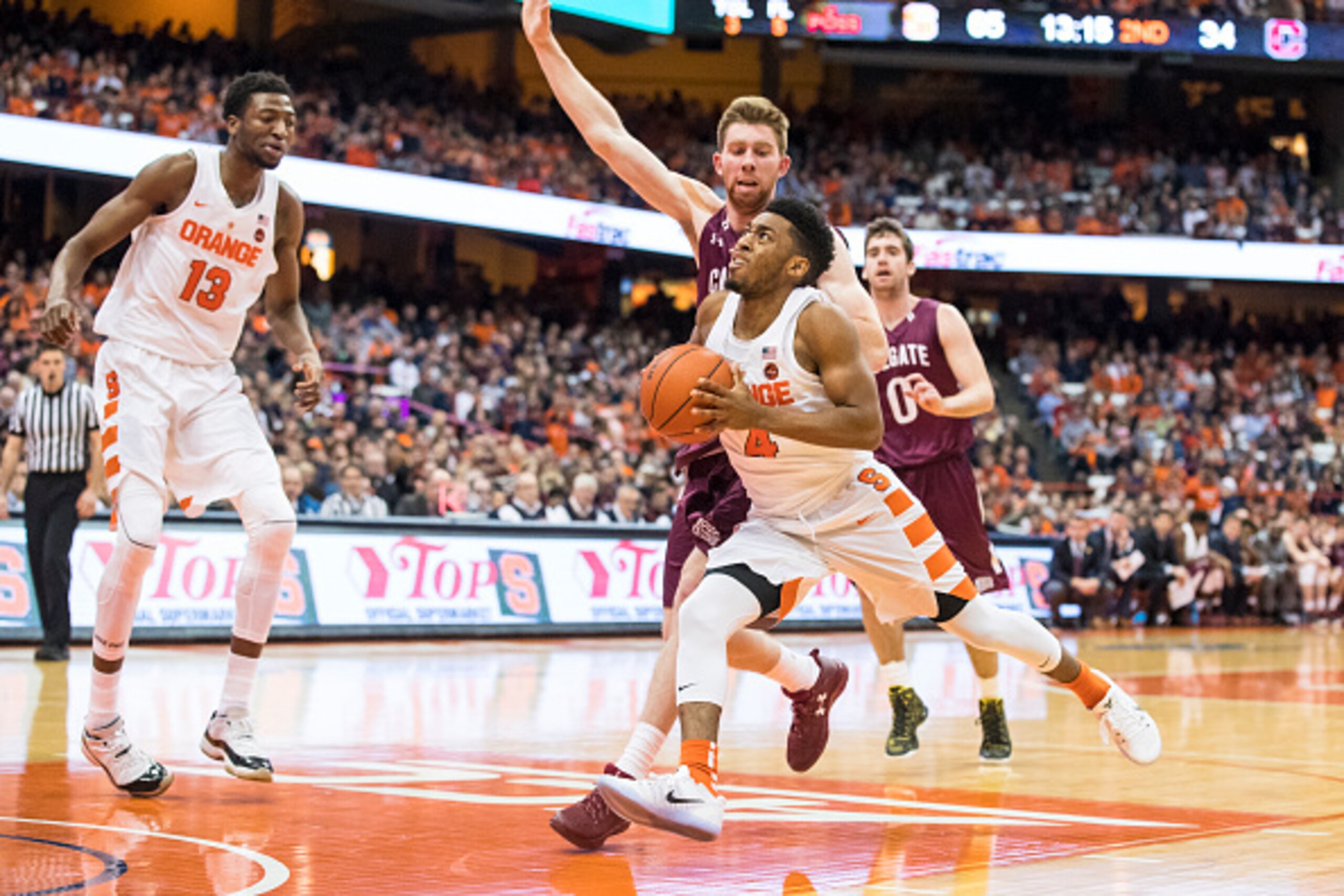
Guard play
Syracuse always has long and lean guys who can play zone defense and rebound the ball, and many end up being solid three-point shooters too. But for the Orange to truly excel they also need effective ball-handlers, something that wasn't present for much of last season before Michael Gbinije flipped a switch and helped pace a surprise Final Four run.
It's an all-new backcourt for Syracuse in 2016-17, and so far it's looked good. Transfers John Gillon and Andrew White, sophomore Frank Howard and freshman Tyus Battle combined for 47 points and 16 assists in the opening 83-55 win over Colgate—not the staunchest of tests, but still one where the results are worth enjoying, as well as hoping they'll continue.
That quartet shot 54.8 percent overall and 40.0 percent from three-point range, numbers that will be hard to maintain. Last year, Syracuse's main guards shot 39.6 percent and combined for only 8.6 assists per game.
17. Saint Mary's
9 of 25
Schedule strength
Saint Mary's won a school-record 29 games last season, with 27 coming during the regular season and West Coast Conference tournament. But when the Gaels fell to arch rival Gonzaga in the WCC final it doomed them to the NIT, where they reached the quarterfinals as a consolation prize.
The Gaels would have been deserving of an at-large NCAA tourney bid had their nonconference schedule been a little better than horrible. According to KenPom.com, it ranked 203rd, and because the WCC only had two other top-100 teams besides Saint Mary's, there wasn't enough of a resume to get it in without an automatic berth.
The same thing applies for the 2016-17 season, where Saturday's trip to Dayton may end up being the Gaels' only non-league game against a team that's a safe bet to make the NCAA field. Their opening win over Nevada will look good if the Wolf Pack contend in the Mountain West, and there are upcoming games against possible NCAA teams Stanford, Western Kentucky and Texas-Arlington, but those aren't sure things.
Last year, Cal and Cal State-Bakersfield were the Gaels' only nonconference foes who made the NCAA tourney, and they lost to Cal.
16. UCLA
10 of 25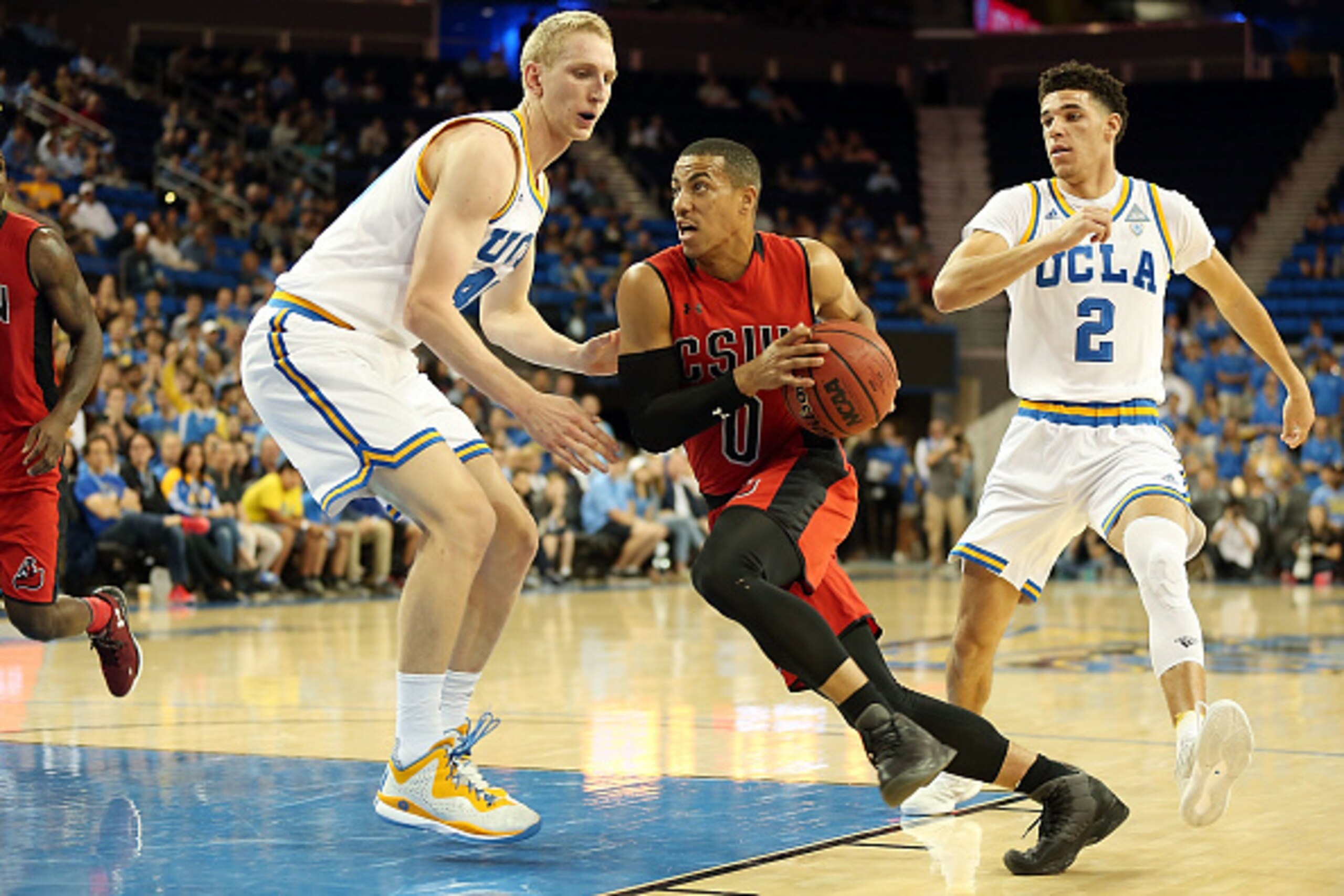
Defense
As was promised, the addition of electric guard Lonzo Ball and versatile forward T.J. Leaf to a UCLA team that returned four double-figure scorers was going to make for some big offensive numbers. Through two games the Bruins are averaging 110.5 points per game, topping the century mark in consecutive games for the first time since November 2013.
UCLA won't be able to keep up those offensive numbers when better competition comes along, but it may end up leading the Pac-12 in scoring this season. And it may need to if the early defensive effort is indicative of how the Bruins will play on that side of the ball.
Their first two opponents shot 46.2 percent and averaged 83.5 points per game. A good portion of that scoring came in garbage time, but Cal State-Northridge led UCLA 42-40 at halftime on Sunday. Future opponents such as Kentucky and the better offensive teams in the conference are going to feast on UCLA's defense, or lack thereof, if that doesn't get addressed.
15. Purdue
11 of 25
Passing
It may have lost, but the way Purdue moved the ball around Monday in its 79-76 home setback to defending national champion Villanova bodes well for the season considering how bad the Boilermakers were in that area a year ago.
Of the 28 field goals Purdue made, 26 were assisted. That came after assisting on 23 of 39 makes in the opening 109-65 win against McNeese State in which five players had at least three dimes. That number was six against Villanova, with Vince Edwards chipping in a game-high eight.
Much of that distribution went to big men Caleb Swanigan and Isaac Haas, who combined for 42 points and are averaging 21.5 and 22.0 points per game, respectively.
Last year, the Boilermakers had a 64.1 percent assist rate but didn't have anyone average more than 2.9 assists per game. Maybe they won't again this season if everyone gets involved, as has been the case so far.
14. Gonzaga
12 of 25
Overaggressive play
Coach Mark Few has another loaded team up in Spokane, beefed up by transfers from California (Jordan Mathews), Missouri (Johnathan Williams) and Washington (Nigel Williams-Goss), as well as a strong freshman class. All of the newcomers are fighting hard to make their presence felt early, with Williams and Williams-Goss having sat out a season, per NCAA transfer rules.
That means the Bulldogs are overflowing with guys looking to impress Few and ensure they get their minutes in a deep rotation, one in which eight players are logging an average of 15 minutes through two games. And if they're not careful they could play themselves out of court time if that eagerness translates into mistakes.
So far the only place that has manifested is in fouls. Gonzaga has committed 37 in two games, compared to 31 for its opponents, and those foes have taken two more free throws.
With the explosiveness that Gonzaga possesses with this roster, the last thing it will want to do is give free points at the line.
13. Michigan State
13 of 25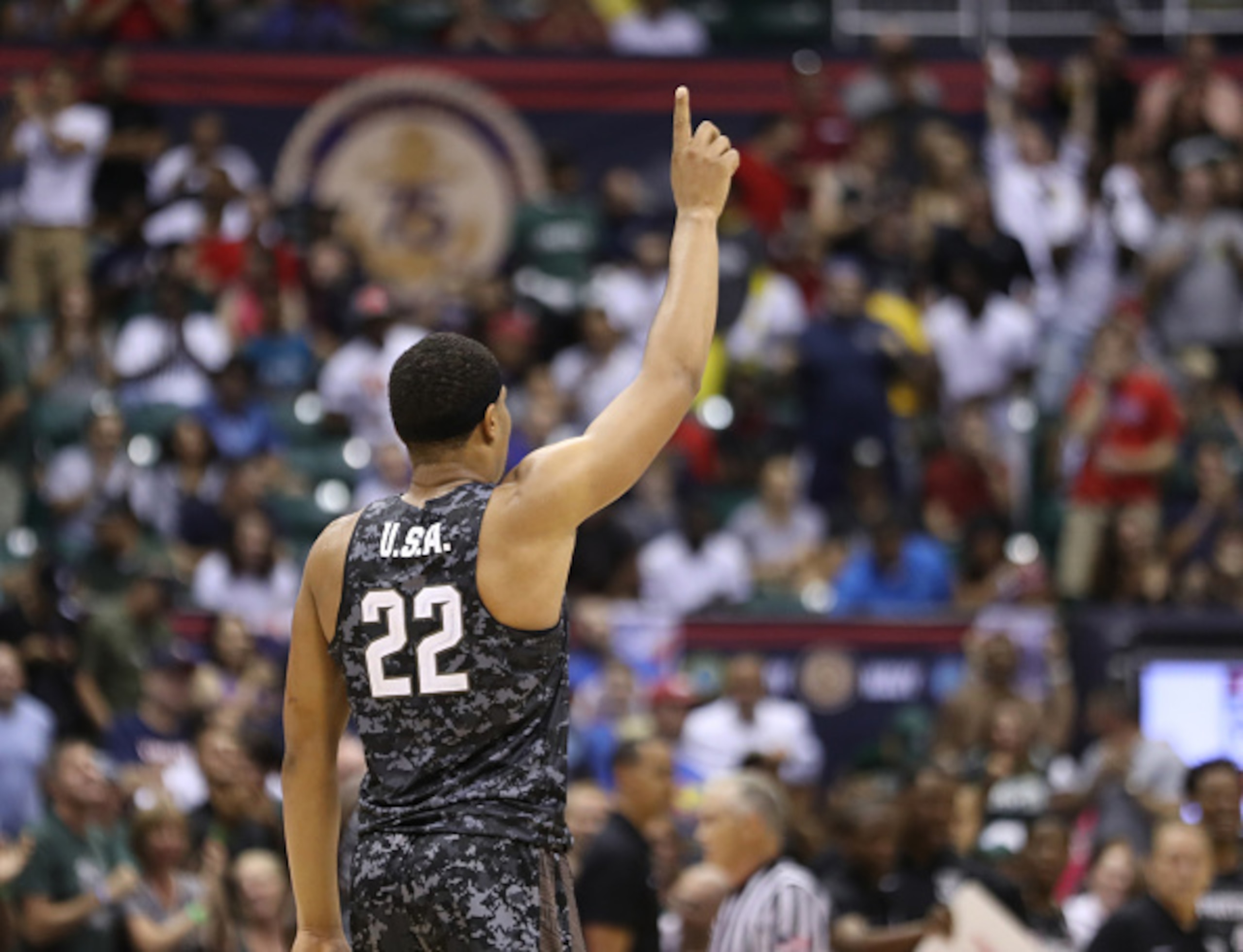
Offensive balance
Six freshmen have averaged double figures under Tom Izzo at Michigan State, most recently Gary Harris in 2012-13 when he scored 12.9 per game. Harris was one of five players to average at least 8.9 per game that season, something the Spartans would love to have from this current group, but early returns indicate that won't be the case.
While Miles Bridges had a tremendous college debut with 21 points and seven rebounds, he was nearly a one-man team for MSU. He took 19 of its 58 shots in that 65-63 loss to Arizona, with no one else scoring more than nine, and that was against a thin Wildcats team.
Against deeper opponents, such as Kentucky on Tuesday in the Champions Classic or later this preseason in the Battle 4 Atlantis and at Duke, having only one guy try to score is going to be problematic. Bridges had four turnovers in addition to all his scoring, part of an 18-turnover effort, and teams are going to overload on him to force others to beat them.
12. Louisville
14 of 25
Free-throw shooting
Louisville's first two games have been walkovers, a 31-point win over Evansville and Monday's 91-58 victory over William & Mary. They won't all be that lopsided, which means the Cardinals better get their foul-shooting situation fixed before it costs them a game.
The Cardinals are 30 of 52 from the line so far, which is 57.7 percent. Big man Mangok Mathiang was 1 of 6 from the line on Monday and is shooting 25 percent.
Louisville wasn't lights out on free throws last season, its 69 percent rate ranking 205th in the country, but four of its top five scorers shot 75 percent or better. That includes Damion Lee and Trey Lewis, who have graduated, leaving behind a group of players who aren't making the most of their free opportunities.
11. Xavier
15 of 25
Backcourt depth
After an opening win over Lehigh that was tight throughout, Xavier was able to have a more standard early-season result by stomping Buffalo 86-53 on Monday. That provided a chance to give what figures to be a heavily worked backcourt some in-game rest in order to keep them from wearing down before the preseason is over.
Xavier's four starting guards—Malcolm Bernard, Trevon Bluiett, J.P Macura and Edmond Sumner—have played 253 of a possible 320 minutes through two games. Backup Quentin Goodin has logged 40 total minutes, while the majority of the rest of the bench action has been given to frontcourt players.
Not having senior guard Myles Davis, who was suspended indefinitely in September in the wake of multiple domestic violence incidents, is already putting stress on a guard group that makes up the bulk of Xavier's lineup.
10. Arizona
16 of 25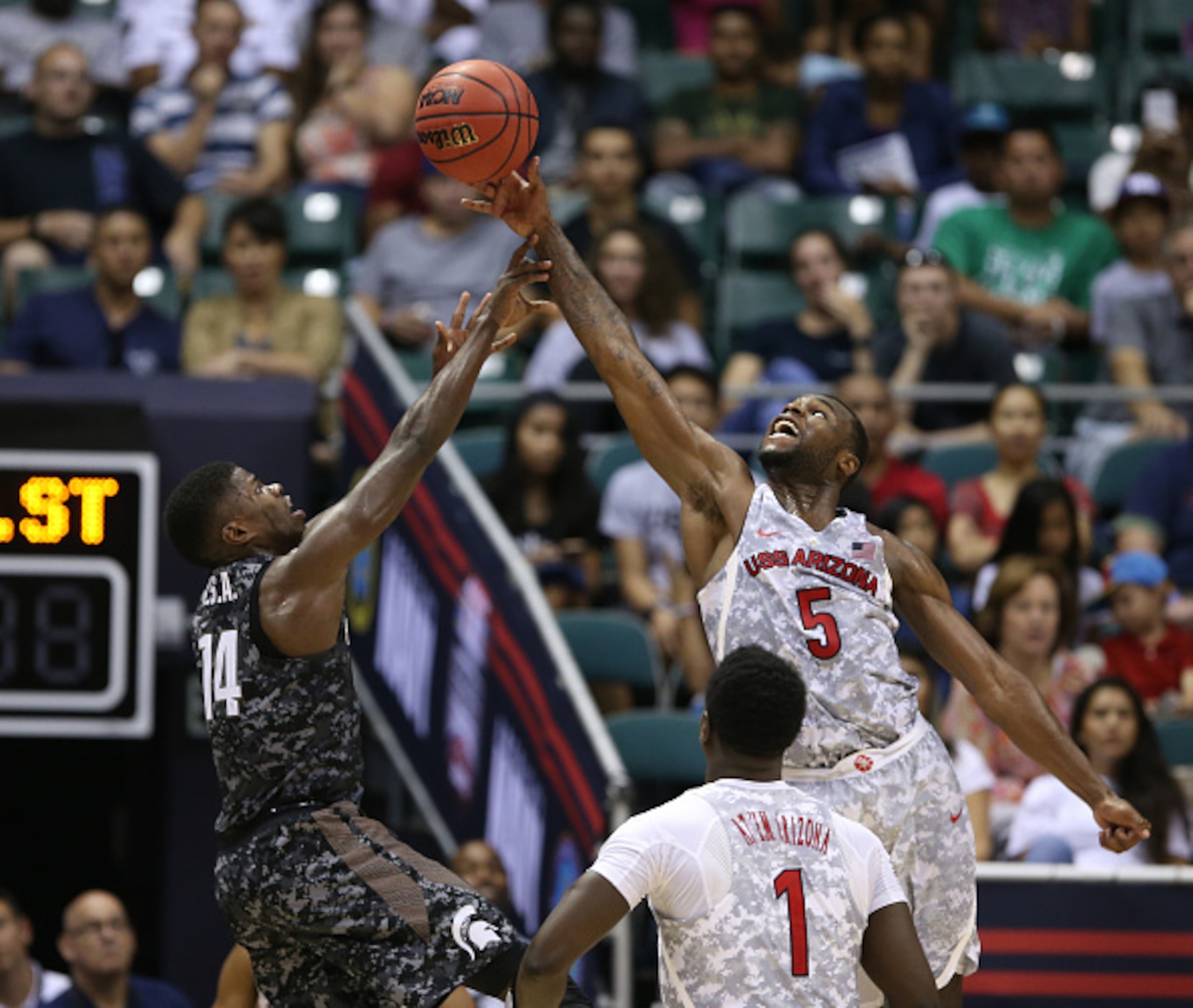
Depth
Arizona signed a top-10 recruiting class for 2016 that featured a trio of five-star prospects who were all going to see plenty of time with the Wildcats graduating numerous impact players. Then guard Terrance Ferguson opted to play overseas, the first of a series of incidents that have turned Arizona from ultradeep to perilously thin.
The preseason saw sophomore center Chance Comanche get suspended for academic issues, though he was reinstated in time to play in Friday's season-opening win over Michigan State in Hawaii. Then wing Ray Smith suffered a third torn ACL in a little more than two years during the first exhibition game, ending his career.
And Arizona has been without sophomore guard Allonzo Trier since mid-October when he was pulled from the Pac-12 media day lineup at the last minute. He's yet to play for the Wildcats and the school has refused to comment on Trier's status.
The Wildcats used eight players against Michigan State, each playing 17 or more minutes. Even with Trier, they'd only have nine available scholarship players, with two suffering knee injuries and another sitting out, per NCAA transfer rules.
9. Wisconsin
17 of 25
Nigel Hayes' shot selection
During Bo Ryan's time running Wisconsin, almost every player was expected to be able to make a three-point shot with confidence. Guys like Nigel Hayes began to take this concept to the extreme during the end of Ryan's tenure, and it appears the 6'8”, 240-pound senior remains determined to be a competent perimeter shooter.
Hayes was 2 of 6 from outside in scoring 14 points during the Badgers' opening 79-47 win over Central Arkansas. Making one-third of his threes is actually a major improvement off last season, when he shot 29.3 percent from outside and took more than 30 percent of his shots from three.
Each season has seen Hayes move further and further from the basket on offense, and it's caused not just his shooting numbers to dip, but also his rebounding. Someone of his size shouldn't be averaging 4.9 rebounds per game for his career, and if he keeps trying to develop that outside shot, it could lead to some bad shooting nights—like in March when he was 2 of 15 in a Big Ten tournament loss to Nebraska.
8. Virginia
18 of 25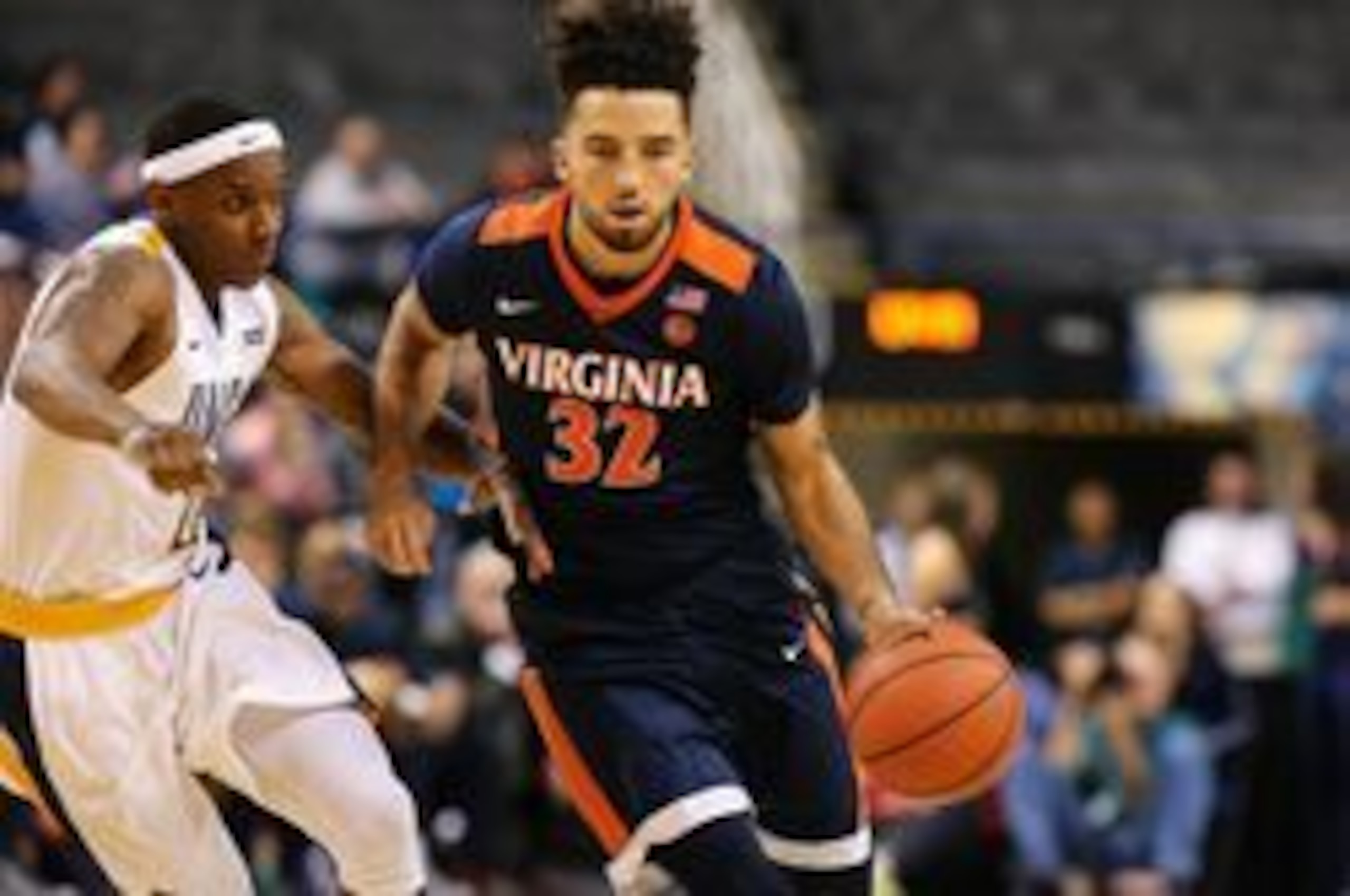
Experience
Virginia had little trouble winning its opener over the weekend, a 76-51 outcome over UNC-Greensboro in which four players scored in double figures. Those were all returners, as guards London Perrantes, Marial Shayok and Darius Thompson and forward Isaiah Wilkins combined for 47 points.
The Cavaliers have to wait a little longer to see what most of their newcomers can do and how they'll fit into the system. Forward Austin Nichols, an impact transfer from Memphis, was suspended for the opener because of a team rules violation, while redshirt freshman Mamadi Diakite had to sit out because of an eligibility issue.
Only two of Virginia's other four freshmen logged minutes in the opener, with guard Kyle Guy getting seven points and three assists in 19 minutes while guard Ty Jerome had two points and three rebounds in nine minutes. Wing De'Andre Hunter and big man Jay Huff are expected to get redshirted.
With Perrantes the only scholarship senior and the lone returning player who averaged more than 4.6 points per game last season, Virginia is going to be leaning heavily on new players and guys who haven't been counted on to score before.
7. Kansas
19 of 25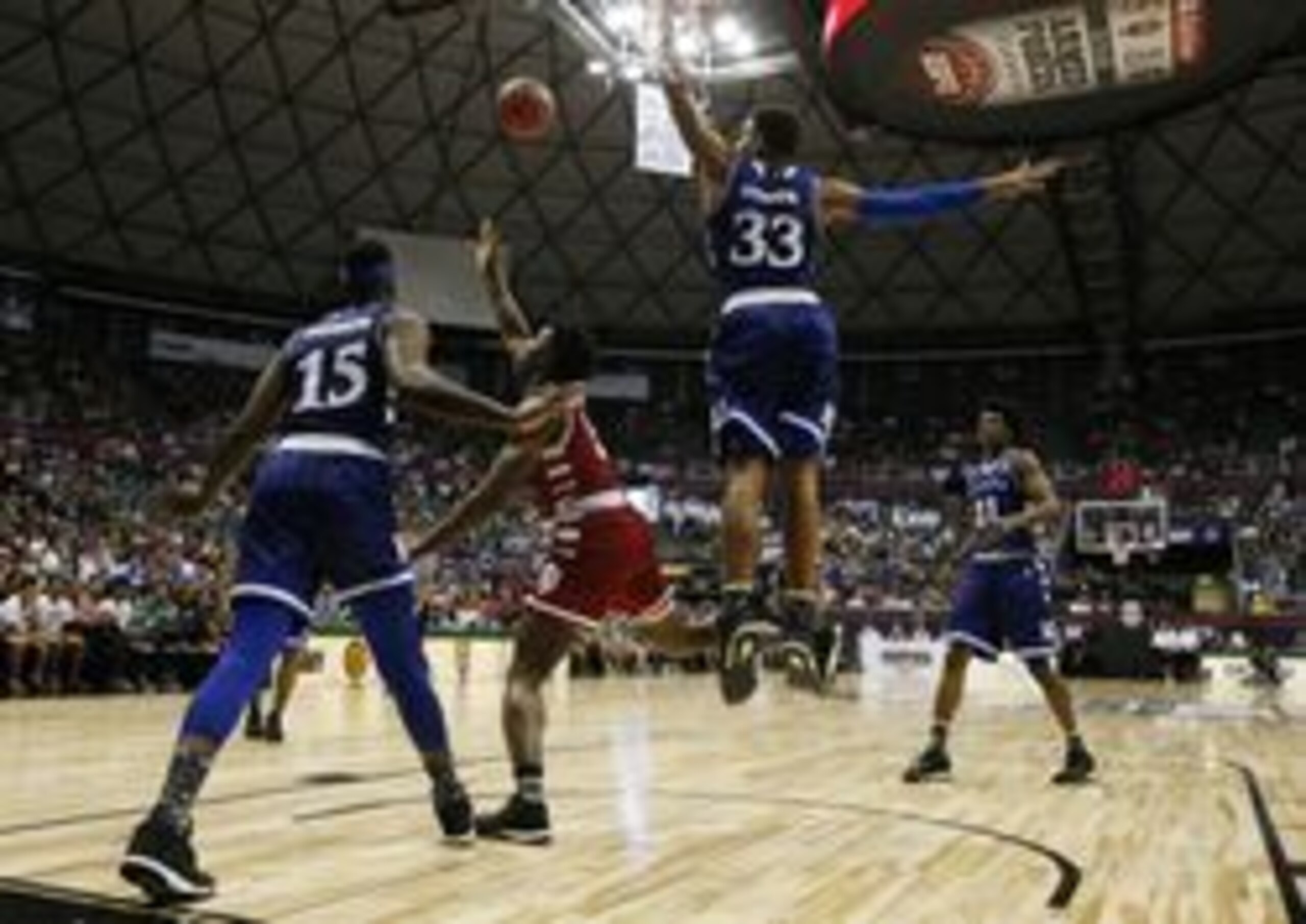
Interior consistency
Once again, it appears that Kansas has four starting positions set in stone, with no reason to make a change barring injury or a sudden drop in performance. Guards Devonte' Graham and Frank Mason, wing Josh Jackson and forward Landen Lucas figure to be in the starting lineup all season.
But then there's that fifth spot, which, like in 2015-16, could end up being a rotating door if head coach Bill Self doesn't see what he likes. Last season, four different guys split that spot, including Lucas, and there's no guarantee sophomore Carlton Bragg will hold on to the slot he earned for the season-opening overtime loss to Indiana.
Bragg had 12 points on 6-of-7 shooting in that loss, but had only four rebounds and played only 18 minutes because of foul trouble, fouling out with 3:45 left in regulation. Every other starter played at least 27 minutes, while Svi Mykhailiuk and LaGerald Vick combined for 60 minutes off the bench.
Those guys are guards, though, while backup frontcourt players Udoka Azubuike and Mitch Lightfoot logged only nine total minutes.
6. Indiana
20 of 25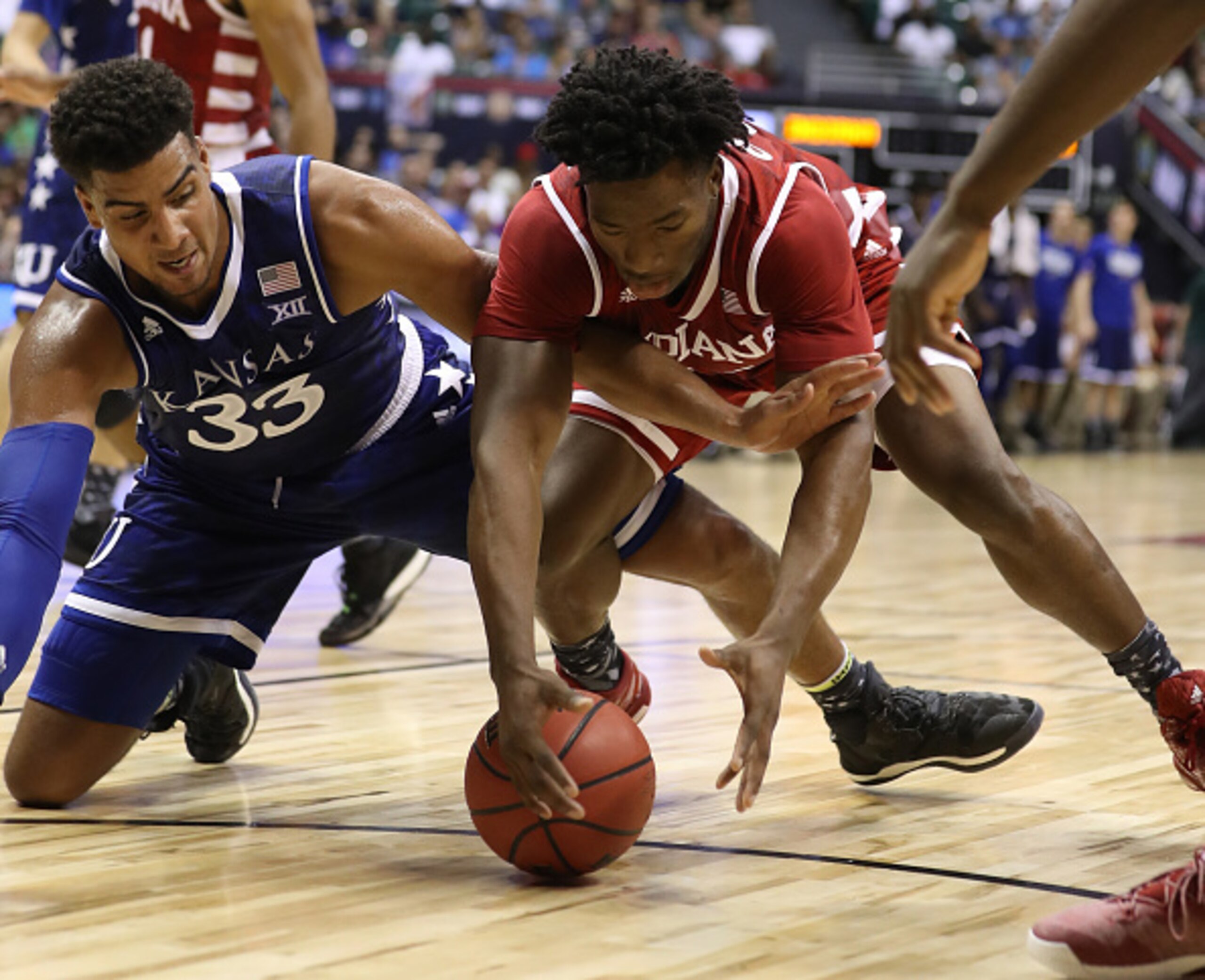
Team defense
Head coach Tom Crean has no shortage of players who can score in bunches, even with leading scorers Yogi Ferrell and Troy Williams moving on. Last season saw Thomas Bryant score at least 15 points nine times, while James Blackmon did it on seven occasions in 13 games before getting hurt.
That duo combined for 45 points in Indiana's 103-99 overtime win over Kansas out in Hawaii, a game that saw Curtis Jones score 15 in just 16 minutes in his college debut and OG Anunoby add 13 on only seven shots.
Scoring isn't going to be an issue for the Hoosiers, but preventing teams from doing so may be. They allowed 69.9 points per game in 2015-16 on 44.4 percent shooting, allowing seven teams to shoot 50.0 percent or better (and going 2-5 in those games).
Five extra minutes inflated the numbers yielded to Kansas, but Indiana gave up 87 points in regulation and ended the game with a woeful 112.5 defensive rating that was far worse than last season's 100.9 rating.
5. North Carolina
21 of 25
Perimeter shooting
North Carolina has a pair of lopsided wins under its belt already, including a true road win at Tulane to get things going. Almost everything has worked well for the Tar Heels, even the long-range game that was a major weakness a year ago.
The Heels have made 16 of 35 three-pointers in two games, making nine at Tulane and seven against Chattanooga. Last season they only hit that many outside shots in 12 of 40 games, while there were nine occasions with three or fewer made threes.
Only 20.3 percent of UNC's points last season came from the long ball, and nearly a third of those threes came from the now-graduated Marcus Paige. Juniors Joel Berry and Justin Jackson have six apiece so far, but can that pace continue?
4. Oregon
22 of 25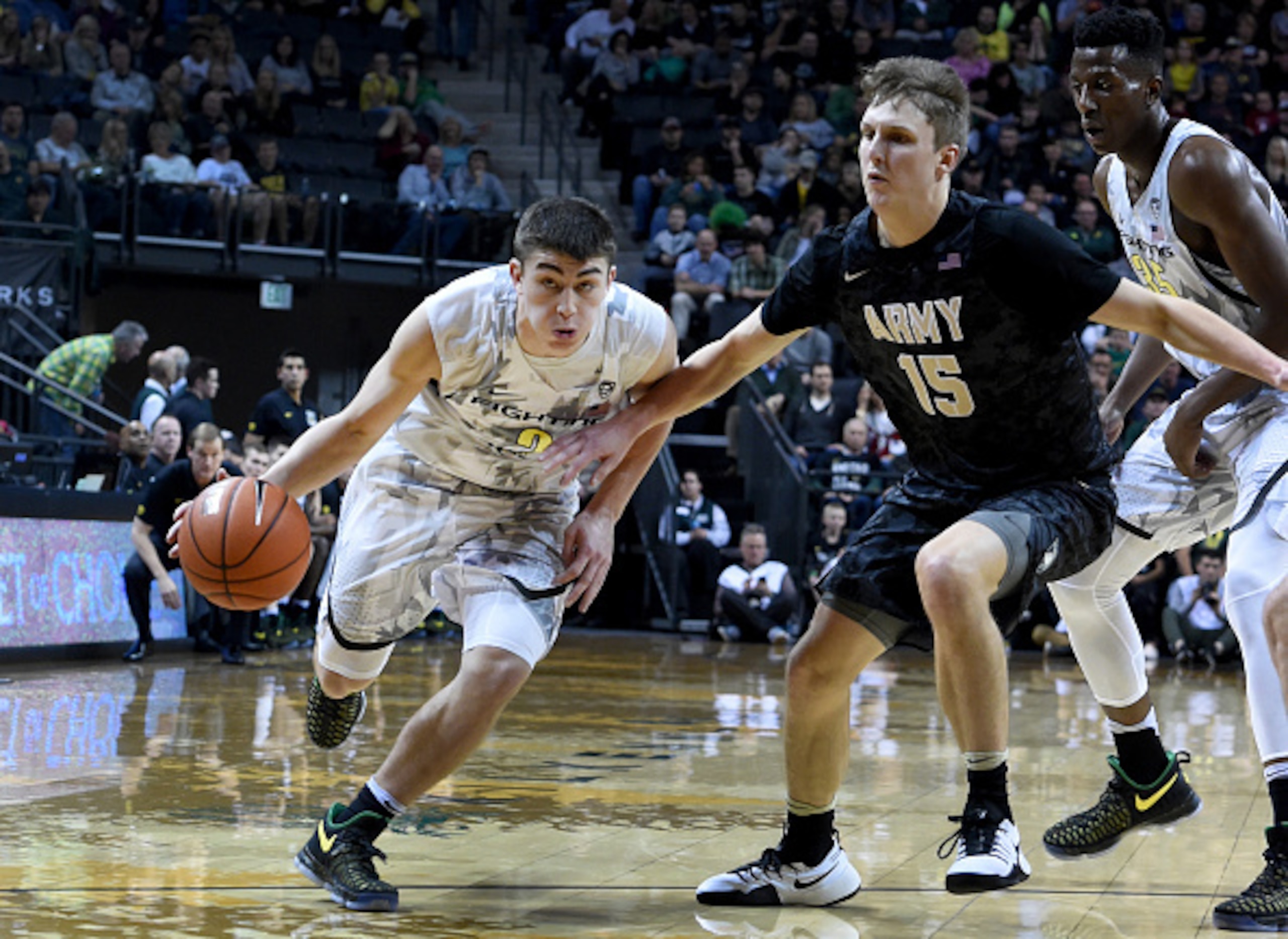
Ball-handling
So much of what worked for Oregon in winning the Pac-12 regular-season and conference tournament titles and reaching the Elite Eight had to do with how it handled the ball and caused opponents to mishandle it. The Ducks averaged 13.6 assists per game and had a solid 1.2-to-1.0 assist-to-turnover ratio while forcing 14 turnovers with 4.6 steals per game.
The Ducks' season-opening 91-77 win over Army was never in doubt, though the margin would have been much better had they not turned it over 17 times.
Not having junior Dillon Brooks handling the ball was noticeable in the opener. Offseason foot surgery has him on the sideline for an undetermined time, keeping Oregon from having his experience out there to settle things. Brooks led the Ducks with 3.1 assists per game last season, and his 13.6 percent turnover rate was good considering he most often had the ball in his hands.
3. Villanova
23 of 25
Interior play
Defending national champion Villanova's 79-76 win Monday at Purdue was a study in what the Wildcats do so well and what they relied on to win the title last season. It also exposed their biggest flaw, one that other teams are sure to try to exploit.
Villanova made seven three-pointers and got 48 points from its guards, including 24 from senior Josh Hart. Three of the Wildcats' four players averaging double figures play in the backcourt, by far their strength.
But 'Nova was out-rebounded 33-30 and gave up nine offensive boards, with Purdue's big men making 14 of 20 two-point shots.
The Wildcats' frontcourt consists of 6'8” Darryl Reynolds and 6'6” Eric Paschall, and that's basically it. Those guys can play bigger than that, but not for long, and that showed with Paschall fouling out in just nine minutes off the bench.
2. Kentucky
24 of 25
Outside shooting
Head coach John Calipari has a reputation for recruiting top-notch guard prospects and quickly turning them into pro-ready players. His latest freshmen backcourt players, De'Aaron Fox and Malik Monk, may end up being among the best he's ever had at Kentucky.
So far, though, neither has shown the ability to consistently do one important thing for guards: shoot from the perimeter.
Fox and Monk are a combined 3-for-17 from three-point range, with Monk shooting 25 percent and Fox missing all five of his tries. The Wildcats are 9-of-34 (26.5 percent) from outside so far, with backup guard Mychal Mulder's 3-of-5 performance in 10 minutes of action keeping that shooting rate from being even worse.
Kentucky is shooting 50.4 percent overall and making 59.6 percent of its two-pointers thanks to those guards' ability to drive as well as a much deeper frontcourt that can score. It will need that outside shot to start falling, though.
1. Duke
25 of 25
Health
Duke heads into Tuesday's showdown with Kansas in the Champions Classic having blown out a pair of overmatched opponents (Marist and Grand Canyon) by a combined 80 points. And that was without three of its star freshmen, held out because of various injuries.
None of that trio—forwards Harry Giles and Jayson Tatum and center Marques Bolden—is likely to play against the Jayhawks, and head coach Mike Krzyzewski has no timetable for when any of them might make their college debut.
The inside combo of senior Amile Jefferson and Chase Jeter is more than enough for when Duke is playing lesser foes, especially with the strength of its backcourt. But the longer the Blue Devils go without having a full frontcourt to work with, the less likely it is they'll be able to stay No. 1.
All statistics courtesy of Sports-Reference.com, unless otherwise noted. All recruiting information courtesy of Scout.com, unless otherwise noted.
Follow Brian J. Pedersen on Twitter at @realBJP.
.jpg?w=2560 "Vikings Buccaneers Football")
.jpg?w=2560 "EVERY Fantasy Football Update")
_0.png?w=2560 "Week 5 Winners & Losers 📊")

