
Hacking the Draft: NFL Teams That Have Draft Day All Figured Out
In many cases, the annual NFL draft is a bit of a crapshoot. Teams pick their future players based on game film involving college competition, a few workouts and some individual interviews and analysis.
Some teams, however, seem to have boiled the draft down to a science. They've at least figured out a formula that consistently yields top-quality talent at various stages of the draft. There are going to be some misses in there, but the teams that regularly draft well have figured out how to do so on a level far above their competition.
You might even say they've figured out how to "hack" the draft.
We're not saying these teams are cheating the system, but they've each figured out a quick path to draft-day success.
We're going to examine these "draft hackers" and identify what allows each to navigate the selection process so well.
Cincinnati Bengals
1 of 6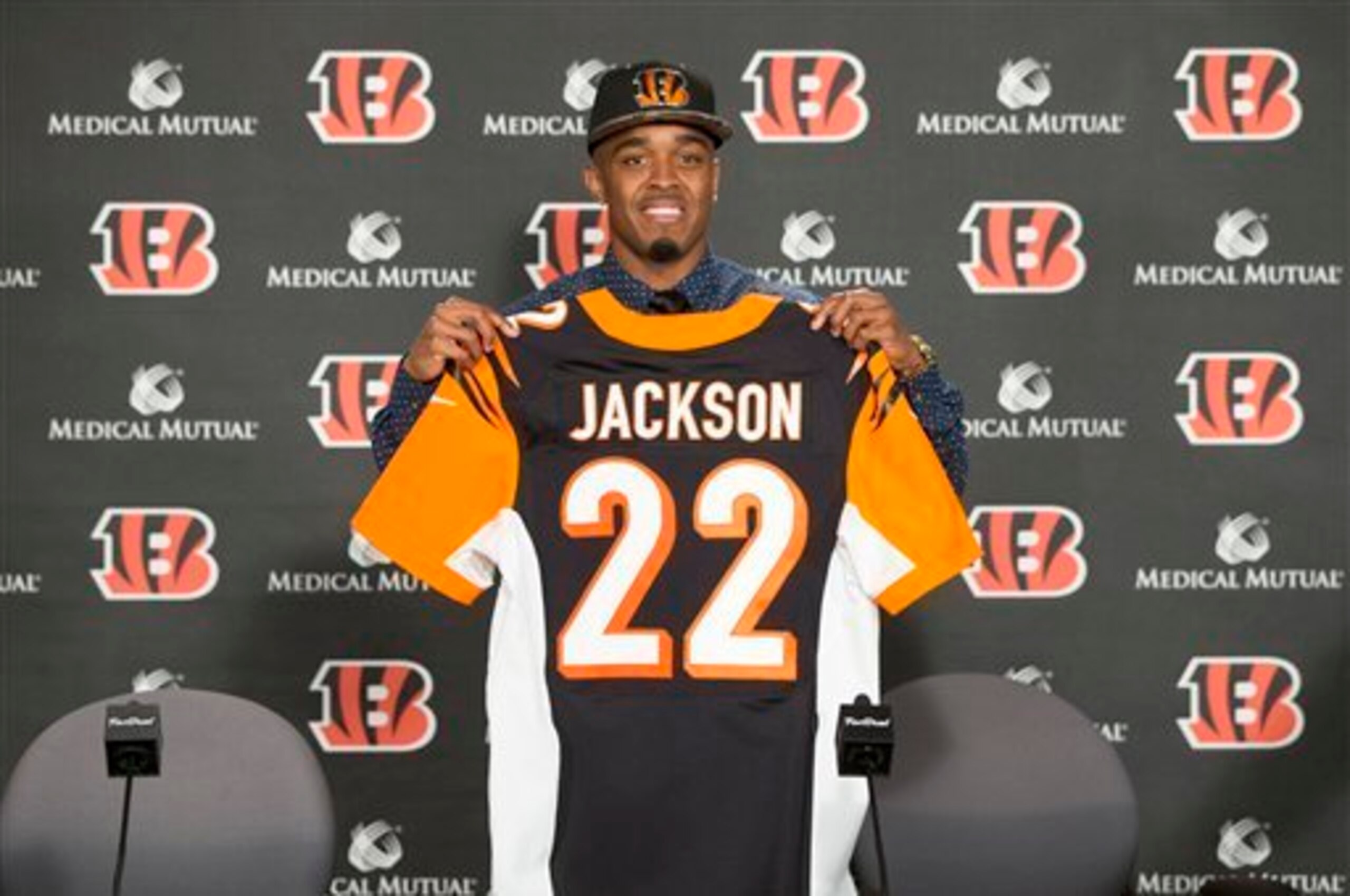
In recent years, the Cincinnati Bengals have taken an interesting approach to the NFL draft, one that has allowed the team to minimize potential blunders.
Since the Bengals have been consistently competitive—they've made the postseason five straight times—the team tends to draft the best available players with the future in mind. Cincinnati doesn't rush draft picks into action and, therefore, can handle when a rookie struggles to adapt or suffers an injury.
Just consider that cornerback and former (2012) first-round pick Dre Kirkpatrick didn't earn a full-time starting role until his fourth season in the league.
This strategy allows Cincinnati to keep the roster stocked with fresh talent without relying on young players. When 2016 first-round pick William Jackson III suffered a torn pectoral muscle back in August, it wasn't that big of a deal for Cincinnati because the rookie might not have been a regular contributor anyway.
"Rookie seasons are often viewed as 'redshirt' type years for cornerbacks anyway," Coley Harvey of ESPN.com explained, "And that's especially the case in Cincinnati."
This strategy isn't utilized each and every year, of course. Guys like wide receiver A.J. Green and quarterback Andy Dalton were immediate starters as rookies. This strategy also doesn't mean that the Bengals don't get stars out of their draft picks.
Cincinnati has selected players like Green, Dalton, tight end Tyler Eifert, defensive end Carlos Dunlap, defensive tackle Geno Atkins and linebacker Vontaze Burfict (undrafted) within the last seven years, and all have since been named to Pro Bowls.
Green Bay Packers
2 of 6
The Green Bay Packers are another team that has been consistently competitive in recent years. In fact, the Packers have been to the playoffs in seven straight seasons dating back to 2009.
Given the fact that the Packers have built almost exclusively through the draft since 2009, it's difficult to suggest that Green Bay hasn't figured out what it is doing in the selection process.
Pass-rushing star Clay Matthews was Green Bay's first-round pick in 2009, and the team has added starters like tackle Bryan Bulaga, safety Ha Ha Clinton-Dix, receiver Davante Adams, running back Eddie Lacy, running back and receiver Ty Montgomery and cornerback Damarious Randall in the years since.
The Packers rarely strengthen their team significantly through free agency—their big get this offseason was tight end Jared Cook—which is a testament to smart and consistent drafting. Instead of spending big on external players, Packers general manager Ted Thompson chooses to re-sign the guys he drafted.
"In short, the Packers not only draft well, they simply don't lose ascending core players on second contracts," Tom Pelissero of USA Today explained in June 2015. "The more they win, the harder it is for those players to believe they're better off elsewhere—even for more money—and the cycle continues."
Green Bay's formula only works, of course, if the team is consistently nailing its draft picks.
Dallas Cowboys
3 of 6
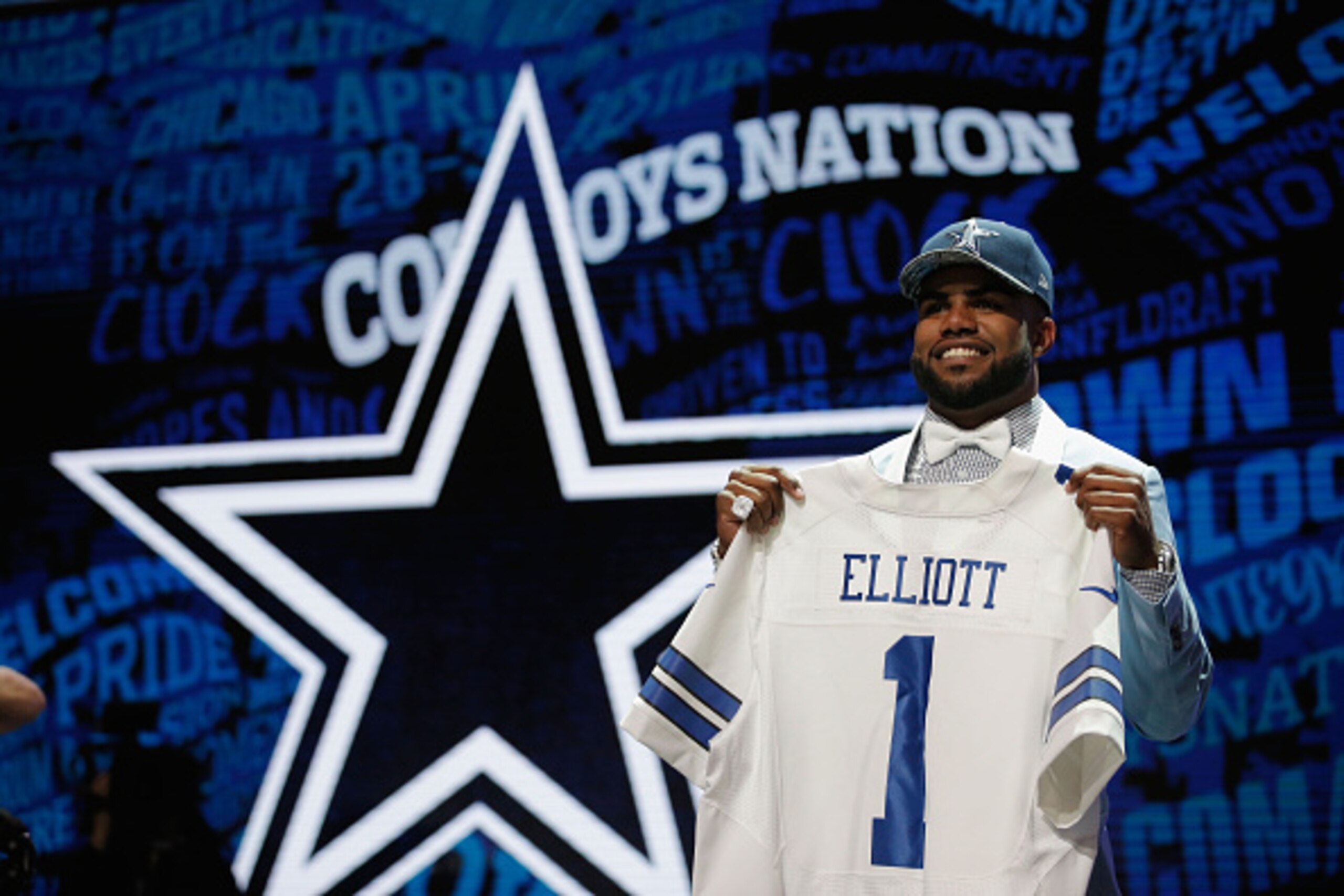
You might assume that the Dallas Cowboys are included on our list because of the success of 2016 rookies Dak Prescott and Ezekiel Elliott. Well, in a sense, that is exactly why the Cowboys are on our list—though not necessarily because of Elliott and Prescott themselves.
The main reason Prescott and Elliott have been able to have success this season is the presence of an offensive line that is rated 10th in pass protection and third in run blocking by Pro Football Focus. This line exists because of the strategy the Cowboys have taken in recent drafts.
Between 2011 and 2014, the Cowboys spent three first-round picks on offensive linemen. Those picks yielded tackles Tyron Smith and Zack Martin, as well as center Travis Frederick. All three of those linemen have been to the Pro Bowl since being selected.
Dallas snagged another Pro Bowler back in 2010 in wide receiver Dez Bryant.
Bryant is an elite deep threat and an obvious boon to Prescott and Elliott when he is healthy. Thanks to past drafts, this year's rookies are able to start on an offense that features one of the best offensive lines in all of football and a guy who can stretch the field.
The end result is a season in which both Prescott (passer rating of 104.2) and Elliott (891 yards rushing, seven touchdowns) are viable candidates for NFL Offensive Rookie of the Year.
.jpg?w=2560 "Saints Lions Football")
.jpg?w=2560 "Vikings Buccaneers Football")
.jpg?w=2560)
Minnesota Vikings
4 of 6
While the Minnesota Vikings have slumped a bit in recent weeks, the only reason the team is good enough to even have a slump is because of sound drafting.
Minnesota's hack for the draft in recent years has been to add draft picks in order to maximize draft capital in years of deep talent. The team has then focused on adding players at core positions.
In 2013, for example, the Vikings added defensive tackle Sharrif Floyd, cornerback Xavier Rhodes and receiver Cordarrelle Patterson in the first round. The year before, Minnesota spent first-round picks on tackle Matt Kalil and safety Harrison Smith.
In 2014, the Vikings added linebacker Anthony Barr and quarterback Teddy Bridgewater in the first round.
Smith, Bridgewater, Kalil, Barr and Patterson have all been named to the Pro Bowl. The Vikings have also drafted budding stars like receiver Stefon Diggs and cornerback Trae Waynes over the past few years.
Even if Minnesota cannot make a serious run at a championship this season, there are plenty of young core pieces in place to help forge such a run in the future. These core pieces are in Minnesota almost exclusively though the NFL draft.
Oakland Raiders
5 of 6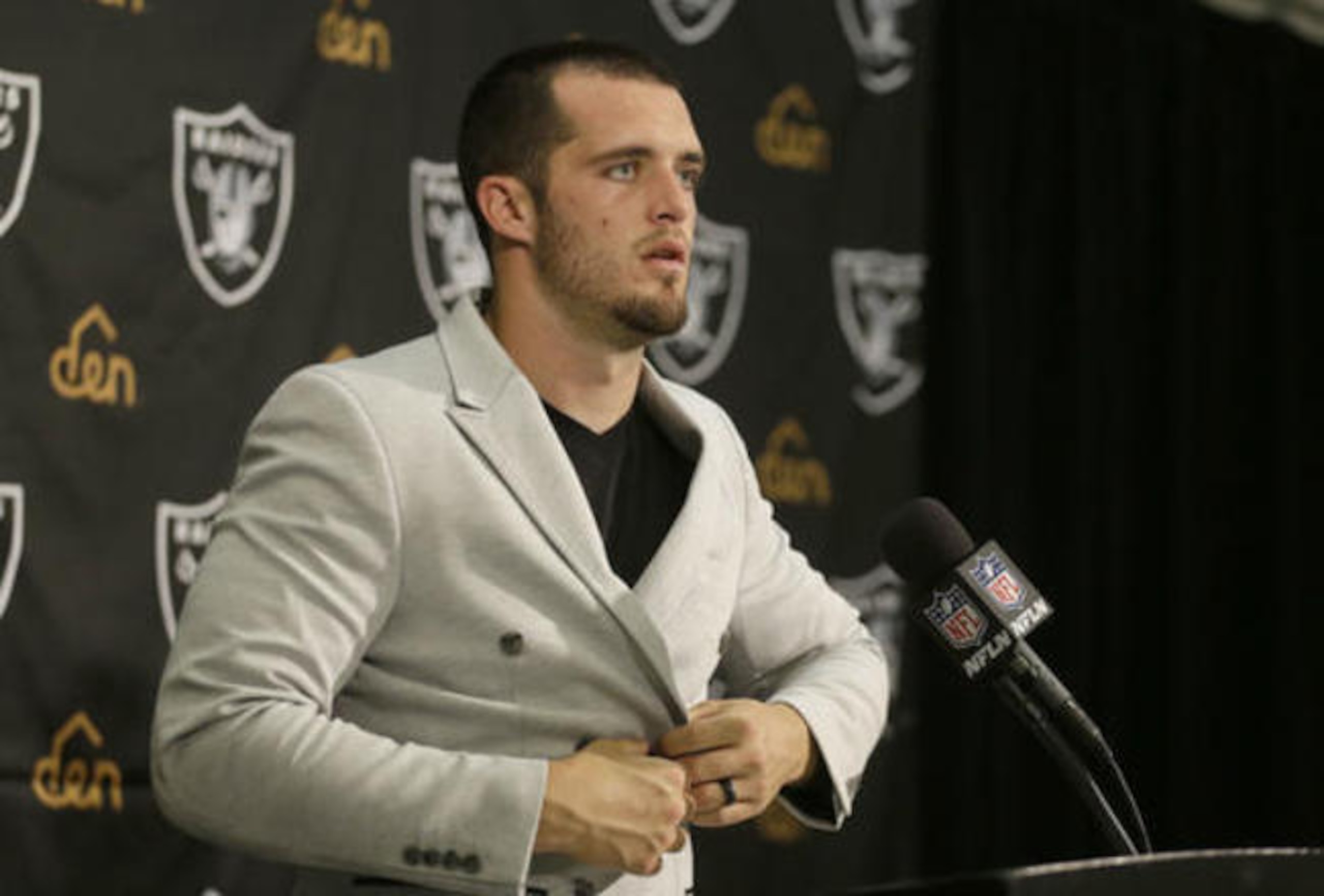
You may have already noticed, but the Oakland Raiders are back. The long-struggling franchise sits on a 7-2 record and atop the AFC West standings. How did the Raiders get here? Smart drafting.
Since Reggie McKenzie took over as general manager in 2012, the Raiders have focused on selecting young core players the team can build upon. There have been some disappointments (see: cornerback D.J. Hayden), but this philosophy has worked over the past couple of years.
In 2014, the Raiders took the best defensive player available in Round 1 in linebacker Khalil Mack. The team then turned around and selected quarterback Derek Carr in the second round of that draft. Last offseason, the Raiders added wide receiver Amari Cooper in the first round.
Back in 2013, the Raiders added running back Latavius Murray in the sixth round.
What these players all have in common is that they form the foundation this Oakland team is built upon—plus they've all been named to the Pro Bowl.
Carr is developing into a true franchise quarterback—he's rated fourth overall among quarterbacks by Pro Football Focus—and Mack might be the best pass-rusher in the NFL. He's rated first among edge-rushers by Pro Football Focus.
“I see a guy who...the game has slowed for him,” ESPN's Paul Gutierrez recently said of Carr, per Mike Triplett of ESPN.com
Even rookie safety Karl Joseph looks like a future Pro Bowler. With these core pieces in place, the Raiders have been able to supplement the roster through free agency and build a young contender.
New England Patriots
6 of 6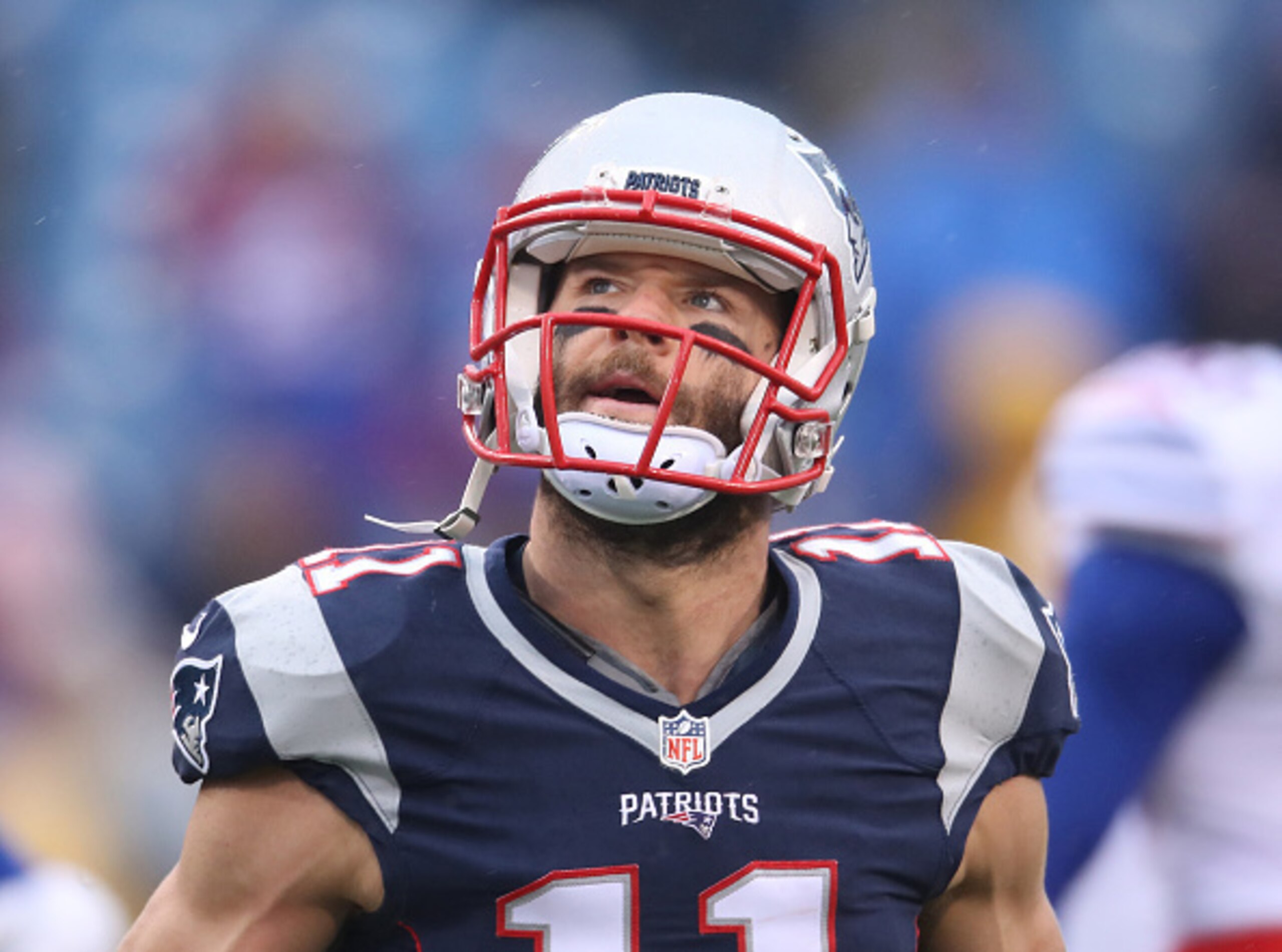
No, this isn't where we talk about how the New England Patriots are geniuses for drafting Tom Brady in the sixth round. However, Brady's subsequent career may have influenced where the Patriots chose to find talent.
The Patriots are an unconventional team when it comes to drafting. They like to wheel and deal, and they like to add players with upside, regardless of position. This strategy has led to the drafting of stars like tight end Rob Gronkowski (second-round pick) and the addition of cornerback Malcolm Butler (undrafted).
In short, the Patriots' draft hack is to not care about draft status or position.
Consider the fact that standout receiver Julian Edelman wasn't even a wide receiver before he got to New England; he was a quarterback from Kent State.
"New England is a unique place," former Patriots scout Jon Robinson explained, per Doug Kyed of NESN.com. "It forces you to learn football and it forces you to learn more than just, 'This player can do this.' It's, 'He can do this, and this is how he is going to fit into our football team.'"
Because the Patriots focus on potential rather than position, they have ended up with some unique players with remarkable skill sets. Edelman is a prime example, as is Gronkowski, who blocks like a tackle and runs like a wideout on the field.
This strategy, along with head coach Bill Belichick's ability to game-plan on a week-to-week basis, is why the Patriots are consistently among the top teams in the NFL.
.jpg?w=2560 "Commanders Eagles Football")
.jpg?w=2560 "Colts Commanders Football")
_0.png?w=2560 "Week 5 Winners & Losers 📊")
