Ranking the Top Transfers in the 2016-17 College Basketball Season
Some have already declared the 2016-17 men's college basketball season the Year of the Freshman, but studs in new homes like Virginia's Austin Nichols and Syracuse's Andrew White III are hoping to instead make it the Year of the Transfer.
While people continue to insist that the vast majority of transfers are going from No Name State to John Doe University, the annual lists of impact transfers just seem to get longer and longer. Jon Rothstein recently listed 20 impact transfers and 20 more under-the-radar transfers for FanRag Sports, and there were a handful of noteworthy guys who didn't even make the cut.
Such is the state of affairs in college hoops when seven of the preseason Top 25 teams (Xavier, Virginia, Gonzaga, Connecticut, Syracuse, Creighton and Iowa State) figure to have at least one new transfer in their starting five, while seven others (Villanova, Oregon, Indiana, Louisville, Purdue, Rhode Island and Maryland) have at least one incoming transfer who should be part of the primary seven-man rotation.
At this point, if you're not one of the six or seven teams that can count on at least one 5-star freshman per year, transfers are your best hope of remaining within striking distance of the Dukes and Kentuckys (Kentuckies?) of the world.
Projected team and individual success were equally important on this list. Players are loosely ranked in ascending order of likelihood to become the star player on a Final Four roster.
Honorable Mentions
1 of 11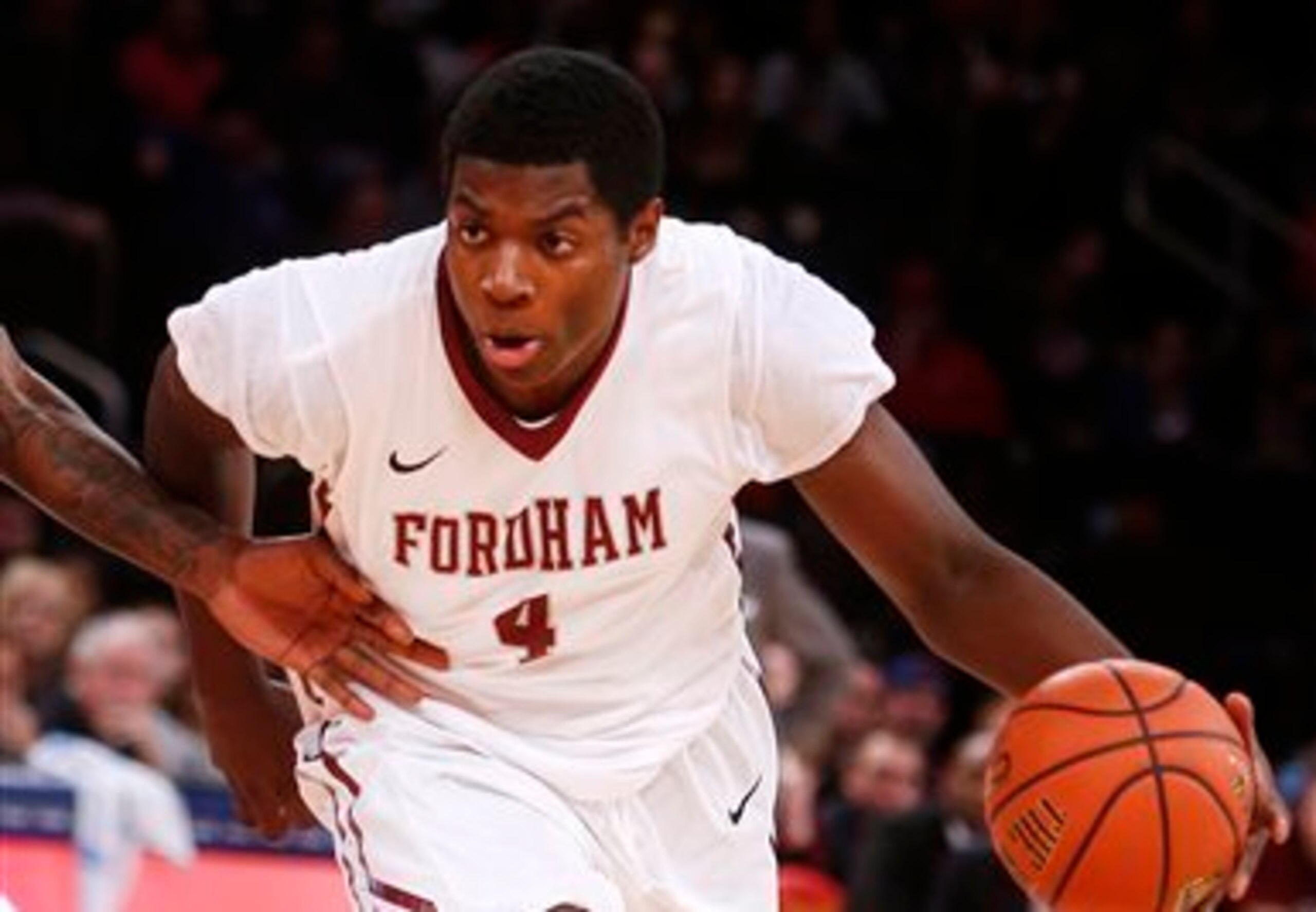
Eric Paschall, Villanova
Once a relatively thin wing-forward who jacked up a ton of shots as a freshman on a bad Fordham team, Paschall has bulked up to 250 pounds and should be a key frontcourt reserve for a Villanova team looking to repeat as national champions. Depending on how Darryl Reynolds does, Paschall might even be the starting 5 for the Wildcats before long.
Josh Newkirk, Indiana
Much has been made of Indiana's quest for a reliable point guard for this season, but Newkirk averaged better than five assists per 40 minutes two years ago as a secondary ball-handler with Pittsburgh. He also shot 43.4 percent from three-point range as a freshman, so he should fit in nicely with this Hoosier offense.
Merrill Holden, Iowa State
Tough to say if Holden is one of the best transfers, but he's certainly one of the most important. With Iowa State losing all three of its frontcourt weapons from last season, this Louisiana Tech transfer becomes one of the only viable sources for Cyclone rebounds.
Josh Cunningham, Dayton
Similar to Holden, Cunningham is just about all Dayton has in the frontcourt. Steve McElvene tragically passed away, and freshman Kostas Antetokounmpo was ruled ineligible, leaving the sophomore transfer from Bradley as the most experienced player on the Flyers roster who is taller than 6'6". Cunningham averaged 7.9 points and 7.5 rebounds per game with the Braves.
Manu Lecomte, Baylor
Most seem to have forgotten about this one, but the former Miami guard should immediately become the starting point guard for the Bears after Lester Medford graduated.
The Clemson Tigers
Jaron Blossomgame is the star for Clemson, but expectations for the Tigers are about as high as they have ever been because of their incoming transfers. Shelton Mitchell (Vanderbilt) and Marcquise Reed (Robert Morris) will make an immediate impact in the backcourt. They'll need to wait until the second semester for Elijah Thomas (Texas A&M) to become available, but he'll also be crucial in their quest for an NCAA tournament bid.
10. (Tie) Shaqquan Aaron, USC, and Semi Ojeleye, SMU
2 of 11
Last Time We Saw Him (Shaqquan Aaron): 1.3 PPG with Louisville
Last Time We Saw Him (Semi Ojeleye): 3.0 PPG, 2.3 RPG with Duke
As far as expectations coming out of high school are concerned, these two guys are the cream of this year's crop. According to Scout, Semi Ojeleye (No. 26 in 2013) and Shaqquan Aaron (No. 27 in 2014) are the only newly eligible to play transfers who ranked in the top 30 of their respective recruiting classes.
In what is becoming far too common a trend in the sport, Aaron's career at Louisville was derailed by the NCAA clearinghouse before it ever had a chance to begin.
The Cardinals didn't even find out until early December whether Aaron would be eligible to play at all while the NCAA investigated tuition payments from his freshman year of high school, according to Jeff Greer of the Courier-Journal. By the time he was ruled eligible, Louisville was already 10-0 without him and was finally getting good enough play out of Wayne Blackshear that it barely found any use for Aaron.
Ojeleye didn't have any eligibility problems at Duke, but he had just as much trouble getting onto the court. The unexpected return of Andre Dawkins and the great play of Rodney Hood and Rasheed Sulaimon made it almost impossible for the inexperienced small forward to see any action. He lasted six more games into a sophomore season before seeking greener pastures.
Thus, despite high expectations on the recruiting trail, neither one has had much of a chance to show us anything.
Both USC and SMU open the season in the vast unknown that we call the "Bubble Zone." Eighteen to 20 wins feel about right for both teams, but the standard deviations on their bell curves of expectations are quite large. They could be big-time sleeper teams if Aaron and Ojeleye tap into their potential in their new homes.
9. Canyon Barry, Florida
3 of 11
Last Time We Saw Him: 19.7 PPG with College of Charleston
Few teams in the country need a pure scoring guard quite like Florida does. Losing Michael Frazier, Eli Carter and Dorian Finney-Smith left the Gators with little more than KeVaughn Allen and a couple of poor-shooting point guards (Kasey Hill and Chris Chiozza).
Canyon Barry was exactly what the doctor ordered.
The son of former NBA great Rick Barry isn't the most efficient scorer in the country—he needed 16.1 field-goal attempts per game to score those 19.7 points—but he's a guy whom opposing defenses constantly need to track.
That's a huge change of pace from last year, when Florida was just an amorphous blob of good-not-great scorers. None of the regulars averaged better than 18.5 points or 14.1 shots per 40 minutes nor shot better than 37.3 percent from three-point range. There simply wasn't a go-to player.
Don't expect Barry to put up 20 points per game in the SEC just because he could do it against College of Charleston's schedule, but he's going to have the occasional scoring outburst while quickly becoming a veteran leader for a relatively young team. If Allen and Devin Robinson finally live up to the hype they got as recruits, though, Barry could be out of a job in a hurry.
.jpg?w=2560 "Titans Giants Football")
.jpg?w=2560 "Saints Lions Football")
8. Jordan Mathews, Gonzaga
4 of 11
Last Time We Saw Him: 13.5 PPG, 41.6% 3PT with California
This was perhaps the most curious transfer of the 2016 offseason.
Maybe Jordan Mathews didn't take kindly to becoming California's sixth man over the latter half of last season, but he had started 63 games in his three seasons with the Golden Bears and was in a great position to become the leading scorer of this year's team. Instead, he packed his bags for Spokane, Washington, to join a loaded Gonzaga roster.
As a result, this should be the best roster head coach Mark Few has ever assembled.
Mathews gives the Bulldogs some much-needed three-point prowess. Kyle Wiltjer was their perimeter star for the past two seasons, but he's gone now. So are Kyle Dranginis and Eric McClellan, who ranked third and fourth on the team in made three-pointers last year. Nigel Williams-Goss isn't much of a shooter, either, leaving Josh Perkins as Gonzaga's only option beyond the arc prior to Mathews joining the team.
Mathews has made 201 triples in his career and attempted more than 200 last year alone, so he's well-equipped to fill that void.
7. Terry Larrier, Connecticut
5 of 11
Last Time We Saw Him: 6.6 PPG, 3.0 RPG with VCU
Terry Larrier was supposed to be the beginning of something special for VCU. After several years of excelling with relatively unknown recruits, Larrier was Shaka Smart's first top-50 guy, Patient Zero in what was about to become an annual tradition of the Rams signing high-major talent and replacing Gonzaga as the mid-major team to beat.
Instead, he played 18.5 minutes per game as a freshman, shot poorly from the field (34.3% FG, 26.2% 3PT) and transferred to Connecticut less than a month after Smart left for Texas.
But he did score in double figures 11 times, including three of VCU's four Atlantic 10 tournament games, and he became more of an asset on the glass late in the season. Had he remained with the Rams, he would have been pegged by everyone as a big breakout candidate for the 2015-16 season.
Instead, he may fit that description in 2016-17.
Between Shonn Miller graduating and Daniel Hamilton declaring for the NBA draft, Connecticut is in dire need of a new wing-forward. Maybe Larrier doesn't start for the Huskies, but he's at least going to be a key reserve if he can build off his finish with the Rams.
6. Marcus Foster, Creighton
6 of 11
Last Time We Saw Him: 12.5 PPG, 1.9 APG with Kansas State
In case you forgot about this guy, Marcus Foster's career arc with Kansas State wasn't that dissimilar from what Melo Trimble went through the past two years with Maryland—minus the part where Trimble is returning for a third year and is among the national Player of the Year candidates.
Playing for a team that wasn't expected to do much, Foster was a superstar as a freshman. He shot nearly 40 percent from three-point range, averaged 15.5 points per game and tallied enough rebounds and assists to legitimately challenge Andrew Wiggins and Joel Embiid for Big 12 Freshman of the Year.
But his shooting stroke wasn't quite the same the following year, and his sophomore slump was what everyone pointed to as the reason the team failed to meet expectations.
Following what can only be described as a dysfunctional relationship with head coach Bruce Weber, Foster transferred to Creighton and gets a new start with a Bluejays team that some may be surprised to find in the preseason Top 25 polls.
Along with former transfers Mo Watson Jr. (Boston University) and Cole Huff (Nevada), Foster should be one of the team's leading scorers. His presence as a secondary ball-handler will open up a number of new avenues for this offense to explore. The dual-combo guard backcourt is all the rage these days, and Creighton now has one heck of a good one.
5. Rodney Pryor, Georgetown
7 of 11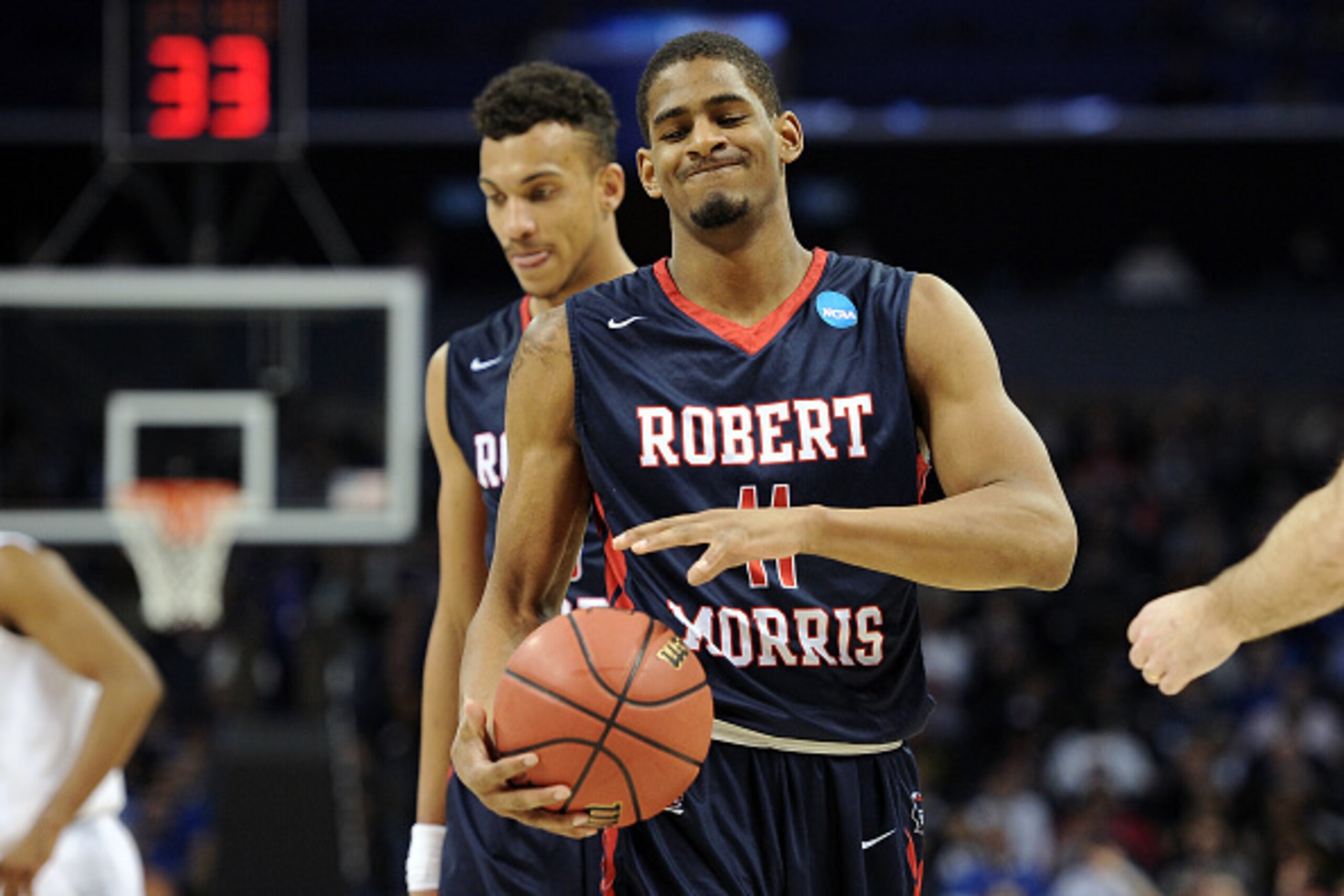
Last Time We Saw Him: 18.0 PPG, 8.0 RPG, 1.7 APG, 1.4 SPG with Robert Morris
It's surprising how few people are talking about Rodney Pryor as one of the most important and capable transfers in the country.
Yes, Robert Morris had a terrible 2015-16 season in spite of Pryor's numbers, and yes, he has spent most of his career facing considerably subpar competition. However, he has scored at least 20 points in a game 23 times in his career, including a 23-point performance against Duke in the 2016 NCAA tournament.
Pryor scored at least 10 points in all but one game last season and finished the year with eight double-doubles. Not too shabby for a 6'5" guard who shoots a lot of threes.
Meanwhile, Georgetown just lost that type of hard-nosed guard. D'Vauntes Smith-Rivera averaged at least 16 points per game in each of the last three seasons, blossoming into more of a lead guard out of necessity after Markel Starks left. His absence leaves this backcourt with a gaping hole in points and leadership.
The Hoyas do still have L.J. Peak and Tre Campbell—and added a dynamite JUCO transfer in Jonathan Mulmore—but Pryor should be one of their go-to guys this year. At any rate, he didn't leave Bobby Mo with the intention of playing 15 minutes per game as a low-volume scorer.
4. RaShid Gaston, Xavier
8 of 11
Last Time We Saw Him: 15.5 PPG, 9.6 RPG, 1.2 BPG with Norfolk State
The top three teams represented on this list are better because of their incoming transfers, but they could survive and still compete without them.
Xavier's hopes and prayers for this season rest heavily upon RaShid Gaston's shoulders.
The Musketeers have some outstanding players. Edmond Sumner is arguably the most NBA-ready player in the Big East. J.P. Macura seems destined for a breakout year. And if it weren't for Villanova's Josh Hart, Xavier's Trevon Bluiett would probably be the preseason Big East Player of the Year.
What they don't have (aside from Gaston) is a dominant big man.
Sean O'Mara has put up solid numbers, but in limited minutes. Kaiser Gates played a bit more than O'Mara did last year, but he's more of a stretch 4 than a conventional big. Maybe Tyrique Jones can make a bit of an impact as a freshman. But that's the full complement of options beyond Gaston, so Xavier needs him to bring some of those Norfolk State numbers to replace Jalen Reynolds and James Farr.
What's scary about that proposition is how little he has done against quality opponents. In 11 career games against KenPom.com top 100 teams, Gaston averaged just 7.0 points and 5.1 rebounds with an average O-rating of 84.5. He'll need to be better than that if Xavier wants to be a Top 10 team for more than just the preseason.
3. Nigel Williams-Goss, Gonzaga
9 of 11
Last Time We Saw Him: 15.6 PPG, 5.9 APG, 4.7 RPG, 1.1 SPG with Washington
Williams-Goss is a professional stat-sheet stuffer.
He's not a good shooter. He commits a few too many turnovers. But he's a guy who had a hand in everything Washington did during his two seasons there. Granted, that means he played a big role in more than a few ugly losses, but he has been a playmaker since the day his college career began.
Now, he gets a chance to hone his craft with a team that isn't mired in a stretch of four straight seasons with at least 15 losses. Quite the opposite, in fact, as Gonzaga hasn't suffered 15 or more losses in a season since 1978 and has competed in 18 consecutive NCAA tournaments.
Williams-Goss will become the leader of a unique roster. As prevalent as transfers have become in recent years, we can't think of a time when a legitimate Final Four contender had three new transfers in its regular starting five. Yet that's what Gonzaga should have in Williams-Goss, Mathews and Johnathan Williams III.
No word yet on whether Josh Perkins will serve any sort of suspension for his recent DUI charge, but Williams-Goss ought to be the primary ball-handler for this team, with or without Perkins. If this is the year the Zags finally reach a Final Four, NWG will be one of the biggest reasons why.
2. Andrew White III, Syracuse
10 of 11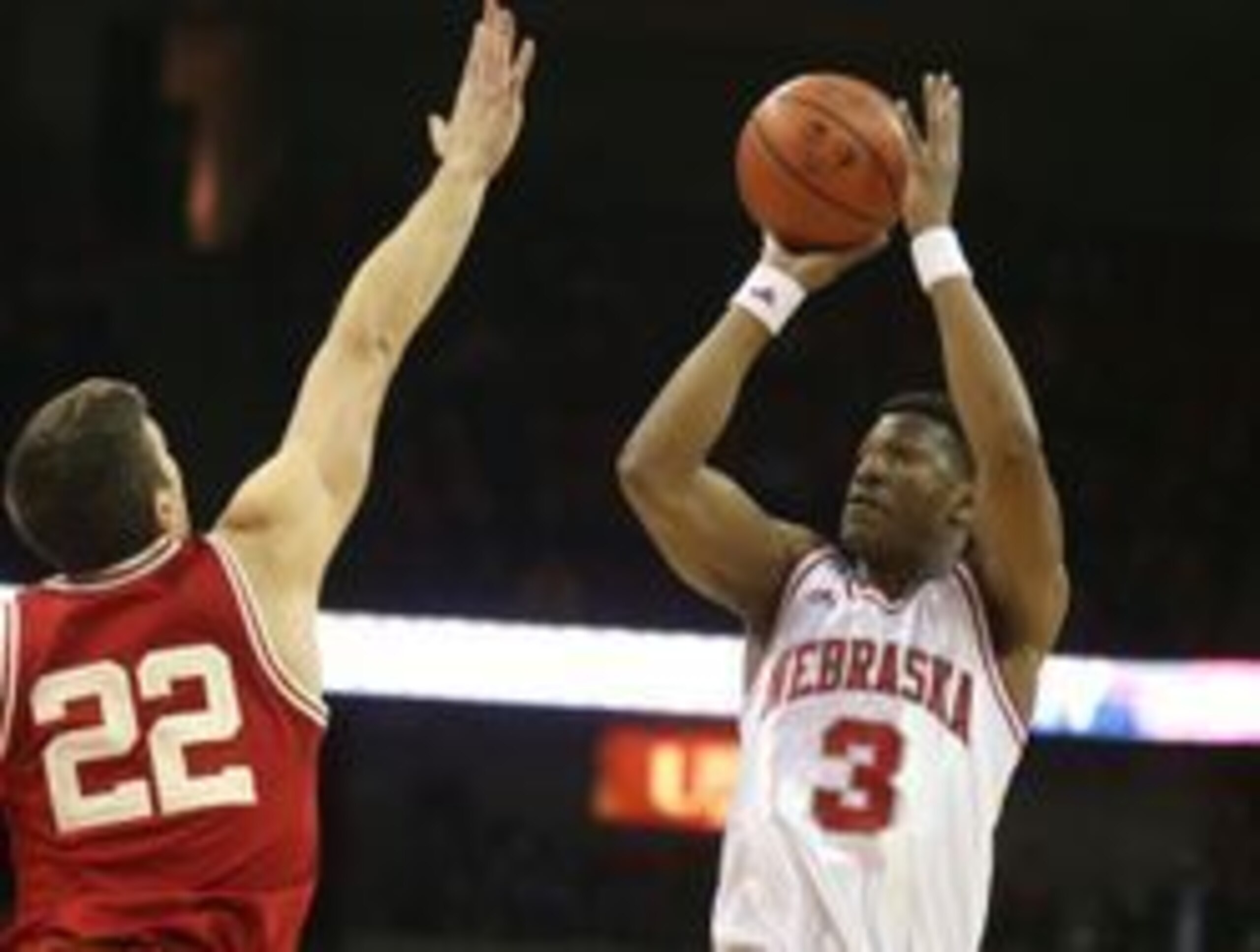
Last Time We Saw Him: 16.6 PPG, 5.9 RPG, 1.1 SPG, 41.2% 3PT with Nebraska
The last domino to fall in the 2016 transfer cycle was one of the biggest.
Like Ojeleye and Aaron, White III was a highly rated recruit who may have picked the right team, but he did so at the wrong time. As a freshman at Kansas in 2012-13, White was buried on the depth chart behind four seniors, Ben McLemore, Perry Ellis and Naadir Tharpe. He only played 6.3 minutes per game, appearing in 18 of the Jayhawks' 37 games.
With McLemore declaring for the draft and the seniors graduating, though, he would have been a starter as a sophomore if not for the additions of Wiggins and Wayne Selden. White ended up playing even less as a sophomore before transferring to Nebraska.
The difference that puts him well ahead of Ojeleye and Aaron on this list, however, is that we've already seen him dominate since that slow start. White was a bright spot in an otherwise forgettable Nebraska season, shooting well from all over the court while recording a few double-doubles.
After losing Michael Gbinije, Trevor Cooney and Malachi Richardson, Syracuse desperately needed an immediate-impact scoring guard. Maybe Tyus Battle can be that guy as a freshman, but we know White can fill that role. His arrival catapulted Syracuse from somewhere in the vicinity of 10th-best team in the ACC to possibly 10th-best team in the country.
1. Austin Nichols, Virginia
11 of 11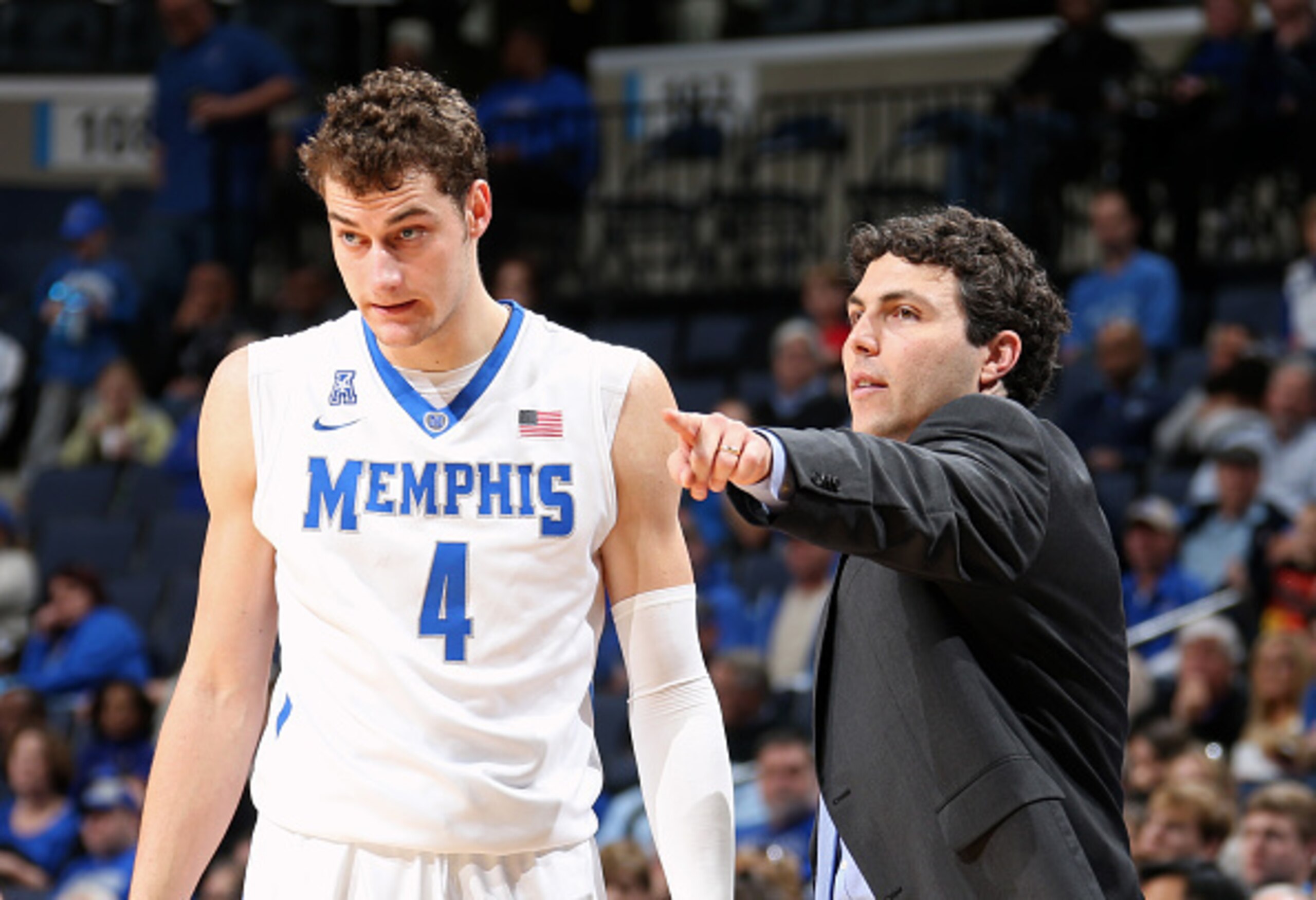
Last Time We Saw Him: 13.3 PPG, 6.1 RPG, 3.4 BPG with Memphis
Austin Nichols was recently suspended for the remainder of Virginia's exhibition games and the first game of the regular season due to a violation of team rules, but he's still the best incoming transfer for the 2016-17 season.
Virginia prides itself on defense, but it hasn't had an individual eraser quite like this. As an entire team, the Cavaliers averaged 3.2 blocks per game last season. Nichols averaged 3.4 by himself as a sophomore playing just 29.5 minutes per game.
Even if he brings nothing else to his new club, it would be a huge win for the Wahoos. But he's also a good scorer and a capable rebounder—though his love of rejections doesn't leave him in a position for defensive rebounds as often as head coach Tony Bennett would like from his frontcourt guys.
He has developed into more than just a rejection machine, though.
"At Memphis, I did a lot of blocking shots, and I hope to do that here," Nichols told Pete Williams of Sporting News. "But I've worked more on moving my feet better, getting faster laterally so I can guard on the wings, switch on ball screens, and guard a 2 or 3. The way we move on defense requires you to move your feet quickly."
He's about to become the centerpiece of a pack-line defense that has been shutting down opponents for the past five years. If he does it well, this transfer just might be helping cut down a net in April.
Stats are courtesy of KenPom.com and Sports-Reference.com. Recruiting information is courtesy of Scout.
Kerry Miller covers college basketball for Bleacher Report. You can follow him on Twitter @kerrancejames.

.jpg?w=2560 "Report: Baker May Miss Up to 6 Weeks")
.jpg?w=2560 "EVERY Fantasy Football Update")