
The Most Telling Statistic for Each Team in the Preseason CBB Coaches Poll
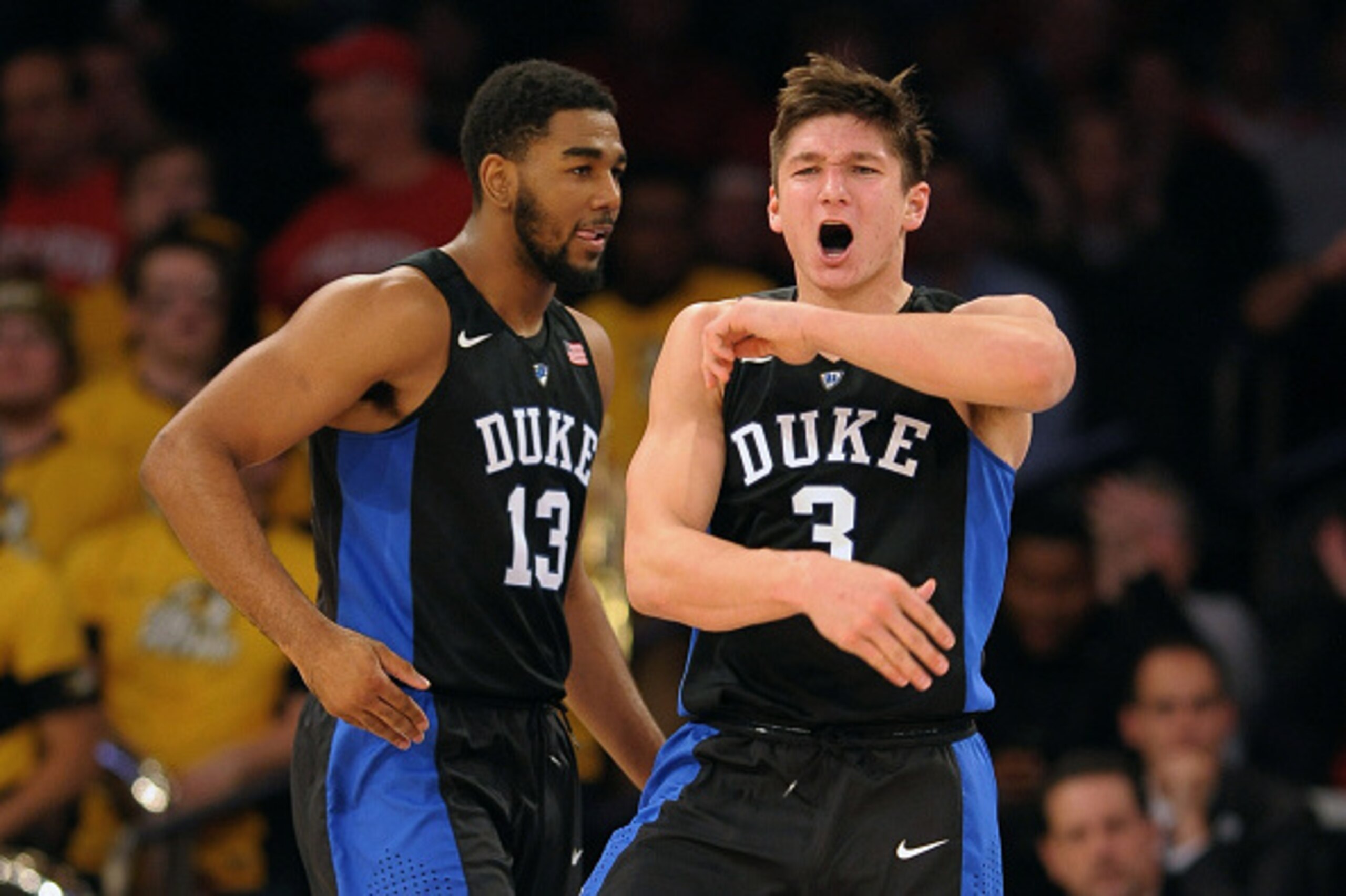
Duke is No. 1 in college basketball's preseason USA Today Coaches Poll, but how well the Blue Devils distribute the ball may be the most telling statistic in whether they're still No. 1 in March.
For each of the teams in that Top 25, we've come up with the one stat that will impact its season most—for better or worse.
Some are team stats; others are relevant to individuals. Some are predictive; others are historical. Most are advanced stats, but several require no knowledge of things such as steal percentage, offensive efficiency or defensive rating.
What these numbers all have in common, though, is that they'll be crucial to either the success or failure of each of these Top 25 teams.
Which stats do you have your eyes on for the season ahead?
Nos. 25-21: Cincinnati-Maryland
1 of 17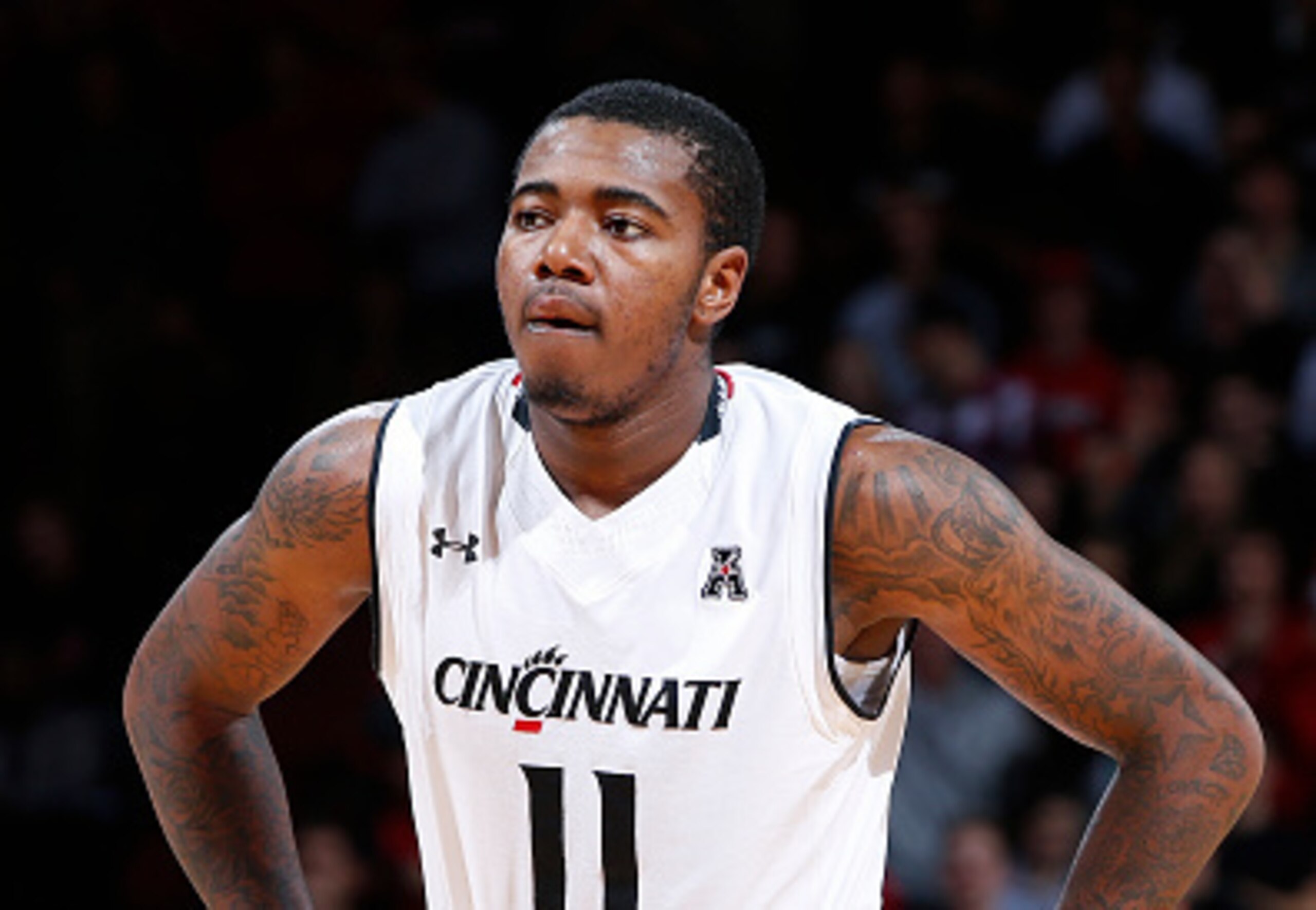
25. Cincinnati Bearcats: Block Percentage
With past stalwarts such as Justin Jackson, Cheikh Mbodj, Octavius Ellis and Coreontae DeBerry, the Bearcats have ranked in the top eight in the nation in block percentage in each of the past four seasons. Rim protection and slow tempo have been at the crux of their efficient defense, but all four of those shot-blockers are gone. It'll be up to Gary Clark and NC State transfer Kyle Washington to pick up the slack with a healthy dose of rejections.
24. Rhode Island Rams: Hospital Visits
E.C. Matthews tore his ACL 10 minutes into the 2015-16 season. Several other members of Rhode Island's primary seven-man rotation missed multiple games last year due to injury. The Rams do not run deep and cannot afford another season with that many bumps and bruises. If they can stay healthy, though, they're the team to beat in the Atlantic 10 and strong candidates to reach the Sweet 16 for the first time since 1998.
23. Creighton Bluejays: Assist Rate
When Creighton was at its best with Doug McDermott, its assist rate ranked in the top 10 in the nation for three consecutive seasons. But while Maurice Watson Jr. posted a hefty 6.5 assists per game last season, the Bluejays failed to rank in the top 100 in the nation in assist rate for the first time since 2008. With the addition of Kansas State transfer Marcus Foster, this should be one of the best passing teams in the country.
22. Texas Longhorns: Turnover Margin
Texas is extremely inexperienced, particularly in the backcourt. The losses of Isaiah Taylor and Javan Felix mean Kerwin Roach Jr. and Eric Davis Jr. are the top returning assist men as sophomores—and they both had a negative assist-to-turnover ratio last season. Stud freshman Andrew Jones should become the primary ball-handler, but how many times will he cough it up?
The Longhorns had more than twice as many turnovers (341) as steals (167) last season. That won't work for head coach Shaka Smart.
21. Maryland Terrapins: Rebounding Margin
Even with Diamond Stone, Robert Carter Jr. and Jake Layman, Maryland was only a marginally above-average rebounding team, averaging 2.7 more boards per game than the opposition. Without that trio, things could get messy. The Terps still have Damonte Dodd, added Duquesne transfer L.G. Gill and should get a nice year from 7'1" Michal Cekovsky. But rebounding margin may be the biggest factor in determining whether they succeed.
Nos. 20-16: UCLA-Connecticut
2 of 17
20. UCLA Bruins: Pick a Defensive Stat
Throughout his career, head coach Steve Alford's teams had been consistently solid on defense, ranking in the top 89 in adjusted defensive efficiency every year from 2002 to 2015, including several years in the top 20. But UCLA was terrible on defense last season, going 15-17 despite scoring better than 77 points per game. The Bruins should be improved on offense with the additions of Lonzo Ball and TJ Leaf, but whether they improve on defense will determine their candidacy for the Pac-12 title.
19. Saint Mary's Gaels: Three-point shooting
The Gaels were quietly incredible on offense last season, shooting 40.6 percent from three-point range and nearly leading the nation in effective field-goal percentage (.584). Five different players made at least 40 triples, including bench assassin Stefan Gonzalez, who made 52.6 percent of his attempts. Unless they improve on defense, they'll need to keep shooting about that well to go dancing this year.
18. West Virginia Mountaineers: Offensive rebounding
We know Press Virginia will force a ridiculous number of turnovers, almost certainly ranking in the nation's top five in steal percentage. But WVU's success over the past two years has been equal parts aggressive defense and offensive rebounding—and the Mountaineers lost their best assets in the latter category. Without Devin Williams or Jonathan Holton, guys such as Esa Ahmad and Elijah Macon will need to clean the offensive glass for this team to win at least 25 games again.
17. Syracuse Orange: Steal Percentage
Syracuse has ranked No. 14 or better nationally in steal percentage in seven consecutive seasons, checking in at No. 4 last year. But the Orange lost Michael Gbinije and Trevor Cooney, who ranked first and second on the team in that category. Also, graduate transfer John Gillon comes from a Colorado State team that ranked 350th in the nation in steal percentage last year. We'll see how many turnovers that 2-3 zone can force this season.
16. Connecticut Huskies: Free-throw percentage
The Huskies were the best in the country at making freebies last season, shooting 79.3 percent from the charity stripe. But Daniel Hamilton (86.0 percent), Sterling Gibbs (85.5 percent) and Shonn Miller (80.2 percent) did the best job of getting to and converting from the line, and they're all gone. Rodney Purvis shot 65.7 percent last year, and that was an improvement from 53.8 percent in 2014-15.
15. Purdue Boilermakers: Turnover Percentage
3 of 17
Purdue did a lot of things well last season, but both forcing and avoiding turnovers were not among them.
The team committed 94 more turnovers than it forced. What's crazy about that stat is starting point guard P.J. Thompson only averaged 1.2 turnovers per 40 minutes and finished the season with 24 steals against just 23 turnovers.
Rather, the big men couldn't hang on to the ball. Caleb Swanigan averaged 4.1 turnovers per 40 minutes, while the center tandem of A.J. Hammons (3.2) and Isaac Haas (3.1) wasn't much better.
Even with those butterfingers in the frontcourt, the Boilermakers were right around the national average in offensive turnover percentage. But they ranked 348th in defensive turnover percentage. In the double-overtime loss to Arkansas-Little Rock in last season's NCAA tournament, they somehow recorded just two steals.
Not a single player averaged better than 1.0 steals per game. Moreover, their leading pilferer (Johnny Hill) graduated, so they might be even worse this year.
Freshman point guard Carsen Edwards and graduate-transfer Spike Albrecht (Michigan) should be of some assistance, but will it be enough for Purdue to break even in the turnover department? Given that six of the nine losses last season came by a margin of seven points or fewer, that could be one heck of a positive swing for the Boilermakers.

.jpg?w=2560)

14. Louisville Cardinals: 3-Point Shooting
4 of 17
The long ball has been a consistent issue for Louisville over the past several seasons. Even when the Cardinals won the national championship in 2013, they ranked 214th in the nation at 33.3 percent three-point efficiency. They have ranked outside the top 169 in five of the past seven seasons, and it's looking like they're headed for another year in that vicinity.
Before graduating, Damion Lee and Trey Lewis combined to attempt 310 of Louisville's 536 three-point shots. The only returning players who attempted more than 20 were point guard Quentin Snider (40-of-99; 40.4 percent) and "shooting" guard Donovan Mitchell (18-of-72; 25.0 percent).
The good news is that Penn transfer Tony Hicks is a career 34.7 percent three-point shooter who has never met a shot attempt he didn't like. And stud freshman V.J. King should provide immediate value on the wing, possibly starting at small forward from day one.
But this is a team that averaged just 6.0 made three-pointers per game last season prior to losing its two main shooters. Louisville would be lucky to make 150 triples this year.
Good thing the Cardinals have ranked in the top five in the nation in adjusted defensive efficiency in eight of the last nine seasons and have a few great, versatile defenders in Ray Spalding and Mangok Mathiang. You don't need to make a lot of threes when you limit the opposition to 61.1 points per game.
13. Gonzaga Bulldogs: 3 Starting Transfers
5 of 17
The sheer number of transfers in college basketball is nearing critical mass. But until a team wins a national championship with multiple transfers in the starting lineup, people will continue to pretend this adaptation of free agency is not an epidemic.
Enter: Gonzaga.
With Nigel Williams-Goss (formerly of Washington), Johnathan Williams III (Missouri) and Jordan Mathews (California) all projected as starters, the Bulldogs have expectations to be one of the top teams in the country.
Of their five leaders in minutes played last season, Kyle Wiltjer, Kyle Dranginis and Eric McClellan graduated, Domantas Sabonis went to the NBA and Josh Perkins may not get to play after a recent arrest. Yet they're in great shape, thanks to guys from major-conference schools who weren't satisfied with their situation.
(There's even a fourth transfer on the roster—Jeremy Jones from Rice—who will play some, though he isn't likely to be a major contributor.)
Add in the importance of transfers for title contenders such as Austin Nichols at Virginia and RaShid Gaston at Xavier, and Gonzaga could be the catalyst for starting a better dialogue on this growing trend.
12. Indiana Hoosiers: Three-Point Defense
6 of 17
Three-point defense wasn't always an issue for the Hoosiers. They were actually slightly better than average in that department in 2015-16, allowing opponents to shoot 34.3 percent compared to the national average of 34.7 percent.
But when things went awry, they got out of hand in a hurry.
Five of Indiana's eight losses came by a margin of five points or fewer, but the other three were blowouts, thanks to horrendous perimeter defense. Duke, Michigan State and North Carolina made a combined 32 triples against Indiana while averaging 94.3 points per game.
You expect that from Duke every year and certainly expected it from Michigan State last year, but North Carolina was a terrible three-point shooting team that still managed to abuse the Hoosiers from deep.
After losing Yogi Ferrell, Nick Zeisloft, Troy Williams and Max Bielfeldt, there might not be enough offensive firepower left on this team to withstand anything close to those kinds of defensive letdowns. Getting James Blackmon Jr. back in the mix will help the offense, but Indiana needs to do a much better job of shutting down the long ball against elite teams this year.
11. Arizona Wildcats: Steal Percentage
7 of 17
For a team that figures to be dependent on guard play, Arizona has not had much of a turnover-forcing defense under head coach Sean Miller.
In four of his seven years at the helm—including this past season—the Wildcats ranked in the bottom 100 in the nation in defensive turnover percentage. The only years they finished above the national average were the two seasons they had T.J. McConnell playing point guard (2013-2015). And even his steal rate with Arizona (3.8 per 40 minutes) wasn't nearly as strong as it was with Duquesne (4.9 per 40 minutes).
However, 3.8 per 40 minutes would be a godsend for the Wildcats right now, as their two best on-ball defenders from last season (Kadeem Allen and Parker Jackson-Cartwright) combined for just 2.9. Rumors have been flying around about Allonzo Trier's eligibility for this season. But if the high-scoring guard doesn't come back, it wouldn't take much to replace his minimal contributions on the defensive end.
Maybe newcomers Rawle Alkins and Kobi Simmons will infuse a little more turnover-forcing urgency, but it hasn't been there lately.
In their nine losses last year, the Wildcats trailed in the turnover battle by a combined margin of 133-77, including a 19-5 deficit in their NCAA tournament loss to Wichita State. Those nine losses came by an average margin of just 4.8 points, so forcing just a couple more turnovers per contest would be a real game-changer.
10. Wisconsin Badgers: Nigel Hayes' Field-Goal Percentage
8 of 17
Nigel Hayes has spent much of the offseason speaking out against social injustices. Wisconsin fans are hoping he also spent enough time in the gym to correct a shooting stroke that disappeared last season.
Two years ago, Hayes was a key piece of one of the most efficient offenses ever. He shot 39.6 percent from three-point range and 54.1 percent inside it. Both his effective field-goal percentage and his true-shooting percentage ranked in the top 200 nationally.
But as his quantity of touches increased as a junior, the quality of them plummeted. Hayes shot 40.0 percent from two-point range and 29.3 percent from three. His points per game increased by 3.3, but his points per field-goal attempt dropped from 1.49 to 1.26.
Yet Wisconsin rebounded from a brutal start to win 22 games and reach a third consecutive Sweet 16 while getting subpar play from the guy who was supposed to be the star. If Hayes can bounce back to anything close to sophomore-year form, the Badgers have enough talent to become the primary challenger to Duke for the 2017 national championship.
9. Michigan State Spartans: Number of Healthy Big Men
9 of 17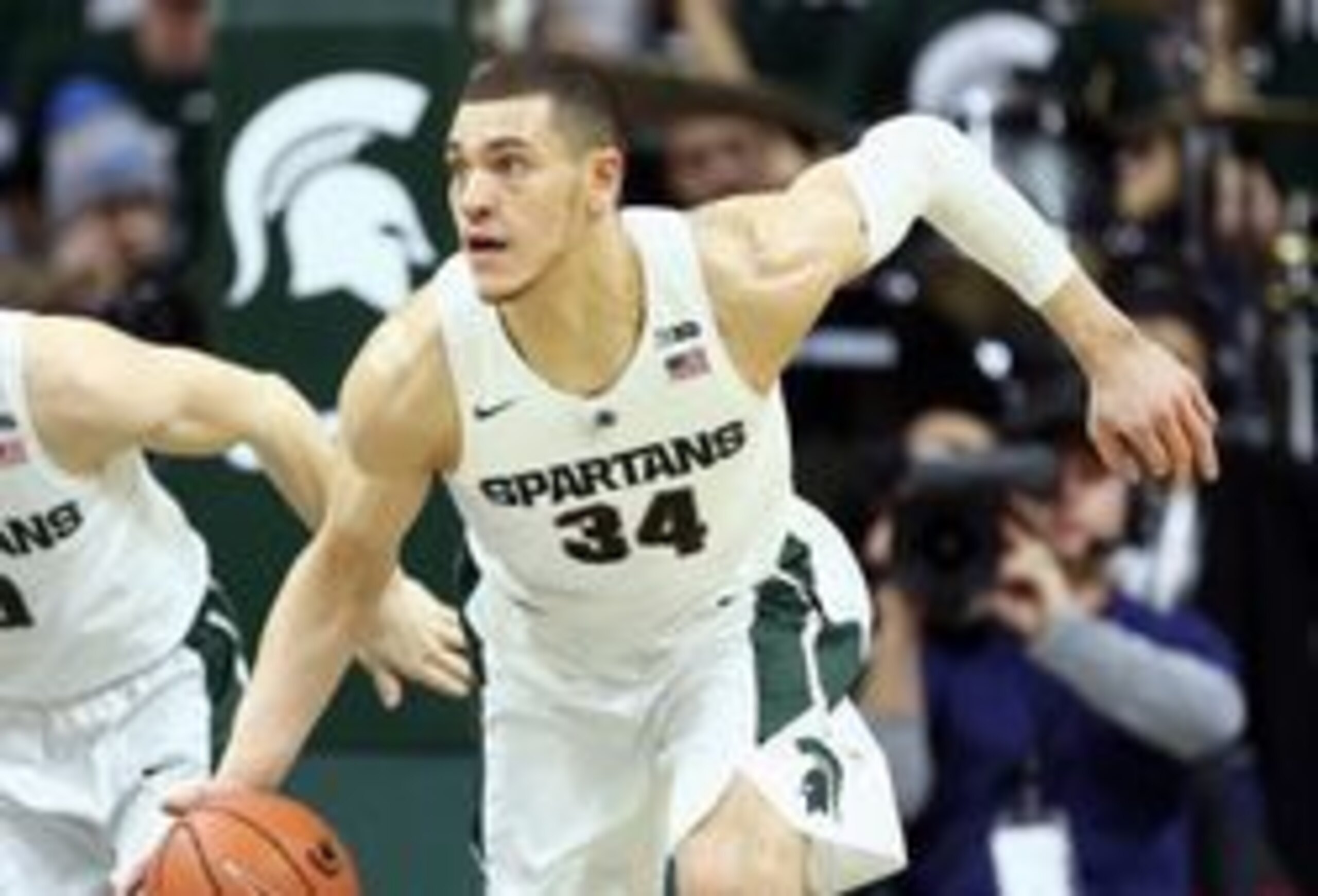
According to Brendan Quinn of MLive.com, Michigan State head coach Tom Izzo said the surgery that Gavin Schilling will undergo on his knee following a non-contact injury suffered in practice earlier this month "isn't minor." Izzo added that Ben Carter's knee injury is "a little more significant" than Schilling's.
For a team that already lost its three leading rebounders from last season, that's a huge blow. At this point, Michigan State's only healthy players taller than 6'5" are 6'6" sophomore Kenny Goins, 6'7" freshman Miles Bridges and 6'8" freshman Nick Ward.
In other words, Izzo's entire frontcourt for the foreseeable future has just 266 minutes of collegiate experience.
The Spartans have some excellent guards. Eron Harris, Joshua Langford and Matt McQuaid should each put up a ton of points this season while Lourawls Nairn Jr., Alvin Ellis III and Cassius Winston make significant contributions of their own. But six guards and a few inexperienced forwards should make for one heck of a juggling act.
Rebounding and paint protection will be a major concern for the Spartans until either Schilling or Carter returns. Even then, lack of frontcourt depth could haunt this team. Izzo put together a fantastic recruiting class, but there's no way he was counting on losing Deyonta Davis (NBA draft), Marvin Clark (transfer) and Javon Bess (transfer) before also losing Schilling and Carter to injury.
8. Xavier Musketeers: Rebounding Margin
10 of 17
Xavier has been an above-average rebounding team for more than a decade. The Musketeers, however, were among the best in the nation on the glass this past season, ranking 19th in rebounding margin at plus-7.5 per game, according to NCAA.com.
But that became less of a strength throughout the year as they slipped from title contenders to mere mortals. They were plus-143 (13.0 per game) on the glass through their first 11 games and only plus-106 (4.6 per game) the rest of the season. In their six losses, they had a combined rebounding margin of minus-14.
Now, the two best rebounders from that roster are gone.
James Farr had a total rebounding percentage of 20.5 with Jalen Reynolds not far behind at 17.8 percent. The only returning player who logged more than seven minutes per game with a rebounding percentage greater than 10.8 is Kaiser Gates. But Xavier will be without his 13.5 rate for a while as he recently underwent knee surgery and is expected to miss the start of the season, according to Shannon Russell of the Cincinnati Enquirer.
That puts a lot of pressure on RaShid Gaston, a Norfolk State transfer and the Musketeers' presumed starting center. If he can dominate the paint and average a double-double, Xavier could be even better than it was last year.
7. Virginia Cavaliers: Block Percentage
11 of 17
If you've watched a Virginia game in the past five years, you know this team plays excellent, methodical defense. The Cavaliers own the defensive glass and make you go through hell just to get a shot off.
But for as good as they have been on defense, they haven't blocked that many shots, ranking just 113th in the nation in block percentage last season.
That will change in a big way this year.
Isaiah Wilkins was Virginia's best shot-blocker last year, but he only played 21.4 minutes per game, forced to split time with Anthony Gill and Mike Tobey—neither of whom blocked more than 22 shots.
Joining Wilkins as a presumed starter in the frontcourt will be Austin Nichols, a Memphis transfer who blocked 22 shots in the first seven games of his sophomore season. Assuming he didn't forget how to block shots while sitting out this past campaign, he'll be Virginia's best one-man defense in the paint since Ralph Sampson in the early 1980s.
Even without Malcolm Brogdon's harassment of would-be shooters on the perimeter, it's downright scary to think about what this team will be able to do on defense. Out of a possible 40 games (80 halves), we'll set the over/under for halves in which an opponent fails to score a dozen points against Virginia at 6.5.
6. North Carolina Tar Heels: Days Until Theo Pinson Returns
12 of 17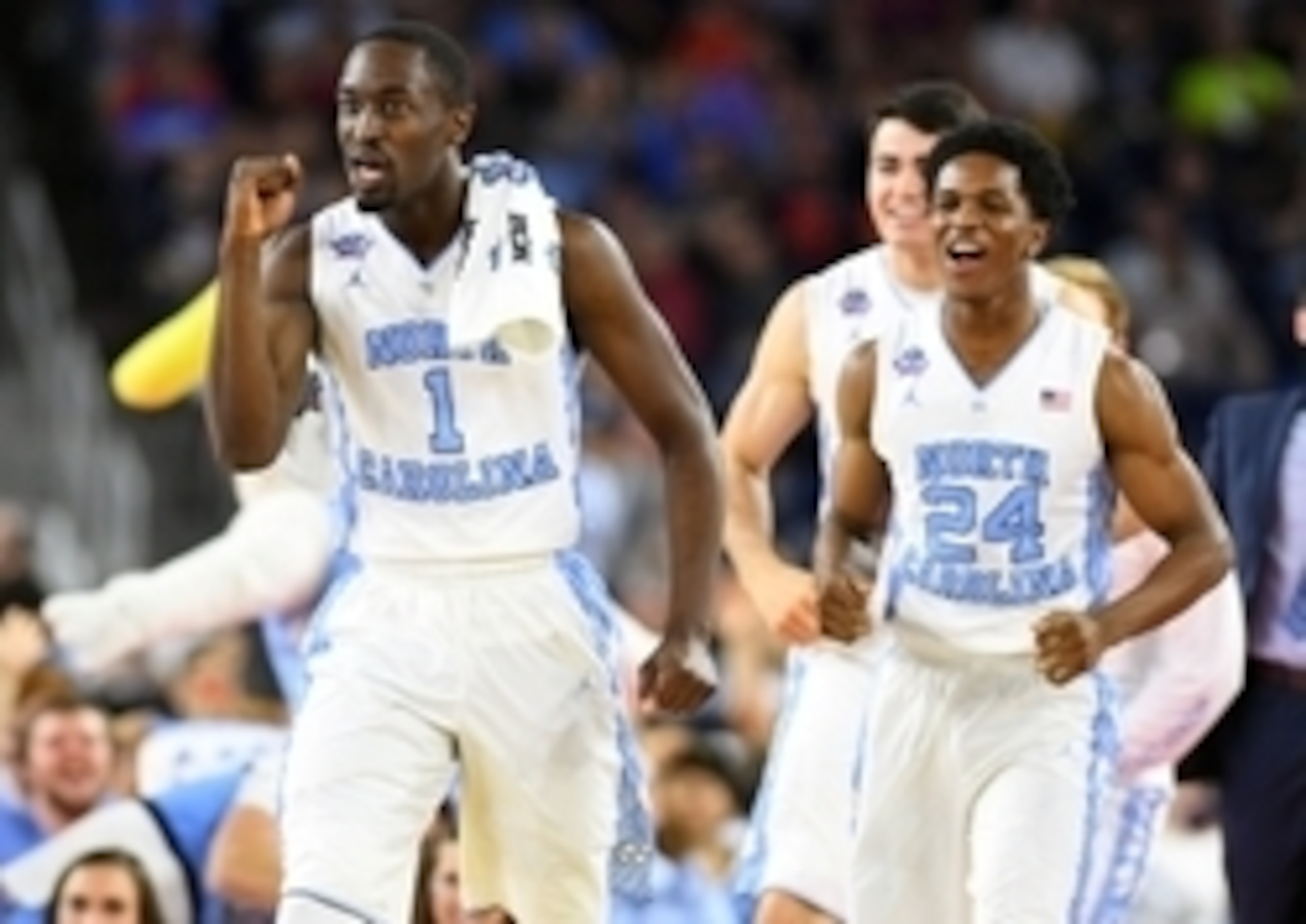
One week ago, you could have made the case that North Carolina had the most complete starting five in the country.
Duke has questions at point guard, Kansas has uncertainties in the frontcourt and we're still trying to figure out what Villanova will do at center without Omari Spellman eligible this year. In Joel Berry II, Theo Pinson, Justin Jackson, Isaiah Hicks and Kennedy Meeks, though, the Tar Heels had a starting lineup without any holes. None of those players will be near the top of the Wooden Award watch list to open the season, but each is a solid contributor.
However, Pinson suffered a fractured foot in practice last week and will be out indefinitely, leaving North Carolina in a pickle.
Head coach Roy Williams has plenty of options to play shooting guard. Nate Britt is still around for what feels like his ninth season. Kenny Williams should be better after a disappointing freshman campaign. And incoming freshmen Seventh Woods and Brandon Robinson should both see more action in Pinson's absence.
None of those options is as much of an all-around asset as Pinson, though, which will leave the Tar Heels counting the days until his return—if he's able to make it back this season at all.
5. Oregon Ducks: Block Percentage
13 of 17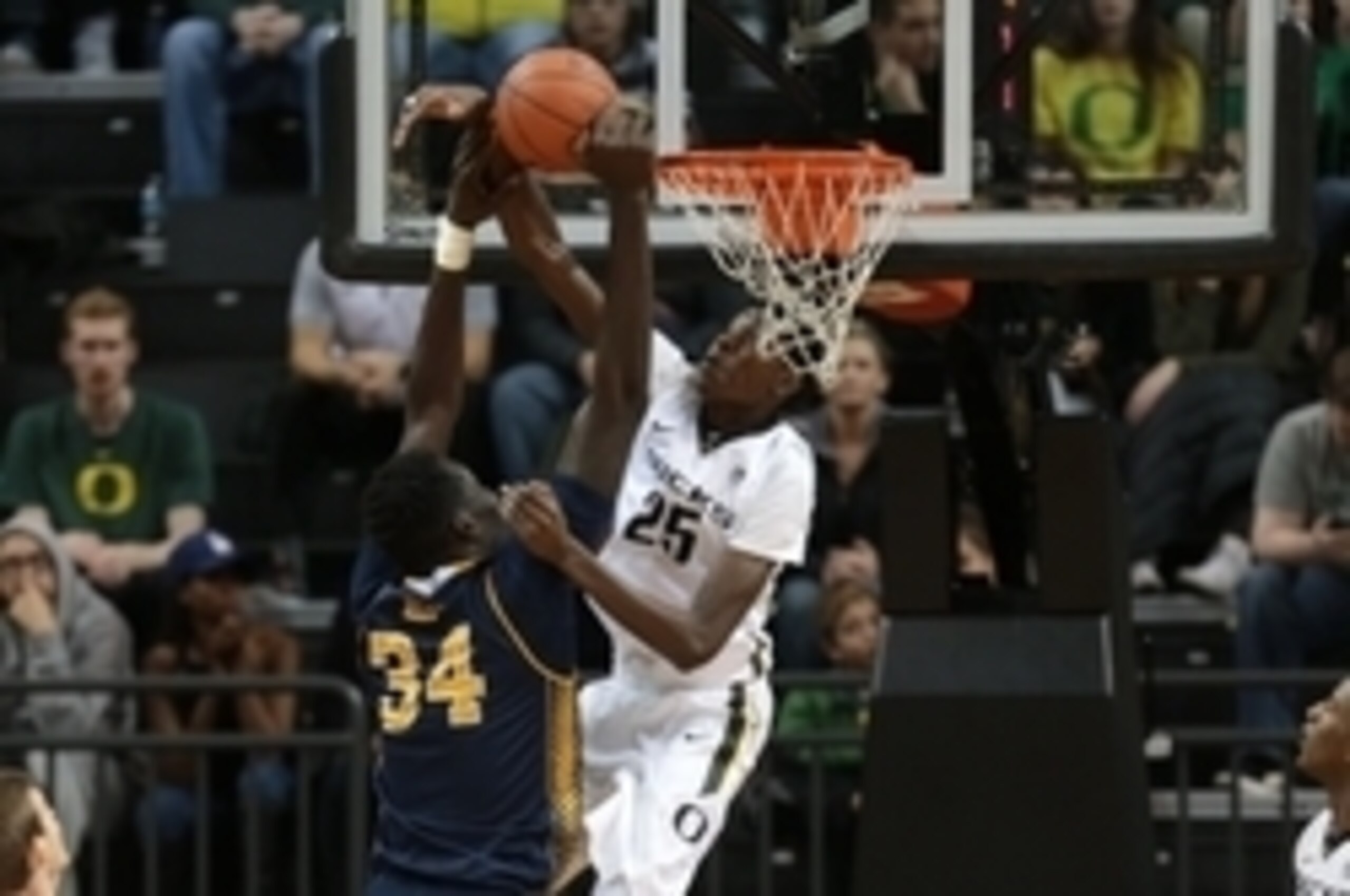
There are quite a few elite teams this season that figure to be difficult to score against in the paint, but Oregon should be the cream of that crop.
The Ducks bring back Chris Boucher and Jordan Bell, who ranked sixth and 52nd, respectively, in individual block percentage last year. And as a freshman, Bell ranked 21st in that category. But a foot injury reduced his playing time, and Boucher's presence kept him from replicating that feat.
In spite of Bell's decline, the two blocked a combined 163 shots last season, which put them—by themselves —one block ahead of Clemson, Illinois-Chicago and Syracuse, all of whom tied with the 35th-most swats in 2015-16.
To that already terrific tandem, head coach Dana Altman added JUCO transfer Kavell Bigby-Williams, who led the nation with 5.9 blocks per game last year at Gillette College (Wyoming). Altman also landed freshman power forward M.J. Cage, who was one of the best shot-blocking recruits available.
There will be no rest for the weary when facing Oregon. With those four giants, the Ducks should be in a near-permanent state of having two elite swatters on the court.
In 2005-06, Connecticut averaged 9.33 blocks per game, which is the most in at least two decades. Oregon may challenge that modern-day record.
4. Kentucky Wildcats: 2-Point Field-Goal Defense
14 of 17
With so much annual roster turnover, you might think there's nothing to be gleaned from Kentucky's stats over the past several years.
However, there were two common threads in the three seasons that the Wildcats were among the nation's elite and earned a No. 1 seed in the NCAA tournament: shot-blocking and two-point field-goal defense.
They're always great in those departments, ranking top 15 in the nation in both categories in each of the past seven years with just one exception—they were 49th in two-point defense in 2014.
But there's a fine line between ranking in the top four percent nationally and sitting at the top of the leaderboard. In 2012, Kentucky went 38-2 while ranking No. 1 in both categories. In 2015, the Wildcats went 38-1 and ranked second in both categories. And in 2010, they were No. 1 in block percentage and No. 6 in two-point defense.
When they hold opponents to less than 42.0 percent from inside the arc and/or block more than 16 percent of their opponents' shots, the Wildcats are almost unbeatable. Keep those numbers in mind as we find out whether Isaac Humphries, Bam Adebayo and Co. will lead Kentucky to a good or great season.
3. Villanova Wildcats: 3-Point Shooting
15 of 17
It's appropriate that Villanova opens the season ranked No. 3 in the coaches poll because it relies so heavily on that shot.
Among the teams that earned a single-digit seed in the NCAA tournament, only Villanova ranked in the top 50 nationally in percentage of field-goal attempts coming from three-point range. The Wildcats teed up the long ball on 42.7 percent of their shots.
Fortunately, those shots were falling when it mattered most. They shot 50.0 percent in the NCAA tournament and 59.4 percent between the Final Four and national championship games to win the title.
Put together another March and early April like that, and they'll bring another banner back to Philadelphia. But can Kris Jenkins and Co. repeat that after no one on the current roster posted a three-point percentage better than 40.0 percent last season?
Villanova will be great during the regular season. It has won three consecutive Big East titles while shooting three-pointers like there's no tomorrow. We just wonder whether that dependence on the long ball will lead to an early upset, such as in 2014 and 2015.
2. Kansas Jayhawks: Consecutive Big 12 Titles
16 of 17
Duke is No. 1 in college basketball's preseason USA Today Coaches Poll, but how well the Blue Devils distribute the ball may be the most telling statistic in whether they're still No. 1 in March.
For each of the teams in that Top 25, we've come up with the one stat that will impact its season most—for better or worse.
Some are team stats; others are relevant to individuals. Some are predictive; others are historical. Most are advanced stats, but several require no knowledge of things such as steal percentage, offensive efficiency or defensive rating.
What these numbers all have in common, though, is that they'll be crucial to either the success or failure of each of these Top 25 teams.
Which stats do you have your eyes on for the season ahead?
1. Duke Blue Devils: Ball Distribution
17 of 17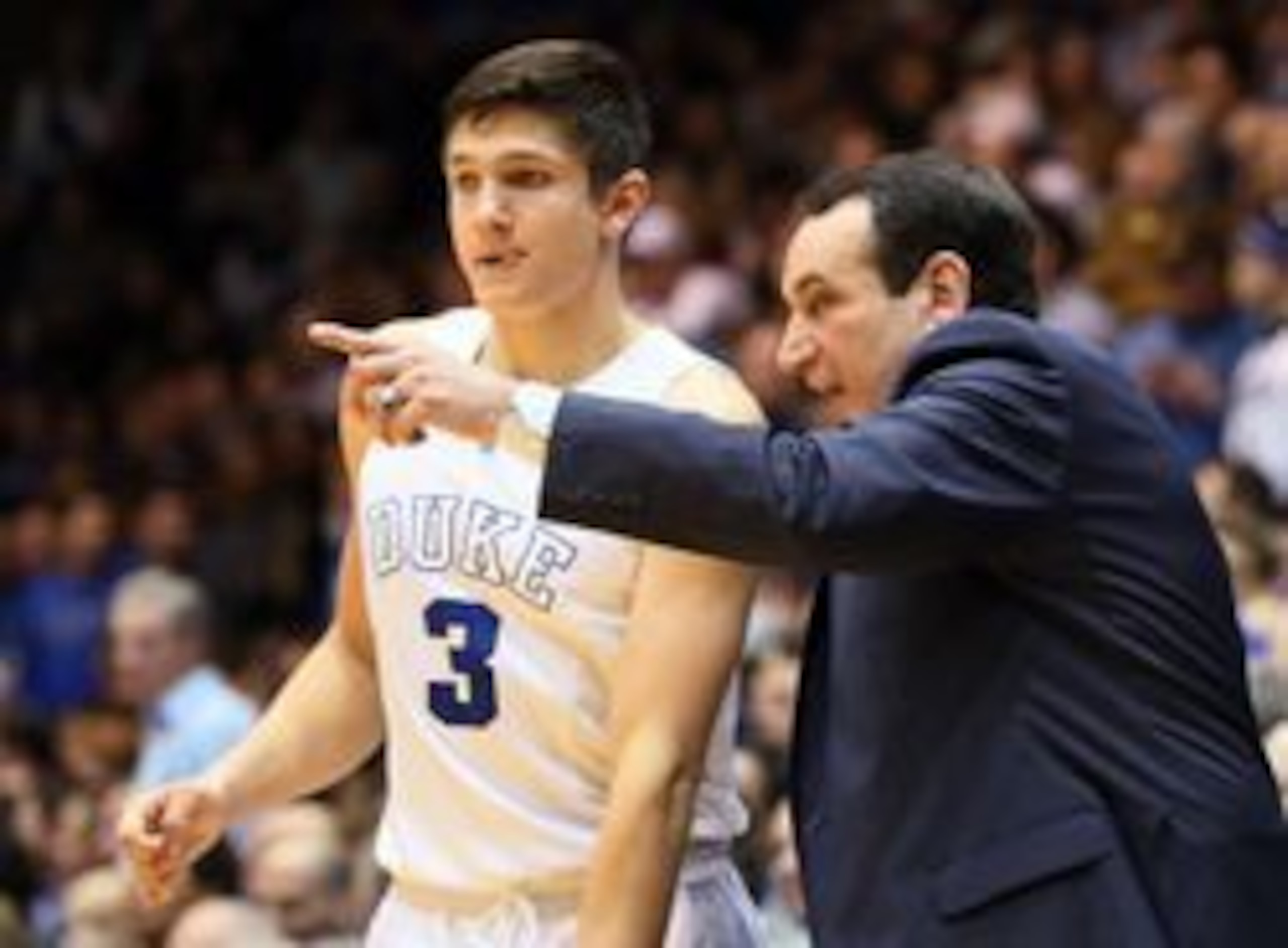
Duke had limited options last season, enabling Grayson Allen (21.6 ppg) to place in the top 15 in the nation in scoring without damaging Brandon Ingram's draft stock. With Marshall Plumlee playing better than 30 minutes per game and hardly ever shooting unless it was right after he grabbed an offensive rebound, there were plenty of shots to go around.
But now Allen can share the ball with three likely lottery picks—Jayson Tatum, Marques Bolden and (if he plays) Harry Giles—as well as Frank Jackson, Luke Kennard, Matt Jones and Amile Jefferson.
Of the bunch, Jefferson might be the only one willing to take a Plumlee approach to his senior season. Jefferson can focus on rebounding and defending while letting his teammates handle the bulk of the scoring. Even at that, making sure that everyone is getting enough touches could be Duke's biggest challenge.
Head coach John Calipari made it work two years ago with the platoon system at Kentucky, but you're crazy if you think Allen came back for another year just to go from 36.6 minutes per game to a part-time job. Perhaps he'll take something of a senior-year Russ Smith approach by racking up assists to try to prove to NBA scouts he can play either the 1 or the 2 in the pros. But he'll still score a lot of points.
If anyone knows how to balance the egos of all-star teams, though, it's got to be Duke head coach Mike Krzyzewski, right? He's had enough experience coaching Team USA over the past decade to figure out how to keep a guy such as Kennard from deciding to transfer due to playing time or ball distribution.
Once Coach K finds that proper balance, best of luck to the rest of the country.
Stats are courtesy of KenPom.com and Sports-Reference.com. Recruiting information is courtesy of Scout.com.
Kerry Miller covers college basketball for Bleacher Report. You can follow him on Twitter @kerrancejames.
.jpg?w=2560 "Rams Eagles Football")

.jpg?w=2560 "Injury-stricken Seahawks signing veteran RB")

.jpg?w=2560 "Bijan's INSANE 1st Half 🤩")
