
Predicting Each Major NCAA Basketball Conference's Leading Scorer in 2016-17
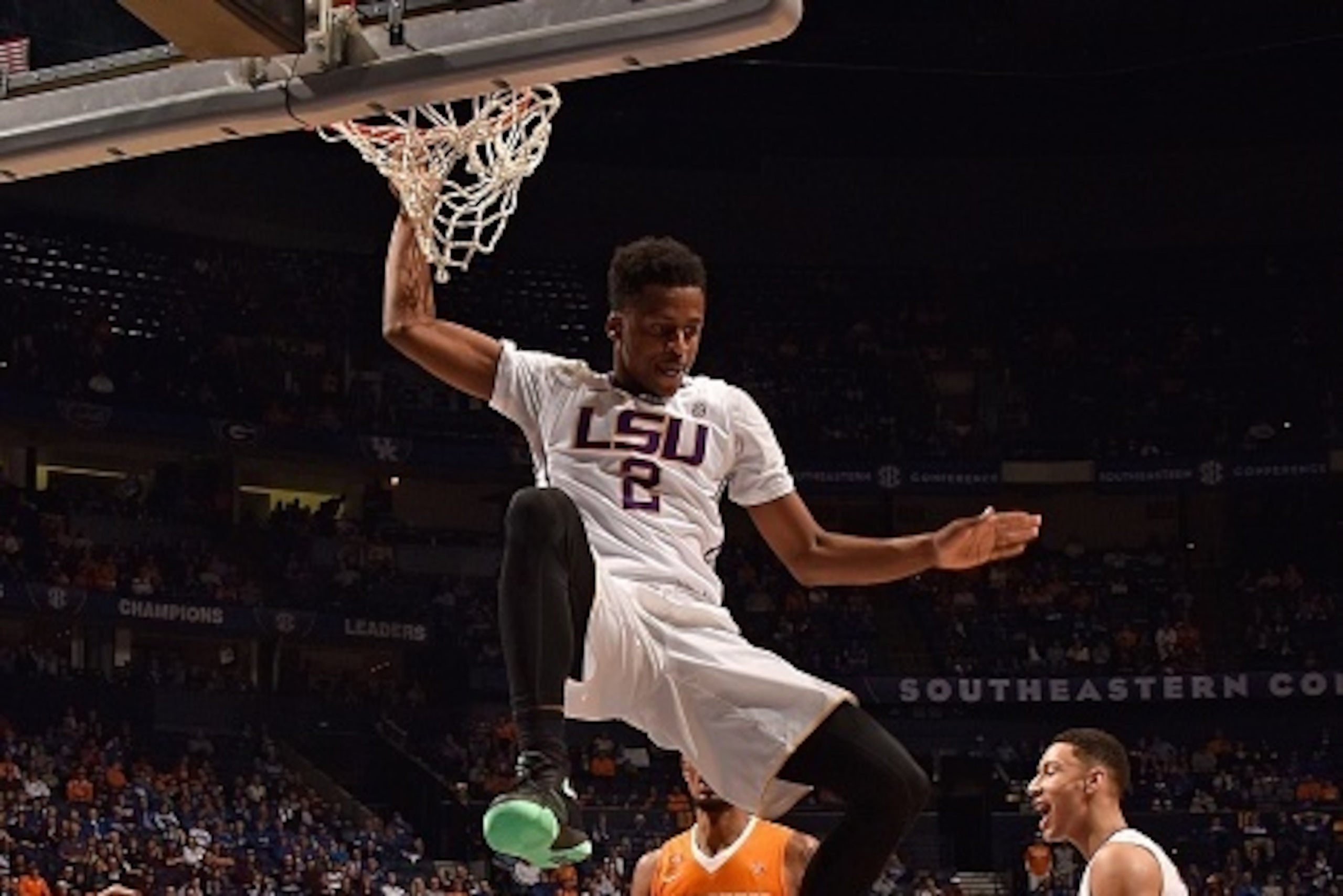
LSU's Antonio Blakeney spent his freshman season overshadowed by Ben Simmons, but he is going to make a name for himself this year as the SEC's leading scorer—albeit for a team no one thinks will make the NCAA tournament.
Generally speaking, this is not a list where you want to find your favorite team. Guys like Denzel Valentine and Buddy Hield were exceptions to the rule by lighting up the scoreboard for national championship contenders. In each of the past five seasons, at least three of the leading scorers from the six major conferences played for teams that failed to make the NCAA tournament.
Hield was enough to get Oklahoma to the 2015 Sweet 16 and the 2016 Final Four, but the only other major-conference leading scorer to make it into the tournament's second weekend in the past five years was Ohio State's Deshaun Thomas in 2013 (Elite Eight). Hield, Valentine, Thomas and Doug McDermott were the only leading scorers in the past five years to carry their teams to a top-four seed in the Big Dance. None of them played for teams that won their conference.
Simply put, the best teams have the most scoring options. Case in point: Duke is so loaded with talent everyone expects the Blue Devils to win the ACC, yet no one expects Grayson Allen to average more than 20 points per game again.
That isn't to say that every team on this list is going to miss the NCAA tournament, but we certainly aren't expecting these teams to win their respective conferences.
Note: In addition to the ACC, Big 12, Big East, Big Ten, Pac-12 and SEC, we've opted to include the three conferences almost certain to send multiple teams to this year's NCAA tournament: American, A-10 and West Coast. If it upsets you to see these in an article advertised as the major conferences, stop reading after the sixth slide.
ACC: Jaron Blossomgame, Clemson
1 of 9
2015-16 Scoring Average: 18.7 PPG
There are three obvious options for this spot: Duke's Grayson Allen, Clemson's Jaron Blossomgame and NC State's Dennis Smith Jr.
As we noted in the intro, though, Allen's scoring average is probably going to decrease this year. Even with Harry Giles injured and likely to miss the beginning of the season, Duke has nearly as many starters on its roster as Kentucky had in 2013-14. The Blue Devils have eight or nine guys good enough to average 10 points per game, which makes it hard to imagine any individual player on that roster will put up more than 18 per night—even though Allen went for 21.6 PPG last year.
And as we'll note in more detail later on, it's uncommon for a freshman to lead a major conference in scoring. It hasn't happened in the ACC in at least 23 seasons. There have been some close calls throughout the years—Maryland's Joe Smith (1994), Georgia Tech's Stephon Marbury (1996), North Carolina's Tyler Hansbrough (2006) and Duke's Jabari Parker (2014) each finished in the top three while averaging more than 18.0 PPG—but it would take a historically great type of season for Smith to break that streak.
Thus, ladies and gentlemen, your leading scorer in the ACC will be Blossomgame.
Though it helped, process of elimination isn't the only reason we're picking him. Blossomgame had an outstanding junior year and came back for one more season with something to prove.
"I put a lot of thought into (remaining in the NBA draft pool), and I feel like I'm better than a second-round pick," he told Aaron Brenner of The Post & Courier. "I feel I can come back and improve my stock tremendously with the opportunities I have here at Clemson."
With the addition of transfer guards Shelton Mitchell and Marcquise Reed to help put him in more positions to score, an excess of 20 points per game (and 20 wins for Clemson) is a real possibility for Blossomgame.
Big 12: Phil Forte, Oklahoma State
2 of 9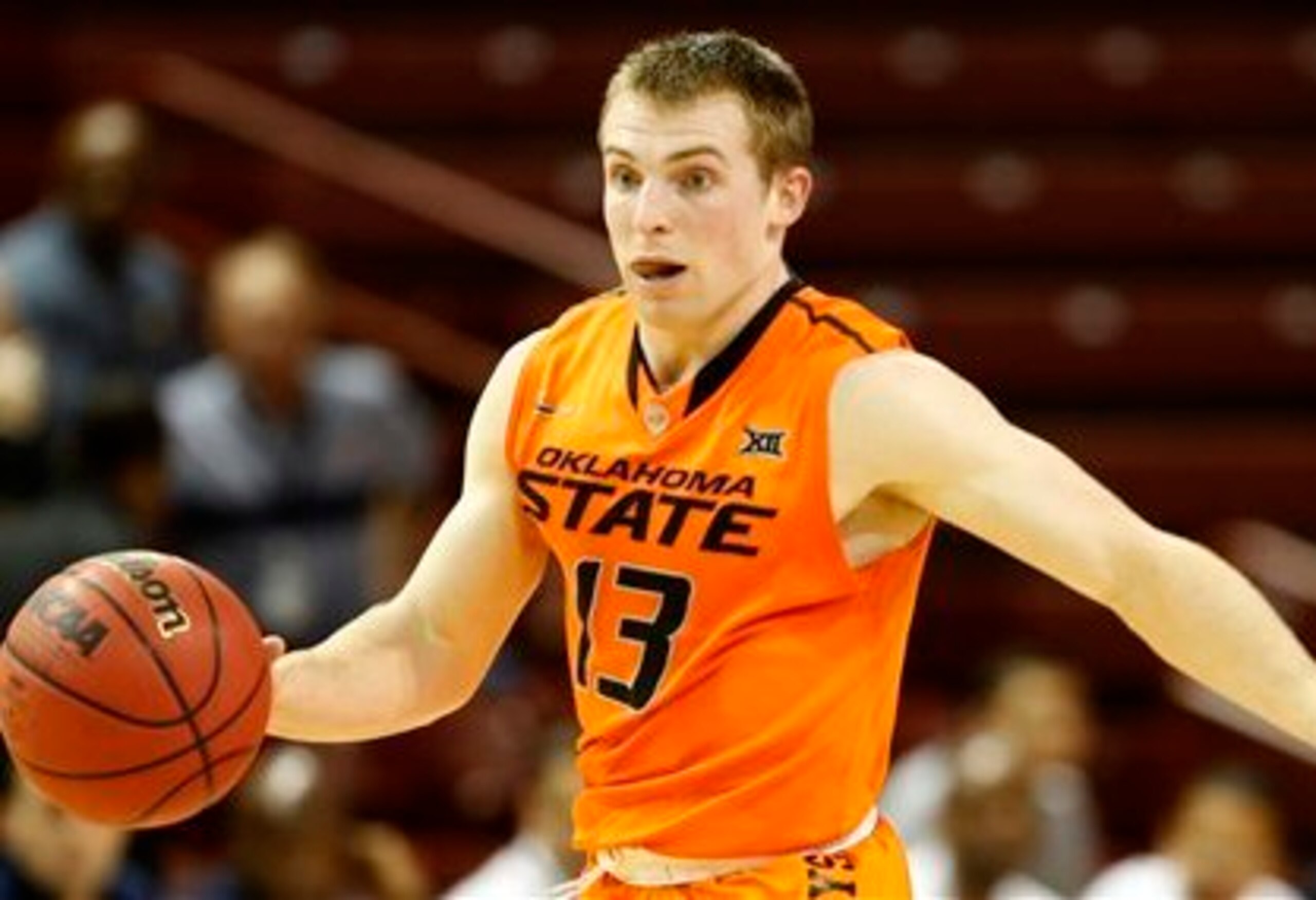
2015-16 Scoring Average: 13.3 PPG (three games)
The Big Ten was the toughest conference to project a scoring leader from because there are so many great options.
The Big 12 is the second-toughest conference because there aren't any good options.
Only five players in the conference averaged so much as 14.0 PPG last season, but they're all gone. Just five of the top 17 scorers are back and they're all guards: Phil Forte and Jawun Evans (Oklahoma State), Jordan Woodard (Oklahoma), Monte Morris (Iowa State) and Frank Mason (Kansas).
We ruled out Mason right away because Kansas might have the most balanced scoring attack in the country this year. Morris and Woodard were tempting due to the sheer volume of scoring they lost from teammates who were seniors last year, but with a combined 961 assists to their names over the last three years, they're a bit too interested in setting up teammates to lead the conference in scoring.
Unless you want to dip a bit further down into last year's scoring list to guys like Baylor's Johnathan Motley or Kansas State's Wesley Iwundu, that leaves us with a pair of backcourt Cowboys to choose from.
Though Evans did have a 42-point game last year, he also had at least five assists in more than half of his games. We expect a lot of those dimes to end up in Forte's hands this year.
Forte didn't last nearly long enough into last season to reap the benefits of his freshman point guard, but Oklahoma State's shooting guard did average 15.0 points per game two seasons ago and figures to be one of the most lethal scorers in the Big 12.
Given all this team lost, what else is it going to do? Jeff Newberry and Chris Oliver graduated. Joe Burton and Tyree Griffin transferred. That's nearly 30 points per game the Cowboys need to replace without adding any transfers.
Freshmen Lindy Waters and Cameron McGriff will be of some assistance, but the bulk of that responsibility will fall on the shoulders of their fifth-year senior. At any rate, if Oklahoma State plans on doing anything this year, Forte needs to be a star.
Big East: Kelan Martin, Butler
3 of 9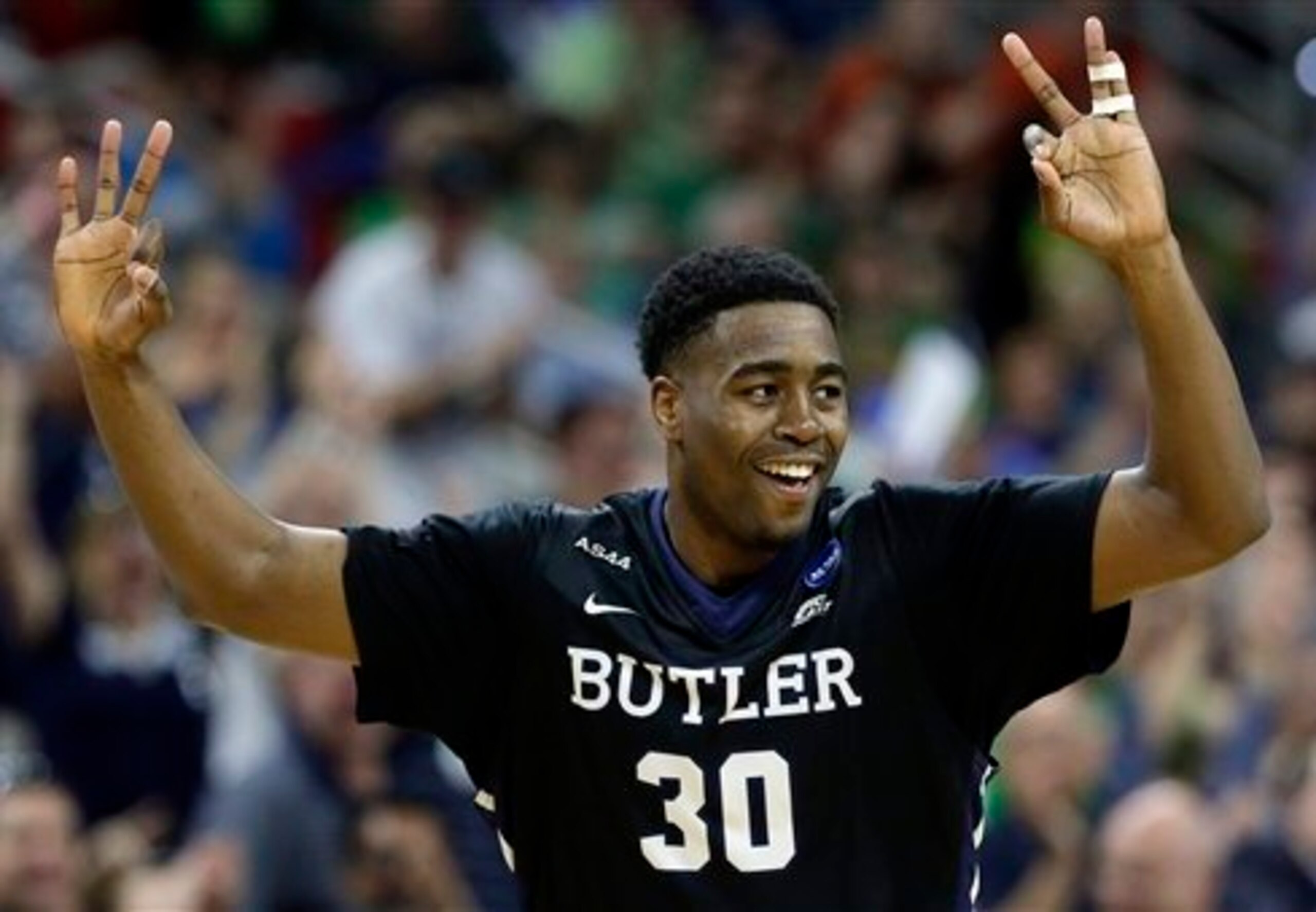
2015-16 Scoring Average: 15.7 PPG
Of the six major conferences, this was the only one that required no deliberation whatsoever.
By a slim margin over Josh Hart (15.5 PPG) and Trevon Bluiett (15.1 PPG), Kelan Martin is the highest-scoring returning player in the Big East. But while Hart and Bluiett get back their top-scoring teammate—Kris Jenkins and Edmond Sumner, respectively—Martin lost the fifth- and 12th-highest-scoring players in the Big East when Kellen Dunham and Roosevelt Jones graduated.
Butler does add Avery Woodson (Memphis), Kethan Savage (George Washington) and Joey Brunk (4-star freshman center) to help plug those scoring gaps, but there's no question Martin is the primary scoring option on this team. Aside from maybe Rodney Bullock at Providence, there's not another team in the Big East on which everyone knows who's getting the ball when they need a bucket.
Heck, over the second half of last season, Martin was already that guy for the Bulldogs. He had a stretch of 11 consecutive games in which he recorded at least 12 field-goal attempts, averaging 17.7 points on 14.8 shots over his final 17 games.
If he could just get to the free-throw line a little more often, we'd be prepared to start etching his name on the scoring trophy. For as aggressive of a scorer as he is, Martin only averaged 4.2 free-throw attempts per game last season. However, he also only played 28.3 minutes per game, as he didn't become a full-time starter until late-January. Look for him to both play and score more as a junior.

.jpg?w=2560)

Big Ten: Peter Jok, Iowa
4 of 9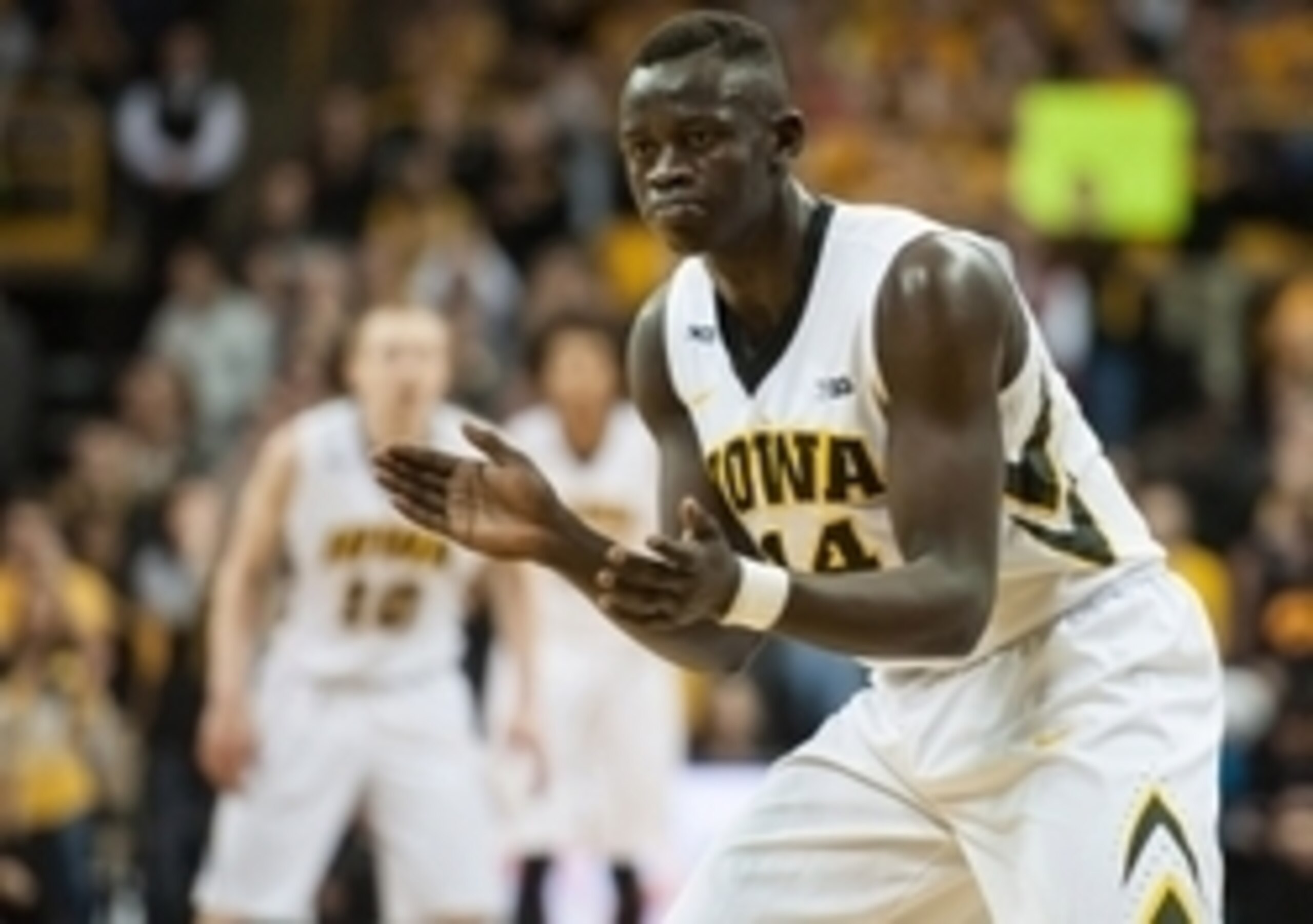
2015-16 Scoring Average: 16.1 PPG
Each major conference had multiple viable options, but none more so than the Big Ten. At least Andrew White III left Nebraska for Syracuse to reduce the pool a little bit, but we still had to gloss over Malcolm Hill (Illinois), Melo Trimble (Maryland), James Blackmon Jr. (Indiana), Corey Sanders (Rutgers) and Shep Garner (Penn State) to settle on Peter Jok.
Aside from Hill (18.1 PPG), Jok is the conference's highest-scoring returning player. However, Hill's only big loss of a scoring partner is Kendrick Nunn, and he's getting both Mike Thorne Jr. and Tracy Abrams back from injury. Add in 4-star freshman point guard Te'Jon Lucas and the Illini have considerably more mouths to feed than they did last year. Thus, unless Hill's efficiency improves significantly (31.4% 3P% and 48.1% 2PT last year), it's likely his scoring average decreases slightly.
Jok, on the other hand, barely has any returning teammates. Jarrod Uthoff, Mike Gesell, Adam Woodbury and Anthony Clemmons all graduated, leaving Jok as the only returning player to average more than 6.0 points per game.
Jok already ranked 91st in the nation in terms of percentage of shots taken while on the floor, but he may well jump up into the top 10 in that category while also playing significantly more minutes. While Hill played more than 35 minutes per game for Illinois, Jok only logged 27.7 minutes per game for the Hawkeyes.
All other things being equal, if Jok averages 35 minutes per game this year, his scoring average would jump to 20.3 points per game. Factor in the expected increase in percentage of shots taken and it might be even higher than that—provided his efficiency doesn't plummet as a result of the increased workload.
Pac-12: Markelle Fultz, Washington
5 of 9
2015-16 Scoring Average: N/A (Incoming freshman)
We're hesitant to do this, because this is not an honor often reserved for first-year players.
Dating back to the 1999-2000 season, there have been a total of 102 leading scorers from the six major conferences. Only four of those players were freshmen—Michael Beasley (Kansas State, 2007-08), Eric Gordon (Indiana, 2007-08), Kevin Durant (Texas, 2006-07) and Kris Humphries (Minnesota (2003-04). It hasn't happened in any major conference in the past eight years, and it hasn't happened in the Pac-12 since California's Shareef Abdur-Rahim did it in 1995-96.
Yet, that's just how good Markelle Fultz might be in his five-month pit stop before the NBA lottery.
Moreover, there just aren't many good options in the Pac-12.
Of the 13 Pac-12 players who averaged at least 15.0 points per game last season, nine are gone, Dillon Brooks is recovering from foot surgery and Isaac Hamilton and Bryce Alford now have to share the rock with Lonzo Ball and T.J. Leaf. That leaves Washington State's Josh Hawkinson as the only returning guy Fultz has to worry about, and we'll take our chances with the presumptive No. 1 pick this June.
Andrew Andrews, Dejounte Murray and Marquese Chriss averaged a combined 50.8 points per game last season before leaving the Huskies. Fultz isn't going to score all of those points, but he should be able to do a lot of damage in an offense that ranked second in the nation in adjusted tempo last year.
The Huskies might not win very many games, but trust us when we say you're going to want to watch as many Washington games as you possibly can this year. It's going to be a lot of fun seeing Fultz fly up and down the court.
SEC: Antonio Blakeney, LSU
6 of 9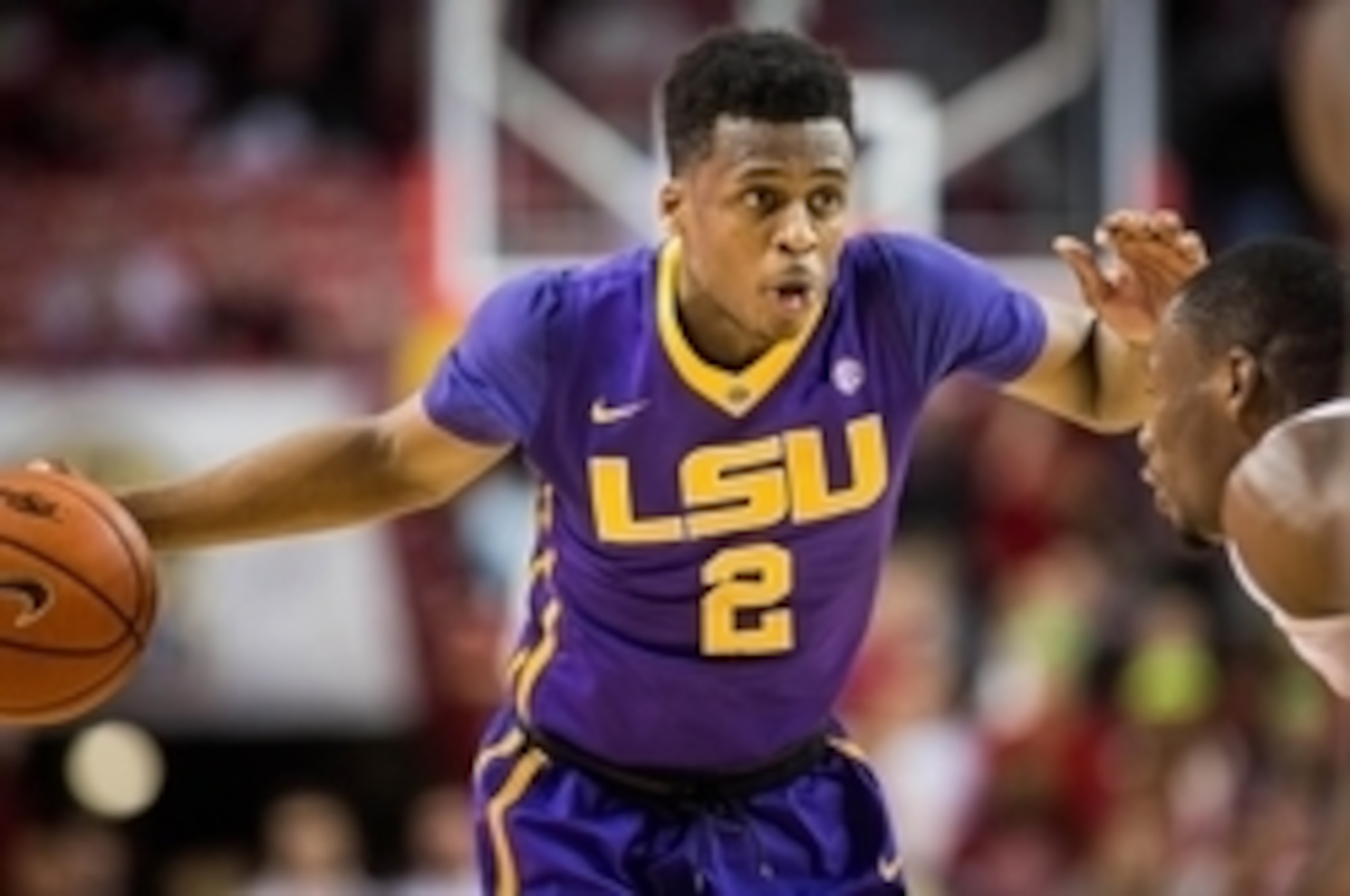
2015-16 Scoring Average: 12.6 PPG
Antonio Blakeney's overall scoring average is less intriguing than what he did at the end of the season.
With senior shooting guard Keith Hornsby out for the first seven games last year, Blakeney got out to a hot start, scoring at least 14 points in each of his first four games. But he tapered off and became a non-factor for the better part of the next two months.
When Hornsby suffered another injury in late February, though, Blakeney went a bit nuts. During that seven-game stretch, Blakeney was averaging 19.9 PPG, scoring at least 18 points in six consecutive games.
Now, keep in mind, that was with Ben Simmons, Tim Quarterman and Josh Gray still on the roster. What kind of numbers is Blakeney going to put up now that four of last year's six leading scorers are gone?
Expectations for the Tigers are considerably less than great. They add a couple of JUCO transfers and a couple of 3-star freshmen, but nothing even remotely worthy to replace all the talent they lost. Unless guys like Jalyn Patterson, Aaron Epps and Brandon Sampson step up in a huge way this year, it'll be up to Blakeney and Craig Victor to somehow score enough points to keep this team from losing 20 games. In fact, an interesting prop bet might be whether Blakeney's scoring average or LSU's total losses is a higher number at season's end.
American: Jahmal McMurray, South Florida
7 of 9
2015-16 Scoring Average: 15.2 PPG
As a freshman, Jahmal McMurray led South Florida in scoring by a margin of nearly 200 points and ranked sixth in the American in points per game.
Of the six Bulls to average more than 5.2 points per game, he's the only one coming back. Angel Nunez, Nehemias Morillo and Jaleel Cousins graduated, while Roddy Peters and Chris Perry decided to transfer elsewhere.
They do add Penn State transfer Geno Thorpe (8.7 PPG in 2014-15) and get Troy Holston Jr. (7.9 PPG) back from a torn ACL, but McMurray might be the only good thing going for a team that has lost at least 60 percent of its games in four consecutive seasons.
Though McMurray may well score more than 20 points per game, another freshman in a similar situation made this a difficult call.
Dedric Lawson averaged 15.8 points per game as a freshman at Memphis, and all four of his highest-scoring teammates are no longer on the roster. Lawson gets to the free-throw line with regularity, is extremely physical in the paint and has plenty of range. He made 35.0 percent of his 80 three-point attempts last season, making him the type of guy who can score in just about any way imaginable.
However, Memphis played at one of the faster tempos in the country last season, and new head coach Tubby Smith has always had teams that played at an average to below-average pace. It may seem like a silly reason to hand the keys to the scoring title to McMurray, but in a race this close, a potential decrease of seven or eight possessions per game for Lawson could easily be the difference.
Atlantic 10: Jack Gibbs, Davidson
8 of 9
2015-16 Scoring Average: 23.4 PPG
The easiest pick on the list, Jack Gibbs won last year's A-10 scoring crown by a margin of 3.8 points per game and loses two of his three highest-scoring teammates to graduation.
After losing Tyler Kalinoski as a teammate after the 2014-15 season, Gibbs exploded, increasing his rate of field-goal attempts per 40 minutes from 13.9 to 20.5. Like Stephen Curry before him, Gibbs had a permanent green light. He averaged 18.2 field-goal attempts per game, which is the exact same number Curry had in 2007-08 when he averaged 25.9 PPG.
After Curry lost three key teammates to graduation, he went even crazier the following year, attempting 20.2 shots per game while averaging 28.6 points.
I'm not saying Gibbs is the next Curry, but I am saying that Bob McKillop has no problem with letting the best player on his roster take as many shots as he possibly can.
The last person to score 29 or more points per game was VMI's Jason Conley in 2001-02. Gibbs probably won't get there, but he might become the first player to eclipse 27.1 points per game since BYU's Jimmer Fredette did it in 2010-11.
West Coast: Jared Brownridge, Santa Clara
9 of 9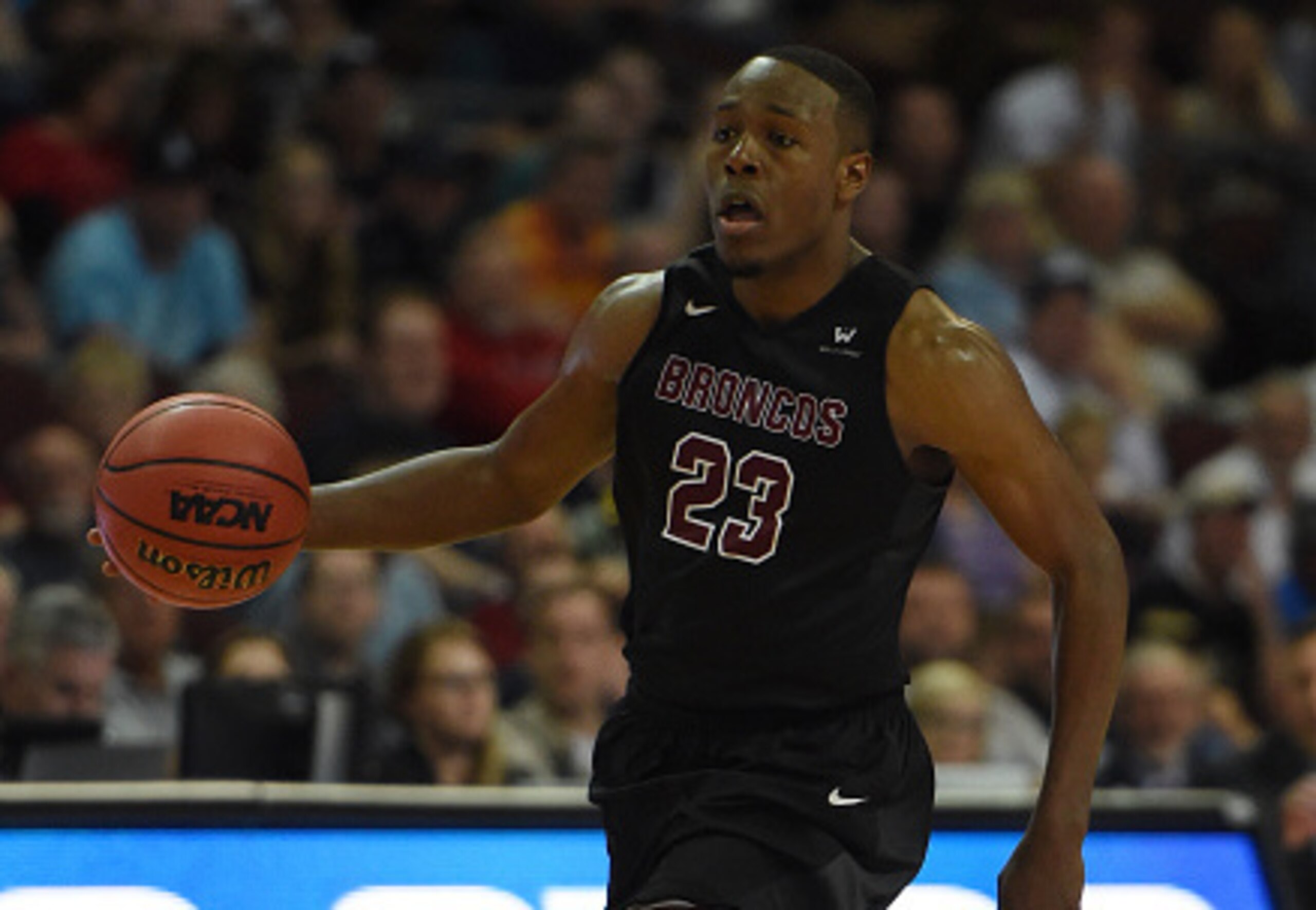
2015-16 Scoring Average: 20.6 PPG
Aside from San Diego sneaking into the 2008 NCAA tournament by winning the WCC tournament, not a single WCC team other than Gonzaga, Saint Mary's or BYU has gone dancing since 2003.
But with the exception of BYU's Tyler Haws scoring a billion points (numbers estimated) from 2012-15, the conference's leading scorer has typically come from elsewhere. Gonzaga's Adam Morrison won it in 2006, while Omar Samhan took home the scoring crown for Saint Mary's in 2010, but those were the only times the WCC titans produced the top scorer—supporting the claim in the intro that you should be hoping you don't see your favorite team on this list.
Last year, Santa Clara's Jared Brownridge narrowly edged out Gonzaga's Kyle Wiltjer (20.4 PPG) and should be the conference's leading scorer again in 2016-17.
The Broncos only won 11 games, but Brownridge had 11 games with at least 25 points, including the memorable 44-point performance in the overtime loss to Arizona in the Wooden Legacy.
Brownridge was No. 1 on our list of the streakiest shooters last month, because he's scary-good once he starts cooking. He had four games last season with at least seven made three-pointers, including back-to-back road games against Nevada and Pacific in December. He has made at least 91 triples in each of the last three seasons.
He's not the most efficient scorer, but he's going to take more than enough shots to average at least 20 points per game once again. He's only 284 points away from 2,000 in his career. With 13 games by Dec. 22, he might get there before Christmas.
Stats are courtesy of KenPom.com and Sports-Reference.com. Recruiting information is courtesy of Scout.com.
Kerry Miller covers college basketball for Bleacher Report. You can follow him on Twitter @kerrancejames.
.jpg?w=2560 "Falcons Saints Football")
.jpg?w=2560 "Rams Eagles Football")
.jpg?w=2560 "Injury-stricken Seahawks signing veteran RB")


.jpg?w=2560 "2 NFL Officials Suspended")
