
Ranking the Biggest Matchup Problems in College Basketball
A key to success in college basketball is creating mismatches, moving players around in a manner that a superior athlete is paired up against a defender who can't guard him. The teams that do this most often tend to sit atop the rankings and go deepest in the postseason.
It helps if a team has some individual players who manage to create their own matchup problems, regardless of who they're up against.
Certain players have the ability to score from all over, thus making it next to impossible to guard them in a way that renders them ineffective. Some just seem to always come through no matter the scenario, and thus when the ball comes to them on offense, it's almost an automatic conversion.
We've picked out 15 players who create a matchup nightmare for opponents, ranked in order of their past effectiveness—for returning players—and how much their teams figure to rely on them offensively this season.
15. Chris Boucher, Oregon Ducks
1 of 15
He was fourth on the team in scoring last season and may not be much higher this year, especially once Dillon Brooks returns from a foot injury. But knowing what Chris Boucher is capable of on offense means teams can't forget about him no matter where he is on the court.
Boucher, a 6'10” forward who set Oregon's school record with 110 swats, is best known for his shot-blocking ability. But he also had 39 three-pointers, making 33.9 percent of his attempts, which accounted for more than a quarter of his scoring.
Several of Boucher's threes came in transition; a full-court possession started himself with a block and then finished when he trailed on the play and was fed for a spot-up three.
14. Lauri Markkanen, Arizona Wildcats
2 of 15Not much is known about Lauri Markkanen other than what's been seen via YouTube and some highlights from his time with Finland's national team at the FIBA U20 European Championship this summer. All of it has been impressive, not just because of his success in scoring but because he's doing it all over the floor.
The 7'0" Markkanen has shown a strong outside touch, impressive post skills and a first step that makes stopping him on a drive quite difficult. All of that has him sitting 13th in DraftExpress' latest 2017 NBA mock draft.
Where he goes from here depends on how Arizona uses him. The Wildcats are loaded with guards this season, which is why we don't have him ranked higher; he figures to spend most of his time in the frontcourt. But knowing he has the capability to do damage in the open court and outside won't make it easy to plan for him.
13. Luke Kornet, Vanderbilt Commodores
3 of 15
On one play, Luke Kornet could be posted up near the basket waiting for a feed or in position to pull down a rebound, something he did on more than 15 percent of possessions last season. Next, the 7-footer might be pulling up from the perimeter and hitting one of his 26 three-pointers.
Do you put the same defender on him in each situation, or mix and match? And how do you know which way he's going to get used?
This is the dilemma Vanderbilt opponents have faced during Kornet's three seasons and what new Commodores coach Bryce Drew will look to exploit. He has experience with such players who create matchup problems, having coached Valparaiso's Alec Peters in the previous three years. That could enable Kornet to become far more involved in Vandy's offense than he's been to this point, averaging only 7.2 points per game for his career.

.jpg?w=2560 "Rams Raiders Football")

12. Jonathan Isaac, Florida State Seminoles
4 of 15A late growth spurt shot Jonathan Isaac from 6'6” to 6'10”, but his skill set remains that of a guard. And with most people defending him much smaller, Isaac was able to dominate at the prep level and is expected to have a similar impact at Florida State as a freshman.
But not just on the outside. As time has gone on, Isaac has become more comfortable going toward the basket as either a driver or a post player. That combination can be lethal when effective, and downright impossible to defend.
"At his size, Isaac moves fluidly and has an impressive skill set that allows him to play on the perimeter facing the rim, but also around the basket," Scout.com wrote. "Isaac has been on an upward trajectory the last two seasons and with his physical growth and skill development, there’s reason to believe he’ll continue this climb and be a lottery pick following one season at Florida State playing for Leonard Hamilton."
Combined with guard Dwayne Bacon, the Seminoles have the potential for one of the best inside-out pairings in college basketball but with each player capable of handling both sides of that combination.
11. James Thompson IV, Eastern Michigan Eagles
5 of 15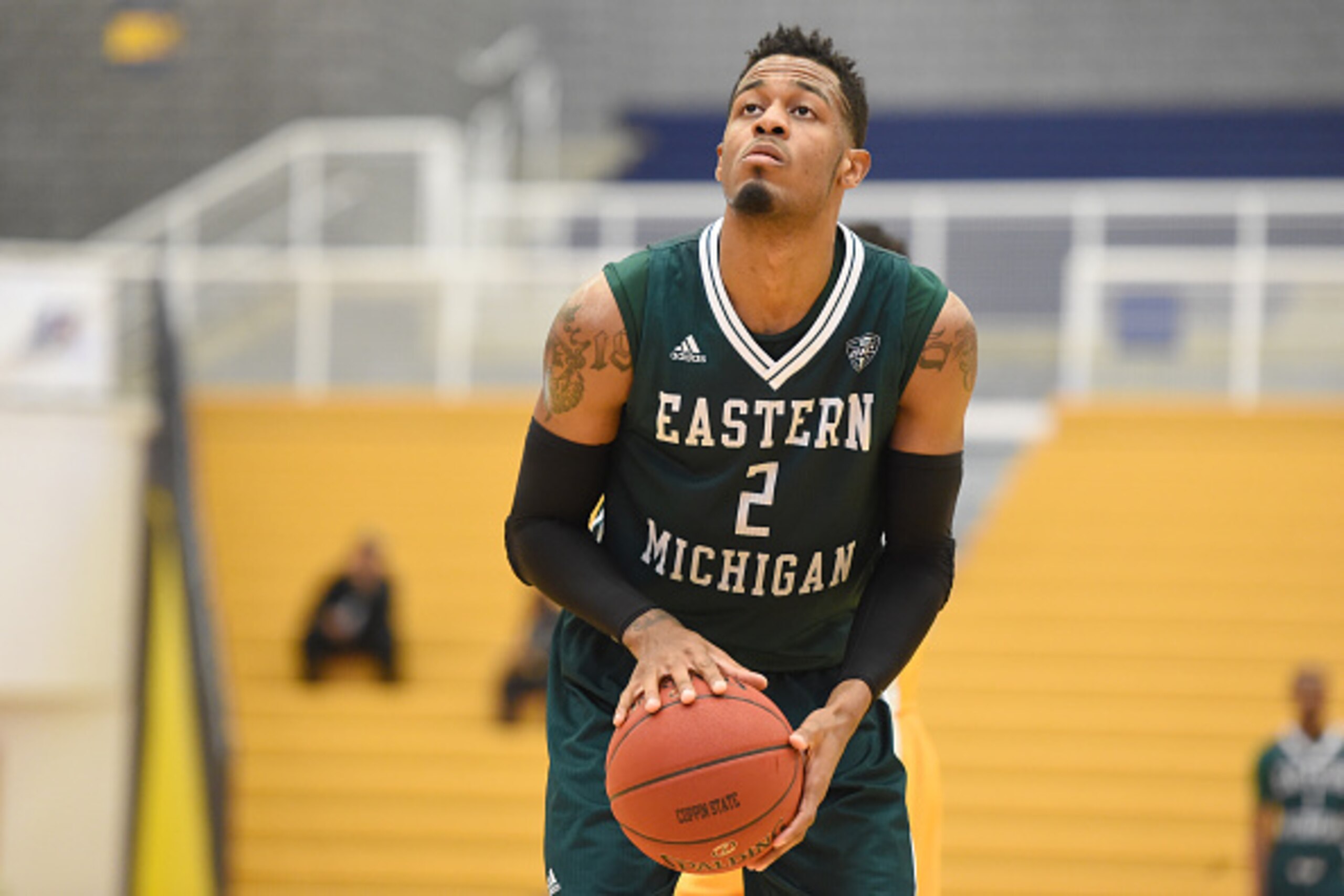
It's been the trend for some time now that tall guys, unless they're the kind with body types that are built for playing with their back to the basket, must show the ability to stretch the floor and shoot from the perimeter to be truly effective. James Thompson thinks otherwise, and he dares you to stop him in the process.
As a freshman, the 6'10”, 220-pound former South Carolina Gamecocks signee only took one three-pointer (he missed, in a game he was 6-of-10 from the floor otherwise) while shooting 65 percent from two-point range. That includes a stretch in January when he made 26 consecutive shots, which at the time tied for the NCAA record.
Overall Thompson averaged 14.8 points per game while chipping in 10.6 rebounds, 148 of his 351 boards coming on the offensive end. His 15.4 percent offensive rebound rate led the Mid-American Conference, where no one was able to prevent him from getting to the ball and then doing good things with it.
10. Lonzo Ball, UCLA Bruins
6 of 15It's been quite a while since UCLA has had an incoming player with as much hype as Lonzo Ball, and depending on who you listen to, he could be the second coming of one of the Bruins' best players of this century.
"I want to be like that dude when I get older," Ball said in the above video, referring to former UCLA standout Russell Westbrook. The 6'6” freshman has been frequently compared to Westbrook because of his diverse skill set, length and willingness to be both a scorer and facilitator.
Opponents will be hard-pressed to game-plan for Ball because of his strong passing ability—Ben Bolch of the Los Angeles Times noted Ball shined in a practice drill in which the Bruins scored baskets on five full-court possessions in less than 27 seconds—that will open the door for him to pull up or drive just as easily.
UCLA has strong returning scorers in Bryce Alford, Isaac Hamilton and Aaron Holiday, all of whom should get better with Ball around. None have the versatility or create as much of a matchup nightmare, however.
9. Evan Bradds, Belmont Bruins
7 of 15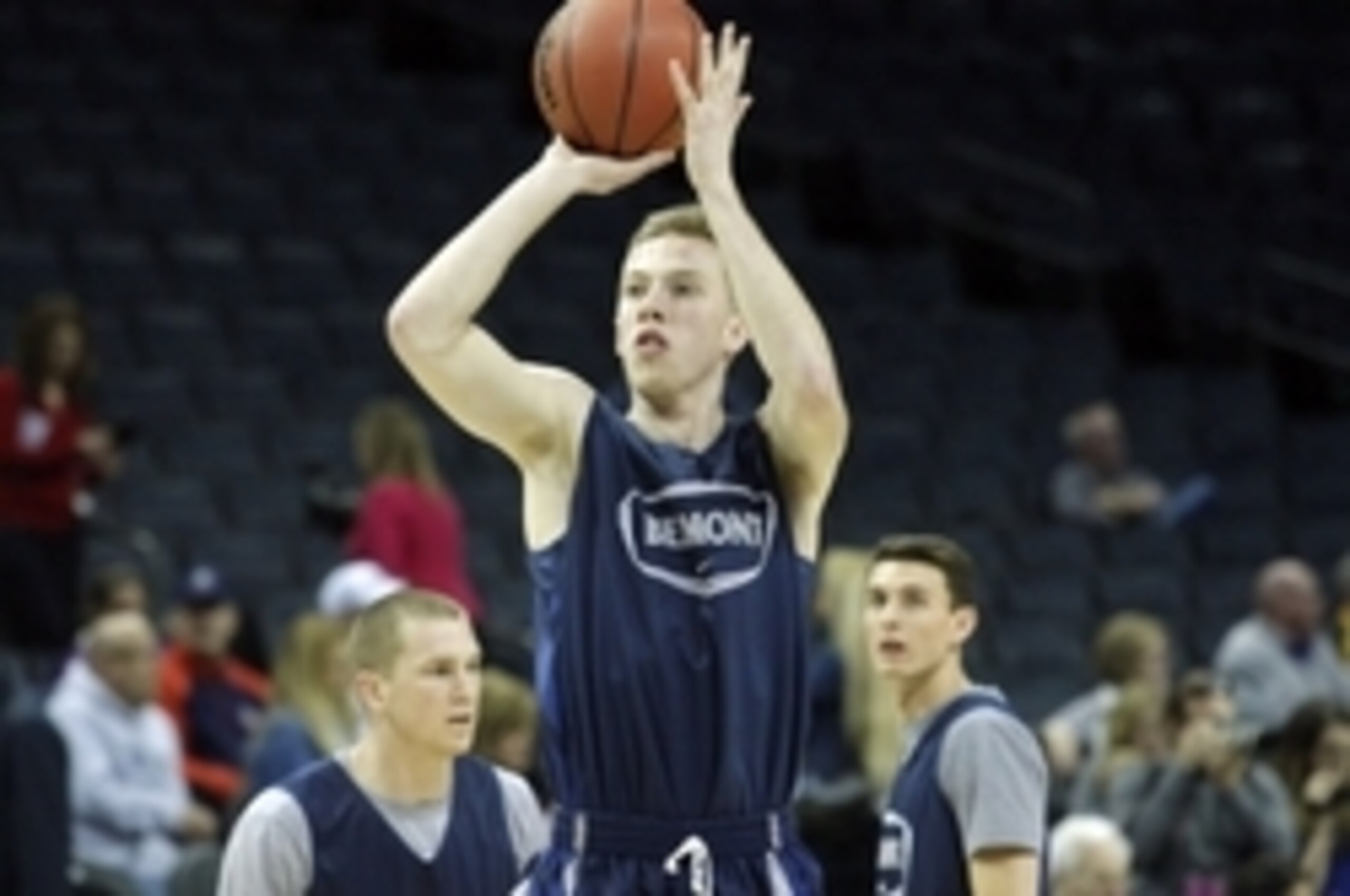
Evan Bradds isn't going to wow you as he walks onto the court; he's a 6'7” wing who doesn't look particularly athletic and certainly not like someone who will be able to score at will. And then the ball ends up in his hands, and it's a shock when it doesn't wind up going through the hoop.
Last season Bradds shot 71.2 percent from the field, the second year in a row he led Division I in shooting after making 68.8 percent of his shots as a sophomore. He took a fair amount, too, averaging 9.2 per game in 2015-16 for the Bruins en route to 17.6 points per game.
Bradds isn't a floor stretcher, having attempted only 29 threes in his career, yet his compact scoring range makes him no less difficult to defend. Whether it's a big man trying to body him up or a smaller player looking to strip the ball, Bradds manages to score far more often than he comes up unsuccessful.
8. V.J. Beachem, Notre Dame Fighting Irish
8 of 15
From a professional standpoint, V.J. Beachem is exactly the kind of player the NBA is looking for. He's 6'8” but plays more like a guard than the forward he's listed at and spends most of his time scoring from outside where few defenders have the length to affect his shot.
"He's 6-8 with a 7-0 wingspan and can really shoot the ball," CBS Sports' Sam Vecenie said, per Rivals.com. "He has a gorgeous, quick shot."
That translated to a 44.4 percent success rate as a junior for Notre Dame, hitting four or more triples in 10 games. He shot 50 percent or better inside the stripe in those contests, taking advantage of teams trying to press on him and take away the outside shot but then giving him room to drive or get into position for a mid-range jumper.
The Fighting Irish will lean more heavily on Beachem this season with point guard Demetrius Jackson and post Zach Auguste moving on. If he remains able to throw off his defenders, Notre Dame may make a third straight Final Four.
7. Nigel Hayes, Wisconsin Badgers
9 of 15
Recently picked by the media as the Big Ten's preseason player of the year, Nigel Hayes is coming off a rather disappointing junior season in which he had a career high in scoring but career lows across the board in terms of shooting rates. But within those disappointing numbers comes a difficulty to defend him because you don't know what he's going to do next.
The 6'8”, 235-pound forward has the size and strength to bang around inside and outmuscle opponents, as he did quite a bit as a freshman when shooting 51 percent and taking all 192 of his shots from two-point range. But the last two seasons have seen Hayes move farther and farther from the paint, taking more than 30 percent of his shots from outside in 2015-16.
The overall shooting rates—36.8 percent from the field, 40 percent on twos and 29.3 percent on threes—weren't much to rave about. But he also chipped in a career-best 104 assists, drawing defenders to him and then feeding teammates for easier shots, and those picking him up on the perimeter never knew if he was going to stay there or head to the rim.
6. Miles Bridges, Michigan State Spartans
10 of 15Part of what has made Michigan State such a consistently successful program during Tom Izzo's tenure is the balance it has shown on offense. Each player has had his role, responsible for certain things that lead to the common goal of efficient scoring, and only on occasion was one person relied on more heavily than the rest of that group.
An example would be how much Denzel Valentine meant to the Spartans last season because of his ability to score, rebound and facilitate with his passing. What made it possible for Valentine to do this was a skill set so diverse there wasn't an easy way to guard him or minimize his impact.
The same is expected of Miles Bridges for his freshman season in East Lansing, but with an added aspect: explosiveness. The 6'7” forward comes to college with great promise, as well as strong early praise from Izzo.
"I think he can be one of the more versatile players that we've had since Jason Richardson," Izzo told 247Sports' Jeremy Warnemuende. "He shoots it pretty good. He's stronger than most freshmen. He's a man-child in that respect."
Add in that Bridges may play up to four different positions in the course of a game, and good luck matching up effectively against him.
5. Justin Robinson, Monmouth Hawks
11 of 15
Before figuring out a way to stop Justin Robinson, first you have to find him.
At 5'8” and 175 pounds, the senior guard is regularly the smallest player on the court and usually has someone several inches taller trying to guard him. That's where the mismatch begins, because bigger players rarely have the speed to keep up with Robinson as he darts through lanes and wiggles away from traffic to get open.
Robinson averaged 19.3 points per game last season for Monmouth, topping the 20-point mark 19 times. That was tied for 14th most in Division I, with six of those games including at least 10 free throws and 12 with three or more three-pointers.
Difficult to slow down with or without the ball, Robinson is what made the Hawks such a fun team to watch last season during their swath of wins over power-conference opponents. Several more are on tap in 2016-17, so expect similar fireworks.
4. Dedric Lawson, Memphis Tigers
12 of 15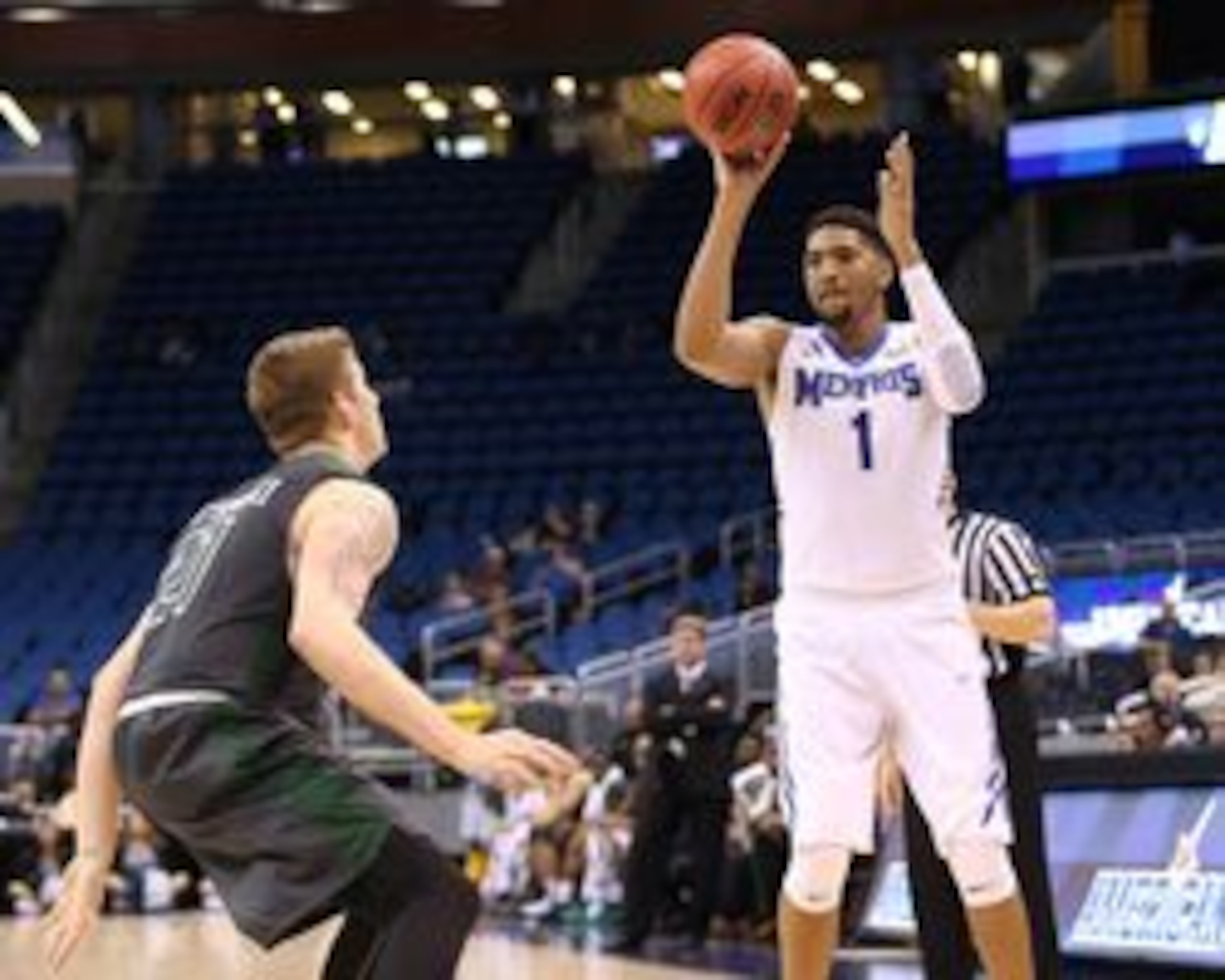
When Josh Pastner skipped out of Memphis for Georgia Tech, he left behind a player in Dedric Lawson, whom many coaches would love to coach and one most would prefer not to have to deal with.
New Tigers coach Tubby Smith is the beneficiary, inheriting a relatively inexperienced roster at Memphis but one that has a strong foundation to build on in Lawson. As a freshman the 6'9” forward led his team in scoring (15.8 points per game) and rebounds (9.3 per game) while taking more than 13 shots per game. Though he weighed only 195 pounds he wasn't able to be pushed around in the paint, and when he'd pull up from outside—making 28-of-80 threes—it opened up the entire floor for Memphis' offense.
"There's a good chance he'll lead the AAC in both points and rebounds as a sophomore," Bleacher Report's Kerry Miller wrote, noting how much Memphis is going to rely on Lawson in 2016-17.
But even though opponents will look to overwhelm him with defenders to limit his effectiveness, it's unlikely that's going to prove successful too often based on his abilities.
3. Tyler Lydon, Syracuse Orange
13 of 15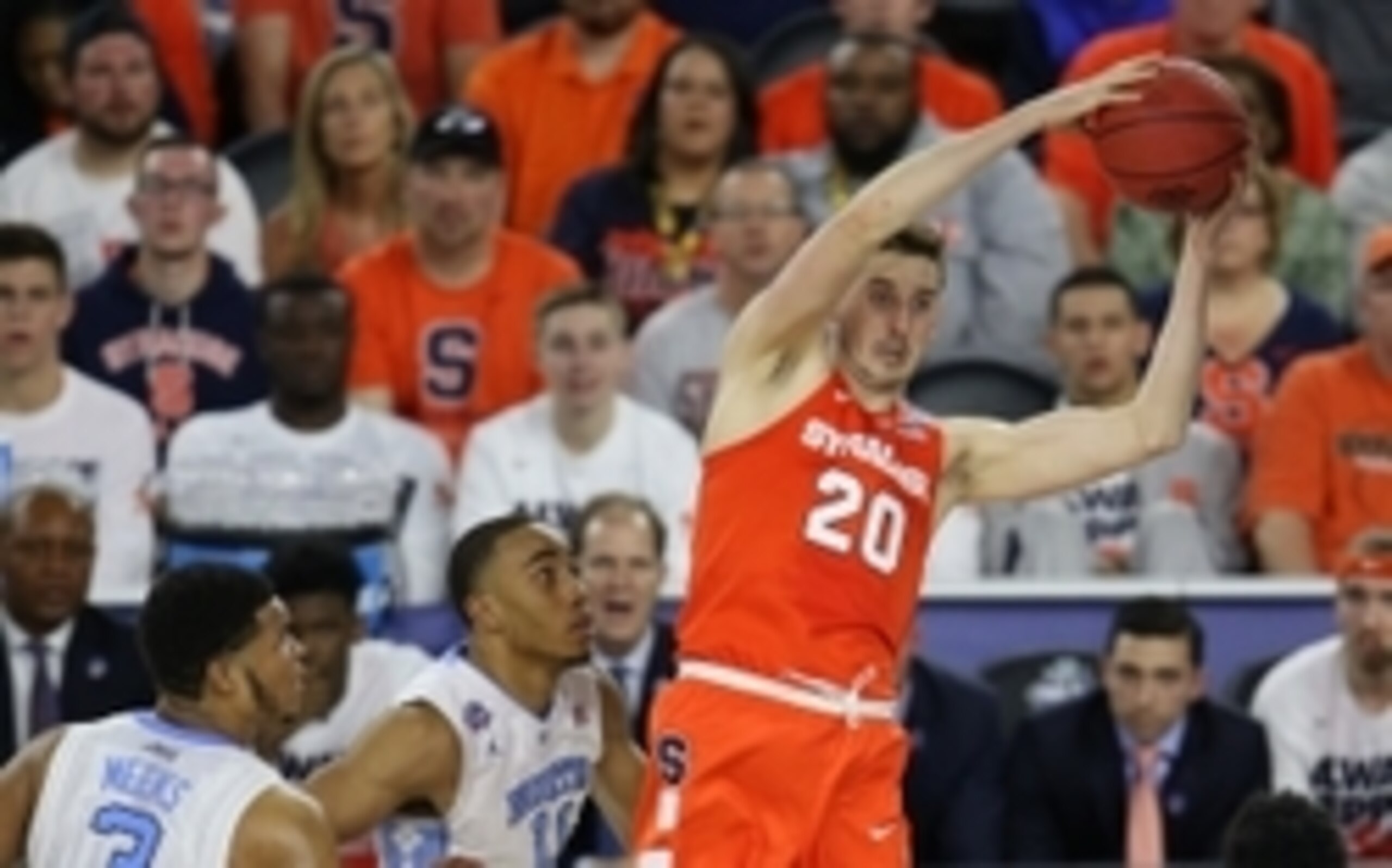
If you've got length, a decent perimeter shot and a willingness to grab rebounds, you too can be a part of Syracuse's long-used zone system. But not all long-and-lean wings and forwards are created equal; ones like Tyler Lydon are quite unique for the many ways they can contribute.
Lydon's freshman season saw him become the Orange's most versatile player despite not being in the starting lineup. He only averaged 10.1 points, but those came from all areas, through a 40.5 percent three-point rate and 54.2 percent on two-pointers, and when he got to the line that produced a 77.4 percent efficiency.
The 6'8” forward's defense often sparked the offensive game, particularly during Syracuse's unexpected run to the Final Four. He had 20 blocked shots in five NCAA tournament games, during which he also averaged 10.2 points and 5.8 rebounds.
2. Jaron Blossomgame, Clemson Tigers
14 of 15
Had Clemson managed to finish its 2015-16 season the way it started ACC play, Jaron Blossomgame might have been able to show on a national stage what teams in his league already knew: that even as Clemson's best and most frequently used weapon, there aren't many ways to slow him down.
The 6'7” forward averaged 18.7 points and 6.7 rebounds on 51.3 percent shooting, which included a strong 44.1 percent three-point rate. He was also good on 78.2 percent of his free throws, attempting 5.5 foul shots per game along with 12.6 field goal attempts. He took nearly 30 percent of Clemson's free throws and 22.7 percent of its shots from the field
"If Blossomgame played for Duke or North Carolina, he’d regularly be talked about as an ACC Player of the Year candidate," Jon Rothstein of TodaysU.com wrote.
Had he had more help around him—as will be the case around him this season, with several impact transfers becoming eligible—Blossomgame would have led the Tigers to their first NCAA tournament appearance since 2011.
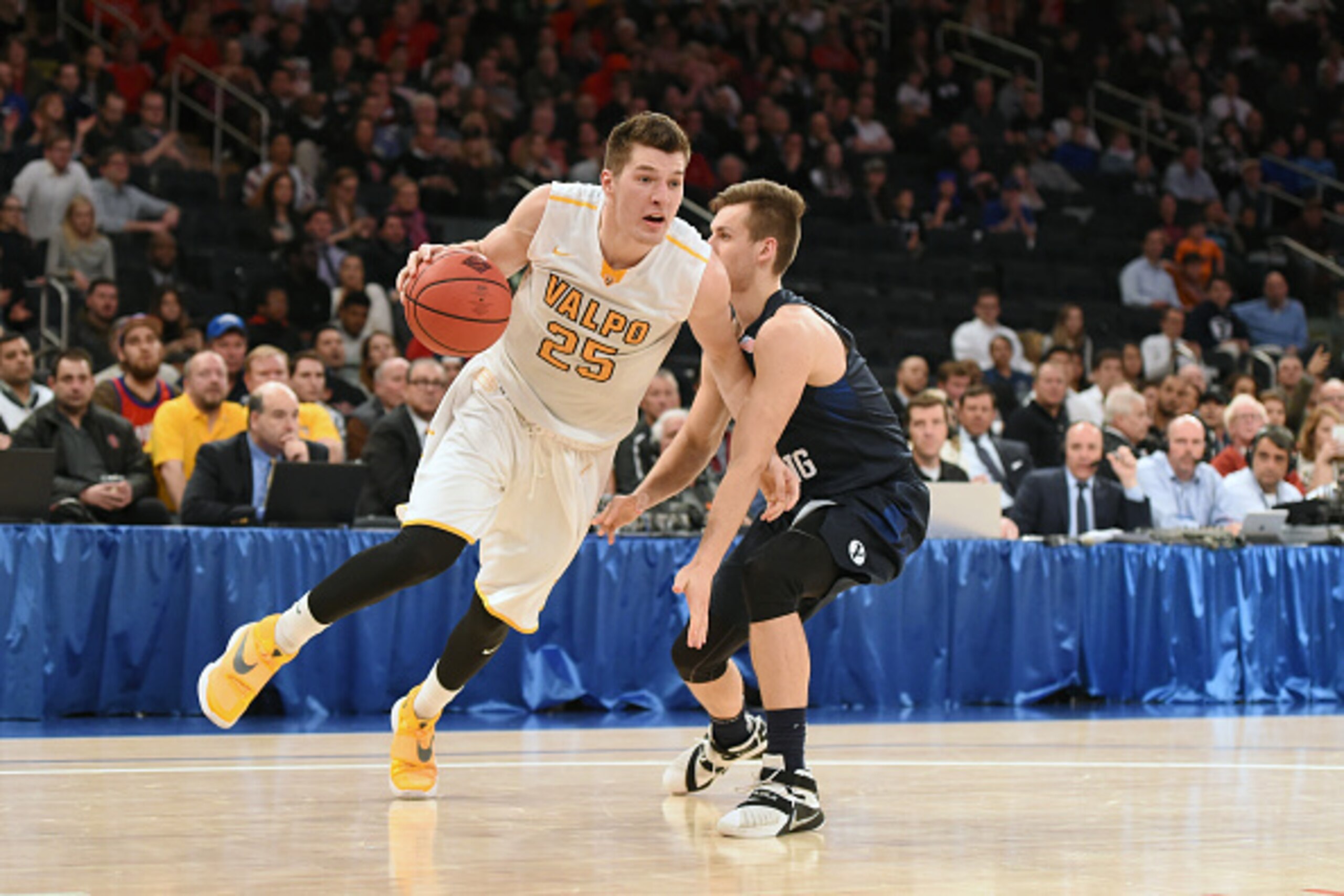
1. Alec Peters, Valparaiso Crusaders
15 of 15
Find a way to shut down Alec Peters and you'll be setting a new standard, since it hasn't happened in quite some time.
The 6'8” forward has dominated the mid-major ranks for three seasons, taking it to another level in 2015-16 when he averaged 18.4 points and 8.4 rebounds per game while shooting 50.5 percent overall and 44 percent from three-point range. He went through the NBA draft process but withdrew to return to Valparaiso for his senior year despite being able to transfer somewhere more high profile as a grad student.
Primarily a jump shooter earlier in his career, Peters now goes inside to post up more often and can also blow by most defenders. His ability to hit from the perimeter causes teams to pull a big man away from the paint to guard him, thus opening the door for a drive to the basket.
Peters had at least three offensive rebounds in 16 of 37 games last season, and in eight of those games he also hit at least five threes. There's no spot on the court where he isn't able to do damage.
All statistics courtesy of Sports-Reference.com, unless otherwise noted. All recruiting information courtesy of Scout.com, unless otherwise noted.
Follow Brian J. Pedersen on Twitter at @realBJP.


.jpg?w=2560 "Rodgers Iced Out on Plane 💎")
.jpg?w=2560 "🚨 Week 8 AP Top 25 Poll")
