
Most Advanced Analytics Teams in Sports
The use of advanced analytics in sports isn't taboo anymore. Franchises have shifted significant resources toward building departments strictly focused on powerful statistic and metric systems.
Using these systems to recruit, sign players and determine ways to win have become a serious part of the narrative in professional sports.
The slideshow you're about to embark on provides a detailed look at eight teams that have done a wonderful job creating analytics departments, spanning the NHL, NFL, MLB and NBA. With so many franchises pushing dollars toward the analytics movement, we only selected teams considered to be the most advanced of the bunch.
Honorable Mentions
1 of 9
You can't find many sports teams these days that haven't embraced the analytics movement. While some aren't totally on the cutting-edge, we figured an honorable mentions slide was important to highlight other franchises using the numbers game to their advantage:
- Boston Bruins
- Philadelphia 76ers
- Tampa Bay Rays
- San Antonio Spurs
- Oakland Athletics
- Buffalo Sabres
- Cleveland Indians
- New York Yankees
- Cleveland Browns
Dallas Mavericks
2 of 9
Dallas Mavericks owner Mark Cuban is a tech guy by nature. He made his billions selling Broadcast.com—a streaming service for college sports and other entities in the 1990s—to Yahoo.
Since then, Cuban has gone on to invest in various startups through the hit TV show Shark Tank and claimed ownership of the Dallas Mavericks. It was a natural transition for Cuban to take his love for tech and apply it to sports. Advanced analytics has now become a way of life for the Mavs, and the source comes directly from their owner.
Head coach Rick Carlisle has embraced this trend, helping Dallas use data to tinker with his lineups and win an NBA title in 2011, as John Hollinger, a former ESPN writer and current vice president of basketball operations for the Memphis Grizzlies, explained.
The NBA has plenty of tech-savvy franchises. Cuban's Mavericks sit near the top of that list.
Atlanta Falcons
3 of 9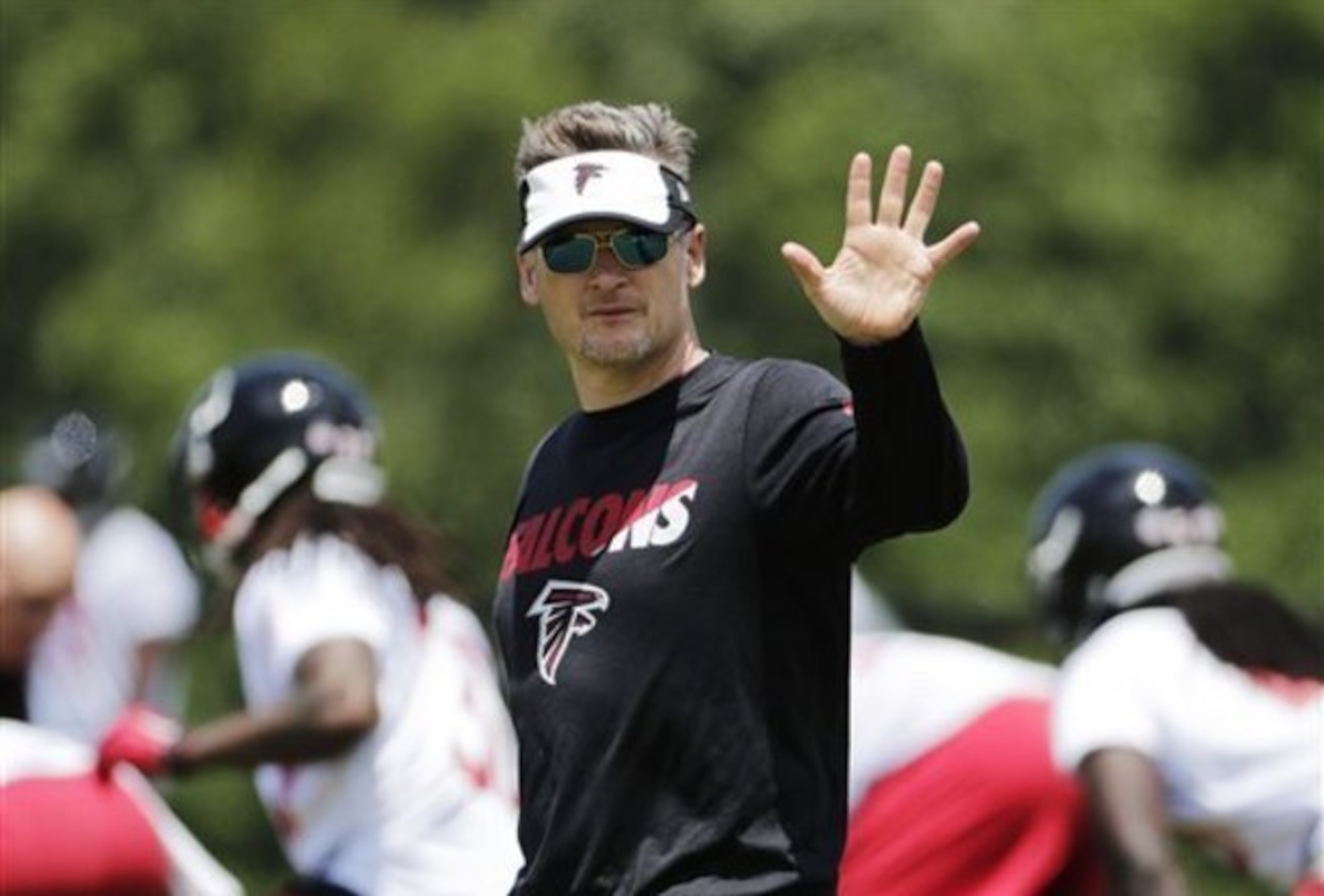
The NFL's use of analytics hasn't always been as commonplace in a mainstream capacity as the NBA or Major League Baseball. Luckily there has been a recent surge in data-driven stats and usage, as sites like Football Outsiders and Pro Football Focus—now used by the NFL on Sunday Night Football broadcasts—have become important commodities.
In terms of teams embracing advanced stats, the Atlanta Falcons and their general manager, Thomas Dimitroff, are one of the top proponents. His front office strategy has been assembled using a forward-thinking ideology.
This ideology touches all aspects, including a sleep performance program. It's been a slow transition, but Atlanta's front office seems to be all-in. They even posted an article on their website detailing why modern analytics are so important.
With head coach Dan Quinn totally on board, the Falcons, led by Dimitroff's efforts, are an important step for the future of NFL franchises utilizing data to gain an edge.

.jpg?w=2560)

Houston Astros
4 of 9
Oakland Athletics executive vice president of baseball operations Billy Beane essentially coined the phrase Moneyball. Bean's use of data research to find players who fit what the A's are doing on the field, all while avoiding spending huge lump sums of money, has set the current trend of analytics in Major League Baseball.
In today's day and age, the Houston Astros have taken Beane's philosophy to another galaxy. Joshua Green of Bloomberg called it "extreme Moneyball," and pointed to general manager Jeff Luhnow as the man with the plan.
Luhnow has taken his role seriously, challenging the very nature of advanced analytics. "Luhnow hired a NASA engineer to help him make sense of all the new data that were becoming available for assessing ballplayers," Green wrote.
It's taken a few years—Luhnow got his start with the team in 2011—but the Astros have turned it around. Back-to-back seasons with 80-plus wins and one playoff appearance has this club on the cusp of greatness.
What's amazing is the entire core of this franchise has been built on the back of analytics and unforgiving in-depth research.
Houston Rockets
5 of 9
The godfather of the advanced analytics movement in the NBA has to be Houston Rockets general manager Daryl Morey.
Morey created a reputation based on his use of numbers and data-crunching. Writing for Grantland at the time, Kirk Goldsberry went into great detail on how Morey turned the Rockets into a stats-first-driven team: "Morey spearheads a forward-thinking front office that has built a sustainable enterprise, and while there’s no question analytics are part of that, they’re by no means lonely."
He's so passionate about his way of thinking that Morey even co-founded the prestigious MIT Sloan Sports Analytics conference in 2006. It serves as a leading platform for analytic research and development, according to the MIT Sloan website.
If you were to craft a poster child and franchise for the advanced-analytics movement, Morey and the Rockets would fit the bill.
Chicago Blackhawks
6 of 9
The use of data in sports can show up in a variety of ways. In the case of the Chicago Blackhawks, one specific way they lean on analytics is in a team-building capacity.
Blackhawks vice president and general manager Stan Bowman has been a driving force behind this revolution. Talking with ESPN.com's Craig Custance about his club's use of statistical data, Bowman said, "Sometimes we find players whose skill sets and style of play mesh well with the players who are already here and our style of play. That's where I think the value of analytics comes in."
Bowman's reliance on these stats has helped the Blackhawks win three Stanley Cups in seven seasons and produced countless rosters full of talent, promise and poise. It seems like all is well in Chi-Town.
Baltimore Ravens
7 of 9
The Baltimore Ravens have relied on the use of analytics in their team-building exercises dating back to 2012. It was then when the Ravens front office hired a man by the name of Sandy Weil to lead an upstart department focused on data.
An official press release at the time described Weil's role as follows: "Charged with examining some of the league's prevailing schools of thought, Weil's studies could cover everything from the value of going for a first down on fourth-and-short, to determining the traits that are key indicators of success for an NFL prospect."
It certainly looks like a smart decision. Since 2012, Baltimore has laid claim to a Super Bowl title, two 10-win seasons and missed the playoffs only twice. With a 3-1 record this season, Baltimore once again looks primed to make a run at the AFC North crown.
Analytics aren't the sole reason for the Ravens' success. However, hiring an asset like Weil for three years— he left his position in May of 2015, according to his LinkedIn page—to build a complex department has to be recognized as a progressive move for this franchise.
Chicago Cubs
8 of 9
The Chicago Cubs were given a shot in the arm when Theo Epstein left the Boston Red Sox in 2011 to become the team's president of baseball operations.
After announcing himself as a vital part to solving Boston's dreaded World Series draught, Epstein's new mission was to use advanced data to give the Cubs a chance at ending their own postseason woes. Four seasons of Epstein's reign has turned a 71-win club into a team that finished with 103 victories in 2016—good enough for the best record in baseball.
Epstein has taken franchise-building to a new level, even partnering with Bloomberg Sports in 2012 to create a new research division. This deal helps evaluate players as well as the entire data-mining process, according to the official press release (via MLB.com).
Continuously pushing the needle in the world of advanced analytics has been part of Epstein's mantra. Let's see if it turns into a World Series win for the Cubs.
Tampa Bay Lightning
9 of 9
Those who believe the Chicago Blackhawks are the NHL's top analytics team have to understand the Tampa Bay Lightning aren't too far behind.
Tampa has transferred enough money into this field to attain success. Take 2014 for example. It was then the Lightning signed a deal with TIBCO—a powerful data management company—to use the company's Spotfire software in order to help process and develop smarter strategies for using various analytic-driven information.
An investment like that showcases a serious commitment to this line of thinking. Tampa's front office didn't just buy software in 2014 and suddenly turn into an analytics-driven team.
Way back in 2012, the club recruited Michael Peterson to think using big data. Four years later, not only does Peterson remain on the staff, but the Lightning's use of this type of information has grown exponentially.
All stats, box scores and information via Sports-Reference.com, unless noted otherwise.
.jpg?w=2560 "Falcons Saints Football")
.jpg?w=2560 "Rams Eagles Football")
.jpg?w=2560 "Injury-stricken Seahawks signing veteran RB")


.jpg?w=2560 "2 NFL Officials Suspended")
