Why Gabi's Understated Excellence Makes Him Atletico Madrid's Perfect Captain
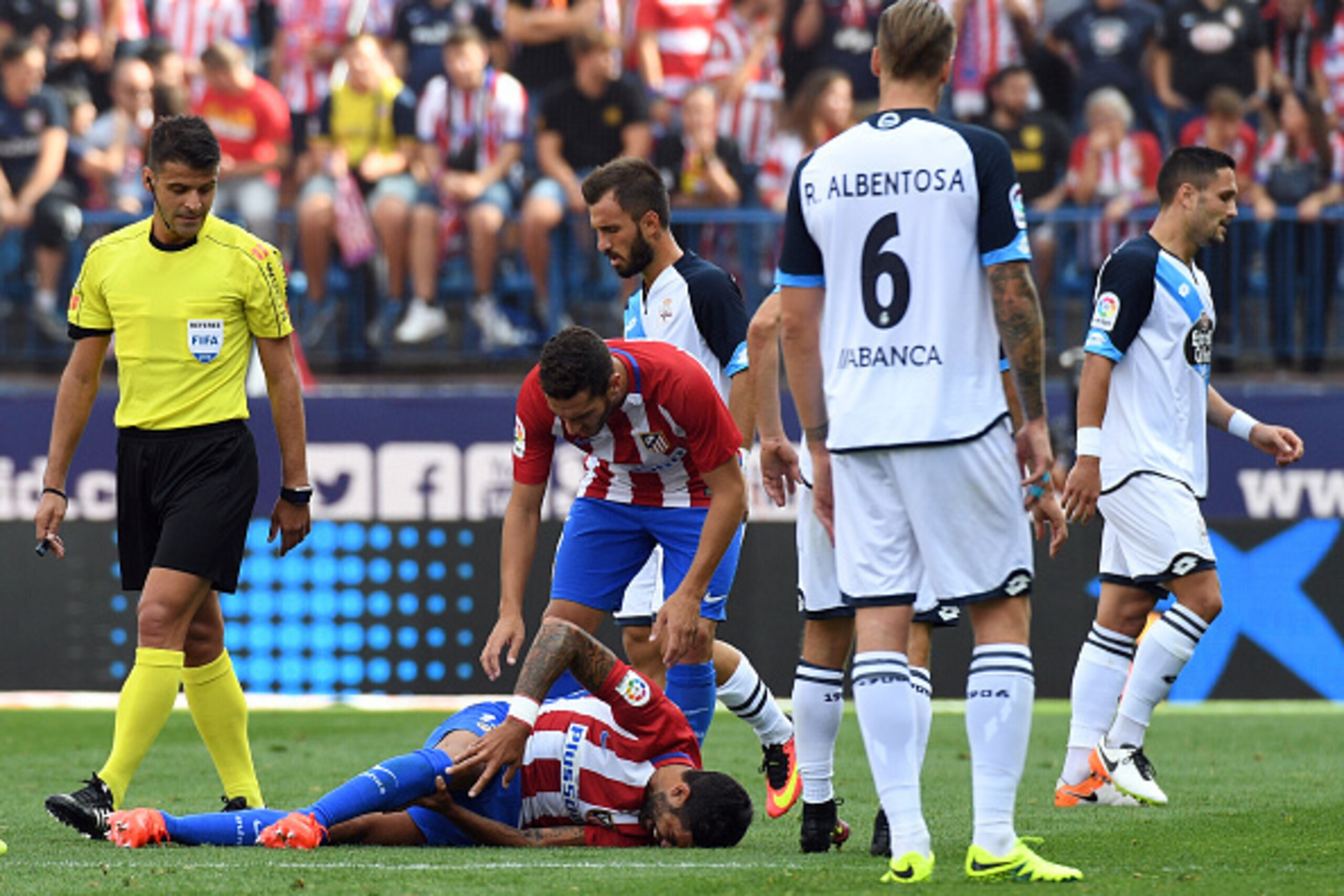
In the event, his rest only lasted 19 minutes. And although he wouldn’t have wanted to see the injury to Augusto Fernandez that required his entrance to Sunday's win over Deportivo La Coruna, Gabi would nonetheless have been happy to be involved.
On he came for his stricken team-mate—who had started in his stead, only to see his ACL cruelly tear and rule him out for a number of months—but there was no sense of ceremony about the arrival of the club captain.
He didn’t march up to his No. 2, Diego Godin, and demand he handed over the armband to its rightful owner.
TOP NEWS

Soccer Stock Check 📈📉

New NFL contenders starting to emerge after Week 4
.jpg?w=2560 "Cardinals Giants Football")
NFL investigating 2 referees for separate viral exchanges
He didn’t shout and scream at his team-mates and tell them to buck their ideas up against limited opposition.
And he didn’t charge around the field looking to set an example by leaving a few stud marks on the ankles of the opposition players.
He just arrived on the pitch, sensed that a job needed to be done and went ahead and did it.
As we speculated on these pages ahead of the game, the 33-year-old was one of the Atletico Madrid players rotated out as manager Diego Simeone sought to make changes ahead of the Champions League clash with Bayern Munich on Wednesday.
In the event, the dreadful misfortune suffered by Fernandez—and indeed by centre-back Jose Gimenez, who was also forced off in the first half with a less serious-looking injury—meant those changes had mixed results, but most importantly, the three points were secured courtesy of an Antoine Griezmann strike 20 minutes from time.
It is a result that has placed Atletico in a familiar position in the Primera Division table.
It has taken just six games for La Liga to have an expected look about it, as Real Madrid—who have stuttered with two successive draws—sit top, a point ahead of the second-placed Barcelona, who in turn are a point ahead of Atletico.
And to many, that is just the natural order of things.
There would be some clubs that, placed in Atletico’s position and facing up to the two mighty behemoths of the world game, would be happy with their lot. Third is, of course, OK. It guarantees Champions League football and shows you’ve got more in common with the division’s big fish than its small fry.
But that has never quite been the Atletico way.
Simeone is largely responsible for that desire to fight and scrap for everything it is possible to achieve, and in Gabi, he has a captain who preaches the same message, albeit in a different way.
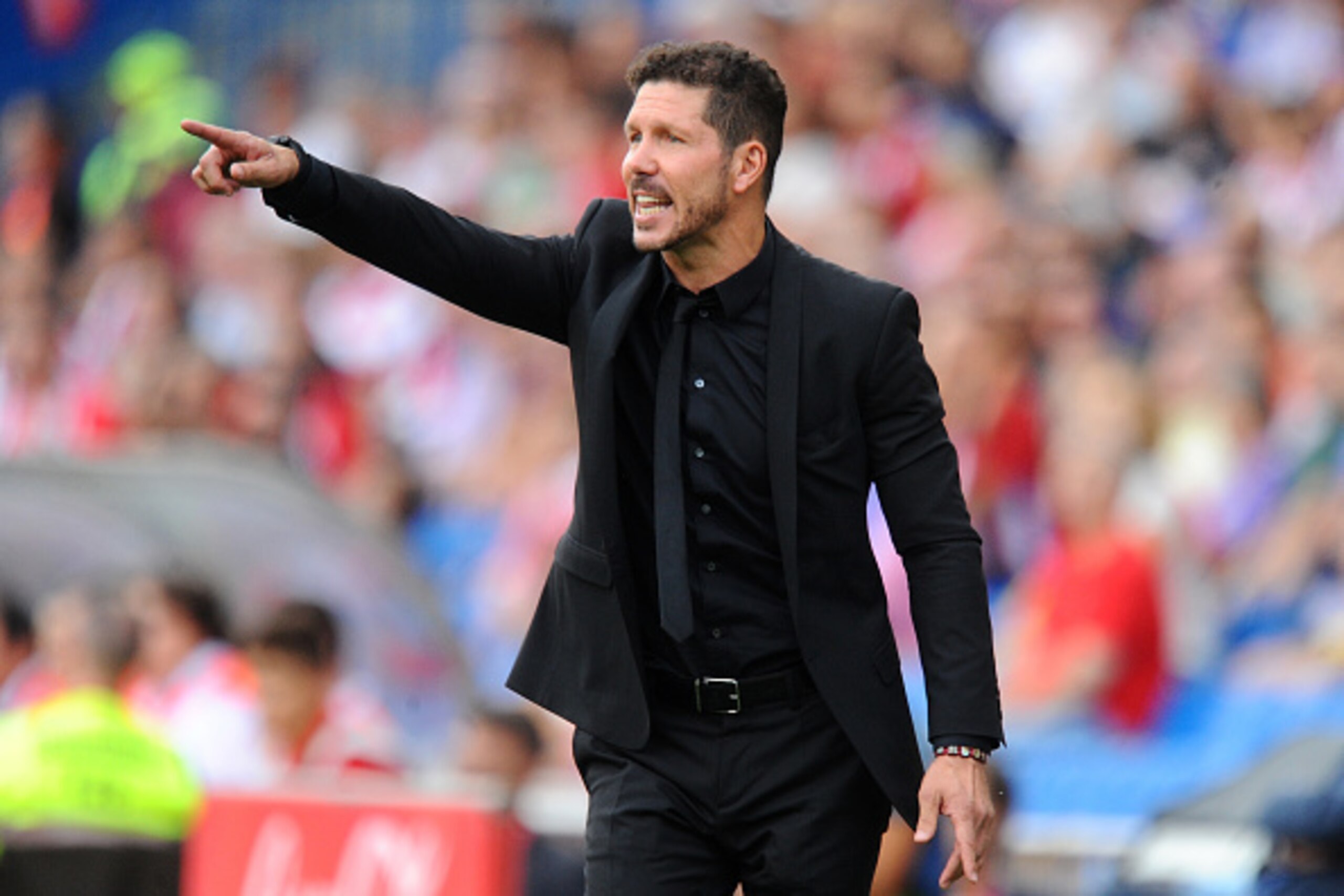
Because while the Argentinian coach is all fire and passion on the sidelines, his Spanish captain is almost the complete opposite.
He chooses to lead by example rather than fear, frequently shuttling across midfield to put out fires before passing the ball on to a more attack-minded team-mate to try to start a fire at the other end.
He can almost be seen as a quiet assassin—not in a “look at me the wrong way and I’ll take you out off the ball” type of way, but instead in a manner in which he can control both a football and a football match, shutting down any attempts from the opposition to get at Atletico between the lines of defence and midfield.
It is here where he excels, holding court and protecting his back four almost effortlessly.
These type of players have come in for universal praise in recent seasons.
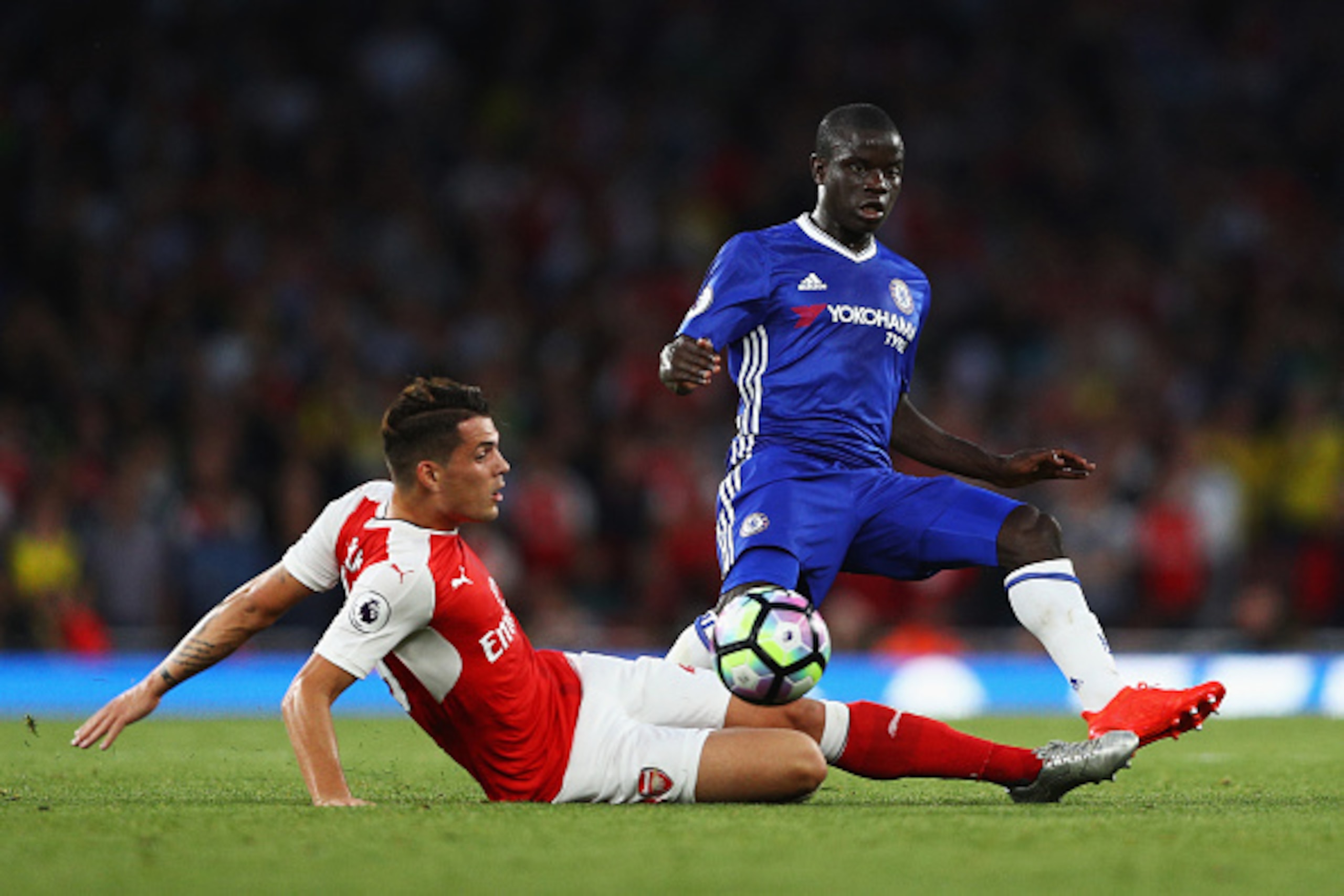
N’Golo Kante was seen as one of the key reasons that Leicester City unexpectedly won the Premier League last season, with the Frenchman earning a place in France’s Euro 2016 squad and then a lucrative move to Chelsea off the back of it.
In a short space of time—and chiefly because of what he helped achieve—he made his name by supposedly not being recognised, winning the ball back and recycling it for a team that came to rely on counter-attacking the vast majority of the time.
Gabi has never quite had that type of recognition because of a number of factors.
He was, of course, already at the club when Simeone joined in December 2011, having rejoined a few months earlier—four years after his departure for a stint with Real Zaragoza.

So he wasn’t, like Kante, a player brought in by his manager to do a specific job for his team. Indeed, during his first spell at the club, he had been Simeone’s team-mate after coming through the youth ranks.
Now his manager, Simeone inherited Gabi. Therefore, the fans would've already had an opinion on him. There would have been many—not that they’d admit it now—who would have been disappointed at his return.
Writing for ESPN FC in May, Spanish football expert Graham Hunter spelled out the issue with Gabi—as much a fervent Atletico fan as Fernando Torres—during his formative years in the Atletico setup.
"[He was] system-born, but system-rejected too. Gabi was crafted in Atleti's academy yet judged, initially, as not having the right stuff. He was bounced out. Although it's hard to conceive now, once repatriated from Real Zaragoza in the summer of 2011, he became regarded by fans and media alike as symbolic of the club's fallibility and weakness.
In his first spell at Atleti, Gabi was a 'middle of the table' player, part of an era during which the club never finished higher than seventh and didn't play Europa or Champions League football. With Atleti, he'd done nothing but lose to Real Madrid in derbies, and just to rub salt in the wounds of the long-suffering Calderon faithful, when Gabi did win or draw against Los Blancos, those results came while he was playing for Getafe or Real Zaragoza. When he returned to Atleti, his first 23 games saw the team humbled by little Albacete in the Cup and as near to the relegation zone as to Champions League qualification.
"
Five years on, he’s won La Liga and appeared in two Champions League finals, although he remains without a senior Spain cap.
That, if anything, has strengthened his bond with the Atletico fans even further. He is their player and only theirs, and he’s come to represent Simeone on the pitch in two rather emphatic ways, according to Hunter:
"Gabi has become the embodiment of El Cholo on the pitch. More than any other footballer in this Atletico squad, Gabi has come to symbolise the attitude, savvy, commitment, aggression and winning mentality through which Los Colchoneros have been transformed.
It's as if Atleti have three 'Cholos' now: the manager himself, Gabi as the manager's representative on the pitch, and Gabi the Cholo-replica footballer. That's some resource.
"
It certainly is, and it is one that will again be called upon when Bayern come calling at the Vicente Calderon.
Gabi—although now not rested—has seen it all before, of course, and he’ll simply treat it as just another game and another opportunity to lead his men by example into a battle many expect them to lose.
But Atletico, and Gabi, don’t often listen to expectations.

.jpg?w=2560 "Hill Injury Update Football")
.jpg?w=2560 "OBJ Calls Out Giants 😳")
.jpg?w=2560 "Tyreek makes another cryptic post amid Chiefs rumors")