

U.S. Open Champion Angelique Kerber Clinches WTA 2016 Player of the Year
Angelique Kerber is the surprise star of the year after winning the 2016 U.S. Open. The 28-year-old German rallied from a 3-1 deficit in the third set to defeat Karolina Pliskova 6-3, 4-6, 6-4. It was another hard-earned, clutch effort that solidified her new No. 1 ranking and left no doubt that she is the player of the year in the WTA.
Take a moment to appreciate Kerber’s year. She won the Australian and U.S. Opens, the two majors played on hard courts. She was a finalist at Wimbledon, silver medalist at the Olympics and winner at Stuttgart. She is the one who finally toppled Serena Williams’ record-tying reign at No. 1, a streak that had endured 186 weeks since late February 2013.

.jpg?w=2560 "Cardinals Giants Football")
No matter what happens to end the tennis year from now to November’s year-end tournament in Singapore, Kerber’s 2016 will go in the record books as the best.
Rise of the Unorthodox Grinder
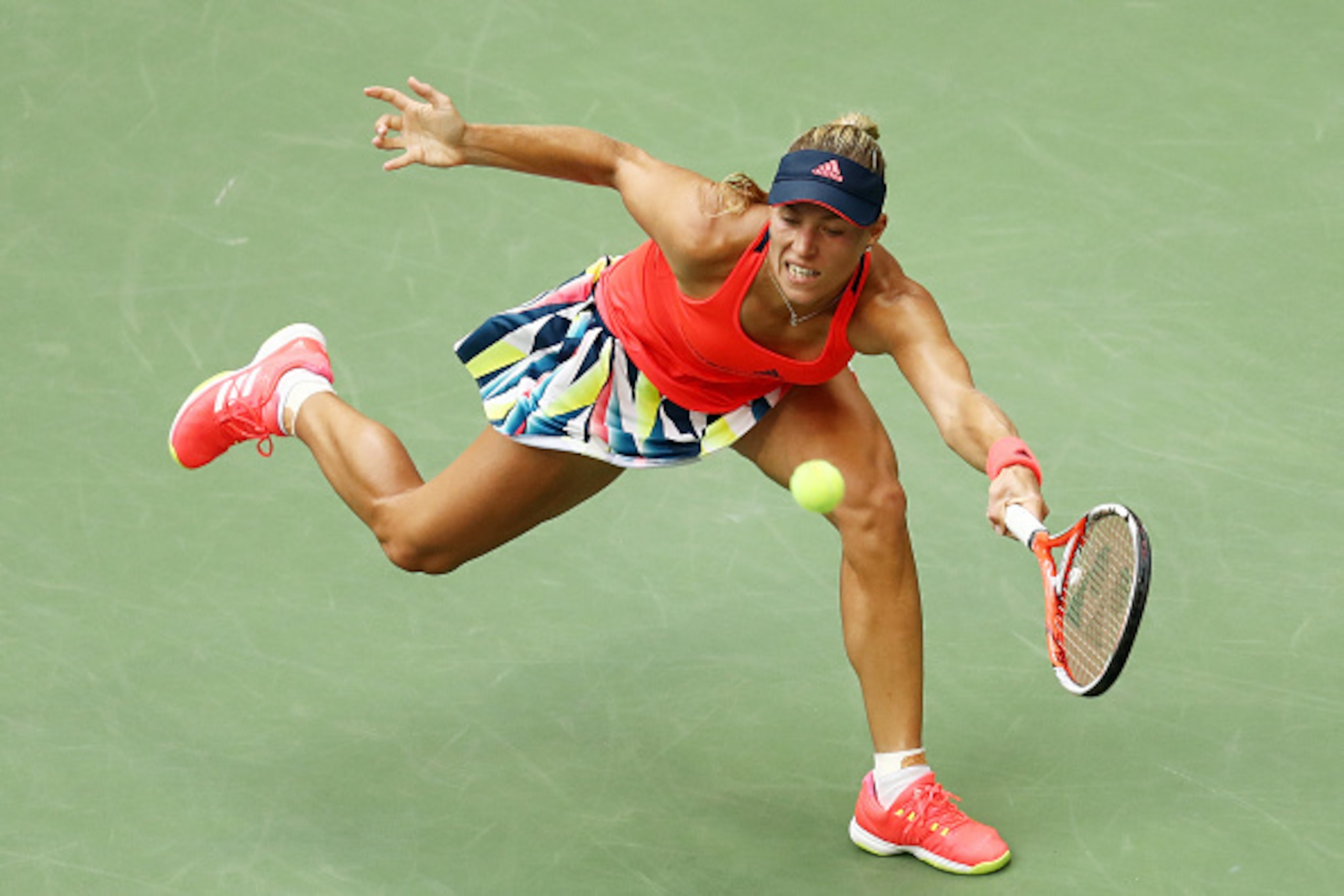
Kerber is not a dominating player. She will only be linked with legends Steffi Graf and Serena Williams because she hails from the same country as the former and has the timing to outlast Serena’s ups and downs in 2016.
Kerber was still relatively unknown when she surprised the tennis world by making it to the 2011 U.S. Open semifinals. By the following year, she was a top-10 player and Wimbledon semifinalist, getting to No. 5 in the rankings.
Then the momentum stopped and Kerber settled in as a borderline top-10 player. She was just another star on a cloudy night, slipping in and out of Serena’s dominant reign. Kerber was solid but unable to do more than one quarterfinals appearance at a major (2014 Wimbledon) from 2013-15. There were no signs that she would rise to the very top.
Winning is never easy with Kerber’s unusual strokes. She’s a lefty with a sweeping forehand that comes nearly horizontal across her body, like watching throwback legend Jimmy Connors who bristled at hitting heavy topspin. Kerber is often bent over or crouching down for open backhands. She has to clear the net by inches and still fly it deep to the baseline, and this is not easy without the security margin of enormous topspin.
Instead, Kerber’s unorthodox style and sudden success has become a thorn in the side of more talented stars. She is extremely fit with strong, muscular legs and the ability to track down her opponents’ best offensive shots. Her sharp angles, timely aggressiveness and flat returns do not leave her as vulnerable to opponents who look to hammer short high balls.
Watching Kerber is a study of concentration. There’s no question that her belief to work hard and play her game has been the foundation to her success, a sentiment she tweeted out recently:
Even after upsetting Serena in the 2016 Australian Open final, it was questionable as to whether Kerber could build on her success, to even have a shot at another major—let alone go after the No. 1 ranking.
It has not been easy. Kerber has two of the year’s majors (Serena won Wimbledon and Garbine Muguruza the French Open), but only one other minor title. She’s blossomed when it counted most, and she’s had to overcome many tough losses including the Wimbledon final.
Ten times Kerber has made it to the semifinals or better in tournaments this year, a tribute to her tenacity, but she’s also lost big matches to Pliskova in Cincinnati, Monica Puig for the Olympics gold medal in women’s singles, Simona Halep at Canada, Serena at Wimbledon, Victoria Azarenka at Miami and Belinda Bencic in Fed Cup play.
Her 54-14 record is terrific but not in the ranks of the truly dominant seasons of the past. She was nearly wiped out on clay, losing at Madrid, Rome and the French Open in the first round. Maybe she needed those lows to regroup and overcome the pressures of becoming the No. 2 player and Australian Open champion.
Kerber Edges Serena in 2016

Serena fans can justifiably point out that the American superstar is still the best player in the game. She appeared in the finals of the year’s first three majors, winning Wimbledon and then matching last year’s run to the U.S. Open semifinals. She won Rome and was a finalist at Indian Wells.
The American is more dominant than Kerber, even nearing age 35. Had Serena matched up with Kerber, Serena would have been a solid favorite. Her 38-6 record in eight tournaments is more efficient than Kerber’s, but it also hints at why she was not able to maintain her No. 1 ranking.
The American superstar has had to pace herself with injuries, nerves in big matches, the pressure of chasing Steffi Graf and the heat of many rising young players who can seemingly rotate their opportunities to go after Serena.
Ultimately, Serena’s sore shoulder cost her at the Olympics, and she missed Cincinnati. She was hobbled for a few matches at the U.S. Open and could not grind past Karolina Pliskova.
But take nothing away from Kerber. Maybe Serena gets healthy and dominates the Asian swing and the year-end finals at Singapore and takes back her No. 1 ranking. In the end, Serena would much rather have what Kerber won in 2016, two majors.
"Emotional moments for #Kerber, the first woman not named Serena to win 2 Slams in the same year since 2007. pic.twitter.com/BTOA24qC1F
— Live Tennis (@livetennis) September 10, 2016"
That’s the all-important determinant in deciding the player of the year, and Kerber will be an important part of tennis history no matter what happens as she pushes toward 30.
“It means a lot to me,’’ an emotional Kerber said in the post-match ceremony, via The New York Post. “I always dreamed to be No. 1, always dreamed winning a Grand Slam and this is my second and especially in New York. I’m the No. 1 player in the world. All the dreams came true this year.”

.jpg?w=2560 "Tyreek Deal May Come Soon")
.jpg?w=2560 "Ward Nearly Walks Out of Presser ▶️")
