
When it comes to conference rivalries in men's college basketball, every metric and eyeball can tell you it doesn't get any better than Duke vs. North Carolina.
Before you start clamoring for Kentucky vs. Louisville, Cincinnati vs. Xavier or some combination of the Philadelphia Big 5, be sure to note we're only interested in rivalries between teams that are (or were) in the same conference for the majority of the games played against each other.
We'll get into the mathematics behind the rankings on the next slide, but just know the calculations are rooted in the theory that the best rivalry would be two teams from the same neighborhood that have played each other multiple times per year for a century, resulting in an annual tug-of-war between contenders for the national championship.
So, yeah, Duke vs. North Carolina scored pretty well. But so did BYU vs. Utah, Penn vs. Princeton and a trio of Big Ten rivalries.
Read on to find out where those heated battles rank.
Ranking Process
1 of 17
Each rivalry was given a rating from 0-10 in four categories based on how it stacked up against the rest of the rivalries. Those categories and how they were scored are:
Proximity
The number of miles one would need to drive to get from one stadium to the other. The closer the better, because no rivalry is complete without fans of opposing schools bumping into each other in day-to-day life. Distances ranged from six miles for Richmond vs. VCU to 500 miles for Arizona vs. UCLA. Scores were calculated as 10-(((distance - 6)/494)*10).
Longevity
Total number of games played between the two schools. Kansas and Kansas State are the standard-bearers with 283 battles over more than a century, but each rivalry considered has had at least 76 showdowns. Score were calculated as ((number of games - 76)/207)*10.
Balance
It's one thing to face the same opponent 200 or more times, but the best rivalries are the ones that go back and forth. Kansas and Kansas State have played 281 times, but the Jayhawks have 95 more wins than the Wildcats. Meanwhile, BYU leads Utah by a margin of 129-128 in their series. Scores were calculated as 10-(((margin - 1)/94)*10).
National Relevance
Even when two irrelevant programs swap victories for decades, their rivalry is still irrelevant. Each team was given a national relevance score calculated as (national championships*25)+(Final Fours*10)+NCAA tournament appearances. Each rivalry was then given a raw score by adding the two components together. Duke and North Carolina topped the list with 687 points, while VCU and Richmond combined for just 34. Scores were calculated as ((Raw Score - 34)/653)*10.
One Final Note
Scores for rivalries between programs that are no longer in the same conference were deducted four points, even if they still play each other in nonconference games on an annual basis. That put their maximum scores at 90 percent of the other rivalries, but one still scored well enough to rank in the top 15.
Honorable Mentions
2 of 17
Syracuse vs. Georgetown and Syracuse vs. Connecticut
Surprising omissions, but they weren't even that close to making the list.
Both scored poorly in proximity and longevity, with fewer than 100 games played between schools separated by more than 250 miles. Despite low scores in this ranking, Syracuse vs. Georgetown and Syracuse vs. Connecticut will be fondly remembered for the Big East gems they gave us for several decades. Of all the rivalries that dissipated during conference realignment, these were two of the biggest ones.
Duke vs. Maryland
In the late 1990s and early 2000s, this was every bit as good as Duke vs. North Carolina. But that was the only stint during which both teams were good at the same time. Other than that, it was just two schools separated by 280 miles that began to really despise each other toward the end of Maryland's time in the ACC.
Kansas vs. Missouri
Like Duke vs. Maryland, the hatred between Kansas and Missouri seemed to hit its apex right as the rivalry was coming to an end. After decades of being undersold as one of the better annual tilts in the game, the frustration with conference realignment led many to regard this as the third-best rivalry in the country—just a step below Duke vs. North Carolina and Kentucky vs. Louisville.
But the Jayhawks owned the rivalry, winning 77 more games than the Tigers. They were also the drastically more relevant program, boasting 14 Final Fours and three national championships to Mizzou's zeroes. Throw in the fact that "The Border War" was actually a battle between schools separated by 169 miles, and it just missed the cut.
Had we not added in that four-point deduction for rivalries between teams no longer in the same conference, though, this one would've ranked No. 10.
15. VCU vs. Richmond
3 of 17
Proximity: 10
Longevity: 0
Balance: 7.98
National Relevance: 0
Total: 17.98
Compared to others on the list, there's very little basketball history between these two programs. The 76 games VCU and Richmond have played against each other is the lowest total of any rivalry considered, including the honorable mentions.
Moreover, these teams haven't much mattered in the grand scheme of things. VCU had that magical run to the 2011 Final Four, but that's the only time either team even reached the Elite Eight.
But the Capital City Classic—formerly known as the Black and Blue Classic—has packed a lot of bad blood into a short period of time. Much of that can be attributed to the fact that the public school (VCU) has been better than the private school (Richmond) located just six miles away.
Plain and simple, these guys don't like each other. That usually results in a rock fight on the court. This past season was an exception to the rule with a pair of high-scoring affairs, but for the majority of the past two decades, these games have been a slow race to 70 points.


14. Arizona vs. UCLA
4 of 17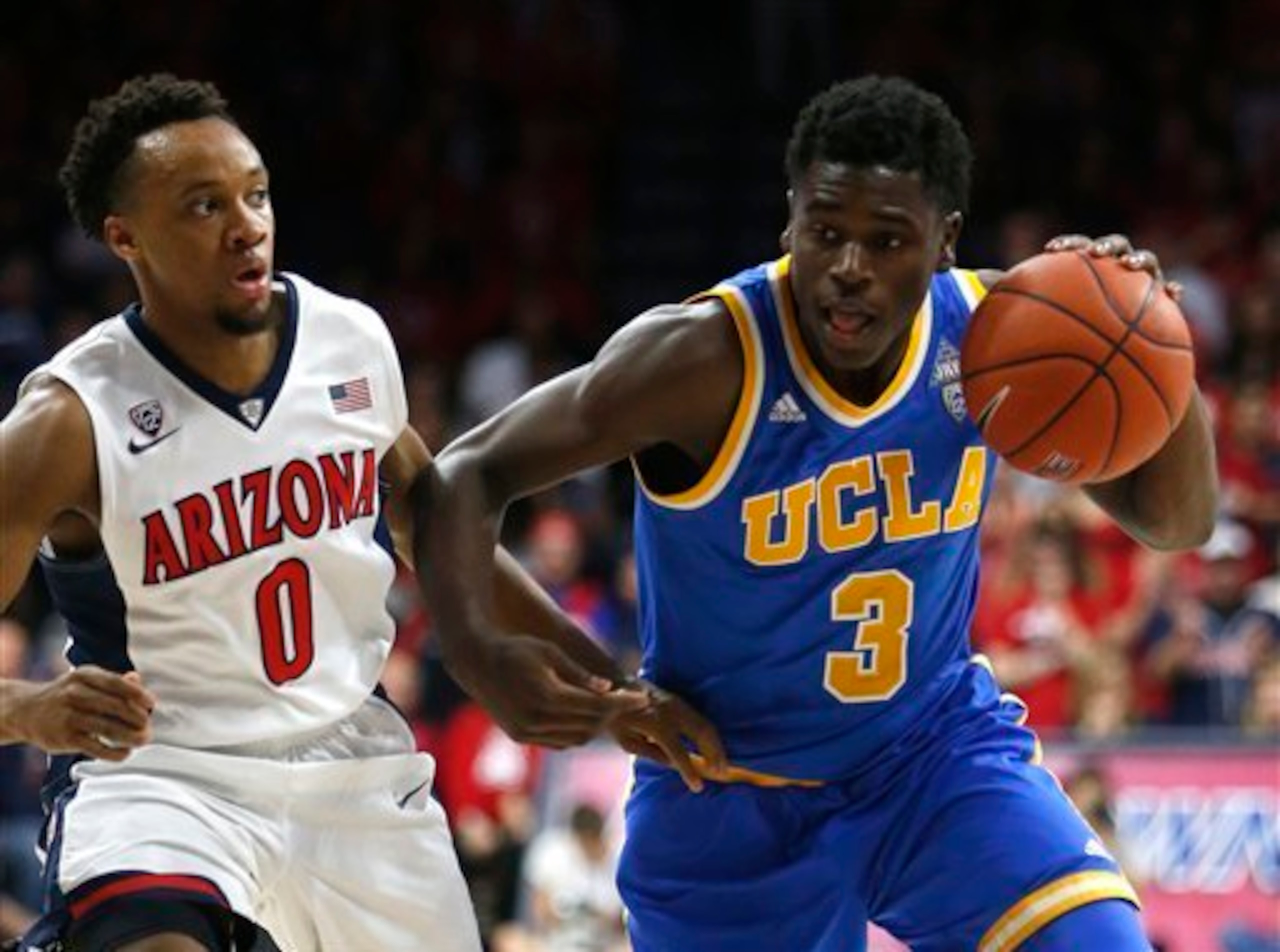
Proximity: 0
Longevity: 0.93
Balance: 8.51
National Relevance: 8.67
Total: 18.10
This one started out as quite the one-sided affair. From 1923-84, the Bruins went 23-2 against the Wildcats.
Over the past three-plus decades, though, there has been much more give and take.
Arizona has a 38-32 edge during that time. Aside from an eight-game winning streak by UCLA in the late 2000s—when it went to three consecutive Final Fours—neither team has won more than four straight games, and there hasn't been a winning streak longer than three games in the past seven years.
In addition to a balanced affair, what has made this rivalry so great is that these are usually the two teams battling for Pac-12 (or Pac-10) supremacy. In the past 31 years, Arizona has 14 conference titles while UCLA has won nine. That doesn't mean this series always determines the champ, but it's one of the few Pac-12 games circled on the national calendar every year.
13. Arizona vs. Arizona State
5 of 17
Proximity: 7.83
Longevity: 7.56
Balance: 3.19
National Relevance: 1.19
Total: 19.78
Arizona's second appearance on the list could not be much different than its first.
The Wildcats and Bruins combined for less than one full point in longevity and proximity while putting up big totals in balance and relevance. But with the Sun Devils, Arizona did most of its damage by playing so many games against a relatively nearby team.
Compared to the 500-mile drive to Los Angeles, the 113-mile trek to Tempe feels like a walk in the park. And after 231 games against each other, it's a drive that most fans can make in their sleep.
Arizona State doesn't have anywhere near the pedigree that UCLA has, though. It barely has more NCAA tournament appearances (14) than UCLA has national championships (11). And with a 148-83 record against the Sun Devils, the Wildcats haven't even been tested compared to their wars with the Bruins.
Nevertheless, these two programs have been battling for so long that the sheer accumulation of games was too great to ignore. If Arizona State—five NCAA tournament appearances in the past 35 years—ever became a more consistent contender in the Pac-12, this could quickly come to be regarded as one of the top rivalries in the country.
12. Georgetown vs. Villanova
6 of 17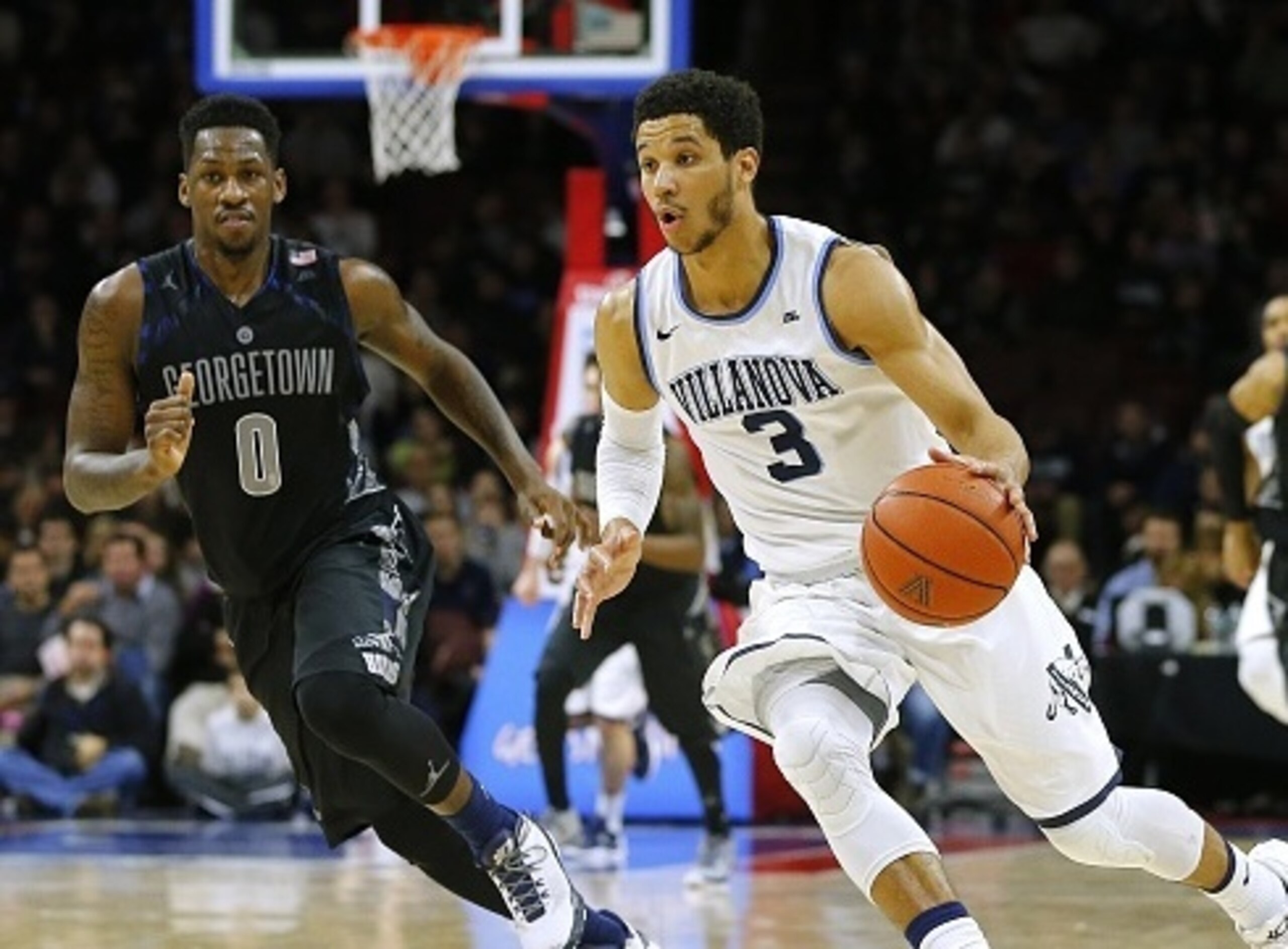
Proximity: 7.37
Longevity: 0.1
Balance: 9.26
National Relevance: 3.17
Total: 19.89
These two schools have only played two more times than Richmond and VCU, but one of those games was one of the most memorable national championships in college basketball history.
Seeking its second consecutive title, Georgetown spent the entire 1984-85 season ranked either No. 1 or No. 2 in the AP poll. There weren't No. 1 overall seeds back then, but it certainly would have gone to the Hoyas. And after stomping fellow Big East No. 1 seed St. John's in the Final Four, the only thing left standing in their way was a No. 8 seed they had already beaten twice that season.
Led by Dwayne McClain and Ed Pinckney, though, Villanova shocked the world, shooting 78.6 percent from the field in the 66-64 victory.
It was only the sixth year of the Big East, so rivalries within the conference were still in their infancy. But that game ensured that Georgetown and Villanova would hate each other for the next three decades.
11. Kentucky vs. Tennessee
7 of 17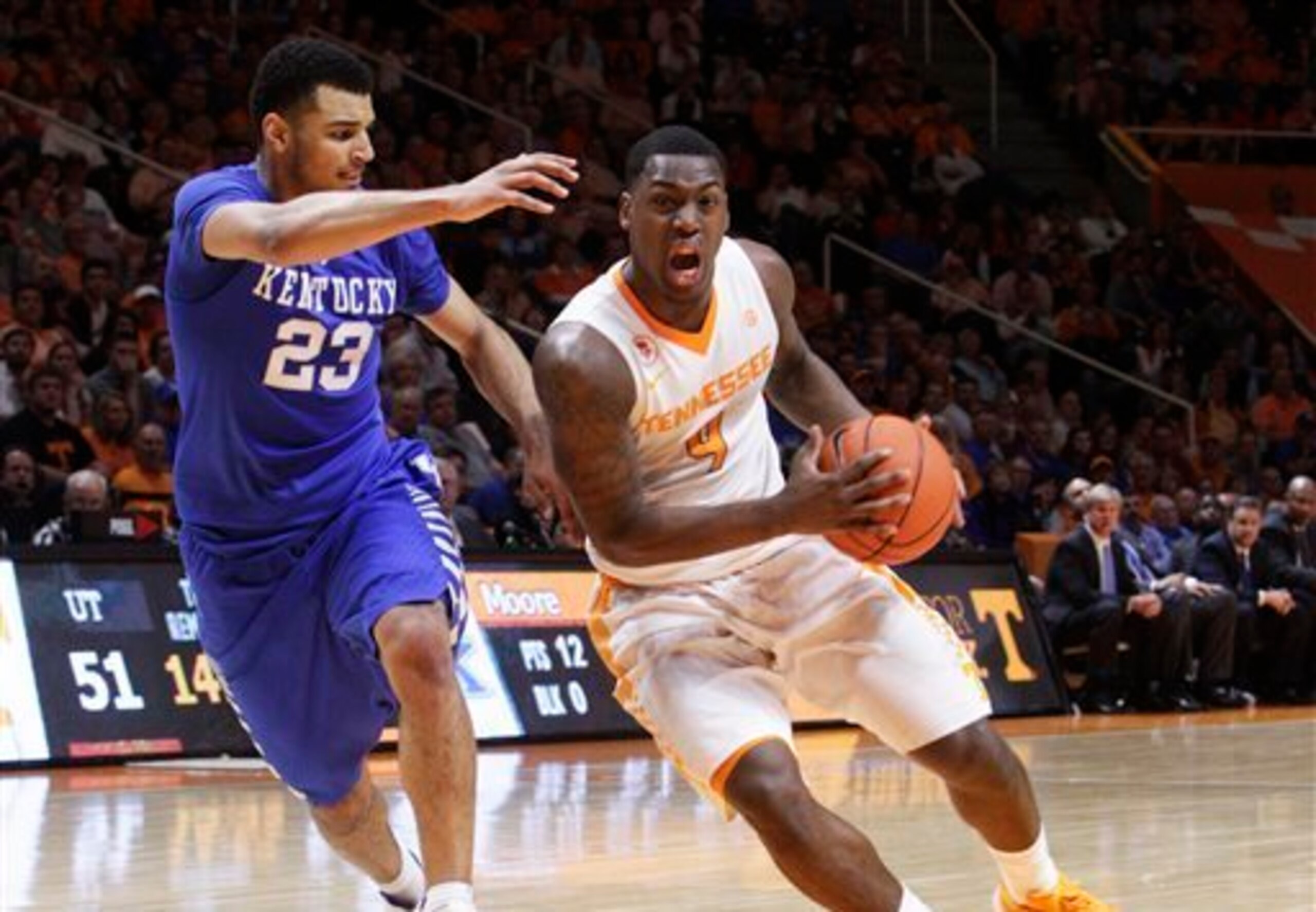
Proximity: 6.5
Longevity: 6.93
Balance: 1.38
National Relevance: 6.3
Total: 21.12
Most fans with only a decade's worth of memory want to believe that Florida is Kentucky's biggest rival in the SEC, but the Gators weren't even remotely relevant until about two decades ago. By the start of the 1997-98 season, Kentucky had already opened up a 72-20 lead in the series. Things have been more balanced since then, with Kentucky winning just 27 of the last 44 games, but there were several multiple-year stretches in which Florida didn't even come within 10 points of beating Kentucky.
Rather, it's Tennessee that has the much longer track record against the Wildcats and that has beaten them on a somewhat-regular basis.
Of course, we're talking about a program with an all-time winning percentage of 76.4, so winning one out of every four games against Kentucky would be enough to put the Volunteers in the minority. They have been a little bit better at 31.2 percent, winning 68 of their 218 battles with the Wildcats.
Consider that Tennessee has never been to a Final Four, though, and it's even more impressive that the Vols have been able to take nearly one out of three from mighty Kentucky.
From 1992-1999, there was a stretch of 16 games in which Kentucky was ranked in the top 10 and Tennessee wasn't ranked at all. The Volunteers won three of those games, including one on the road against No. 2 Kentucky. That's the stuff that great rivalries are made of.
10. Minnesota vs. Wisconsin
8 of 17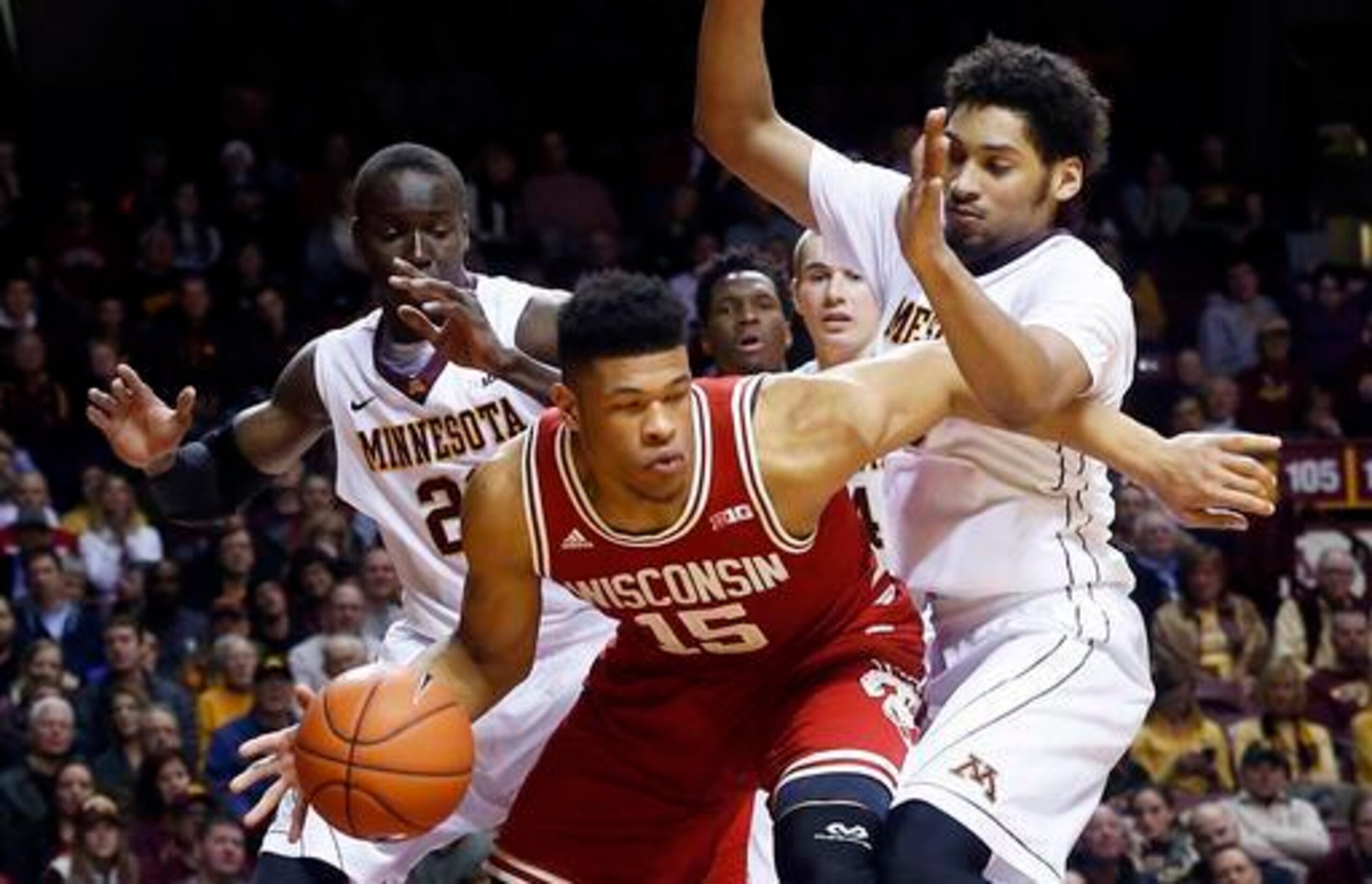
Proximity: 4.72
Longevity: 6
Balance: 9.57
National Relevance: 1.15
Total: 21.44
As pointed out on the previous slide, the past two decades make it feel like Kentucky vs. Florida should be a better all-time rivalry than it actually is.
With Minnesota vs. Wisconsin, we see the opposite phenomenon. The past 18 years make it feel like the Badgers should be so far ahead that even calling this a rivalry would be laughable. Dating back to 1998-99, Wisconsin is 441-173 with three Final Four appearances. During that same span, Minnesota is 317-266 with only one win in the NCAA tournament.
The Badgers have gone 25-7 against the Golden Gophers in the 32 games played in those 18 years.
But in the 48 years before that, Wisconsin had a cumulative record of 546-694 and won just one NCAA tournament game. While Minnesota had a few Sweet 16 appearances in those decades, the teams were on more level ground, going back and forth to the point where the all-time series is currently just 102-97 in favor of Minnesota.
In terms of both proximity and national relevance, this rivalry isn't anything that special. But Minnesota and Wisconsin have been evenly matched for so long that it has evolved into one of the better pairings the Big Ten has to offer.
9. Kansas vs. Kansas State
9 of 17
Proximity: 8.42
Longevity: 10
Balance: 0
National Relevance: 4.5
Total: 22.92
Way back in the World War I era, Kansas and Kansas State used to play four times per season, playing on back-to-back nights at one venue before returning the favor a few weeks later.
Those were also the days when this was a well-balanced rivalry. Kansas State won 23 of the first 43 games of the Sunflower Showdown, including handing Kansas its only two losses during the 1913-14 and 1914-15 seasons. Had there been such a thing as an NCAA tournament back then, Kansas State likely would have been a major contender in it.
But then things got ugly for the Wildcats, as the Jayhawks won 57 of the next 68 games. They went back and forth nicely for the following four decades, with Kansas State reaching 15 Sweet 16s and four Final Fours, but it has been all Kansas since 1984. The Jayhawks are 72-11 over the past 33 years, including a 31-game winning streak from February 1994 to March 2005.
Kansas and Kansas State have played more games than any other rivalry, but it's also the most lopsided one, with the Jayhawks winning better than two out of every three games.
8. Oklahoma vs. Oklahoma State
10 of 17
Proximity: 8.42
Longevity: 7.51
Balance: 5.85
National Relevance: 2.80
Total: 24.59
Though they have "only" been members of the same conference since 1957, basketball's version of the Bedlam Series is one of the best and most deeply rooted rivalries in the game.
Separated by just 84 miles, both Oklahoma and Oklahoma State have had a lot of success throughout the years. Both programs rank in the top 29 in NCAA tournament berths and top 21 in Final Four appearances. But compared to the standard of excellence of 10 national championships and 35 Final Fours set by Duke and North Carolina, combining for two and 11, respectively, it isn't worth all that much.
Unlike Kansas and Kansas State, these Big 8/Big 12 schools have been somewhat equally yoked. Even after winning 17 of the last 23 games, Oklahoma's lead in the 230-game series sits at just 135-95.
And back before Kansas' current reign of dominance in the Big 12, it was the Oklahoma schools battling for control of the conference, combining to win five straight Big 12 tournament titles from 2001-05 while also each picking up a regular-season crown along the way.
7. BYU vs. Utah
11 of 17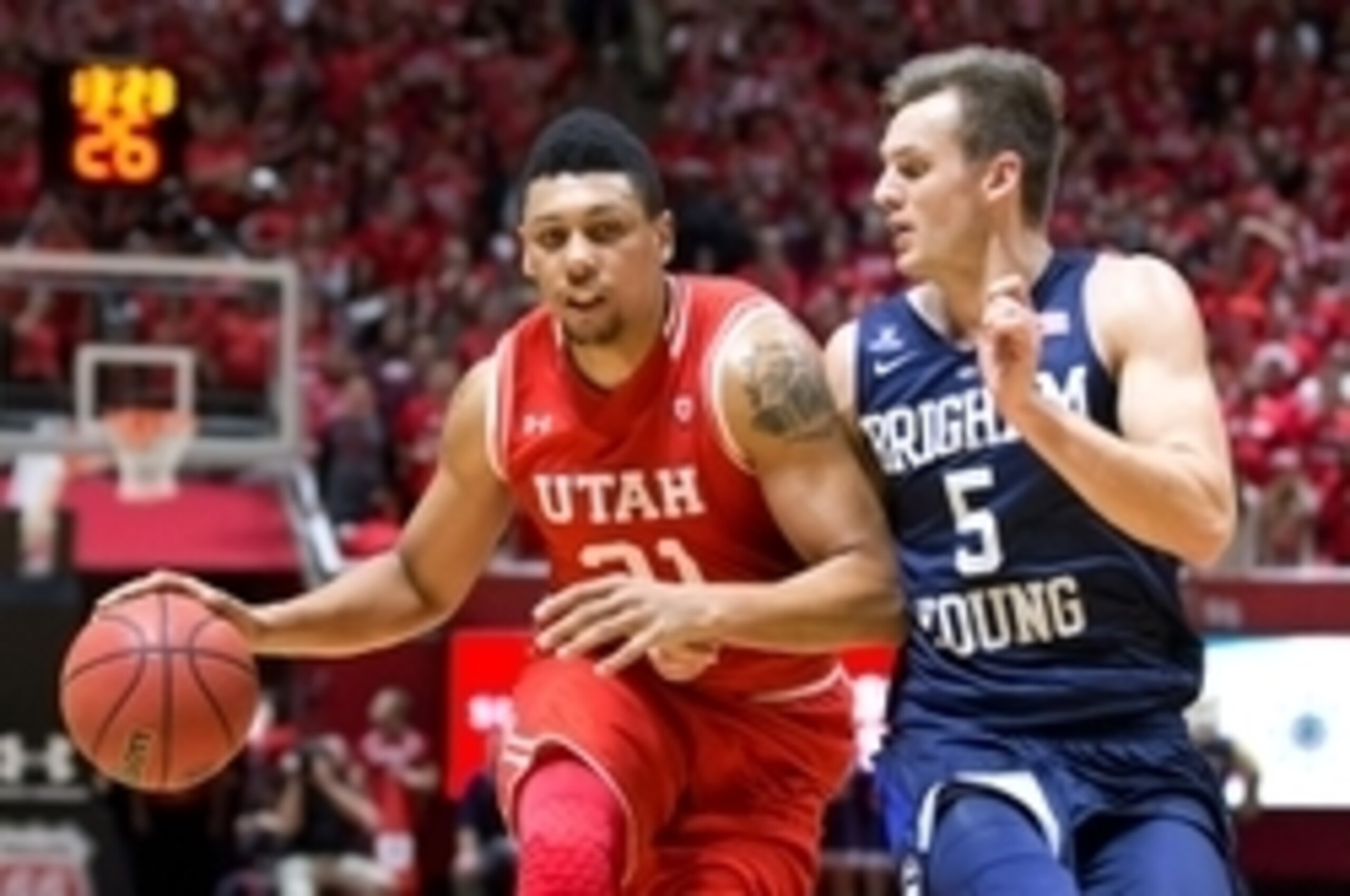
Proximity: 9.13
Longevity: 8.83
Balance: 10
National Relevance: 1.36
Total: 25.32 (after four-point deduction)
It's not a rivalry that often gets mentioned among the all-time greats, but BYU vs. Utah would have ranked No. 2 with a lot of room to spare if they were still members of the same conference.
For decades, the Cougars and Utes followed each other around. They both joined the now-defunct Skyline Conference in 1923 and remained there until joining the WAC in 1962. After that, it was off to the Mountain West Conference in 1999, but they went their separate ways in 2011—BYU went to the West Coast Conference while Utah helped turn the Pac-10 into the Pac-12.
Though they no longer meet twice a year, the rivalry still burns hotter than ever. Just ask BYU's Nick Emery, who punched Utah's Brandon Taylor during a game last December, prompting Utah head coach Larry Krystkowiak to temporarily cancel the Holy War for the upcoming season—though they have already announced plans to rekindle the flames in 2017.
As things currently stand, this is just about the closest rivalry possible. After 257 games, BYU leads the series 129-128. They've been playing each other forever and are located just 49 miles apart. It's just too bad BYU has never been to a Final Four. If that national relevance score were a little bit higher, this rivalry would have ranked No. 3, even with the four-point deduction.
6. Indiana vs. Purdue
12 of 17
Proximity: 8.10
Longevity: 6.24
Balance: 7.34
National Relevance: 3.95
Total: 25.63
What's baffling about this rivalry is how mutually lopsided it has been in this millennium. Dating back to February 2000, 21 of the 28 games between Indiana and Purdue have been decided by a margin of at least 11 points. And the split of those 21 blowouts has been 12-9 in favor of Indiana.
It wasn't always that way, but for the past 16 years, the Hoosiers and Boilermakers have been two heavyweights, standing in the middle of the ring taking turns delivering haymakers.
Purdue leads the all-time series 115-89, but try telling that to an Indiana fan, and he or she will be sure to inform you the Hoosiers have won five national championships to Purdue's goose egg in that category. Though Purdue is 1-0 against Indiana in the NCAA tournament, beating the Hoosiers in the 1980 Sweet 16 en route to one of its two trips to the Final Four.
It was tempting to give this rivalry bonus points for producing one of the most memorable moments in college basketball history. On Feb. 23, 1985, it was Purdue's Steve Reed who was at the free-throw line when legendary Indiana head coach Bob Knight hurled his chair across the court following a technical foul.
That incident came in the middle of a 14-year stretch in which neither Indiana nor Purdue won more than two consecutive games in the rivalry.
5. North Carolina vs. North Carolina State
13 of 17
Proximity: 9.8
Longevity: 7.51
Balance: 2.02
National Relevance: 6.65
Total: 25.86
It's only the second-best rivalry in the state of North Carolina, largely because the Tar Heels have been better than the Wolfpack for most of the history of college basketball.
They've met 230 times over the course of more than a century, with UNC leading by a 153-77 margin. With the exception of the 1950s, when the Wolfpack had a 10-year run of spending at least one week ranked in the top nine of the AP poll, North Carolina has clearly been the better team for most of the way.
Since 1980, the Tar Heels have won 60 of the 81 matchups, and since 2004, they hold a 25-3 edge in the so-called rivalry.
But with seven combined national championships and 73 NCAA tournament appearances for the teams separated by just 22 miles, most of the metrics worked in their favor.
4. Penn vs. Princeton
14 of 17
Proximity: 9.21
Longevity: 7.71
Balance: 8.62
National Relevance: 0.51
Total: 26.04
Clearly, the national relevance metric was not a fan of this rivalry. Neither Penn nor Princeton has ever won a national championship. Each has been to one Final Four before getting slaughtered in that national semifinal.
But both teams have played their fair share of Cinderella, each winning 13 NCAA tournament games in their 47 combined dances.
For many moons, this was the only Ivy League battle that mattered. From 1960-2007, Penn won the Ivy League 23 times while Princeton won 22 titles. The rest of the conference combined for five titles, including Yale's portion of the three-way tie in 2002.
It was mutual dominance for decades, with Penn currently holding a 124-110 lead in the all-time series. Cornell and Harvard have had their moments in the sun in the past decade, but Princeton is arguably the favorite to win the Ive League this year, while Penn is starting to show signs of life for the first time in a decade.
3. Michigan vs. Michigan State
15 of 17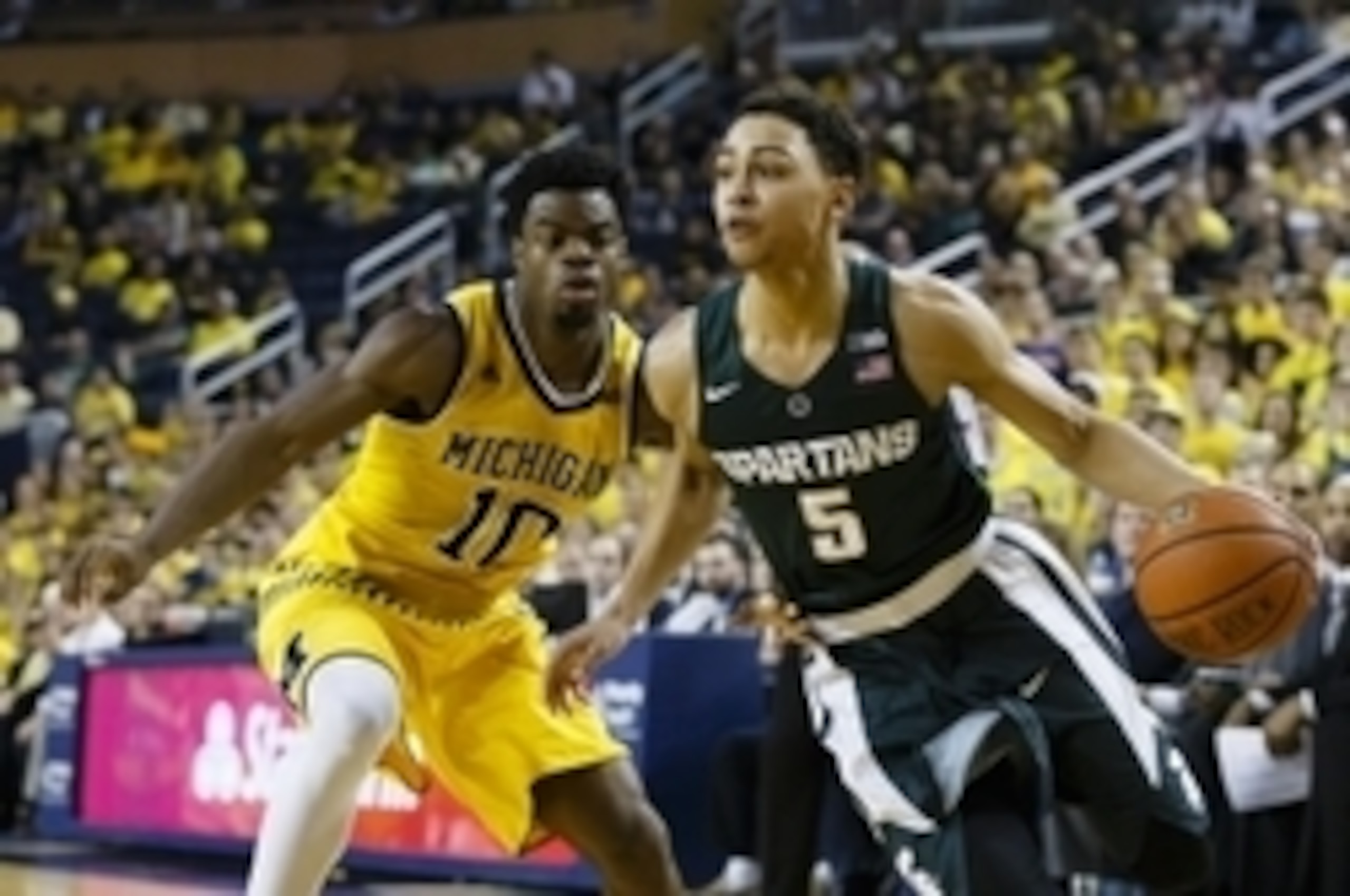
Proximity: 8.81
Longevity: 4.59
Balance: 9.04
National Relevance: 3.94
Total: 26.37
While Michigan vs. Ohio State is one of the best college football rivalries, it's Michigan vs. Michigan State that has produced one of the best college basketball battles.
These two schools have been playing on an annual basis since 1918, even though the Spartans didn't join the Big Ten until 30 years later. By that time, the Wolverines had opened up a big lead in the series, winning 36 of the first 53 games.
But they have been equals in the 70 years since then, with Michigan State pushing into a 63-61 lead thanks its current four-game winning streak—a tally that includes seven wins Michigan was forced to vacate as part of the Fab Five fallout.
One huge moment in the rivalry had nothing to do with basketball and everything to do with a Ford Explorer.
According to a report by Jim Cnockaert of MLive.com, Michigan's Maurice Traylor wrecked a car carrying five Wolverines and a prized recruit on Feb. 17, 1996. That the incident occurred 30 miles away from where Mateen Cleaves was supposed to be during his recruiting visit led to questions that unearthed the Ed Martin scandal that rocked Michigan's basketball program to its core for nearly two decades.
Meanwhile, rather than choosing Michigan, Cleaves ended up at Michigan State, where he led the Spartans to two Final Fours and a national championship. Considering they went 16-16 under first-year head coach Tom Izzo in the year before his arrival, it's not hard to argue that Cleaves was the catalyst that turned Michigan State into the dynasty it is today. Quite the ripple effect from one flipped vehicle.
2. California vs. Stanford
16 of 17
Proximity: 9.23
Longevity: 9.37
Balance: 7.34
National Relevance: 1.56
Total: 27.5
Cal vs. Stanford has been come to be known as one of the great college football rivalries—at least in part because "The band is on the field!" might be the most iconic moment in the history of that sport—but they have had their fair share of great games on the hardwood, as well.
The Golden Bears and the Cardinal are just 44 miles and 26 games apart, with Cal holding a 147-121 edge in the series. Only Kansas and Kansas State (281) have faced each other more times than these two foes.
What's a bit weird about this rivalry is that Cal and Stanford have never been particularly good at the same time.
In stark contrast to the pairing you're about to see at No. 1, they have only met twice while both ranked in the AP poll. No. 4 Stanford beat No. 25 Cal on Jan. 9, 1999, and No. 17 Stanford beat No. 22 Cal on March 8, 2003. And the only year they both advanced as far as the Sweet 16 was in 1997. Cal bowed out in the regional semifinal as a No. 5 seed, while Stanford exited in the same round as a No. 6 seed.
One other interesting wrinkle in this rivalry is that Mike Montgomery was a head coach for both schools, leading Stanford for 18 years and its only Final Four appearance since 1942 before spending some time in the NBA and eventually returning as California's head coach for a few years. Rick Pitino followed a similar arc, going from Kentucky to the Boston Celtics to Louisville, but it's hardly common for a coach to spend time on both benches in a rivalry.
1. Duke vs. North Carolina
17 of 17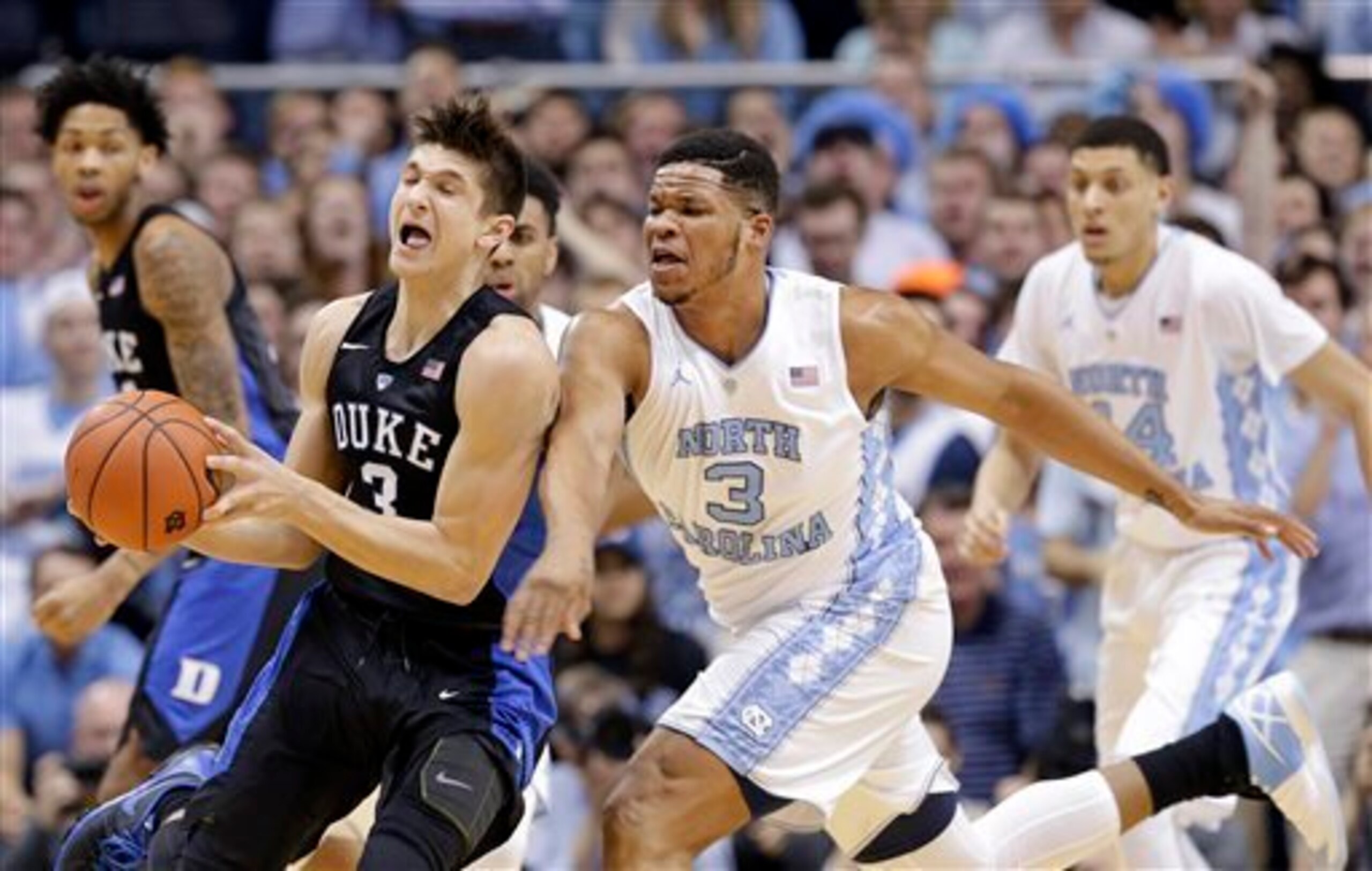
Proximity: 9.9
Longevity: 8.1
Balance: 7.34
National Relevance: 10
Total: 35.34
Were you really expecting anything else? Kentucky vs. Louisville has given Duke and North Carolina a run for its money over the past decade or so, but there's not an in-conference rivalry even remotely on par with what has been brewing on Tobacco Road for the past 97 years.
For 142 consecutive meetings, at least one of the two teams has been ranked, including an active streak of 27 straight games in which either Duke or North Carolina was ranked in the top eight. In 65 of the last 93 games, both the Blue Devils and Tar Heels were ranked. For 12 of those games, they were both ranked in the top five, including a pair of No. 1 vs. No. 2 affairs in 1994 and 1998.
Both schools have five national championships. North Carolina is the all-time leader in Final Four appearances with 19, but Duke isn't far behind at 16. They are Nos. 3 and 4 on the all-time wins list, trailing only Kentucky and Kansas.
North Carolina leads the series 134-108, but much of that advantage can be attributed to a 16-game winning in the 1920s. Since then, they have been almost dead even, with neither team winning more than four consecutive games in the past 14 years.
Suffice it to say, there's a reason the gap between No. 1 and No. 2 on this list is wider than the gap between No. 2 and No. 11. This is the best in-conference rivalry in college basketball by a landslide. Anyone who tries to convince you otherwise is delusional.
Kerry Miller covers college basketball for Bleacher Report. You can follow him on Twitter @kerrancejames.



.jpg?w=2560 "Latest Peyton-Colts Rumors")
.jpg?w=2560 "Chiefs, Steelers Eye WR Trades")