Fantasy Football 2016: Guide to This Season's Top Handcuff RBs
We can define insurance as protection against a possible eventuality. In fantasy football, the most common form of insurance employed is the practice of "handcuffing" running backs. This investing strategy is the practice of acquiring the direct backup, or the handcuff in fantasy vernacular, to a starting running back.
Accuracy guru John Paulsen of 4for4.com efficiently details the intricacies of handcuffing tailbacks:
"Handcuffing RBs is not an exact science. The importance of a handcuff depends on several factors, including the value of the starter in question, the durability of the starter, the talent (and price) of the handcuff, the overall clarity of the backfield situation and the roster size of your league. Generally, it’s a good idea to handcuff your top 1-2 backs provided the aforementioned factors don't make it difficult or wasteful to do so. Running back is the most injury-prone position in fantasy football, and it makes sense to buy insurance if the handcuff meets the necessary criteria.
"
We're in agreement with Paulsen that the pursuit of insurance is entirely contextual and shouldn't be unilaterally applied to each depth chart scenario. There are only a handful of cases around the league we project a clear inheritance path for touches. On many depth charts we're likely to witness the workload splinter among a variety of early-down and change-of-pace specialists. FantasyPros provides us with a helpful overview of tailback depth charts around the league.
This practice of handcuffing was born when running backs entirely ruled the early rounds in drafts—which is no longer the case in this rich new era of superstar wideouts—yet it still persists in many leagues. If the pursuit of drafting in fantasy football aims to maximize the output of each selection, then consolidating resources into competing and often defeating backfield shares isn't ideal. There are, as we've mentioned, scenarios that prove worthy of consideration for insurance, which we canvas in this piece.
Maximizing shares of opportunity among several different backfields is often our favorite practice, as opposed to purely seeking the cost certainty of consolidation. Which is to say, going after high-upside backups is a fine practice, but don't pay an overt premium to simply protect your top picks at the position. It's fine to poach your competitors, while seeking to avoid overpaying for opportunities around the league.
We witnessed just last season how important the Pittsburgh Steelers' DeAngelo Williams proved in replacing an injured Le'Veon Bell. On the doorstep of the 2016 campaign, investors must decide if paying the premium for Williams and Bell proves worthy.
The theme of handcuffing is truly appreciating context, which largely focuses on the pricing of potential found on a specific depth chart. Join us in discussing the most fantasy-relevant handcuff situations around the NFL.
The Vikings' Jerick McKinnon Is a High-Upside Handcuff to Consider
1 of 9
The Minnesota Vikings' Adrian Peterson has amassed 2,619 total touches in the regular season over his career. Peterson turned 31 this past March. While "All Day" has defied logic before, such as topping 2,000 yards fresh from an ACL injury, at some point the erosion of age and workload will take its toll.
This isn't to say 2016 will see a precipitous drop in production or efficiency for Peterson, but rather it's merely possible given the conditions. Even if it's simply injury and not underperformance, pursuing shares of his ultra-athletic backup Jerick McKinnon could prove profitable in the right scenario.
McKinnon has flashed big-play potential already in the preseason and last season averaged 5.2 yards per carry and an efficient 8.2 yards per reception. With Peterson often being spelled for McKinnon on third down, the understudy will see the field a good amount this season even with his mentor at full capacity.
To call McKinnon a special athletic specimen is an understatement, as Professor Xavier likely recruited him out of high school given the insane measurables we find for the Georgia Southern product. Consider that McKinnon rated in the 98th percentile in broad jump, 94th in vertical jump, 99th in bench press, 98th in 10-yard dash and 89th in 40-yard dash results among positional prospects since 1999, per MockDraftable.com.
Nike's SPARQ Rating is a sport-specific assessment of athleticism that aims to capture a comprehensive view of athleticism. As Rotoworld's Zach Whitman details, McKinnon is in rare company in regards to this unique metric:
"Backs with McKinnon’s speed, lower-body explosiveness and upper-body strength just don’t exist. He’s truly unique. … He’s also a freak. An average NFL skill position player will ring in at around a 110 pSPARQ, a good athlete at 120, and very good at 130. Elite is about 140, and the 150+ range is reserved for Calvin Johnson, Vernon Davis, and a select few others. McKinnon’s 147.5 is one of the top scores among all running backs over the last 16 years. … An option quarterback at Georgia Southern, there’s certainly a fair amount for McKinnon to learn at the NFL level to become a running back.
The transition isn’t guaranteed. But out of 1000+ RBs, my database shows that only 56 have recorded a sub-4.4 40-yard-dash at either the combine or their pro day. The top 6 pSPARQs from those 56 are: Willis McGahee (tests taken pre-ACL), Chris Johnson, Edgerrin James, Jamal Lewis, Reggie Bush and Jerick McKinnon. When you’re the kind of freak McKinnon is, you tend to do pretty well in the NFL.
"
Rare athleticism? Check. Growing sample size of NFL efficiency? Yep. Understudy role behind a true workhorse veteran back in a run-centric offense? No doubt. The ingredients and context for investing in McKinnon as an insurance policy behind Peterson are present.
FantasyPros' average draft position index reveals McKinnon is going as the 57th running back off the board at pick No. 185 overall on average. Even if you don’t invest in Peterson, shares of McKinnon are inviting given the potential upside. If you invest in Peterson, the cost for insuring the aging legend isn't prohibitive and appears appropriate.
Derrick Henry Offers Massive Upside in the Titans' Run-Heavy Offense
2 of 9
The Tennessee Titans' Derrick Henry has been a special running back at every level so far. Henry was downright dominant in both high school—where he set the all-time yardage record, per ESPN—and in college at Alabama—where he graded second among draft-eligible backs last season in rushing, according to Pro Football Focus.
As an entirely unique physical prospect, the massive back rates in the 99th percentile in height (6'3") and weight (247 lbs) among positional prospects since 1999, per MockDraftable. So the statistical and specimen angles are satisfied, but what about the opportunity for Henry playing behind veteran workhorse DeMarco Murray?
Coach Mike Mularkey has vowed to involve Henry into his run-heavy offense, one often coined as the "exotic smashmouth" scheme this offseason. In a league trending pass-heavy, the Titans could provide an old-school counter, with Mularkey sharing his intent to involve Henry with ESPN.com's Paul Kuharsky:
"We’ll find ways to get [Henry] on the field. We know what he’s capable of doing. I just want to be careful, I did it one time when I went in and was worrying about how many numbers guys were getting and it didn’t work. We’re going to do what’s best for the team like we’ve been doing from the beginning. And whatever that is, if he’s a large part of it, [he] is. But he’ll have a role, definitely.
"
Henry is Pro Football Focus' top-rated rookie running back in the preseason and has the the second-highest pure rushing grade among all NFL backs over the exhibition period. The last time we saw Murray on the field in real NFL action, he delivered just 3.6 yards per carry and looked sluggish for the Philadelphia Eagles. Even if Murray finds a revival campaign in 2016, shares of Henry as the handcuff, or even the contrarian investment for those who believe Murray is done, could prove profitable.
Tevin Coleman Could Compete for Early-Down Touches as the Backup in Atlanta
3 of 9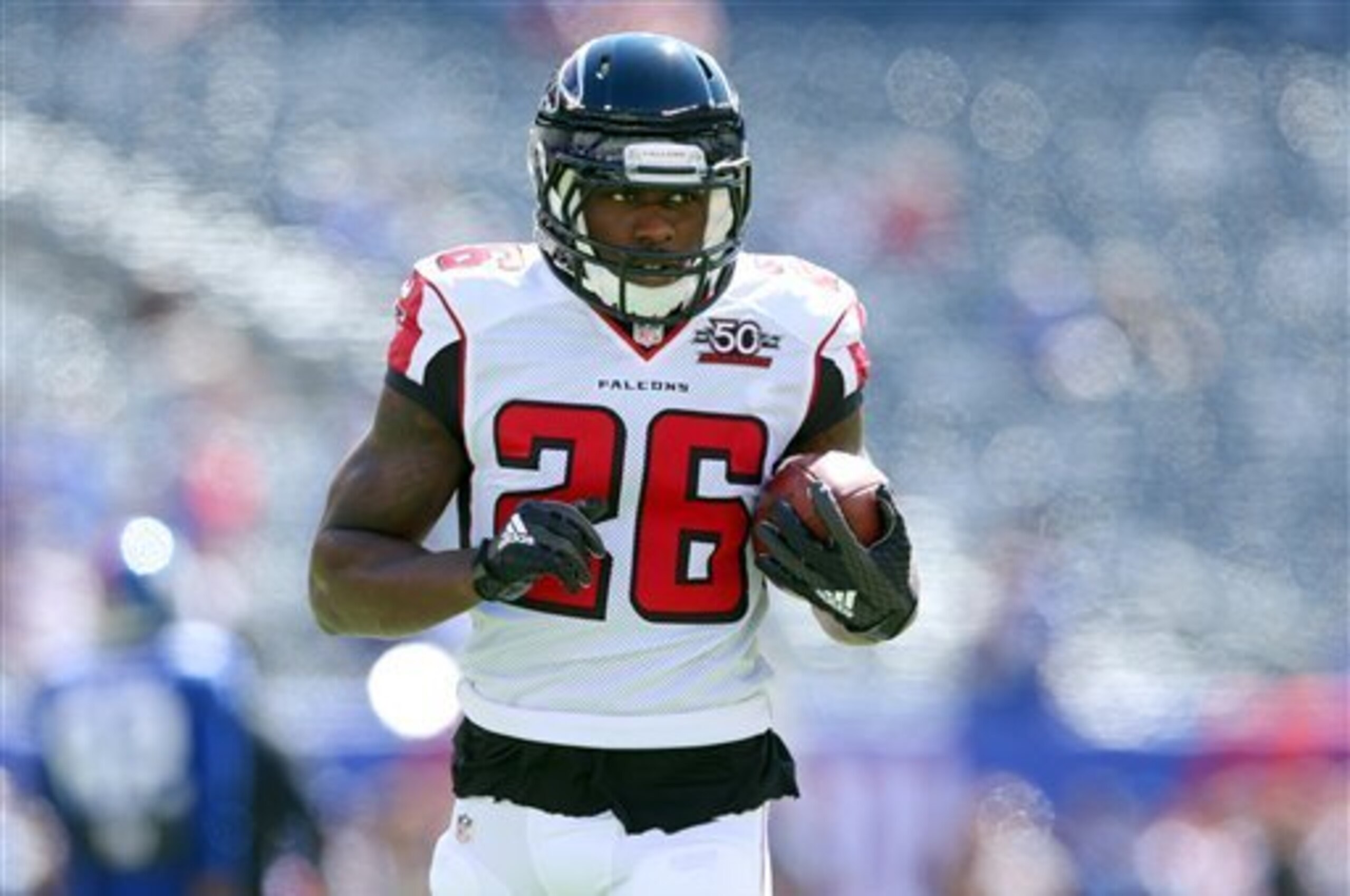
This time last year we witnessed the Atlanta Falcons' Tevin Coleman going ahead of backfield peer Devonta Freeman in fantasy drafts, per Fantasy Football Calculator. One of them finished as the top overall fantasy back in both standard and PPR scoring formats, and it wasn't Coleman.
Now we find Freeman regularly going in the first and second round of fantasy drafts, while Coleman isn't even the first Coleman drafted in most leagues, per FantasyPros' average draft position index. Well into the later rounds as the 44th back taken on average, in comparison to Freeman as the seventh back on average this summer, Coleman represents great profit potential this season.
Even assuming Freeman remains in the majority position in snap count for the Falcons' backfield, some independent value and legitimate opportunity could emerge for Coleman given his noted talents as an early-down rushing option. When he was with Pro Football Focus, fantasy analyst Mike Clay found Coleman separated himself as the team's better back against base defensive looks:
"Coleman faced a base or tougher defense on 80 percent of his carries. His 4.5 YPC against base was 14th best at the position. Devonta Freeman, meanwhile, carried the ball against four or fewer defensive backs on 65 percent of his tries, which was 17th highest. Freeman averaged 3.6 YPC against base (38th) and 4.6 vs. nickel (17th). This suggests Coleman may take on more early-down work in 2016, with Freeman sustaining his passing-down gig.
"
If Freeman were to go down, the Falcons' fantasy-friendly scheme could feed him a heavy volume of touches and snaps. Considering Freeman played 67 more snaps than any other NFL tailback last season—this while sitting out a game—the usage upside for Coleman if he were to take over or inherit feature duties is massive.
.jpg?w=2560 "Seahawks Chiefs Football")

Raiding the Backfield: Oakland's DeAndre Washington Delivers Rare Upside
4 of 9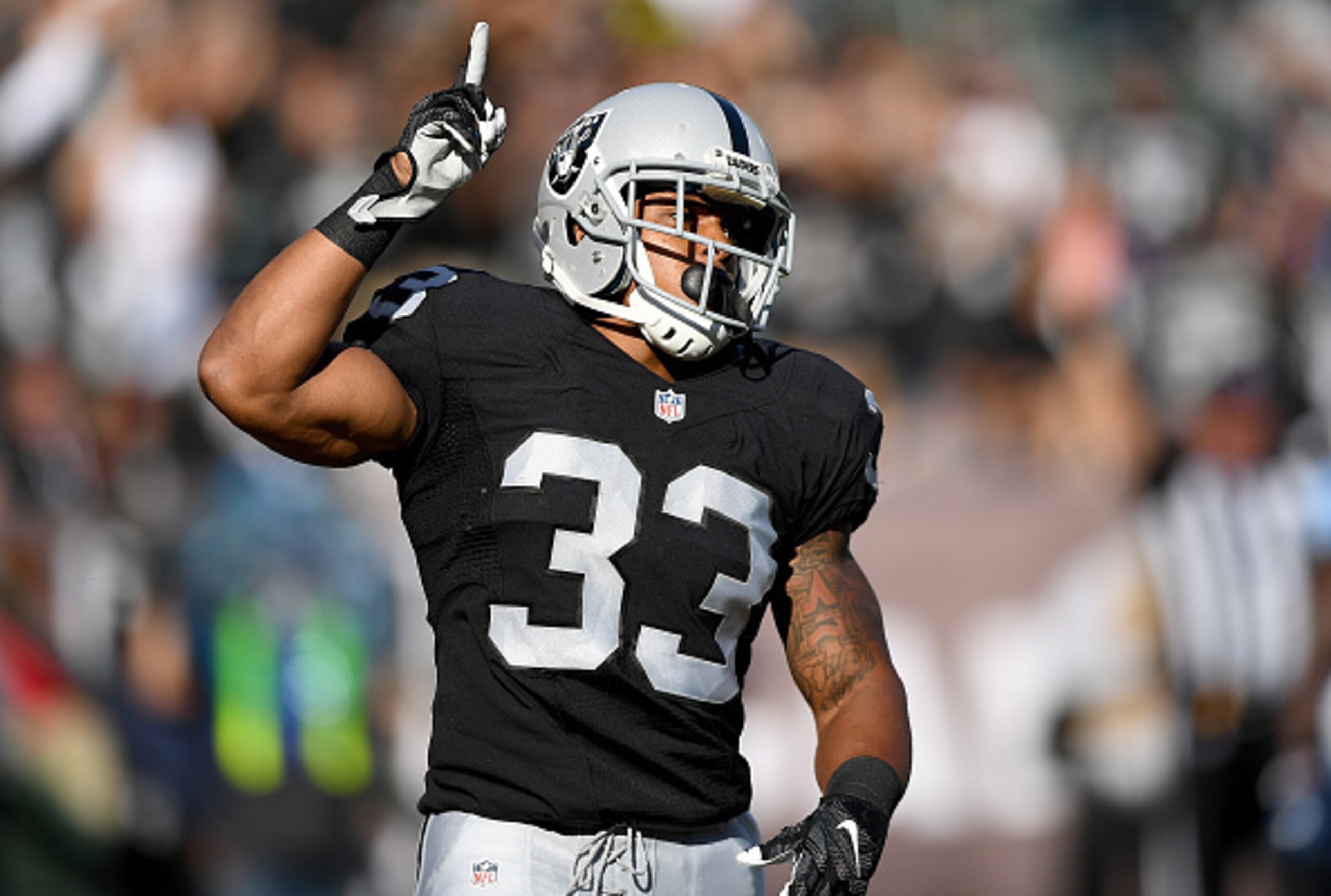
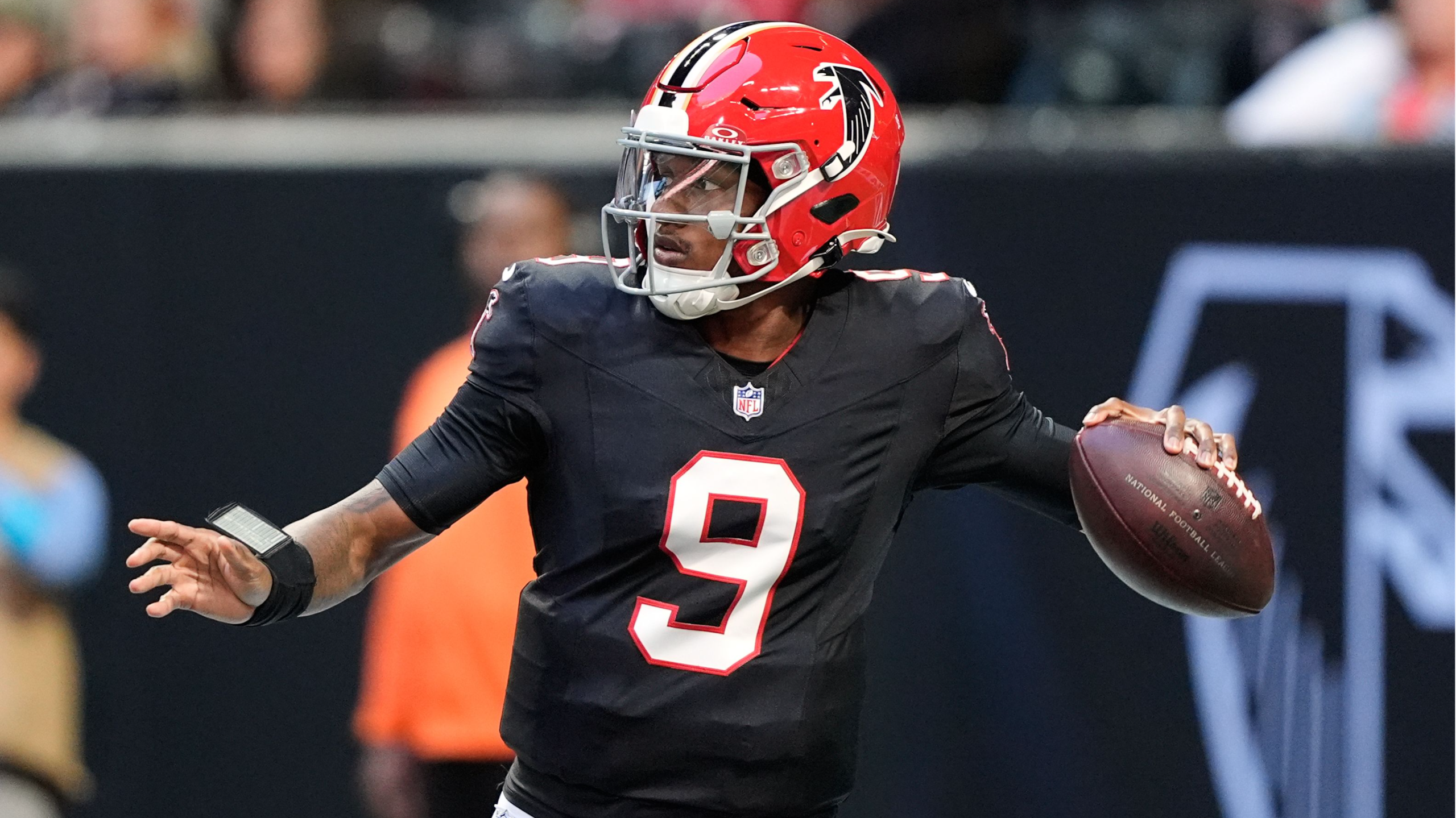
With encouraging comparisons to Ray Rice and DeAngelo Williams as a physical prospect, per MockDraftable's database, the Oakland Raiders' DeAndre Washington claims rare upside as the understudy to workhorse Latavius Murray.
Among the positives to consider, we must mention the fact the Raiders' offensive line is projected as the second-best blocking group in the NFL, per Nathan Jahnke of Pro Football Focus. The team's offensive agenda is also kind to the prospects of Washington's upside, as the Raiders' staff explicitly intends to increase rushing volume this season, per Vic Tafur of the San Francisco Chronicle.
A gifted receiving back, Washington netted 124 receptions for 1,110 yards at Texas Tech, good for an effectively efficient rate of 8.8 yards per reception. For some context, Murray was just one of three backs in the NFL this past season to catch at least 35 passes but fail to top six yards per catch. This indicates Washington could see the field immediately as the third-down complement to Murray as the more effective per-target receiving asset for Oakland.
We've already witnessed a collection of big plays from Washington in the preseason, including this juke-filled highlight from NFL.com. Murray is a young workhorse, so predicting erosion or injury is a bit premature, but he wasn’t exactly efficient last season, so there is a case for a performance shift if Washington can capably outplay him this season.
Either way, the price for Washington as the 57th running back off the board on average in drafts this summer, per FantasyPros, is quite affordable. Whether you invest in Murray, upside shares of Washington could prove season-shifting if he ever earns a meaningful portion of the workload for Oakland.
Denver's Devontae Booker Is One of the More Exciting Handcuff Prospects for 2016
5 of 9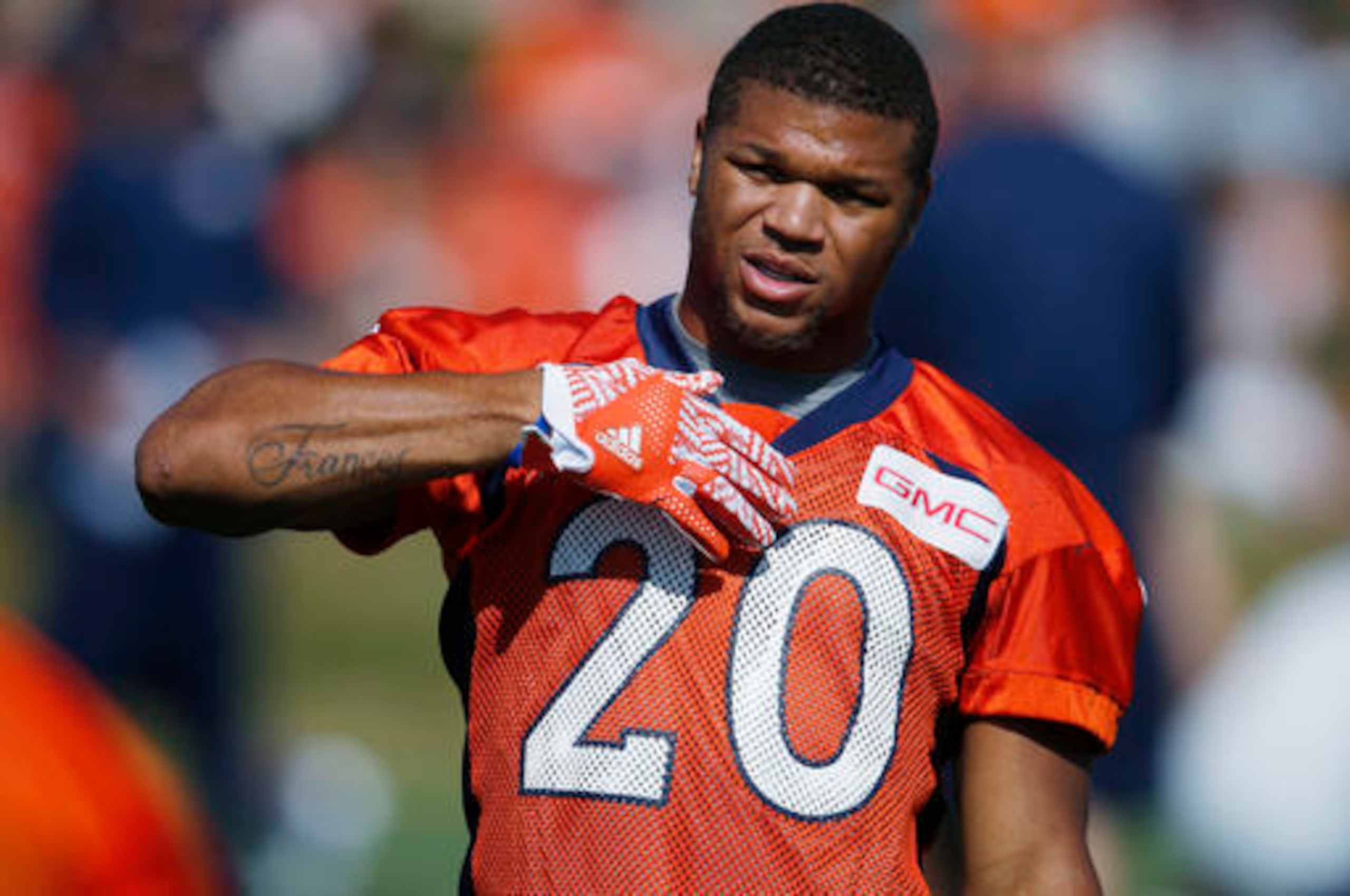
Denver Broncos rookie tailback Devontae Booker graded positively in the rushing, blocking and receiving phases at Utah last season, per College Football Focus. In fact, Booker earned the third-highest overall grade among draft-eligible prospects at the position, according to CFF.
While the Broncos' C.J. Anderson has a stranglehold on the majority share of backfield touches heading into the new campaign, Booker is among the more appealing handcuff assets given the combination of his own talent profile and the team's intention to prove run-heavy this season.
Bleacher Report's scouting profile for Booker heading into the draft this season offers insight into his impressive skill set:
"Booker is a smooth strider with the suddenness to juke defenders and the acceleration to pull away for chunk plays. Once he gets past the first line of defenders, Booker's toughness kicks in. He finishes runs with power and will get low to bowl over a defender. He has a solid cutback juke and will throw out a spin move on the go. ... As a receiver, Booker is arguably the best in the class of running backs. He naturally looks the ball in and can make sideline grabs with impressive footwork and concentration. He's more than just a screen back and can be an effective member of the passing game.
"
While work could prove scarce for Booker as long as Anderson is active, he's going at pick No. 155 on average in drafts this summer, per FantasyPros. The premium for ensuring the Denver backfield isn’t, you guessed it, mile high. With veteran tailback Ronnie Hillman fighting for his roster spot throughout camp, Booker is the back to covet when consolidating the Denver backfield.
Is the Cost of Acquiring DeAngelo Williams as a Handcuff Too High in 2016?
6 of 9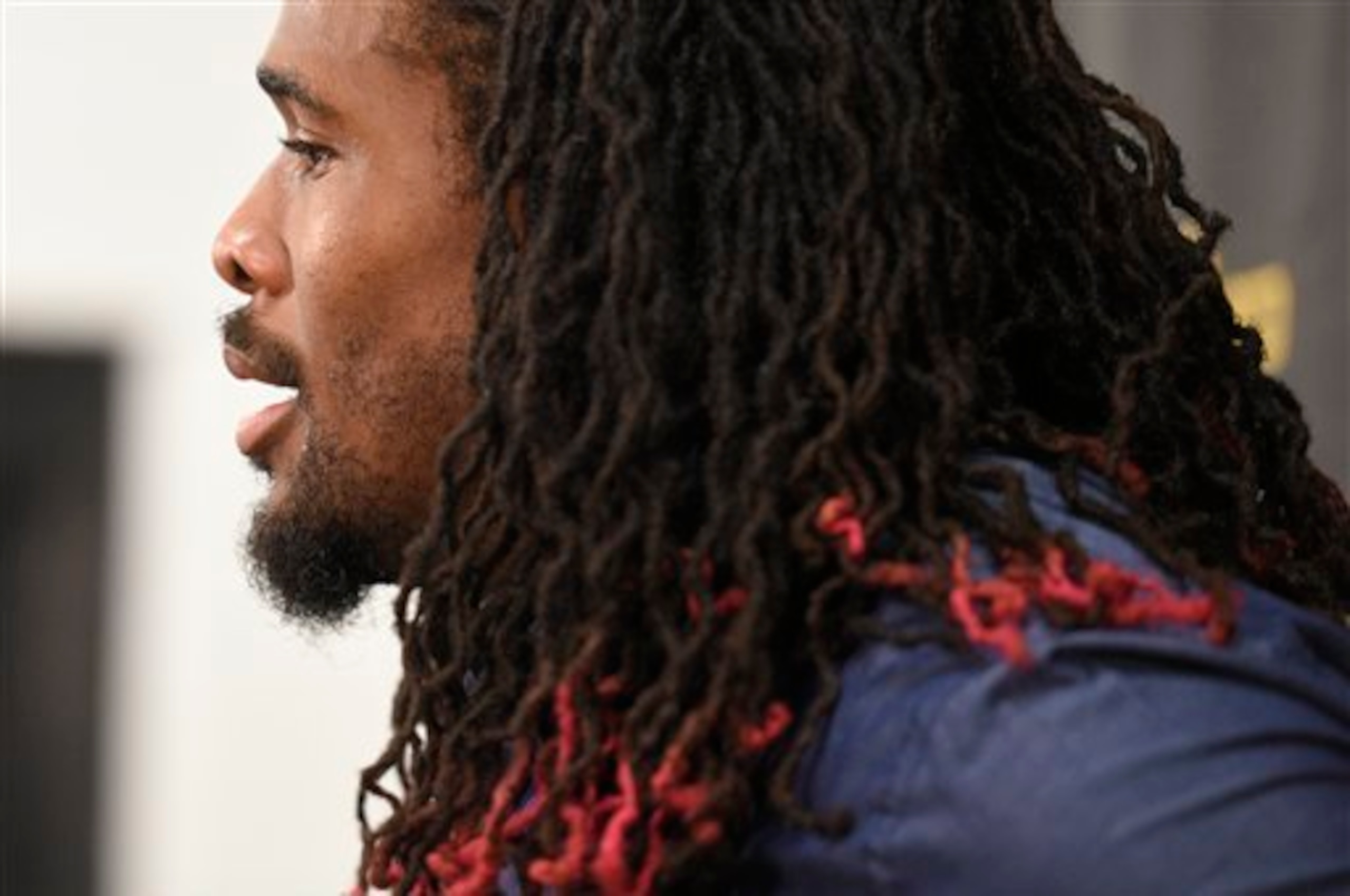
The Pittsburgh Steelers' DeAngelo Williams is the most expensive handcuff in fantasy football. This would have proven true even if the team's superstar tailback Le'Veon Bell weren't suspended for the first three games of the season for watching Half Baked, or something like that.
With Bell missing the first three games, Williams' already pricey draft position has risen to rare heights for a back who is 33 and has a fairly long injury history dating back to his days with the Carolina Panthers. The market is into shares of Williams largely based on his epic 2015 production pattern, a season that saw him tally 179 fantasy points in ESPN standard leagues, the fourth-most among all backs despite the fact Bell started six games last season.
For those interested in taking on discounted shares of Bell, who is going sixth at running back on average in drafts, according to FantasyPros, consolidating the Pittsburgh depth chart is almost prohibitively expensive given Williams is priced as RB31. Last year, Williams was an ideal handcuff in the sense he more than paid off the policy, while this season the premium is quite high for such insurance.
Some in the industry, or maybe just us, suggest considering the "Naked Bell" route if you plan on investing in Bell, which is to say you don't pay the premium for Williams. This is certainly a strategy bearing inherent risks, but the aforementioned cost of consolidation is essentially a high-end second-round pick for Bell and then say a sixth- or seventh-round allocation for Williams.
We can certainly see the logic in paying such a premium and don't begrudge investors seeking some semblance of cost certainty. Just be mindful of the opportunity cost involved, as legitimate starting fantasy assets are often found in the range required to acquire Williams, and certainly where we have to pay for Bell.
Seattle's Christine Michael Is a Freak Athlete with Real Opportunity
7 of 9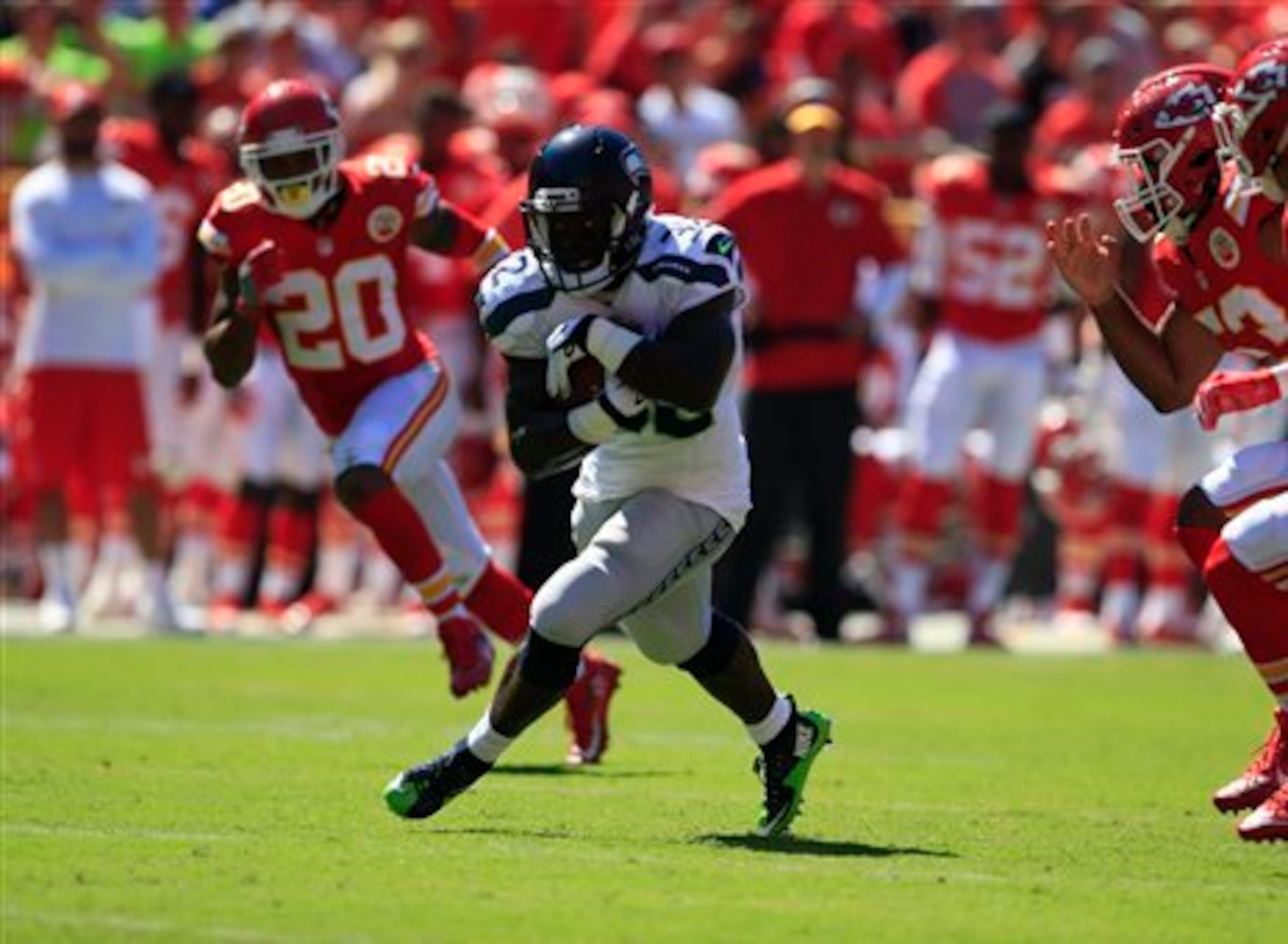
The Seattle Seahawks' Thomas Rawls produced a brilliant rookie season in 2015 as the handcuff commodity behind Marshawn Lynch. In fact, Rawls produced the second-best yards-per-carry rate as a rookie (5.6) with as many as 147 carries, per the Wall Street Journal's Michael Salfino.
Rawls averaged 15.1 fantasy points per game over seven starts last season, behind only the Arizona Cardinals' David Johnson and Atlanta Falcons' Devonta Freeman in fantasy points per game in ESPN standard leagues among starting tailbacks with at least four starts.
The holdup in confidently investing in Rawls for 2016 stems from his lingering ankle ailment, which required offseason surgery and has kept him out of preseason action to date. In his place, super-athlete and Twitter favorite Christine Michael has toted the rock 24 times for 157 yards in the preseason.
With Michael earning praise for finally grasping the playbook and running decisively from the coaching staff this preseason, a time-share for meaningful early-down work could emerge with Rawls.
Coach Pete Carroll recently offered insight to ESPN.com's Sheil Kapadia into Michael's inspired preseason: "He really has made it clear to us that he’s serious about the work. He’s serious about the consistency. He’s taken great pride in the way he’s brought it day in and day out all throughout the offseason and into camp and all of that. And he’s an explosive, dynamic athlete. So we’re just going to keep going with him."
An athletic SPARQ freak, per Zach Whitman of FieldGulls.com, going as RB48 in drafts, per FantasyPros, Michael makes for a fun upside investment in the later rounds whether you invest in Rawls or not.
Tim Hightower Comes at a Low Cost for Those Seeking Insurance for Mark Ingram
8 of 9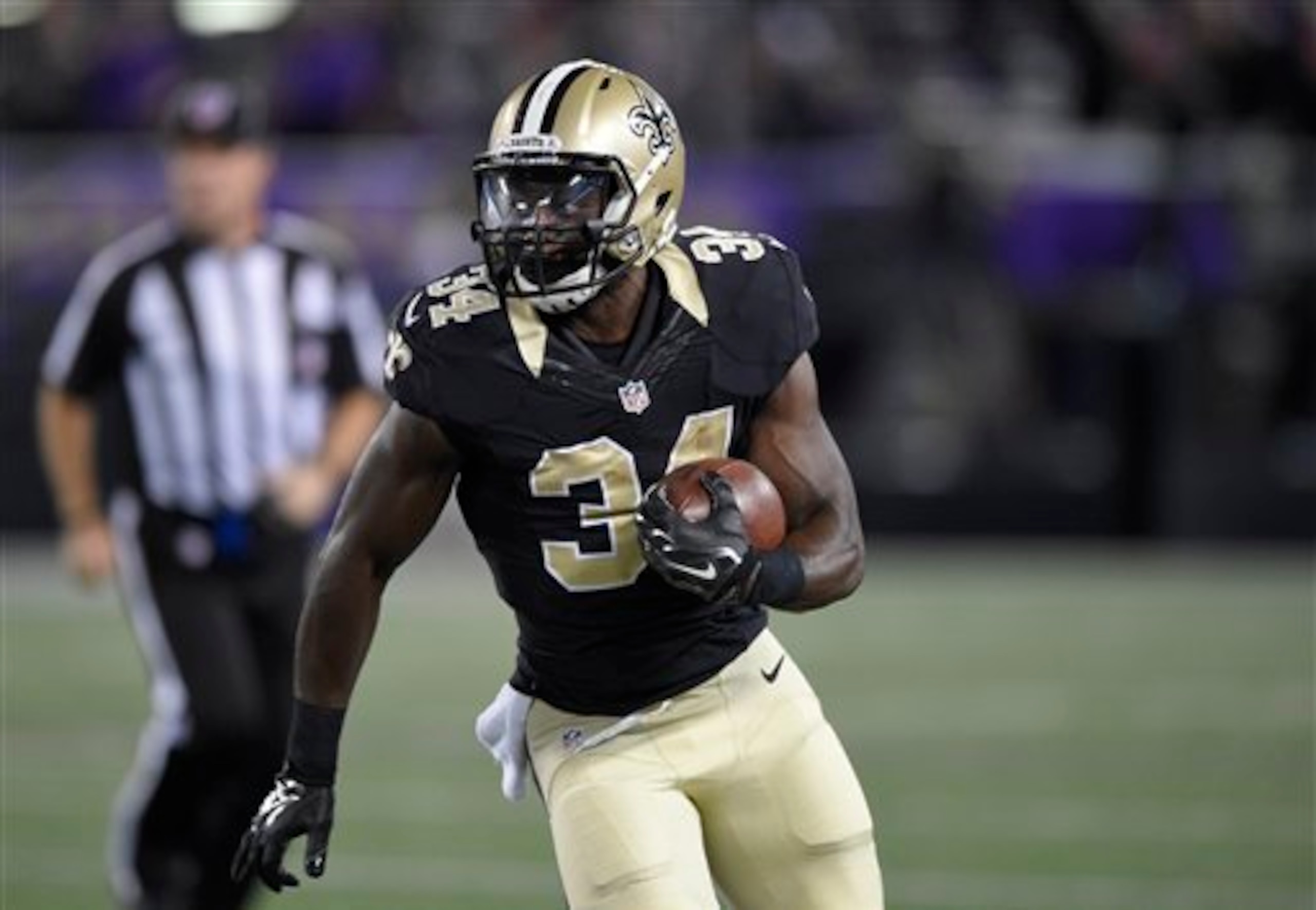
Only the Arizona Cardinals' David Johnson scored more fantasy points in ESPN standard leagues over the final four weeks of the 2016 season than the New Orleans Saints' Tim Hightower. Johnson is being drafted in the first round in nearly all formats as the second tailback off the board on average, while Hightower is going 65th among backs, per FantasyPros.
While we have no qualms with Johnson's price given his elite scoring upside and role as one of the best receiving backs in all of football, Hightower is the direct early-down backup to the Saints' Mark Ingram, who has played 16 games in a season just once in five pro campaigns.
It is quite possible last season's epic finish was a workload-induced mirage for Hightower, who was out of the league for four years before joining the Saints in 2015. The Saints still have C.J. Spiller, who was already injured by the time Hightower took over bell-cow duties last December, as their main change-of-pace back complementing Ingram.
This suggests the path to independent fantasy value is nearly impossible for Hightower outside of injuries to both Ingram and Spiller this season. While such an event seems unlikely, it certainly unfolded last season, as both backs struggle with durability.
The cost is the main factor in highlighting Hightower, as the Saints backfield has long been a rich fantasy role given the heavy passing workload and rich red-zone rates the offense produces. As an exploratory pick in the twilight rounds—he's going 222nd on average in drafts, per FantasyPros—Hightower is one of the cheapest handcuff assets in the league this season.
Notable Tailback Handcuffs: James Starks, Alfred Morris and Others
9 of 9
Rounding up some other notable insurance assets at the running back position, we admittedly like late shares of the Dallas Cowboys' Alfred Morris. The Cowboys earned the highest run-blocking grade from Pro Football Focus last season, spurring Darren McFadden to elite total yardage production as the team's featured back for much of 2015.
For 2016, the team is wholly invested in rookie running back Ezekiel Elliot. This rings especially true as the team will be without Tony Romo for at least six weeks with another back injury. The Cowboys appear positioned to be among the run-heaviest schemes in the NFL this season, and particularly while Romo is recovering.
This means Elliot will endure a heavy workload, while his key backup asset is Morris, at least for meaningful early-down work. Morris, to his credit, is Pro Football Focus' highest-graded tailback in the preseason through three games. Morris is being drafted as RB45 on average, per FantasyPros, thus the policy for Elliot isn't prohibitively expensive.
In Green Bay, the Packers' James Starks proved quietly effective when afforded a majority share of the workload last season. During the six games Starks earned at least 50 percent of the snaps at tailback or had at least 10 carries, he tallied 595 yards from scrimmage on 105 touches. This would equal a top-10 fantasy rate at the position is sustained, so cheap shares of Starks behind Eddie Lacy are palatable given precedent.
In Tampa Bay, it's worth noting Charles Sims graded as the top overall tailback on Pro Football Focus last season and could be in line for over 100 carries and nearly 50 receptions, just as he did last season. Behind a physical workhorse like Doug Martin, Sims could become a true RB1 if he were the feature back in Tampa.
Finally, we come to the Kansas City Chiefs' Spencer Ware. While the Chiefs have both Charcandrick West and Ware behind Jamaal Charles on the depth chart, it's Ware who we find truly investable, as he'd likely assume the valuable goal-line duties if Charles were to again bow out with injury this season. Ware was the 19th-rated rusher on Pro Football Focus last season despite tallying just 165 snaps.
Snap and fantasy football data for this article sourced by an ESPN database.