
The Biggest Storylines for Top College Basketball Teams in the 2016 Offseason
For each of the projected top 20 teams in the 2016-17 men's college basketball season, there has been an intriguing offseason storyline to follow.
Some of them are merely growing speculation about how good or important individual players will be—i.e. Arizona's Lauri Markkanen, Kansas' Carlton Bragg and Michigan State's Gavin Schilling.
Others are legitimate concerns for title contenders. Will the scandals at Louisville and North Carolina play a factor in this season? Will Villanova's Omari Spellman be ruled eligible to play? Does Indiana have a point guard? And what's going on with Dillon Brooks' injured foot?
The regular season begins in less than 12 weeks. While you indulge in the start of football season and the end of baseball season, be sure to keep an eye on these evolving narratives.
Teams on the following slides are listed in alphabetical order and are the top 20 teams in our projected preseason Top 25.
Arizona Wildcats
1 of 20
Biggest Storyline: Will Arizona start a college basketball revolution into position-less rotations?
This roster is loaded with talented shooting guards and small forwards. Aside from backup point guard Parker Jackson-Cartwright and a couple of big men, the Wildcats almost entirely consist of players between 6'3" and 6'8" who can both shoot threes and rebound.
In terms of style and the type of players, they're the closest thing to the Golden State Warriors that the college game has.
And Arizona's potential position-less approach gained even more traction after a report by Arizona Daily Star's Greg Hansen that 6'11" Lauri Markkanen scored 63 points in a Finnish national team scrimmage while shooting 12-of-15 from three-point range. I'll believe that when someone produces a box score, but there is one from August 20 showing Markkanen shooting 3-of-5 from downtown while scoring 24 points against Poland.
That's not quite as exciting as 63 points, but it's proof that the big man has range and could make Arizona the most unguardable team in recent memory.
Kentucky was quite difficult to stop two years ago, but that was brute force—a dominant frontcourt laying waste to everything in its path. This is more like Wisconsin from two years ago, where everyone on the court is a threat to shoot from anywhere within 25 feet. Except Arizona's guys are more athletic and NBA-ready than the majority of those Badgers were.
The stretch 4 and the starting backcourt made up of two combo guards has taken the college game by storm over the past few years. This could go a step or two further to a point where every Wildcat on the court is some kind of wing-forward hybrid.
If nothing else, it's an intriguing experiment and a logical progression with the NBA transitioning away from dominant big men. And if it results in a great season for Arizona, look for others to follow suit in 2017-18.
Baylor Bears
2 of 20
Biggest Storyline: Will Jo Acuil be healthy and helpful?
Rico Gathers is currently trying to earn a roster spot with the Dallas Cowboys. Taurean Prince is doing the same with the Atlanta Hawks. That leaves Johnathan Motley, T.J. Maston and not a whole lot else on Baylor's list of returning players who can grab a few rebounds per game.
That is, unless you count Jo Acuil as a returning player, even though the former Neosho County C.C. transfer has yet to play a game with the Bears due to a heart issue.
But according to Baylor's men's basketball Twitter account, Acuil is back in action. He tallied nine points and four rebounds in nine minutes during one of Baylor's recent games in Italy.
Now that he has evidently been medically cleared to play, the next mystery to uncover is how much of an impact he'll be able to make at the D-I level. Acuil was a shot-blocking and rebounding machine against JUCO competition, but will that translate to the Big 12?
We're not expecting the second coming of Isaiah Austin—though Acuil did attempt 69 three-pointers during his two seasons with NCCC—but if the 7'0" center can help fill the voids on the glass while providing a few rejections along the way, he would be a massive addition for the Bears.
Duke Blue Devils
3 of 20
Storyline: Will challenging run with Team USA help or hurt Coach K's psyche?
The biggest speculation about Duke in 2016-17 has been the question of Harry Giles' health. Now nine months removed from his second major knee surgery in the past three years, it's hard not to wonder whether the projected 2017 lottery pick will survive the season.
One bad injury is a fluke. Two is a trend. But even if Giles is the most injury-prone big man since Greg Oden, perhaps he'll follow Oden's career path by staying healthy for a few months and completely dominating as a freshman.
Moreover, word could break tomorrow that Giles is going to miss the entire season and Duke would still be the near-unanimous No. 1 team in the preseason AP Top 25. Between Jayson Tatum, Marques Bolden, Amile Jefferson, Chase Jeter, Javin DeLaurier and Sean Obi, the Blue Devils have enough frontcourt options to figure something out.
What will be more intriguing to watch is the toll that Olympic basketball takes on head coach Mike Krzyzewski.
In most years, Coach K's job with Team USA mostly consists of managing egos and staying out of the way. Team USA won every game in 2008 by at least a 10-point margin and won seven of the eight by 20 or more. There were two tough games in 2012, but it was still mostly a walk in the park en route to eight more wins.
But this year was a struggle. Half of the games came down to the wire—a deviation from the norm made even more alarming by the fact that Team USA's women were eviscerating every opponent. Krzyzewski actually had to work and sweat this year.
By the end, he looked every bit the part of a 69-year-old man who has been on the road for six consecutive weeks between the July recruiting period and the Olympics. Team USA was up by 36 in the fourth quarter of the gold-medal match against Serbia and Coach K still looked stressed out.
The last time Team USA floundered like this in international play was at the 2006 FIBA World Championship, where it eventually lost to Greece in the semifinals. Duke went 22-11 the following season and finished the season outside the AP Top 25 for the only time in the past two decades.
Coincidence? Most likely. But we'll be keeping a closer eye on Duke's head coach than usual to see if he can withstand yet another tournament in which his team is the overwhelming favorite to win.


Gonzaga Bulldogs
4 of 20
Biggest Storyline: The rich become richer.
Per usual, Gonzaga was already going to be a preseason Top 25 team.
Losing Kyle Wiltjer, Domantas Sabonis and Eric McClellan hurt, but in addition to Przemek Karnowski returning from a back injury, the Zags were adding Nigel Williams-Goss and Johnathan Williams III as sat-out-a-year transfers, and head coach Mark Few had signed the best recruiting class of his career. Mostly different names from last year, but still more than enough talent to win the West Coast Conference—even with Saint Mary's and BYU both legitimate threats for at-large bids.
They got even stronger by adding California graduate-transfer Jordan Mathews, who evidently doesn't think the Golden Bears know how to win.
"I committed because of the winning culture at Gonzaga," Mathews told Scout.com's Max Mendel. "I felt very comfortable with the staff and the guys on the team. It felt like the right place to play going forward and a place where they know how to win."
In Mathews, they add valuable veteran experience and some much-needed three-point shooting. Williams-Goss shot 25.6 percent from beyond the arc in his final season at Washington, leaving Josh Perkins (37.8 percent) and Silas Melson (32.3 percent) as the best three-point shooters on the roster before Mathews (41.7 percent in his career) signed.
Mathews' decision also furthered the narrative that Gonzaga is becoming one heck of a popular landing spot for major-conference transfers. In the past three years, Few has picked up transfers from Kentucky (Wiltjer), Missouri (Williams), Washington (Williams-Goss), California (Mathews), Vanderbilt (McClellan) and USC (Byron Wesley). Add in his improved recruiting on the high school front, and it seems Cinderella is on its way to becoming a juggernaut.
Indiana Hoosiers
5 of 20
Biggest Storyline: Who plays point guard?
Did you know that Yogi Ferrell finished his career at Indiana with more points and assists than North Carolina's Marcus Paige, despite playing fewer minutes?
Well, now you do. Ferrell is also one of just 15 players since the beginning of the 2000-01 season to record at least 1,900 points and 600 assists in his career. Others on that list include Jameer Nelson, Shabazz Napier, Greivis Vasquez and Matthew Dellavedova.
So who becomes the primary ball-handler for the Hoosiers now that Ferrell's gone?
According to ESPN's Andy Katz, nobody.
Katz said Indiana will take a point guard-by-committee approach, with head coach Tom Crean telling him, "Whoever gets that basketball off a made basket, they're ripping and running."
But when has "by committee" ever worked in sports? Bullpen by committee in baseball just means the manager doesn't have a closer he can trust. And when a football coach say he has two starting quarterbacks, what he's really saying is he has no starting quarterback.
Even when Kentucky almost went undefeated with its platoon system, it was obvious toward the end of the season that Tyler Ulis should have been getting more minutes as the point guard than Andrew Harrison.
Maybe Indiana enters the preseason with no concrete plans to make Josh Newkirk, Robert Johnson, James Blackmon Jr., Curtis Jones or Devonte Green the starting point guard, but Crean had better figure something out soon. That "ripping and running" idea might sound nice now, but it's hard to run a successful fast break if Thomas Bryant doesn't know who to pass to after he gets a rebound.
Kansas Jayhawks
6 of 20
Biggest Storyline: Will Carlton Bragg be bigger and better as a sophomore?
Aa great as Kansas' backcourt trio of Frank Mason, Devonte' Graham and Josh Jackson will be, it's Carlton Bragg who will determine the Jayhawks' ceiling in 2016-17.
And he's closer to hitting his head on ceilings than when he first arrived in Lawrence.
Bragg was listed at 6'9" last season, but according to a July report by Tom Keegan of KUsports.com, "To the naked eye, Bragg looks closer to 6'11"."
Regardless of his official height, Bragg is poised for a monster sophomore year. He played sparingly as one of Kansas' many frontcourt reserves, but he averaged 17.0 points and 11.1 rebounds per 40 minutes over the course of the season.
His breakout party was already getting underway in March. Between the Big 12 Tournament and Kansas' first game of the NCAA tournament, Bragg played 40 minutes, tallying 28 points and 12 rebounds and making both of his three-point attempts.
It's a small sample size, and we've certainly been fooled by numbers like those in former 5-star recruits before—here's looking at you, Chris Walker—but Bragg should be a positive X-factor for the Jayhawks.
Kentucky Wildcats
7 of 20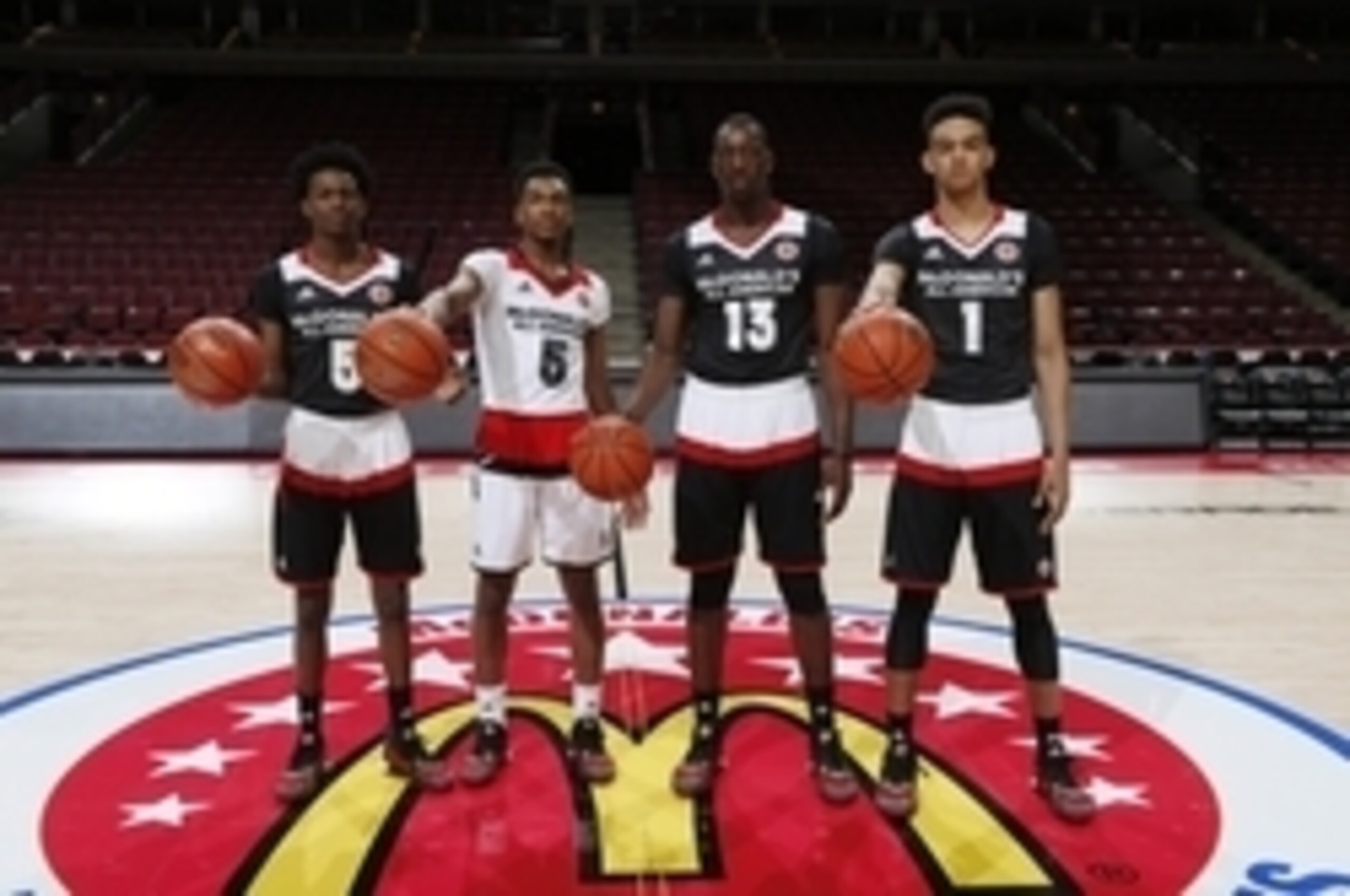
Biggest Storyline: Will this year's freshmen meet expectations better than last year's freshmen?
Jamal Murray lived up to the hype and then some, stringing together 12 consecutive games with at least 20 points and scoring at least 15 in 29 of his final 31 games.
But the rest of last year's freshmen? Not so much.
Skal Labissiere was the biggest disappointment, rapidly dropping from best recruit in the country to a guy who occasionally showed up against Kentucky's weakest opponents. Isaiah Briscoe didn't play like the 12th-best recruit in the nation, either, finishing the season with a sub-100 O-rating and a worse-than-100 D-rating. Meanwhile, top-60 freshmen Isaac Humphries and Charles Matthews combined to play fewer minutes than Derek Willis.
Compared to the immediate benefit that head coach John Calipari's other recent classes had provided, the 2015 class was a complete disaster, despite being ranked No. 1 in the nation.
And the Wildcats are going to be far more reliant on their freshmen than they just were. Last year's team had Tyler Ulis, Alex Poythress, Marcus Lee and Willis as veterans, which kept them in the national championship conversation despite the disappointing freshmen.
This year, it's Willis and Briscoe, and that's about it. So if Bam Adebayo, Malik Monk and De'Aaron Fox don't each have the kind of lottery-pick-worthy campaigns that are expected of them, Kentucky's 2016-17 season could go off the rails in a hurry.
Louisville Cardinals
8 of 20
Biggest Storyline: Have we heard the last of Katina Powell?
If you thought a self-imposed, one-year postseason ban was going to make the NCAA forget about Louisville's escort scandal, then you don't know the NCAA.
According to the Associated Press, Louisville athletic director Tom Jurich recently spoke with Louisville station WKRD 790-AM and said, "We're going to deal with it up front like we always have. We'll take our punishment, we'll move on, and we'll get better from it."
That doesn't sound like someone who is particularly confident there will be no further sanctions.
Nor was it promising in mid-June when former school president James Ramsey agreed to resign as part of the decision by Kentucky Governor Matt Bevin to disband Louisville's 17-member board of trustees and replace it with 10 people of his choosing, according to ESPN.
I haven't the slightest clue what is going to happen or when. Given the speed at which the NCAA operates, there might not be any resolution here until the 2019-20 season. But even if it doesn't immediately limit what the Cardinals can do on the recruiting trail or in the NCAA tournament, this will at least remain a public-relations nightmare through the 2016-17 season.
Michigan State Spartans
9 of 20
Biggest Storyline: Can Gavin Schilling handle a full workload?
Among Matt Costello having a monster senior year, Deyonta Davis playing great as a freshman and Denzel Valentine rebounding better than most forwards, the frontcourt was one of Michigan State's many strengths in 2015-16. At 16th in the nation in offensive rebounding percentage and eighth defensively, the Spartans owned the glass about as well as any team. Costello and Davis also made them one of the better shot-blocking teams, too.
But all three of those guys are gone. Even Colby Wollenman graduated, leaving Gavin Schilling as the only returning player taller than 6'6".
Head coach Tom Izzo did go out and get Ben Carter as a graduate transfer from UNLV, but he tore his ACL in February and, according to CBS Sports' Jon Rothstein, is still at least a few weeks away from being fully cleared. And as Brendan F. Quinn reported for MLive in early July, incoming power forward Nick Ward reported to campus nearly 20 pounds above his ideal playing weight.
If Carter can't go right away and if Ward has some conditioning issues, Schilling—who merely averaged 3.8 points and 3.1 rebounds per game as a junior—is Izzo's only option at center on a roster that doesn't have many power forward options, thanks in part to losing both Javon Bess and Marvin Clark as transfers.
Maybe the Spartans go small with 6'6" Miles Bridges at the 4 and a backcourt of Eron Harris, Joshua Langford and either Matt McQuaid or Tum Tum Nairn, but they have to get 40 minutes at the 5 somehow.
If Schilling has the type of breakout senior year that Costello or Duke's Marshall Plumlee had, Michigan State could be just as much a threat to win the national championship as it was before running into Middle Tennessee last year. But if his final year is only marginally better than the first three, this team may get destroyed in the paint on a regular basis.
North Carolina Tar Heels
10 of 20
Biggest Storyline: The academic scandal that just won't go away.
It has been nearly two years since we were first introduced to Kenneth Wainstein and the infamous Wainstein Report, outlining years of academic fraud at North Carolina. And it still hangs over the institution like an ominous cloud, growing either a little bit brighter or darker every couple of months.
On Aug. 1, the university submitted its response to the NCAA's most recently amended notice of allegations, formally issued in April.
For the 99.99 percent of you who have neither the time nor the willpower to read 73 pages of legal jargon, here's the TL;DR version: Yes, we screwed up, but our accrediting agency (Southern Association of Colleges and Schools Commission on Colleges) already penalized us with one year of probation, so take your "lack of institutional control" accusations and mind your own business.
Will that be the end of the story, or will the NCAA come back with something else in six weeks?
As Roman Stubbs wrote for the Washington Post on Aug. 2, "The matter now returns to the NCAA, which has 60 days to respond. UNC is set to appear before the NCAA's Committee on Infractions this fall, and the investigation is likely to drag on into early next year."
Early next year? Goodness gracious. By the time anything is resolved here, this scandal will have lasted twice as long as DeflateGate.
But it didn't stop the Tar Heels from reaching the 2016 title game, hasn't had much of an impact on their recruiting and shouldn't be anything that keeps them from succeeding in 2016-17. All the same, it's a big storyline that is evidently going to persist at least into the start of conference play.
Oregon Ducks
11 of 20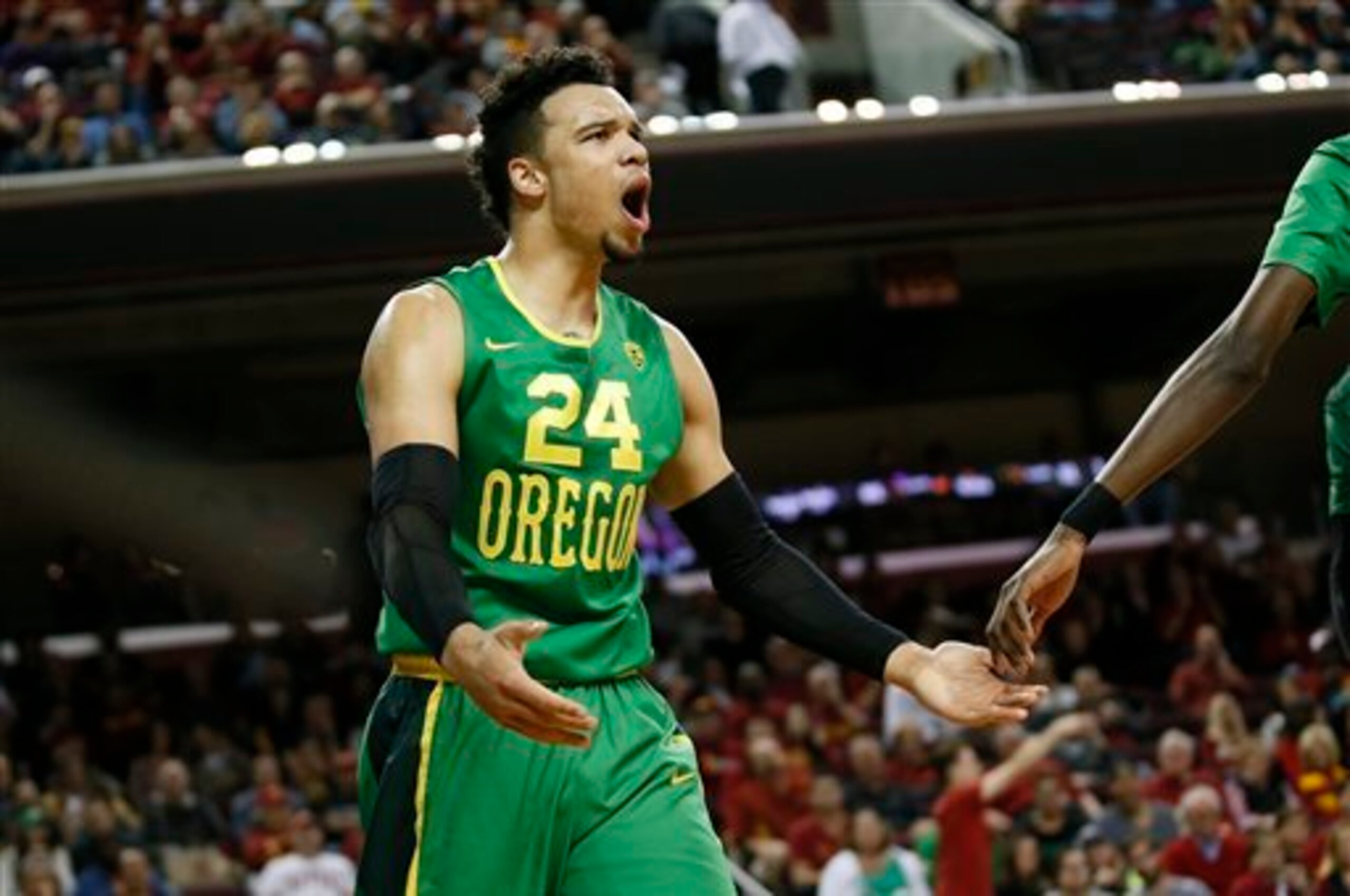
Biggest Storyline: How bad is Dillon Brooks' foot injury?
A little over a month ago, Kristen Rodgers of KEZI 9 News reported that Oregon's Dillon Brooks had a "hot spot in his left foot" that could develop into a stress fracture. A scary proposition, but with nearly four months remaining until the start of the regular season, it sounded like something that could be fine with an adequate amount of rest.
But now Brooks is out with no timetable for a return.
According to Tyson Alger of the Oregonian, Ducks head coach Dana Altman said on Aug. 20, "He's going to be out for a while. He had surgery, and we'll just have to wait and see what the doctors say."
So much for rest.
The good news is that Oregon has plenty of depth. In addition to six key returning players, the Ducks add JUCO stud Kavell Bigby-Williams and a trio of 4-star freshmen. If Brooks misses any time or otherwise needs to be eased back into action, they have the talent to tread water without him.
However, you don't just suddenly lose one of the top candidates for preseason Pac-12 Player of the Year without some sort of drop in expectations. If Brooks misses a significant amount of time, it might cost the team the conference title and could develop into one of the biggest stories in the nation for the 2016-17 season.
Purdue Boilermakers
12 of 20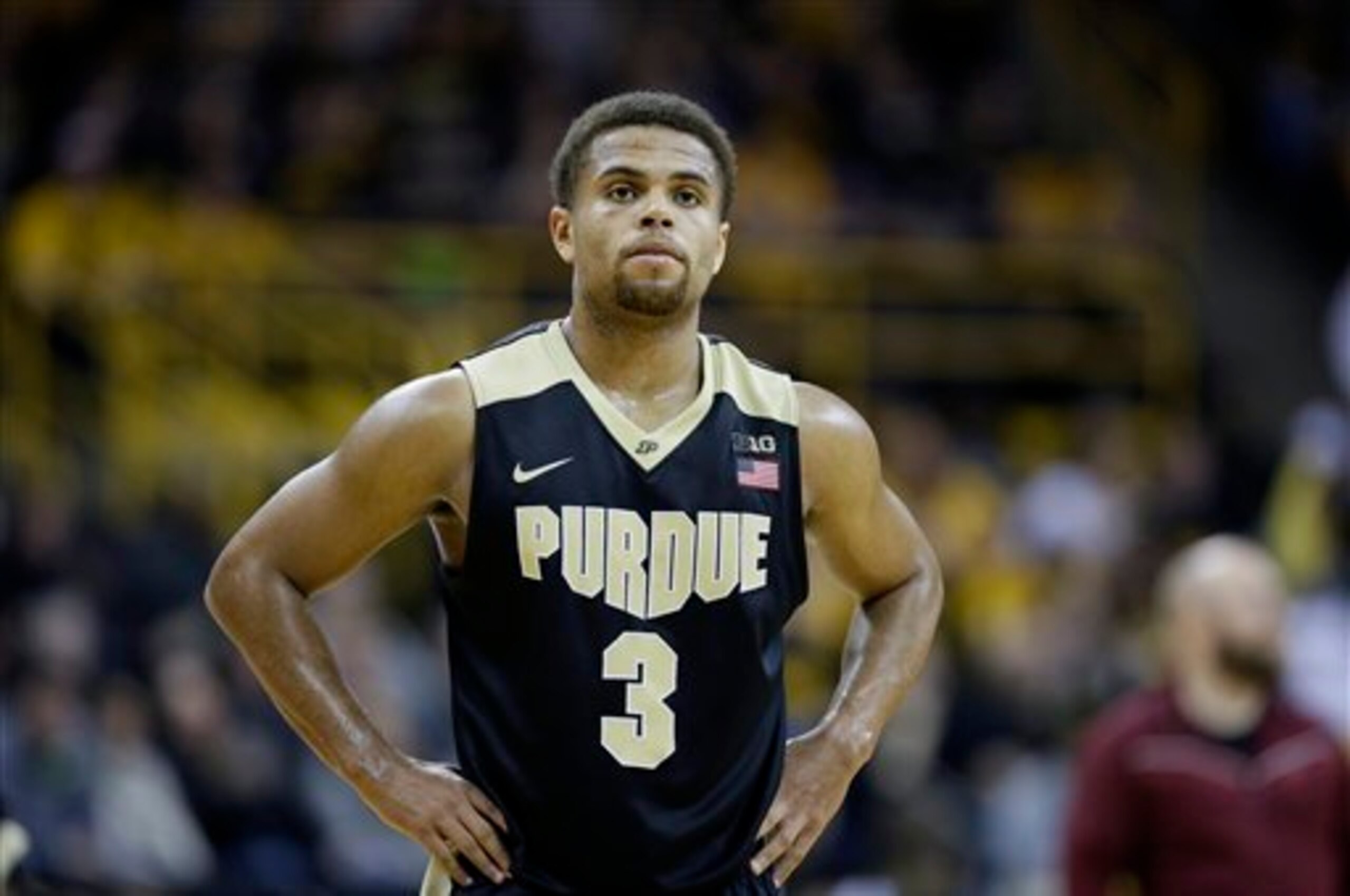
Biggest Storyline: What role will P.J. Thompson play?
For as much as national writers harped on Purdue's lack of guard play in 2015-16, P.J. Thompson was a valuable backcourt asset. He didn't shoot much, but he had the third-highest O-rating in the country, averaging better than 4.0 assists per turnover while making 41.5 percent of his three-point attempts.
But between the additions of graduate transfer Spike Albrecht and freshman Carsen Edwards and the cry for Ryan Cline to get more playing time as a sophomore, Thompson's role on this year's team is more than a bit up in the air.
As Pete DiPrimio of the News-Sentinel wrote last week, overlook Thompson at your own risk.
According to DiPrimio, Thompson averaged 10.8 points and 4.3 assists while shooting 68.8 percent from three-point range in Purdue's four games in Spain this summer. Granted, most of those games were blowout wins for the Boilermakers—the score of the final game was 117-66—but it was a clear reminder of what Thompson can bring to the table.
The frontcourt is Purdue's biggest strength, as forwards Vince Edwards, Caleb Swanigan and Isaac Haas are arguably the team's three best players. But don't be surprised if Purdue primarily plays a three-guard lineup, both to keep the big men fresh and to give more playing time to its deep stable of guards, including Thompson.
A starting five of C. Edwards, Thompson, Dakota Mathias, V. Edwards and Swanigan, with Haas and Cline as the first guys off the bench, would be formidable.
Rhode Island Rams
13 of 20
Biggest Storyline: Can they make an early splash in Uncasville?
If you don't have the Rams as a top-25 team, they should at least be on your radar. With E.C. Matthews returning from injury to join a rotation that gained valuable experience in his absence, this is a team that (if healthy) could go on a legitimate run in the NCAA tournament.
But for the most part, the Rams' nonconference schedule leaves something to be desired. Home games against Dartmouth, Marist, Brown, Holy Cross, William & Mary and Old Dominion aren't impressing anyone. Even the road games against Providence and Valparaiso don't have anywhere near the luster they would have had last year.
So if the Rams are going to make a statement that they mean business this year, it will need to come in the Hall of Fame Tip-Off Tournament eight days into the season.
It's only a four-team tournament, but it might be the two best opponents they face all year.
They open against Cincinnati, which may have some early growing pains after losing Farad Cobb, Octavius Ellis, Coreontae DeBerry and Shaq Thomas. Beat the Bearcats and—unless Penn State pulls off a massive upset—the Rams would face Duke.
They don't even need to beat Duke to prove something. As long as Rhode Island doesn't get blown out of the gymnasium, it would instantly become a team that everyone is keeping an eye on for the rest of the season.
Saint Mary's Gaels
14 of 20
Biggest Storyline: Will the Gaels learn their lesson and schedule better?
Saint Mary's was one of the half dozen or so teams with a legitimate grievance with the selection committee last March. The Gaels went 27-5 with two wins over Gonzaga and nary an ugly loss on their schedule.
However, they didn't leave the state of California until the final weekend of January and only played one game in the entire season against a team that made the NCAA tournament as an at-large team—a loss to California.
We don't know much about their schedule yet, but what we do know isn't pretty. A road game against Stanford might have some value, and there's a chance the home opener against Nevada ends up being a game against a tournament team. Other than that, home contests against San Jose State and UC Irvine and a neutral-court game in Las Vegas against UAB are all that have been announced thus far.
With most of the top programs already releasing their nonconference schedules, that could be a major problem for this mid-major team.
Conference play should carry more weight with Gonzaga a top-notch program and BYU a strong breakout candidate, but the selection committee sent a clear memo to Saint Mary's to do better with its nonconference scheduling. Thus far, the Gaels have ignored that memo at their own peril.
Texas Longhorns
15 of 20
Biggest Storyline: Is Texas on the verge of becoming a legitimate national powerhouse?
Texas has always been able to recruit talent. Since landing the second-best class in the country in 2004, the Longhorns have signed 14 5-star recruits, including Kevin Durant (No. 2), Avery Bradley (No. 4), Myles Turner (No. 6) and Jordan Hamilton (No. 7) who were each rated near the very top of their respective classes. In total, they have signed 33 top-100 recruits in the last 13 years.
Despite all that potential, they haven't been to the Final Four since 2003 and haven't even reached the Sweet 16 since 2008. Because of that constant failure to meet expectations in March, Longhorns fans were none too sorry to see Rick Barnes leave at the end of the 2014-15 season.
But now that a coach with Shaka Smart's talent is getting access to the kind of recruits that Texas can land—guys such as Jarrett Allen and Andrew Jones, in particular—this could be the start of something great.
This year's team is extremely young, but it's also the one that may determine how seriously recruits consider Texas in the near future.
Aside from Tevin Mack, who had originally committed to VCU, no one on last year's roster was hand-picked by Smart. In 2016-17, we'll get to find out what and how he does with talented freshmen. If Allen and Jones have big years, it'll only get that much easier for Smart to land big-name recruits going forward. At that point, Kansas will finally have a legitimate challenger in the Big 12.
UCLA Bruins
16 of 20
Biggest Storyline: Jonah Bolden leaves to play internationally.
This isn't so much a developing storyline as it is an impact that may be felt more as the season progresses.
Jonah Bolden wasn't going to be a starter for UCLA. He probably wouldn't have even fit into the primary seven-man rotation. But his length and ability to affect the game on defense would've been crucial attributes for the Bruins. His decision to return to Australia to play for one season before going to the NBA draft could be a problem for UCLA.
"Jonah thought that, with GG [Gyorgy Goloman] back healthy, he'd be able to slide back down to the 3 spot," Bruce Bolden, Jonah's father, told Fox Sports. "Unfortunately, over the past month, he was still in that big-man role and didn't know why. ... He wanted to go to the 3 spot, and he got the impression that it wasn't going to happen, and he felt that would ruin his chances of really showing his 3 skill set."
An understandable frustration for the 6'10" wing, but with Lonzo Ball, Bryce Alford, Isaac Hamilton, Aaron Holiday and—if he recovers from a torn meniscus—Prince Ali all in the mix for backcourt playing time, his insistence on playing the 3 on this roster was only going to leave him glued to the bench.
Despite the logjam, he likely would have played 15-20 minutes per game as the first line of defense in the zone. Those minutes will be sorely missed, unless someone else unexpectedly steps up to become a key contributor on an otherwise hapless defense.
Villanova Wildcats
17 of 20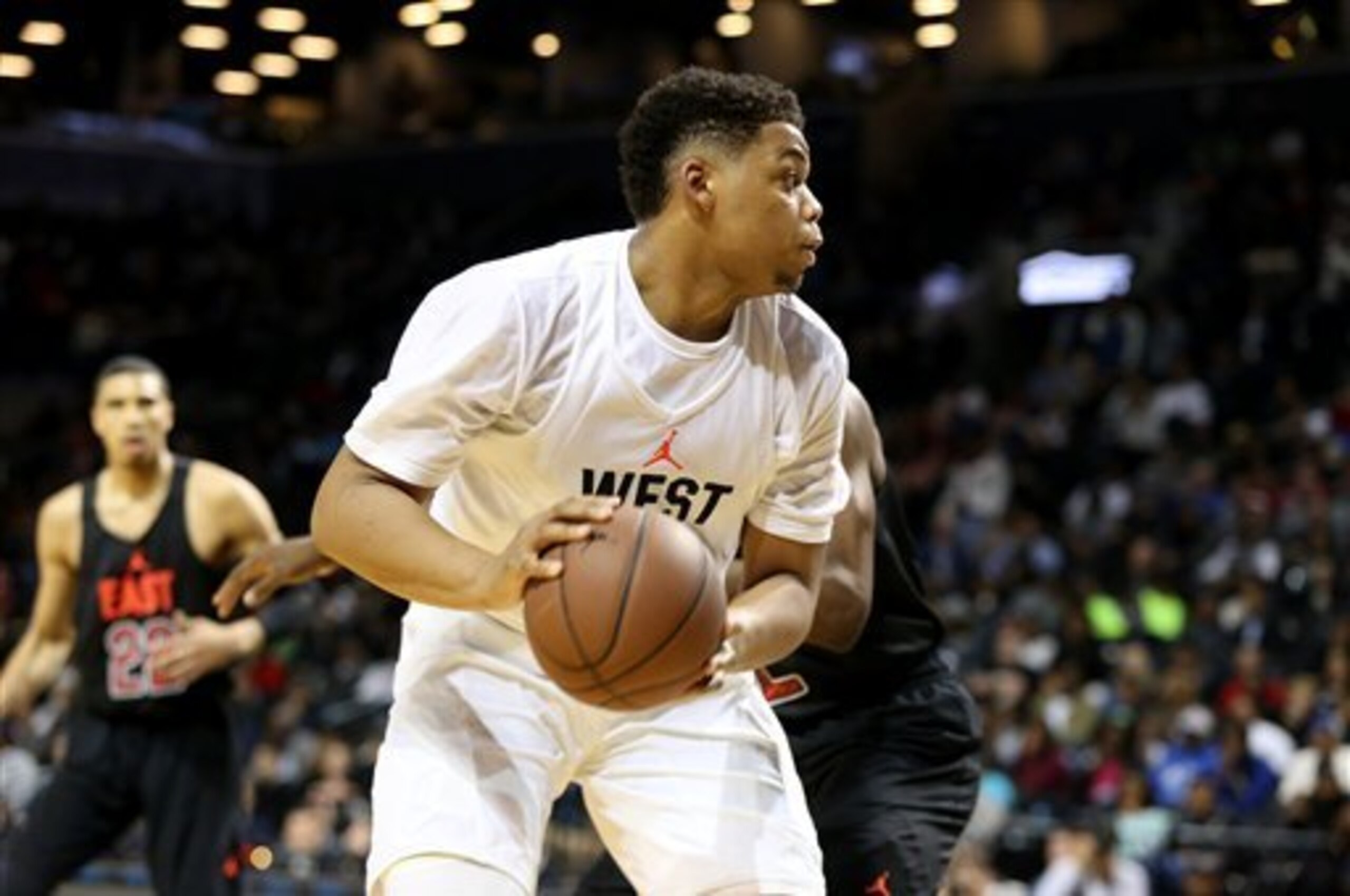
Biggest Storyline: Omari Spellman still not cleared by NCAA.
Summer eligibility issues for freshmen often go away before having any kind of impact. Marquette's Haanif Cheatham wasn't cleared in time for the Golden Eagles' trip to Italy last summer, but he ended up getting cleared, starting every game and averaging 11.8 points per game as a freshman.
As such, Villanova fans shouldn't be at DEFCON 1 just yet with Jon Rothstein of CBS Sports reporting on Monday morning that Omari Spellman still hasn't been cleared by the NCAA.
And yet, it's hard to forget that guys such as Kentucky's Skal Labissiere, Kansas' Cheick Diallo and Louisville's Shaqquan Aaron had eligibility issues last late into the offseason or even into the regular season before they ended up making nowhere near the impact that they were supposed to make as highly rated recruits.
Villanova can afford to do-si-do with the NCAA over this for maybe another month, but if Spellman isn't cleared by Oct. 1, it will officially be time to start figuring out other options.
Fortunately, the Wildcats have a few.
In Josh Hart, Kris Jenkins, Mikal Bridges and Eric Paschall, they have four hybrid players who could serve in some combination as the 3-4-5 alongside guards Jalen Brunson and Phil Booth. They also still have Darryl Reynolds, who played well as the primary 5 for the few games last season that Daniel Ochefu missed with a concussion. Freshmen Dylan Painter and Tim Delaney could also serve as stopgaps at center if and when those first two plans aren't working.
But there's no question this team would be better off if Spellman gets cleared tomorrow. A wrecking ball in the paint with a little bit of range, he might be the best big man in the Big East this season, if he gets to play.
Virginia Cavaliers
18 of 20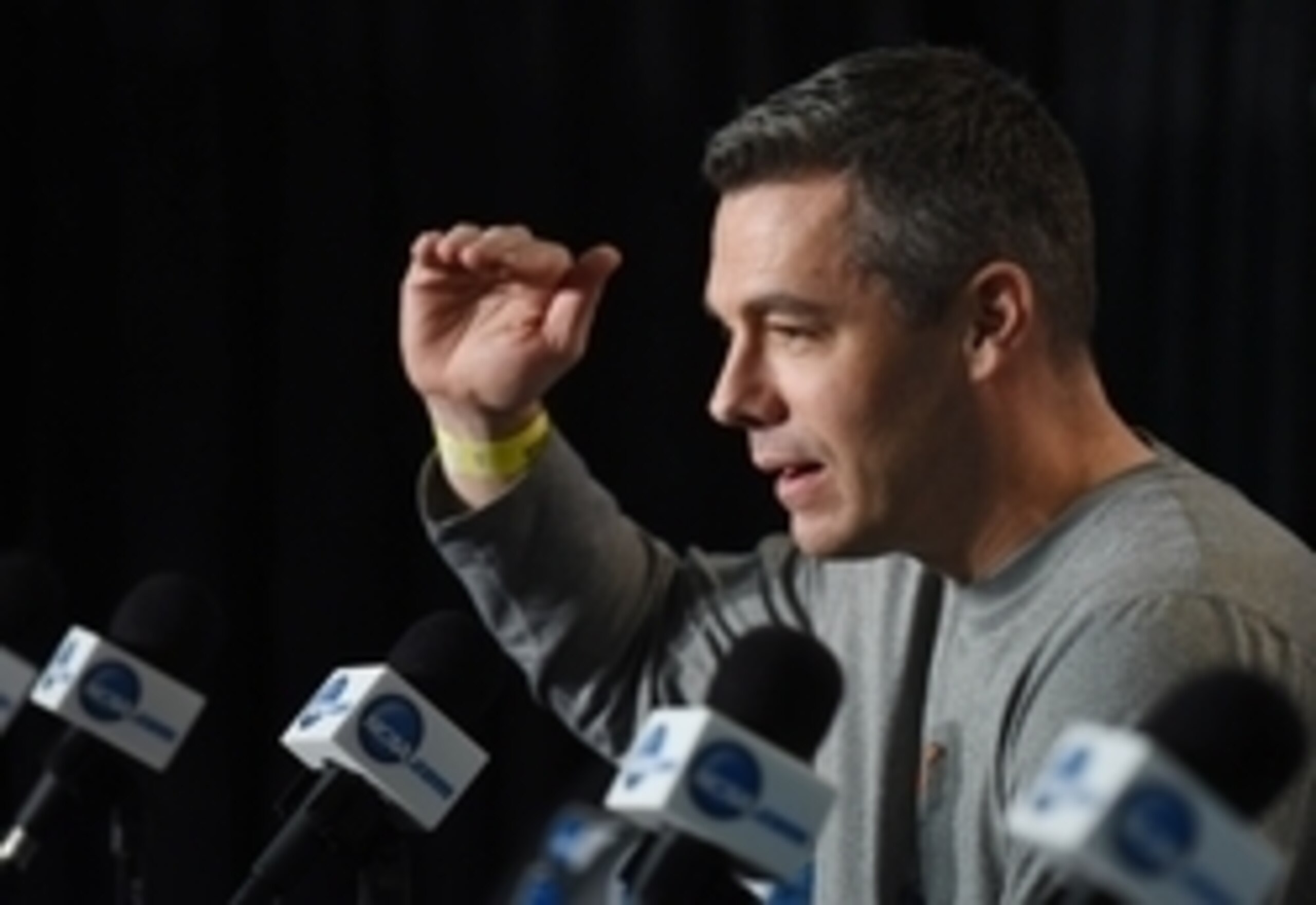
Biggest Storyline: Is this the year Virginia finally lives up to postseason expectations?
The Cavaliers have been outstanding for the past three seasons, using impenetrable defense to put together a combined ACC record of 45-9. This year will be no different with the addition of shot-blocking extraordinaire Austin Nichols. Virginia will have plenty of competition from Duke, North Carolina and Louisville, but it could win the ACC.
Yet, because of the recent NCAA tournament flame-outs, Tony Bennett's team could enter the dance with a 34-0 record, and we'd still be skeptical about its championship credentials. Despite a pair of No. 1 seeds and a No. 2 seed, Virginia has just six wins in the last three tournaments and has failed to reach the Final Four.
It didn't help matters that the Cavaliers were up by 16 in the second half of the Elite Eight game against Syracuse only to give it all away. It was the type of meltdown that only an experienced underachiever could muster.
Throughout the 2015-16 season, the lack of faith was a two-headed narrative, as both Virginia and Villanova had failed to reach their seeding potential in several consecutive years. But with Villanova winning the national championship while Virginia lost spectacularly, all of that pressure falls squarely on Virginia's shoulders.
(Unless Georgetown has a nice season and earns a No. 4 seed or better, in which case the Hoyas might even carry the bulk of the "I refuse to trust this team" burden.)
Best of luck, Wahoos, but if you're going to break the nation's bracket this year, it'll be because you finally win more games than we're willing to believe you're capable of winning.
Wisconsin Badgers
19 of 20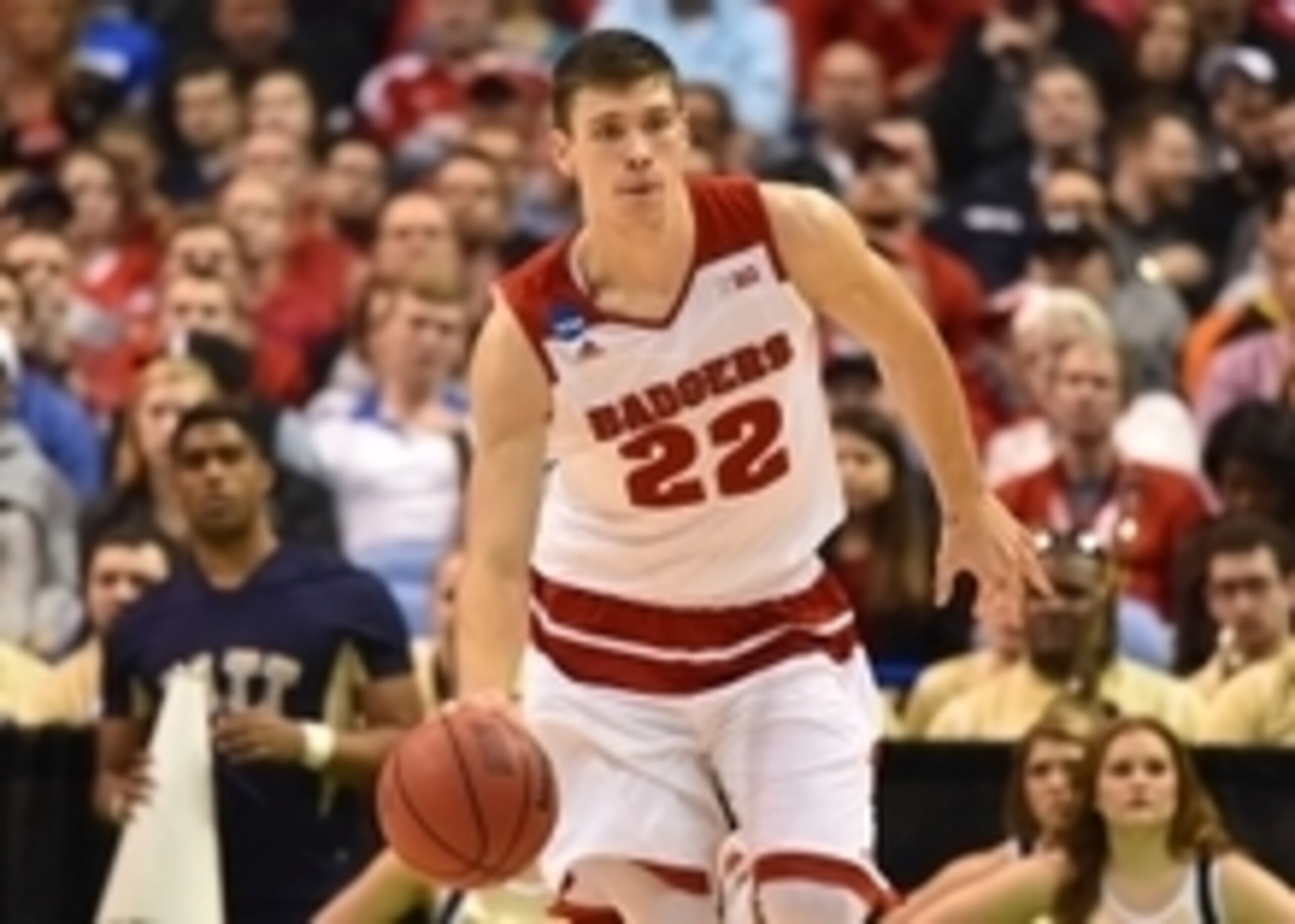
Biggest Storyline: Could this be the best Wisconsin team ever?
That may seem like a weird question for a program that just went 36-4 two years ago while rewriting the books on offensive efficiency, but what's stopping Wisconsin from challenging Duke for the role of best team in the country in 2016-17?
The Badgers get everyone back from last season and even add Brevin Pritzl and Andy Van Vliet. They have a full offseason to work with Greg Gard. They can reasonably expect a more efficient year out of Nigel Hayes. And there's almost no chance they'll have worse luck with opposing three-point percentages than they have had in each of the past two seasons.
Granted, things could get worse. Maybe Ethan Happ has a sophomore slump or Vitto Brown takes a step backward after a breakout junior year. But if Hayes shoots better than 40 percent from inside the arc this year while opponents shoot closer to the national average from beyond the arc, that's a positive swing of at least a few points per game.
Considering eight of Wisconsin's 13 losses last season came by a margin of six points or fewer, those minor differences could have major ramifications for a team that finished strong and should be more confident than it was at the start of last season.
Xavier Musketeers
20 of 20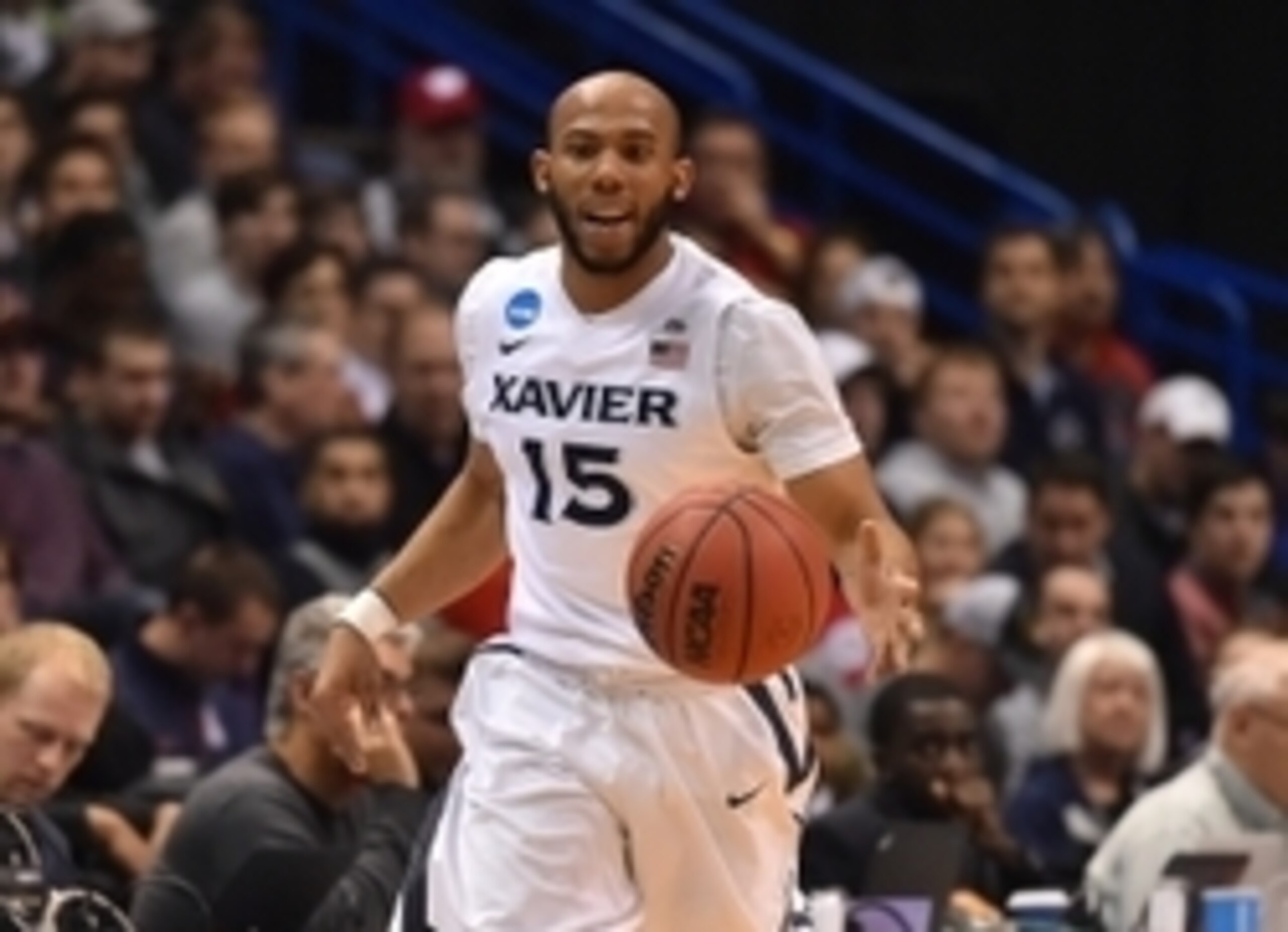
Biggest Storyline: Myles Davis' criminal charges.
Myles Davis averaged 10.8 points and 4.1 assists per game last season and is going to be a crucial member of Xavier's backcourt this season—provided he can focus on the task at hand while an ex-girlfriend is pressing charges against him.
According to the Cincinnati Enquirer, Davis has been charged twice in the past two months with "misdemeanor criminal damaging" for allegedly breaking a cell phone and putting a dent in a car door. His former girlfriend also accused him of threatening her, punching holes in her wall and trying to punch through her windows. She was granted a protective order—AKA restraining order—as a result.
I won't speculate on the details other than noting that a lawsuit stemming from a breakup is more than just a bad breakup. It's hard to forecast how this whole thing plays out, and though it takes a backseat to the serious criminal implications, the Musketeers may need to prepare for a starter to be away from the court because he has to appear in court.
Stats are courtesy of KenPom.com or Sports-Reference.com, and recruiting information is courtesy of 247Sports, unless noted otherwise.
Kerry Miller covers college basketball for Bleacher Report. You can follow him on Twitter @kerrancejames.



.jpg?w=2560 "Latest Peyton-Colts Rumors")
.jpg?w=2560 "Chiefs, Steelers Eye WR Trades")