The Most Polarizing Players in College Basketball in 2016-17
With notoriety comes great scrutiny. This applies to all facets of life and is especially prevalent in the world of sports, where the most well-known athletes are regarded in so many different ways depending on who you ask.
College basketball is no different. A sport with fans as passionate as this one tends to create its share of so-called "heroes" and "villains," many of whom are considered both thanks to the polarizing nature of their personalities, playing styles or other circumstances. Whether you love them or hate them, see them as a budding superstar, huge bust or anything in between, everyone has an opinion about these guys.
The majority of college basketball's most polarizing players from last season are no longer around, but plenty of others still exist. You probably know of a few of them, but the rest you'll no doubt be forming an opinion of after reading their circumstances.
Bryce Alford, UCLA
1 of 10
The son of a coach is quite often one of the most polarizing figures in any sport, particularly if he plays a prominent role on that team. Usually, the team's fans are still in favor of that player, but this isn't the case with Bryce Alford.
If anything, he tends to get more rancor than other UCLA players because of his relation to the head coach, who isn't exactly a fan favorite himself.
Following a disappointing 15-17 season, the worst record for a Bruins team since 2009-10, Steve Alford forfeited a one-year contract extension he'd previously received. However, that wasn't enough to satisfy the faction who wanted Alford fired.
A Twitter account started in February is connected to an open letter to UCLA athletic director Dan Guerrero that notes, among other things, "The perception among UCLA fans is that Alford is using UCLA basketball as a platform and showcase for his son, Bryce, at the expense of the team, the program, the fans and the legacy of UCLA basketball."
Yet when Bryce Alford hits a game-winning shot—like he did to beat No. 7 Arizona in January—it's not like those fans are booing the victory. You can't have it both ways, Bruins nation.
Grayson Allen, Duke
2 of 10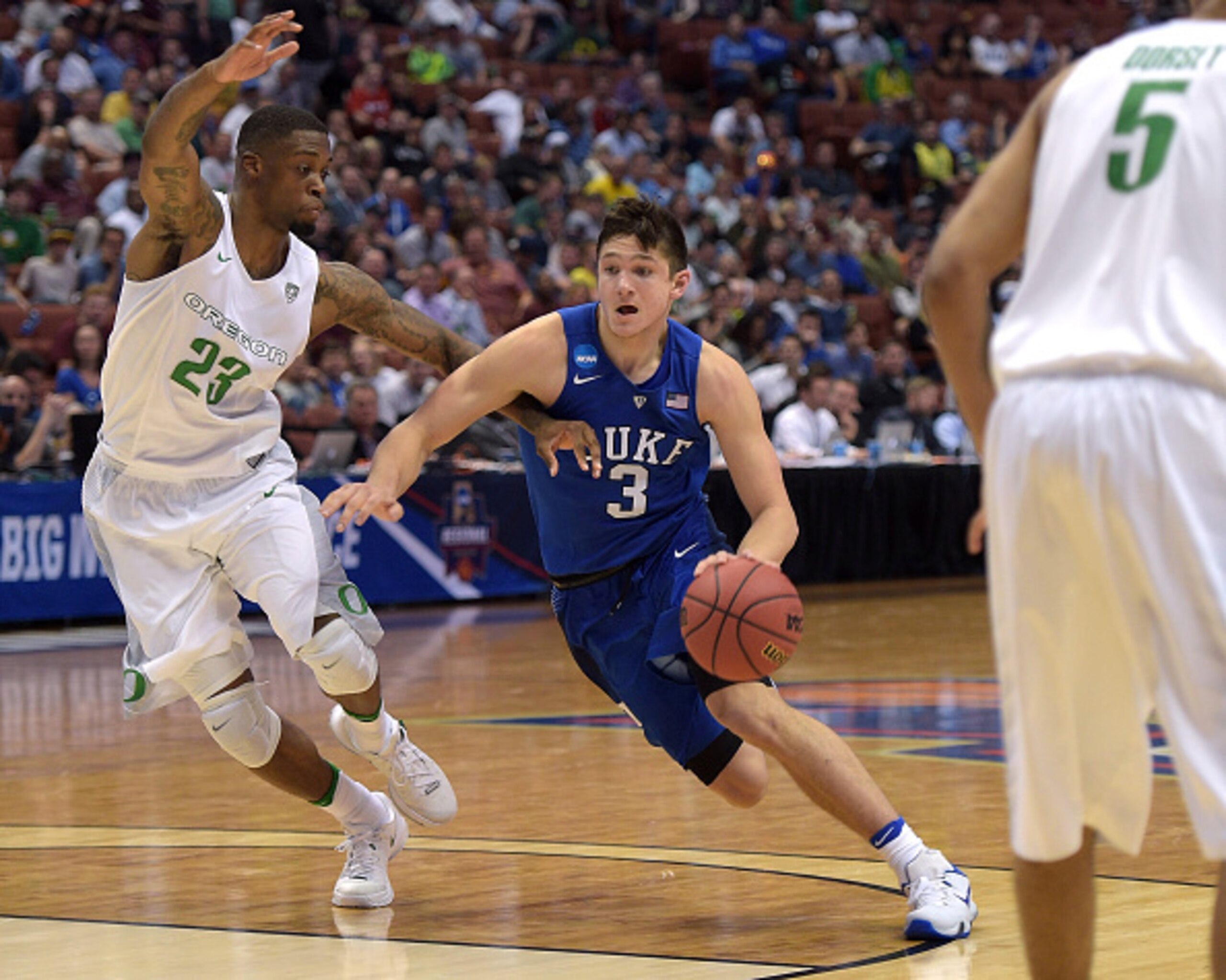
It's kind of an unwritten rule that if you're not a Duke fan, you hate the Blue Devils. The same goes for the New York Yankees in professional baseball, the Dallas Cowboys in the NFL and the Los Angeles Lakers in the NBA. And if you're the star of one of those teams, odds are you're not going to be well-liked by the general populace.
Duke always seems to have one of those guys whom fans love to hate, going back to Bobby Hurley and Christian Laettner in the 1990s and continuing on to today with Grayson Allen assuming the title of most hated player in college basketball. It doesn't help that he's developed a reputation for some questionable on-court tactics.
"After busting out during the 2015 national title game as a freshman, Allen emerged this past season as great player on a good Duke team. He also emerged as a pusher, a shover, a flopper and a tripper. And people hated him for it. It doesn’t take much for college hoops fans to hate Duke. Allen poured gasoline onto an already raging fire.
"
Allen drew ire for a few tripping incidents last season. Then, after Duke was eliminated in the Sweet 16 by Oregon, he refused to shake hands with Oregon's Dillon Brooks.
BeeJay Anya, North Carolina State
3 of 10
BeeJay Anya arrived at North Carolina State in 2013 weighing 325 pounds, so it wasn't a surprise the 6'9" center could only manage 11.6 minutes per game as a freshman as he worked to get in shape and improve his stamina. Listed at 295 as a sophomore, his court time increased, but still only to 19.4 minutes per contest. The 285-pound version averaged 23.4 minutes this past season.
So what kind of chiseled form will Anya have for his senior year? How's 344 pounds sound? That's what he's listed at on the Wolfpack's online roster, though video from NC State's "Packapalooza" event shows Anya looking much thinner than that.
Whatever he ends up weighing when the 2016-17 season begins, what won't change is how much Anya is judged based on his stamina and staying power. He could be (pardon the pun) a big part of a good team this season if he's able to manage to play for longer periods of time, but if he struggles or tires, the weight issue will keep getting used against him.


Austin Grandstaff, DePaul
4 of 10
There's no denying that transfers have become more prevalent in college basketball the last few seasons, but it's far from the "epidemic" that some have made it out to be. In most cases, a player who transfers ends up much happier at the second school, and only occasionally do they move on yet again.
And then there's Austin Grandstaff, whose brief college career so far has seen him be part of three different programs but only play for one.
A 4-star prospect in the 2015 recruiting class, the 6'4" guard signed with Ohio State in November 2014 as part of a five-man class that was rated fifth-best in the country. He averaged 4.4 points and 11.5 minutes over the Buckeyes' first 10 games last season before deciding to transfer. His father, Wes Grandstaff, told Bill Landis of Cleveland.com "we'll be smarter in our decision" for Austin's next school, which ended up being Oklahoma.
But only for a few months. Grandstaff joined the Sooners in January, but by May, he and Oklahoma were "parting ways," according to Jerry Meyer of 247Sports, before he ever played a game. A month later, he signed with DePaul, where he'll be eligible to play in the 2017-18 season.
Assuming he doesn't transfer again.
Chase Jeter, Duke
5 of 10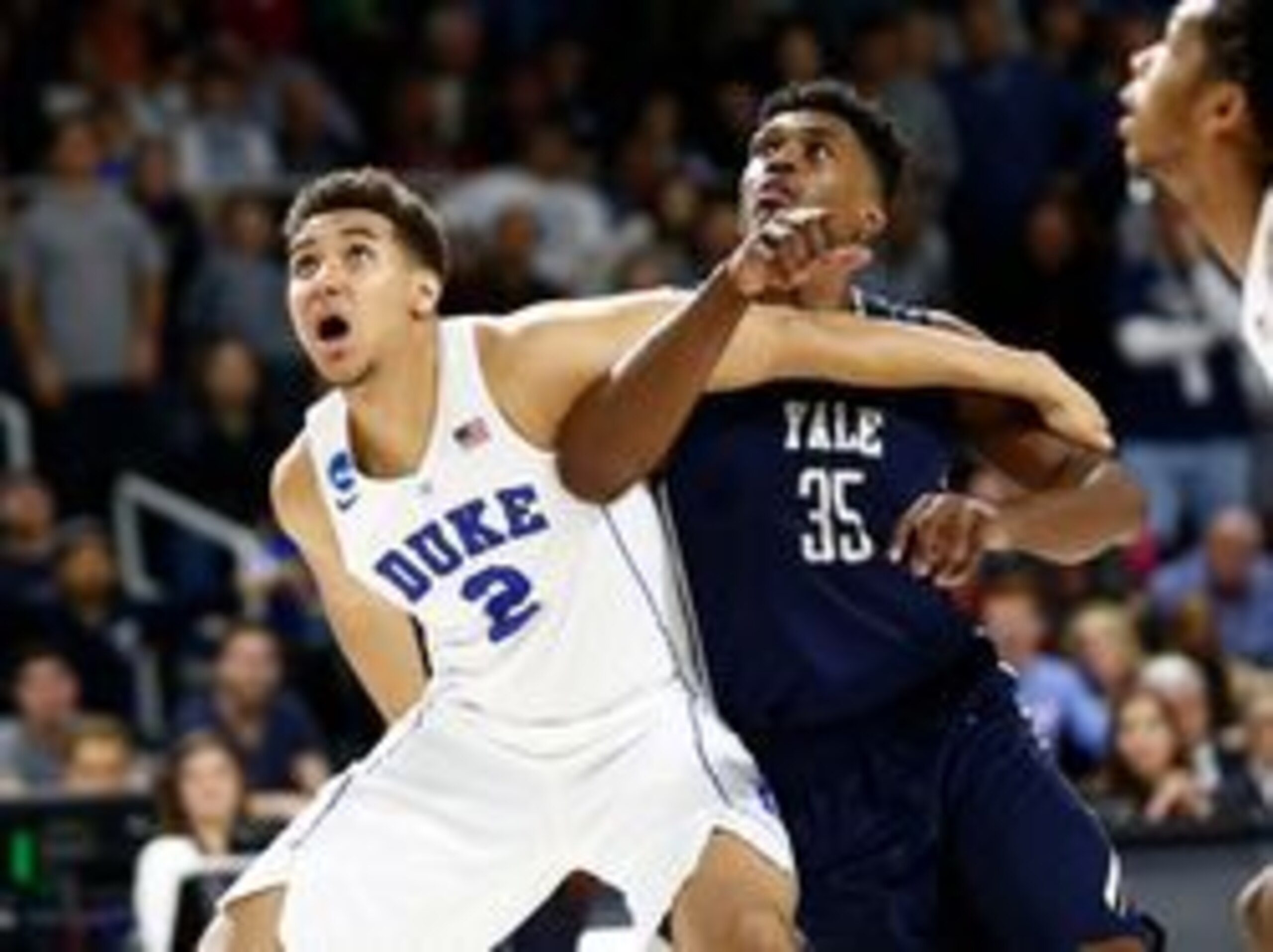
While teammates such as Allen are polarizing for their demeanor and how it's received by college basketball fans, Chase Jeter makes this list for his play. Or, rather, how little of it he got as a freshman in 2015-16.
The No. 15 player in his class committed to Duke in August 2014, and that choice was met with much praise for the destination and how great he'd be with the Blue Devils. ESPN's Paul Biancardi (via ESPNMediaZone.com's Derek Volner) called him "one of the elite post players," and CBS Sports' Seth Davis said he'd be a "terrific motion offense player."
We at Bleacher Report got swept up by Jeter's hype, too, wondering whether his arrival at Duke meant center Marshall Plumlee should seek a transfer, and more than 60 percent of readers who voted in an online poll figured he'd be starting as a freshman.
Instead, the 6'10" Jeter ended up the seventh guy in what was essentially a six-man rotation for Duke last season. He averaged only 7.9 minutes per game, logging fewer minutes over the entire year than forward Amile Jefferson did in nine games before going down with a season-ending injury.
Maybe Jeter wasn't ready in his first year to be as good as his recruiting profile indicated he'd be, or maybe he's on his way to being a bust. One year probably isn't enough to determine that, but it won't stop many from thinking that way.
Dedric Lawson, Memphis
6 of 10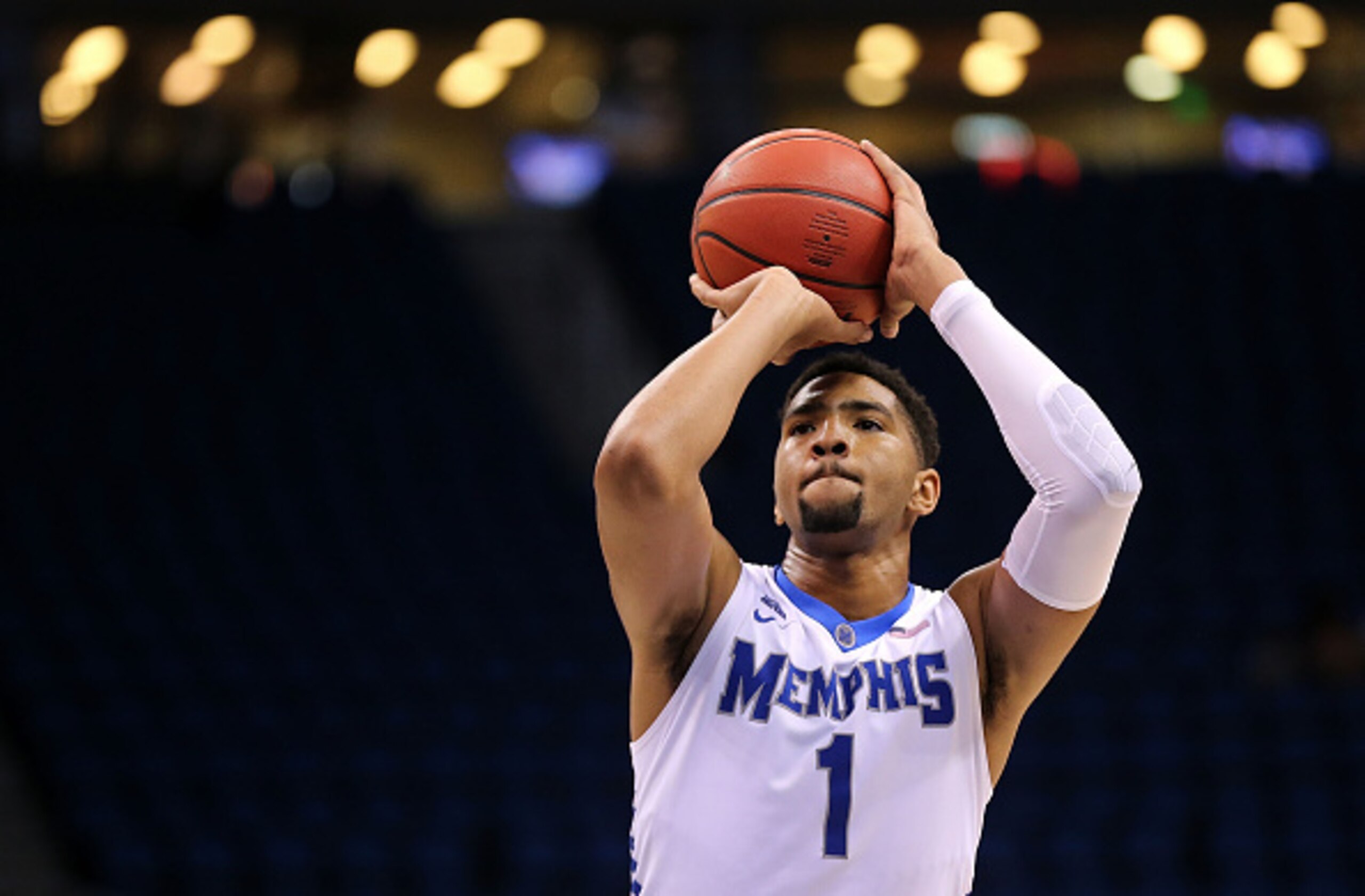
While his team struggled to a 19-15 record and missed the NCAA tournament for the second straight season, Dedric Lawson's freshman year in 2015-16 was pretty darn good. The 6'8" forward was far and away Memphis' best player, averaging 15.8 points, 9.3 rebounds, 2.5 assists, 1.7 blocks and 1.2 steals. He led the Tigers in three categories and was no worse than third in the others.
So it wasn't a surprise that Lawson was among many freshmen who declared for the NBA draft last spring, especially after the coach who hired him (Josh Pastner) left to take the Georgia Tech job, but it was shocking that he reversed that decision not long after. And then went ahead and filed paperwork to enter the draft.
The reason? According to CBS Sports' Gary Parrish, it was a "not-so-subtle move" meant to let new coach Tubby Smith know that Lawson wouldn't be coming back unless his father, Keelon Lawson, remained on staff as an assistant coach.
Keelon Lawson remains part of the program, as does Dedric and brother K.J. Lawson, who missed most of last season because of injury. And Memphis remains the favorite for Chandler Lawson, a 5-star prospect in the 2019 recruiting class.
Svi Mykhailiuk, Kansas
7 of 10
Check out any early mock-up for the 2017 NBA draft, and you'll find an equal mix of college players and international prospects. Svi Mykhailiuk constitutes both, a Ukranian-born player who is heading into his junior season at Kansas and is projected by DraftExpress as the No. 27 pick next June.
Not too sure who he is? You're not alone. Despite arriving at Kansas two years ago with a fair amount of hype, Mykhailiuk hasn't played much so far.
Listed as a guard despite being 6'8", he averaged 11.2 minutes as a freshman while scoring 2.8 points per game. Last year, he increased his playing time to only 12.8 minutes yet nearly doubled his scoring to 5.4 points per contest.
Last November, Bleacher Report's C.J. Moore wrote about Mykhailiuk's slow progress and cited a scout who said, "I think everyone feels it's a matter of when, not if, as far as him breaking out," but the "when" still hasn't happened. Yet he remains a valued pro prospect, judging by his placement on those mock drafts.
Maybe his breakout will come this winter. According to Gary Bedore of the Kansas City Star, Mykhailiuk led Ukraine's under-20 national team in scoring and was second in rebounding in the FIBA U20 European Championships this summer.
Ivan Rabb, California
8 of 10
A total of 27 college freshmen put their names into the 2016 NBA draft as early-entry candidates this spring, though several ended up withdrawing before the late-May deadline. Ivan Rabb wasn't on that initial list, the highest-rated freshman in the country based on his recruiting rankings at seventh overall in the 2015 class.
Is that because Rabb wasn't as good as those ratings would indicate? Not really. He averaged 12.5 points and 8.5 rebounds in 2015-16 while shooting 61.5 percent and was considered by many to be a first-round pick, possibly one who would have been a lottery selection had he turned pro.
Connor Letourneau of SFGate.com wrote in June that Rabb was a “player some thought could crack the top five picks,” thus making his decision to return to school quite intriguing.
Must mean he's scared, right? Or does he just want to be fully ready to contribute in the pros when he leaves instead of having to fight for court time and risk washing out?
"The second-team All-Pac-12 selection was more concerned about making a rotation than going in the lottery," Letourneau wrote. "To play as a rookie, Rabb recognized he needed to establish himself as a reliable defender."
Caleb Swanigan, Purdue
9 of 10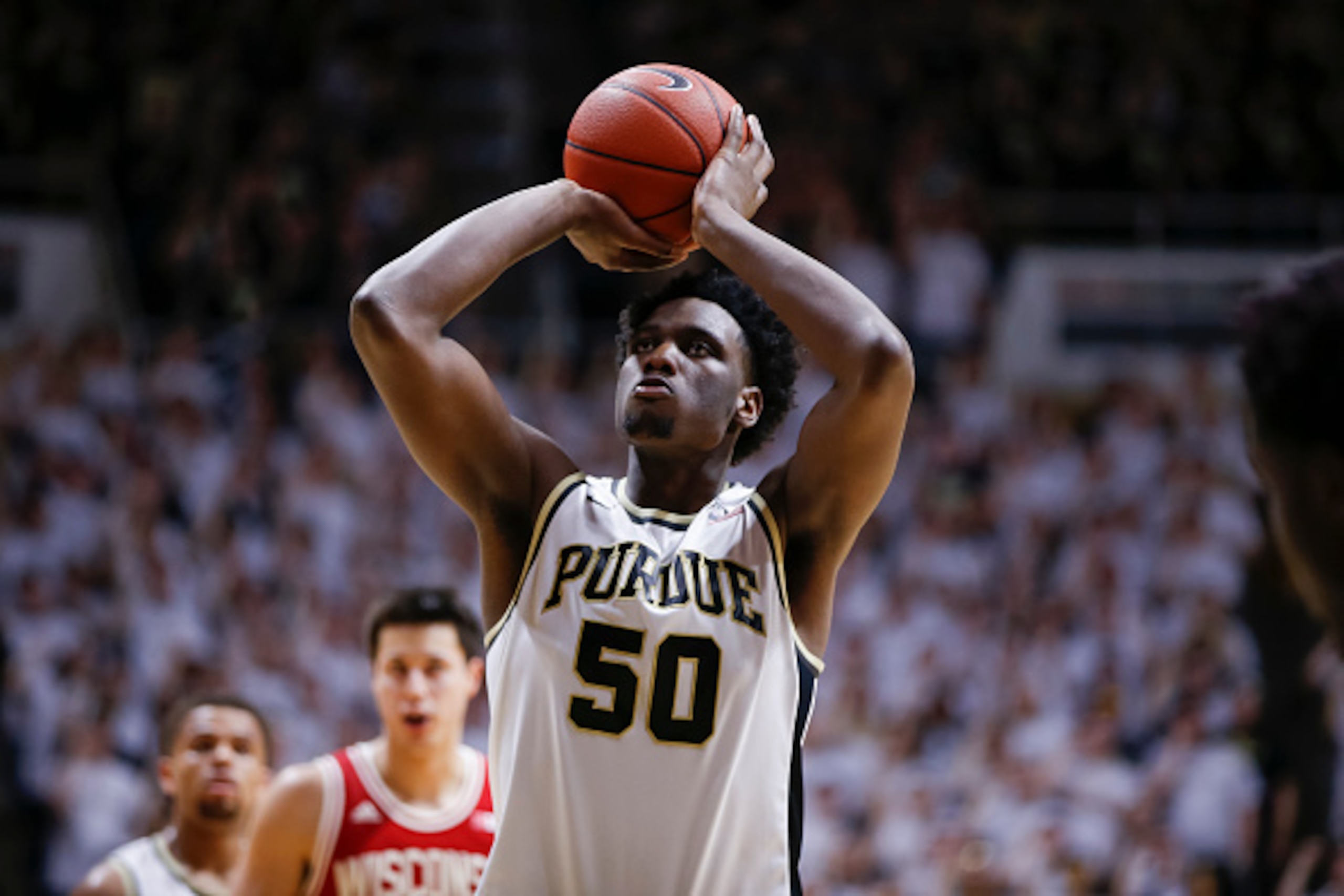
At 6'9" and 250 pounds and with a nickname like "Biggie," there's no doubt what position Caleb Swanigan plays and the type of player he is. Or is there?
Swanigan started all 34 games for Purdue last season as a freshman, averaging 10.2 points and a team-high 8.3 rebounds (a shade ahead of 7-footer A.J. Hammons' 8.2 per game). Those are the numbers that scream power forward, yet his 46.1 shooting percentage would indicate otherwise.
Usually, the big guys in the post take almost all their shots within a few feet, resulting in great shooting rates. However, Swanigan made only 51.9 percent of his two-pointers, and his overall rate was so low because he attempted 72 threes and hit only 21.
Maybe Swanigan was looking ahead to the NBA, where everyone but the most traditional old-school centers spend time shooting from the perimeter. But if that's the case, then he probably would have stayed in the draft instead of withdrawing in May.
Melo Trimble, Maryland
10 of 10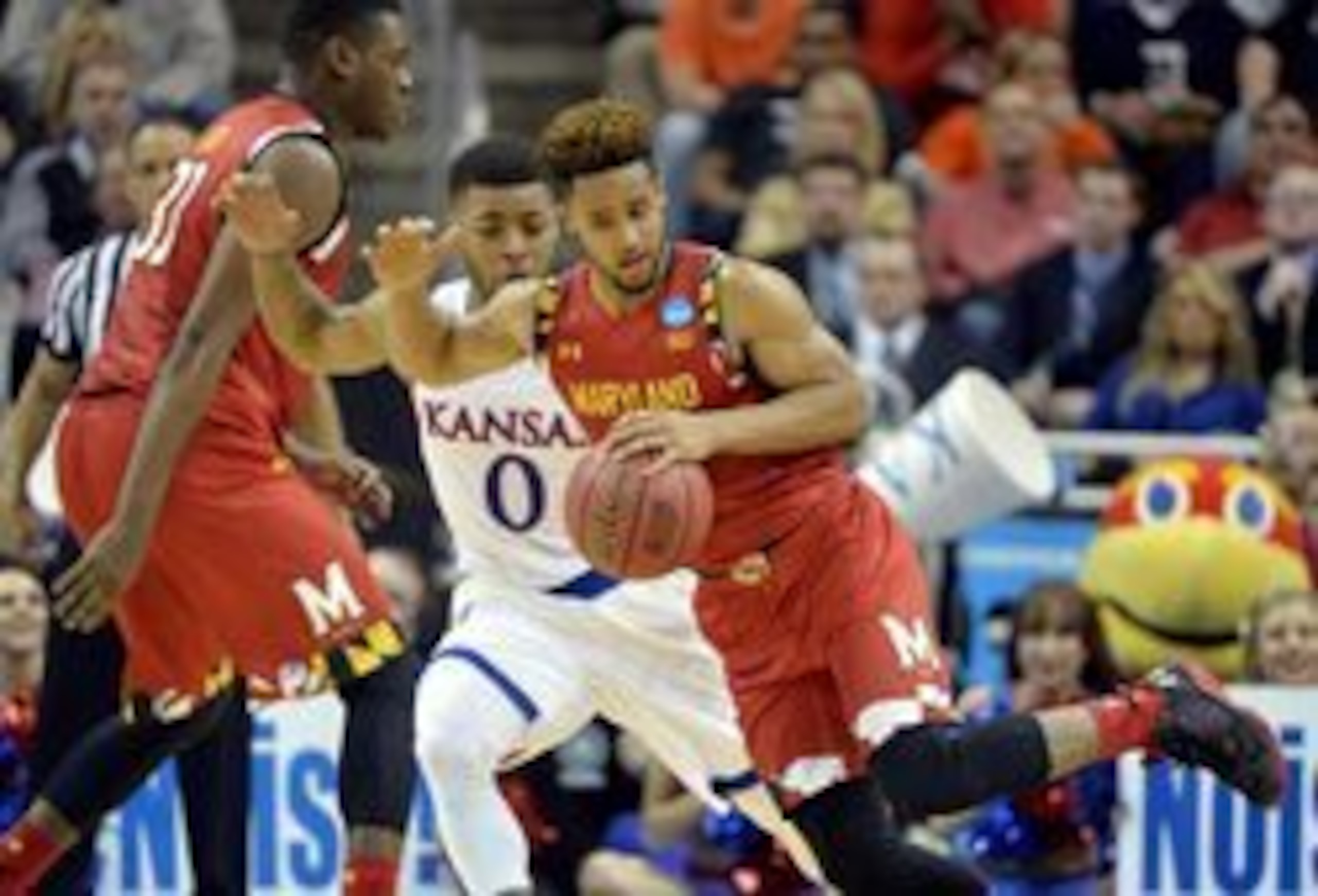
As the freshman phenom on a breakout Maryland team in 2014-15, Melo Trimble was one of the most well-regarded players in college basketball. His return, combined with the addition of prospect Diamond Stone and graduate transfer Rasheed Sulaimon, landed the Terrapins at No. 3 in the preseason Associated Press poll this past season.
But despite almost as many wins and a deeper NCAA tournament run, Maryland's 2015-16 performance was generally regarded as a disappointment based on expectations. Trimble's play was cited as a big reason, with most of his numbers dipping from the year before.
Most notably, he went from 41.2 percent from three-point range to 31.4 percent, and his one main flaw as a freshman—turnovers—continued to be an issue. But Bleacher Report's Kerry Miller called Trimble's regression "one of the most overblown talking points" of last season.
"You'd think Trimble was out there throwing the ball in the wrong hoop with the way some were blaming Maryland's late-season struggles on him," Miller wrote.
All statistics courtesy of Sports-Reference.com unless otherwise noted. All recruiting information courtesy of 247Sports.com unless otherwise noted.
Follow Brian J. Pedersen on Twitter at @realBJP.
.jpg?w=2560 "LA Premiere of \"Chad Powers\"")