The projected top 20 teams for the 2016-17 men's college basketball season have more strengths than weaknesses, but no team is perfect.
Oregon's shot-blocking duo will be a nightmare for opposing teams, but its perennially poor three-point defense could be just the opening those opponents need.
UCLA might be the highest-scoring team in the country, but it also might give up more points than any other squad.
Arizona has 11 players who would start for most teams, but does it have enough rebounders?
And those are just the elite teams from the Pac-12. It's the same in every conference, with each of these teams boasting one strength that instills optimism for a national championship, provided it can figure out an answer for its biggest weakness.
Teams on the following slides are listed in ascending order of projected ranking to open the season.
20. Saint Mary's Gaels
1 of 20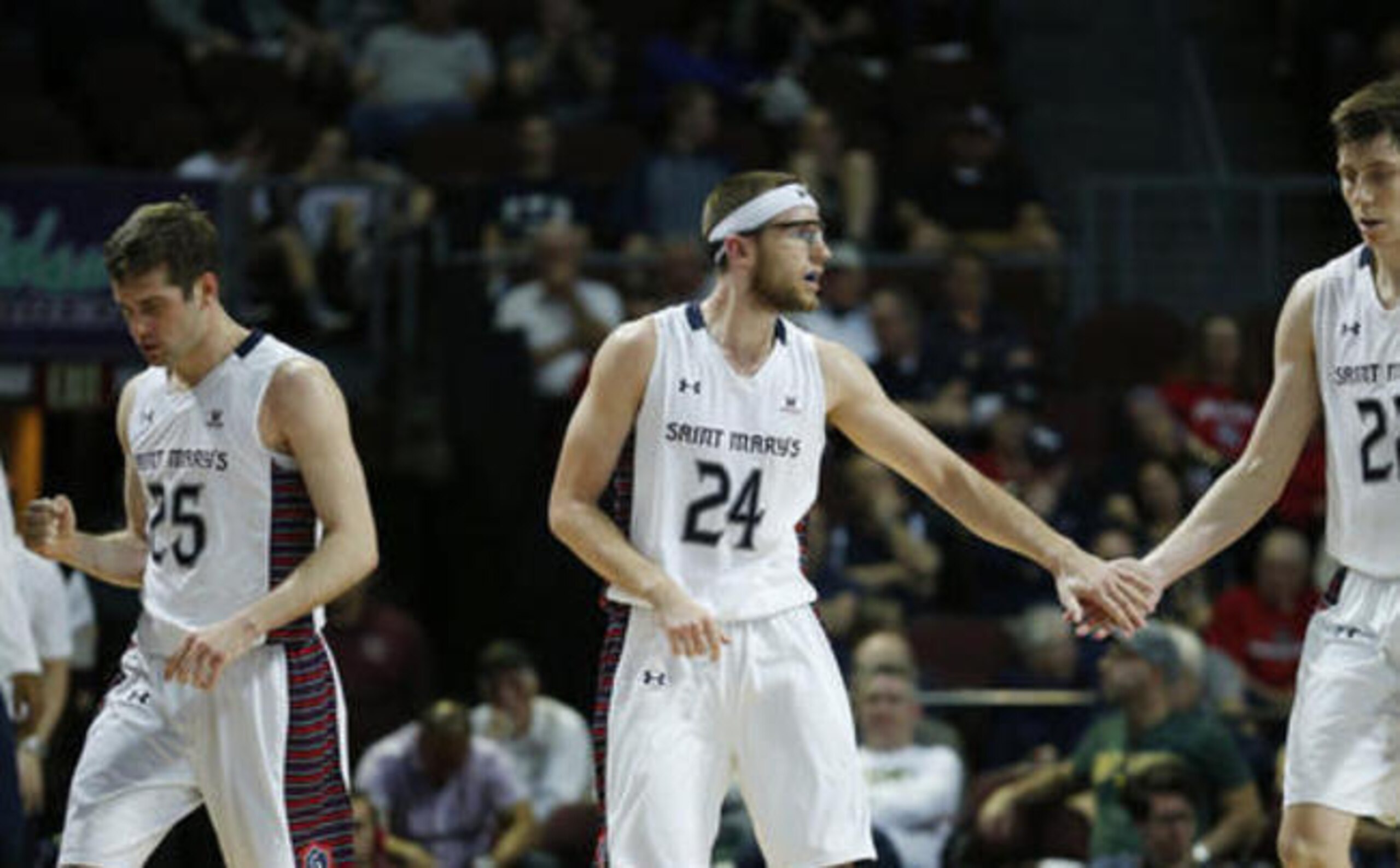
Biggest Strength: Cohesion
While high-ranking teams such as Duke, Kentucky, Arizona and Michigan State figure to prosper because of their all-you-can-eat buffet of incoming talent, Saint Mary's is looking good because it didn't lose anyone from a team that went 29-6 with one of the most efficient offenses in the nation.
Led by veteran combo-guard duo Joe Rahon and Emmett Naar, the Gaels should remain a team that avoids turnovers and scores in bunches. Look for stretch 5 Evan Fitzner to get even better as a sophomore. The 6'10" big man was one of their better long-range shooters last season, connecting on 41.0 percent of his 134 attempts.
Biggest Weakness: On-Ball Defense
For as great as the Gaels are on offense, they give back a lot of those points on defense. They ranked 320th in the nation in defensive turnover percentage, finishing 20 of their 35 games with fewer than 10 turnovers forced, according to their game log on Sports Reference.
Part of that is due to their slow pace of play, but none of the eight regulars in the rotation had a steal percentage better than 2.2 last season. As long as they're shooting better than 40 percent from three-point range, they're OK. On the nights when those shots aren't falling, though, the inability to create fast-break situations can be problematic.
19. Louisville Cardinals
2 of 20
Biggest Strength: Ball Pressure
The Cardinals were elite on defense during the days of Russ Smith, Peyton Siva and Chris Jones, but they have remained more than solid in the turnover department since replacing those pesky guards. Donovan Mitchell and big man Raymond Spalding were among the team leaders in steal percentage last season, and they are both in a position for significantly more minutes en route to a breakout year.
The big key in 2015-16 was defensive tempo. Despite the reduced shot clock, Louisville got better at drawing out possessions before forcing a turnover or bad shot, averaging 19.0 seconds per defensive possession—good for second-longest in the nation.
Biggest Weakness: Experience
After losing seniors Damion Lee and Trey Lewis as well as sophomore Chinanu Onuaku, Louisville is lacking in veterans. Rick Pitino did go out and get senior combo guard Tony Hicks from Penn, but with 0.48 career win shares per 40 minutes and a box plus/minus of negative-3.1, we shouldn't expect too much out of him.
How well will Quentin Snider and Mangok Mathiang fare in leading this young crop of talent?
18. Rhode Island Rams
3 of 20
Biggest Strength: Interior Defense
Primary guards Jarvis Garrett, Jared Terrell and E.C. Matthews have done little to force turnovers in their careers, but the Rams have fared well on the defensive end thanks to the shot-blocking and rebounding presence of Hassan Martin.
Though only 6'7", Martin averaged 2.5 blocks per game last season, while former Memphis transfer Kuran Iverson contributed 1.2 of his own. Because of that duo, the Rams ranked 22nd in block percentage and 46th in defensive rebounding percentage.
Biggest Weakness: Depth
Lack of reserves was Rhode Island's biggest issue heading into last season, and that didn't get any better when it lost Matthews for the year just 10 minutes into the first game. Because of that injury, Four McGlynn ended up playing a ton of minutes as a graduate transfer, and Earl Watson became the primary contributor off the bench.
Both of those guys graduated, though, and while the Rams have four incoming freshmen ranked in the top 350 by 247Sports, none of them are in the top 260. As a result, they have a strong starting five and not much else, unless former Indiana transfer Stanford Robinson can become a reliable sixth man.


.jpg?w=2560 "Seahawks Chiefs Football")
17. Baylor Bears
4 of 20
Biggest Strength: Offensive Rebounding
We'll see how things go with Rico Gathers out of the picture, but Baylor has ranked in the top four in the nation in offensive rebounding percentage in each of the past three seasons.
Gathers ranked in the top seven in that individual category in all four of his years with Baylor, but he wasn't the only one who crashed the glass. Johnathan Motley has put up big numbers in both of his seasons, while Ishmail Wainright and T.J. Maston have also been solid. If former JUCO transfer Jo Acuil is able to get on the court this year (missed all of 2015-16 with a heart condition), even better. The 7'0" center dominated in the paint for Neosho County Community College.
Biggest Weakness: Three-Point Defense
Because they primarily play zone defense, the Bears' fate is often left in the hands of the three-point gods.
Two years ago, that worked out just fine, as opponents shot 29.8 percent from beyond the arc against them, good for the eighth-lowest mark in the country. But last year—thanks in large part to Kansas and Oklahoma becoming two of the most lethal three-point attacks in the nation—Baylor ranked 291st in that category at 36.9 percent. What will that percentage be in 2016-17?
16. Texas Longhorns
5 of 20
Biggest Strength: Guard Play
Despite losing Isaiah Taylor, Javan Felix and Demarcus Holland, the Longhorns are loaded with strong backcourt options. Sophomore guards Eric Davis Jr. and Kerwin Roach Jr. are the team's two primary returning players. Andrew Jones should start at point guard from day one as a freshman, and Jacob Young should be heavily in the mix for minutes as a freshman, as well.
Shaka Smart has worked wonders with much less talented backcourts. The rest of the Big 12 could be in serious trouble once he sinks his hooks into this group.
Biggest Weakness: Experience
Texas has one of the best recruiting classes in the country, and last year's crop of freshmen wasn't a shabby haul for Smart, either. As a result, it's quite possible the primary eight-man rotation for the Longhorns will consist of four freshmen, three sophomores and one senior (Shaquille Cleare) who has averaged fewer than 14 minutes per game in each of his collegiate seasons.
For teams and coaches used to riding young players, that wouldn't be a huge concern. But Smart's best teams were loaded with experience. The five leaders in minutes played during VCU's magical run to the 2011 Final Four were four seniors and a junior. And when the Rams earned consecutive No. 5 seeds in 2013 and 2014, each primary five consisted of two seniors, two juniors and a sophomore.
15. Xavier Musketeers
6 of 20
Biggest Strength: Three-Point Defense
Led by 6'6" point guard Edmond Sumner, Xavier has one of the taller backcourts in the country. Though its guards don't block many shots, that height makes it difficult for opposing teams to get clean looks from distance. As a result, in 50 percent of Musketeers games last season, their opponents shot worse than 30 percent from three-point range.
That defense wasn't exclusive to 2015-16, either. In three of Chris Mack's seven seasons as the head coach, the Musketeers have ranked in the top 25 in the nation in defensive three-point percentage.
Biggest Weakness: Frontcourt Depth
If Norfolk State transfer RaShid Gaston doesn't pan out as the primary big man, Xavier's in trouble.
James Farr graduated, Jalen Reynolds declared for the draft, and Makinde London transferred, leaving Gaston, Sean O'Mara, Kaiser Gates and incoming freshman Eddie Ekiyor as the only players on the roster taller than 6'7". But Gates and O'Mara averaged a combined 17.4 minutes per game last season, and Ekiyor is only a 3-star forward. So, yeah, Gaston better give Xavier quality minutes.
14. Indiana Hoosiers
7 of 20
Biggest Strength: Three-Point Shooting
Despite losing three players who shot better than 40 percent from beyond the arc (Yogi Ferrell, Nick Zeisloft and Max Bielfeldt), Indiana should remain one of the best perimeter offenses in the country.
Robert Johnson, James Blackmon Jr. and OG Anunoby should all start, and each one shot better than 44 percent from distance last year. The Hoosiers also still have Collin Hartman and Juwan Morgan as forwards with three-point range. Even Thomas Bryant dabbled in that art last season, averaging one attempt in each of his final eight games.
Biggest Weakness: Health
Blackmon is recovering from his second knee surgery in college. The latest one cost him the final 22 games of the 2015-16 season. Meanwhile, Morgan had offseason surgery to repair a shoulder issue that had been plaguing him since high school.
If both guys come back stronger than ever, Indiana could contend for the national championship. But if either of those projected starters is unable to return to full health, that's a problem. The Hoosiers do have some nice incoming pieces in Curtis Jones and De'Ron Davis, but there's not a whole lot of depth on this roster.
13. Purdue Boilermakers
8 of 20
Biggest Strength: Frontcourt Prowess
Though the Boilermakers have virtually no big men available off the bench, the combined force of Caleb Swanigan, Vince Edwards and Isaac Haas gives them the strongest frontcourt in the Big Ten, if not the country.
Swanigan had his issues as a freshman—turnovers and poor shot selection, to be more specific—but he is an animal in the paint who should have a monster sophomore year. And though he played limited minutes in each of the past two seasons, Haas was wildly efficient with his time on the court and could be a nightly double-double threat with starter minutes.
Biggest Weakness: Perimeter Defense
Save for a nice stretch of games in early December against New Mexico, IUPUI and Howard, opposing teams had no trouble possessing the ball against Purdue's backcourt. According to Sports Reference, the Boilermakers only forced 10 or more turnovers in 12 of their 35 games. Meanwhile, they committed at least 10 turnovers 24 times, finishing the season with a cumulative turnover margin of negative-94.
Worse yet, Johnny Hill was their best player for forcing turnovers, and he's no longer on the roster. Unless Carsen Edwards comes in and starts picking pockets left and right, that could be a major issue for Purdue once again in 2016-17. It certainly was in the NCAA tournament loss to Arkansas-Little Rock, when the Boilermakers committed three times as many turnovers (18) as they forced (six).
12. Gonzaga Bulldogs
9 of 20
Biggest Strength: Depth for Days
Even before adding California's Jordan Mathews as a graduate transfer, Gonzaga already had enough quality basketball players to field a proper soccer team.
Yes, the Zags lost their top three scorers (Kyle Wiltjer, Domantas Sabonis and Eric McClellan), but they get Przemek Karnowski back from a back injury, had Johnathan Williams III and Nigel Williams-Goss watching from the bench as transfers, and landed a quality recruiting class with four 4-star freshmen and a fifth who didn't miss the 4-star cutoff by much. Add in returning players such as Josh Perkins, Silas Melson and Ryan Edwards, and Gonzaga will have no problem going at least two deep at every position.
Biggest Weakness: Free-Throw Shooting
Williams shot worse than 60 percent from the stripe in his two seasons with Missouri. Karnowski is below 50 percent in his career. And the guards aren't exactly lights-out, either, as Williams-Goss, Melson and Perkins are all between 70 and 75 percent in their careers.
At least Mathews (78.4 percent career) will be solid from the free-throw line, but it would be hard to overstate how nice it was to have Wiltjer, Sabonis and McClellan shoot a combined 80.1 percent last season. Fouls will never be an issue with all this depth, but making the opposition pay for its fouls could get dicey.
11. Michigan State Spartans
10 of 20
Biggest Strength: Perimeter Shooting
Michigan State can't possibly be as lethal as it was last season with Denzel Valentine (44.4 percent) and Bryn Forbes (48.1 percent) catching fire on the regular, but the Spartans will still have great shooters in Eron Harris and Matt McQuaid. And though they haven't been too consistent with that part of their games yet, stud freshmen Miles Bridges and Joshua Langford also have more than enough range to keep the defense honest.
Don't sleep on Alvin Ellis III making some splashes, too. He has played sparingly in his first three campaigns, but he shot 40.0 percent from beyond the arc last season. And they could use his veteran experience.
Biggest Weakness: Lack of Experience
Eron Harris should be a solid veteran leader, but Tum Tum Nairn and Gavin Schilling are also top-three on the roster in total experience. No offense to those guys, but they don't even remotely fall in the same class of Spartans leaders as guys such as Valentine, Travis Trice and Adreian Payne.
Michigan State should be in good shape with one of the best recruiting classes in the country, but will Harris be enough to guide them both on and off the court? Tom Izzo always has his team ready to compete in March, but there may be some trials and tribulations along the way.
10. Wisconsin Badgers
11 of 20
Biggest Strength: Cohesion
Like Saint Mary's, Wisconsin is getting everyone of value from 2015-16 back for 2016-17, and big things are expected as a result.
Toward the end of last season, the Badgers were already playing like a top-10 team, stringing together 10 wins in 11 games and upsetting No. 2 seed Xavier in the NCAA tournament. And now that group is one year older, one year wiser and fully immersed in the system of new head coach Greg Gard.
Unless a few guys take a big step backward from the level they were playing at this past March, Wisconsin's experienced talent should make it a legitimate title contender.
Biggest Weakness: Three-Point Defense
While otherwise one of the most efficient defenses in the country, the Badgers were abused from beyond the arc for a second consecutive season. They ranked 306th in the nation at 37.4 percent this past season, which was only the slightest improvement from 2014-15's marks of 308th and 37.5, respectively.
Struggling to slow down the perimeter assaults from Indiana and Michigan State was to be expected, but the Badgers allowed North Dakota, Western Illinois and Prairie View A&M to shoot a combined 63.6 percent from beyond the arc. Bronson Koenig shoots well and plays a lot of minutes without committing many turnovers, but opponents are routinely shooting over him like he's not even there.
9. UCLA Bruins
12 of 20
Biggest Strength: Guard Play
If Lonzo Ball makes a seamless transition to the college game and is as good as advertised, yikes.
UCLA is already loaded with returning guards. Bryce Alford, Isaac Hamilton and Aaron Holiday each started all 32 games last season and return this year. Prince Ali could also be in the mix if he's able to fully recover from July surgery to repair a torn meniscus. And the Bruins add to that mix a guy who might be the best point guard in the entire country.
Biggest Weakness: Defense
To state the obvious, this team should be able to score in bunches. In addition to all those guards, the Bruins still have Thomas Welsh and add a versatile power forward in T.J. Leaf. It's how often they can stop the opposition from putting up just as many points that will determine whether they're one of the best teams in 2016-17 or just another disappointment.
Losing Jonah Bolden to international hoops didn't help what was already shaping up to be an average-at-best defense. And with Holiday—the team leader in steal percentage last season—likely moving to a reserve role to accommodate the addition of Ball, UCLA could be even worse on defense than it was in 2015-16.
8. Virginia Cavaliers
13 of 20
Biggest Strength: Interior Defense
Shocking, right? The Virginia defense has ranked in the nation's top six in adjusted efficiency in four of the last five seasons. It's certainly no coincidence that Malcolm Brogdon was on the floor for each of those years, but the Cavaliers might be better than ever with the addition of Austin Nichols.
Two years ago for Memphis, he was as much a one-man defensive stopper as Emeka Okafor was for Connecticut over a decade ago, blocking one out of every eight opposing two-point attempts while on the court.
And Isaiah Wilkins—who should be headed for a significant bump in playing time after Anthony Gill and Mike Tobey graduated—was quietly Virginia's most valuable defender last year. His defensive box plus/minus (8.0) was almost twice as good as that of any other Wahoo. Best of luck scoring against this frontcourt.
Biggest Weakness: Free-Throw Rate
When you play at one of the slowest tempos in the country, free throws are naturally tough to come by, since fewer possessions per half mean less time spent in the bonus.
The Cavaliers only averaged 17.0 free-throw attempts per game last year, which was the 17th-lowest rate in the country. That figures to get worse, as Gill (6.7), Brogdon (4.9) and Tobey (3.4) were the only players in the primary 10-man rotation to average better than 2.6 attempts per 40 minutes.
(It's admittedly a weak weakness, but try finding glaring holes in a team that has ranked in the top five on KenPom.com for three straight years.)
7. Arizona Wildcats
14 of 20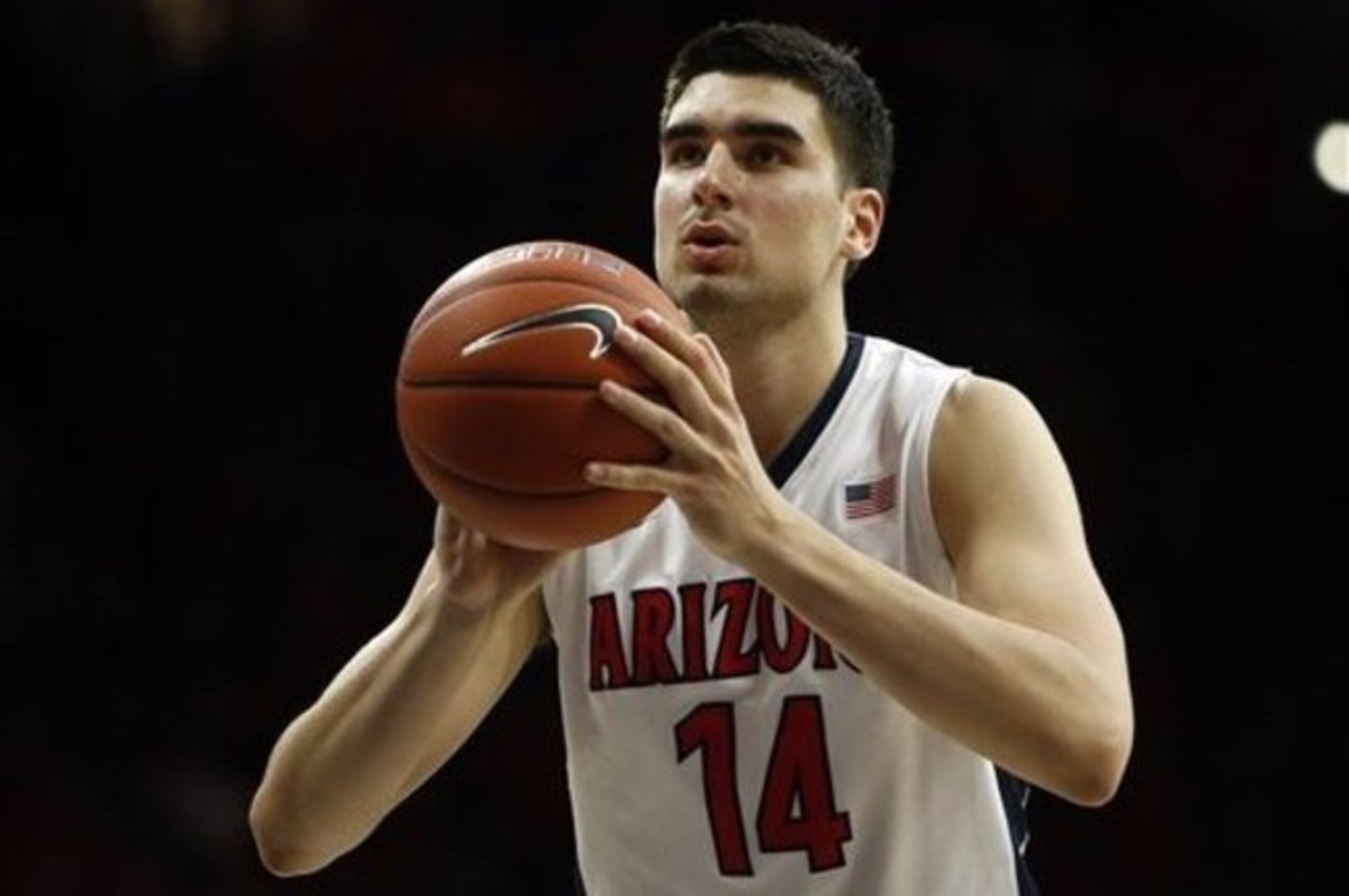
Biggest Strength: Quality Depth
Even with Terrance Ferguson opting to play overseas rather than become a freshman at Arizona, Sean Miller still has a ton of quality players on this roster.
On the returning front, Allonzo Trier leads a stable that includes Kadeem Allen, Dusan Ristic, Parker Jackson-Cartwright and Chance Comanche. The Wildcats also signed three 5-star freshmen in this year's class, and they have a fourth stud in redshirt freshman Ray Smith. Just for good measure, they also added a JUCO transfer (Keanu Pinder) and a graduate transfer (Lipscomb's Talbott Denny). These guys can go 11 deep without losing much in potency.
Biggest Weakness: Rebounding
The hope is that freshman Lauri Markkanen will help fill this void, but Arizona lost an awful lot of prowess on the glass with Ryan Anderson and Kaleb Tarczewski both graduating.
Deep as this roster is, it isn't particularly tall. Ristic is the only returning player taller than 6'4" who did much of anything, and his numbers were rather pedestrian compared to Anderson and Zeus. Getting the newcomers to crash the boards will be crucial.
6. Kentucky Wildcats
15 of 20
Biggest Strength: Driving Guards
John Calipari loves to run the dribble-drive motion offense, and he'll have three guards this year who could thrive running the point in those sets.
The main idea of the offense is to spread the floor to open up lanes for the man with the ball to drive to the hoop. If no one rotates to stop him, it's an easy layup—or in Malik Monk's case, a highlight-reel dunk. If the defense does stop the driver, he dishes it off to the teammate left unattended, usually for an open three-pointer.
What's perhaps most interesting about Kentucky this year is there will be times when the guards are the biggest two-point threats while the bigs are more likely to shoot threes. Both Derek Willis and incoming freshman Wenyen Gabriel are 6'9" forwards who like to hang out on the perimeter. What will opposing teams do to combat that inverted attack?
Biggest Weakness: Lack of Experience
Kentucky always relies heavily on freshmen, but it usually has at least a few veterans to help steer the ship. Were it not for junior Derek Willis and senior Alex Poythress, the Wildcats might have missed the NCAA tournament last year.
They do still have Willis, but Dominique Hawkins is the only other upperclassman expected to make any sort of impact. Even their stock of sophomores is lower than usual, with Isaiah Briscoe and Isaac Humphries the only ones who fit that bill.
Bam Adebayo, De'Aaron Fox and Co. should be outstanding, but there may be some growing pains for one of the youngest rosters in the country.
5. North Carolina Tar Heels
16 of 20
Biggest Strength: Offensive Rebounding
Brice Johnson will be missed, but North Carolina is at least equipped to remain elite on the offensive glass without him. Kennedy Meeks (13.5) and Isaiah Hicks (12.5) both ranked in the top 80 nationally in offensive rebounding percentage, while Johnson (11.8) was "only" 118th.
Moreover, Johnson and Joel James graduating opens the door to more playing time for Luke Maye, who grabbed 16.1 percent of available offensive boards during his limited playing time as a freshman. Incoming freshman center Tony Bradley should be a force on the glass, as well.
Biggest Weakness: Three-Point Shooting
What else is new? This has been North Carolina's biggest problem for the past several years. There's one solid shooter (Joel Berry) and then a bunch of guys who can't even be counted on to make one out of every three attempts.
Incoming freshman Brandon Robinson should be able to help in that department—if and when he can get on the court. The Tar Heels did lose Marcus Paige, but they still have Berry, Justin Jackson, Theo Pinson, Nate Britt, Kenny Williams and fellow freshman Seventh Woods as wings blocking Robinson's path to playing time.
4. Oregon Ducks
17 of 20
Biggest Strength: Shot Blocking
The Ducks were third in the nation last season in block percentage, and that was with Elgin Cook and Dwayne Benjamin commanding a lot of minutes as seniors in the frontcourt who rarely blocked shots.
With those two graduating, Jordan Bell should become a starter alongside Chris Boucher to form the most formidable shot-blocking duo in recent memory. Bell (3.3) and Boucher (4.5) combined to block 7.8 shots per 40 minutes last season. Boucher ranked sixth in the nation in individual block percentage. Bell was 52nd on that list after ranking 21st as a freshman in 2014-15.
Biggest Weakness: Three-Point Defense
A problem that may only get worse as opponents discover how difficult it is to score in the paint against the Ducks, they allowed opposing teams to shoot 36.2 percent from beyond the arc last season.
It wasn't the first time that has been a struggle for this team. In the past eight years, Oregon has ranked 116th or worse in defensive three-point percentage seven times. And aside from 2009, the Pac-12 hasn't been potent from distance, typically ranking in the middle of the pack in three-point percentage and near the bottom in terms of percentage of shots that come from three-point range.
It was Oregon's undoing in the Elite Eight loss to Oklahoma, which shot 12-of-24 from beyond the arc.
3. Villanova Wildcats
18 of 20
Biggest Strength: Versatility
Not only can starters Josh Hart and Kris Jenkins each play any position from shooting guard to power forward, but Villanova also has two uber-versatile reserves in Mikal Bridges and Eric Paschall.
As Rob Dauster of NBC Sports noted earlier this month, the Wildcats could go with the type of "Death Lineup" that helped the Golden State Warriors win 73 regular-season games last year. Put Jalen Brunson and Phil Booth in the backcourt with some combination of the aforementioned four players at the 3, 4 and 5, and that would be a nightmare to defend.
It's a good thing Villanova has that option because...
Biggest Weakness: Omari Spellman's Eligibility
Right before Villanova's trip to Spain, coach Jay Wright said 5-star freshman center Omari Spellman still hasn't been cleared to play by the NCAA.
As the projected primary big man, it would be a huge blow for Villanova if that issue lingers into the season. Wright does still have Darryl Reynolds, Dylan Painter and Tim Delaney as options, but they aren't nearly the force that Spellman would be. Wright seems optimistic that it won't be a problem, but if Spellman is unable to play, that would make repeating as national champions much more difficult than it already is.
2. Kansas Jayhawks
19 of 20
Biggest Strength: Backcourt Talent
In Frank Mason, Devonte' Graham and Josh Jackson, Kansas has the best backcourt in the country. Add in Lagerald Vick and Sviatoslav Mykhailiuk as bench options, and it's not even fair.
Vick barely touched the court as a freshman, but he could make a huge impact as a sophomore with Wayne Selden and Brannen Greene out of the picture. At any rate, when a player that talented is maybe your fifth-best guard, you're in ridiculously good shape. Bill Self may need to give Jackson and Mykhailiuk some minutes at the 4 just to get everyone properly involved.
Biggest Weakness: Proven Frontcourt Talent
In addition to Perry Ellis finally graduating, the Jayhawks lost Jamari Traylor, Hunter Mickelson and Cheick Diallo, leaving them with only a couple of returning big men.
They have plenty of options, though, including the aforementioned possibility of Jackson or Mykhailiuk at the 4 in a smaller lineup. But Landen Lucas is the only forward with a fair amount of collegiate exposure. He and Carlton Bragg should be phenomenal on the glass, but if Kansas is going to trip up this season, it will likely be because of a lack of experience in the frontcourt.
1. Duke Blue Devils
20 of 20
Biggest Strength: All of the Talent
Duke has four of the top 15 players in this year's recruiting class, including Harry Giles, who by all accounts should be the No. 1 overall pick in next year's NBA draft if he has a healthy 2016-17 season.
That alone would be enough to make the Blue Devils a top-10 team and a title contender, but they also have Grayson Allen, Amile Jefferson, Matt Jones, Luke Kennard and Chase Jeter returning. Add incoming top-50 freshman Javin DeLaurier to the mix, and they have a 10-man rotation just as talented as Kentucky's "platoons" roster from two years ago.
Let's assume the starting five is Frank Jackson, Allen, Jayson Tatum, Jefferson and Giles. That still leaves a bench of Jones, Kennard, DeLaurier, Jeter and Marques Bolden that would probably also rank as one of the 10 best "starting" fives in the country.
Biggest Weakness: Pressure
Because this is the most ridiculously talented team since Kentucky went 38-1 in 2014-15, Duke will face the same kind of expectations that team did.
The 40-0 talk hasn't gotten off the ground yet—largely because this year's ACC is approximately 37 times better than the SEC the Wildcats had to contend with—but if the Blue Devils can get through their early nonconference hurdles, the pressure will begin to mount.
They'll face a few stiff challenges along the way, but the biggest threat to Duke's national championship bid in 2017 might be its own psyche. If this team plays up to its full potential, no one can match it.
Stats are courtesy of KenPom.com or Sports-Reference.com, and recruiting data is courtesy of 247Sports, unless noted otherwise.
Kerry Miller covers college basketball for Bleacher Report. You can follow him on Twitter @kerrancejames.



.jpg?w=2560 "Latest Peyton-Colts Rumors")