
Who Should Be in the Fantasy Football Hall of Fame?
Do you remember when Chuck Muncie had 19 rushing touchdowns for the San Diego Chargers in 1981? How about when Spec Sanders delivered 18 rushing scores for the then-New York Yankees in 1947?
No? That's OK, we don't either. But those epic statistical campaigns would have been incredibly fun fantasy seasons. Which brings us to this question: Which NFL players have enjoyed the most significant stretches of statistical success, worthy of recognition for the Fantasy Football Hall of Fame? An imaginary Canton, Ohio, if you will.
If we are to consider historical incumbents worthy of induction, Jim Brown's dominant Sundays for the Cleveland Browns, Dan Marino's magical pass-happy seasons for the Miami Dolphins, the San Francisco 49ers' peerless Jerry Rice and '90s rushing sensations Emmitt Smith and Barry Sanders are undeniably worthy of bronze busts.
But for this piece, let's hone our focus on the age of the internet and the rapid ascension of fantasy football over the past 16 years. We've compiled the best statistical seasons and multiyear stretches of sustained success since 2000 with an eye on nominating five worthy Fantasy Hall of Famers for each offensive position.
We can safely consider the new millennium the age of fantasy football, so we're fittingly focused on this sample size for our study. This sample includes 16 complete NFL campaigns and features some of the greatest statistical achievements of all time, especially as we've entered this offense-friendly era of the league.
If you've been playing fantasy football for more than a decade, you'll enjoy seeing the likes of the Kansas City Chiefs' Priest Holmes and the San Diego Chargers' LaDainian Tomlinson earn well-deserved recognition among the greats of the era.
We invite you to endorse names we've left off and also feel free to counter or disagree with any inclusions in the comments section.
Fantasy Legends Under Center: Peyton Manning Leads the Way
1 of 4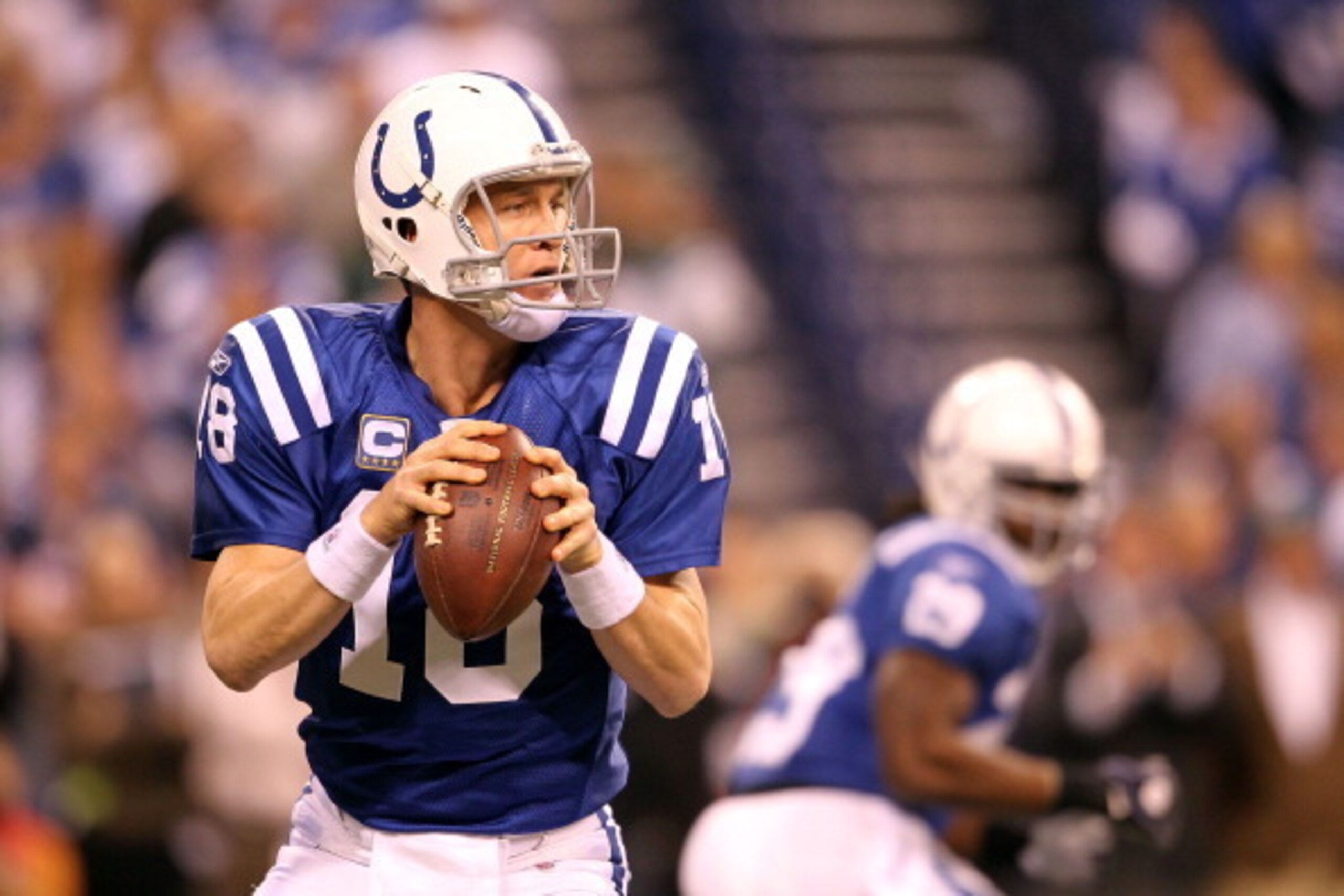
Even as industry experts wisely preach patience when investing in quarterbacks, we can't deny when we witness league-winning efforts from certain superstar signal-callers.
This one was relatively easy, as Manning has five seasons since 2001 that rank in the top 25 at the position. Manning also claims the top fantasy season ever at the position, not just limiting the threshold to 2000, as he tallied an NFL-record 55 total touchdowns in 2013. Amazing consistency combined with a high scoring ceiling delivers Manning the top spot en route to imaginary enshrinement.
2. Drew Brees
Brees has five of the top 10 passing yardage seasons in NFL history. That should be enough to qualify for this distinction behind Manning, although we'll add that Brees has also thrown for at least 32 scores in eight straight seasons in addition to compiling miles of production on the field.
With a restocked set of weapons in New Orleans, there is some value to be found in Brees, as he regularly goes fourth or fifth at the position in drafts this summer.
3. Tom Brady
Four fantasy seasons that rank in the top 20, two of which are in the top seven, cement Brady's status as a fantasy legend. We can remember in the early to mid-2000s when Brady was somewhat of a middling fantasy option good for, say, 3,600 yards and 25 scores, but everything changed during that epic 2007 season, working with Randy Moss and a massive uptick in passing volume. Ever since, Brady has thrown for at least 36 scores or 4,100 yards per season (not including the 2008 campaign when a knee injury forced Brady to miss all but one game).
Heading into 2016 facing a four-game suspension, there is potentially great value for those willing to assume his discounted stock, as replacement level for the position is relatively easy to source. Go ahead and take Brady in the middle rounds and someone like Matt Stafford or Kirk Cousins later in the draft and enjoy the profits once he's back on the field.
4. Cam Newton
This is arguably too low for Newton when it comes to fantasy football acumen, as Super Cam is the per-game leader in fantasy production since 2000, with 19.9 fantasy points per game (ESPN standard scoring). Peerless success as a rusher combined with increasingly productive passing metrics make Newton a rare weapon in both real and fantasy football.
Newton will be the first signal-caller off the board in most drafts this summer.
Second only to Newton in per-game production (19.1), this also might be too low for Rodgers, but the longer career rates for Brees and Brady were difficult to overcome. Rodgers' 2011 was the stuff of legend—48 touchdowns and just six interceptions. Late-season injuries have marred his reputation as a fantasy force in some circles, but Rodgers remains a high-floor fantasy star heading into the new campaign.
Meriting Mention
Andrew Luck is third in fantasy points per game behind only Newton and Rodgers, while his young career still leaves a ton of room to scale this list.
We'd be remiss to leave Russell Wilson out of this discussion, as he's fourth in fantasy points per game since 2000 and is somewhat Newtonian in his ability to combine rushing success with pocket prowess. In fact, Wilson is a far better pocket passer than Newton in regard to QBR and per-attempt efficiency, suggesting he could eventually join the elite all-timers with more seasons to his name.
Going back into some awesome single-season performances, Daunte Culpepper produced a ridiculous statistical effort in 2004 that included 41 total scores and over 400 rushing yards. Stafford balled out in 2011 with what looks like an outlier season, but it will be interesting to see if he can continue his efficient production from the second half of last season into 2016.
Running to Glory: The Best Fantasy Football Tailbacks
2 of 4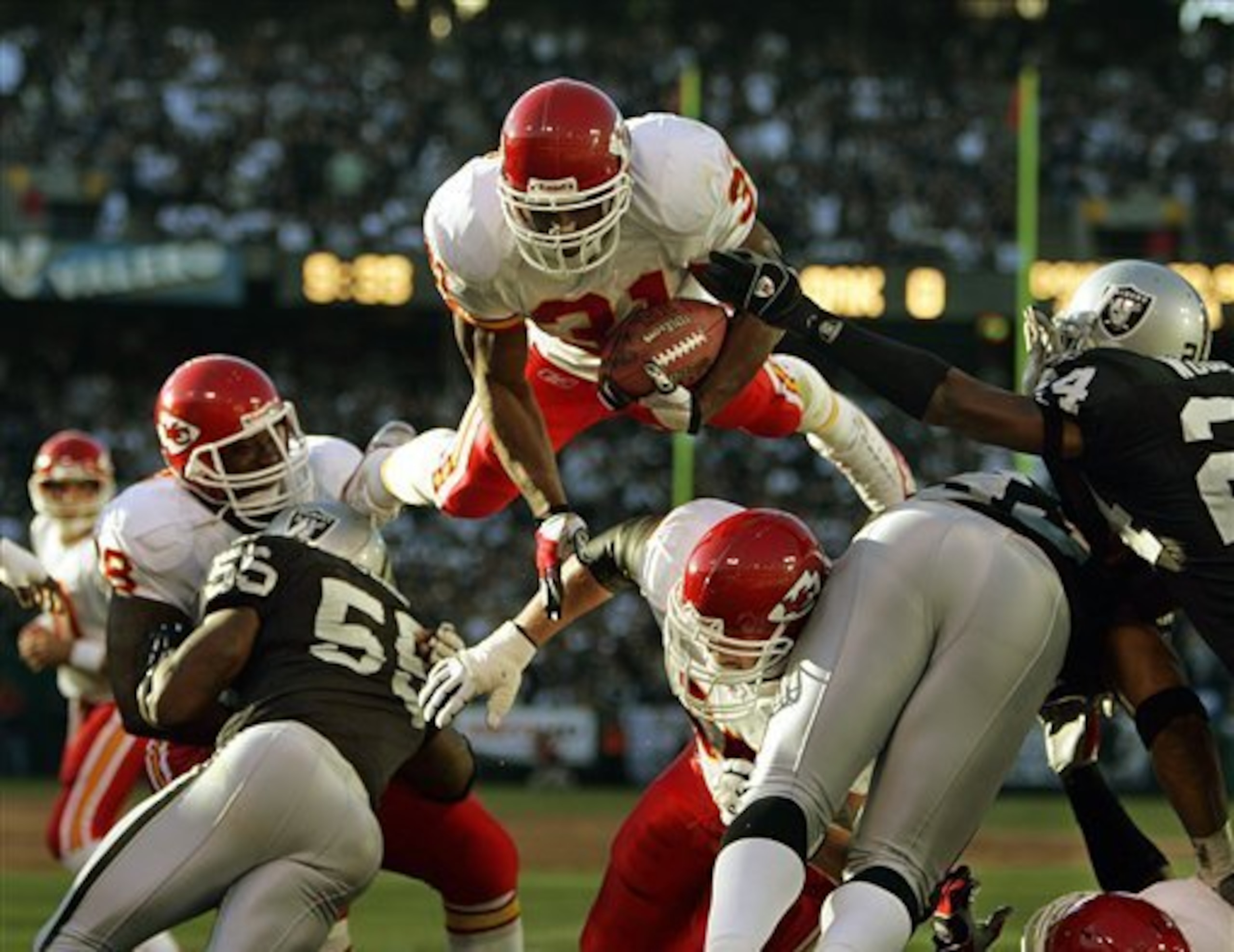
We're undoubtedly witnessing a transformative shift in the fantasy football marketplace this summer. Looking at recent draft behavior on Fantasy Football Calculator, we find six of the top 11 and half of the top 20 picks on average are wide receivers. Back in the day, as in the era before 2010 or so, the top 20 was thoroughly dominated by workhorse running backs, with only, say, Randy Moss, Terrell Owens or Marvin Harrison meriting consideration in the upper-investment tier.
With the specialization of NFL running schemes giving way to committee backfields and a scarcity of 250-carry backs, we are in a new pass-focused era of the game, and the current marketplace reflects this. We can look back at some epic seasons from legendary tailbacks to remember the days when halfbacks dominated the hobby. In this section, let's evaluate the top fantasy football Hall of Famers since 2000.
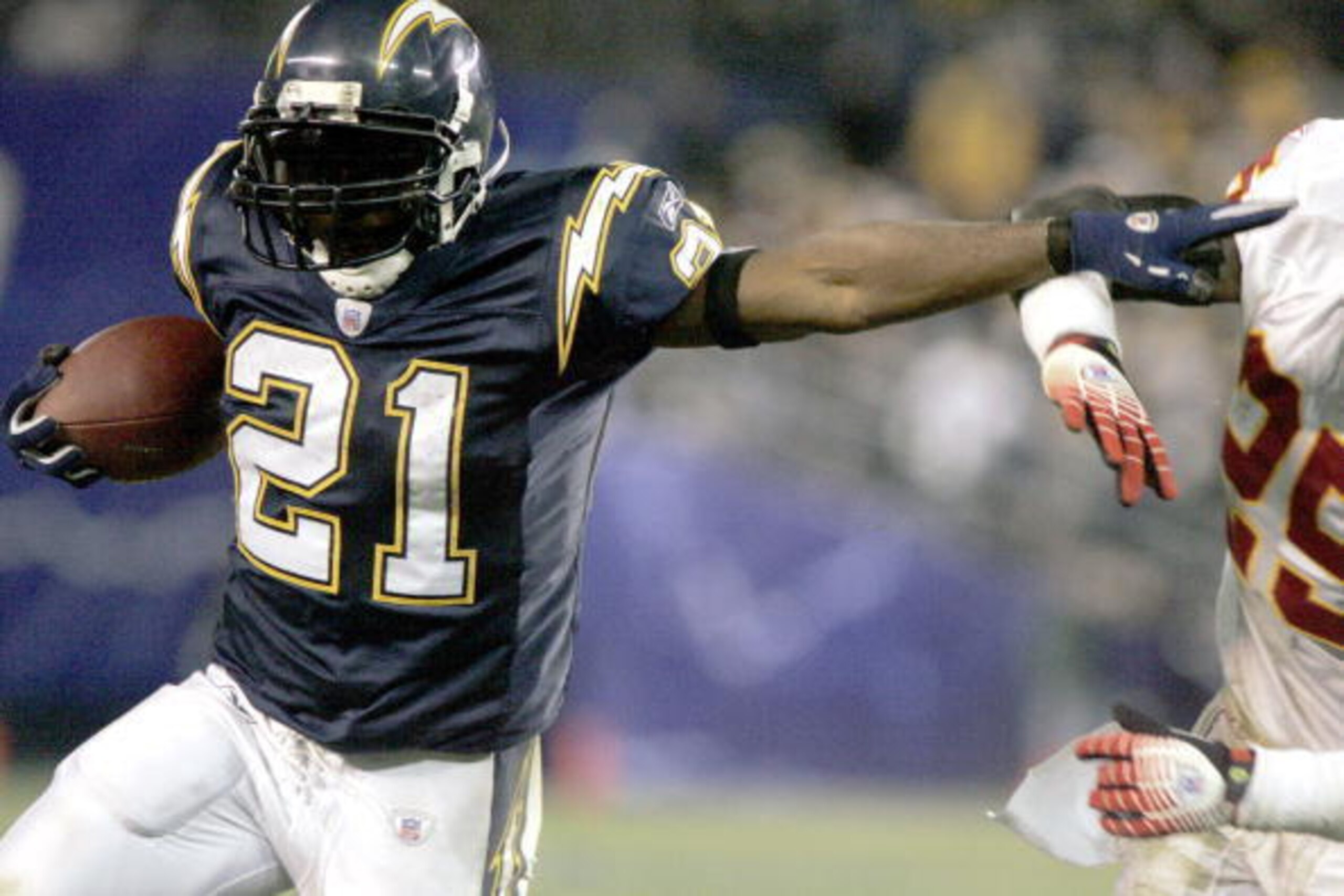
1. LaDainian Tomlinson
While Lawrence Taylor is the original LT, Tomlinson proudly borrowed the moniker and went on a historic run of total-yardage success after being the centerpiece of a draft trade that involved Michael Vick heading to the Atlanta Falcons in the 2001 NFL draft.
Tomlinson claims the single-season rushing touchdown record, achieved in a 2006 effort that saw him post 410 fantasy points using ESPN standard scoring. No player—including quarterbacks—has produced a higher single-season fantasy total since 2000.
Regarding single-season success, Tomlinson is also tied for the fifth-most (329 standard points in 2003), 14th-most (299 points in 2005), 17th- (293 in 2007) and 19th-most (291 in 2002) fantasy points among NFL backs over the past 16 years. That's just silly.
Imagine having Tomlinson on your PPR (point per reception) fantasy team in 200; he hauled in 100 catches, tallied 2,370 yards from scrimmage and scored 17 total touchdowns. Whew.
2. Priest Holmes
While we made mention of his historic exploits in the introduction to this article, Priest Holmes' prolific production for the Kansas City Chiefs in the early 2000s is just awe-inspiring.
Holmes claims the second- and third-best fantasy campaigns at the position since 2000. In fact, only injury got in the way of Holmes possibly producing the best fantasy season of all time at the position, as he averaged more fantasy points per game (25.8, using ESPN standard scoring) in 2002 than even Tomlinson's 2006 opus.
While his reign on the top was short like leprechauns, as Christopher Wallace put it, Holmes merits consideration as a fantasy football legend for his incredible run of production from 2001 to 2004. Over those four seasons, Holmes tallied 76 touchdowns in 54 games. That is not a typo. Holmes averaged 68 receptions and 2,188 yards from scrimmage from 2001 to 2003.
A series of serious injuries eventually forced him out of the game prematurely, but Holmes was a league winner for several seasons.
3. Shaun Alexander
From 2001 to 2005, Alexander scored at least 16 touchdowns and accrued at least 1,635 total yards in every season. His 27 rushing scores in 2005 are tied with Holmes for the second-most ever in a season. The end of his prime came quickly after tallying an erosive 385 touches in that legendary 2005 season, but fantasy investors in Alexander the Great still fondly recall that monstrous effort and his sustained run of success.
As amazing as AP has proved to be over his stellar career, it's surprising to see that his best fantasy season (297 fantasy points in 2012) ranks just 15th among backs since 2000. That said, Peterson has turned in five seasons with at least 222 fantasy points in his career, a feat only bested by Tomlinson's six such seasons over the past 16 years.
Consistency is the key to Peterson's perch as an all-time fantasy asset, as he's delivered at least 10 touchdowns in every single season in which he's played at least two games. Peterson's per-play efficiency isn't lost on us, either, as he's second to only Jamaal Charles among active NFL backs in career yards per carry with a robust clip of 4.9.
Even as he enters the 10th year of his career, Peterson is being drafted as the first or second back overall in most standard drafts this summer.
5. Arian Foster
This might read as recency bias, as we pass over some stellar performers for Foster, but consider this telling stat: Foster has four seasons that rate in the top 56 of running backs in fantasy points per game since 2000.
Only Tomlinson has more such seasons, as Foster ties with Holmes in this unique qualifier. What this means is that Foster's prime was particularly prolific on a per-game basis, which is what we demand from fantasy superstars.
For some more context, Foster's 2010 opus saw him average 19.6 fantasy points, good for 15th most since 2000. Peterson's best season in 2012 saw him average 18.5. Foster also enjoyed a rate of 18.3 fantasy points per game in 2011, ranking 21st over this span. It's unclear if reports of Foster's current revival in Miami for the Dolphins will convert into fantasy success, but it's clear he enjoyed a special stretch of elite production worthy of this list.
Meriting Mention
Running back was a particularly difficult position to consider given the presence of names like Marshall Faulk, who produced awesome numbers from 2000 to 2003 and could arguably be worth of unseating Foster in this regard. The difference-maker was Foster's substantial touchdown lead and the fact we're using the year 2000 as the cutoff. Faulk is assuredly a fantasy football all-timer, so we wouldn't argue if you put him in your top five.
Larry Johnson followed Holmes in Kansas City and produced the ninth- and 10th-most fantasy points in a season for a back over the past 20 seasons in 2006 and 2005, respectively. An utter lack of longevity hurt his case.
The Giants' Tiki Barber posted at least 1,440 total yards in sixth straight seasons, but a clear lack of scoring consistency limited the fantasy upside. In a PPR context, Barber is an undeniable legend.
Speaking of PPR beasts with limited touchdown appeal, the Eagles' Brian Westbrook was another total-yardage maven blessed with elite receiving skills. Westy's 2007 season ranks 13th in PPR points since 2000 even though he missed a game.
Was Edgerrin James worthy of consideration? He posted some elite seasons for the Colts but had just one season finish in the top 40 among backs since 2000. Marshawn Lynch enjoyed a stellar stretch from 2011 to 2014, but the fantasy ceiling was never so special (a lack of receiving yardage could be the culprit), and it kept him from turning in historic single seasons.
Who did we leave off? Feel free to nominate in the comments section.
Randy Moss Among the Hall of Fame Fantasy Wideouts
3 of 4
Receivers are no longer second-tier fantasy commodities, as we find the likes of Julio Jones, Antonio Brown and Odell Beckham atop almost every ranking and ADP (average draft position) index in the industry.
There was a time when a prolific fantasy season from a wideout was somewhat rare, but for some context as to how productive the position has become in this increasingly pass-happy modern NFL, we find 11 of the top 20 top fantasy seasons from receivers since 2000 have come in the past three seasons.
Even with the recency of receiving success driving the current fantasy market to recognize the immense value of top wideouts, it's fun to note that our list of all-time fantasy assets over the past 16 seasons is littered primarily with players who have since retired.
Consider them the forefathers of the superstar fantasy receivers. Jerry Rice, of course, is the G.O.A.T. at the position in both real and fantasy considerations, but with our more modern window beginning in 2000, his days in Oakland and Seattle sadly didn't make the cut.
1. Randy Moss
Moss has the top two single-season fantasy totals at the position over the past 16 seasons. His historic 2007 saw him set the single-season scoring record (although Rice scored 22 in just 12 games in a strike-shortened 1987, to be fair), while his epic 2003 effort included 111 receptions, 1,632 yards and 17 scores.
The counter to having Moss this high would be his forgettable and regrettable stint in Oakland, but we can also recognize this downturn is bookended by sustained stretches of position-best production for both the Minnesota Vikings and New England Patriots, respectively.
When it came time to turn in a week-winning fantasy performance, Moss was there for his investors more times than not.
2. Marvin Harrison
On the doorstep of induction into the actual Hall of Fame, Harrison produced seven consecutive seasons with at least 1,113 yards, 10 scores and 82 catches from 2000 to 2006. Harrison's 143 catches in 2002 remain an all-time record, while the extreme bankability of his production pattern makes him a viable candidate to top Moss on this index.
3. Terrell Owens
Much like Detroit's Calvin Johnson, Owens battled injuries throughout his prolific career but still managed to play at least 14 games in all but one campaign from 2000 to 2010. Owens was a peerless playmaker after the catch in addition to being the ultimate diva at the position, using his physicality and force to toss defensive backs out of the way en route to the end zone.
As for his fantasy chops, Owens claims four seasons that place in the top 25 in total fantasy points since 2000 using ESPN standard scoring, the most of any receiver over this era. Owens tallied double-digit touchdowns in seven of 11 seasons since 2000 (in addition to two nine-score seasons), a truly rare feat.
4. Calvin Johnson
Megatron left the league on his own terms, much like another former Lions legend Barry Sanders. Also like Sanders, Johnson was a top statistical stud for a sustained stretch, having produced seven seasons of at least 1,120 yards and four seasons with at least 1,331 yards.
Even in a "down" final season in the pros last fall, Johnson tallied 1,214 yards and nine scores—metrics most star wideouts hope to achieve. Even as injuries seemed to nag his career, Johnson played at least 13 games in every season and at least 15 games in six of his nine NFL campaigns. Johnson put fear into opposing corners, defensive coordinators and fantasy foes alike.
5. Torry Holt
In eight seasons from 2000 to 2007, Holt averaged 94 catches, 1,384 yards and eight touchdowns. Much like Harrison, Holt's high weekly floor for targets and production put him in rare territory as a fantasy commodity, especially in an era where running games were still prominent forces. The touchdown ceiling was never so high, as he topped out at 12 in 2003, but bankability and reliability remain coveted traits for fantasy investors.
Meriting Mention
It was tough to leave off the Pittsburgh Steelers' Antonio Brown, as he's produced the fourth- and fifth-most fantasy points in a single season since 2000 in 2014 and 2015, respectively. It's just a matter of time with Brown, who needs more games under his belt to unseat some of the names above. Julio Jones and Odell Beckham, similarly, are trending toward a Hall of Fame fantasy careers but need more games logged to their credit.
Larry Fitzgerald was a difficult omission, likely the most worthy of unseating Holt of this era. The issue for Fitz was the lack of a high-ceiling season, which is to say Holt's best season in this era saw him finish with the sixth-highest fantasy tally at the position over the qualifying span, while Fitzgerald's best campaign in 2008 finished 27th—or just behind the season we just witnessed from DeAndre Hopkins for the Houston Texans.
Speaking of Houston, Andre Johnson was a PPR maven for many years for the Texans and fantasy investors, but a clear lack of touchdown pedigree saw him top out with just two seasons ranked in the top 50 at the position over the past 16 seasons, which calls into question his league-winning ceiling.
.jpg?w=2560 "Patriots Seahawks Football")
Hall of Fame Fantasy Tight Ends: Tony Gonzalez Rises Above
4 of 4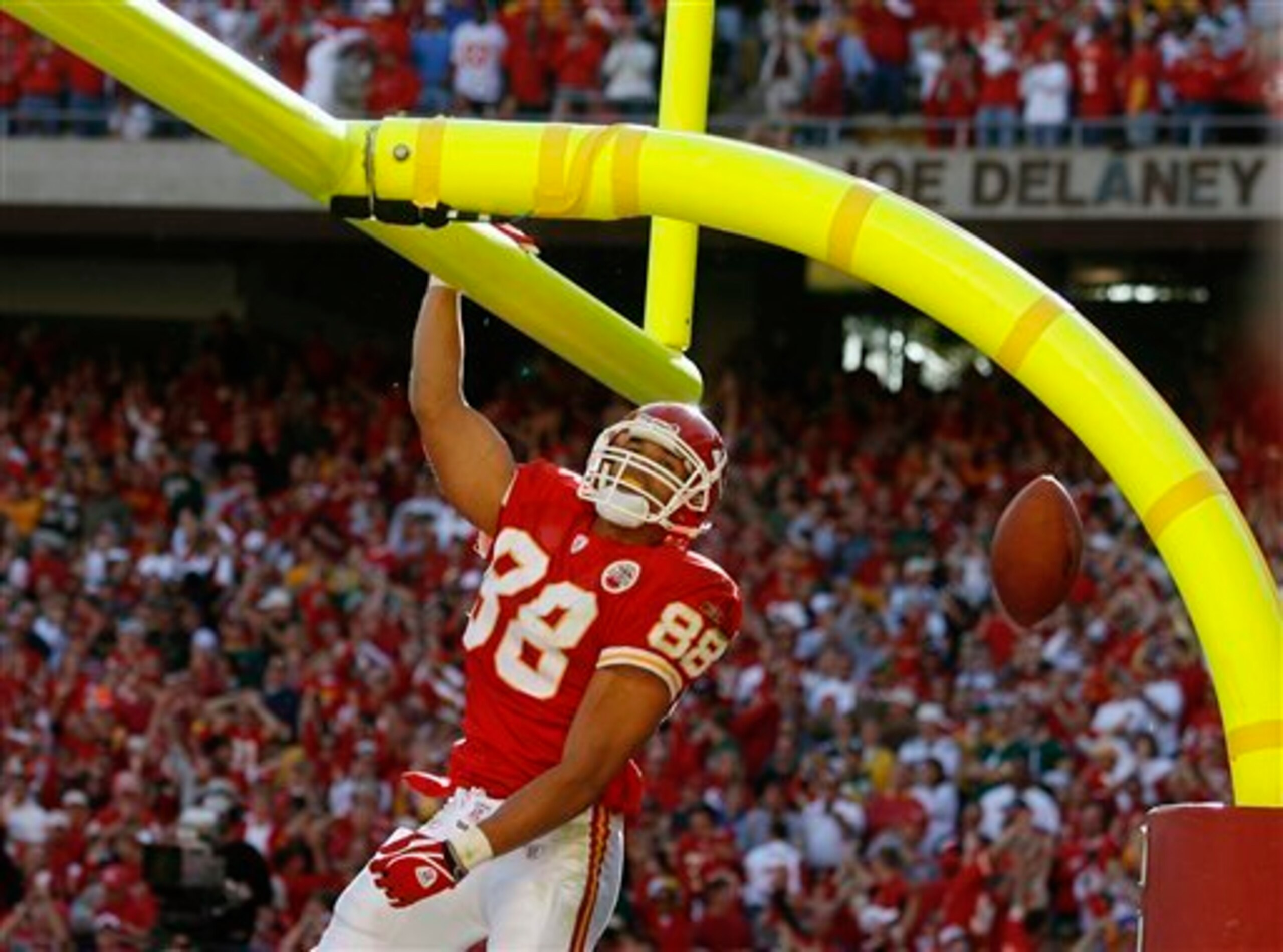
The tight end position has seen superstars shine with stellar stats before. Kellen Winslow Sr. led the league in receptions in consecutive years in the early 1980s, while Todd Christensen, Ozzie Newsome and Shannon Sharpe turned in some great campaigns over the years.
Yet we are now truly in the golden era at the position these days, as blocking assignments haven given way to increased route running and red-zone usage. With a new wave of athletes at the position, let's consider the top fantasy producers at tight end since 2000.
Pounding domestic light beer and pulling off awful dance moves is all part of the offseason regimen for Gronk, who has produced three of the top five fantasy seasons of the past 16 years. Gronkowski's 2011 opus saw him finish with numbers that resemble an epic Randy Moss effort.
He's changed the lexicon of fantasy football, as he pulls off Gronkonian plays with ease, tossing safeties to the sidelines as he goofily high-steps into the end zone.
Past the smiling and fun are tons of brilliant plays and an incredibly high scoring floor, as Gronkowski has produced at least 11 touchdowns in every season, save for one injury-riddled year (played just seven games in 2013). A borderline first-round commodity in most formats, Gronkowski is truly above his positional peers in both current and historical contexts.
2. Tony Gonzalez
It was close between Gonzo and the guy just below, but being the predecessor of the basketball-infused superstars at tight end helps drive the narrative of this Cal product as a fantasy legend.
With six seasons that rank in the top 30 over the past 16 seasons in total fantasy points—the most of any tight end—Gonzalez has the statistical chops as the position's all-time receiving leader. For further statistical context, Gonzalez has four of the top 11 highest reception totals at the position over since 2000.
3. Antonio Gates
Before Gronkowski starting going all Gronk on everyone, Gates was the one mimicking Gonzo's elite numbers. Maybe there is something to having a last name that starts with a "G"?
Either way, Gates has five seasons that rank in the top 20 in fantasy points at the position since 2000, the most of any tight end. Since becoming a starter in 2004, Gates has at least seven touchdowns in 10 of 12 seasons.
Even as he's lost a step or two, we still find immense value in Gates, who's in the twilight of his career as the red-zone maven for the Chargers. Put it this way—if you had to make a bet on the Chargers' touchdown leader among skill players this season, it would likely be Gates. Meanwhile, you can find Gates going 10th or later at the position in most drafts this summer.
4. Jimmy Graham
As we mentioned, Gronk has three of the top five fantasy campaigns at the position since 2000, while Graham has the other two. In fact, Graham's 2013 and 2011 rank second and third, respectively, at the position since 2000. The sample size isn't so big, and Graham's career might already truly be on the downswing as he struggles with injury recovery and usage volume in Seattle, but his heyday with the New Orleans Saints saw Graham tally four fantasy seasons that rank in the top 30 since 2000.
Speaking of this season, Graham could become a value play in leagues where he slips past the top 10 at the position. There is inherent risk in his injury recovery from a serious knee injury, but rare scoring prowess in the red zone still offers relevancy, even if his target usage remains mediocre on the Seahawks.
5. Jason Witten
Witten has several elite fantasy finishes on his resume, including two results in the top 20 since 2000. Witten also registered the all-time reception record for tight ends in 2012 with 111. While his game plays better in PPR formats given his lack of touchdown volume (just two seasons with at least eight scores), Witten's rare consistency (at least 64 catches in 12 straight seasons) earns him a spot in the top five at the position.
Meriting Mention
While with the Colts, Dallas Clark turned in some nice games but only one special season during his 2009 effort. Injuries marred what could have been a special statistical career. Carolina's Greg Olsen is putting together an impressive career, but he'll need more longevity at this prime perch to earn Hall of Fame status. Vernon Davis turned in two stellar touchdown-driven seasons while with the 49ers, but an inconsistent career and lack of receiving volume hurt his bid.
This might surprise you, but Travis Kelce ranks ninth in fantasy points per game for tight ends since 2000. More impressively, the Redskins' Jordan Reed ranks sixth at the position in per-game production over this span. Both players are still early in their respective careers, but strong per-game efficicency is notable.
Note: Fantasy stats and rankings calculated from ESPN.com.
.jpg?w=2560 "Packers Jacobs Plea Football")


.jpg?w=2560 "Grading WWE NXT 🔠")
