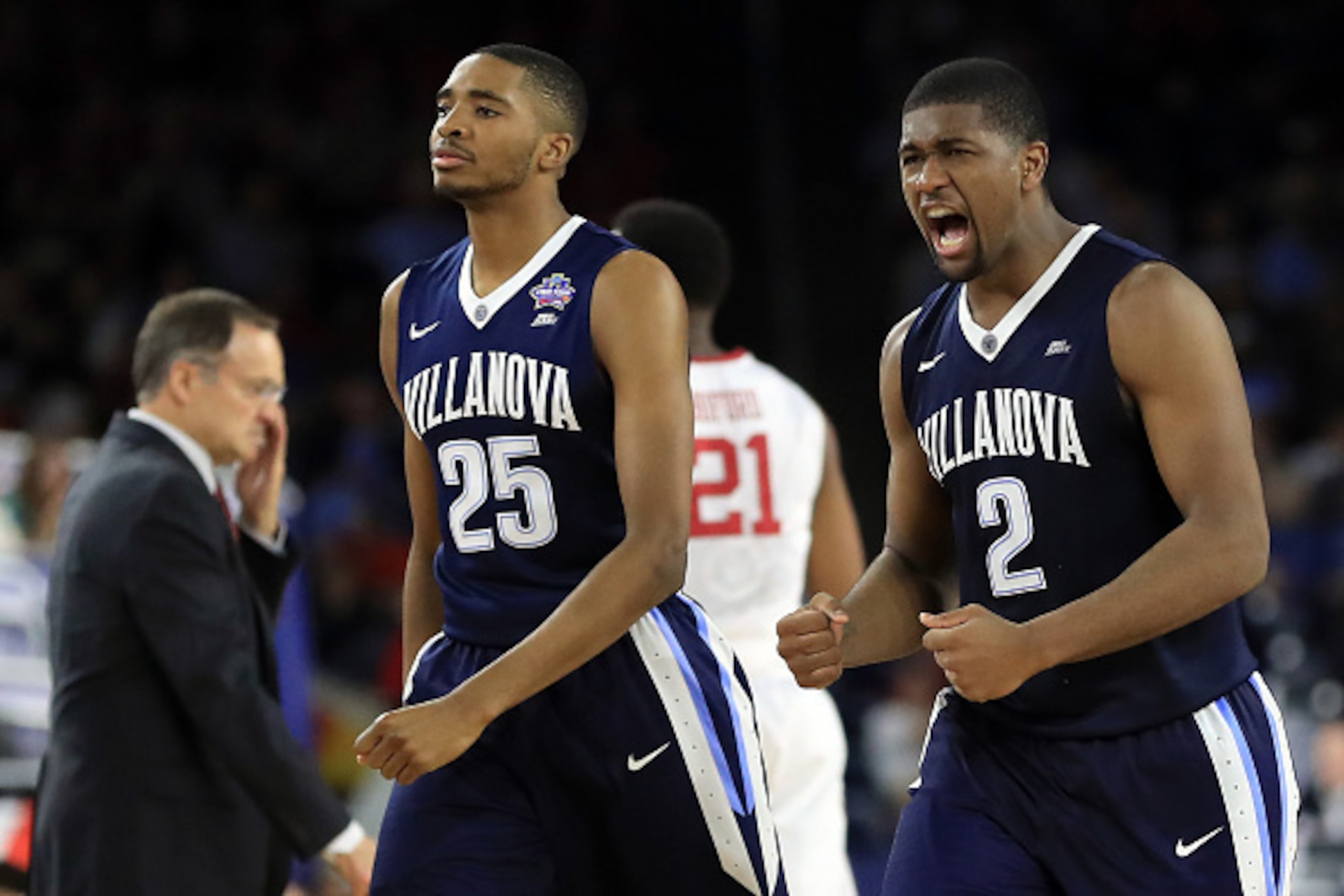


Villanova won the 2016 NCAA basketball national championship playing small ball, and the Wildcats are just as much a threat to win it all in 2017 with the same style.
The conventional big man is a dying breed in basketball. Stretch 4s and even stretch 5s are the new normal, as versatility and range are more coveted than the ability to eat up space in the paint. But with only so many Frank Kaminsky and Kyle Wiltjer types to go around, many teams are forgoing rim protectors in favor of smaller, faster players.
It has worked quite well for the Golden State Warriors in the NBA over the past few years, and these are the teams most likely to put the strategy to good use at the collegiate level in 2016-17.
Any team projected to start two players 6'8" or taller was immediately removed from consideration. Beyond that, the smaller they are and the better they are, the higher they ranked on the list.
Honorable Mentions
1 of 11
Notre Dame Fighting Irish
Temple Gibbs, Steve Vasturia, Matt Ryan, V.J. Beachem, Bonzie Colson
Mike Brey's starting center might be the 6'5" Colson, but in addition to both Ryan and Beachem measuring in at 6'8", there's also a reasonable chance that 6'9" John Mooney starts as a freshman. Though they didn't quite qualify for the list, the Fighting Irish should have one of the most perimeter-oriented offenses in the country.
Maryland Terrapins
Melo Trimble, Kevin Huerter, Jared Nickens, L.G. Gill, Damonte Dodd
Add in freshmen Anthony Cowan and Justin Jackson and redshirt sophomore Dion Wiley, and the Terps are loaded with perimeter options 6'7" or shorter. But will they be good enough? And how much will 7'1" Michal Cekovsky be in the mix this season?
Vanderbilt Commodores
Riley LaChance, Matthew Fisher-Davis, Nolan Cressler, Jeff Roberson, Luke Kornet
Though Kornet is 7'1", he's a stretch 5 with legitimate three-point range. The wild card is Cressler. The former Cornell transfer didn't fare too well in his first season with the Commodores and may well be bumped from the starting lineup in favor of 6'8" freshman Clevon Brown, at which point this would no longer qualify as a small-ball lineup.
Davidson Wildcats
Jack Gibbs, Jordan Watkins, Oskar Michelsen, Peyton Aldridge, Nathan Ekwu
Even before Steph Curry played there, Bob McKillop's teams always relied heavily on the long ball. That will be no different this year with four of the five projected starters attempting at least 98 triples last season. But if 6'11" Boston College transfer Will Magarity bumps 6'7" Ekwu out of a starting job, Davidson would be too tall for small ball.
Baylor Bears
Manu Lecomte, Al Freeman, Ish Wainright, Terry Maston, Johnathan Motley
He might not start right away, but 7'0" JUCO transfer Jo Acuil will play a big role for this team if he's able to fully recover from the heart condition that kept him out all of last season. Also, Maston is only 6'7", but he's the furthest thing from a small-ball forward, attempting zero three-pointers in his first two seasons.
10. Princeton Tigers
2 of 11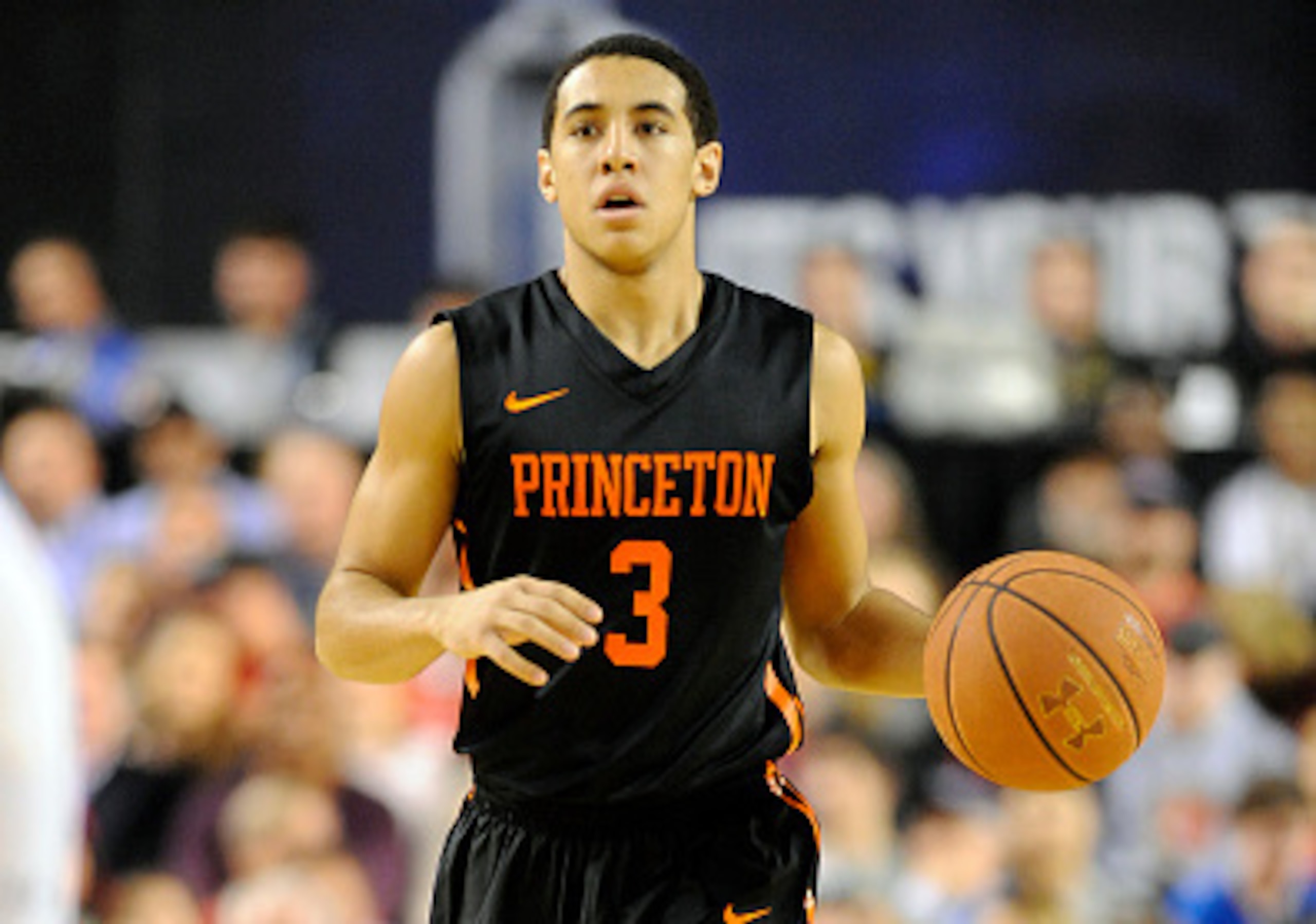
PG: Spencer Weisz (6'4")
SG: Devin Cannady (6'1")
SF: Henry Caruso (6'4")
PF: Steven Cook (6'5")
C: Pete Miller (6'11")
6th Man: Amir Bell (6'3")
Let's get this party started with one of the best three-point shooting teams.
At 9.7 made triples per game, Princeton ranked 13th in the nation in that category. Devin Cannady (46.0 percent), Henry Caruso (44.6 percent), Spencer Weisz (39.4 percent), Amir Bell (36.1 percent) and Steven Cook (35.6 percent) each shot 35.5 percent or better while making at least one triple per game.
Individually speaking, that's nothing special. There were 648 members of that club last season, per Sports-Reference.com. But there were only five teams that had five such players (Belmont, Kansas, North Florida, Saint Mary's and Princeton), and only Princeton and Saint Mary's bring back each of those players for another season.
You won't find Saint Mary's on this list because it has three significant contributors who are 6'9" or taller, but being alone with the Gaels on a list of quality three-point shooting teams is impressive, as Saint Mary's had one of the most efficient offenses in the nation last season.
In addition to Princeton's perimeter prowess, KenPom.com shows that the Tigers played 21 percent of their possessions last season with 6'5" Cook as their center.
If that isn't the definition of small ball, what is?
With nary a senior among the 13 leading scorers on a team that went 22-7 in 2015-16, Princeton should be one of the best minor-conference teams in the country.
9. Ohio State Buckeyes
3 of 11
PG: JaQuan Lyle (6'5")
SG: Marc Loving (6'7")
SF: Jae'Sean Tate (6'4")
PF: Keita Bates-Diop (6'7")
C: Trevor Thompson (6'11")
6th Man: Kam Williams (6'2")
Despite losing 80 percent of last year's freshman class to transfers—getting rid of problems, in head coach Thad Matta's words—Ohio State should be one of the better and smaller teams in the country.
The Buckeyes do still have Trevor Thompson and a solid incoming freshman center in Derek Funderburk, but they should platoon at the 5 while the other five players listed above each average better than eight points per game for a second straight year.
Though just 6'4", Jae'Sean Tate is one of the better rebounders and interior presences on this roster. Similar to Butler's Roosevelt Jones—but capable of making the occasional three-pointer—Tate is a power forward trapped in a shooting guard's body, and it gives Ohio State more flexibility and versatility.
JaQuan Lyle, Marc Loving, Keita Bates-Diop and Kam Williams each attempted more than three three-pointers per game last season. But only Williams (43.7 percent) shot better than 34.0 percent and only Loving (4.7) attempted more than 3.5 per game, making this a well-rounded team that wasn't particularly lethal.
Experience was not on Ohio State's side in 2015-16. Loving was the only upperclassman to play in a single game, and Lyle started 31 of the 35 games as a freshman point guard. One year wiser but not any taller, Ohio State should be a tournament team in 2017 after a rare year off from the Big Dance.


.jpg?w=2560 "NBA Gambling Charges")
8. Butler Bulldogs
4 of 11
PG: Tyler Lewis (5'11")
SG: Kethan Savage (6'3")
SF: Kelan Martin (6'7")
PF: Andrew Chrabascz (6'7")
C: Tyler Wideman (6'8")
6th Man: Avery Woodson (6'2")
In Kellen Dunham and Roosevelt Jones, the Bulldogs lost a pair of crucial backcourt players to graduation. But they may become even more perimeter-oriented with the addition of transfers Avery Woodson and Kethan Savage.
Savage isn't much of a shooter. He only attempted 80 triples in his final season with George Washington. However, Jones averaged just one attempt per season, so it doesn't take much to be more of a three-point weapon than him.
And at eight attempts per 40 minutes as a 40.5 percent shooter in two seasons with Memphis, Woodson is more of a three-point specialist than Dunham was (38.5 percent on 7.3 attempts per 40 minutes).
But the real key to Butler's small-ball mentality is Andrew Chrabascz. Despite standing 6'7", he has as many combined three-point attempts (132) and assists (114) as he does rebounds (246) in the past two seasons. Chrabascz also has nearly twice as many steals (75) as blocks (38) in his three-year career. He looks like a power forward, but he doesn't play anything like a traditional one.
Kelan Martin is what allows Chrabascz to avoid mixing it up in the paint, as the 6'7" forward averaged 9.6 rebounds per 40 minutes last season. Martin is one of the more versatile weapons in the country and should do well as the undisputed leader of this team in 2016-17.
7. VCU Rams
5 of 11
PG: JeQuan Lewis (6'1")
SG: Doug Brooks (6'4")
SF: De'Riante Jenkins (6'6")
PF: Justin Tillman (6'7")
C: Mo Alie-Cox (6'7")
6th Man: Ahmed Hamdy Mohamed (6'9")
"Small ball" is synonymous with "shoots a lot of three-pointers" more often than not, but that isn't going to be VCU's M.O. in 2016-17—even with a point guard who shot 41.5 percent last season and emerged as a major offensive weapon at the end of last season.
Justin Tillman and Mo Alie-Cox have combined to attempt three triples in five seasons with the Rams, and Doug Brooks is a career 32.4 percent shooter who's primarily out there for a steal rate that led the nation last season. And the book on incoming freshman De'Riante Jenkins is that he's capable of making threes, but will need to work to make it a more consistent weapon.
Suffice it to say, by losing Melvin Johnson and Korey Billbury to graduation, VCU's perimeter game took a big hit.
Still, with Alie-Cox as a 6'7" shot-blocker (3.1 per 40 minutes in his career) and Tillman as the primary rebounder at 6'7", the Rams will remain one of the smaller teams in the country. In fact, with 6'9" Michael Gilmore, 6'7" Gerron Scissum and 6'9" Jonathan Nwankwo all transferring out of the program, Ahmed Hamdy Mohamed is the only remaining player on the roster taller than 6'7".
As long as Alie-Cox and Tillman both continue shooting better than 60 percent from the field, though, the Rams should have enough firepower to win at least 24 games for an 11th consecutive season.
6. Virginia Tech Hokies
6 of 11
PG: Seth Allen (6'1")
SG: Justin Bibbs (6'5")
SF: Ahmed Hill (6'5")
PF: Chris Clarke (6'6")
C: Zach LeDay (6'7")
6th Man: Justin Robinson (6'1")
Like VCU, Virginia Tech is alarmingly short. The Hokies do have a few big men on the bench—7'0" Johnny Hamilton, 6'10" Kerry Blackshear and 6'9" freshman Khadim Sy—but everyone in their projected starting lineup is 6'7" or shorter.
Unlike the Rams, the Hokies have a bunch of guys who can stroke it from deep.
Justin Bibbs shot 45.5 percent from downtown last season. Zach LeDay attempted 59 three-pointers and made 35.6 percent of them. Seth Allen struggled his way to a 28.0 percent clip last season, but he has never been afraid to shoot and hit 38.0 percent a few years ago with Maryland.
Ahmed Hill shot 38.6 percent two years ago before missing this past season with a partially torn patella tendon. And though he might not start with Hill back in the equation, Justin Robinson shot 35.1 percent last year. Just almost every member of the primary rotation is a perimeter threat.
Moreover, the Hokies play the type of defense typically expected from a small-ball team. They don't force a ton of turnovers, but they defend the perimeter well and draw out possessions, making opponents work like mad to get an open look at the rim.
Even though the ACC is just as loaded as ever, this should be the year that Virginia Tech finally breaks through and makes the NCAA tournament after doing so just once in the past two decades.
5. Dayton Flyers
7 of 11
PG: Scoochie Smith (6'2")
SG: Kyle Davis (6'0")
SF: Charles Cooke (6'5")
PF: Kendall Pollard (6'6")
C: Josh Cunningham (6'7")
6th Man: Kostas Antetokounmpo (6'9")
Few teams have embraced small ball quite like Dayton has over the past several years.
The Flyers haven't had a player taller than 6'7" rank in their top five in points per game since Josh Benson in 2012-13. That was also the last year that they missed the NCAA tournament, so they have undeniably gotten better by going smaller.
This year won't be any different. After Steve McElvene tragically passed away at the age of 20, Dayton lost its best and biggest interior weapon and will likely be forced to rely on Bradley transfer Josh Cunningham—a player who attempted 64 three-pointers two seasons ago—as its tallest starter.
It's probably not right to label Cunningham as a center, but Kendall Pollard isn't much of one, either. He only averaged 4.9 rebounds per game last season even though he was often the biggest Flyer on the court. Charles Cooke is the best rebounder on the team, but he's also the best three-point shooter. And when a 6'5" player is one of the top sources of rebounds, that's a good indication you're looking at a small-ball team.
The wild card here is freshman Kostas Antetokounmpo—the younger brother of Milwaukee Bucks stud, Giannis. But even if he starts over Cunningham, the Flyers would still meet our definition of a small-ball team, and Antetokounmpo is a versatile weapon who often plays like more of a small forward than a center.
4. Oklahoma Sooners
8 of 11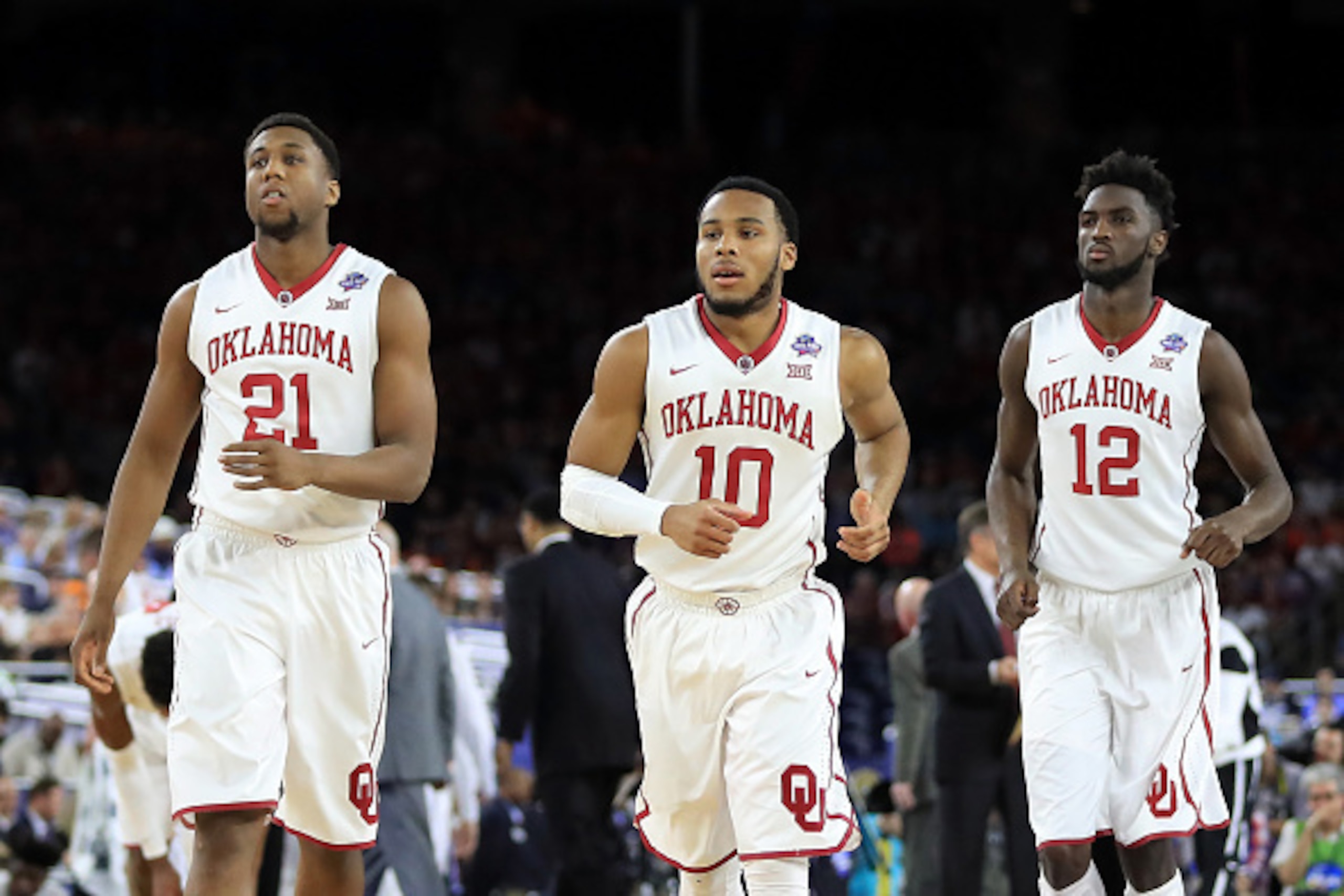
PG: Jordan Woodard (6'0")
SG: Kameron McGusty (6'5")
SF: Christian James (6'4")
PF: Dante Buford (6'7")
C: Khadeem Lattin (6'9")
6th Man: Rashard Odomes (6'6")
With 6'8" stretch 5 Ryan Spangler graduating and 7'0" Akolda Manyang dismissed from the team last month following a robbery arrest, Oklahoma has little choice but to give Dante Buford a full-time job and embrace small ball in 2016-17.
That isn't to say that Buford is a 6'7" three-point specialist. He only averaged one attempt for every 11 minutes spent on the court. But the 36.1 percent two-point shooter who only averaged 5.9 rebounds per 40 minutes likely would have spent more time on the perimeter were it not for Buddy Hield, Isaiah Cousins and Spangler already accounting for 15.4 three-point attempts per game.
With that trio out of college eligibility, look for the redshirt sophomore forward to become a stretch 4 who ranks in the top three on the roster in points per game.
Further cementing Oklahoma's status as a small-ball team is a 6'4" guard who will effectively serve as the primary small forward. Christian James shot 50.0 percent from three-point range last season, but there simply aren't many other options with five of last year's nine leading scorers no longer on the roster.
The Sooners might not be quite as reliant on the three ball as they were last season, but they're going to do a lot of their damage from the perimeter once again.
3. Iowa State Cyclones
9 of 11
PG: Monte Morris (6'2")
SG: Matt Thomas (6'4")
SF: Deonte Burton (6'4")
PF: Darrell Bowie (6'7")
C: Merrill Holden (6'8")
6th Man: Naz Mitrou-Long (6'4")
Between Georges Niang as a stretch 4 for the past four years and Royce White as a point forward the year before that, Iowa State has been playing small ball for the past half-decade—and playing it well. During both the 2012-13 and 2013-14 seasons, the Cyclones didn't have a single player taller than 6'7" rank in the top five on the team in scoring.
If any program is fit for life with 6'7" Darrell Bowie and 6'8" Merrill Holden as its primary forwards, it's this one.
Neither of those players is much of a perimeter threat—combined 14-of-57 (24.6 percent) from three-point range in their careers—but they aren't conventional frontcourt monsters, either. Deonte Burton might actually be Iowa State's best interior player, as he averaged 8.3 rebounds and 11.8 two-point attempts per 40 minutes last season.
Per usual, the long ball will be Iowa State's biggest asset. Matt Thomas emerged as a three-point assassin last season, and Naz Mitrou-Long will be a welcome addition back to this offensive attack after shooting 39.5 percent between his sophomore and junior seasons. Monte Morris is also a career 38.3 percent three-point shooter, even though he's most dangerous as a passer.
2. Xavier Musketeers
10 of 11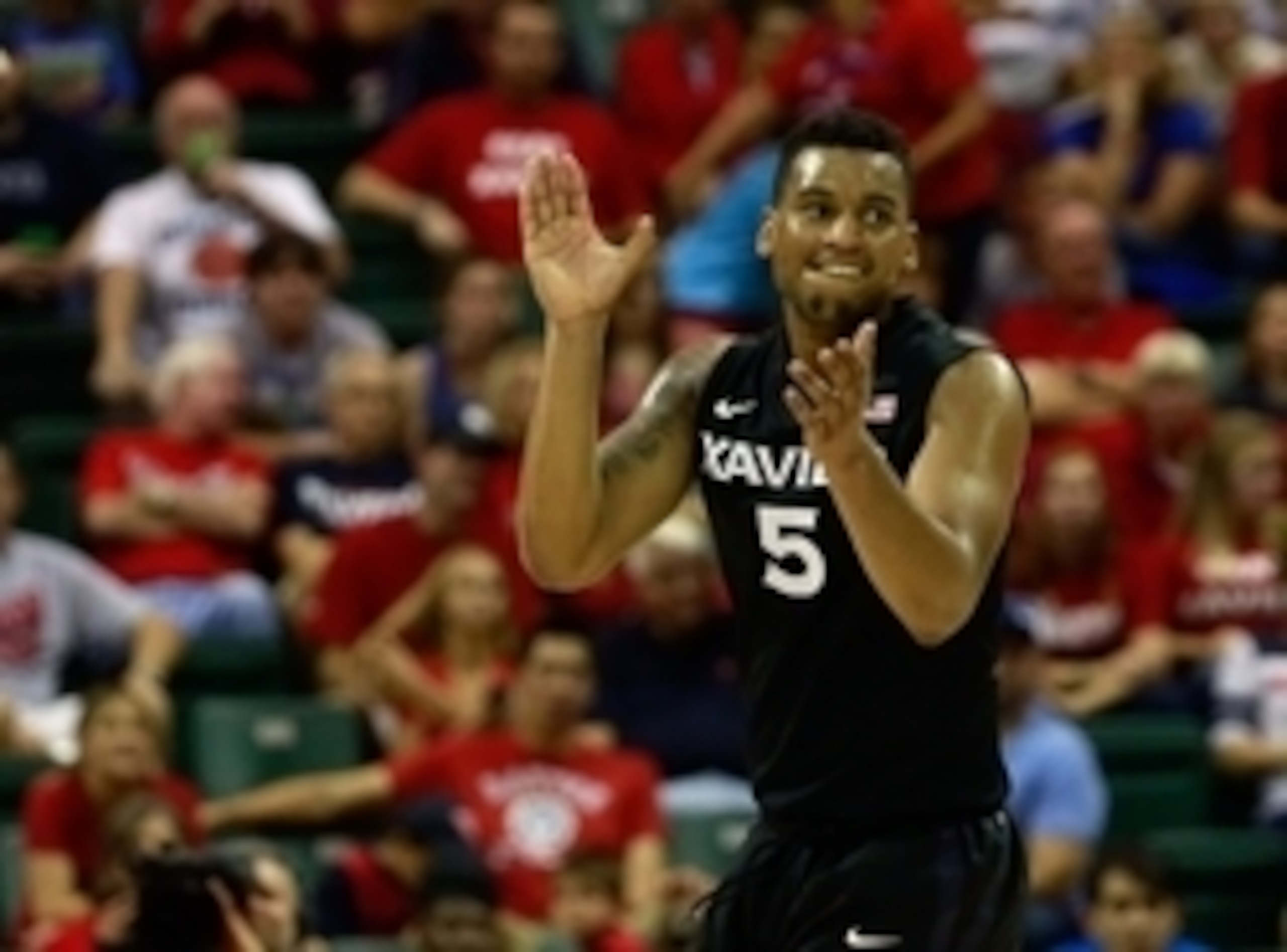
PG: Edmond Sumner (6'5")
SG: Myles Davis (6'2")
SF: J.P. Macura (6'5")
PF: Trevon Bluiett (6'6")
C: Rashid Gaston (6'9")
6th Man: Quentin Goodin (6'3")
The Big East is home to two of the best teams in the country that also happen to adhere to small-ball principles.
For Xavier, the key to nearly everything is 6'6" wing-forward Trevon Bluiett. He was one of just eight players in the country to average at least 6.0 rebounds and 5.5 three-point attempts per game while shooting better than 39.0 percent from beyond the arc, according to Sports-Reference.com. And with both Jalen Reynolds and James Farr out of the picture, his impact in the rebounding department is only going to increase.
But Bluiett isn't the only perimeter threat for the Musketeers. Edmond Sumner, Myles Davis and J.P. Macura averaged a combined 10.7 three-point attempts per game last season. Though they weren't nearly as indispensable on the glass as Bluiett, they also combined to average 15.0 rebounds per 40 minutes.
Rashid Gaston likely won't attempt a single three-pointer—he didn't in any of his previous three seasons with Norfolk State—but the other four projected starters on this team are weapons all over the court. That approach of one true big man and a boatload of versatile players is what led the next team on our list to the 2016 national championship.
1. Villanova Wildcats
11 of 11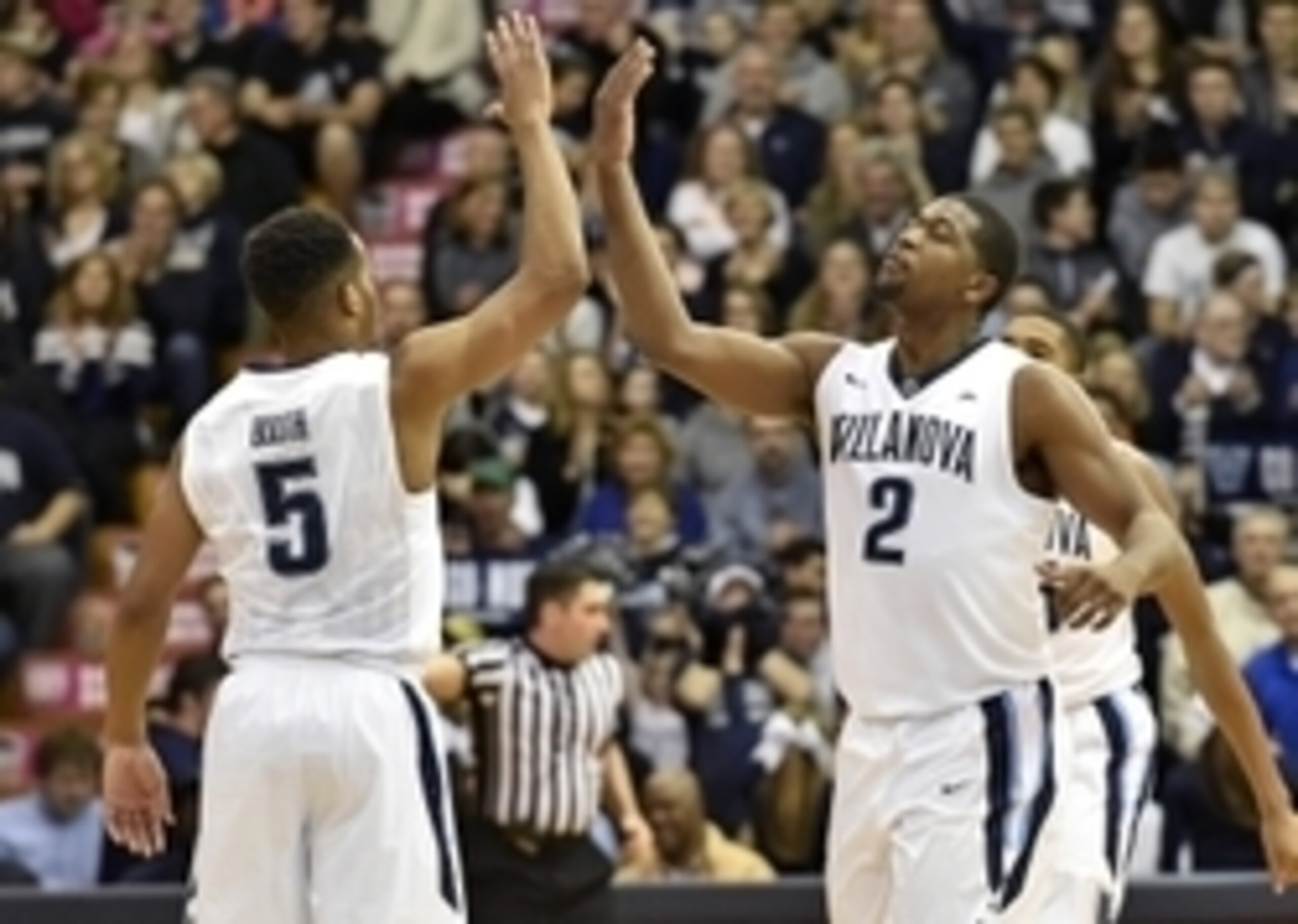
PG: Jalen Brunson (6'3")
SG: Phil Booth (6'3")
SF: Josh Hart (6'5")
PF: Kris Jenkins (6'6")
C: Omari Spellman (6'9")
6th Man: Mikal Bridges (6'7")
When your 6'6" power forward is one of the most dangerous three-point weapons in the country and the author of one of the most iconic shots in NCAA tournament history, you've clearly mastered the art of small ball.
Even more so than Kris Jenkins, Villanova is fueled by Josh Hart. He has been a Swiss army knife for head coach Jay Wright over the past three seasons, but he further emerged as an interior weapon in 2015-16, averaging 6.8 rebounds per game while shooting 59.5 percent from inside the arc. At just 6'5", he puts up better numbers than most power forwards.
And with the transition from Daniel Ochefu to Omari Spellman, Villanova becomes even more of a small-ball team. Whereas Ochefu did nearly all of his scoring within five feet of the hoop, Spellman has legitimate range out to 18 feet that will help the Wildcats' spacing and versatility.
There was never any doubt that Villanova would be No. 1 on this list, but Mikal Bridges as the versatile sixth man completely separated the Wildcats from the pack. With three-point range and the ability to rebound and defend almost any position, Bridges is like bringing a second Hart in off the bench.
If Phil Booth continues to play as well as he did in the Final Four and national championship, Villanova could be even better than it was last year, despite getting a bit smaller.
Kerry Miller covers college basketball for Bleacher Report. You can follow him on Twitter @kerrancejames.

.jpg?w=2560 "Aikman Blasts Cowboys WR 🫣")

.jpg?w=2560 "Jonathan Taylor Landing Spots")