

Media Days a Reminder That SEC's Burgeoning Image Problems Mostly Self-Inflicted
HOOVER, Ala. — Scandal at Ole Miss. The Jeffery Simmons video. A massive sexual assault lawsuit at Tennessee. Alabama's prize left tackle in hot water.
Despite winning yet another national championship, it hasn't been a banner year off the field in the Southeastern Conference or for college football in general, although few seem to be nowadays. The Baylor sexual assault scandal grabbed the most headlines this past offseason, but the SEC has had its share of issues as well, which have been widely discussed at length during the recent months when there were no games or practices.
As the incidents continued to pile up, it made the league look worse and worse.

.png?w=2560)

"Social media has really changed the landscape of how things are perceived, both good and bad, to positive and negative stories," said Phil Savage, executive director of the Senior Bowl. "But there's no doubt that this offseason has had some rough spots and there's some real ramifications that have come from all of them."
And so came SEC Commissioner Greg Sankey's dilemma when thinking about his opening address to media members Monday.
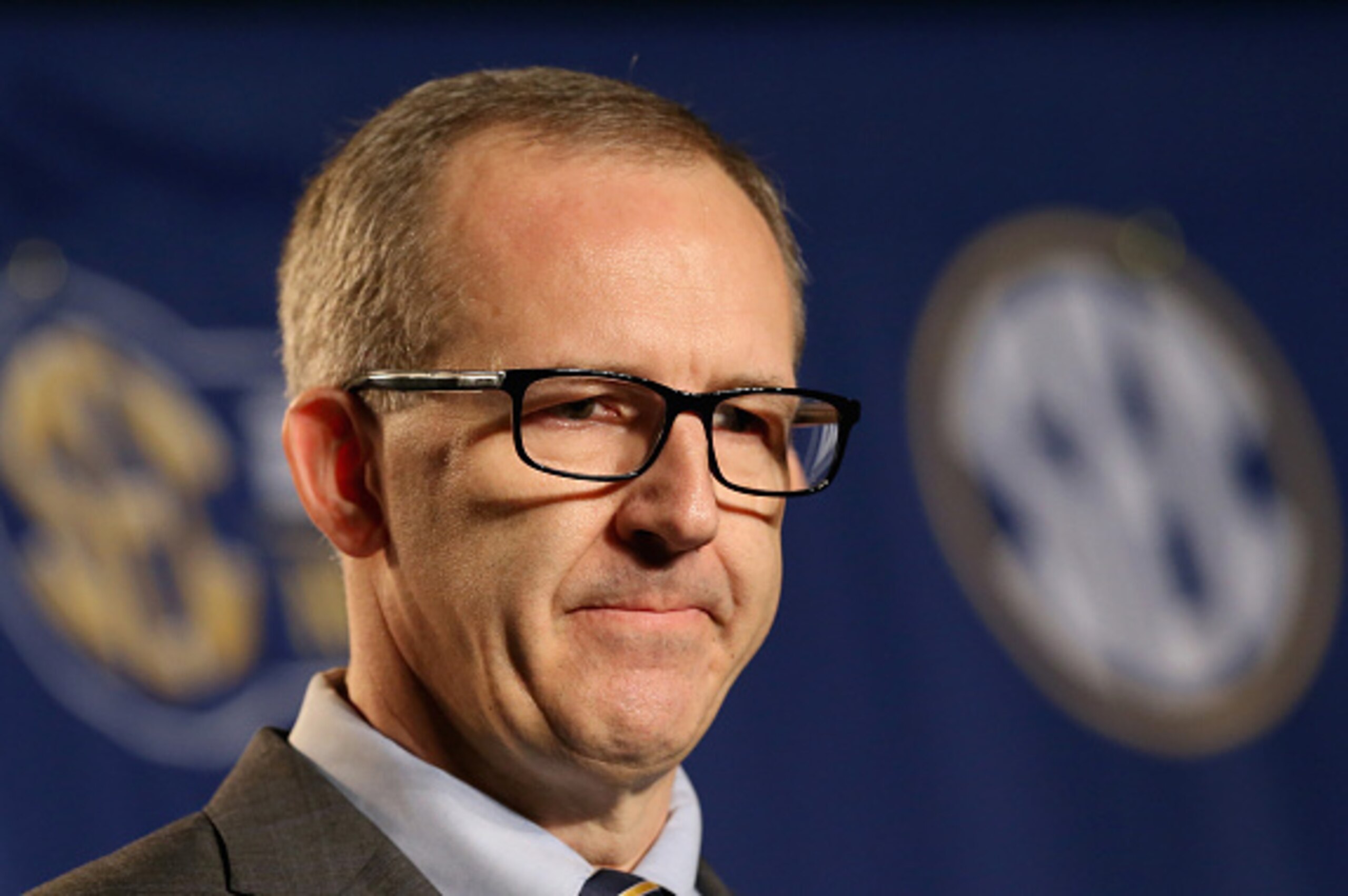
Sankey's job, of course, is to try to steer the conference through troubled waters and do what he can to strengthen the 14-school league. While the commissioner will often be the first to mention the SEC's success and competitive prowess, he also has to weigh that with academics and good behavior, adding that programs need to have a higher standard.
The more they all go together, the better. However, the result is seldom uniform, often like someone trying to pull up a complicated window blind and not quite getting it right.
So when asked if the image of the league or college football has taken a significant hit this offseason, Sankey's immediate answer was a predictable "No."
"I think it is inappropriate to aggregate independent issues that have occurred over a number of years, in different settings, different backgrounds, and attach those to the Southeastern Conference," he said. "A matter that may have occurred three months ago, a suggestion that something that occurred four years ago somehow became a point of tarnish, I don't accept that notion.
"It's convenient to write for media days, and we've seen that before. People pay attention in a different way. But you have to unpack each of those circumstances and evaluate each accordingly."
In certain aspects, Sankey does have a point.
The NCAA's ongoing infractions case with Ole Miss includes strong allegations from during and before Hugh Freeze's tenure as head coach. Additionally, the Title IX lawsuit that Tennessee recently settled "had centered on cases of alleged sexual or physical assault by student-athletes reported by eight female students between 2013 and 2015," according to CNN.
Those situations had absolutely nothing to do with individual mistakes such as Alabama's Cam Robinson and reserve safety Hootie Jones getting arrested and facing drug and weapons charges, which the prosecutor decided not to pursue. That both still have a chance to play in the Crimson Tide's high-profile opener against USC became the hot topic Wednesday.
"Cam Robinson and Hootie were not charged with anything," Crimson Tide head coach Nick Saban said. "I think that the facts we have are a little different than what has been advertised.
"Both guys have done a significant number of things to change their behavior, internally, whether it was a police ride around or community service or juvenile groups that meet to be a positive influence and role models to make better choices and decisions."
But therein lies the crux of the criticism of SEC programs. While the coach says he's not going to prosecute a player in public, he otherwise appears to be giving a break to a player in order to save his own skin. Even if that's not the case, the perceived flaccid response stirs up the controversy.
Despite the legal outcome of the players not being charged, per the tweet below, Robinson and Jones are still dealing with the court of public opinion, where fans are quick to judge (especially players on other teams) and tough to sway. Regardless of facts which may never be fully revealed, especially in situations involving youths, such incidents can't help make them, the coach, the school and the conference look bad.
"To me, the spotlight's brighter," said Bill Hancock, executive director of the College Football Playoff, who has been working in college athletics since 1971. "But I view the bright spotlight as a positive thing, that we can learn from what's happening."
Yet minus change, the overriding issues linger. While the Rebels seem destined for some harsh realities and have already self-imposed a reduction of 10 football scholarships over the next three seasons, testing fraud was committed, and no one's been held responsible for the impermissible benefits to football recruits and players. Moreover, other societal issues, including violence against women, aren't going away.
Thus, Sankey's emphasis here, and Saban's for that matter, was to try to focus on what college athletics are all about: the students.
"I think this is the great thing about college football that sometimes gets overlooked; that there's so many good things that we do to help young people have a better chance to be successful," Saban said.
He knows a few things about growing up during turbulent times, as Saban was just down the street when the National Guard opened fire on unarmed students at Kent State in 1970. Recently, it's tragedies in Orlando, Baton Rouge and Dallas, all in SEC territory, with students who are beginning to find their voices, not liking what they see.
"Not just in college football, but I can't believe what's going on in the world today," Vanderbilt linebacker Zach Cunningham said. "You can't separate it and say, 'Oh that's just college football.'"
Commodores teammate Oren Burks, one of the student-athletes Sankey singled out as already being a leader, took it a step further and felt he had a responsibility to use his platform here to speak out against the recent violence crippling America.
"I feel that it's terrible to see innocent people killed for no reason," Burks said. "Whether it's African-Americans or cops, it doesn't matter. We [as a country] need to have a sense of honor and respect for human life."
While that statement may seem simple or even obvious, speaking up is not, just like a year ago when Missouri players struggled with what to do before boycotting practices and threatening to skip games amid racial unrest on campus. While that stance is now being widely praised, the decision to do so was not.
"I learned that individuals are really, really concrete in their ways," Missouri defensive end Charles Harris said. "You have to be patient, you have to be understanding, and you have to put yourselves in [other people's] shoes. It's all about perspective."
But none of that was the purpose of this week's media days. Attracting more than 1,400 journalists, it was supposed to promote the upcoming season, even though we're still approximately 50 days from the first game and three weeks shy of training camps opening.
And while the players are right, that distasteful incidents are all around them, it's hard for cynics not to have a field day at responses that, on the surface, seem to enhance the "football first" notion that exists.
Sankey was well aware that football might be overshadowed, and it began almost immediately when he was declaring that the SEC needs to have higher expectations across the board. At the same time, Auburn coach Gus Malzahn announced that his four players who had been arrested on misdemeanor drug charges in May wouldn't miss any playing time.
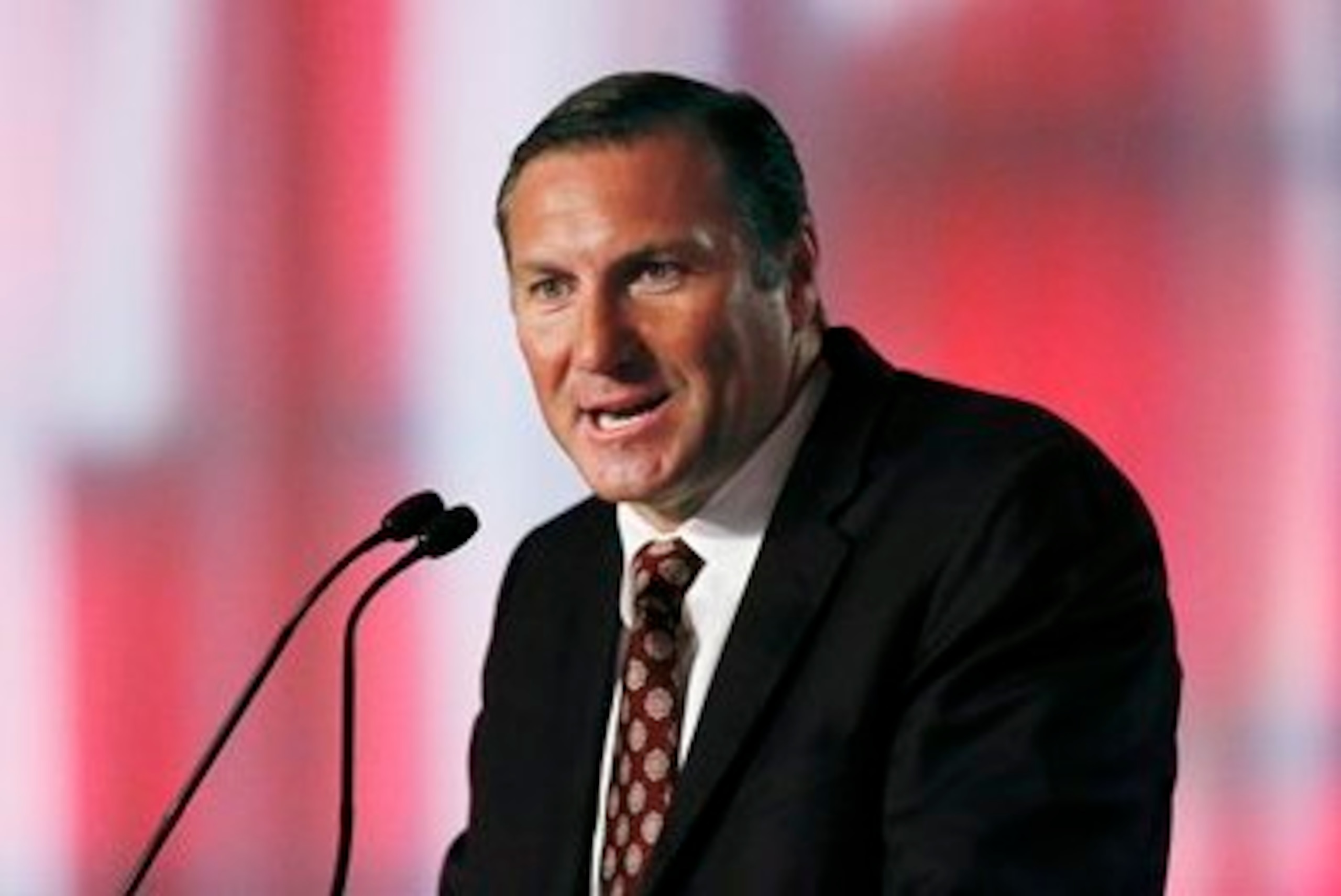
Tuesday, Dan Mullen then completely undercut Sankey's pleas when being asked about Mississippi State's decision to admit 5-star prospect Simmons even after video surfaced of the defensive lineman repeatedly striking a woman on the ground.
Last year, the SEC passed a rule banning players with a history of domestic violence from transferring into the league, which was widely hailed as being a step in the right direction, only it doesn't cover incoming freshmen. So regarding MSU's football penalty of merely a one-game suspension, presumably when the Bulldogs open against South Alabama, Sankey said: "What that young man has is an opportunity. He's going to be closely scrutinized. That's not behavior that's acceptable in any way."
Even so, it came across as a football-first move.
Mullen attempted to distance himself from the controversial suspension by calling it a university decision but added, "I was just thrilled that we're going to have Jeffery in our family." When pressed on if he should be held responsible if Simmons causes an incident on campus, the coach stated, "We're all responsible."
Finally, when asked if he would feel the same if the woman involved were his wife or daughter, Mullen hesitated and bafflingly said, "I don't think my family would be in that situation."
He subsequently borrowed Sankey's statement that he doesn't think 10 seconds of video should have a major impact on someone's life. Ironically, he had just proved that very point with his ignorant and apparent self-serving statements.
Nevertheless, the damage was done, serving as a clear reminder that many of the SEC's biggest issues have been of its own doing, societal ills or not.
Fair or unfair, isolated incidents or a reflection of bigger, more expansive troubles, fans are right to be skeptical of certain motivations from coaches and their programs.
Until the frequency of these black-eye incidents slows—and more importantly, until the programs, universities and league leadership make stronger, more meaningful statements in terms of consequences—critics will claim it's the same old SEC and continue to accuse it of being a win-at-all-costs conference, especially considering the massive amounts of money flowing into its coffers.
Quotes were obtained firsthand unless otherwise noted. Recruit ratings courtesy 247Sports.
Christopher Walsh is a lead SEC college football writer. Follow Christopher on Twitter @WritingWalsh.



.jpg?w=2560 "Jonathan Taylor Landing Spots")