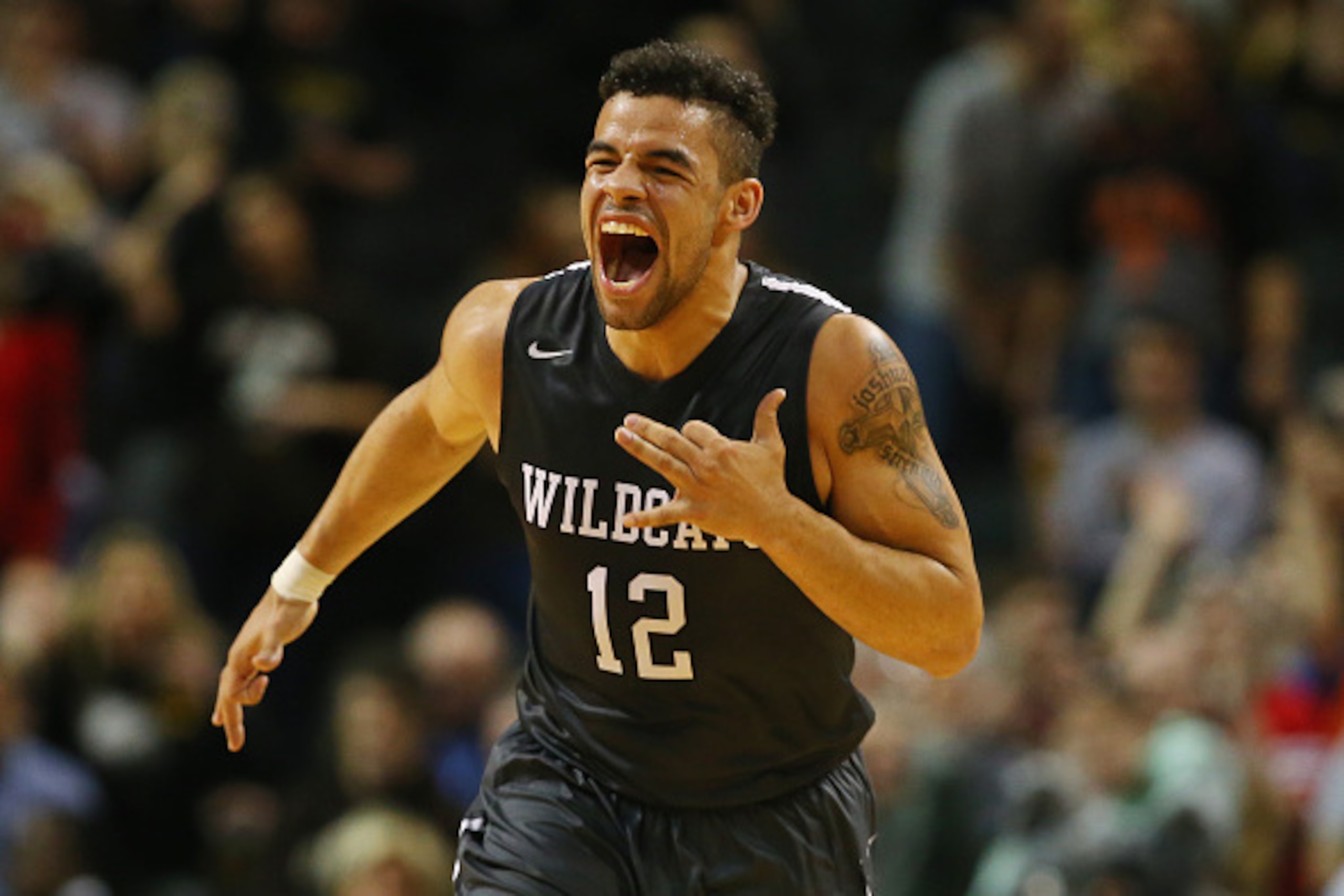


Major-conference players get most of the national attention, but the 2016-17 college basketball season will be loaded with mid-major stars like Jack Gibbs, Alec Peters and Emmett Naar.
With 351 teams in Division I hoops, there's more talent than there are television cameras to broadcast it.
These players will fly below the radar for months, but they'll finish the season with better averages and efficiency ratings than most of the studs projected as lottery picks. That's largely due to the varying levels of competition, but it's also because they have the freedom and the ability to take over games whenever they so choose.
Whether it be a scoring phenom, a double-double machine or an outstanding two-way combo guard, these are the 20 non-major stars who should put up incredible numbers, ranked in ascending order of how likely they are to take the world by storm in the NCAA tournament—just like Stephen F. Austin's Thomas Walkup did this past March.
*Players from the AAC, ACC, Big 12, Big East, Big Ten, Pac-12 and SEC are ineligible for this list.
Honorable Mentions
1 of 21
Atlantic 10 Also-Rans
- Tyler Cavanaugh, George Washington
- Charles Cooke, Dayton
- Peyton Aldridge, Davidson
- JeQuan Lewis, VCU
There were nearly a dozen viable candidates from the A-10, but we arbitrarily set a cap of three players per conference so that this didn't turn into a list of 20 players from the A-10, Mountain West and West Coast conferences.
Cooke and Cavanaugh were the toughest omissions to make. Both were members of CBS Sports' Jon Rothstein's preseason first team in late June and should be in the running for A-10 Player of the Year if either of their teams makes the NCAA tournament.
Mountain West Also-Rans
- Tim Williams, New Mexico
- Jeremy Hemsley, San Diego State
Williams is a double-double machine, and Hemsley is a prime candidate for a monster year after averaging 12.0 points per game as a freshman. Unfortunately, there are three other MWC players in our top 15.
Jalan West, Northwestern State
In addition to a cap of three players per conference, we also imposed a maximum of one player per team, which only impacted Northwestern State. Zeek Woodley is comfortably in our top 10, and despite missing all but one game last season due to injury, West would have been a top 15 player as well.
The redshirt senior averaged 20.0 points and 7.7 assists per game in 2014-15, leading the nation in the latter category. If he's able to fully recover from his torn ACL, he and Woodley should have little trouble becoming the highest-scoring duo in the country once again.
Tra-Deon Hollins, Nebraska-Omaha
Hollins isn't much of a shooter, but he's the best on-ball defender in the nation and a fine point guard, averaging 4.0 steals and 6.0 assists per game last year. But it must also be noted that he commits a lot of turnovers (3.0 per game), and his stats are inflated by playing for a team that has ranked in the top five in the nation in adjusted tempo in each of the past four years.
Ethan Telfair, Idaho State
Telfair is lethal from the charity stripe, averaging 6.6 made free throws per game and converting on 86.9 percent of his attempts. Moreover, he's a triple-double threat, averaging 20.2 points, 5.4 assists and 4.0 rebounds per game. It's too bad he commits 3.6 turnovers per game and plays for a team that hasn't finished more than one game above .500 in more than two decades.
Derrick Griffin, Texas Southern
Griffin dominated the SWAC as a freshman, averaging 13.3 points, 11.0 rebounds and 2.2 blocks per game—which is about what you might expect when a highly rated, two-sport star ends up playing in one of the worst conferences in the country. Unfortunately, because he also plays football, he ends up not lacing up for the hardwood until midway through the nonconference season, making it difficult to rank him in our top 20.
20. Evan Bradds, Belmont
2 of 21
2015-16 Stats: 17.6 PPG, 9.2 RPG, 2.2 APG
Evan Bradds is one of the most efficient scorers in recent college basketball history.
Over the past three seasons, Belmont's big man has attempted 707 two-pointers, converting on 70.6 percent of them. He's one of just two players in more than two decades to top 67.5 percent on at least 675 attempts from inside the arc. Oddly enough, the other player to do so also attended Belmont (Adam Mark from 2001-04).
And last year was the most efficient yet from Bradds, as he shot 72.1 percent from inside the arc and a career-best 70.5 percent from the free-throw line. As a result, he averaged 1.91 points per field-goal attempt while only trying eight three-pointers.
Bradds has also developed into one of the better rebounders in the country, corralling 12.0 per 40 minutes as a junior. All told, it was enough for him to be named Ohio Valley Conference Player of the Year, despite Austin Peay's Chris Horton putting up 18.8 points, 12.0 rebounds and 1.8 blocks per game.
19. James Thompson IV, Eastern Michigan
3 of 21
2015-16 Stats: 14.8 PPG, 10.6 RPG, 1.4 BPG
Over the past five seasons, there have only been five freshmen to average a double-double while appearing in at least 30 games: Anthony Davis, Ben Simmons, Julius Randle, Shawn Long and James Thompson IV.
Two of those players (Simmons and Davis) became the No. 1 overall draft pick after their freshman seasons. One (Randle) went No. 7 overall after just one collegiate season. Another (Long) is in a two-man club with the legendary Tim Duncan as the only college basketball players in the past 23 seasons to record 2,000 points, 1,400 rebounds and 250 blocks in a career.
And then there's Thompson, who plays for a school that hasn't been to the NCAA tournament since 1998 and that has only had one player (Earl Boykins) appear in an NBA game in the past 12 years.
Is he headed for a huge sophomore season and a future in the pros or did he simply benefit from serving as one of the only legitimate frontcourt presences in the MAC? The only thing we can say for certain is that Thompson will have us checking Eastern Michigan box scores far more frequently than in years past.



18. Rokas Gustys, Hofstra
4 of 21
2015-16 Stats: 13.5 PPG, 13.0 RPG, 1.2 BPG
It's one thing to average a double-double, but Blake Griffin, Kenneth Faried and Rokas Gustys are the only underclassmen since the 1993-94 season to put up at least 13.0 points and 13.0 rebounds per game for a full year.
To get there, Gustys had seven games with at least 15 points and 15 rebounds and a pair of games with at least 20 of each. A 20-20 game only happened 23 times last season. Ben Simmons did it once. Brice Johnson did it once. But Gustys did it twice—in back-to-back games in January, no less.
As with James Thompson IV, though, we're forced to question how much his numbers were inflated by lack of competition.
Gustys finished the season with 168 more rebounds than any other player in the Colonial Athletic Association, averaging 15.2 rebounds per conference game compared to just 9.5 against everyone else. Still, it's not like the CAA will add four carbon copies of Shaquille O'Neal this offseason, so Gustys should continue to put up ridiculous numbers in 2016-17.
17. James Daniel, Howard
5 of 21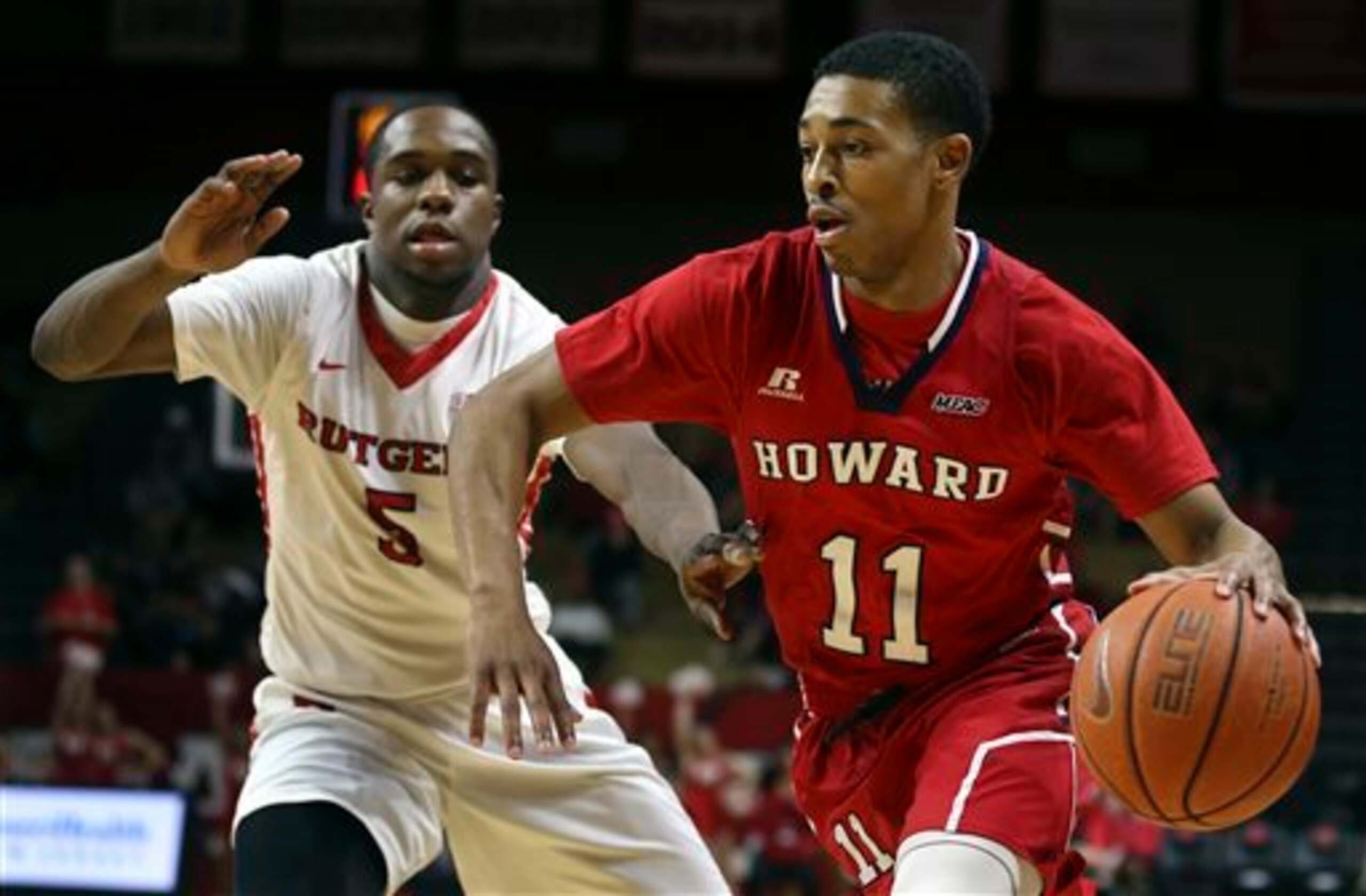
2015-16 Stats: 27.1 PPG, 2.8 APG, 2.2 RPG, 2.0 SPG
There's no bigger conundrum in ranking minor-conference players than James Daniel.
The nation's leading scorer averaged 27.1 points per game in 2015-16. The only other players in the 2010s to top 26.5 per game were Jimmer Fredette and Doug McDermott during the senior seasons in which they each won the Wooden Award. That's one special club that includes Daniel.
But Daniel averaged 19.7 shots and 11.0 free-throw attempts against dreadful competition to hit that mark, shooting 38.8 percent from the field and committing 4.1 turnovers per game. Even without playing a lick of defense, Fredette was worth 0.256 win shares per 40 minutes, and McDermott checked in at 0.261. Daniel's ratio was only 0.158, and his box plus/minus was a measly 0.6.
A career 39.9 percent shooter from inside the three-point arc, the only thing Daniel has in common with Fredette or McDermott is a permanent green light. Those other two guys led their teams to No. 3 seeds in the NCAA tournament as seniors. Howard is just hoping Daniel's senior year results in a record above .500 for the first time since 2002.
16. Dallas Moore, North Florida
6 of 21
2015-16 Stats: 19.8 PPG, 6.0 APG, 4.0 RPG, 39.5 3P%
Thanks to Dallas Moore, North Florida had one of the most efficient offenses in the country last season.
Five players averaged at least 12.0 points per game, and the Ospreys ranked fourth in the nation in effective field-goal percentage. They owned the three-point line, shooting 41.0 percent as a team while making 411 triples. In the past six years, North Florida is the only team to make at least 385 three-pointers while shooting 38.5 percent or better.
That all begins with the primary ball-handler.
Moore is one of the best triple-threat point guards in the game today. His versatility to drive and dish, finish among the trees or pull up for a three-pointer make him almost impossible to guard, even before factoring in the teammates who are lethal from the perimeter.
He does lose a trio of key teammates to graduation, but Moore still has Aaron Bodager as a sidekick—who led the nation in offensive rating last year. Moore's assist total will likely drop, but look for him to become more assertive in averaging around 24.0 points per game.
15. Nick Emery, BYU
7 of 21
2015-16 Stats: 16.3 PPG, 3.5 RPG, 2.5 APG, 1.4 SPG, 38.3 3P%
Nick Emery floated through most of his freshman season without much fanfare. He had the occasional 20-point game and was suspended for one game for punching an opponent, but the Lone Peak High School star flew well below the national radar for the first three months.
Then in mid-February, he exploded with a flurry of three-pointers, scoring 37 points in a win over San Francisco while shooting 10-of-12 from beyond the arc. Two nights later, he had 31 points against Santa Clara.
And that was with Kyle Collinsworth and Chase Fischer still on the roster.
With that duo graduating this summer, Emery will become the undisputed alpha dog in BYU's backcourt. Whether he becomes more of a passer with a three-headed froncourt monster of Kyle Davis, Eric Mika and Corbin Kaufusi or a more dominant scorer, it's almost inevitable that Emery's impressive numbers will increase in his sophomore season.
14. Gian Clavell, Colorado State
8 of 21
2015-16 Stats: 20.8 PPG, 6.9 RPG, 3.1 APG, 42.2 3P%
In what was supposed to be his final collegiate season, Gian Clavell got out to an incredible start.
He scored at least 15 points in each of his first 10 games. He was named the KenPom.com MVP in four of those games. And among the six games in which he failed to secure that honor, there was a loss to Long Beach State in which he had 20 points, 15 rebounds and four assists and a season-opening win over Northern Iowa with 16 points, seven rebounds, five assists and no turnovers.
Few players in the country were more valuable, which was a bit unexpected from the former JUCO transfer who averaged 9.2 points and shot 30.1 percent from three-point range in 2014-15.
A broken hand brought his season to an abrupt end, but Clavell's medical hardship waiver was approved earlier this month, meaning he'll be back for one more senior year.
There's only one other returning player on this roster who averaged at least 5.0 points per game (Emmanuel Omogbo), so this was massive news for the Rams. Clavell should resume his role as the team leader and may well be the most valuable player in the Mountain West Conference.
13. Cameron Oliver, Nevada
9 of 21
2015-16 Stats: 13.4 PPG, 9.1 RPG, 2.6 BPG
Two years ago, Nevada was 9-22 with one of the most inefficient offenses in the country. The Wolf Pack were blown out repeatedly, including finishing the season with three consecutive losses by a margin of 16 or more points.
But then they added Cameron Oliver, and all was right with their world.
All five of the leading scorers from the 2014-15 team returned for another year, but Oliver was the catalyst that resulted in an improvement to a 24-14 record. Even with star big man AJ West (12.1 points and 11.0 rebounds per game in 2014-15) leaving the program one month into the season, Nevada was still drastically better with Oliver around to dominate in the paint.
And he was just hitting his stride late in the season. Between the Mountain West and CBI tournaments, Oliver averaged 20.1 points, 10.9 rebounds and 3.5 blocks over his final eight games.
12. Antonio Campbell, Ohio
10 of 21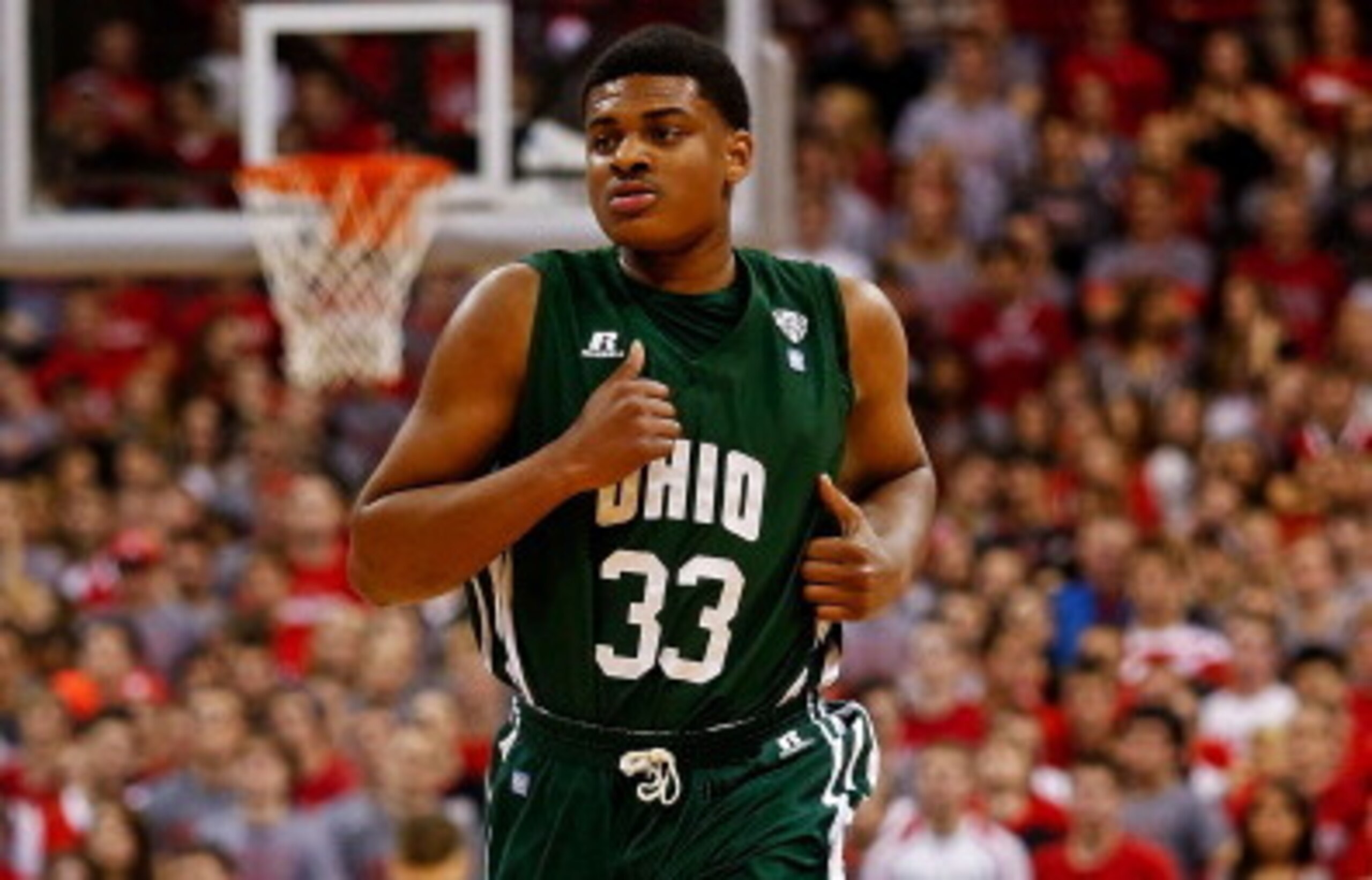
2015-16 Stats: 17.1 PPG, 10.2 RPG, 1.8 BPG
As previously noted on James Thompson IV's slide, the MAC offered almost no resistance to its minimal supply of big men last season. For players taller than 6'7" who aren't afraid to crash the glass, stay out of foul trouble long enough to play 25 minutes and there's a good chance a double-double will follow.
But Antonio Campbell is more than just some brute who beat up on little guys. He took Thompson to the woodshed in Ohio's one game against Eastern Michigan, tallying 33 points and 11 rebounds, while Thompson fouled out with 11 and five, respectively.
Campbell was also a viable three-point weapon, making 36.8 percent of his 117 attempts on the season. The only other players in the past decade to average at least 16 points and 10 rebounds per game while making at least 36 percent of their 100 or more three-point attempts were Kevin Durant and Draymond Green.
If Campbell has a senior year as great as his junior year, perhaps the Golden State Warriors will spend a second-round draft pick on him to get all three of those versatile forwards together on one team.
11. E.C. Matthews, Rhode Island
11 of 21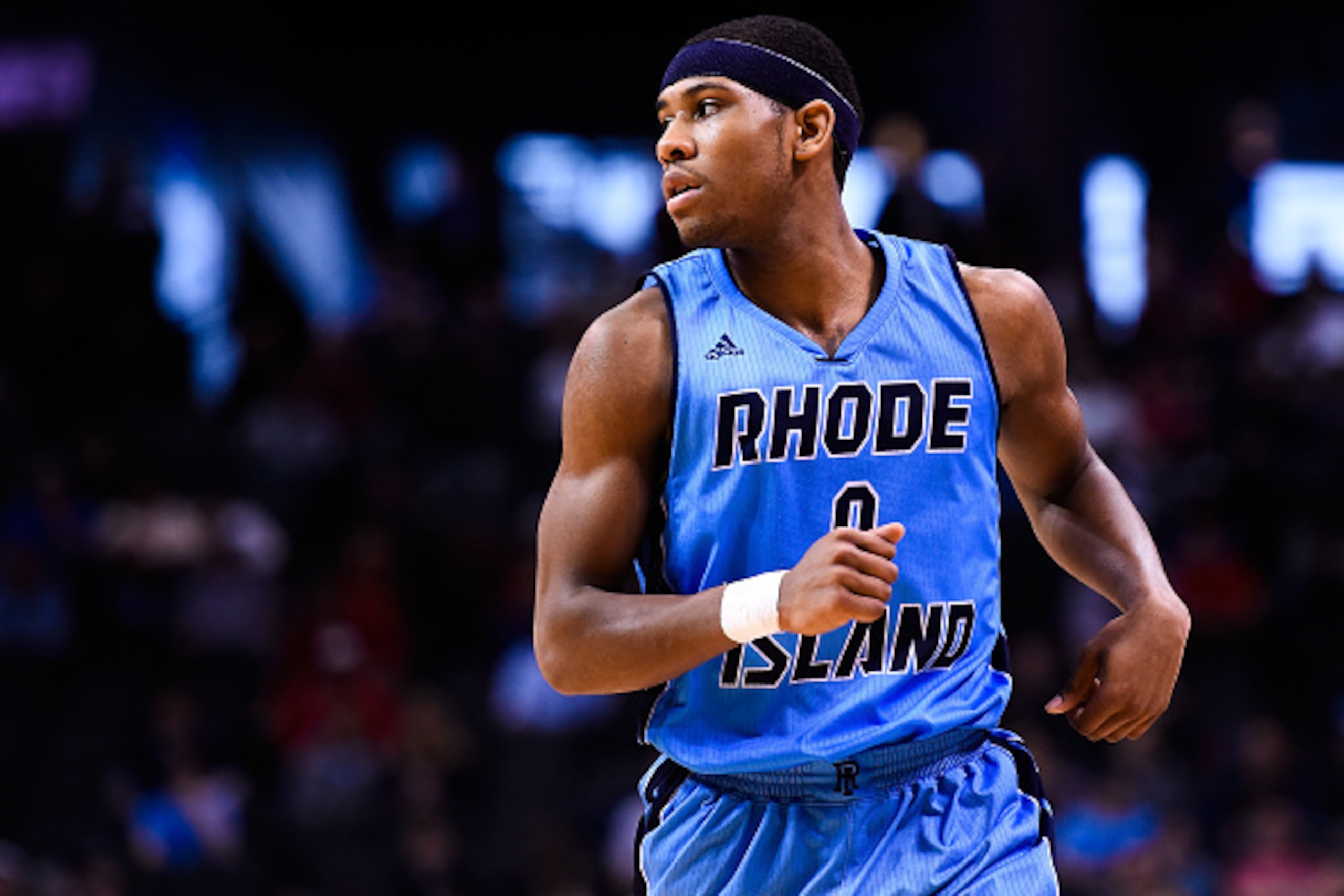
2015-16 Stats: One game, zero points, two rebounds
There's at least one injury-related wild card every preseason.
Two years ago, it was Arizona's Brandon Ashley attempting to bounce back from the foot injury that cost him the final two months of his sophomore year. Last year, it was Kentucky's Alex Poythress recovering from a torn ACL. In both cases, it was a strong roster that had a good chance of becoming a Final Four-caliber team if the player in question was fully healthy.
This year, that wild card is E.C. Matthews. The leader of the 2014-15 Rhode Island Rams (16.9 PPG, 4.6 RPG) only lasted 10 minutes into the 2015-16 season before tearing his ACL, but he could be what propels Rhode Island into uncharted waters.
This team has not been to the NCAA tournament since 1999 and has never been to a Final Four. But with a core of Matthews, Jared Terrell, Jarvis Garrett, Kuran Iverson, Hassan Martin and Indiana transfer Stanford Robinson, something special could be brewing.
Still, we're talking about a player who is only 80 percent recovered from a major surgery. He might eventually be the most important non-major-conference player in the nation, but we opted to award our top 10 spots to fully healthy players.
10. Jaylen Adams, St. Bonaventure
12 of 21
2015-16 Stats: 17.9 PPG, 5.0 APG, 3.7 RPG, 1.3 SPG, 43.8 3P%
Jaylen Adams was one-third of the most underappreciated trio in recent memory. He was one of three Bonnies to average at least 16.5 points per game. He was their best three-point and free-throw shooter and also led the team in assists and steals.
Marcus Posley and Dion Wright are both gone, though, leaving us to wonder whether opposing defenses will now find it easier to slow down Adams or whether he's going to blossom into one of the highest-scoring guards in the nation as a junior.
In place of his former teammates, Adams will now be sharing the rock with Matt Mobley (17.2 PPG at Central Connecticut State in 2014-15) and David Andoh (15.6 points and 8.7 rebounds per 40 minutes at Liberty in 2014-15). They're both taking sizable steps up in competition by transitioning to the A-10, but in Adams, they'll also have a more capable ringleader than they did in their former homes.
As was our assumption with Dallas Moore at North Florida, look for Adams' assist total to decrease while he becomes a slightly more assertive scorer. If he keeps shooting 43.8 percent from downtown and 87.4 percent from the free-throw line, he should clear 20.0 points per game with room to spare while outscoring all A-10 players not named Jack Gibbs.
9. Zeek Woodley, Northwestern State
13 of 21
2015-16 Stats: 22.2 PPG, 5.2 RPG, 1.6 APG, 1.0 SPG, 40.7 3P%
For the second consecutive season, Zeek Woodley averaged 22.2 points per game in Northwestern State's up-tempo offense.
But don't blame the pace of play or volume of shots for his scoring totals because Woodley has been an efficient scorer. In his three-year career, he has a 56.4 field-goal percentage, 40.7 three-point percentage and 83.7 free-throw percentage.
The only other player in the past 25 years with at least 200 three-point attempts and career shooting percentages of at least 55.0, 40.0 and 80.0, respectively, is Doug McDermott.
And don't try to tell us that's a product of poor competition, either. Over the past two seasons, Northwestern State has played nine road games against major-conference teams. Woodley averaged 22.1 points in those games while shooting 54.7 percent from the field. He gets buckets regardless of who he plays.
It's just too bad Northwestern State is such a colossal disaster on defense, allowing at least 83.0 points per game in each of the past three seasons. As a result, the team with the 11th-highest scoring player in the country only managed to win eight games.
8. Quinton Hooker, North Dakota
14 of 21
2015-16 Stats: 20.1 PPG, 4.9 RPG, 3.5 APG, 1.9 SPG, 38.3 3P%
At the rate at which he has improved over each of the past two offseasons, Quinton Hooker is going to lead the nation in scoring in 2016-17. After putting up a measly 4.2 points per game as a freshman, he jumped up 8.6 PPG to 12.8 as a sophomore and another 7.3 PPG to the 20.1 he averaged last year.
Room for another year of growth like that is rather limited, as all six of last year's leading scorers are returning for another season. Still, Hooker's evolution from a combo guard who averaged 1.30 points on 9.9 field-goal attempts per game to one who was good for 1.48 on each of his 13.5 shots per game was incredible. He became a more reliable shooter at all three levels and also got to the free-throw line nearly 50 percent more often.
But the scary part is he was still heating up when the season ended.
After being held to 28 points or fewer in each of the first 88 games of his career, Hooker scored at least 30 points in four of his final eight games. During that stretch, he averaged 24.6 points while shooting 54.8 percent from three and 92.9 percent from the free-throw line.
7. Mike Daum, South Dakota State
15 of 21
2015-16 Stats: 15.2 PPG, 6.1 RPG, 44.6 3P%
Mike Daum's per-game numbers don't look like all that much, but the freshman only played 20.8 minutes per game. Per 100 possessions, he averaged 42.7 points and 17.0 rebounds—compared to 34.9 and 17.1, respectively, for Jahlil Okafor in 2014-15.
Daum's 0.292 win shares per 40 minutes was good for third-best in the nation in 2015-16, and he was the only non-senior to finish the year above 0.27. It was also the ninth-highest WS/40 that any player has posted since the 2009-10 season, just barely behind Damian Lillard and ahead of DeMarcus Cousins.
In addition to points and rebounds, the 6'9" power forward led his team in three-point and free-throw percentage. He's an enigma who not enough of the country was able to experience as a member of rarely televised South Dakota State, but get ready to watch what he can do with closer to 30 minutes per game in his second year.
6. Nigel Williams-Goss, Gonzaga
16 of 21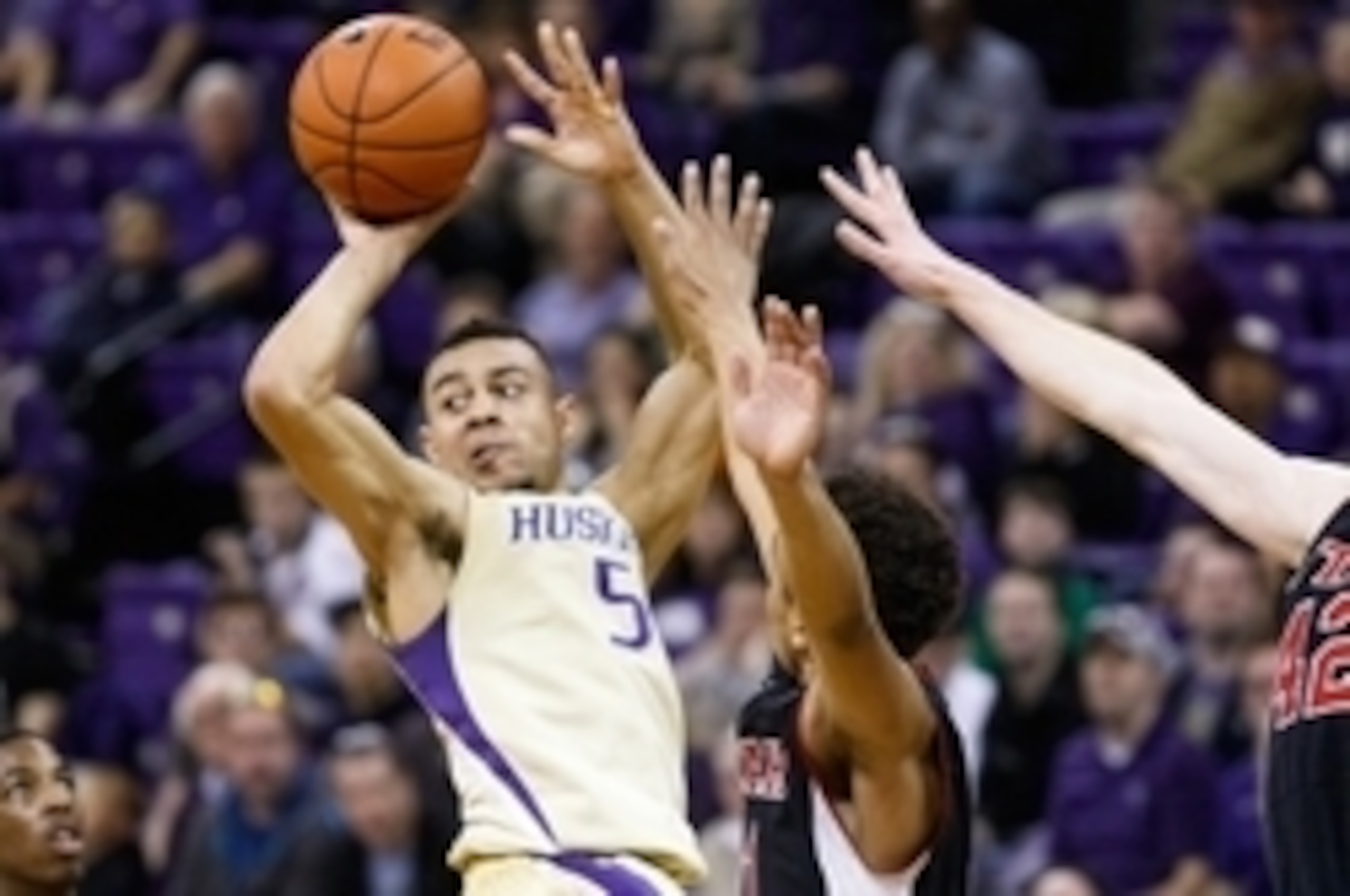
2015-16 Stats: DNP (Sat out after transferring)
Absence makes the heart grow fonder, and it often leads us to over-romanticize players who transfer and sit out a season. For proof of this, keep an eye on the Derryck Thornton hype meter over the next 16 months. He had a 96.7 offensive rating and a win shares per 40 minutes ratio of just 0.048 as a freshman at Duke, but he'll eventually come to be viewed as the savior that can help carry USC to the Final Four for the first time since 1954.
But Nigel Williams-Goss was a stone-cold stud before he transferred away from Washington. He averaged 13.4 points, 4.4 assists and 4.4 rebounds as a freshman before increasing each of those numbers as a sophomore. He's not much of a shooter (30.7 career three-point percentage), but he mastered the art of finishing in the paint while avoiding contact.
Though he never played in the NCAA tournament, don't forget that Williams-Goss led the Huskies to an 11-0 record early in the 2014-15 season before a complete collapse fueled by the January dismissal of big man Robert Upshaw. Williams-Goss is a scoresheet-stuffing leader who could steer this stacked Gonzaga roster to its first-ever Final Four appearance.
5. Elijah Brown, New Mexico
17 of 21
2015-16 Stats: 21.7 PPG, 5.5 RPG, 3.2 APG, 1.1 SPG, 39.4 3P%
Circling back to the mention of Derryck Thornton on the previous slide, sometimes a change of scenery does make all the difference in the world.
Elijah Brown embodies that concept.
He had a brutal freshman year with Butler, averaging just 18.6 minutes and 6.8 points per game while shooting 33.7 percent from the field. A combo guard who couldn't reliably make three-pointers and who had more turnovers than assists, Brown was going to be the odd man out once Roosevelt Jones returned from the broken wrist that cost him the entire 2013-14 season.
Rather than spending most of his time on Butler's bench in 2014-15, he opted to spend all of it on New Mexico's bench before becoming one of the biggest mid-major stars in the country. He set a career high in assists in his first game with the Lobos and followed it up with new personal bests in points and rebounds in his second game.
Brown still commits far too many turnovers—he had at least five in each of his final six games last season—but at least now he's scoring in bunches and regularly setting up other teammates to make up for it.
4. Justin Robinson, Monmouth
18 of 21
2015-16 Stats: 19.3 PPG, 3.8 RPG, 3.7 APG, 2.2 SPG, 39.4 3P%
Monmouth was dreadful before 5'8" Justin Robinson became larger than life.
Including Robinson's uninspiring freshman season, the Hawks went 69-149 (.317 winning percentage) from 2007-14. But he was the primary catalyst of their 18-15 season two years ago and the star of the show during last year's 28-8 campaign—even though the bench mob stole most of the limelight.
When Robinson came to play, Monmouth was tough to beat.
Fatigue seemed to catch up with him toward the end of the season, but he averaged 24.8 points and 3.0 steals per game in November against USC (twice), UCLA, Notre Dame, Dayton and Drexel. Regardless of the caliber of opponent, Robinson made his impact felt on both ends of the floor.
Factor in the chip that this entire team will be playing with on its shoulder after getting snubbed from the 2016 NCAA tournament, and Robinson might be putting up even more ridiculous numbers this coming year.
3. Emmett Naar, Saint Mary's
19 of 21
2015-16 Stats: 14.1 PPG, 6.3 APG, 3.7 RPG, 1.3 SPG, 41.8 3P%
Emmett Naar quietly had a remarkable sophomore season for the 29-6 Gaels.
Saint Mary's should not have been good. In fact, a complete disaster of a season would have been understandable for a team losing all six of its leading scorers except for Naar—who led the team in assists as a freshman and only averaged 6.3 points per game.
Instead, the Gaels had one of their best seasons ever, fueled by Naar spending more than 37 minutes per game as an efficient point guard. Per 40 minutes, his points, assists, rebounds and steals all went up from the previous year, while his turnover and foul rates decreased. The only area where he didn't improve was three-point shooting, where he merely dropped from 44.9 percent to a still-lethal 41.8 percent.
Naar had multiple points-assists double-doubles and even flirted with a couple of triple-doubles, tallying at least eight points, eight rebounds and six assists in back-to-back games in early February. And with everyone from last year's roster back for another season, Naar should only become more effective as a junior.
2. Alec Peters, Valparaiso
20 of 21
2015-16 Stats: 18.4 PPG, 8.4 RPG, 1.3 APG, 44.0 3P%
This will be the year that Alec Peters finally steps up and puts Valparaiso on his back.
Peters has already been fantastic. He's a deadly, efficient stretch 4 who averaged 20.8 points and 8.6 rebounds in Valpo's five NIT games. From February 16 through March 22, Peters was the KenPom.com game MVP in eight out of nine games—and the one exception was the loss to Green Bay in the Horizon League semifinals in which he had 32 points, 12 rebounds, two blocks and a steal.
What's crazy about the numbers Peters put up is that his usage rate decreased from the previous year. While most of these minor-conference studs are the singular go-to weapons on their respective teams, Peters only averaged one field-goal attempt for every 2:41 spent on the court.
That has to change this season with Keith Carter, Darien Walker, Vashil Fernandez and E. Victor Nickerson all graduating. Peters was already this team's best option. Now that he's one of the only ones, his scoring average should soar to new heights.
1. Jack Gibbs, Davidson
21 of 21
2015-16 Stats: 23.4 PPG, 4.9 APG, 4.1 RPG, 1.8 SPG, 33.2 3P%
Just sit back and watch the points fly.
Jack Gibbs had the seventh-highest scoring average in the nation last season, even though his three-point percentage dropped 93 points from his sophomore year. He routinely blew by would-be defenders with ease en route to three 40-point games filled with two-point buckets and free throws.
The crown jewel of his junior year came in the mid-January win over Massachusetts. Gibbs had 43 points, eight rebounds and eight assists, putting a nice capstone on four consecutive KenPom.com game MVPs in which he averaged 30.3 points, 7.8 assists, 4.8 rebounds and 2.0 steals while shooting 43.2 percent from beyond the arc.
Unfortunately, he didn't have enough gas left to get to the finish line. Not only did his usage rate go through the roof, Gibbs also played nearly 50 percent more minutes in 2015-16 (1,099) than he did the previous year (750). As a result, he shot 20.4 percent from three-point range in six games in March and was held to 42 points on 54 field-goal attempts in the A-10 tournament.
But if his three-point stroke returns to stay for the entire 2016-17 season, this is the player who will lead the nation in scoring.
Kerry Miller covers college basketball for Bleacher Report. You can follow him on Twitter @kerrancejames.
.png?w=2560)


.jpg?w=2560 "Jonathan Taylor Landing Spots")