
Though no college basketball players were selected to represent the United States in the 2016 Olympics, the upcoming Games in Rio sparked a curiosity in what a "Dream Team" comprised entirely of college basketball players would look like.
Without a doubt, Mike Krzyzewski is the head coach of this fictitious conglomerate. John Calipari does have a ton of experience making world-class talent and ego work together toward one goal and would be more than welcome as an assistant, but the international experience that Coach K has had with Team USA over the past four decades makes him the best man for the job.
Who would he be coaching, though?
From the pool of thousands of players eligible for the 2016-17 college basketball season, we've compiled the 12-man roster that would be unbeatable against other players their age. This team would get crushed by the actual U.S. men's national team, but if there was an Olympic basketball event for players under the age of 23, get ready to read about the roster that would win gold.
This isn't meant to be a ranking of the 12 best players in the nation, but rather the 12 men with skill sets that mesh perfectly to form a unit with no perceived weaknesses.
Point Guard
1 of 7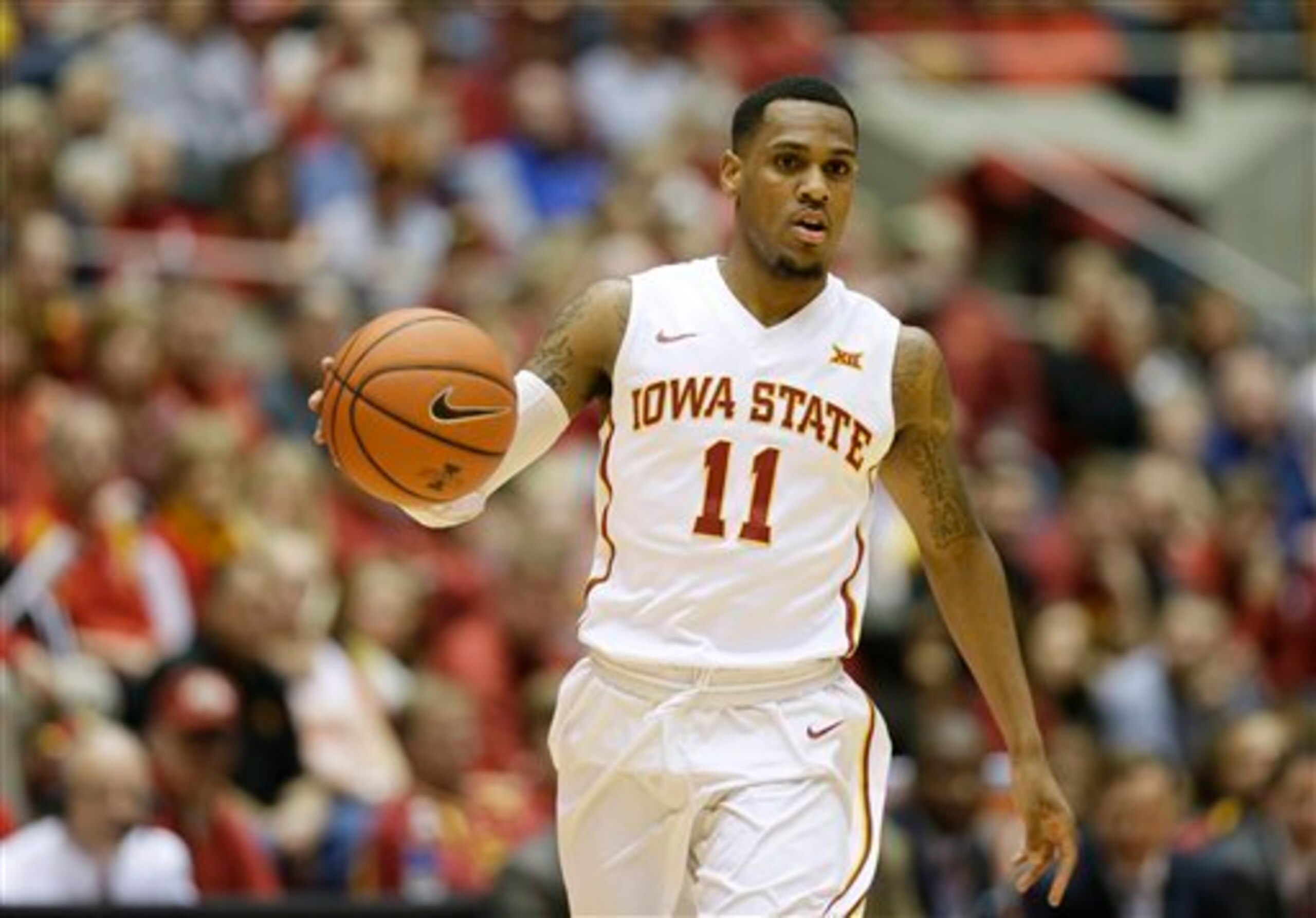
The Starter: Monte Morris (Iowa State)
Point guard is always the most important position on the court, but that value is amplified tenfold on this type of all-star roster.
First and foremost, we need a player who excels at setting up teammates without committing too many turnovers. Of nearly equal importance, it needs to be a guy who can make an opponent pay for not respecting his shot but also one who doesn't feel the need to call his own number too often. And it wouldn't hurt if he can force the occasional turnover as the first line of defense.
Had Tyler Ulis stayed for another year, this would have been a difficult decision. As is, Monte Morris is undeniably the point guard we need.
Morris had a 4.2 assist-to-turnover ratio last season while finishing with more steals (62) than turnovers (57) for the third straight year. He played 38.0 minutes per game in Iowa State's up-tempo offense and never seemed to get fatigued. And he's a career 38.3 percent three-point shooter, so good luck to opposing teams that attempt to focus their defensive efforts elsewhere.
The Reserve: Tra-Deon Hollins (Nebraska-Omaha)
In the rare event that Morris needs a water break, his backup should be a player who can dole out dimes in bunches while providing a change of pace elsewhere.
At 6.1 assists per game, Tra-Deon Hollins meets the first criterion with room to spare, and at 4.0 steals per game, he gives this team one heck of a defensive stopper to occasionally throw at the opposition.
Hollins does have some turnover issues (3.0 per game), and he isn't much of a three-point threat (28.4 percent), but his value added on defense for a handful of minutes per game would more than make up for those deficiencies.
Shooting Guard
2 of 7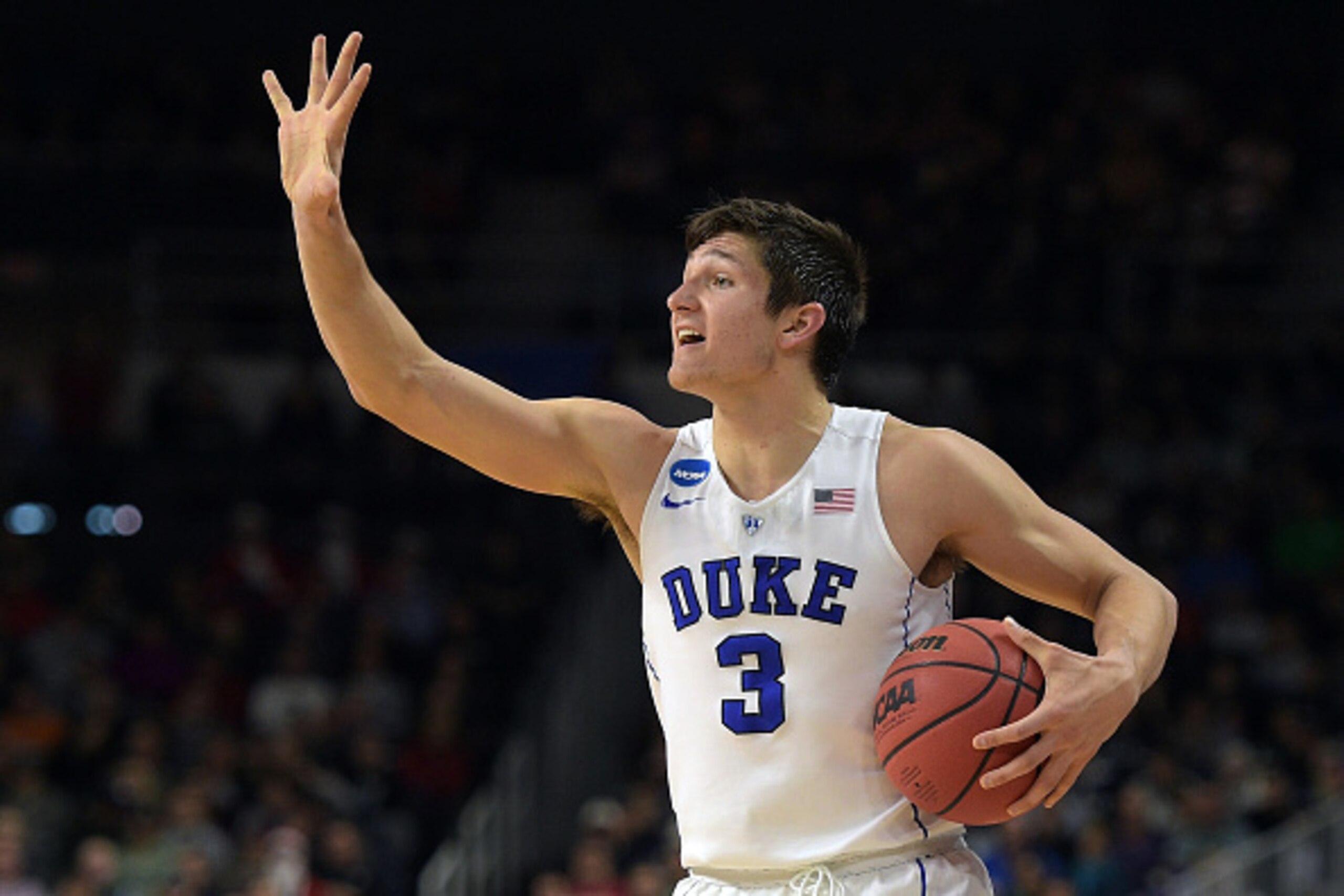
The Starter: Grayson Allen (Duke)
It might be tempting to simply seek out the most lethal three-point shooter in the country, but let's not forget how important it has been in recent years to have a dual combo guard backcourt.
Villanova won it all last season with Ryan Arcidiacono and Jalen Brunson both averaging at least 2.5 assists per game and shooting better than 35 percent from three. Villanova's opponent in the national championship (North Carolina) had a similar set up with Joel Berry II and Marcus Paige.
In 2015, Duke had Tyus Jones and Quinn Cook. The year before that, Connecticut had Shabazz Napier and Ryan Boatright. Really, the only team in the past decade to cut down the final nets with a shooting guard who was just out there to rain threes and rarely pass was Kentucky in 2012 with Doron Lamb in that role—but considering that team had Anthony Davis and Michael Kidd-Gilchrist, those Wildcats are the exception to a lot of rules when it comes to realistically building a title contender.
Yes, we need a starting shooting guard who can shoot, but he has to be more than just that. He must also have the ability to slash, pass and defend at least 75 percent as well as the starting point guard.
Even with those constraints, there were a handful of viable candidates. Oklahoma's Jordan Woodard and Virginia's London Perrantes fit the bill, as does St. Bonaventure's Jaylen Adams.
In the end, though, there's just no way Grayson Allen misses the cut. His defensive intensity leaves something to be desired, but the nation's second-leading returning scorer does force the occasional turnover while slashing and shooting at an elite level and passing (3.5 assists per game) more often than you might expect. Bonus consideration for a career 83.9 percent free-throw stroke that makes him a valuable weapon in salting away a late lead.
The Reserve: Giddy Potts (Middle Tennessee)
Despite our best efforts to construct an unbeatable roster, we must prepare for the possibility of needing a three-point barrage to make up a late deficit. Indiana's James Blackmon Jr. would be an excellent choice, but we'll take Giddy Potts and his 50.6 percent three-point stroke from last season—including shooting 13-of-22 (59.1 percent) between the Conference USA and NCAA tournaments.
Small Forward
3 of 7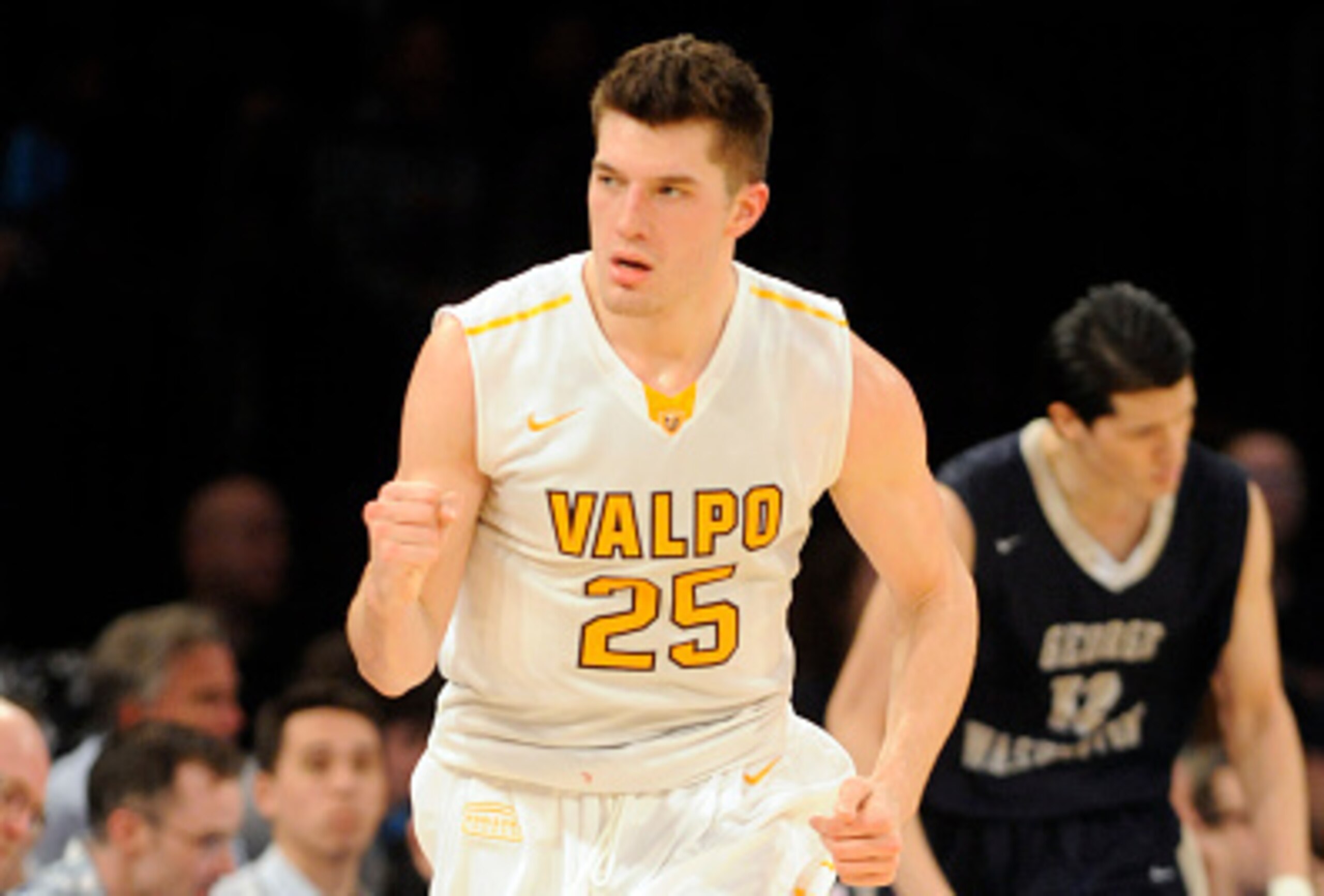
The Starter: Alec Peters (Valparaiso)
Some will inevitably argue that this 6'9" minor-conference stud should be listed as a power forward, but when a player attempts more than 200 three-pointers in a season and makes 44 percent of them, his position isn't defined by his height or his ability to rebound.
Besides, what is a small forward in today's game anymore?
Most starting lineups have two conventional backcourt players, two conventional frontcourt players and either a three-point shooter who can grab some rebounds or a big man with some three-point range. It's the most undefined position on the court, ranging from primary ball-handlers like Michael Gbinije to primary rebounders like Ben Simmons.
So call Alec Peters whatever you want; just know that you want him on this team. With his height and range, he's one of the most unguardable players in the country. He also shot 56.2 percent from inside the arc and finished the season with 14 double-doubles.
A lot of great candidates for this spot fell by the wayside. Oregon's Dillon Brooks, Xavier's Trevon Bluiett and Duke's Jayson Tatum are each legitimate contenders for the Wooden Award. But if it's dominant versatility you want in a small forward, it's hard to do better than Peters.
The Reserve: Josh Jackson (Kansas)
We need at least one freshman somewhere on the roster, so why not the best one in this year's class?
Josh Jackson is going to do some incredible things this season for the Jayhawks, and his hyper-competitive nature would push this dream team to be as good as it possibly can be.



Power Forward
4 of 7
The Starter: Thomas Bryant (Indiana)
With three great shooters already in the starting lineup and Giddy Potts as an assassin off the bench, no need for a stretch 4 here. A conventional power forward who can rack up points and rebounds while converting at a high clip in the paint is the perfect target.
Few fit that description better than Thomas Bryant. Indiana's big man shot 70.7 percent from inside the arc as a freshman and averaged better than 11 rebounds per 40 minutes over the latter half of the season.
Though he tallied just two double-doubles, Bryant improved throughout the year and is expected to be an absolute force down low in 2016-17 without Troy Williams and Max Bielfeldt around to steal his thunder and his rebounds.
What Bryant showed in the NCAA tournament against Kentucky and North Carolina was just a glimpse into what might be in store for the sophomore season of a presumed 2017 lottery pick.
The Reserve: Ivan Rabb (California)
Like Bryant, Ivan Rabb surprised a lot of people by deciding to come back to school for a second season.
A slightly better rebounder (11.9 per 40 minutes) but a marginally worse shooter (61.5 percent from two-point range), bringing Rabb off the bench behind Bryant would be anything other than a drop in production.
The real value in combining these two power forwards is that there's no concern about foul trouble. At a combined 9.3 personal fouls per 40 minutes last year, it was often an issue. On this roster, though, give both big men 20 minutes of maximum effort without fear of the whistle and just enjoy the show.
Center
5 of 7
The Starter: Chris Boucher (Oregon)
As with Alec Peters at small forward, there will likely be some objections to 6'10" forward Chris Boucher as the primary center on this roster. But any player who can block 100 shots in a season is welcome to start at center on our team. In fact, Boucher is the only returning player in the country who blocked at least 100 shots last season, and interior defense is the primary thing otherwise lacking on this dream team.
But Boucher is so much more than just a shot-blocking wizard. He's also a quality rebounder with three-point range who is capable of taking over a game with his offense. (He scored at least 15 points 12 times.) But he doesn't need to score to make an impact. (He averaged just 7.8 field-goal attempts per game.)
That latter quality would be crucial on a roster where Grayson Allen, Alec Peters and Thomas Bryant are doing the bulk of the scoring. But rather than picking a shot-blocker who doesn't score or rebound particularly well (i.e. Amida Brimah), at least Boucher is a legitimate threat to score from anywhere within 26 feet of the hoop to keep the defense honest.
The Reserve: Tacko Fall (Central Florida)
We didn't get to see much of Tacko Fall last season, as the 7'6" freshman only played 17.6 minutes per game.
During his limited time on the court, though, he was wildly productive, averaging 16.7 points, 13.3 rebounds and 5.4 blocks per 40 minutes and shooting 75.0 percent from the field. And in his final four games of the season, he averaged 26.8 minutes, 12.8 points, 11.0 rebounds and 3.5 blocks per game.
We probably wouldn't want him in the starting lineup to play 25 to 30 minutes per game, but let's get him out there in short spurts in relief of Boucher and dare the opposition to attempt a single shot within eight feet of the rim at any point in the game.
The Super Sub
6 of 7
The Super Sub: Josh Hart (Villanova)
This roster goes legitimately two deep at each position, but what if disaster strikes? If a starter at one of the five positions rolls an ankle and his backup is simply having a disastrous game, we need one final line of defense who can come in and get the job done, regardless of position.
That "break in case of emergency" guy is Josh Hart. He is a jack-of-all-trades small forward who is an above-average defender, rebounder, passer and shooter.
Hart is hardly the ideal candidate to fill in at center, but the joy of having Thomas Bryant and Ivan Rabb as the power forwards is that either one of them could slide to the 5 while Hart gets the job done at the 4. Likewise, he wouldn't be the best choice for point guard, but he could play it in a pinch, or he could be the shooting guard while Grayson Allen takes over the primary ball-handling duties.
What sets Hart apart from the other candidates who could adequately fill in at just about any spot on the floor—players like Charles Cooke, Malcolm Hill, Dillon Brooks and Trevon Bluiett—is three years of winning experience, including a national championship. Hart was Villanova's sixth man for his first two years, but he has been an indispensable component of a team that has gone 97-13 with him on the roster.
From his experience, talent and effort, he would be an invaluable addition to this roster, both as another coach in the huddle and as a versatile sub.
The Hype Man
7 of 7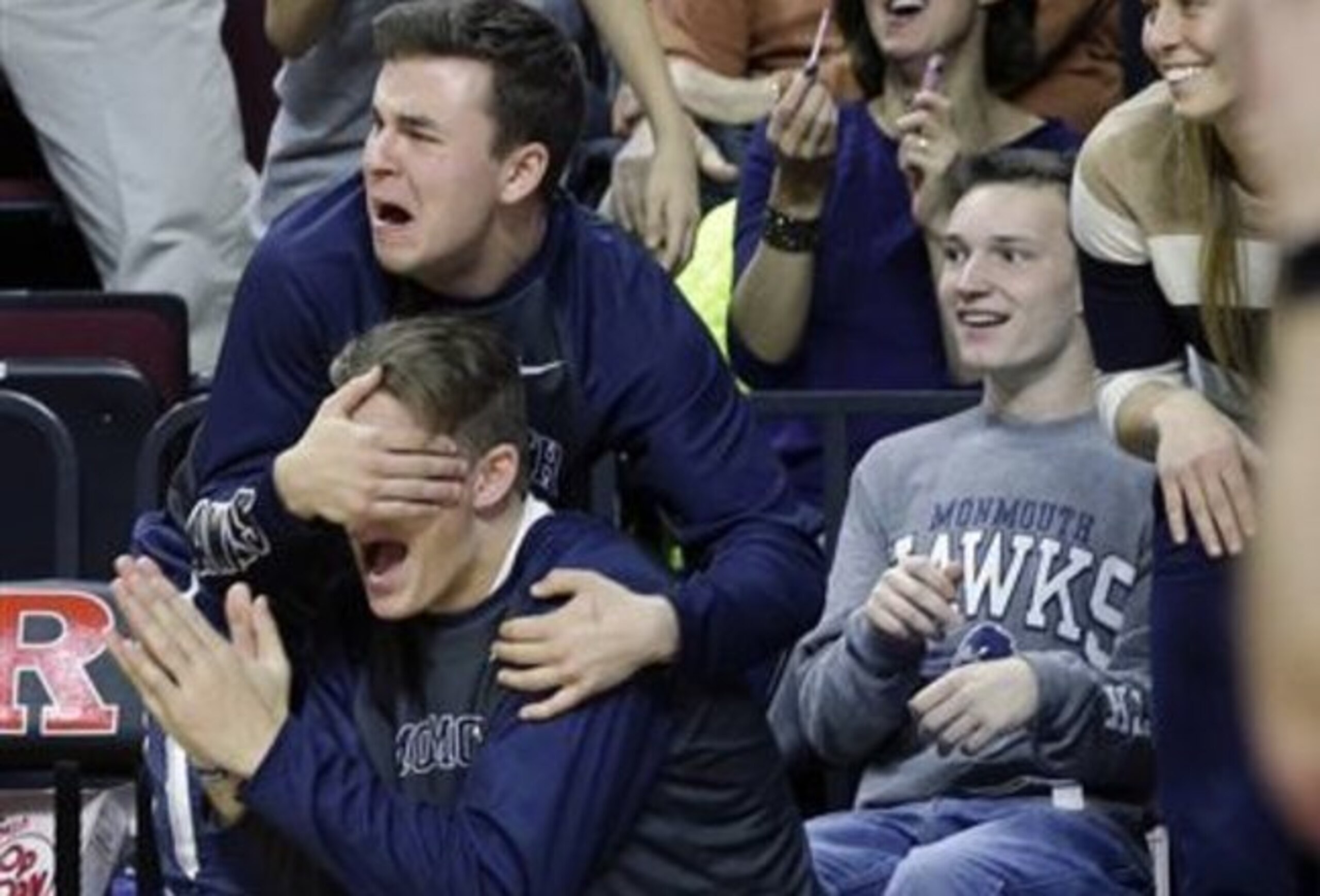
The Hype Man: Daniel Pillari (Monmouth)
A dream team simply does not need 12 players.
Heck, a dream team barely needs 10 players. At the 2012 Olympics, Team USA had two games decided by a margin of fewer than 16 points. Anthony Davis (one minute), James Harden (five) and Andre Iguodala (five) played a combined 11 minutes in those games. Emeka Okafor only even appeared in two games as the 12th man on the 2004 Olympic team.
So this team doesn't need the 12th-best player in the country. What it needs is the best benchwarmer in the country.
Who better for that job than the ringleader of the Monmouth Bench Mob, Daniel Pillari?
While Pillari would help keep things light-hearted in what should be tense situations, he is also the ideal player to put in the game with a 30-point lead to get both the players and the fans fired up. Every great college basketball team has a walk-on who is not-so-secretly the favorite player among the student section. Kentucky's Sam Malone even went so far as to brand himself the "Human Victory Cigar."
He might average less than one minute per game, but Pillari's minutes spent on the sideline are where his true value lies.
Kerry Miller covers college basketball for Bleacher Report. You can follow him on Twitter @kerrancejames.
.png?w=2560)
.jpg?w=2560 "Malik Beasley Negotiating Plea Deal (AP)")
.jpg?w=2560 "Jonathan Taylor Landing Spots")
