
Why Le'Veon Bell Won't Get the $15 Million Per Year He Wants
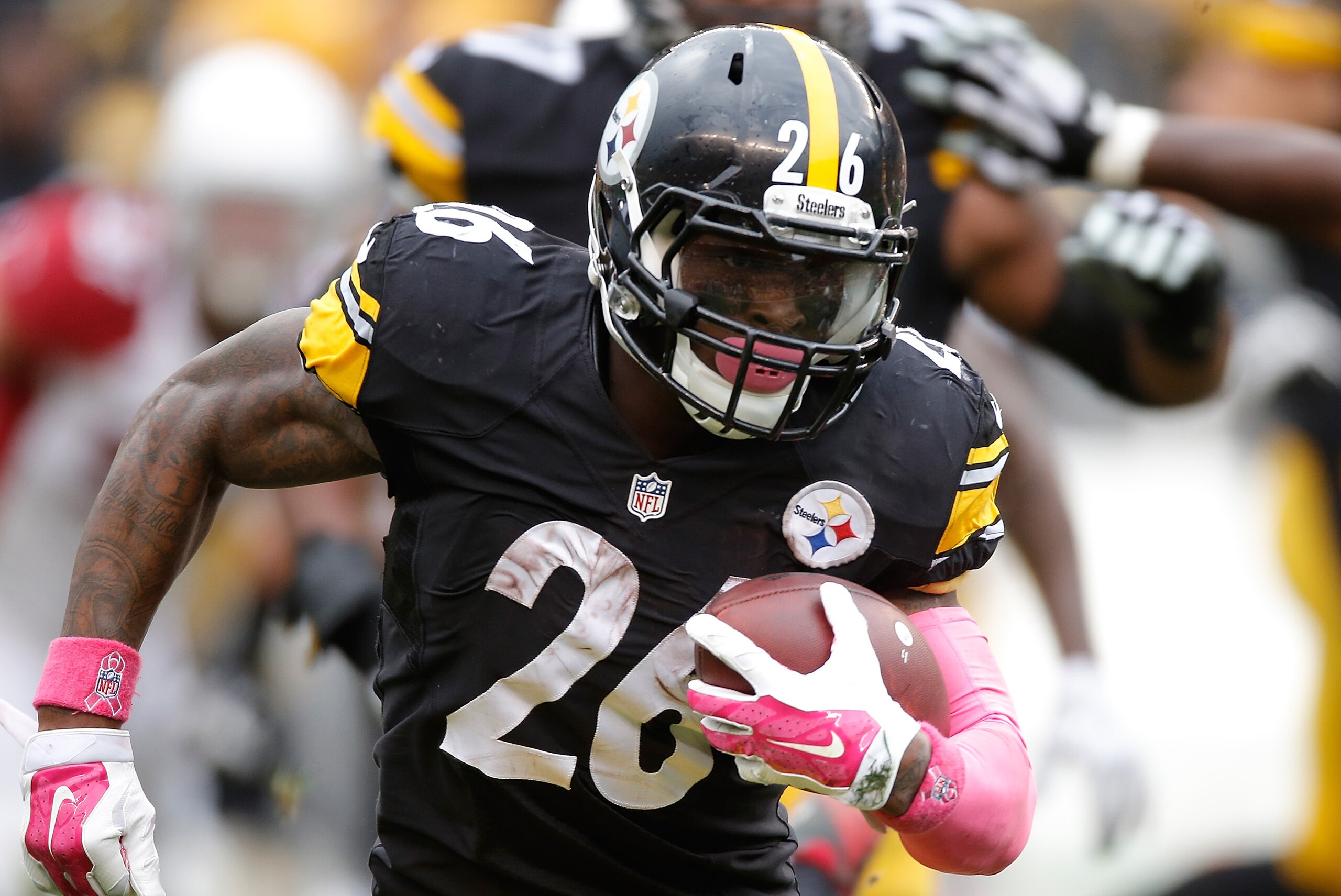
Pittsburgh Steelers running back Le’Veon Bell wants you to believe everything he says in his music. We know this because, well, he said so.
He means every lyric of hot fire from his new song “Focus”. Bell is just overflowing with truth as he enters the final year of his rookie contract, when a back who’s scored 22 touchdowns in only 35 career games will be paid a pittance of $966,900 in 2016.
Bell knows how much it will cost to retain his services, and how much he wants that number to rise.
.jpg?w=2560 "Colts Football")
.jpg?w=2560)
.jpg?w=2560 "Commanders 49ers Football")
Just follow the bouncing ball for the answer, as 120 Sports pointed out:
As first noted by Rob Perez of Fox Sports, the sizzling lyric from Bell that raised eyebrows is “I'm at the top and if not I'm the closest/ I'ma need $15 a year and they know this.”
He’s not wrong. When healthy, Bell is the league’s most versatile running back, and the Steelers are surely aware of what he’s worth.
But there’s a gap between what Bell is worth and what he’ll get. The 2013 second-round pick may deserve a new contract that pays him $15 million annually. Getting there, however, means fighting a mighty enemy: salary-cap management philosophies that have progressively minimized running back pay.
There are several obstacles standing in Bell’s way, most of which are out of his control. Though maybe not the first one? That depends on how much you believe in the evil hand of lady luck and her role in the snapping and twisting of football injuries.
Bell has played in only 35 of a possible 48 regular-season games throughout his three-year career. That becomes both a damning and impressive statement now as future contract numbers are being juggled around. It’s possible to acknowledge and be concerned about the former while still being in awe of what Bell has done during his brief time on an NFL field.
Bell’s missed time could be damning simply because the running back position is known to grind multitalented athletes into piles of dust. Often that process can happen fast, too, and having three separate injuries over three consecutive seasons doesn’t exactly fill those who sign Steelers paychecks with confidence about long-term health.
This is the moment when Bell's 2015 season ended prematurely in Week 8. He hobbled away with tears to his MCL and PCL, captured here by the NFL's official Twitter account:
“You're talking about gross instability at the knee, potentially," ESPN injury expert Stephania Bell told ESPN.com's Jeremy Fowler. "This is a very compromised knee."
A multiligament recovery is highly delicate, though Bell is progressing well. For what it's worth, he’s looked like his typical explosive self on the practice field.
Please note that Bell is wearing shorts here and facing contact from only air:
The Steelers will take a cautious approach during training camp. Fowler projects Bell will make his preseason debut in Week 3.
Calling Bell injury prone might be a reach, and that’s a label tossed around much too freely. He may just be a sworn enemy of luck and/or the football gods high above. However, two of his injuries have been to the same knee, which doesn’t exactly score contract-negotiating points.
But Bell does have this birth-certificate counterpoint: He’s 24 years old.
Yes, running backs can age both quickly and suddenly. But Bell isn’t some repeatedly battered runner in his late 20s or early 30s. As is the case with most of the younger NFL generation now, Bell is so young he dodged the early-'90s laser background school picture—which is for the best, though that was a special look when combined with a rat tail.
Bell’s young body can recover fast. Another source of giddiness about his age is that he likely hasn’t reached his peak yet. That’s insomnia-inducing stuff for defensive coordinators after Bell has done this over his first three seasons, even while missing those 13 games:
| Matt Forte | 5,066 | 5.1 |
| LeSean McCoy | 4,807 | 5.1 |
| DeMarco Murray | 4,756 | 5.0 |
| Le'Veon Bell | 4,166 | 5.2 |
| Eddie Lacy | 3,947 | 4.8 |
Once more with feeling then: Bell has missed nearly a full season’s worth of games in his young career and is still fourth among all running backs during that time in yards from scrimmage. Oh, and his average yards per touch over those three years ranks first.
His skill set is diverse, and Bell is the sort of dynamic running back who can easily form the pillar of an offense for years. That’s true even during an era when running backs are often the appetizer and the passing game’s fireworks serve as the main course.
He just isn’t a running back Pittsburgh needs as its pillar. For the Steelers, no running back is worthy of such a high financial pedestal.
Sure, having Bell healthy for all of 2015 certainly would have been the preferred option over seeing him broken. But the Steelers didn’t take any offensive steps back with him on injured reserve.

That was mostly because of DeAngelo Williams, a 32-year-old in 2015 being paid $870,000. He ran for 907 yards at 4.5 yards per carry and added 367 more yards as a receiver. Williams started only 10 games, and he finished six of them with 100-plus yards from scrimmage.
While Williams illustrated how easy it can be to find quality running back production off the veteran scrap heap, the Steelers’ fire-breathing passing attack kept funneling through wide receiver Antonio Brown. He’s posted back-to-back 1,600-plus yard seasons.
For the Steelers, it all starts with Brown—who averaged 114.6 receiving yards per game in 2015—and the weapons given to quarterback Ben Roethlisberger. Then their receiving talent snowballs.
Fellow wide receiver Martavis Bryant is suspended for one year. But behind him is Markus Wheaton, who posted 476 yards over the final six games of 2015 (79.3 per game) with four touchdowns. Then there’s second-year wideout Sammie Coates, who Steelers offensive coordinator Todd Haley said has had a “tremendous offseason," per Mark Kaboly of the Pittsburgh Tribune-Review.
Lastly, the Steelers also brought in Ladarius Green during free agency. The uber-athletic tight end who has spider hands down the seam recorded 429 yards and four touchdowns in 2015, even while playing in a limited capacity for the San Diego Chargers behind Antonio Gates.
So the hurdles ahead of Bell in his quest for a $15 million annual jackpot are looming large before we factor in the most obvious roadblock: NFL market realities.
Here in the lucrative times of 2016, the NFL pays quarterbacks first, and then anyone who can either directly help or hinder the quarterback second. The latter category primarily applies to pass-rushers and cornerbacks. The first one is broader, but wide receivers and left tackles generally fall under that umbrella.
Running backs? They're not invited to the party even though the premier ones can be the engine that makes an offense hum. The position comes with an immense physical pounding, but eventually someone of Bell’s caliber should be able to reset the market and establish a new high-water mark.
And maybe someone will. But that someone won’t actually be Bell because the timing isn’t right. Understanding why starts with noting the instant cliff dive after the Minnesota Vikings’ Adrian Peterson in the table below:
| Adrian Peterson | $14 million |
| Jamaal Charles | $9.1 million |
| LeSean McCoy | $8 million |
| Jonathan Stewart | $7.3 million |
| Doug Martin | $7.2 million |
Peterson agreed to help ease the salary-cap burden on his team by restructuring his contract in 2015. But the initial deal was signed back in 2011, which was a zany time in our lives when a) it was briefly acceptable to request this at weddings and b) running backs were still deemed worthy of paychecks on par with the rest of their elite offensive peers.
The Tampa Bay Buccaneers’ Doug Martin is a shining current-day example of how fast the position’s money pot dries up. In March, he was in a similar situation to the one Bell could face as a pending free agent in 2017. The oft-injured Martin had just completed the second of two 1,400-plus yard rushing seasons in his career and made himself a potentially hot commodity.
But then all it took for the Bucs to retain him was an average of $7.2 million annually and $15 million guaranteed. The original contract Peterson signed in 2011 came with $36 million in guaranteed cash, which looks monstrous by comparison.
After the injury element is factored in along with the Steelers’ offensive depth and the pennies thrown at running backs, there’s still one final nail in Bell’s coffin. It’s a familiar one, too, and the enemy of all players who want their performance alone to dictate how high their market rises.
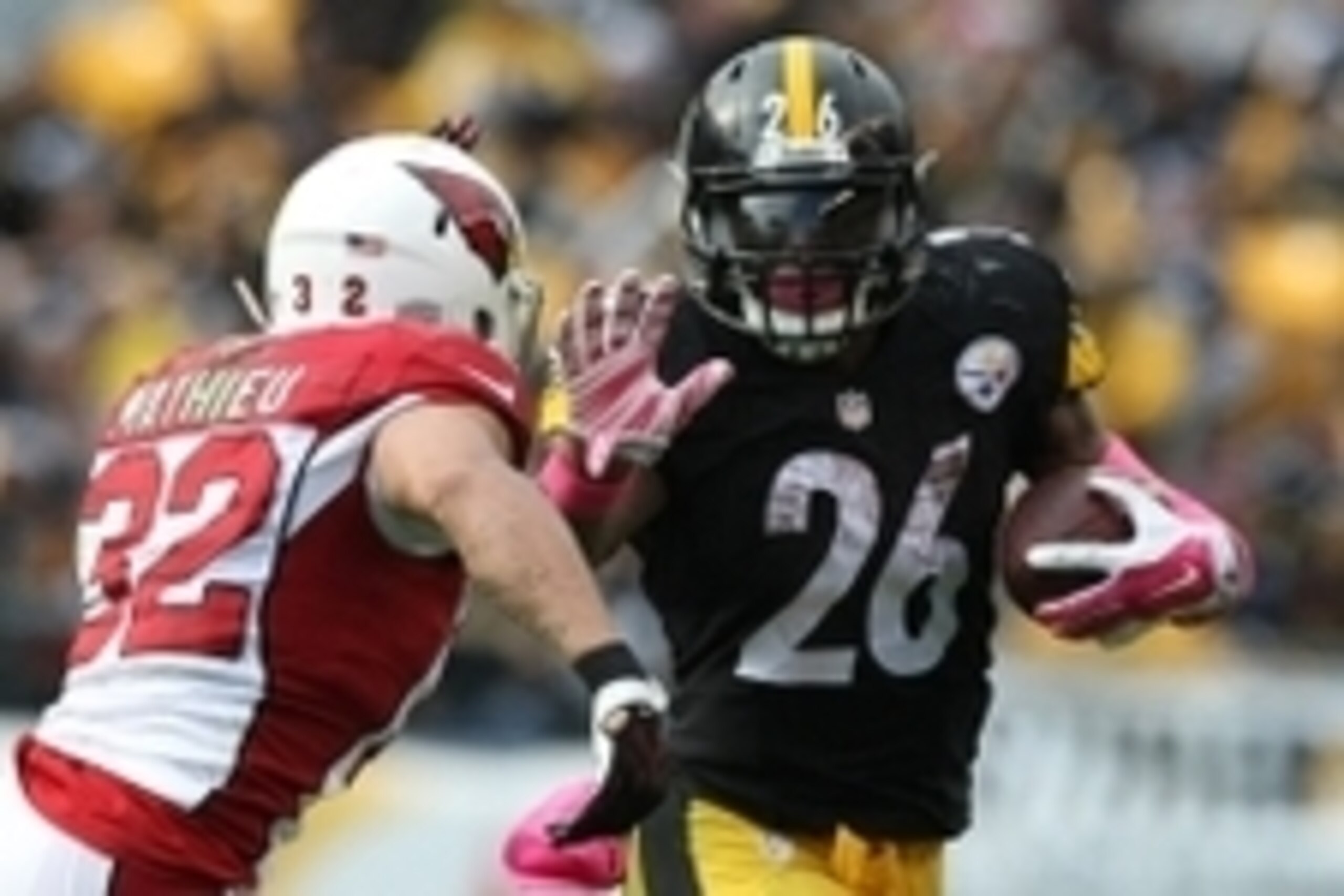
The franchise tag always serves as a baseline for long-term negotiations. In 2016, a fully guaranteed one-year deal for running backs under the tag came at a cost of $11.789 million.
That was up from $10.951 million in 2015. It’s likely the 2017 tag will make a similar jump. But Bell would then have to stay healthy and continue to produce at a level dramatically above his peers for the Steelers (or any team if he becomes a free agent) to justify handing over a market-resetting contract.
He’s done the production part before. But he hasn’t done the health part, and that alone will slow a running back’s long-term money tap to a trickle.
The real underlying obstruction, though, is a deep-rooted one. Rightly or wrongly, there’s a belief that the next DeAngelo Williams can be unearthed, which is supported by looking down the rushing yards standings from 2015. There we see other lightly paid veterans like Chris Ivory and Darren McFadden in the top 10. They’re alongside cheap backs on rookie contracts that pay in monopoly money (Todd Gurley, Devonta Freeman and Latavius Murray).
Bell, meanwhile, is the premium gold during a time when general managers crave found gold to fill out their backfields. Changing that perception is a tough money mountain to climb.
All contract info courtesy of Spotrac unless otherwise noted.
.jpg?w=2560 "DOLPHINS-AIKMAN")



.png?w=2560 "Week 8 Winners & Losers 📊")