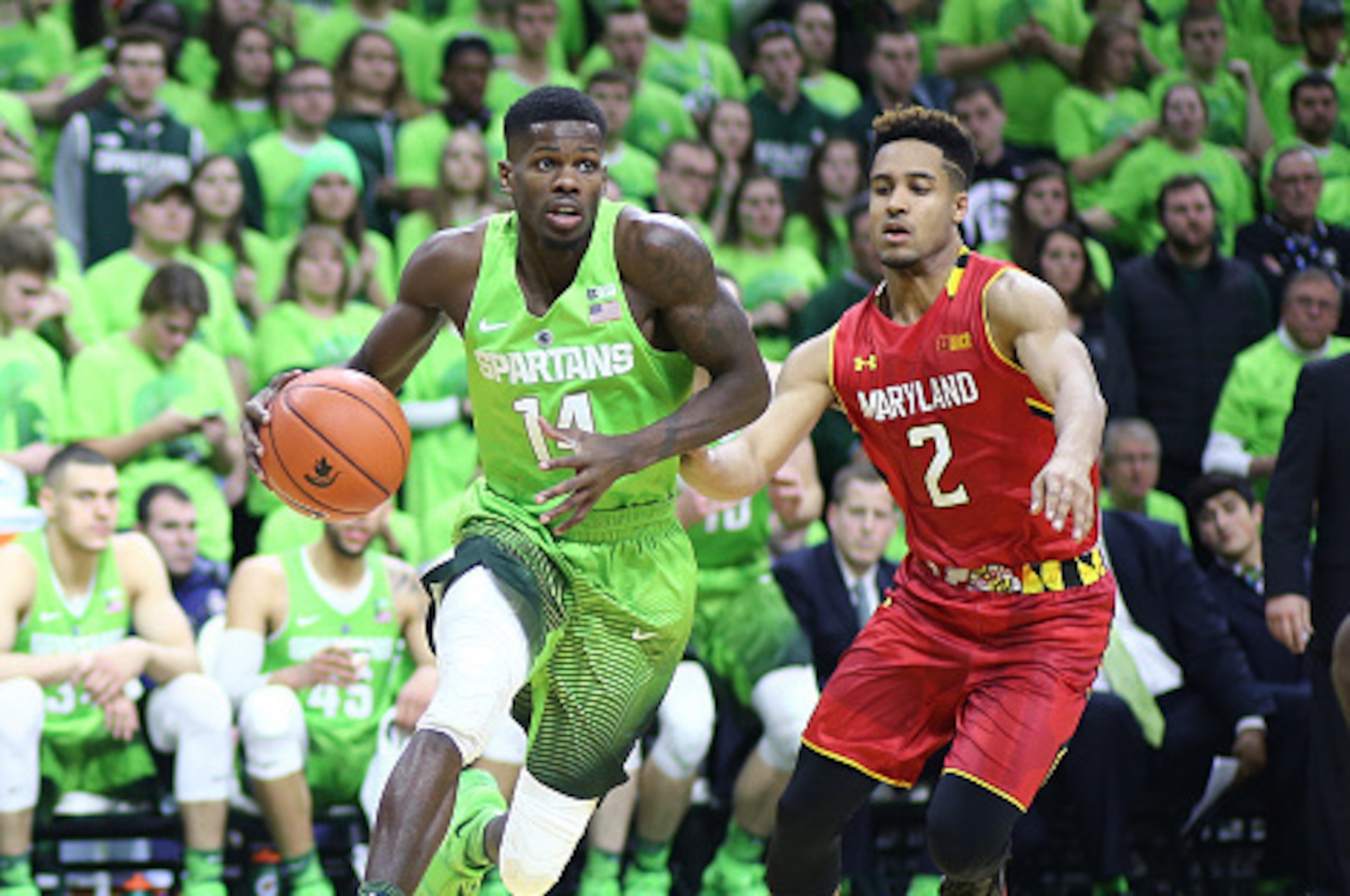

Michigan State's Eron Harris and Maryland's Melo Trimble are two of the men's college basketball players who will be under the most pressure during the 2016-17 season.
One thing to note right away: Not all high-pressure situations are created equally.
Some of these 10 players are indispensable members of top-notch programs. Some are leaders of teams either seeking a breakout year or hoping to avoid a disappointing season. Others are simply individuals on the fast track to the NBA looking to live up to sky-high expectations.
Regardless of the source, these are the players most likely to feel the weight of the world pressing down upon them. How they respond to it will have colossal ramifications on how the season plays out.
Players on the following slides are listed in alphabetical order by last name.
Bam Adebayo, Kentucky
1 of 10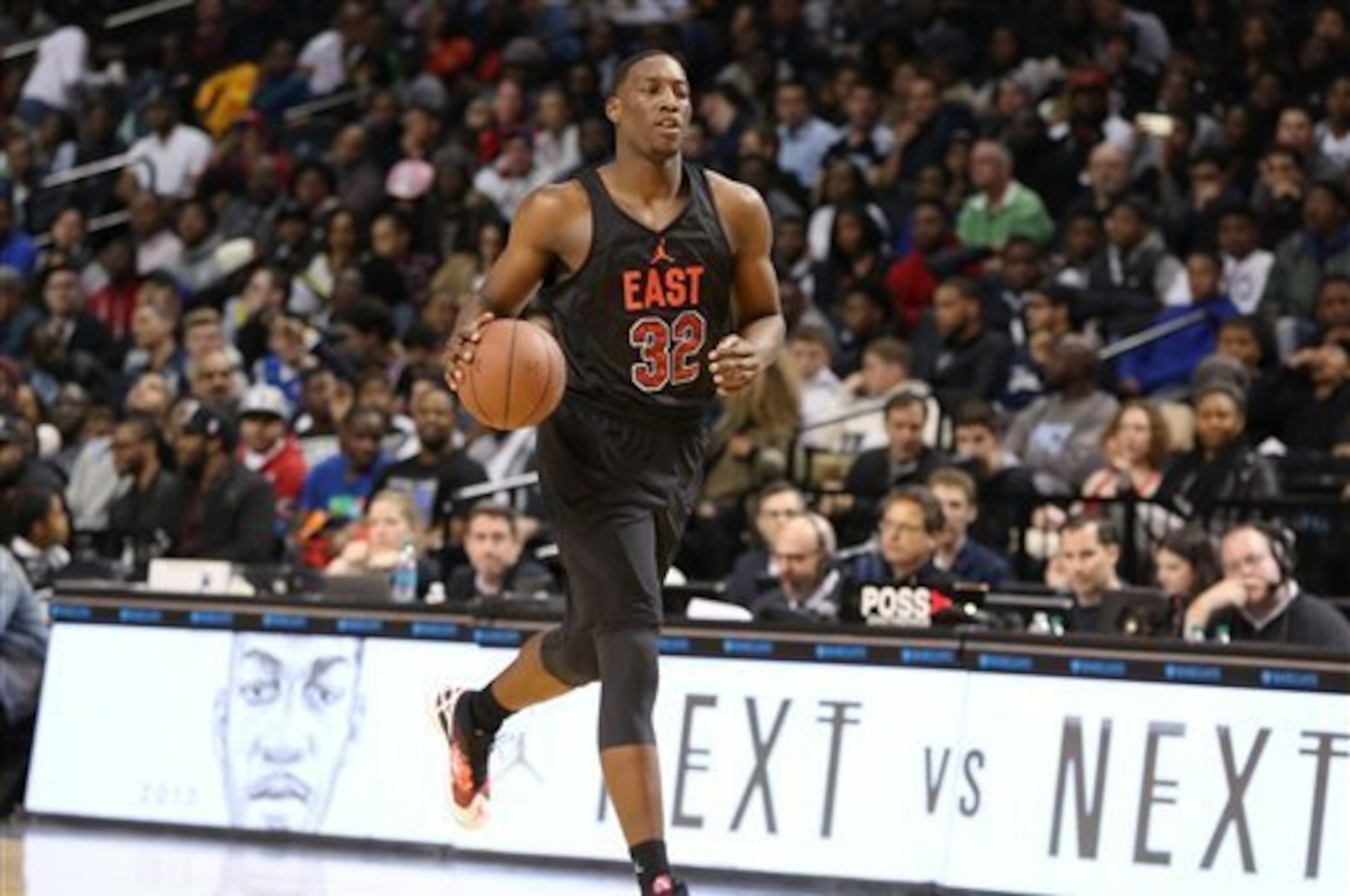
It's never easy to replace a star, but it might be even harder to replace a player who struggled at a place where stardom is the norm.
We've seen it at Kansas over the past few years, where the eligibility issues with Cliff Alexander and Cheick Diallo have led to questions about head coach Bill Self's ability to leverage freshmen. We saw it at Connecticut and Syracuse after Ater Majok and Fab Melo respectively failed to live up to the hype. And we might see it this year at Kentucky as Bam Adebayo seeks to pick up the "frontcourt superstar" badge that Skal Labissiere never wore.
As the players following in the footsteps of those situations, one only has a couple of games to prove himself before the whispers of "another bust" begin.
Adebayo should be a star. Julius Randle had a double-double in each of his first seven games as a freshman with the Wildcats in 2014-15, and it could hardly be considered a surprise if Adebayo does the same.
But "should be" never panned out for Labissiere, putting extra pressure on a player that has nothing to do with him aside from where they play their home games. If Adebayo doesn't come storming out of the gates in November, he'll need to work even harder over the subsequent few months to prove he can be the big man in the paint for Kentucky in the NCAA tournament, as well as a player worth a lottery pick.
Eron Harris, Michigan State
2 of 10
The Big Ten is top-heavy with Final Four-caliber teams. Indiana, Michigan State, Purdue and Wisconsin might not quite debut in the Top 10, but each should open the season in the AP Top 25.
But while the Badgers, Boilermakers and Hoosiers figure to excel almost exclusively with veterans, optimism for the Spartans is rooted in an excellent recruiting class. Miles Bridges (12), Joshua Langford (20), Cassius Winston (33) and Nick Ward (41) are each rated by 247Sports as top-50 recruits who will slot into Michigan State's primary seven-man rotation.
Head coach Tom Izzo also has Eron Harris, who just might be the most important player in the entire conference. Not only is he the highest-scoring returning Spartan, the fifth-year senior will be expected to provide this young roster with veteran experience and leadership.
As far as NBA talent is concerned, this might be the greatest roster ever constructed at Michigan State. Harris should be the main factor in deciding whether the Spartans turn all that potential into one of their better seasons.
Frank Jackson, Duke
3 of 10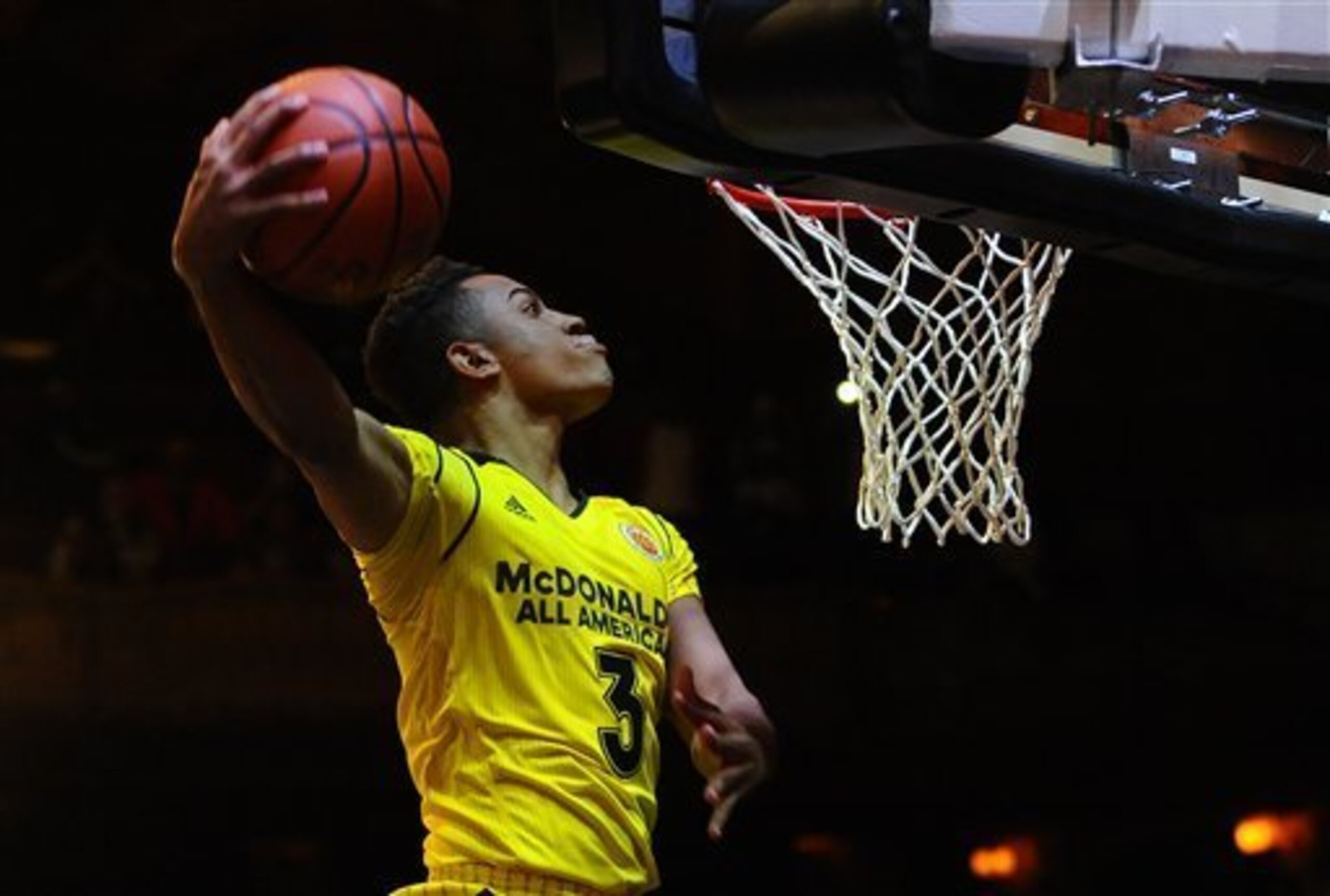
To say the least, head coach Mike Krzyzewski has some talent on his roster. If Amile Jefferson and Harry Giles are both fully recovered from lower-body injuries suffered late in the 2015 calendar year, the Blue Devils legitimately go two or three deep at every position except for one.
Though Grayson Allen and Matt Jones each handled the ball often last season, Derryck Thornton's decision to transfer leaves Frank Jackson as the only true lead/point guard on this team.
Regardless of the season, Duke's primary point guard faces a ton of pressure. Much like the quarterback for the Dallas Cowboys or the cleanup hitter for the New York Yankees, the job inherently comes under scrutiny because of the national love-hate relationship with the team. The pressure is even more intense when opening the season as the favorite to win it all, as Duke does in 2016-17.
In looking at whether Duke could go undefeated, Rob Dauster of NBC Sports wrote, "The biggest concern to me is the point guard spot. ... Jackson is going to have to embrace being a full-time point guard on a team with four or five guys that can take over a game."
Unlike Tyus Jones or Duke point guards of yore who excelled at setting up teammates (Greg Paulus, Chris Duhon, Steve Wojciechowski, Bobby Hurley, etc.), Jackson is more of a Kyrie Irving or Jay Williams type of lead guard who is anything but afraid to call his own number. Finding proper balance as both a distributor and a scorer on this loaded roster will be the biggest key for Jackson to mitigate criticism.


.jpg?w=2560 "NBA Gambling Charges")
Josh Jackson, Kansas
4 of 10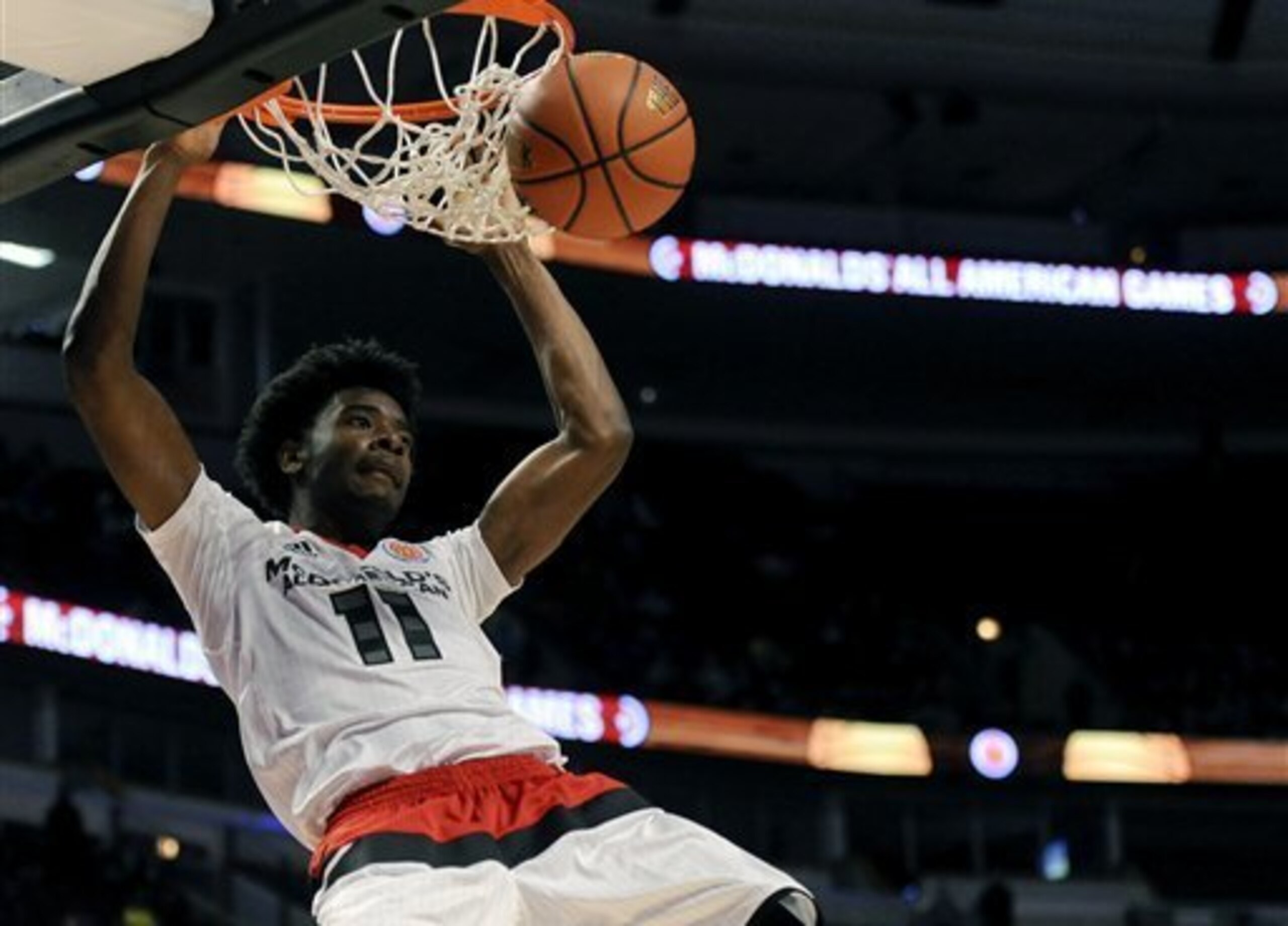
We've reached a point in college basketball where expectations for the No. 1 recruit in the country are borderline unattainable.
Ben Simmons averaged 19.2 points, 11.8 rebounds and 4.8 assists per game, and the talking heads spent half the season and the subsequent months in the lead-up to the draft asking each other whether he's overrated.
Jahlil Okafor was the top recruit in 2014, but many expressed concerns about his defense in the process of averaging 17.3 points and 8.5 rebounds per game on a national champion that didn't have much of a presence at power forward.
The year before that, Andrew Wiggins was the No. 1 recruit, and he might have been the most dissected college basketball player ever.
Now it's Josh Jackson's turn.
When the Jayhawks signed the stud small forward, they went from a team that should probably win the Big 12 to one of the few serious candidates to win the 2017 national championship. Add in the near-unanimous assumption that he'll be a top-five pick in next year's draft, and there's more pressure on Jackson in 2016-17 than there is on any other player in the country. Anything less than immediate excellence will be met with question marks and red flags.
Kris Jenkins, Villanova
5 of 10
After making the most memorable shot in NCAA tournament history, Kris Jenkins should be immune to pressure. The face of the 2016 national championship could could miss every shot he takes this season and still go the rest of his life without paying for a cheesesteak within 20 miles of Villanova's campus.
Still, the expectations for his senior year will be higher than high.
Fortunately, Jenkins does have Josh Hart to help shoulder the load. Both veterans will open the season on the short list of viable candidates for the Wooden Award with Hart serving as the heart and soul of the Wildcats. If and when Villanova struggles, Hart's stats will be the first ones dissected in hopes of diagnosing the problem.
But when Villanova needs a big bucket, all eyes and hopes will fall on Jenkins. And it's more than just what he did at the buzzer of the title game. He was an assassin for the majority of the latter half of the 2015-16 season.
What a difference a year makes. Last October, we had "power forward" listed as Villanova's biggest weakness. Now, people may regard Villanova's power forward as the most clutch shooter in the country.
E.C. Matthews, Rhode Island
6 of 10
We're venturing a bit off the beaten path for this one, but Rhode Island—fresh off a 17-15 season—is a fringe preseason Top 25 team in large part due to the presumed return of E.C. Matthews.
Matthews averaged 16.9 points per game in 2014-15 for a Rams team that won 23 games. However, they missed out on the tournament because his backcourt running mates (Jared Terrell and Jarvis Garrett) weren't ready to contribute at a high level as freshmen. That duo was drastically better as sophomores, but Matthews tore his ACL in the season opener.
The hope now is that Rhode Island will get a healthy Matthews alongside effective, veteran teammates, resulting in an Atlantic 10 championship and an NCAA tournament berth for the first time since 1999.
In late June, Jon Rothstein of CBS Sports put Matthews on his preseason A-10 first team. A few days later, he attended a Rhode Island practice and reported that Matthews is already 80 percent recovered from the torn ACL.
As long as he can get to 95 percent by November, Matthews will be expected to lead the Rams in scoring en route to becoming one of the best non-major-conference teams in the country.
Monte Morris (Iowa State) and Jordan Woodard (Oklahoma)
7 of 10
Both Monte Morris and Jordan Woodard are in nearly identical situations, so we might as well consider them together.
Each lead guard was a crucial piece of a title contender from the Big 12. Woodard was a better shooter (45.5 percent from three), while Morris was a better distributor (6.9 assists per game), but they both averaged at least 13 points per game while providing some of the best on-ball defense the conference had to offer—they both ranked top five in the Big 12 in steals per game.
The other thing they now have in common is the mass exodus of their supporting casts. Woodard lost Buddy Hield, Isaiah Cousins and Ryan Spangler to graduation, while Morris must now move on without Georges Niang, Jameel McKay and Abdel Nader.
As a result, Morris and Woodard will each become the clear leader of a team that isn't expected to do quite as much this season. Whether they can defy those assumptions by carrying their respective teams to a top-three finish in the Big 12 and a strong NCAA tournament seed will determine whether they go down in history as great college guards or guys who simply performed well when surrounded by talent. It could also determine whether they get drafted next June.
Ivan Rabb, California
8 of 10
Prospects for the Golden Bears in 2016-17 took a sizable hit when Jordan Mathews opted to graduate-transfer to Gonzaga, but it only increased the amount of individual pressure on Ivan Rabb as a sophomore.
Like Jared Sullinger, Marcus Smart and Kris Dunn before him, Rabb chose another season of college basketball at a time when draft experts had him projected for a top-10 pick.
Suffice it to say, one doesn't turn down millions of guaranteed dollars just to be another pretty good college player. Expectations by everyone, including Rabb, are that he'll be one of the best in the nation.
"I didn't just want to be in the NBA," Rabb told ESPN's Jeff Goodman in early May. "I wanted to make sure I was ready when I got there. ... I know I need to get stronger. I want to come back better defensively, a better shooter, a better rebounder, more comfortable on the floor. I want to be the leader. I wanted to have a bigger role."
Wish granted.
With all three of last year's leading scorers gone, Rabb is clearly the alpha dog at California for this season. Anything less than the stat line Utah's Jakob Poeltl posted in 2015-16 (17.2 points, 9.1 rebounds, 1.6 blocks) would be a disappointment and would likely have NBA scouts questioning whether he's still worth a lottery pick in 2017.
Melo Trimble, Maryland
9 of 10
Maryland's 2015-16 season wasn't anywhere near as good as expected, and its prospects for 2016-17 were looking far worse with Rasheed Sulaimon and Jake Layman graduating, Diamond Stone and Robert Carter Jr. declaring for the NBA draft and Melo Trimble on the fence about doing the same.
Trimble was one of the last players before the deadline to make a decision about the draft. Had he remained in the draft, Maryland would have lost all five of its starters and would have been projected to finish in the bottom half of the Big Ten—if not the bottom third.
But with Trimble's decision to return to the Terrapins, they got a breath of life and look like a team that should make the NCAA tournament.
Maryland likely won't be a preseason Top 25 team, but it's not a crazy idea—especially if you think Trimble will get back to shooting and individually dominating games like he did two years ago as a freshman. However, if he instead struggles from three-point range while averaging close to three turnovers per game again, it could be a rough season in College Park.
Nigel Williams-Goss, Gonzaga
10 of 10
Expectations at Gonzaga are always pretty high. The Bulldogs have won at least 23 games in 19 consecutive seasons. The only other team with an active streak of more than a decade is Kansas (27 years). The Zags have also been to 18 consecutive NCAA tournaments and have spent at least one week in the Top 20 of the AP poll in 15 straight years.
Yet, this is probably going to be the most hyped Gonzaga team ever—a ridiculous proposition for a team that lost four of its six leading scorers.
That's because the Bulldogs might have the best incoming group of players in the country, once you factor transfers into the recruiting rankings. The Zags are already No. 13 based on incoming freshmen, but they also add Jordan Mathews (California), Johnathan Williams III (Missouri) and Nigel Williams-Goss (Washington).
The latter member of that trio figures to be the primary recipient of either credit or blame, depending on whether Gonzaga lives up to what ought to be a preseason ranking in the Top 10. Williams-Goss averaged 15.6 points and 5.9 assists per game two years ago with Washington and should become the leader of this sensational backcourt rotation.
Can he make the type of leap that Kyle Wiltjer made after his transition from a high-major program (Kentucky) to Gonzaga? If so, Williams-Goss will be a legitimate National Player of the Year candidate for a No. 1 seed in the NCAA tournament.
Kerry Miller covers college basketball for Bleacher Report. You can follow him on Twitter @kerrancejames.
Recruiting rankings courtesy of 247Sports.
.jpg?w=2560 "Aikman Blasts Cowboys WR 🫣")

.jpg?w=2560 "Jonathan Taylor Landing Spots")