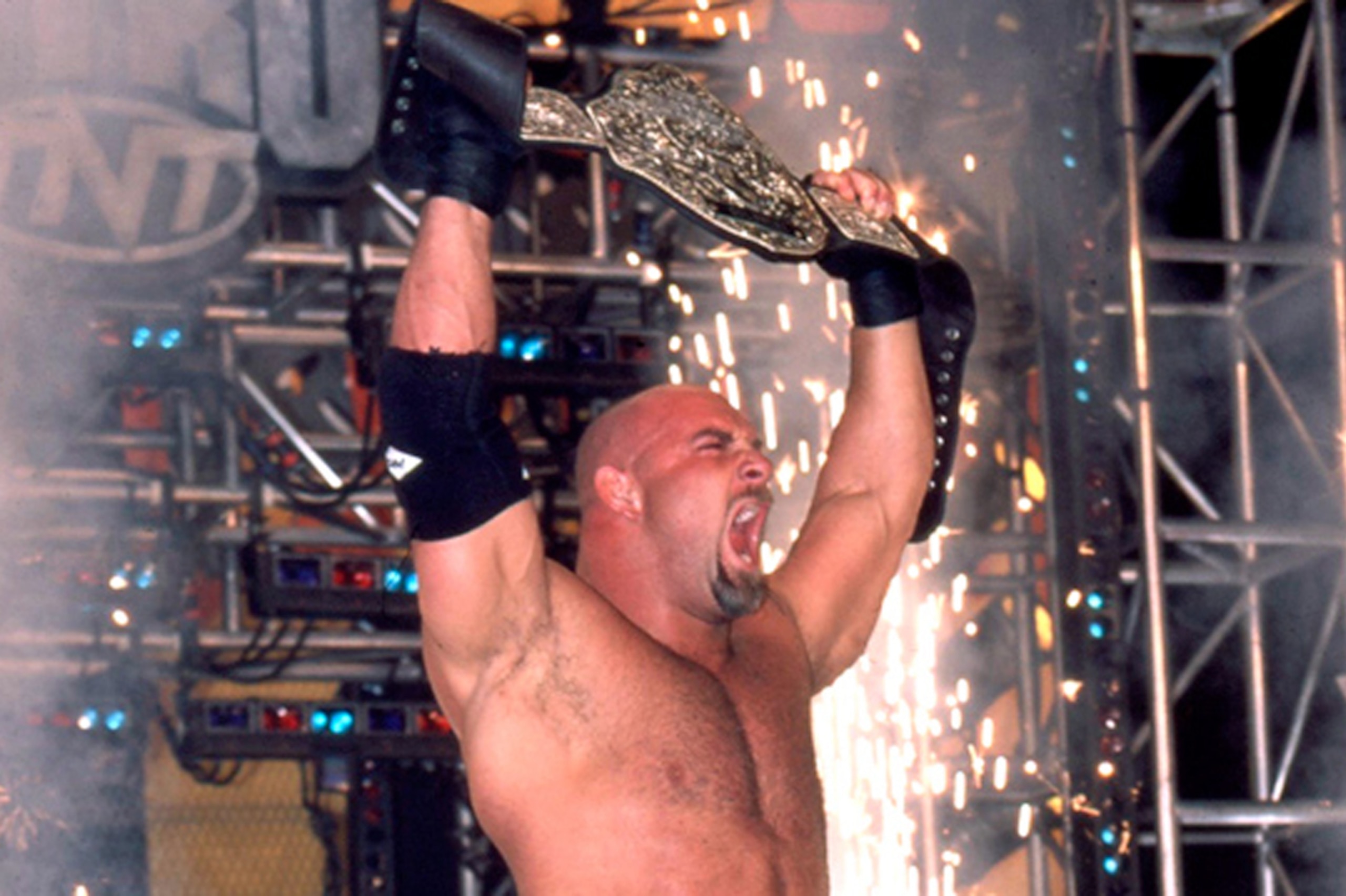


On July 6, 1998, the professional wrestling world was shaken to it core when Goldberg capped off the greatest 10-month run in the history of the industry by defeating Hulk Hogan to capture the WCW Championship at Atlanta's Georgia Dome.
With over 40,000 fans in attendance, the hometown hero lifted Hogan high in the air and dropped him to the mat with a spine-crushing Jackhammer. For the first time in three years, the company had taken the focus away from the established stars who dominated the 1980s and focused on a young phenom whose systematic destruction of the roster had captured the audience's imagination.
TOP NEWS
.jpg?w=2560)
Full Grades from Latest Raw
Breakker, Dragunov, More Rumors 👂
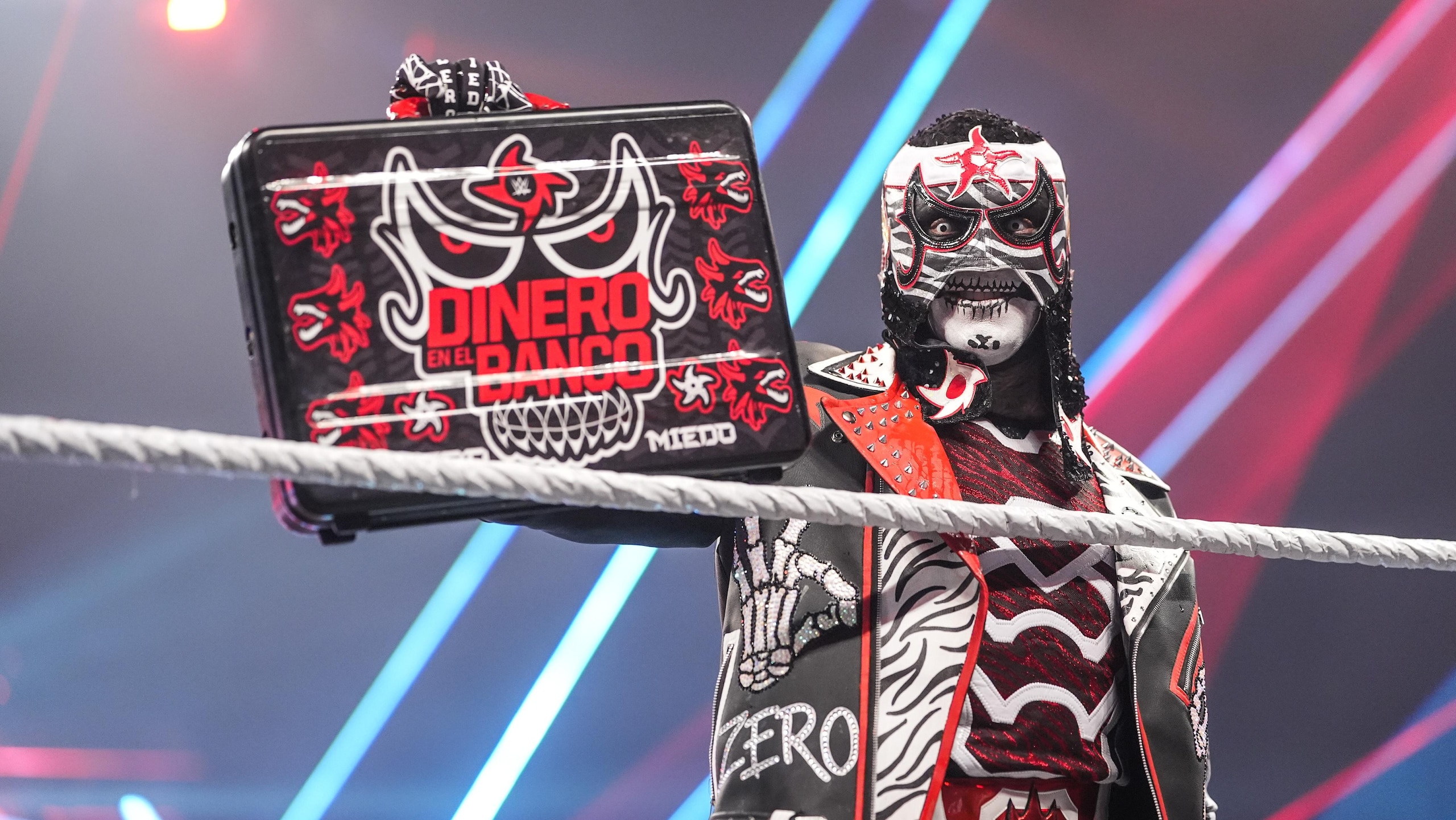
Penta Takes Control, More Raw Fallout 💪
At the height of the Monday Night Wars, it appeared as though the company was finally prepared go all-in with a star capable of carrying it into the new millennium, rather than hitch its wagon to legendary performers desperate to hang on to the past.
As history tells us, though, the Goldberg experiment did not prove to be as successful as it should have been. The positives were momentary, and the long-lasting reaches were nonexistent. Less than three years after what on the surface looked like a game-changing booking decision, the company was out of business— the sole property of Vince McMahon.
A Changing Landscape
One of the largest crowds in WCW history packed the Georgia Dome to witness Goldberg's title opportunity, and on short notice. The big-money match pitting the unstoppable force against heavyweight champion Hollywood Hogan was announced four days in advance on Thunder, proving the company had very little long-term vision.
It also suggested the industry had changed significantly.
Rather than building stories over time, culminating with an enormous match at a holiday show or on pay-per-view, it was of the utmost importance to deliver the best and biggest shows every Monday night in hopes of wresting control from the competition in the weekly ratings war.
Goldberg vs. Hogan should have been a Starrcade main event—a match capable of drawing one of the biggest buyrates in WCW history and thus one of the greatest paydays for its performers. Instead, the company settled for a gigantic stadium packed with 40,000 fans on four days of promotion—half of its total capacity.
Though the company sacrificed an even bigger crowd, an even larger payday and a third straight Starrcade mega main event, it achieved what it set out to with a substantial ratings win.
Beating WWE on the Highway to Hell
The summer of 1998 saw WWE build to an epic encounter between "Stone Cold" Steve Austin and The Undertaker for the company's heavyweight title at SummerSlam—an event broadcast from the historic Madison Square Garden in New York.
Dubbed "The Highway to Hell" and featuring AC/DC's iconic hit of the same name, Vince McMahon's sports-entertainment empire was riding a wave of momentum.
Then it ran into a brick wall named Goldberg.
It began with the July 6 episode of WCW Nitro in which the phenomenon unseated Hogan as the company's top dog. From there, the Ted Turner-owned wrestling company would dominate the ratings battle. While WWE would win the remainder of July, WCW would seize control, soundly defeating McMahon's promotion throughout August and into September.
| August 10, 1998 | Raw: 4.5 - Nitro: 4.6 | Raw: Fatal 4-Way for the WWE Tag Team Titles; Nitro: Goldberg vs. Meng |
| August 17, 1998 | Raw: 4.2 - Nitro: 4.9 | Raw: Val Venis vs. Kaientai in a Gauntlet Match; Nitro: Goldberg vs. The Giant |
| August 24, 1998 | Raw: 4.7 - Nitro: 5.2 | Raw: Bart Gunn vs. Bradshaw in a Brawl for All match; Nitro: Goldberg and Kevin Nash vs. Hulk Hogan and The Giant |
| August 31, 1998 | Raw: Preempted - Nitro: 6.0 | Nitro: Sting and Lex Luger vs. Bret Hart and Hulk Hogan |
| September 7, 1998 | Raw: Preempted - Nitro: 5.5 | Nitro: Sting and Lex Luger vs. DDP and Roddy Piper |
| September 14, 1998 | Raw: 4.0 - Nitro: 4.5 | Raw: Steve Austin vs. Ken Shamrock; Nitro: Goldberg vs. Sting |
Contrary to what WWE has eluded to in documentaries such as WWE Network's The Monday Night Wars, the sudden explosion of the Austin-McMahon rivalry did not turn the tide permanently in the favor of the eventual winner. Rather, it was still very much a dogfight every week, with interest in the beast-like Goldberg proving WCW still had the tools to emerge victorious in the battle for sports-entertainment supremacy.
So what happened? Why did things go so wrong?
The Downfall of an Industry Icon
Ego is a hellish thing. It has doomed world leaders, businessmen and many a professional wrestling promoter.
It also led to the demise of WCW—the truest competition McMahon's WWE ever had. Furthermore, it helped derail one of the surest things in professional wrestling history.
Ratings supported the idea that fans were ready for someone fresh, new and exciting. The viewing audience had bought into the aura surrounding the enigmatic smasher. They wanted to see Goldberg succeed, even lead the company as its franchise star for the foreseeable future.
Industry veterans like Hogan, Kevin Nash and Randy Savage just could not bring themselves to step out of the spotlight and allow the juggernaut to run wild.
Goldberg's first pay-per-view title defense saw him battle midcard star Curt Hennig in the semi-main event, while Hogan teamed with Chicago Bulls great Dennis Rodman to battle Diamond Dallas Page and Utah Jazz star Karl Malone.
A month later at Road Wild, Goldberg's importance to the product was once again undermined as he competed in a Battle Royal against the likes of Sting, Nash, The Giant and Lex Luger. In the main event that night? You guessed it: Hogan, who teamed with Eric Bischoff to meet Page and late-night comedian Jay Leno.
Yes, a television personality in a gimmicky tag bout was determined more important than the continued growth and development of the one ratings draw the company still had.
Goldberg did not even appear on the Fall Brawl card in September but did headline Halloween Havoc against Paige...in a match the pay-per-view audience never saw, because the company ran out of airtime.
Authors RD Reynolds and Bryan Alvarez relived the ordeal for their 2004 book, The Death of WCW:
"To make matters significantly worse, nobody bothered to tell the cable companies, because at 11:00 p.m. EST, 25 percent of the folks who had purchased the show suddenly found themselves looking at a black screen. Local outlets were flooded with angry phone calls and had to struggle to come up with some sort of offer to placate the fans, most of whom demanded full refunds. When all was said and done, it's estimated that WCW lost almost $1.5 million in pay-per-view revenue because of a simple miscommunication.
"
The reason the company's biggest star and world champion did not have enough time for what would amount to his greatest match to date?
The Hulkster had to get his win back over The Ultimate Warrior from eight years earlier at WrestleMania in a horrifically bad match that ranks as one of the worst in company history.
By Starrcade, it was apparent WCW had managed to take the one big draw it had left and neutered him, all for the sake of stroking the egos of stars who had not quite figured out that their time as the top stars in any promotion had passed.
Nash beat Goldberg in the marquee match of the December pay-per-view, ending his historic undefeated streak and putting a final nail in the coffin of his effectiveness.
It is unfathomable that Goldberg only managed one world heavyweight title run in WCW and, more importantly, that it was as poorly handled as it was. An industry icon whose penchant for destroying foes in short order captivated the wrestling world, his WCW story should have had a much happier ending than it did.
Even WWE, which prides itself on wrestling history and learning from mistakes of the past, failed to utilize him in a manner that would generate buzz and electricity when he signed with the company in 2003.
Yet with as many creative disappointments as he has faced and as many political hurdles as he encountered at the height of his initial push, Goldberg remains one of the industry's most in-demand performers some 12 years after his last match. That demand led to a return to WWE television of sorts in 2016.
Don't call it a comeback?
The May 30, 2016, episode of Raw featured a video package announcing Goldberg's involvement as an unlockable character in the upcoming WWE 2K17 video game.
For many, it was a monumental moment that reintroduced the legend and future Hall of Famer to the industry in which he found his greatest professional success.
It also, understandably, spurred talk of a return to WWE.
It would not be out of the realm of possibility for the Superstar known simply as "Da Man" to millions of longtime wrestling fans to return to the squared circle for a one-off match. If that were to happen, the most logical opponent would be Brock Lesnar, with whom he had a rather notorious showdown in 2004 at WrestleMania 20.
That match was a major letdown, as both men were on their way out of the company and found themselves on the receiving end of merciless jeers from the WWE faithful. A shot at a redo would be intriguing for both the performers themselves as well as an audience champing at the bit to see the dream match done right.
Goldberg even spoke of his desire for another match with Lesnar in an interview with IGN:
Furthermore, he has taken to Twitter to tease a return to the ring, answering a fan's question about the number of spears and Jackhammers he has left in his arsenal:
Whether Goldberg gets his rematch with Lesnar, whom he beat the first time, remains to be seen. Should he make an in-ring return to WWE, though, the only realistic role for him is that of a special attraction. Fans witnessed in 2003 what happens to the aura of the Goldberg character when it is overexposed.
Bringing him in for a big-money match on a card like WrestleMania or SummerSlam, letting him Jackhammer a fool or two and disappear for the time being is the best way to utilize his star power. He should be what Brock Lesnar was originally intended to be.
Legacy
Goldberg is one of the greatest characters to ever star in professional wrestling.
A performer who carried himself like a star and was given the pyrotechnic entrance and a swarm of police to escort him to the squared circle so he didn't stop and pummel anyone on the way there, he will always force fans to sit up and take notice.
There was an aura around Goldberg that allowed him to take the wrestling world by the throat and force a main event push out of WCW. While things did not go the way they should have, Goldberg weathered the storm of bad writing and worse business decisions—his connection with the audience unwavering.
It is that connection that will make him successful if or when he ever decides to lace the boots up for one last go-round, be it at WWE or elsewhere.
A future Hall of Famer whose contributions to the industry may have been short-lived but were immense, he did not need the world title to legitimize him. He did not need the credibility that having that championship on his resume gave him. He would have gotten over and stayed over just on the way he was originally booked during his build to the title.
What that title win did for him was make him a household name at the height of professional wrestling's popularity. He became one of those rare stars to jump into pop culture relevance, and as a result, WCW lived on longer than it otherwise may have.
There are plenty of industry icons better between the ropes and more effective on the stick, but few will ever have the ability to grab the audience's attention and refuse to let go the way Goldberg did.
.jpg?w=2560 "Report: Giants Releasing Najee")