How an NBA Executive Unearths Hidden Gems Around the Globe
BOSTON — Long gone are the days when international prospects were the stuff of novelty. Kristaps Porzingis putback dunks, Giannis Antetokounmpo coast-to-coast drives and Rudy Gobert contests at the rim further validate the world's place in the NBA.
At the start of the 2013-14 season, more than 20 percent of the NBA was foreign-born, according to Kurt Helin of NBC Sports, and now you'd have an impossible time finding an all-American roster.
It's also hard to find a team better positioned to take advantage of the foreign influx available in the 2016 NBA draft than the Boston Celtics. Boston's front office has accumulated eight of the 60 selections available, which equals 13.3 percent of the entire class.
TOP NEWS
Kerr Trolls Dubs Fans
Grading Every Team's Summer-League Rookies 🔠
Best Undrafted Players Ever 💎
With 12 players currently under contract for the 2016-17 season, the Celtics clearly won't have room for a large rookie influx next season. The franchise's haul of picks instead opens the door to take chances on a number of young international prospects, which they can stash overseas while maintaining their rights.
Austin Ainge, son of Celtics general manager Danny Ainge and Boston's director of player personnel and scouting, has spent a large chunk of the past season overseas evaluating the top international talent. Bleacher Report sat down with Ainge for an exclusive interview this past week to get an inside look at the team's process and the notable challenges that come with the gig.
Bleacher Report: Let's start from the beginning: How do you guys figure out which international prospects are worth checking out? How early does that process begin?
Austin Ainge: It usually starts with the junior national teams. Under-16, under-17, under-18 [teams], we are following box scores, watching film and attending some of those. You start to see who the best players are from each country. There are some guys that don't end up playing on those teams, but most of the best players make their country's under-18 team. That's where it starts.
B/R: And from there you start looking at some of the pro European leagues?
AA: Yeah, so you look at those players. There are also some camps. The NBA does a Basketball Without Borders camp, where they try to invite the best players. We go off of those lists as well, and we're at those camps and watch those. That's the summer. During the season, we obviously see where those guys are playing and try to watch film and watch in person at those places.
That's where the biggest challenge happens, because on professional teams it's hard for 17-, 18-, 19-year-olds to earn minutes. A lot of times they don't play a lot on the bigger teams. On second division, third division, junior teams, sometimes they get to play a lot but not against the highest level of competition. Those are the challenges.
B/R: How often do some of the biggest prospects play on the second-division teams? Is it similar to the farm system in the Major League Baseball where guys are just getting groomed?
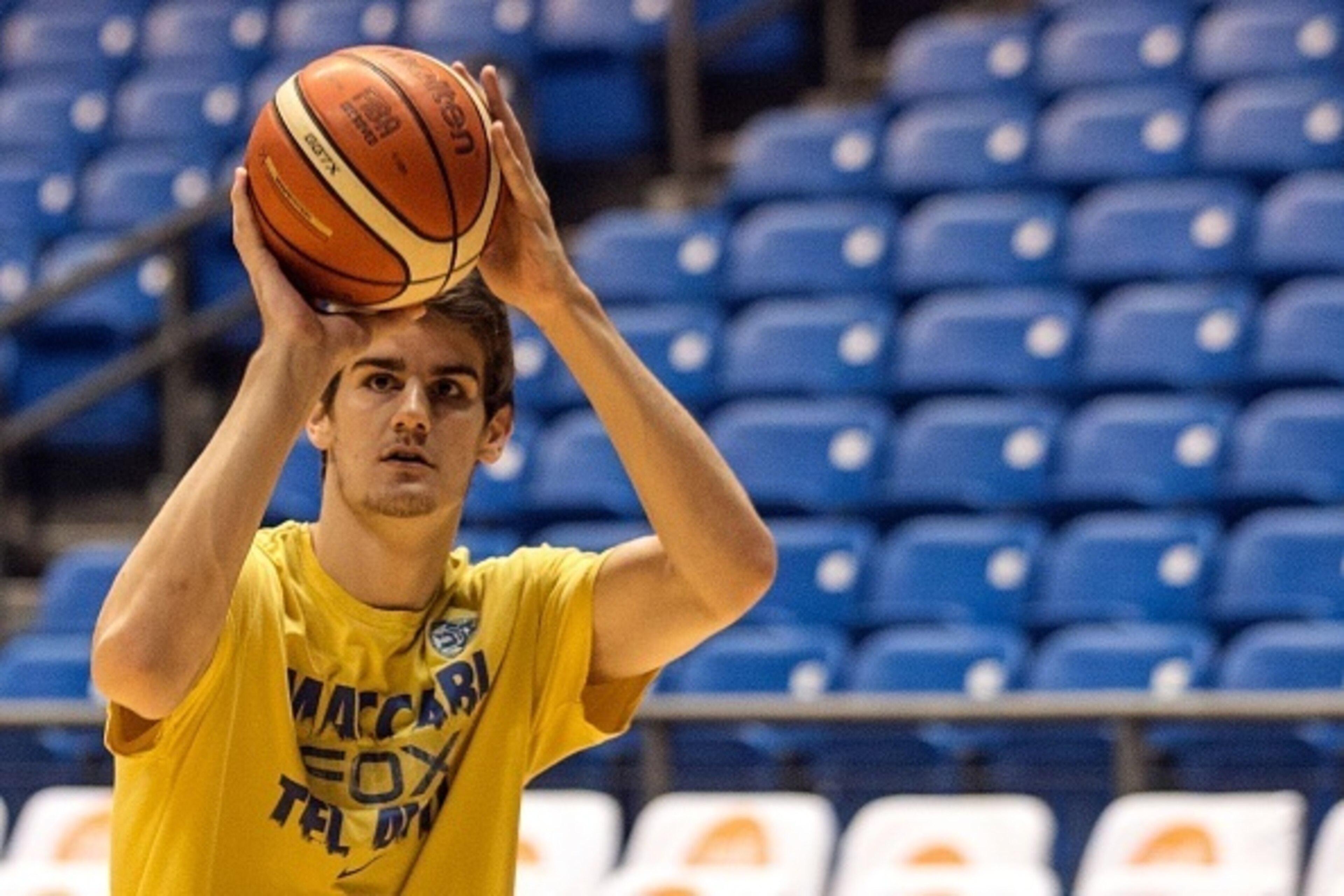
AA: Exactly, that's where Dragan Bender played last year—a second-division team. Sometimes we prefer that, rather than the young guy just sitting on the bench. Most leagues, pretty much every major league in Europe, has second, third divisions or a junior division. It's called different things in different countries.
B/R: Which European leagues are the most credible in terms of yielding high-caliber talent?
AA: It varies. A lot of it ends up being kind of random. I would say that Spain does a very good job. They have well-coached and well-established second divisions and junior divisions. There's always a lot of talent in France. Croatia and Serbia always have players every year for us to see. Those would be spots that I seem to end up every year. Turkey is really growing as well. Their economy is doing really well so the league is able to pay and attract some really good players.
B/R: Do you guys use tiers to rank the leagues around Europe? Is there much consistency there?
AA: It changes on the economy and the year. There are leagues that are better than others, for sure. It's usually just the money available. Can they keep their best players in town, or do the other teams sign them away?
B/R: What's the most common problem you see with how European players are coached or trained? What's the best thing you see in Europe that nobody in America seems to get?
AA: It varies very widely, team to team more than country to country. I would say that, in general, European teams do a very good job developing skill of players, getting players to buy into team concept. The strength and conditioning programs are not as well-developed and not as emphasized as they are in U.S. colleges. That is usually something that kids lack a little more than U.S. counterparts. Oftentimes there are better coaches, so there's some trade-offs there.

B/R: What type of information are you gathering about the player while watching him abroad against different levels of competition? What off-the-court type information are you looking to gather?
AA: You always start with the physical tools. That's the easiest thing to see. You just progress from there. Skill level, anticipation, vision, competitiveness and leadership, energy. All of these types of things, and then you try to get into how they are off the court, how hard they work, their practice habits, their personalities, these type of things. You just keep going and try to gather as much information as you can.
B/R: Building a network overseas to get that kind of reliable information about prospects must be a bit of an ordeal that takes some time. How challenging is that process for teams these days?
AA: It's really easy now. The apps that everyone just texts internationally for free and calls internationally for free have really made it easy. Because we do end up hitting a lot of the same spots every year, you just get to know people.
B/R: Are there politics involved at all? Certain people or teams you have trouble trusting as you try to gather information?
AA: It varies widely. Some organizations over there don't want to lose their players to the NBA and don't want you in their practices. Understandably, they don't want you to take their players. Some organizations would really love it if their player got drafted and they got an NBA buyout. You just deal with it case by case.

B/R: How common is it that European teams would worry about you poaching? Or do most organizations embrace having scouts like yourself in the building?
AA: A pretty big majority of the teams are very welcoming to us; they know if one of their players is an NBA prospect and are not under the illusion that they are going to keep them forever. Most of them are very welcoming and treat us very well.
B/R: A couple of teams (Denver Nuggets, Utah Jazz) like the Celtics are going to have more draft picks this year than available roster spots, leading to more draft-and-stash possibilities. What are the pros and cons of drafting and stashing a player?
AA: Every guy's situation is different, so it's hard to make sweeping comments about everybody. Their contract is a big factor ,and sometimes it is a great advantage to let a guy grow and develop and get lots of minutes on a European team versus maybe struggling to earn minutes on your team. And you can bring them over when they're more ready. Sometimes you would prefer to have the guy in your system learning what your coaches want them to have. It just depends on the player.
B/R: When you do decide to stash a player, how much of that comes into trusting the other organization to develop a player the way you want, risking injury, etc., versus the reality of contract buyouts and cheap experience before the NBA career starts?
AA: The most common thing is they're already under contract. You're drafting a guy knowing you can't bring them over and he's just going to stay with the team that he's on. It's not something that we control. They have an existing agreement and stay and continue to play. You hope that they're in a good program, but I think there's a lot of great coaches and a lot of great situations for players to develop.
B/R: Is there any good explanation for the fact that Boston rarely drafts internationally historically under Danny Ainge? Was that a matter of roster construction more than anything else?
AA: I just think it was draft picks and roster.

B/R: Have you guys as an organization beefed up international scouting in your tenure? Does Boston's recent paradigm changes mean there's a greater chance we'll see more of an international flavor to the roster in the coming years? Is there at least less reluctance to draft internationally?
AA: We have [beefed up our scouting]. We've invested more over the last four or five years. We try to be as prepared as we can be. I think 20 percent of the NBA is internationally born, so it's a big part of scouting. We have a full-time European scout. His name is Benas Matkevicius. We talk almost daily, just like with our scouts here in the U.S.
B/R: What's your passport book look like this year? I imagine you have a few of those extra inserts.
AA: I do. It's a lot of stamps. The hard part about international scouting logistically is they'll put out a schedule, but it will just say this weekend. A week or two in advance, the TV schedules dictate whether that's Friday, Saturday, Sunday or Monday. Every trip has to be last-minute, and then you hope he plays. When college games come out, it's the whole season. NBA schedules, it's the whole season, and times and dates are set. That's not the way they do it in Europe. They change them all last-minute. It's always a last-minute scramble trying to make it all fit.
B/R: So it's the leagues that change the time of games? Do they do it based on TV or matchups or are there other factors?
AA: Every league is a little different, but they'll do it on gym availability or television. It just will change all the time. It can be hard to get a trip. When you go all the way to Europe, you want to maximize your time. You don't want to have a time when there's four days in between a game. You're trying to do a game every day or a practice every day, and with the schedule changing, it's hard.
B/R: Any favorite countries to scout in or particular experiences that stand out when you are abroad? Is safety ever an issue?
AA: I like to go to new places. I enjoy when prospects are in cities that I don't go every year already. I enjoy going to different, new places. I speak Spanish so Spain is always a favorite, but other than that, new places.
The other thing I would say that makes international scouting fun is the fans. The craziness. My dad and I were in Croatia last month at a playoff game, and the fans had a bonfire in the stands of the opposing team's flags. They didn't stop the game or kick anyone out, there was just a big fire in the gym. They just play on.
I was in Athens scouting Mario Hezonja two years ago, and the home team was down at halftime, and someone called in a bomb threat. They emptied the whole place, tried to kill the momentum. I was in an Italian league playoff game and a fan stood up and threw both shoes, one at a time, at an opposing player. They stopped, blew the play dead. Everybody laughed and they threw him his shoes back and they just kept playing.
They actually did. They tossed him his shoes back and kept playing. These things make it fun.
I love it. It's a blast. There are a few times when you feel unsafe, but most of the time, it's fun. Some are real mild and not that crazy. It just depends where you're at and the time of year.
.png?w=3840)
.png?w=3840 "Every City's 2000s Mt. Rushmore 🤩")