In Lifting Cavs to Title, LeBron James Takes Place Among NBA's Ultimate Winners
OAKLAND, Calif. — Standing there next to Bill Russell, the flecks of gray in LeBron James' beard matching the full gray in Russell's, James was as Russell will forever be.
A winner.
This is not some bad guy who left home or some good guy who came back. He's a winner.
TOP NEWS

Pic of LeBron's Helicopter Commute 🚁

Duren Calls Out 'False' Rumors
Trade Idea to Give Warriors Alternative All-Star Upgrade 🏀
Here, there, everywhere.
James took Kobe Bryant's farewell season and Stephen Curry's unanimous MVP season and turned it into his Cleveland Cavaliers championship season with a 93-89 Game 7 triumph.
Russell was on the postgame platform Sunday night because the league named the NBA Finals MVP award after him, because he is regarded as the consummate winner with 11 titles in his 13 seasons.
With the outcome of Game 7 in doubt into the final minute, the official Finals MVP ballot had blank spaces for voters to choose one player if Cleveland won and another if Golden State won.
At work there is a preconceived notion that winning the series makes all the difference in deciding who is "most valuable."
There was a real possibility that James, so dominant in this series without a real leading Warrior, would become the first player on the losing team to be named Finals MVP since 1969, the first season of the award.
Jerry West was honored then despite his Los Angeles Lakers losing to Russell's Boston Celtics. West averaged 38 points for the series to no avail despite a hamstring strain and exhaustion.
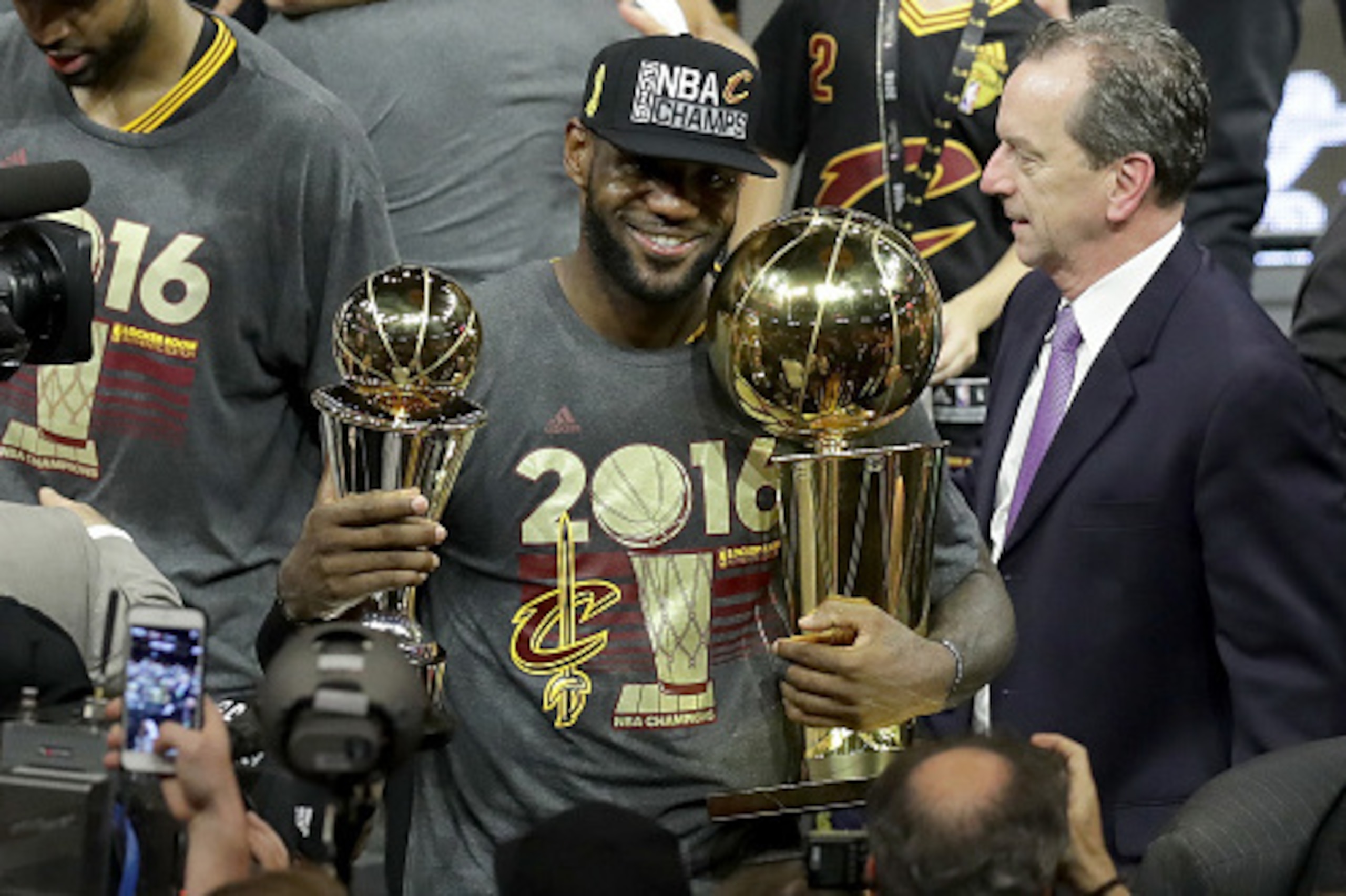
Sunday night veered close to being even more awkward, as the potential loomed that Russell, the sport's ultimate winner, would have to oversee the presentation of the trophy to James as a loser.
The fact that James was so close to losing might minimize the legitimacy of his accomplishment to some, except for this: Fact trumps opinion.
James built his narrative by sticking to that concept. He engineered a result no one can dispute in this unprecedented comeback from a 3-1 Finals deficit, the toppling of the 73-9 Warriors and the fact that he is now 2-0 when playing in Game 7 of a Finals series.
The story went from James making the NBA Finals for a sixth consecutive year (nice, but…) to him blowing the mind of anyone who didn't watch much of the regular season (wait, how is it that he wasn't the unanimous MVP?!).
How did he do it?
James went into Game 7 with a supreme confidence that he knew how to win.
He trusted his inclusive style, doing some of everything instead of just scoring, and still did not regret for a moment leaving Cleveland after "The Decision" in 2010.
"I knew what I learned in the last couple years when I was gone," he said of his time in Miami and his two titles there.
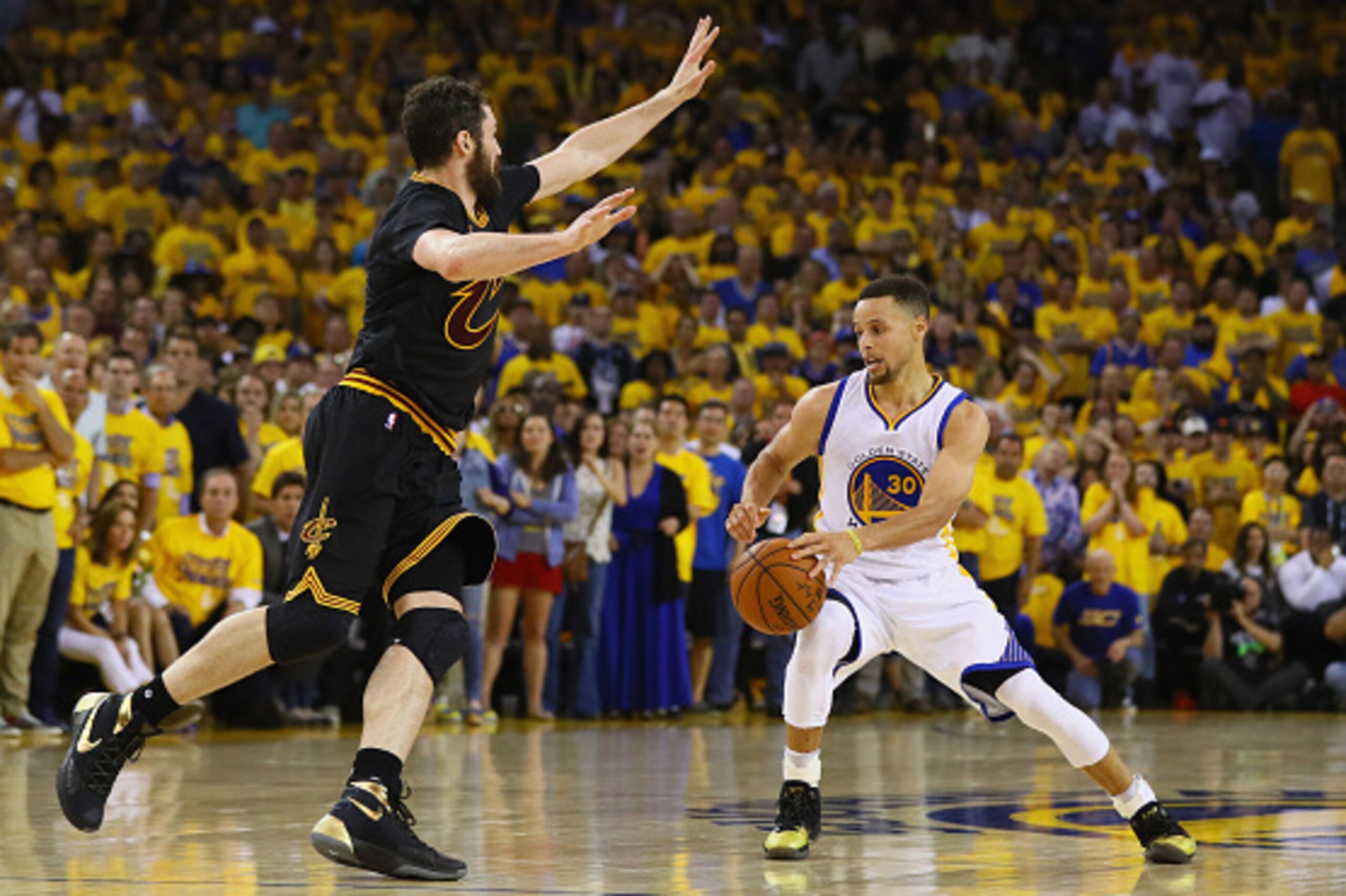
It's a process all great winners must learn, even Curry, who hunted a game-tying three-pointer late instead of doing the more complicated work of driving and settling for two points or drawing, kicking and trusting someone else.
James saw immaturity in Kyrie Irving and Kevin Love—albeit incredibly driven immaturity from Irving, who seizes moments more than people realize—and accepted it would take time and effort to develop it.
Irving, 24, didn't even make the playoffs in his first three seasons. Now, he's on a curious list of just four out of the past 31 No. 1 overall picks to have won titles with the teams that drafted them. (David Robinson, Tim Duncan and James are the other three.)
Irving is special, but James helped bring it out in him much the way Robinson did for Duncan.
It was appropriate that Irving hit the tiebreaking clutch three Sunday night, because James has stayed true to his natural personality that wants teammates to shine.
Despite how large his ego is, James clings fiercely to his empathy. He wants things done his way—more through consideration for others than outright confrontation.
And James made it happen in a mere two years back in Cleveland.
"He knows how much he's meant to this team and then also to me personally," Irving said after Game 6.
"The game always gives back to people who are true to the game," James said.
And this season, in these Finals, James just kept working on making it work with these Cavaliers, pushing forward with a winner's mentality. That's the only way anyone fights off elimination time after time after time with the final surge having to come on the road.
"I was confident; I was calm," James said.
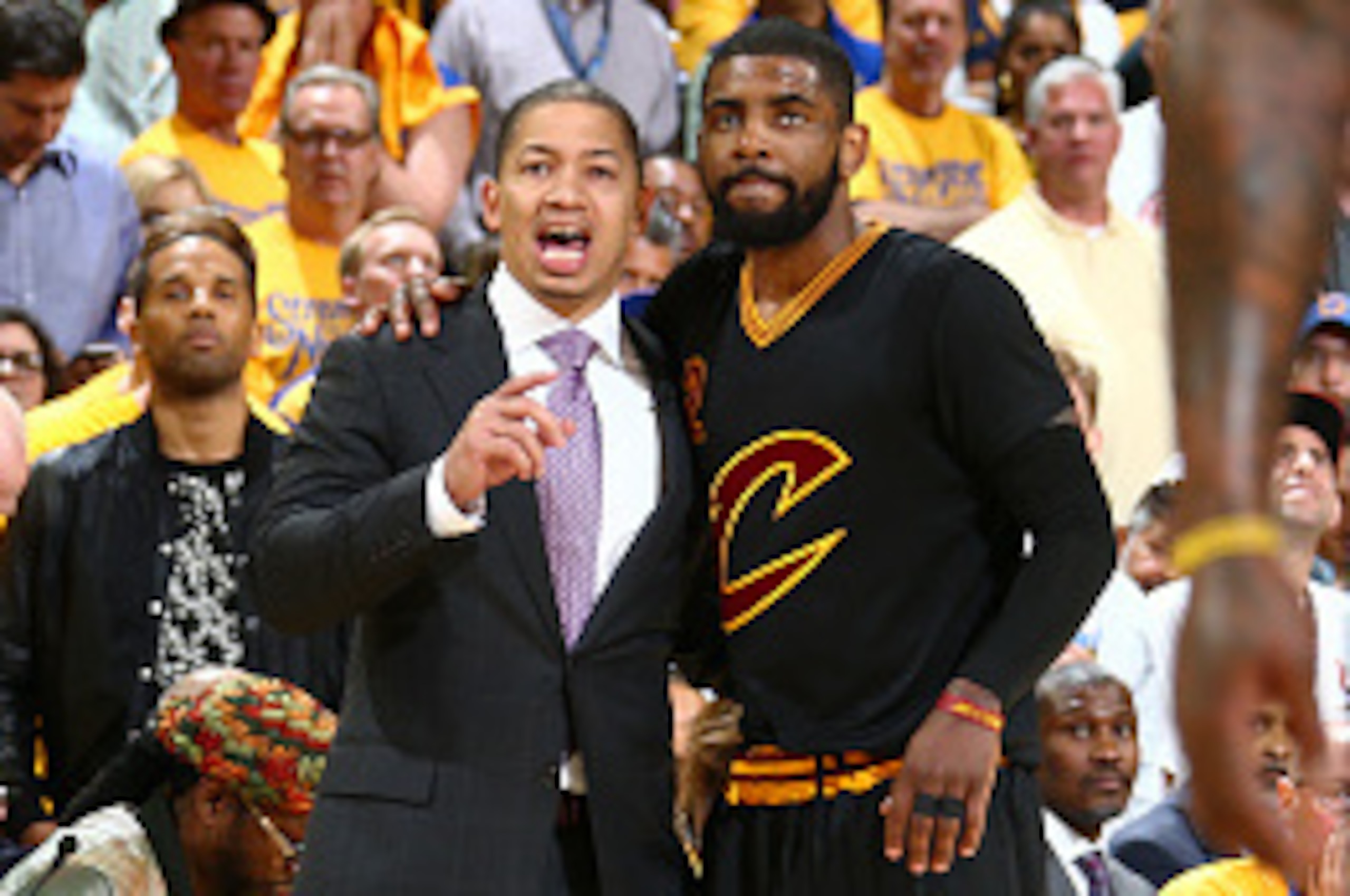
Of course, he got help, foremost from general manager David Griffin in promoting head coach Tyronn Lue, who was instrumental in unleashing Irving. Griffin also added well-liked chemistry players in veterans Richard Jefferson and Channing Frye, who helpfully held bookend lockers on either side of Love's.
But what this title boils down to is James believing what he thinks of himself as opposed to what all the critics think. Though many people seemingly take glee in rooting for him to fail, he trusted that he's a greater fighter and winner than they say.
Waves of people in the Miami area tuned in to Game 5 of the Finals with the hope of seeing James' season end. Of the top five local markets watching that game on ABC, four were close to the teams involved—Cleveland had a 38.5 rating, San Francisco-Oakland had a 36.9, Sacramento had a 20.4 and Columbus had a 19.6—and the other was Miami with a 20.1.
The idea that this is a victory for the Cleveland area is secondary to this being a victory for James—because he is so primary. They burn his jerseys or root for him to lose when he leaves because he's a winning machine in this sport.
"People just counting me out," James said. "Throughout my 13-year career, I've done nothing but be true to the game. Give everything I've got to the game. Put my heart, blood, sweat, tears into the game. And people still want to doubt what I'm capable of doing."
Russell is another who gave so much to the game. He gave his body, for sure, and that was evident in the 30 seconds it took him with the aid of a cane to descend the four steps of the platform after the trophy ceremony.
When West won that Finals MVP in '69, it happened despite Russell leading the Celtics to victory on the road in Game 7 in what would be his final game. West delivered 42 points, 13 rebounds, 12 assists in Game 7.

Well, James just led the Cavaliers to victory on the road in Game 7 with his own triple-double and was named unanimous Finals MVP.
With this result, he also stiff-armed Curry from joining a rare club including himself, Russell and Michael Jordan as the only players to win the regular-season MVP and NBA title in consecutive seasons.
That's as good a place as any to end this season.
James, 31, has three championships now. That's not Russell's 11 or Jordan's six.
But it's enough already.
It's enough to prove LeBron James, like very few others, is an all-time great winner.
Kevin Ding is an NBA senior writer for Bleacher Report. Follow him on Twitter, @KevinDing.


.jpg?w=2560 "NFL investigating 2 referees for separate viral exchanges")
.jpg?w=2560 "Report: Chiefs Contact Hill's Agent")
.jpg?w=2560 "OBJ Calls Out Giants 😳")

.jpg?w=2560 "Tyreek makes another cryptic post amid Chiefs rumors")