

Pep Guardiola Will Demand Versatility from His Manchester City Players
Pep Guardiola’s managerial success at such an early stage in his career is unprecedented. In seven seasons in charge of teams—four at Barcelona and three at Bayern Munich—he’s collected 21 major trophies, including six league titles and two Champions Leagues.
His teams have been ruthlessly efficient and wonderfully entertaining—the perfect mix between pragmatic and artistic.
Understandably, he’s become the most coveted manager in football, the coach players are desperate to work with. He improves the games of those under his tutelage and guarantees success. He demands like no other manager, and his players deliver because the rewards are often huge.
TOP NEWS

New NFL contenders starting to emerge after Week 4
.jpg?w=2560 "Cardinals Giants Football")
Love's Body Already 'Tired'
Vrabel Trolls CJGJ After WR Shade
The intensity he shows in everything he does—scouting players and opposition, the way he works on the training field, his manner on the touchline—is reflected in his teams. They move the ball at speed and recover it quickly if they lose it. They usually run harder and further than the opposition. Fitness is vital, otherwise there’s no chance of maintaining a place.
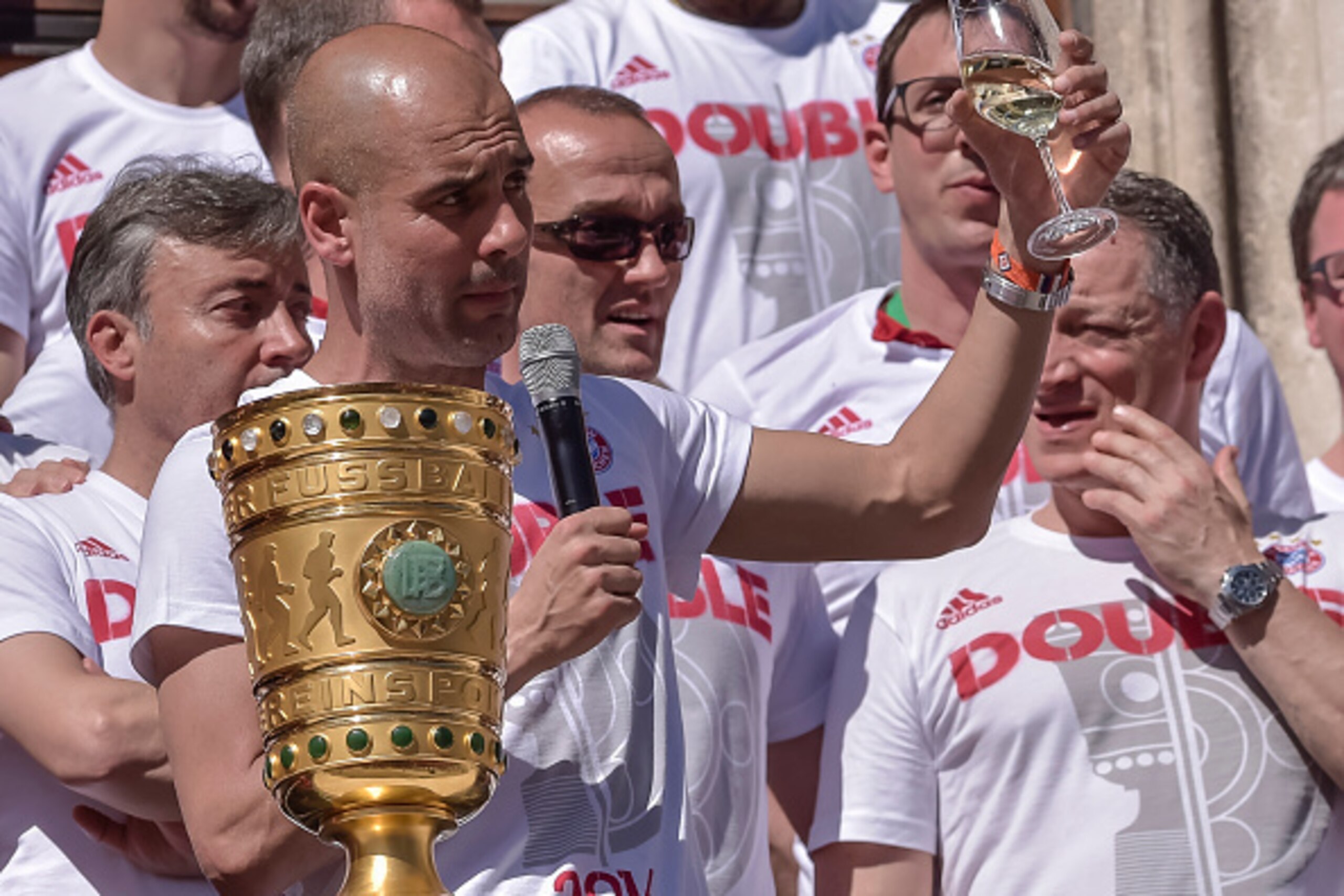
Manchester City are likely to be revolutionised by his arrival. The stale, insipid football that saw Manuel Pellegrini’s tenure come to a stuttering end will be completely refreshed by bold recruitment, training methods and tactics.
There’ll be innovations along the way, too. At both Barcelona and Bayern Munich, Guardiola found ways to dumbfound the rest of us by moving players into new positions and watching them excel.
Would anybody have seen Javier Mascherano as a centre-half before Guardiola played him there? The Argentinian had made his name as a scurrying defensive midfielder—limited but incredibly effective. He’s now an accomplished central defender who reads the game superbly. No one saw it coming.
Mascherano was seen as the odd one out for a while at Barcelona, the player who didn’t fit their slick passing style and technical brilliance. Guardiola saw him as a vital component who could provide an assured last line of defence.
Ever the realist, Mascherano knows he lacks technical gifts, but under Guardiola he found a role among elite players.
"It is a blessing to be here," Mascherano said in 2012, per Sid Lowe in the Guardian. "I watch Busquets and learn. I'd love to be able to play like [Xavi, Iniesta and Busquets], but I can't."
He didn’t need to. He had a manager who believed in him and saw in him the qualities needed to be a top-class defender. He's excelled there ever since.
And it wasn’t a one-off. Javi Martinez, a classy central midfielder during his Athletic Club Bilbao days, was switched to centre-back by Guardiola, with his ball-playing abilities valued by the Catalan who likes to play out from the back. Again, few saw it coming, and it worked.
David Alaba, perhaps Guardiola's most trusted Bayern player, was the best left-back in the game during the Catalan's first season at the Allianz Arena, yet he played in midfield and at centre-half in recent campaigns and did so with distinction.
The fact is Guardiola has always been comfortable working with smaller, versatile squads of players, with young prospects brought into the mix when needed. The theory seems to be if players can operate in three or four positions, you don’t need as many of them.
In a question-and-answer interview with FIFA.com back in 2011, Guardiola said he thrives on finding a tactical solution from within his squad during times when his options are limited.
"Finding intelligent players must be a priority for you then.
Absolutely. The problem is you can’t always get them. You can sign players on the recommendation of friends and colleagues and based on what you see on TV, but it’s only when they’re out on the pitch with you that you find out if they can do what you want them to. It’s not easy. Sometimes it’s worked for me and sometimes it hasn’t.You also need versatile players because your squad’s not as big as those of other teams.
"
I’ve never been worried about having a small squad. In fact, being a little short on options is probably better for us than having a lot, especially as I’ve got players with so much quality to call on. I’ve got complete faith in the team and my philosophy is that there’s a solution to every problem. Whenever there’s a potential problem I’ll always look at the alternatives I’ve got in the first team and even among the youngsters.
So what can we expect at City?
Some of the players are going to be used in different roles to what we’re used to. Fernandinho, for example, looks an ideal candidate to play at centre-back, particularly if Guardiola opts for a three-man defence.
The former Shakhtar Donetsk man is comfortable in possession and has the kind of tactical intelligence Guardiola admires. His two-game stint on the right of City’s attacking three last season was proof that quality players like the Brazilian can operate anywhere and still perform at the highest level.
There's even the possibility he could play at right-back. He has the energy and drive, as well as the defensive nous, to compete for a place there. It's an option that Guardiola would be foolish to rule out.
Yaya Toure could leave this summer, but should the Ivorian stay, he is another who could move backwards. He's played at centre-back before—in a Champions League final under Guardiola's management, no less—and the dynamism that once made him the best midfielder in the game has been eroded. A move to centre-back, a role where pace and running power are less important, would nullify some of that regression.
And what of David Silva, a player no longer guaranteed his favoured No. 10 role? His ability to keep the ball and regularly find a team-mate with his range of passing means he could play in a deeper role.
Too often the Spaniard has been played in wide areas, left stranded at times and unable to dictate in the way we know he can. A deep-lying, Luka Modric-style position is by no means beyond him. Guardiola likes to dominate possession in the centre of the pitch and there are few better at keeping the ball than Silva.
The options available to Guardiola are wide. Whereas other managers have fixed ideas and systems, the former Barcelona boss prides himself on being able to innovate, to find something unexpected that can help his side progress.
City fans and pundits are currently spending time trying to predict his lineup and approach, but there are likely to be a few curve balls. Expect the unexpected.
Rob Pollard is Bleacher Report's lead Manchester City correspondent and follows the club from a Manchester base. All quotes were obtained firsthand unless otherwise noted. Follow him on Twitter @RobPollard_.
.jpg?w=2560 "Cardinals Giants Football")

.jpg?w=2560 "Ward Nearly Walks Out of Presser ▶️")
.jpg?w=2560 "OBJ Calls Out Giants 😳")


.jpg?w=2560 "Buzz: Tyreek Eyeing November Return")