

There is no such thing as a lock in the NBA draft.
Many of this year's prospects have high floors, which means they offer little risk and, at the least, should earn an NBA living.
But the expectations for the following 10 players are much greater.
From athletic limitations to shaky skills, each prospect has a specific flaw or set of weaknesses that could keep them from reaching their potential. I explained why each could possibly bust or at least fail to meet the bar their projected draft range naturally sets.
Ben Simmons (LSU, PF, Freshman)
1 of 10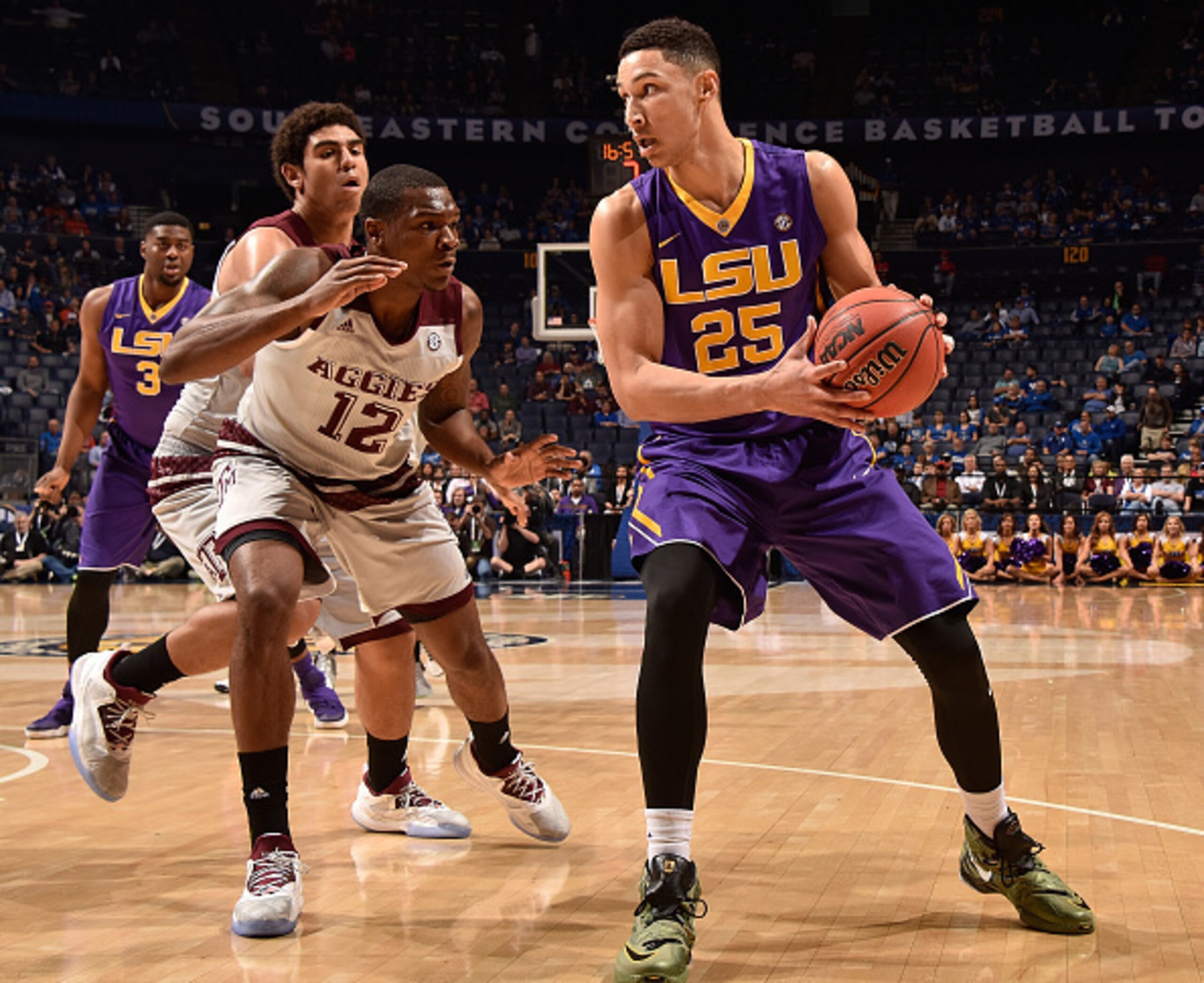
Reason for possible bust: Scoring trouble
Cause: Missing jumper
Ben Simmons' athleticism, passing and rebounding eliminates the chances of any Anthony Bennett-like bust fate. On the other hand, it's not given that he's the NBA's next big star, which is what the Philadelphia 76ers would expect to land with their No. 1 overall pick.
Simmons' lack of shooting range and confidence is no secret. He took three three-pointers all season and rarely looked at the rim beyond 10 feet.
At his best driving to the hoop, Simmons does the majority of scoring off one foot using runners, floaters and unorthodox one-handers on the move. Even at the college level, defenders picked up on this and began sagging back to take away the drive and hopefully force the jumper off two feet. NBA defenses will catch on quickly as well.
Simmons is most often effective with the ball, only he doesn't have much of a pull-up or step-back game. Early in his career, it's easy to envision him forcing the issue in traffic, without the confidence or accuracy to stop and pop.
Off the ball, he's not currently a spot-up shooting threat, so Simmons could have a tough time scoring consistently if he's forced to rely on just transition, drives and putbacks.
Draymond Green is the only other player to star with Simmons' offensive skill set, which highlights point-forward versatility and a limited one-on-one scoring game. But Green is also a top-notch defender, and Simmons isn't.
Brandon Ingram (Duke, SF, Freshman)
2 of 10
Reason for possible bust: Physical disadvantages
Cause: Lack of strength
At 196 pounds, with incredibly skinny legs, Brandon Ingram's biggest obstacle will be the physical transition.
Kawhi Leonard, DeMarre Carroll, P.J. Tucker, Jae Crowder and Michael Kidd-Gilchrist are a few of the wings Ingram will likely match up against. Many small forwards assigned to him will have an additional 25-plus pounds of muscle, whether Ingram adds bulk or not.
Lack of strength is something Kevin Durant heard a lot of out of Oklahoma. But even Durant weighed 215 pounds at his NBA combine.
You won't find many first-round wings thinner than Ingram, who could have trouble with contact (at both ends of the floor) and finishing at the rim.
Using DraftExpress' database and NBA combine weights, the only small forwards drafted under 200 pounds since 2009 include: Tyler Honeycutt, Austin Daye, DeAndre Daniels, K.J. McDaniels, Otto Porter and Tony Snell.
Ingram is loaded with talent, but we haven't seen wings this light develop into major scorers, which is what the Los Angeles Lakers will expect DraftExpress' projected No. 2 pick to become.
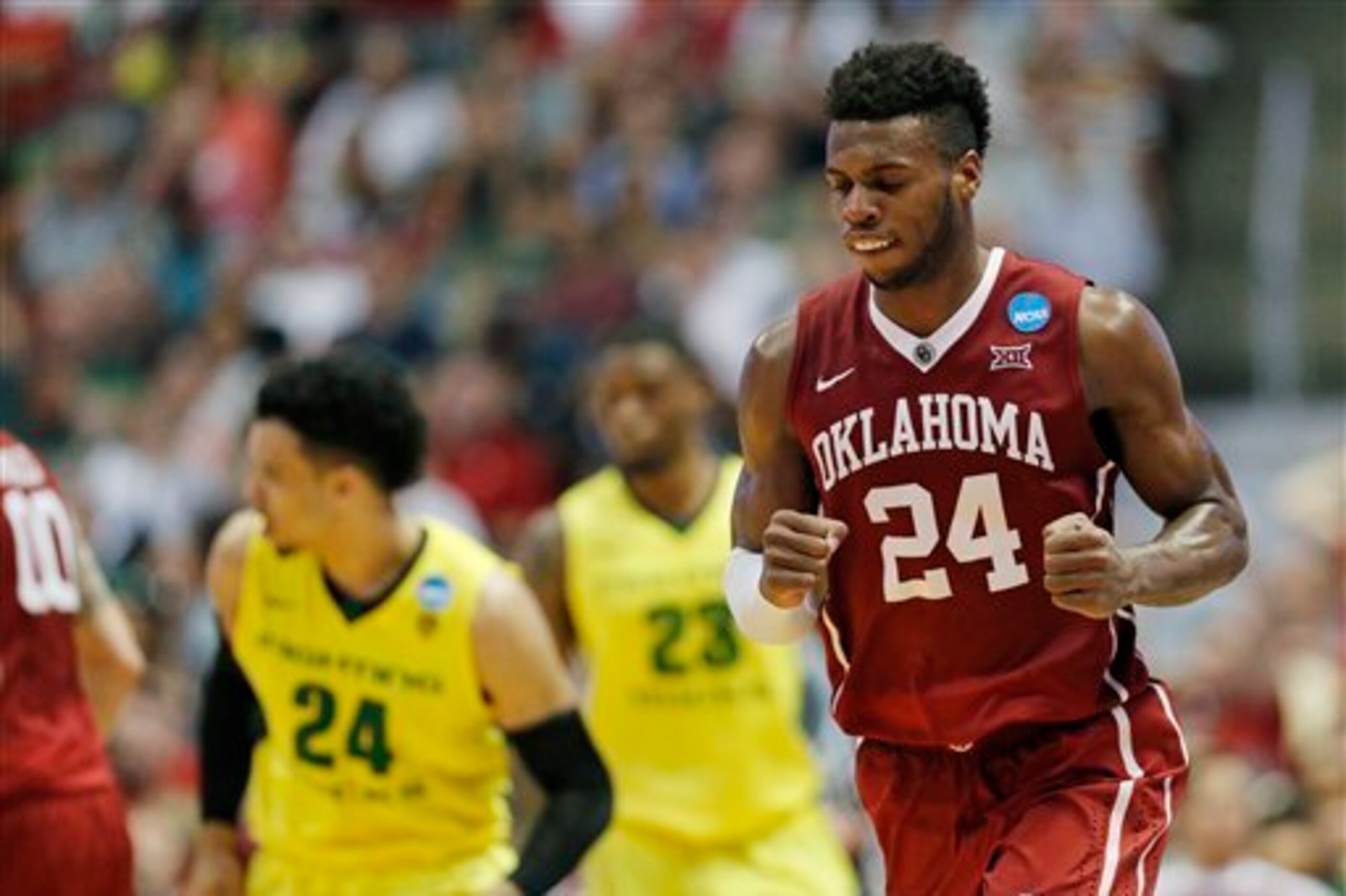
Buddy Hield (Oklahoma, SG, Senior)
3 of 10
Reason for possible bust: One-dimensional
Cause: Limited versatility
Outside of Buddy Hield's spectacular shooting and shot-making skills, his other basketball strengths are tougher to identify.
He's not a playmaker; Hield never averaged more than three assists per 40 minutes through four years at Oklahoma. As a senior, he totaled 75 assists to 113 turnovers.
And unlike many of today's volume-scoring 2-guards, Hield isn't a proficient one-on-one scorer in the mid-range, having shot 36.9 percent on two-point jumpers while making just 31 total on the year, per Hoop-Math.com.
He's not a great passer either, and with average athleticism and size (6'5") relative to others at the position, he doesn't project as a mismatch in isolation.
What's more, his defensive potential isn't exciting. Hield is capable, but he's not a ball-stopper, and he doesn't offer the versatility to guard both backcourt positions.
Hield's jumper will keep him around, but alone, it might not be enough to guarantee a long-term starting role.



Jamal Murray (Kentucky, SG, Freshman)
4 of 10
Reason for possible bust: Inefficiency
Cause: Jumper overload
Streaky but lethal, Jamal Murray's jumper gets heavy usage. He took 277 threes and 151 two-point jump shots his freshman year, per Hoop-Math.com,
Only 20.4 percent of his field-goal attempts came at the rim, and he took just 4.8 free throws per 40 minutes. He also lacks a blow-by first step, which holds him around the perimeter.
Thus, Murray's shot selection is on the difficult side. Though capable from everywhere on the floor, the majority of his field-goal attempts are relatively low-percentage looks.
Even with outstanding shot-making ability, Murray could have trouble remaining efficient, given how much he leans on outside shooting and improvised attempts in the lane.
The fact he's not a dynamic playmaker or plus defender puts even more pressure on his jumper.
Kris Dunn (Providence, PG, Sophomore)
5 of 10
Reason for possible bust: Inefficiency
Cause: Point guard poison (Mix of poor shooting and decision-making)
With 6'4" size, blazing quickness, above-average athleticism and natural playmaking ability, Kris Dunn's floor is high. Even if he's a bust, the assist numbers will be there.
The efficiency wouldn't be, though.
Dunn is best dancing with the ball in his hands—except he's been a turnover machine over the previous two seasons (254 giveaways in 66 games). He tends to be reckless with his dribbling, passing and shot selection.
There aren't many questions concerning his talent, but Dunn's shaky decision-making is no easy fix.
Now 22 years old, he's also yet to make more than 70 percent of his free throws or finish with a true shooting percentage above 55 percent.
A ball dominator (can't play 2-guard) who coughs up the rock and struggles from outside, Dunn will have trouble with efficiency early in his career. Depending on how he adjusts over the years, we could either be talking about the next John Wall or Michael Carter-Williams.
Dragan Bender (Croatia, PF/C, 1997)
6 of 10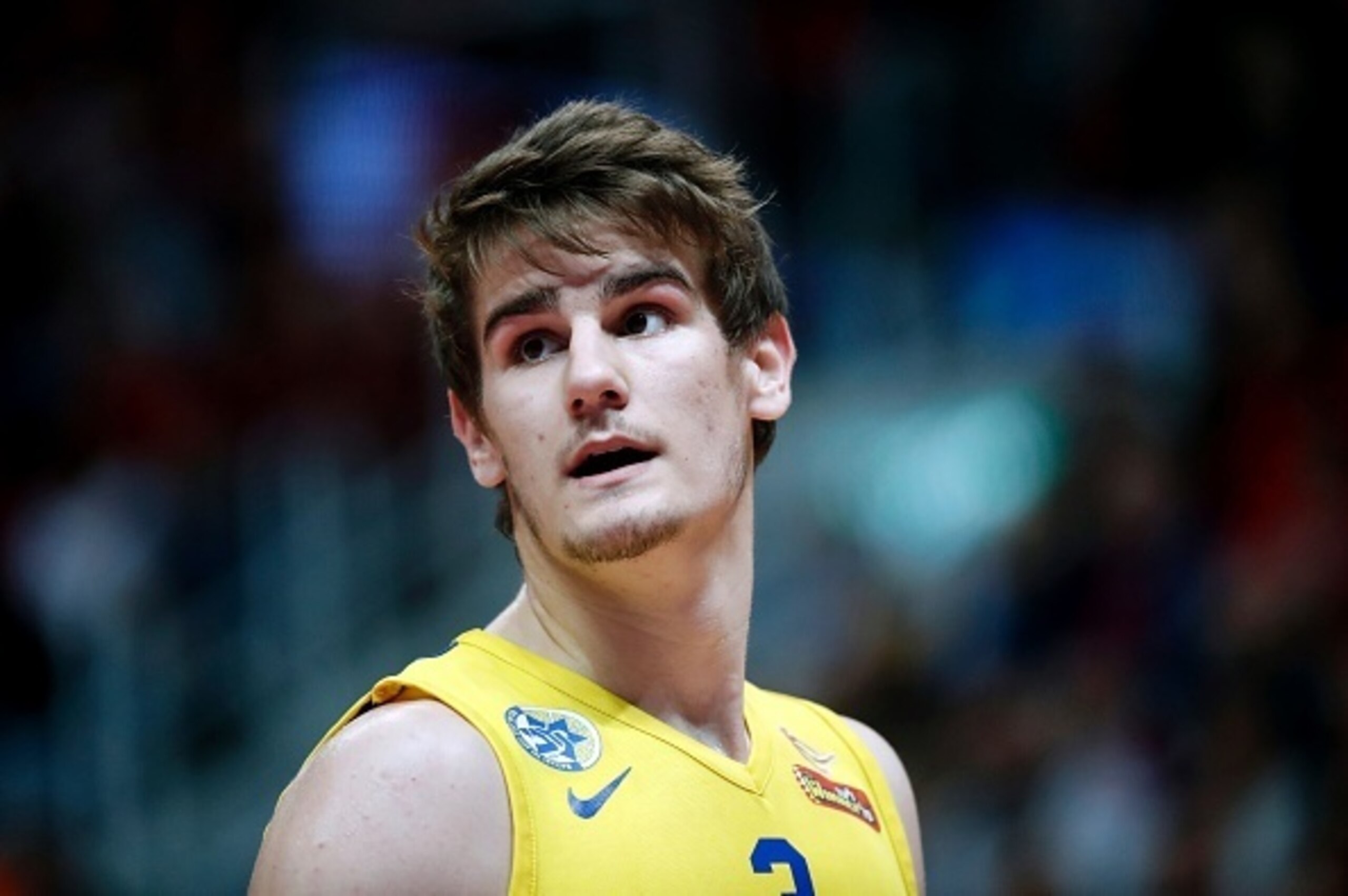
Reason for possible bust: Master of none
Cause: No core fundamental strength
Though known for unique versatility, there still isn't one area in which Dragan Bender specializes.
The jack-of-all-trade skill set should keep him afloat, but not being dominant in any aspect of the game could make it tough to become anything more than a role player.
Though mobile and coordinated, Bender lacks strength and explosiveness. That likely has something to do with his preference to hang around the perimeter. In 2015-16, between Euroleague, Israeli Basketball Premier League and Eurocup, Bender took more threes (77) than two-pointers (65), an unusual stat for a 7-footer.
Unfortunately, his combined 33.8 percent clip from deep isn't the most convincing number.
Shooting will ultimately be key for Bender, who isn't a shot creator in the half court. He also registered a 12.1 rebounding percentage, per RealGM.com, and grabbed just 7.8 boards per 40 minutes.
If it turns out he's not a scorer and he doesn't shoot or rebound at high levels, Bender could end up looking more like Jonas Jerebko than Kristaps Porzingis.
Jaylen Brown (California, SF, Freshman)
7 of 10
Reason for possible bust: Inefficiency
Cause: Stalled development
Whoever takes Jaylen Brown in the top 10 will be betting on significant offensive improvement.
He'll need it, given his 51.8 percent true shooting percentage, 43.1 percent field-goal clip and 4.5 turnovers per 40 minutes.
His athleticism and physical tools are far ahead of his ball skills and jumper, but Brown won't be competing for 2017 NBA Rookie of the Year. Outside of driving, he doesn't offer enough in the half court, where he isn't a threat to create or shoot. Unless it's a transition opportunity or a slash through the lane, he doesn't see many high-percentage looks.
With showtime explosiveness and a textbook NBA body, Brown has an ideal foundation to build from. At this stage, though, he hasn't added much to it.
If his ceiling is at floor 10, he'll enter the league around floor three.
With such a long way to go, the question is: What level will he eventually reach?
Marquese Chriss (Washington, PF, Freshman)
8 of 10
Reason for possible bust: Tweener
Cause: Stalled development
Marquese Chriss goes top 10 this year based on potential, which is ultimately fueled by world-class athleticism and tremendous room for offensive growth.
There just isn't any guarantee we'll see it.
His 10.7 percent rebounding percentage, per Sports-Reference.com, is lower than any projected first-round big man. He's not a physical player around the basket (tough to change), which suggests his perimeter-skill development will be crucial.
And though he's shown flashes of shot-making outside the paint, we're only looking at a 21-of-60 sample size from three and a 68.5 percent free-throw stroke.
What if his jumper remains average? Is he quick enough off the dribble to attack from behind the arc? I wouldn't bank on Chriss as a big mid-range scorer off pull-ups and step-backs.
His 6.5 fouls per 40 minutes and 26 total assists to 69 turnovers also highlight limited feel for the game. And gradual improvement could be tougher to pull off without great basketball instincts.
Chriss will face the same challenges that Perry Jones III and Derrick Williams struggled to overcome.
Jakob Poeltl (Utah, C, Sophomore)
9 of 10
Reason for possible bust: Outdated style of play
Cause: Limited versatility
The NBA game has moved away from traditional back-to-the-basket scorers, an identity Jakob Poeltl has taken on over the past year.
Teams are now looking for bigs who can stretch the floor and pull opposing anchors away from the basket. That's not something Poeltl has flashed the potential to do, considering 85 percent of his shots this year came at the rim, per Hoop-Math.com.
As a full-time 30.4-minute-per-game contributor, Poeltl also wasn't a major difference-maker on defense either. His defensive box plus/minus fell to 4.4 from 7.2, per Sports-Reference.com. And scouts saw Gonzaga's Domantas Sabonis torch him in the NCAA tournament.
Meanwhile, he didn't block many shots; Poeltl's 5 percent block percentage and two blocks per 40 minutes this season were below average for a lottery center.
He'll stick regardless, thanks to his size at 7 feet, hands around the basket and rebounding. But Poeltl is likely to go top 10 in the draft, which means someone will be expecting him to emerge as a long-term starter.
If it turns out Poeltl doesn't stretch the floor or protect the rim, his NBA value is going to take a hit. Would teams even use him against small-ball lineups?
Henry Ellenson (Marquette, PF, Freshman)
10 of 10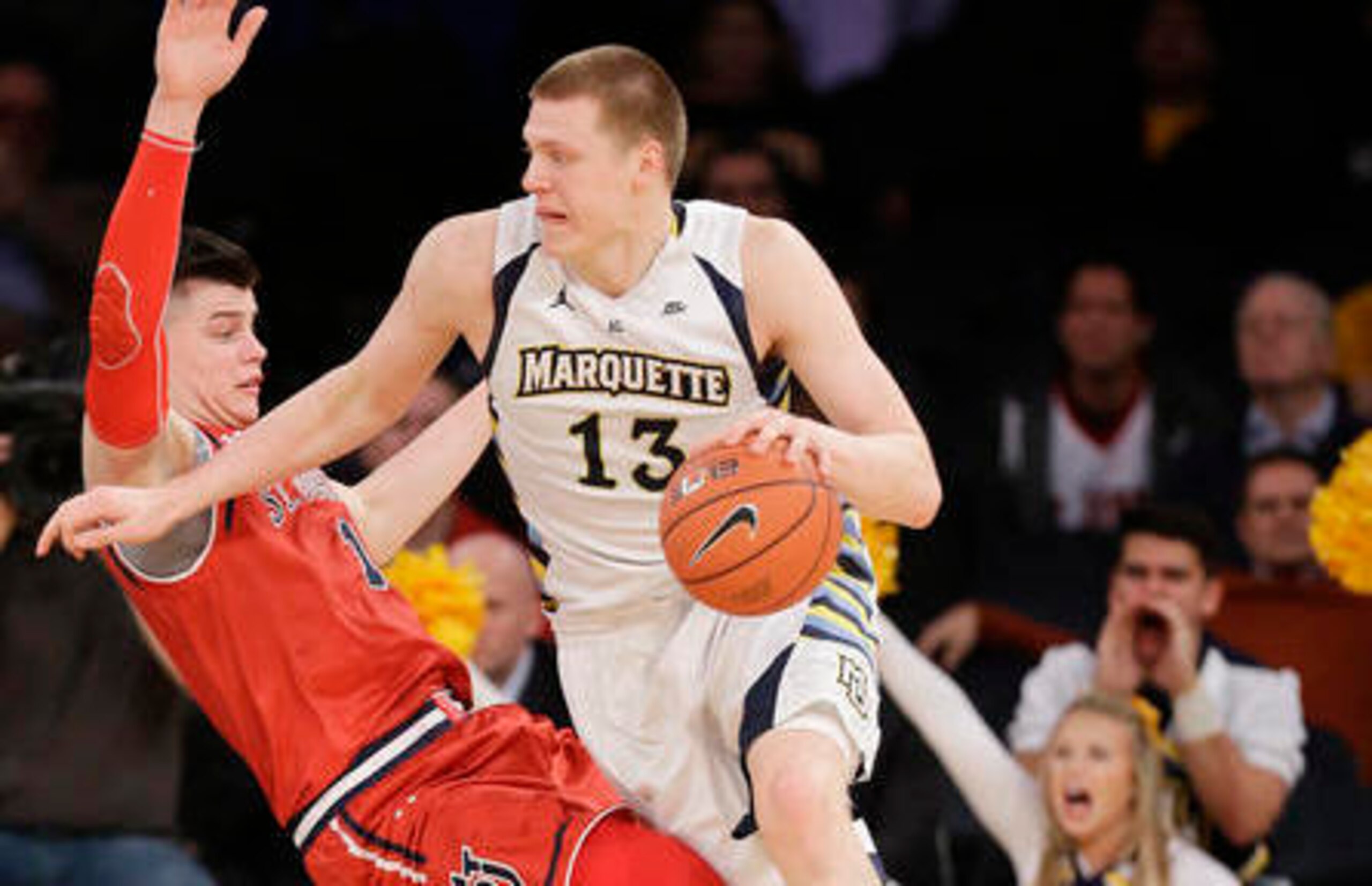
Reason for possible bust: Offensive inefficiency, defensive inability
Cause: Inadequate athleticism
Henry Ellenson is the most skilled power forward in the class, but limited athletic ability will make it difficult to display those skills in the pros.
Without great quickness or explosiveness, he could have trouble separating, both off the dribble and at the basket. The big man shot just 51 percent around the rim (including floaters), per DraftExpress' Mike Schmitz, and 49.5 percent on two-pointers.
Though 6'11 ½", Ellenson looks more comfortable away from the basket (only 26 percent of shots came at the rim).
But not too far away—he shot 28.8 percent from three his freshman year.
Ellenson's defensive outlook isn't encouraging, either. He doesn't offer much rim protection (4.4 percent block percentage, 1.8 blocks per 40 minutes) or perimeter coverage (limited foot speed).
A one-way player, Ellenson will need his offense to carry him. He has a jumper, post-up and face-up game in the works. Whether he'll consistently get off clean shots will be another story.
Stats courtesy of Sports-Reference.com, Hoop-Math.com and RealGM.com.

_0.png?w=2560 "Unranked Teams Cause Chaos in Rankings 📊")
.png?w=2560 "Week 8 Winners & Losers 📊")
.jpg?w=2560 "Jonathan Taylor Landing Spots 📍")



