
The Top 10 2017 NBA Draft Prospects in the Big Ten
After seeing three of its own get taken in the first round of the 2015 NBA draft, including No. 2 pick D'Angelo Russell of Ohio State and No. 9 selection Frank Kaminsky of Wisconsin, the Big Ten may be in line for a down year as far as selections go. But that just means a rebound in 2017 would be even more noteworthy.
According to DraftExpress' latest mock draft, the Michigan State duo of Deyonta Davis and Denzel Valentine might be the league's only surefire first-round picks. Only Davis, projected to go 13th overall to the Phoenix Suns, is likely to be a lottery selection. If he were to fall out of the top 14, that would mark the first time since 2011 the Big Ten didn't produce a lottery pick.
Will the 2017 draft crop be better? That depends on how some returning standouts improve and whether the league's most high-profile newcomers manage to live up to their hype, but the prognosis is good. Check out who we've pegged as the Big Ten's top draft prospects, then give us your thoughts in the comments section.
Honorable Mentions
1 of 11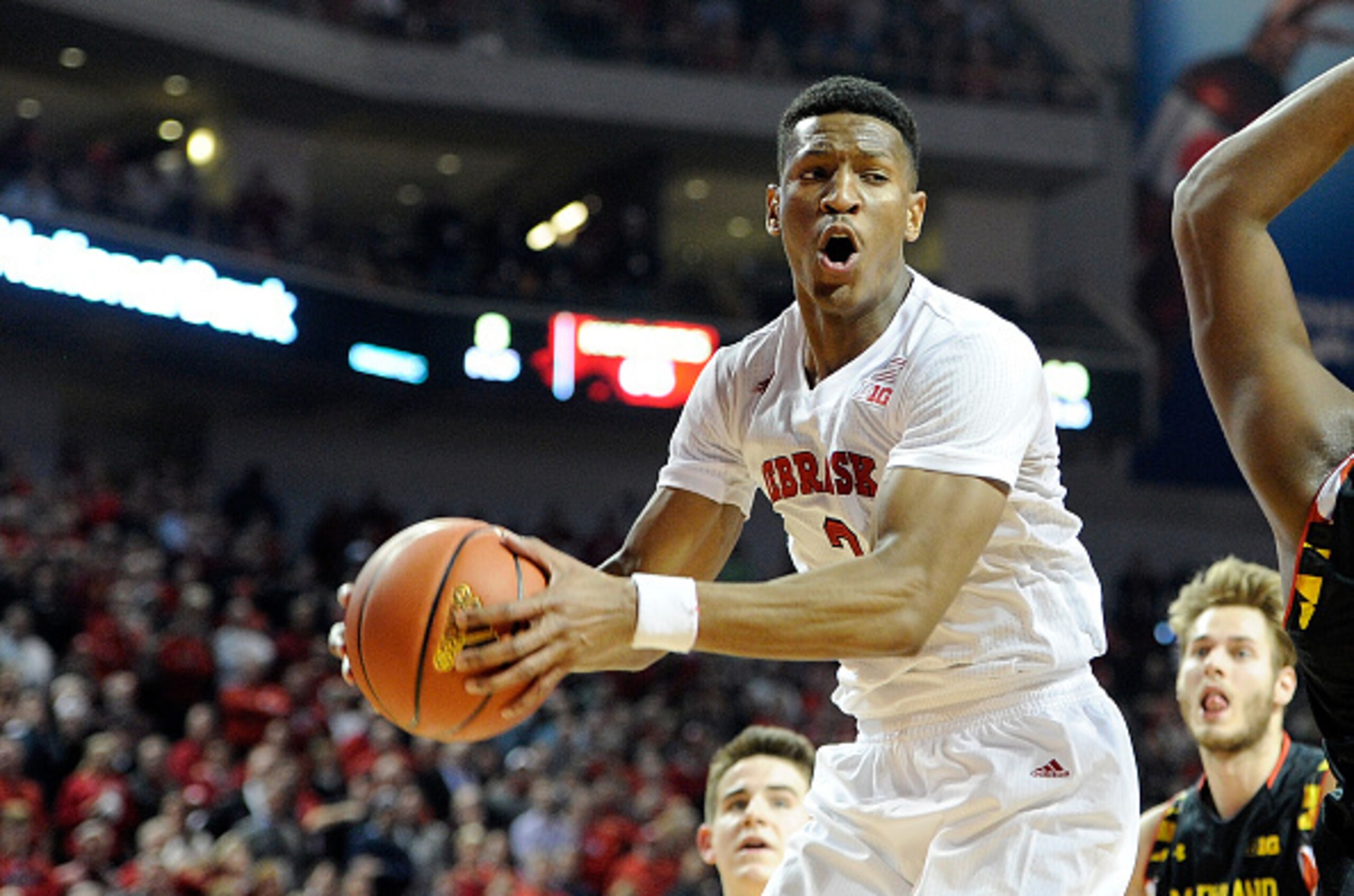
There are some clear-cut NBA draft prospects set to play in the Big Ten next season, as well as some weaker prospects that could play their way into getting picked with a strong 2016-17. Some of the latter players made our top 10—here are the ones that garnered consideration but didn't make the cut:
- Damonte Dodd, Sr., Maryland
- Isaac Haas, Jr., Purdue
- Malcolm Hill, Sr., Illinois
- Zak Irvin, Sr., Michigan
- Marc Loving, Sr., Ohio State
- Andrew White, Sr., Nebraska
10. James Blackmon, Jr., Indiana
2 of 11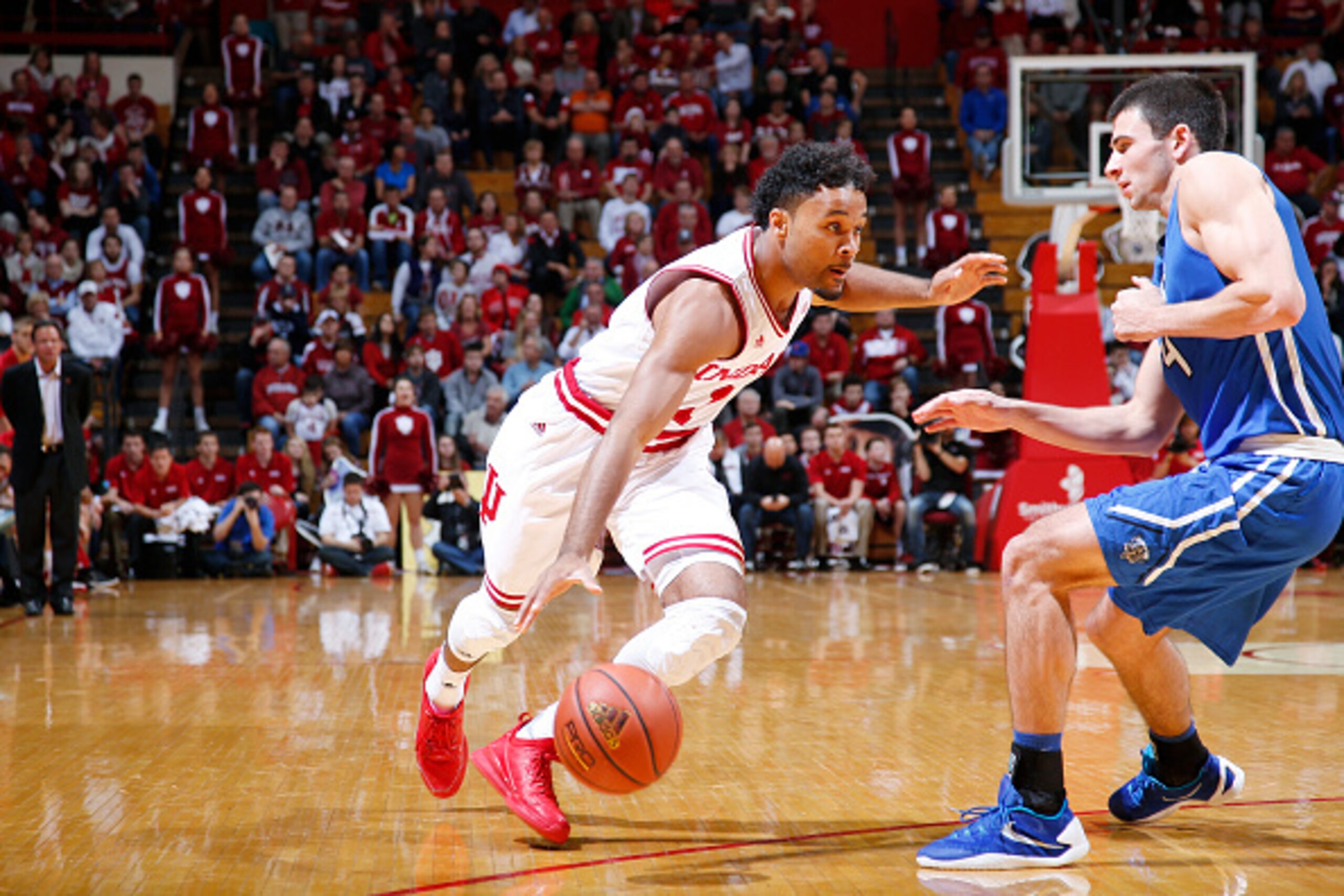
Position: Shooting guard
Height, weight: 6'4”, 190 lbs
A torn-ACL suffered in December was likely a main contributor to James Blackmon withdrawing from the NBA draft this spring. He wasn't far enough along in his recovery to warrant a combine invite or work out for individual teams, and it would have been a major gamble to hope a franchise would take a chance on him.
Instead, Blackmon gets to focus on his rehab in order to return to Indiana at full strength. Assuming that's the case, expect a prolific junior year based on the Hoosiers' scoring losses and what Blackmon was doing before he got hurt.
He averaged 15.8 points per game and shot 46.3 percent from three-point range through Indiana's first 13 games, though he struggled in the Hoosiers' most important early contests. Against Wake Forest, Duke and Notre Dame, he averaged 10.0 points on 29.0 percent shooting.
9. Vitto Brown, Sr., Wisconsin
3 of 11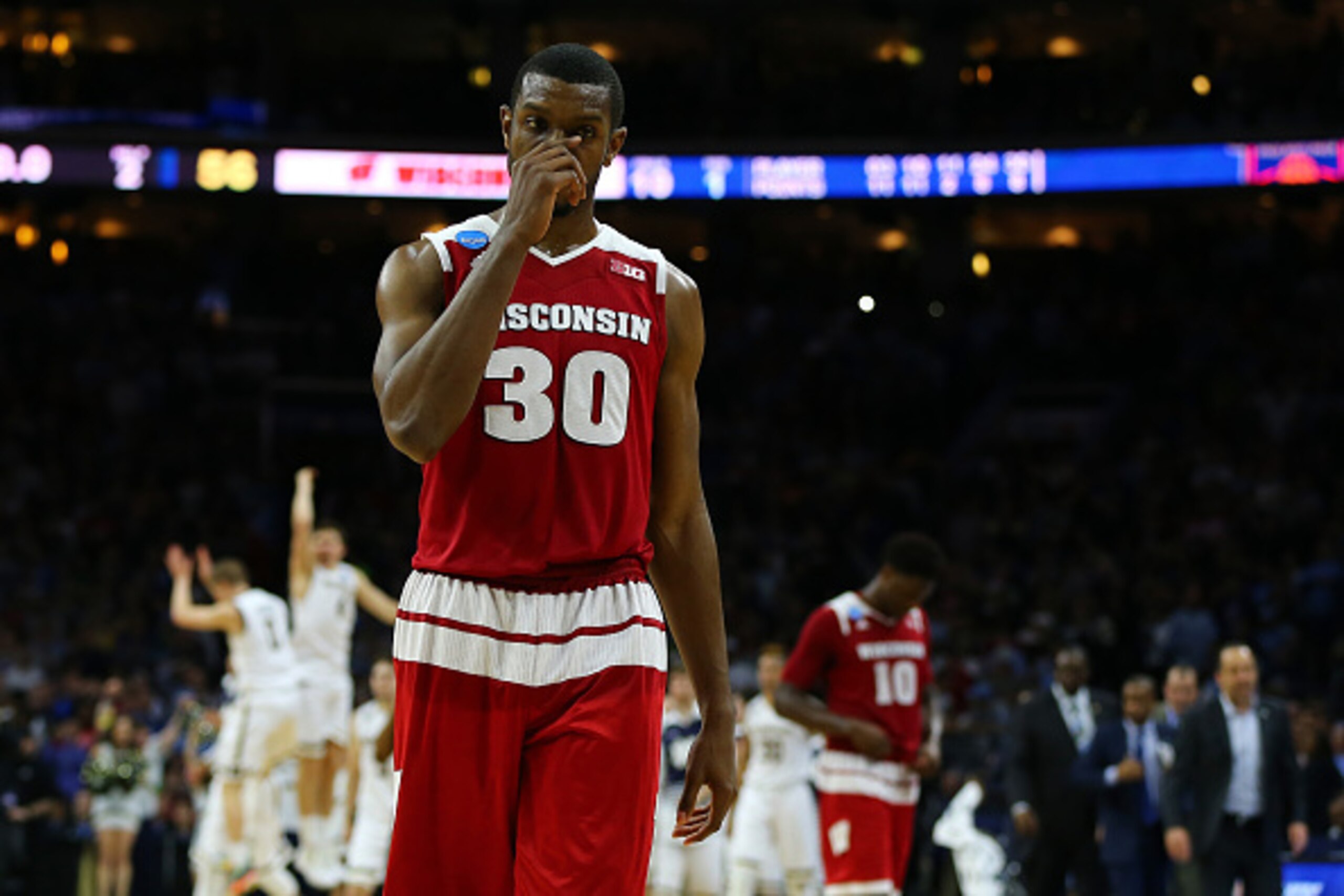
Position: Power forward
Height, weight: 6'8”, 237 lbs
Could Vitto Brown be the next Frank Kaminsky? That might be too high of a ceiling for him, but based on how he broke through this past season, it's not far-fetched to think he can parlay a late-blooming college career into hearing his name called next year at the NBA draft.
Brown's 9.7 points and 5.0 rebounds per game were a huge leap from his 1.8 and 1.3 as a sophomore, though his minutes per game did jump from 6.3 to 25.4 in 2015-16. But his breakout was also impacted by the sudden development of a three-point shot, as he hit 40 percent of his 95 attempts after not taking one shot beyond the arc in his first two seasons.
Showing this shot can fall on a consistent basis—he attempted two or fewer threes in about half of Wisconsin's games, though he was 7-of-16 in the NCAA tournament—while improving his rebounding rate is the key to Brown getting on draft boards in 2017.
_0.png?w=2560 "CFB Top 25")

.png?w=2560)
8. Vince Edwards, Jr., Purdue
4 of 11
Position: Small forward
Height, weight: 6'8”, 225 lbs
Vince Edwards was Purdue's best athlete last season, but one that had to play out of position. The presence of three sizable frontcourt players and a crop of guards that struggled to take care of the ball prompted the Boilermakers to have Edwards spend as much time on the perimeter as in the paint.
He responded with strong across-the-board production, ranking second on the team in points per game (11.3), third in rebounding (5.4) and first in assists (2.9). He was also Purdue's best three-point shooter at 40.7 percent.
Edwards went through the draft process and now has an idea of what NBA teams think of him. Continuing to show a diverse skill set will make him attractive to pro clubs a year from now.
7. Keita Bates-Diop, Jr., Ohio State
5 of 11
Position: Small forward
Height, weight: 6'7”, 235 lbs
Ohio State had a disappointing 2015-16 season from a team standpoint, losing 14 games and missing the NCAA tournament for the first time since 2007-08. Keita Bates-Diop managed to carve out a decent year though, one in which he made huge leaps from his limited freshman action.
Bates-Diop averaged 11.8 points, 6.4 rebounds and 1.2 blocks per game last season, nearly tripling his numbers from the year before when he played less than 10 minutes per game. His shooting numbers dipped as he tried to show off a three-point stroke that didn't connect very often, but otherwise the improvement was across the board.
A battle with mononucleosis late in the season saw him struggle in the Big Ten tourney loss to Michigan State, before sidelining him for the Buckeyes' two NIT games. According to Bill Landis of Cleveland.com, Bates-Diop lost more than 20 pounds while sick.
Expect Bates-Diop to be back at full strength next season when he'll take on a greater leadership role for a team that has seen four of OSU's five-man 2015 recruiting class leave the program.
6. Melo Trimble, Jr., Maryland
6 of 11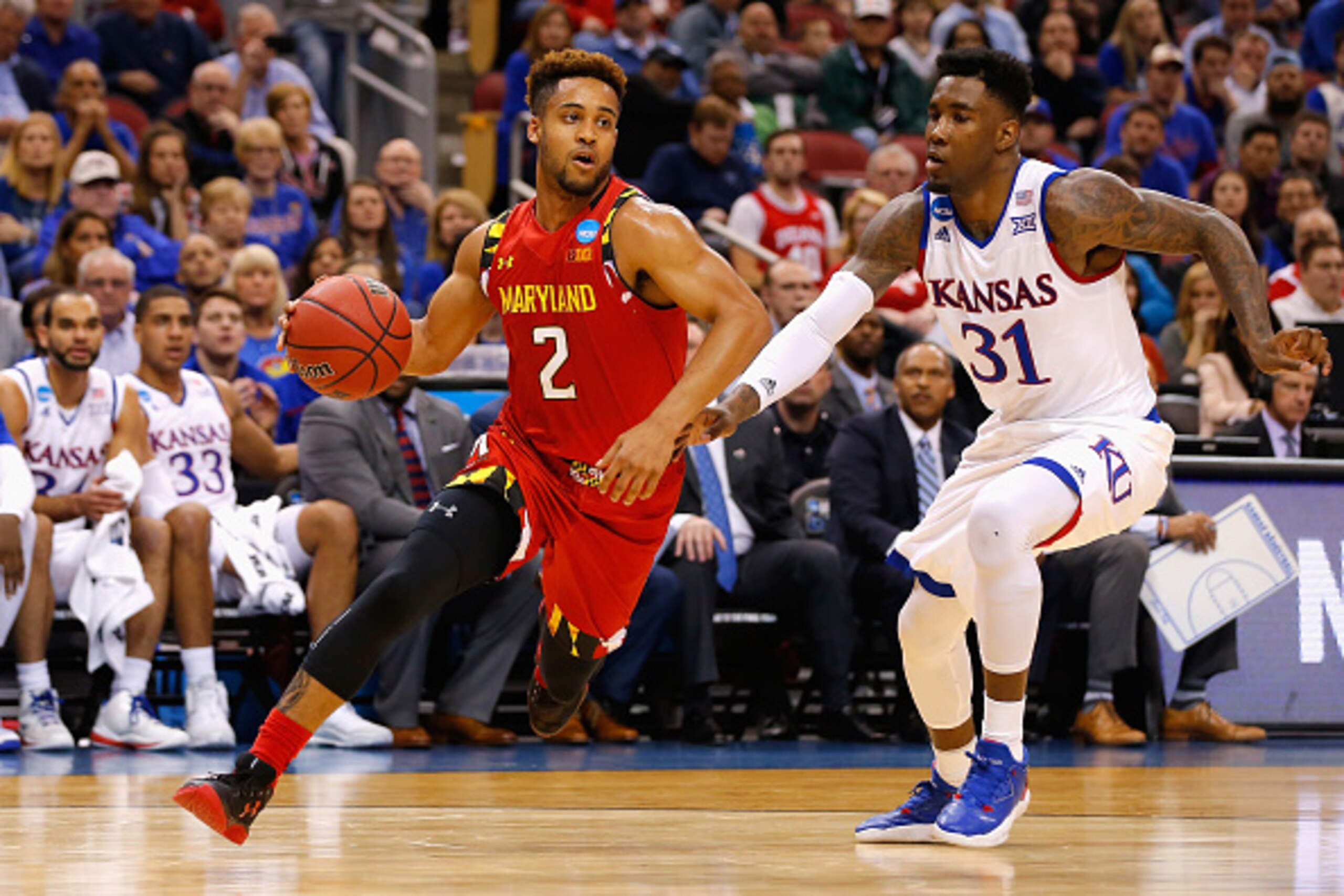
Position: Point guard
Height, weight: 6'3”, 192 lbs
There's always at least one player each year who probably should have turned pro when his stock was highest but ended up missing that window. That could be Melo Trimble this time around, as his best opportunity to enter the NBA might have been after a promising freshman season.
Trimble scored 16.2 points per game and shot 41.2 percent from three-point range in 2014-15 on a Maryland team that finished second in the Big Ten but then failed to make it out of the first weekend of the NCAA tournament. He became the focal point of last season's Terrapins, but thanks to a strong frontcourt, there wasn't as much need for his scoring.
Instead, Trimble had the chance to operate the offense and show he could make strong decisions between shooting or passing. He ended up turning it over 16.8 percent of the time he was on the court.
His stock trending downward, Trimble chose to give it another year in school in hopes of bouncing back. However, he will be the primary attraction on a rebuilding Maryland team that may struggle to make the NCAA tourney.
5. Nigel Hayes, Sr., Wisconsin
7 of 11
Position: Power forward
Height, weight: 6'8”, 240 lbs
His minutes and scoring have gone up each year, but Nigel Hayes has appeared to sacrifice efficiency for production as he progresses through college. Whether he can move back toward a healthy balance could determine what his pro prospects are like next summer.
Hayes was one of the last high-profile players to announce his return to Wisconsin for his senior year, telling C.L. Brown of ESPN: “It was better to work on the skills I would need in the NBA a year in advance, rather than three months prior.” That decision shows the headiness that Hayes has previously displayed through his wide-ranging grasp of the English language in NCAA tournament press conferences. Now we'll see if he translates that into adjusting his game.
He averaged a career-best 15.7 points per game but also a career-worst 36.8 percent field-goal percentage in 2015-16, taking 104 more shots than the year before but connecting on five fewer. Part of this was Hayes' reliance on jumpers, taking 133 three-pointers after attempting none as a freshman, but his role in the pros is as a wing—he must be able to develop a consistent jumper to succeed there.
4. OG Anunoby, So., Indiana
8 of 11
Position: Small forward
Height, weight: 6'8”, 215 lbs
Catching a glimpse of OG Anunoby in action last season was similar to spotting Bigfoot: it didn't happen often, but the experience was certainly memorable.
Anunoby played a mere 13.7 minutes per game as a freshman, but that was more than enough to make his presence felt. He chipped in 4.9 points and 2.6 rebounds per game, though he made the greatest impact on defense, finding a way to shut down some of the Big Ten's best players when on the court.
Thanks to a 7'6” wingspan, Anunoby takes up a lot of space on defense and makes it incredibly difficult for opponents to dribble around him, shoot over him or pass through his area. His 97.6 defensive rating was best on the Hoosiers, and during their four postseason games (Big Ten tournament and NCAA tourney) he had six steals, six blocks, 36 points and 10 rebounds in 85 minutes of action.
Anunoby should play much more this season, likely replacing Troy Williams in the starting lineup, and with those increased minutes we'll see if he's capable of keeping up that defensive intensity for longer stretches.
3. Caleb Swanigan, So., Purdue
9 of 11
Position: Power forward
Height, weight: 6'9”, 247 lbs
The “little” guy in Purdue's towering three-man frontcourt, Caleb Swanigan had a solid (if not spectacular) freshman season in which he averaged 10.2 points and 8.3 rebounds per game. Nowadays that's more than enough production to warrant a previously well-regarded prospect—Swanigan was the No. 18 player in the 2015 recruiting class—to turn pro and never look back.
Instead, Swanigan put his name into the draft and then waited until after getting feedback from the NBA, from its combine and individual workouts. And that feedback, in general, called for him to return to Purdue and "work on [his] explosiveness," as he told Nathan Baird of the Lafayette Journal & Courier.
"Where I'm at now, skill-wise, is good," Swanigan added. "They like how hard I played."
Effort wasn't an issue for Swanigan, who gave it his all last season, but execution often was. For a man his size that plays so close to the basket, his 46.1 percent shooting rate was subpar. Going 21-of-72 on three-pointers didn't help, but he also had eight games in which he shot 30 percent or worse on two-pointers.
2. Miles Bridges, Fr., Michigan State
10 of 11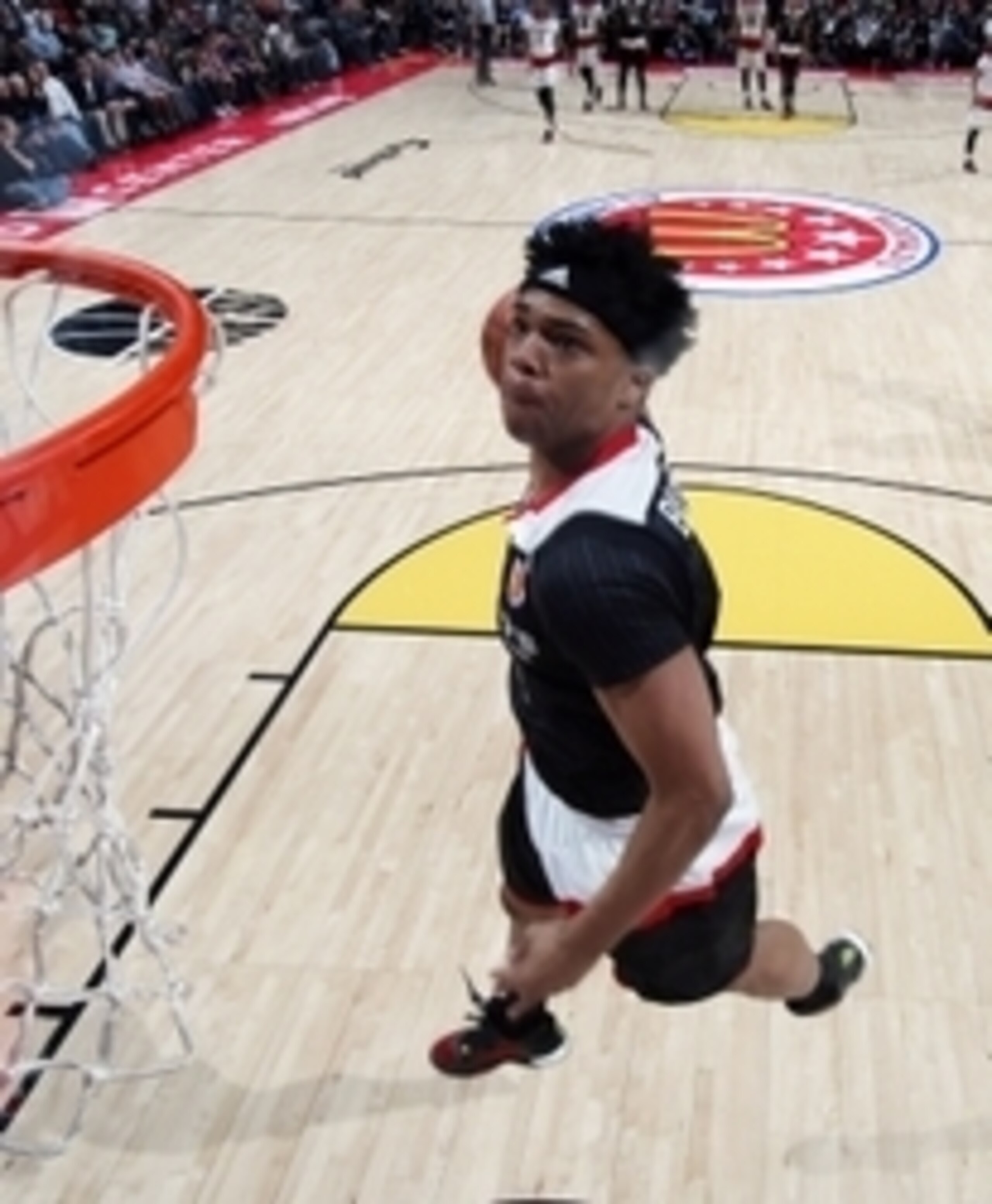
Position: Forward
Height, weight: 6'8”, 230 lbs
Out with the old, in with the new for Michigan State. The Spartans' roster has had some significant turnover since they were shocked by 15th-seeded Middle Tennessee in the NCAA tournament in March, with six players departing either via graduation, transfer or early NBA draft entry. Thankfully, the program's best recruiting class in Tom Izzo's 20-plus season is coming to East Lansing, headlined by Miles Bridges.
An explosive athlete who will likely step right into Denzel Valentine's role as offensive leader, Bridges brings even more to the table thanks to his "game-changing ability," ESPN's Jeff Borzello wrote last fall. Borzello also noted that Bridges should thrive in the "positionless frontcourt" that MSU has used over time and from which Branden Dawson and Draymond Green developed into stars.
At No. 12 overall, Bridges is the highest-rated player from the 2016 recruiting class to enter the Big Ten this season. And unlike the recently departed Deyonta Davis, Bridges won't have any trouble putting up numbers as a freshman since he'll be a main player on his young team.
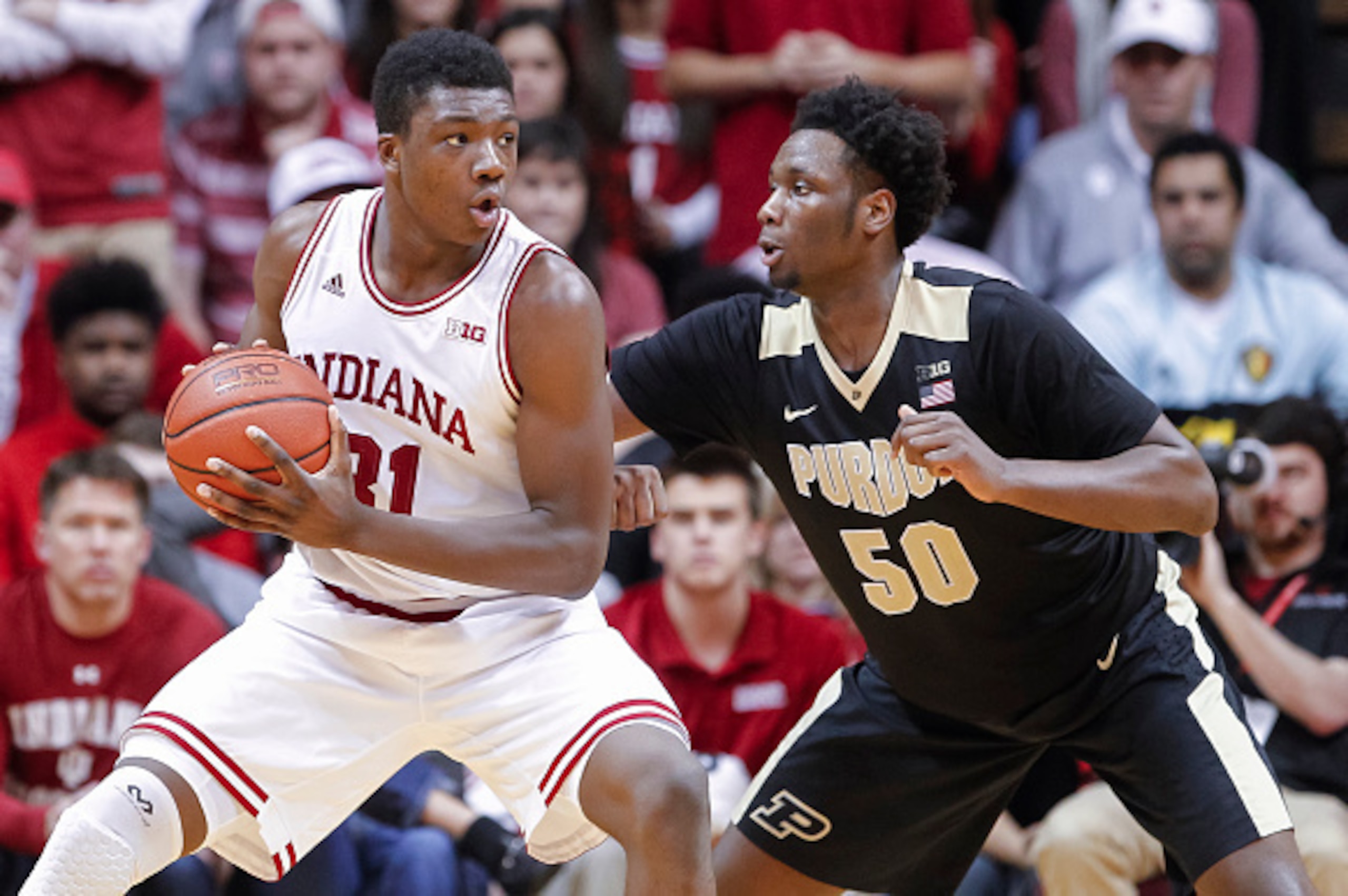
1. Thomas Bryant, So., Indiana
11 of 11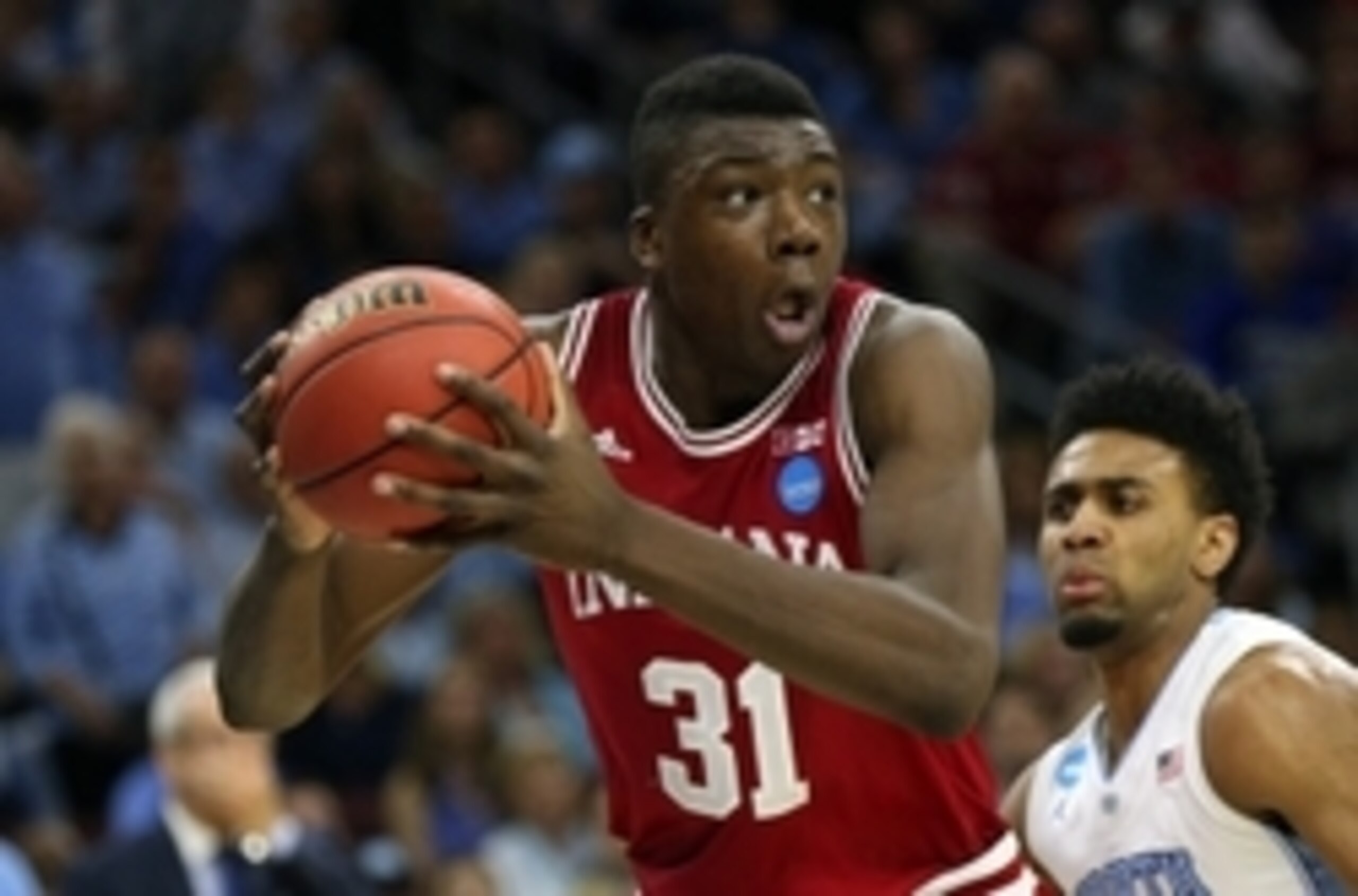
Position: Center
Height, weight: 6'11”, 241 lbs
Had he opted to turn pro, Thomas Bryant might have contended with Michigan State's Deyonta Davis for the top draft selection among Big Ten prospects. Instead he opted to come back to Indiana and further develop his game, rather than head into the NBA with a lot to learn but with plenty of promise.
Davis took one route, Bryant the other. We'll see how it pays off for each in the future, but for now the move means Indiana gets its best low-post presence and a staunch defender who was arguably its most impactful player on both ends of the court in 2015-16. He could stand to do more offensively, though, which will be the emphasis for his sophomore year.
This will both be by choice and necessity, since Indiana loses one of its top scorers in Yogi Ferrell. With his absence, there will be more chances available for Bryant, whose 70.7 two-point shooting rate was fifth-best in Division I but came via only 6.6 shots per game.
If Bryant can continue to shoot at a high rate but with more volume, while also showing a strong knack for rebounding and blocking shots, he'll be in the 2017 lottery.
All statistics courtesy of Sports-Reference.com, unless otherwise noted. All recruiting information from 247Sports, unless otherwise noted.
Follow Brian J. Pedersen on Twitter at @realBJP.
.jpg?w=2560 "Colts Football")





