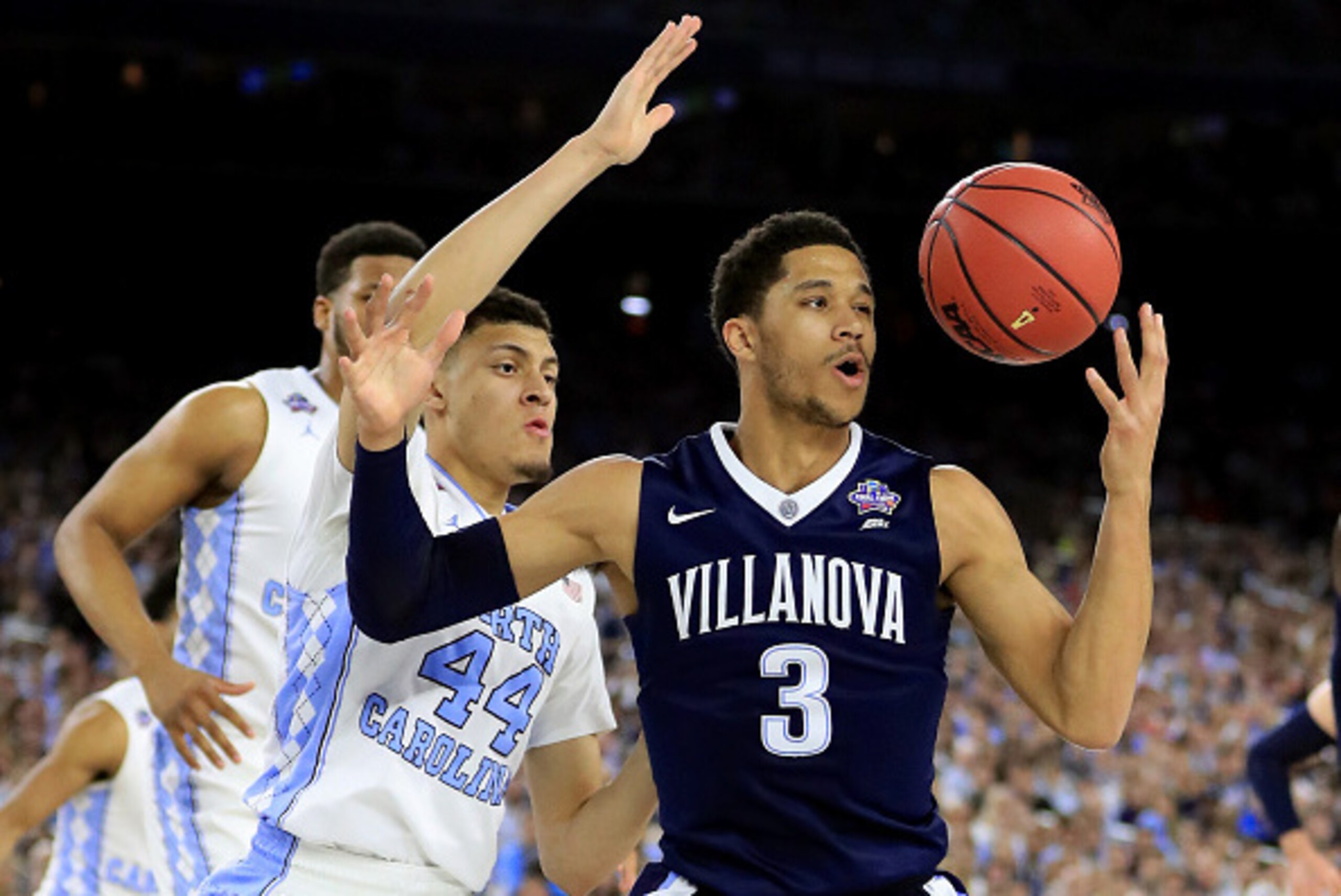


Not one of the projected stars of college basketball in 2016-17 is destined to become the next Michael Jordan or Wilt Chamberlain, but there might be a second coming of Kevin Martin, Jared Sullinger or Jeff Green in this year's crop of NBA prospects.
We're not going to waste your time with crazy comparisons. Stars such as Stephen Curry, LeBron James, Kevin Durant and James Harden are nowhere to be found on this list, outside of being mentioned in passing as better players than the actual comparisons chosen. Rather, we went searching for rational, stats-based comps for players who ought to shine in the college game in 2016-17.
Take note of a few other things before diving in:
- We're only interested in active NBA players. There might be players from the 1980s and '90s who work as better comparisons for some of these guys, but that's not what we're looking for.
- Comparisons are made primarily on stats from the 2015-16 NBA regular season, but each player's entire career was taken into consideration.
- Though we listed each college player's height and weight, physical attributes were of secondary concern. Rather than matching a player with like-sized professionals and picking the one with the most similar stat line, we took the opposite approach of matching based on stats before making sure not to compare a point guard to a center.
Players on the following slides are listed in alphabetical order by last name.
The Freshmen
1 of 20
Back in late March, B/R's Scott Phillips made pro-player comparisons for 10 of the top freshmen at the McDonald's All-American Game. The man eats, sleeps and breathes recruiting, so rather than reinventing the wheel, we've decided to just list those comps here while adding a few more:
- Josh Jackson, Kansas: Andrew Wiggins
- Jayson Tatum, Duke: Paul Pierce
- Marques Bolden, Duke: Al Jefferson
- De'Aaron Fox, Kentucky: Jrue Holiday
- Malik Monk, Kentucky: Lou Williams
- Bam Adebayo, Kentucky: Kenneth Faried
- Miles Bridges, Michigan State: Justise Winslow
- Markelle Fultz, Washington: Brandon Roy
- Lonzo Ball, UCLA: Jason Kidd
The Freshman: Jonathan Isaac, Florida State
The NBA Comparison: Anthony Davis
Isaac will need to step up his unibrow game and become a much better shot-blocker to get anywhere close to Davis' level, but they were both late bloomers.
Once upon a time—before sprouting several inches in high school—Davis was an elite guard with legitimate range. When he adapted to his new body and added a post game with defensive prowess, his potential became limitless. The assumption was that he would spend an equal amount of time draining threes and rejecting shots at Kentucky, but he didn't start really incorporating that three-point stroke until this past season in the NBA.
Likewise, Isaac was an average-sized guard until a couple of years ago. Now he's a 6'11" small forward on a Florida State roster where he'll likely spend most of his time as the de facto center. He's already doggone good and probably has more room for development than any other top-rated recruit, per 247Sports.
The Freshman: Dennis Smith Jr., North Carolina State
The NBA Comparison: Chris Paul
Both Smith and Paul were dynamic, slightly undersized point guards who chose schools close to their North Carolina hometowns. Smith might be the most dangerous triple-threat guard in the country, which has been true of Paul for more than a decade. All that Smith is missing to seal the comparison is a lethal mid-range pull-up game, but give it time.
The Freshman: Harry Giles, Duke
The NBA Comparison: A Kevin Garnett-Greg Oden hybrid
When healthy, Giles is an aggressively athletic freak of nature who dominates the low post. He was the most unstoppable player at the FIBA U19 World Championships last summer while playing primarily against guys two years older than him.
But when all of the scouting reports begin with question of health, it's hard not to draw comparisons to Oden. Giles tore the ACL, MCL and meniscus in his left knee in 2013 and partially tore the ACL in his right knee this past November. With just one major knee injury, perhaps Blake Griffin would have been an appropriate comp. But with multiple surgeries under his belt, the red flags are waving.
Grayson Allen, Duke
2 of 20
Physical Attributes: 6'4", 185 lbs
NBA Comparison: Bradley Beal
We get the non-freshmen portion of the program started with some high praise by matching Grayson Allen up with a former No. 3 overall pick and one of the highest-scoring guards who have yet to appear in a NBA All-Star Game.
Frequent minor injuries have kept him from hitting his peak, but Bradley Beal is a lethal gunner. This past season, he averaged 6.4 three-point attempts per 40 minutes while connecting on 38.7 percent of them. He gets the occasional rebound and assist, but he's anything but a savant in those categories. And his defensive effort is somewhere on the spectrum between "apathetic" and "atrocious."
Throw in a little bit more of a nose for contact, and you've got Allen. Similar to Beal, Allen attempted 6.6 threes per 40 minutes last season and made 41.7 percent of them. And if you watched any Duke games last season, you know his idea of defense is simply outscoring the opposition on offense.
Allen probably won't score nearly as much this season on such a loaded Blue Devils roster, but he should have a nice career in a league that is aggressively gravitating toward three-point specialists.
Dwayne Bacon, Florida State
3 of 20
Physical Attributes: 6'5", 202 lbs
NBA Comparison: Shabazz Muhammad
Similar to Grayson Allen, Dwayne Bacon sent us in search of a high-scoring wing who finishes through contact and doesn't expend any unnecessary energy on defense. But unlike Allen, Bacon is an above-average rebounder (8.1 per 40 minutes) who hasn't shot well from beyond the arc (28.1 percent).
Lo and behold, Shabazz Muhammad was the perfect match.
The former one-and-done phenom from UCLA averaged 20.5 points, 6.4 rebounds and 1.2 assists per 40 minutes last season while shooting just 28.9 percent from three-point range. But that didn't stop him from attempting nearly four triples for every 40 minutes spent on the court.
On the defensive end of the court, it's probably insulting to connect Bacon and Muhammad, because the latter ranked dead last in the country in defensive box plus/minus among the 320 NBA players who logged at least 700 minutes. Bacon merely tied for worst on his own roster in that category, but he still needs to improve in that area if he's going to hack it in the pros.
_0.png?w=2560 "CFB Top 25")

Jaron Blossomgame, Clemson
4 of 20
Physical Attributes: 6'7", 214 lbs
NBA Comparison: Rudy Gay
Jaron Blossomgame was the toughest nut to crack. His scoring and rebounding rates were nearly identical to Dwayne Bacon's, but Blossomgame was a much more lethal three-point weapon (44.1 percent) and was also one of the better shot-blockers at 1.6 per 40 minutes. If he were just a couple of inches taller, Dirk Nowitzki would be a reasonable comparison to make.
At just 6'7", though, Rudy Gay is about the best we can do.
Gay isn't a 44.1 percent three-point shooter for his career, but neither is Blossomgame. If we include his first two seasons at Clemson, he actually drops all the way down to 34.1 percent, which is nearly identical to Gay's career rate (34.4 percent).
Throughout his career, Gay has been the proverbial jack-of-all-trades, master of none. He's an above-average scorer who rebounds, passes and defends just well enough that you want him playing as many minutes as possible—even though it's difficult to pinpoint his exact value to the roster. That's about where we're at with Blossomgame, whose effective versatility should make him a coveted asset for years to come.
Trevon Bluiett, Xavier
5 of 20
Physical Attributes: 6'6", 215 lbs
NBA Comparison: Nikola Mirotic
As far as height differential is concerned, this is admittedly one of the worst comparisons on the list. Trevon Bluiett is just 6'6", while Nikola Mirotic stands 6'10".
But if you just look at their numbers and didn't know about that four-inch discrepancy, you'd think they were clones:
- Bluiett (per 40 minutes in 2015-16): 19.7 points, 8.0 rebounds, 2.8 assists, 1.2 steals, 7.5 three-point attempts, 4.7 free-throw attempts, 39.8 three-point percentage, 77.0 free-throw percentage
- Mirotic (per 40 minutes in 2015-16): 18.9 points, 8.8 rebounds, 2.4 assists, 1.4 steals, 8.4 three-point attempts, 4.4 free-throw attempts, 39.0 three-point percentage, 80.7 free-throw percentage
Because of his height, Mirotic does a better job in the blocks category (1.12 to 0.42), but that's about the only area where it feels like we're comparing apples to oranges—though Bluiett has improved drastically from his 0.2 block percentage as a freshman to 1.2 as a sophomore.
On a roster where he isn't required to be a stretch 4 and can instead settle in as a conventional small forward, Bluiett will probably become more of a Matt Barnes or a Jae Crowder type of player. However, the Mirotic comp works nicely while he serves as Xavier's power forward.
Chris Boucher, Oregon
6 of 20
Physical Attributes: 6'10", 200 lbs
NBA Comparison: Kristaps Porzingis
In the understatement of all understatements, guys like Kristaps Porzingis don't grow on trees.
At 7'3" with reasonably reliable three-point range and a propensity for blocking shots, there's a good reason that one of his many nicknames is "Unicorn." In fact, he's one of just two players in the past decade to record at least 80 made three-pointers and 125 blocks in the same season—and he did so while playing 299 fewer minutes than Rasheed Wallace did in 2007-08.
Well, Chris Boucher isn't exactly "Joe Average College Basketball Player," either. Last year, Boucher became the first player to make at least 35 three-pointers while blocking at least 110 shots since Seton Hall's Eddie Griffin in 2000-01.
Boucher (6'10") isn't nearly as tall as Porzingis, but both guys are excellent rebounders and shot-blockers who put up 4.7 triples per 40 minutes and make 34 percent of them. It may not be the perfect comparison—Boucher's ceiling will never approach the same layer of the stratosphere as Porzingis'—but best of luck finding a better fit.
Isaiah Briscoe, Kentucky
7 of 20
Physical Attributes: 6'3", 218 lbs
NBA Comparison: Archie Goodwin
Keep in mind, we never promised these would all be favorable comparisons to NBA players.
In his first season in the NBA, Archie Goodwin shot 5-of-36 from three-point range. Despite that crippling inability to shoot the ball, Goodwin did just spend his third season in the NBA as a regular in the rotation during the latter half of a hopelessly lost season for the Phoenix Suns.
In his first season at Kentucky, Isaiah Briscoe shot a nearly identical 5-of-37 from three-point range.
Worse yet, Briscoe shot just 46.0 percent from the free-throw line and committed 2.4 turnovers per 40 minutes while merely serving as Kentucky's tertiary ball-handler. Though a respectable rebounder, passer and defender, Briscoe desperately needs another year of college hoops to prove he can put the ball in the basket.
If Briscoe were a bit taller, Shaun Livingston would be the more optimistic comparison. Livingston never learned how to shoot threes, connecting on just 12 regular-season triples in his 12-year career. However, he honed his craft at the free-throw line and became an above-average slashing point guard.
It will be tough with De'Aaron Fox and Malik Monk blocking his access to the ball, but Briscoe's best shot at an extended run in the NBA might be becoming the linchpin of John Calipari's dribble-drive motion offense. If he can learn to finish through contact and convert from the charity stripe, his stock will increase exponentially.
Dillon Brooks, Oregon
8 of 20
Physical Attributes: 6'7", 215 lbs
NBA Comparison: Jeff Green
Jeff Green has never been an All-Star, but he has been a consistently strong producer since his arrival in the NBA. Not many small forwards can make that claim. Look no further than the past few lotteries for names such as Justise Winslow, Mario Hezonja, T.J. Warren, Doug McDermott and Otto Porter for proof of that.
But we like Dillon Brooks' chances of following in Green's footsteps.
In his nine NBA seasons, Green has averaged 17.5 points and 6.1 rebounds per 40 minutes while shooting 33.9 percent from three-point range. Brooks' numbers as a sophomore at Oregon were 20.4, 6.6 and 33.8, respectively.
Like most moderately successful small forwards in the NBA, Brooks plays at least a small part in just about everything the Ducks want to do. He's not much of a triple-double threat, but it's not crazy to think he could get a few in his career. Similarly, he's not particularly likely to pop off for 30 points in a game, but he can almost always be counted on for a dozen.
Green's career at Georgetown was similar, and he saved his best for his third and final season with the Hoyas. If Brooks has yet another leap in store for year No. 3, it could be the springboard that propels him into the first round of the 2017 NBA draft and a decade-long, productive career.
Thomas Bryant, Indiana
9 of 20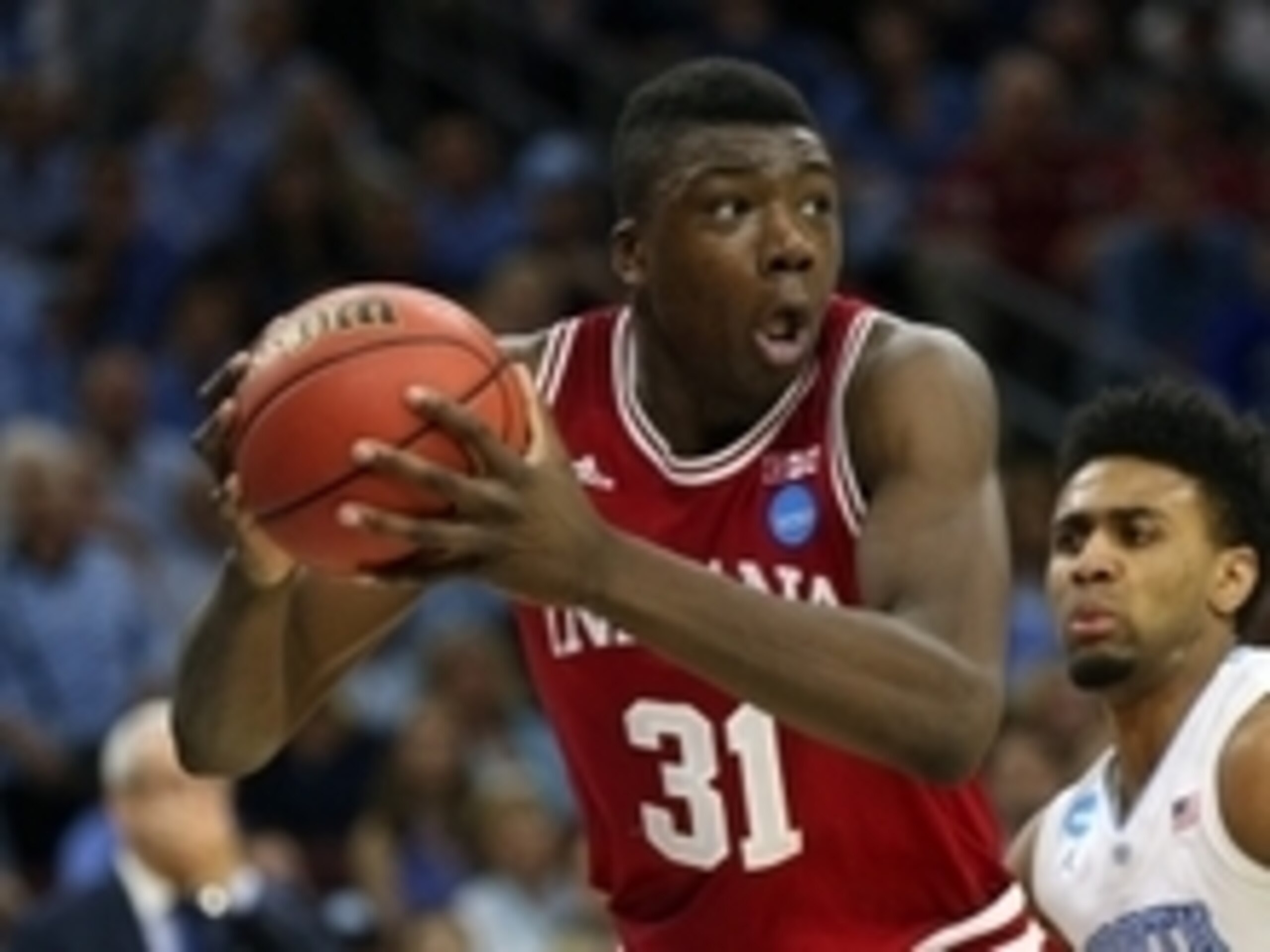
Physical Attributes: 6'10", 241 lbs
NBA Comparison: Karl-Anthony Towns
In terms of player efficiency rating during the 2015-16 NBA season, this is by far the highest praise any non-freshman on the list received. But Thomas Bryant (No. 7) and Ivan Rabb (No. 13) are the only returning players DraftExpress currently has projected for top-20 picks in 2017, so it makes sense that Bryant is projected for a successful career.
Bryant was absurdly efficient in his own right last season, making 70.7 percent of his two-point attempts and 70.6 percent of his free-throw attempts as a freshman—good enough for a PER of 26.6 that put him in a tie with Diamond Stone for sixth place among Big Ten players who appeared in at least 16 games.
So why Karl-Anthony Towns?
There are plenty of NBA big men who averaged at least 20 points and 10 rebounds per 40 minutes last season—Bryant's numbers were 21.0 and 10.2, respectively—and all but one of them (Al Jefferson) shot at least 70 percent from the free-throw line. But most of them are more active in the passing and/or shot-blocking aspects of the game than Bryant.
Towns does have Bryant covered slightly in both assist and block rate. However, the only other somewhat applicable match was Derrick Favors, and he's just 1-of-16 from three-point range in his six-year career. Bryant was 5-of-15 from beyond the arc last season and has the stroke to make that as much a part of his game as Towns has in the NBA (30-of-88 as a rookie.)
Josh Hart, Villanova
10 of 20
Physical Attributes: 6'5", 204 lbs
NBA Comparison: Will Barton
Sometimes the size of the fight in the dog means more than the size of the dog in the fight.
NBA Draft Combine measurements did not go well for Josh Hart. His wingspan, standing reach and hand size were all relatively low, and they're unlikely to change at his age. Because of that physical data, teams will be hesitant to spend a first-round pick on him.
But there aren't any tools that can measure his toughness or aggression. In spite of his size, Hart averaged 8.6 rebounds per 40 minutes this past season. Part of that was due to the lack of a true power forward on the roster, but Jay Wright also knew he didn't need a second frontcourt player with Hart in there with a nose and heart for loose balls.
He's the type of guy who might need a couple of years or a couple of teams to find the right home, but he'll be nearly indispensable when he does—kind of like Will Barton.
Portland wasn't a good fit for Barton for his first 2.5 years, but he has developed into a super sub with Denver over the past 110 games. Like Hart, Barton has the build (6'6", 175 lbs) of someone who has no business flirting with double-doubles, but he averaged 8.1 rebounds per 40 minutes last season.
Where Hart could become more of an impact player than Barton is behind the arc. Hart shot just 35.7 percent from downtown last season, but he was a 46.4 percent shooter as a sophomore. With his ability to crash the glass, if he can get that three-point stroke back up into the 40 percent range, he could be a poor man's Kawhi Leonard or a rich man's Omri Casspi.
Nigel Hayes, Wisconsin
11 of 20
Physical Attributes: 6'8", 235 lbs
NBA Comparison: Jared Dudley
Would the real Nigel Hayes please stand up?
As a freshman, he was a great defender who never ventured beyond the arc for offense. As a sophomore, he was a lethal three-point shooter and a critical piece of one of the most efficient offenses in college basketball history. As a junior, that efficiency vanished, and he became more of a facilitator for others, averaging 3.0 assists per game.
It's tough to forecast what a player will do in the pros when there's no telling what he's going to do as a senior.
If and when he finally puts it together, Jared Dudley is a conservative estimate of what Hayes could become. Dudley has been a shooting guard, small forward and power forward hybrid throughout his nine seasons, but regardless of the box you want to place him in, he has been a good three-point shooter, an adequate rebounder and passer, and a solid on-ball defender.
If Hayes decides to fully embrace last year's propensity for ball distribution, he could develop into more of a Nicolas Batum.
Justin Jackson, North Carolina
12 of 20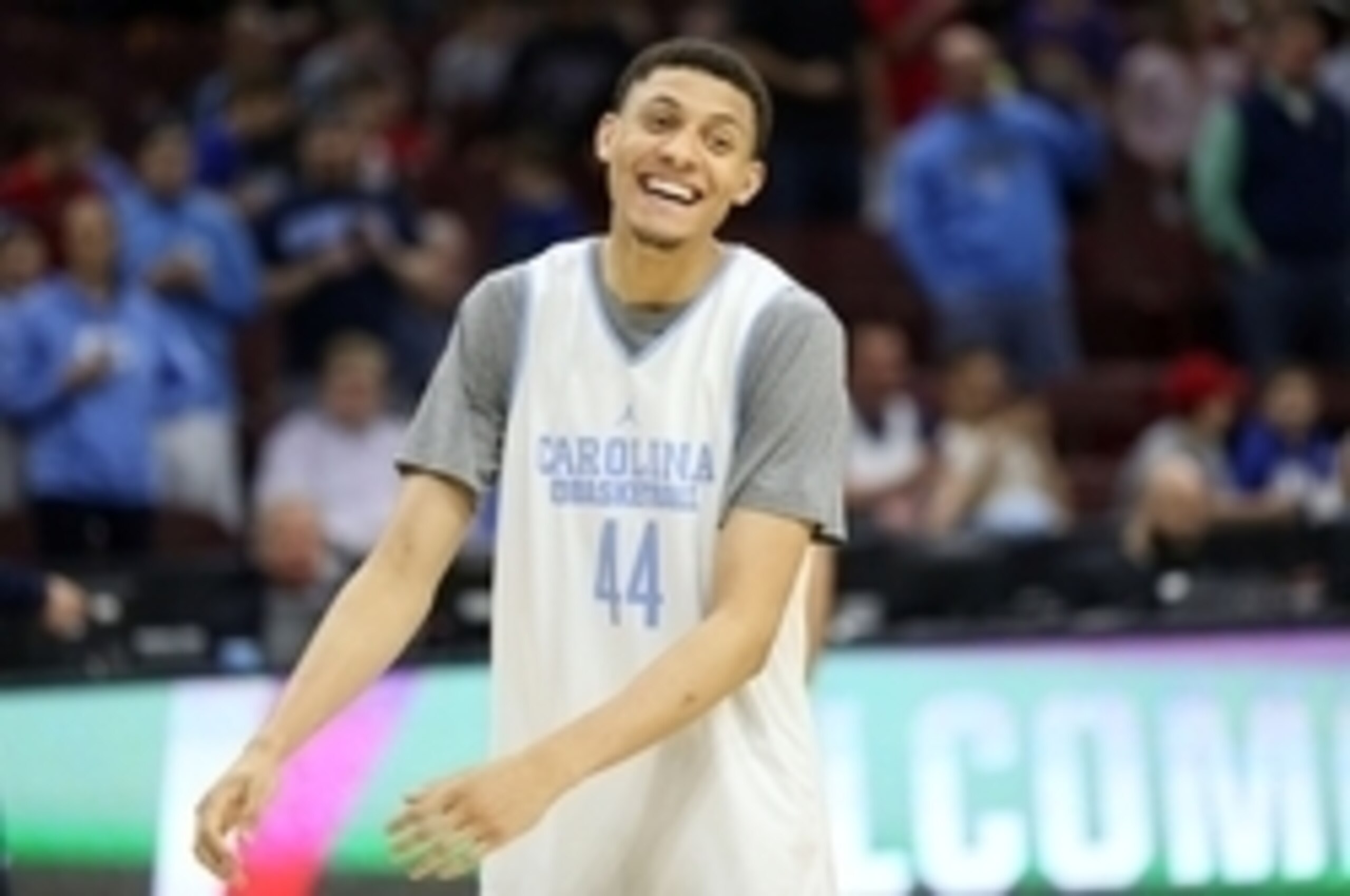
Physical Attributes: 6'8", 193 lbs
NBA Comparison: Evan Turner
The big remaining area for Justin Jackson to improve as a junior is his perimeter shooting. The 6'8" wing shot it well in both the 2015 and 2016 NCAA tournaments (a combined 14-of-26), but even with those impressive postseason numbers, he has connected at a career clip of just 29.7 percent over his first two seasons with the Tar Heels.
At a certain point, he'll need to either prove that the long ball can be a reliable weapon or phase it out of his game while developing in other areas.
Evan Turner has done the latter over the past two seasons in Boston, improving as a distributor and defender while becoming less dependent on his errant perimeter stroke (30.5 percent in his NBA career).
Jackson is already an above-average distributor for his size, averaging 3.9 assists per 40 minutes last season, despite rarely serving as even the secondary ball-handler in a rotation that included Joel Berry, Marcus Paige, Theo Pinson and Nate Britt.
Jackson also grabbed 5.5 rebounds per 40 minutes, despite frequently deferring to Brice Johnson, Isaiah Hicks or Kennedy Meeks on the glass. He has the talent and court vision to potentially become the type of triple-double threat that Turner is—he had three of them during the 2014-15 season. Jackson just hasn't had much of an opportunity to showcase that multifaceted game.
Kris Jenkins, Villanova
13 of 20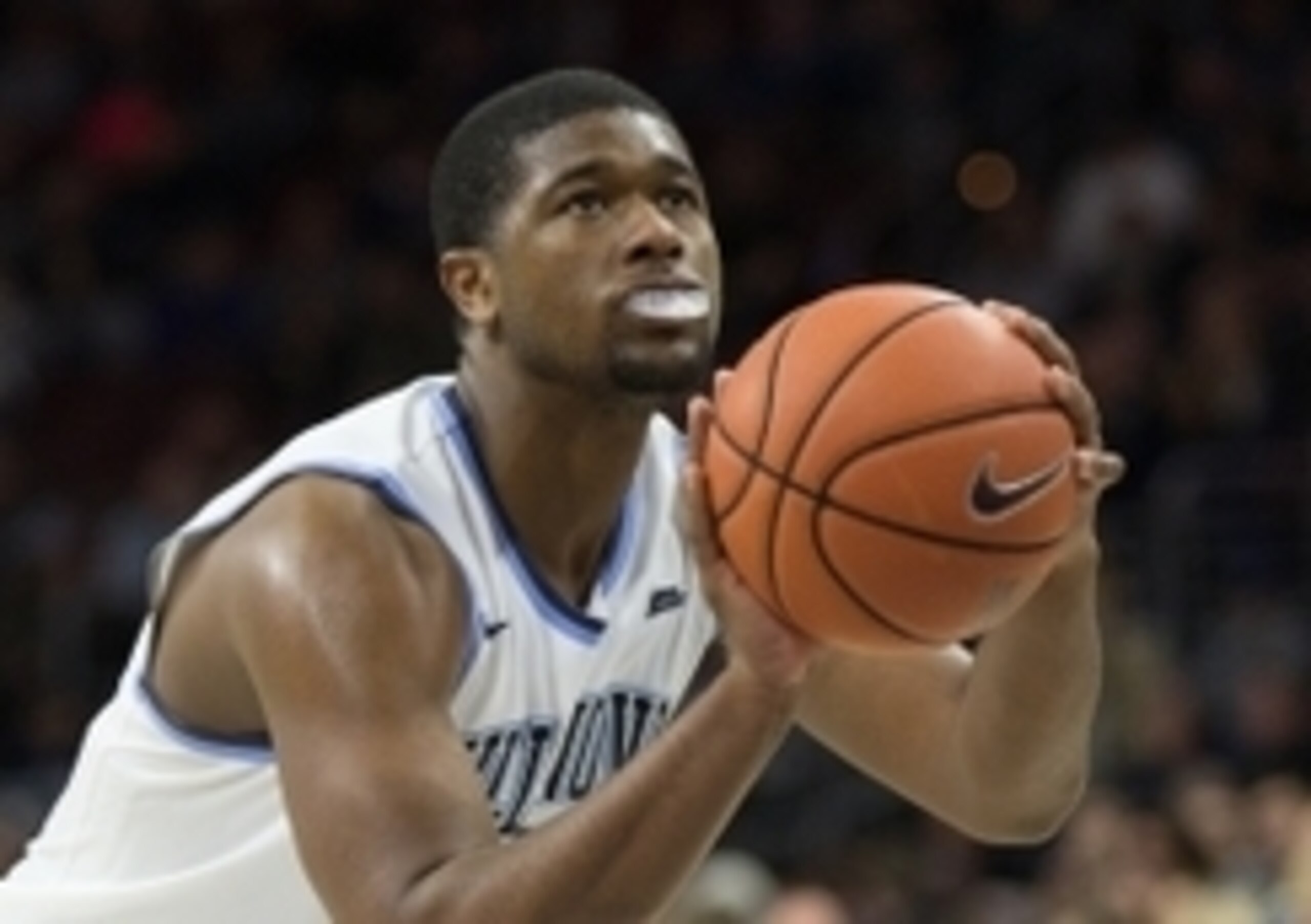
Physical Attributes: 6'6", 240 lbs
NBA Comparison: C.J. Miles
This was the easiest comparison to make on the entire list.
C.J. Miles has been a notorious gunner over the past few seasons, but he took it to new heights in 2015-16 by averaging 10.6 three-point attempts per 40 minutes. Among the 250 leaders in minutes played, only Stephen Curry (13.1) and Mirza Teletovic (10.9) attempted triples at a higher rate.
That's right. Even Kobe Bryant and Klay Thompson averaged fewer three-point attempts per minutes on the court than Miles.
Moreover, that's pretty much all Miles does. He forces the occasional turnover and grabs a few rebounds, but he doesn't drive or dish. His sole purpose is to make it rain threes.
Kris Jenkins isn't quite that bad, but he used to be. Prior to the concussion symptoms that sidelined Daniel Ochefu for three games in the middle of conference play, Villanova's starting power forward had nearly twice as many three-point attempts (122) as rebounds (64) and didn't record a single steal or block in 10 out of 20 games.
Over the latter half of his junior year, Jenkins became more of a well-rounded player, but he still finished the season averaging 9.1 three-point attempts per 40 minutes. And he will be remembered for the rest of history as the guy who made the buzzer-beating three-pointer to win the 2016 national championship. Don't be surprised if he makes a decent NBA career out of little more than the long ball.
London Perrantes, Virginia
14 of 20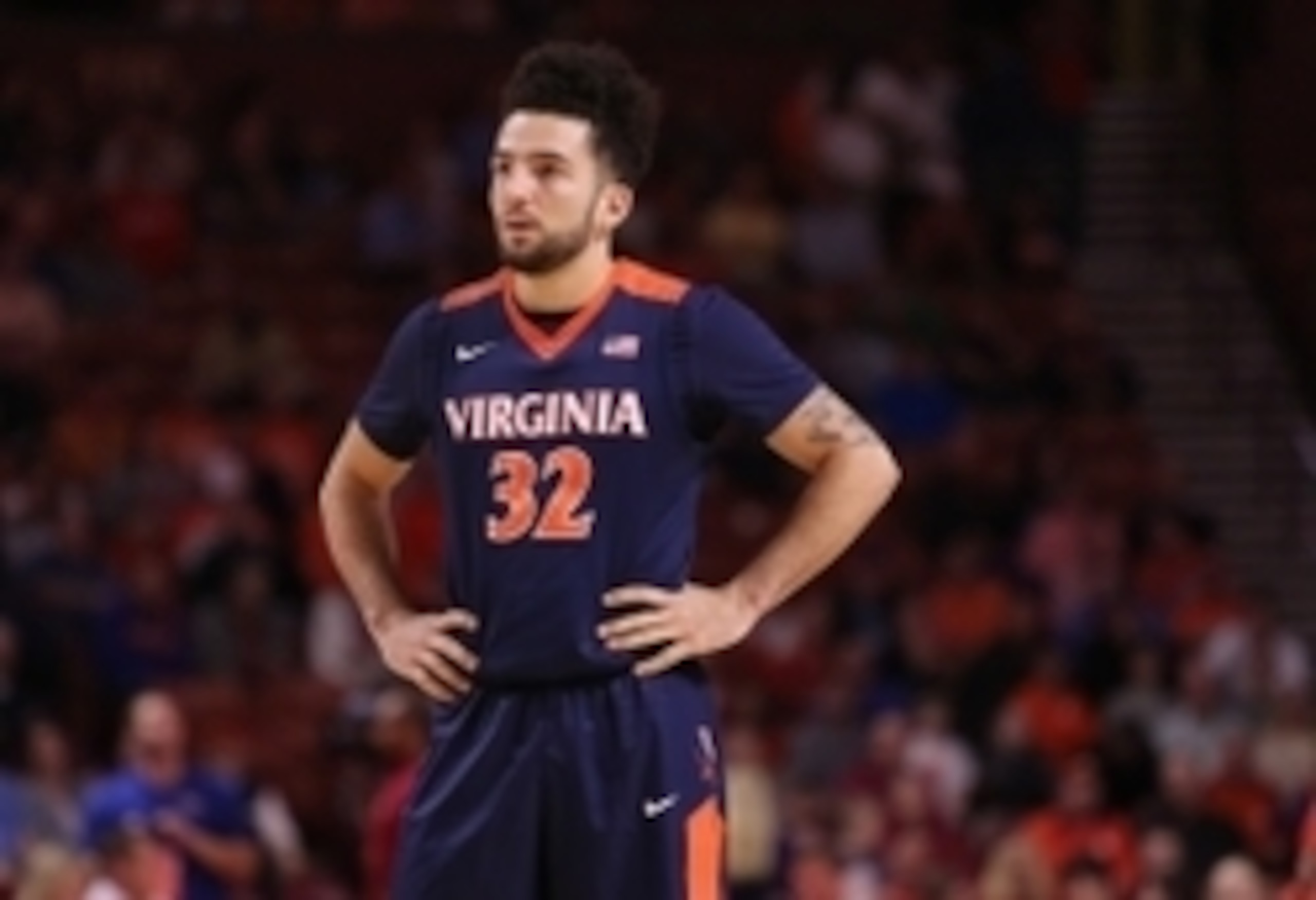
Physical Attributes: 6'2", 189 lbs
NBA Comparison: Jose Calderon
It's rare to find a player who is both lethal from three-point range and perfectly content with setting up teammates instead.
London Perrantes shot 48.8 percent from beyond the arc as a junior, but he finished last season with just seven more three-point attempts than assists, averaging more than five of each per 40 minutes—which is more like six after accounting for Virginia's slow pace of play. And over the course of his three years with the Cavaliers, he has roughly four assists for every three three-point attempts.
That has also been the case for Jose Calderon as of late, who didn't hit his peak as a shooter until his early 30s. Over the past four seasons, Calderon is shooting 44.1 percent from downtown but has tallied 340 more assists than three-point attempts during that time.
And this comes after spending most of his career as a pure point guard. During the 2010-11 season, Calderon averaged 8.9 assists and 2.3 three-point attempts per game.
Perrantes likely won't ever be that committed to sharing the rock, but he could be the type of point guard who frequently finishes games with more assists than points, even though he possesses the shooting stroke to average close to 20 points per game.
Alec Peters, Valparaiso
15 of 20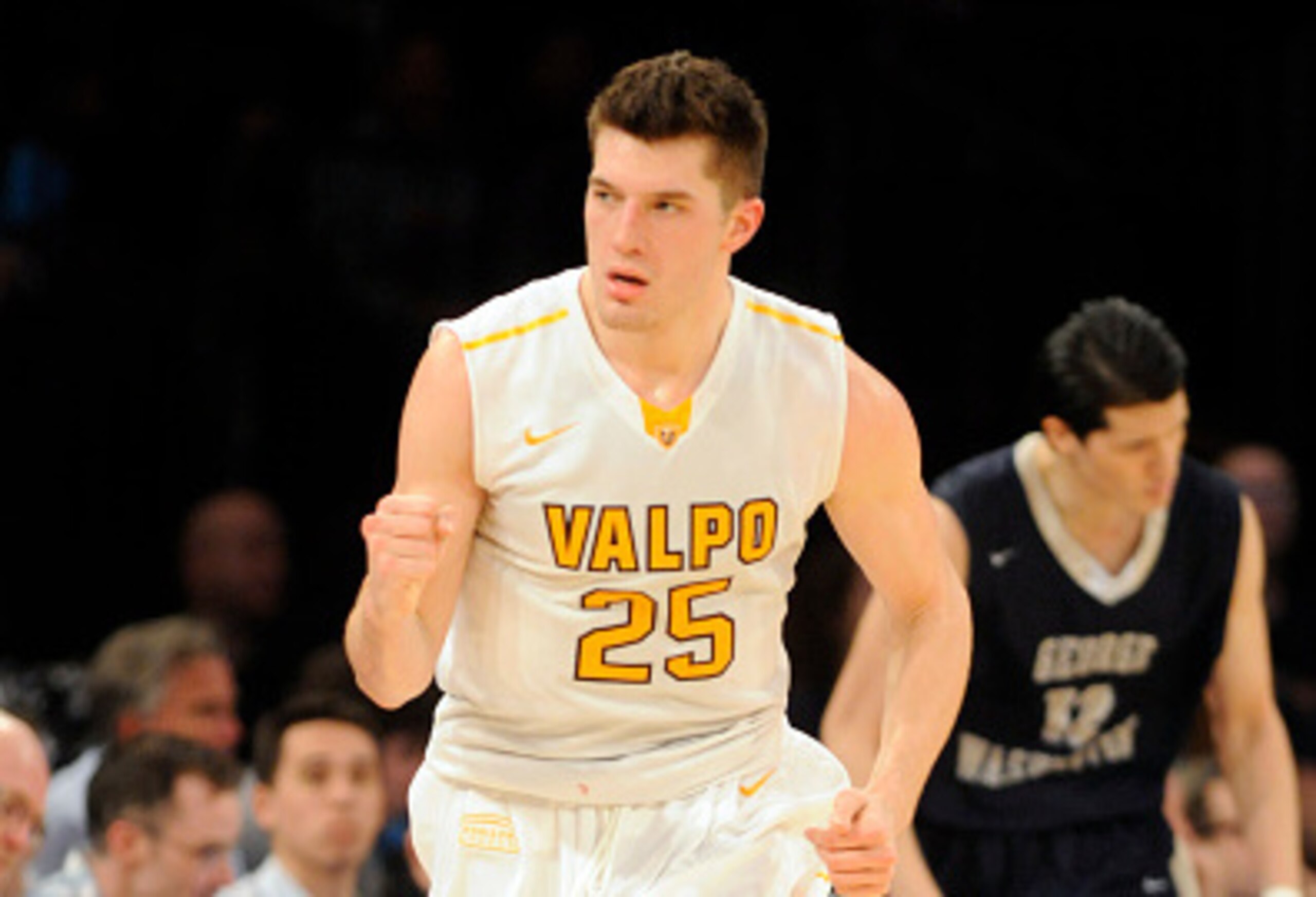
Physical Attributes: 6'9", 225 lbs
NBA Comparison: Kelly Olynyk
As mentioned elsewhere on this list, big men who both grab a lot of rebounds and attempt a lot of three-pointers are rare. Kevin Durant and Kevin Love are both members of that club, but if Alec Peters were destined to become like either of those guys, he would have remained in this year's draft pool to become a lottery pick.
No, the better comp for Peters is another player who came through the mid-major ranks: Gonzaga's Kelly Olynyk.
What's strange is that Olynyk wasn't much of a shooter in college. He averaged 27.0 points and 11.2 rebounds per 40 minutes in his final season with the Zags, but he only attempted 30 threes all year. Last season with the Boston Celtics, though, the 7'0" center averaged 6.0 three-point attempts per 40 minutes and converted on 40.5 percent of them.
Peters was even more lethal for Valparaiso, sinking 44.0 percent of his 7.0 attempts per 40 minutes while also corralling 10.5 rebounds per 40 minutes.
There's no telling how those mid-major studs will pan out in the NBA, though. Peters might alternatively follow in the less enviable footsteps of former Gonzaga star Adam Morrison.
Ivan Rabb, California
16 of 20
Physical Attributes: 6'11", 215 lbs
NBA Comparison: Kenneth Faried
For the time being, there's nothing "stretch" about Ivan Rabb's game. He attempted just two three-pointers last season, one of which came with 46 seconds remaining in a 13-point game. He's an old-school big man who is only going to get better once he packs on some weight that he can throw around in the paint.
Contrary to reports that the conventional center is a dying breed, there were 16 NBA players last season who averaged at least 15 points and 10.0 rebounds per 40 minutes while attempting fewer than 0.2 three-pointers per 40 minutes. After weeding out the ones who can't hit the broad side of a barn from the free-throw line, the best remaining comparison was Kenneth Faried.
Rabb isn't quite as relentless on the glass as The Manimal, but he's close. Faried has averaged 18.5 points and 13.1 rebounds per 40 minutes over the course of his NBA career, which is only marginally better than Rabb's freshman-year marks of 17.5 and 11.9.
Both Rabb and Faried block enough shots to keep the opposition from halfheartedly attacking the glass, and they're both just good enough from the charity stripe to avoid joining the likes of Andre Drummond, DeAndre Jordan and Dwight Howard in the NBA's painful-to-watch hack-a-player strategy.
Caleb Swanigan, Purdue
17 of 20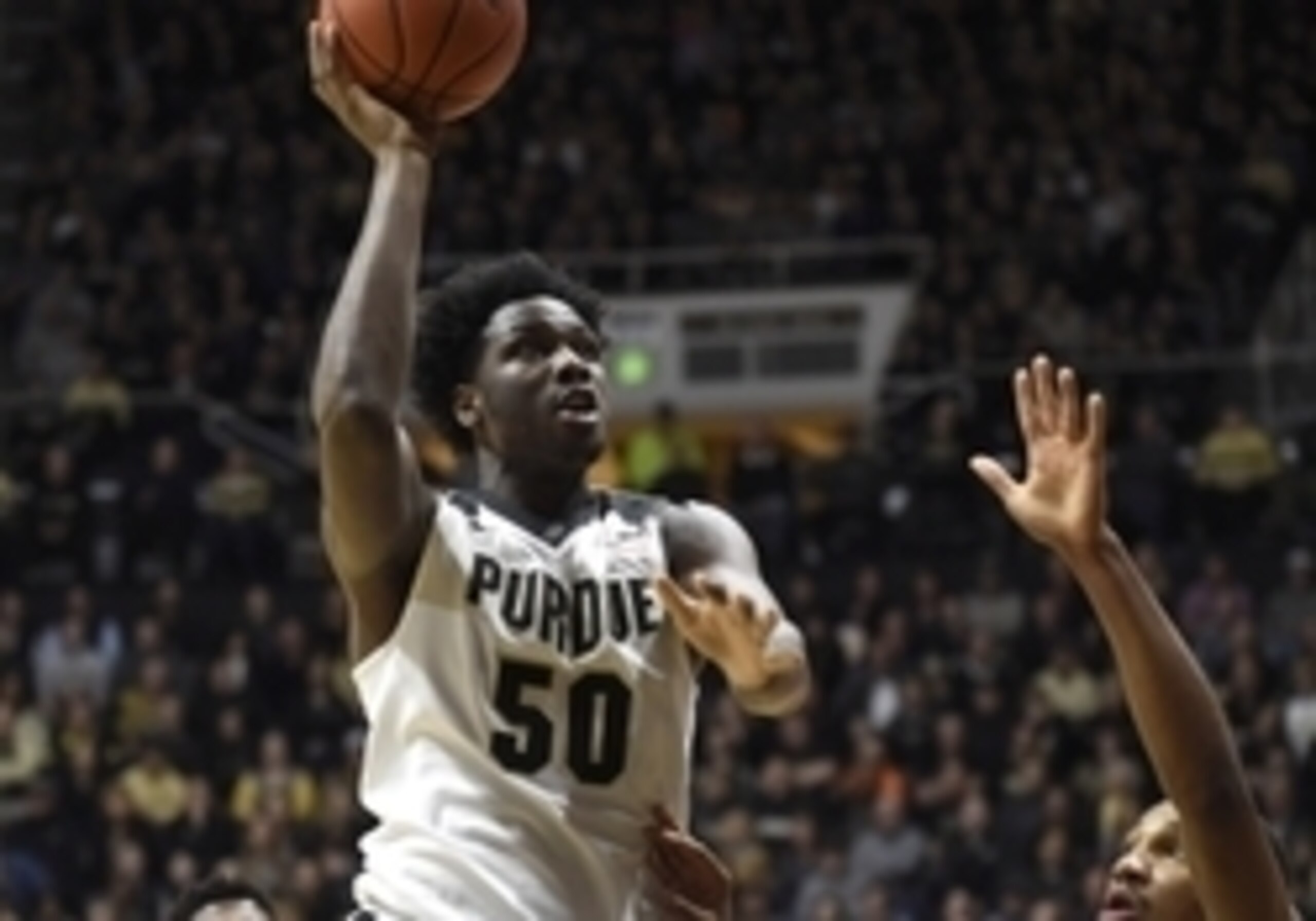
Physical Attributes: 6'9", 247 lbs
NBA Comparison: Jared Sullinger
Chances are we've only just begun to tap into Caleb Swanigan's potential as a frontcourt star. Sharing the paint with A.J. Hammons and Isaac Haas should have limited his effectiveness on the glass, but he still averaged 12.9 rebounds per 40 minutes. That number should only increase with Hammons now out of the picture.
There are plenty of great rebounders in the NBA but only a few who also account for at least two assists and two three-point attempts per 40 minutes. Add in the build of a 6'9" fullback, and former Ohio State star Jared Sullinger is the perfect match.
Like Swanigan, Sullinger has shown no hesitation to step outside the arc to get his points, even though he's a career 27.6 percent three-point shooter. And though he rarely shared the rock in college, he has become an increasingly effective passer, more than doubling his assist rate from his rookie year to nearly 4.0 per 40 minutes this past season.
If Swanigan can become even more effective with his three-point stroke (29.2 percent as a freshman), there's a decent chance he could be the next Kevin Love—particularly since they're both apathetic defenders who are more interested in grabbing defensive rebounds than keeping shots from going up in the first place.
Allonzo Trier, Arizona
18 of 20
Physical Attributes: 6'5", 199 lbs
NBA Comparison: Kevin Martin
Were it not for Kevin Martin, there wouldn't be a single player in the NBA quite like Allonzo Trier.
Arizona's freshman wing averaged 21.1 points, 1.6 assists, 5.8 three-point attempts and 7.7 free-throw attempts per 40 minutes. The next player on our list (Melo Trimble) registered similar numbers in three of those four categories but had an assist rate nearly four times as high as Trier's—a relatively common combination for driving guards.
But when Trier gets his hands on the ball, he's usually going to shoot. Granted, he shot 36.4 percent from three and 79.3 percent from the free-throw line, so it would be hard to argue that he's hurting the team. Still, it's a bit crazy that one of Arizona's primary ball-handlers barely tallied an assist per game.
That makes him a good match for Martin, who averaged 18.8 points, 2.1 assists, 5.0 three-point attempts and 6.3 free-throw attempts per 40 minutes in his 12th NBA season.
Martin used to be a bit better with assists, but he also used to attempt significantly more triples and freebies. At his peak of "ball hoggery" in 2010-11, he averaged 28.8 points, 7.1 three-point attempts, 10.3 free-throw attempts and just 3.0 assists per 40 minutes.
Melo Trimble, Maryland
19 of 20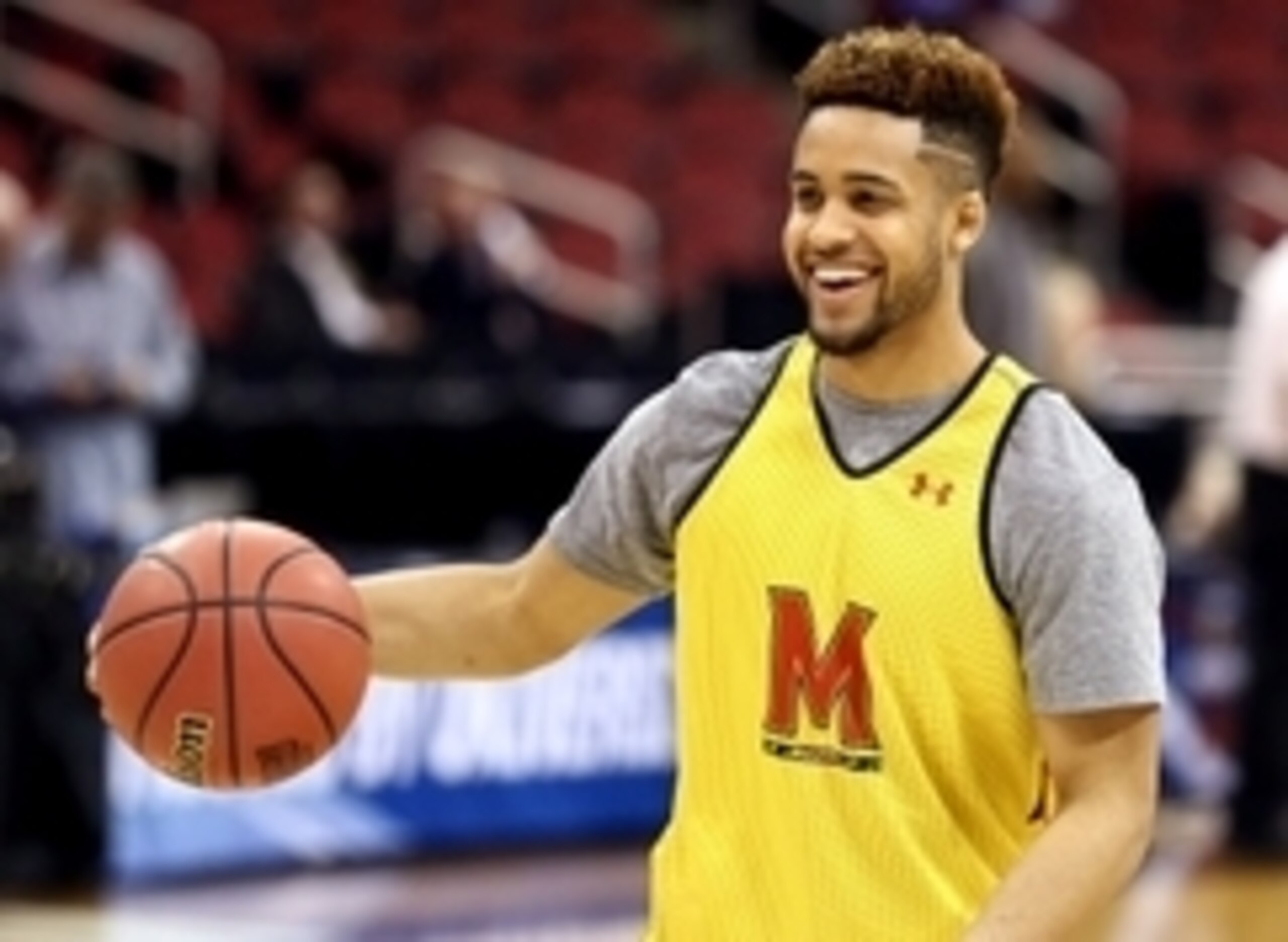
Physical Attributes: 6'3", 192 lbs
NBA Comparison: Kemba Walker
Provided his long-term shooting stroke is closer to the 41.2 percent he posted as a freshman than the 31.4 percent he shot as a sophomore, there are a ton of great options for where Melo Trimble is headed.
Trimble averaged 5.9 assists, 6.2 free-throw attempts and 6.3 three-point attempts per 40 minutes last season. By reducing the pool of NBA players to just those who recorded a 5.0 or higher in each of those categories last season, we're left with these nine players: Stephen Curry, Kevin Durant, James Harden, Chris Paul, Damian Lillard, Isaiah Thomas, Reggie Jackson, Kyle Lowry and Kemba Walker—each of whom also shot at least 35 percent from three and 81 percent from the free-throw line.
Curry, Durant, Harden and Paul are so far ahead of Trimble in some categories that they weren't even worth entertaining as options, but there isn't a name on that list who would make for an offensive comparison.
Of the remaining choices, let's go with Walker, if only because Trimble is about to be the type of one-man show at Maryland that Walker was as a junior at Connecticut. With the other four starters from last year's roster leaving, it's time to find out just how individually dominant Trimble can become.
Nigel Williams-Goss, Washington
20 of 20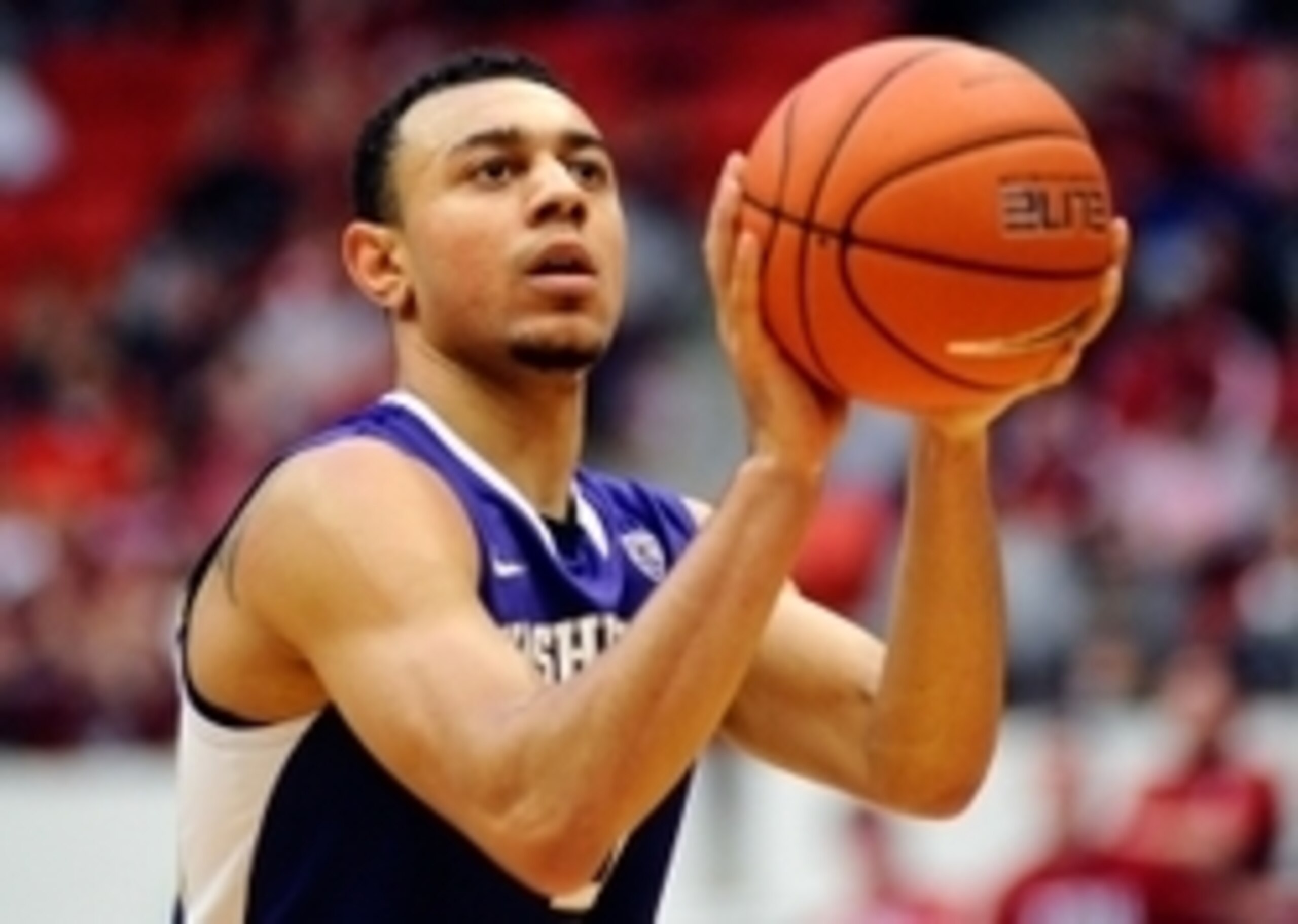
Physical Attributes: 6'4", 182 lbs
NBA Comparison: Michael Carter-Williams
Nigel Williams-Goss is the only non-freshman on our list who didn't play last season, and, no, we didn't pick his NBA comparison because he also has a hyphenated last name of Williams.
The last time we saw Williams-Goss, he was a triple-double waiting to happen. In two seasons with Washington, he had 12 games with at least seven points, six assists and six rebounds, but he was never quite able to amass 10 in each category.
Likewise, Michael Carter-Williams came tantalizingly close to a triple-double multiple times in his two seasons with Syracuse without ever pulling it off. With the extra minutes in the NBA, though, he finally got there, tallying five triple-doubles in his first two years.
What really seals the comparison is that neither point guard can shoot. Carter-Williams is shooting just 25.5 percent from three-point range in his three-year NBA career, and Williams-Goss shot 25.6 percent from beyond the arc as a sophomore. It's incredible that they both pass and score so well when the opposition can practically leave them alone on the perimeter without any fear of repercussion.
College statistics courtesy of Sports-Reference.com and KenPom.com. NBA statistics courtesy of Basketball-Reference.com. Height and weight figures courtesy of DraftExpress.com.
Kerry Miller covers college basketball for Bleacher Report. You can follow him on Twitter @kerrancejames.
.png?w=2560)
.jpg?w=2560 "Colts Football")





