


It's deja vu for the NBA Finals.
After throttling the rest of the Eastern Conference, the Cleveland Cavaliers are within four victories of their first-ever title. Again. And after narrowly escaping the Oklahoma City Thunder, the Golden State Warriors are on the verge of epic champagne showers. Again.
All of those regular-season and playoff games later, we're here, back where last year ended. The Cavaliers are healthier, the defending champion Warriors are better. But the stakes are the same.
TOP NEWS

Brown with an all-time summary of relationship with Tatum

Heat, Giannis were down by 20+ in each of their 3 losses

Power Ranking Every NBA Team's Starting Lineup 🔢
Might the outcome be different?
Backcourt
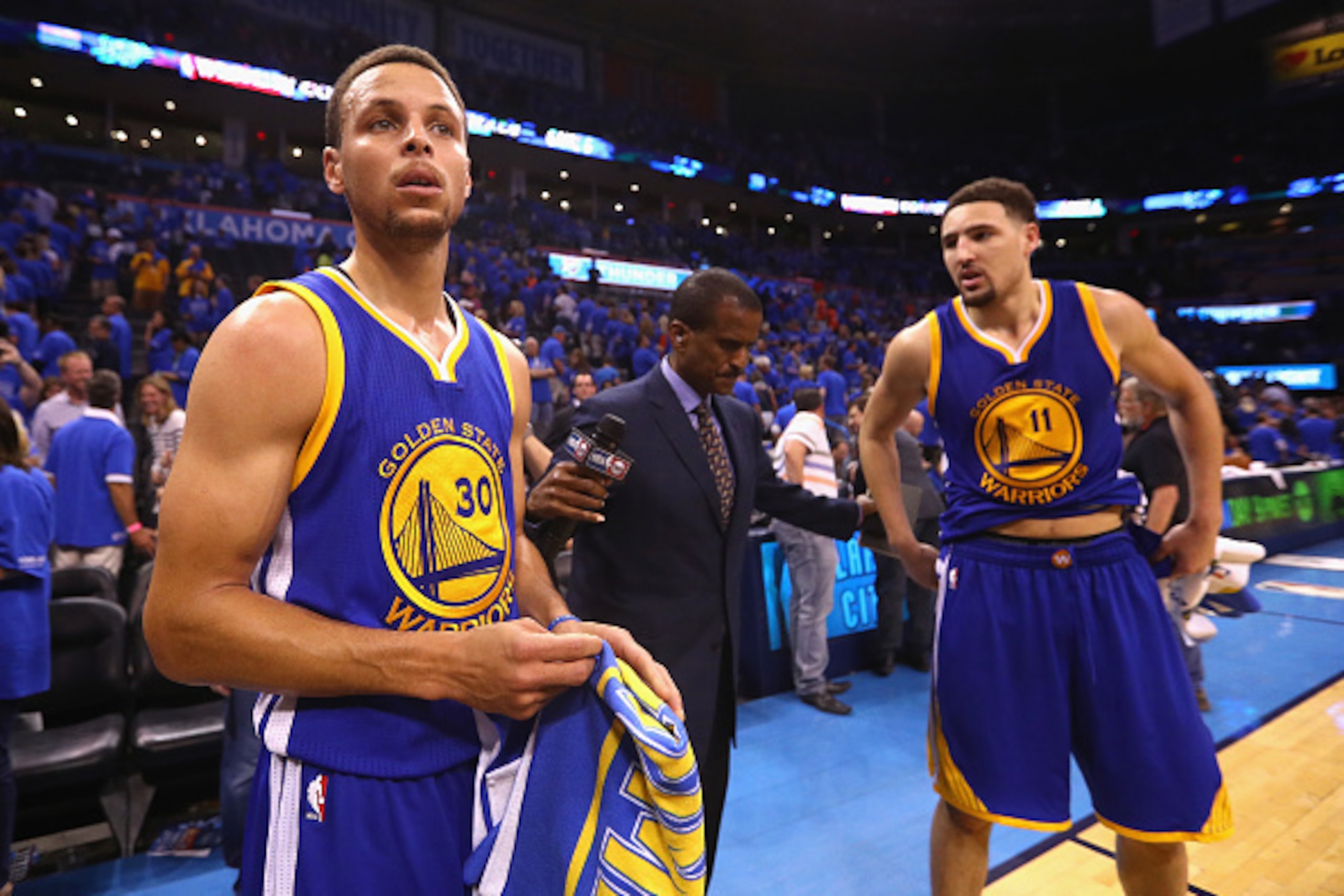
Cleveland Starters: Kyrie Irving, J.R. Smith
Golden State Starters: Stephen Curry, Klay Thompson
With all due respect to the Cavaliers, Kyrie Irving and postseason J.R. Smith, the Warriors deploy the best starting backcourt in basketball, and it's not even close.
Irving and Smith, to their credit, make for a lethal offensive combination, one with the long-distance acumen necessary to rival the flame-throwing of Stephen Curry and Klay Thompson. Both of Cleveland's guards are shooting better than 45 percent from downtown overall (that is not a typo) and sinking more than 50 percent of their catch-and-shoot triples (also not a typo).
But their matchups during the Eastern Conference playoffs never once came close to a duo like Curry and Thompson. Those two are draining three-pointers with comparable efficiency while shooting a significantly higher volume, and they both won't be as easy to manipulate off switches and drive-and-kicks on the defensive side.
Take a look at how the backcourts compare from beyond the arc on both ends of the floor:
| Irving/Smith | 6.1 | 13.2 | 45.9 | 2.9 | 7.4 | 38.5 |
| Curry/Thompson | 8.9 | 20.6 | 43.3 | 2.9 | 9.0 | 32.6 |
Neither Irving nor Smith, who ranks as a defensive bright spot during these playoffs, balances his sweet shooting with suffocating three-point prevention. The Cavaliers cannot cover up for both of them without sacrificing elsewhere.
Slotting Iman Shumpert next to Smith while using LeBron James as the de facto point guard offers more defensive potential, but the offense won't look the same without Irving. Tethering James to either one of Curry or Thompson, though feasible, limits the time he can spend on Draymond Green—godspeed, Kevin Love/Tristan Thompson—and forces Cleveland to stash Irving on someone like Harrison Barnes.
The Cavaliers are best suited to hoping Irving and Smith don't get exploited too much on their own. They can send timely traps and pray Curry continues his roller-coaster postseason—his shooting percentage inside eight feet of the basket (52.6) has plummeted relative to the regular season (62.5), and he's putting down just 25 percent of his treys in tight and very tight spaces.

But banking on Curry to remain human is dangerous. He can still shift the outcome of a game during one minutes-long burst and has come on when it matters most, shooting 63.6 percent from the field during the final five minutes of games in which Golden State is ahead or behind by no more than five points.
Oh! And his partner in crime is an All-Star who can function as a No. 1 scorer when Curry isn't a breathing incendiary device.
Unless the mothership abruptly calls Curry home, the Cavaliers' backcourt is in for a tough NBA Finals.
Advantage: Warriors
Frontcourt
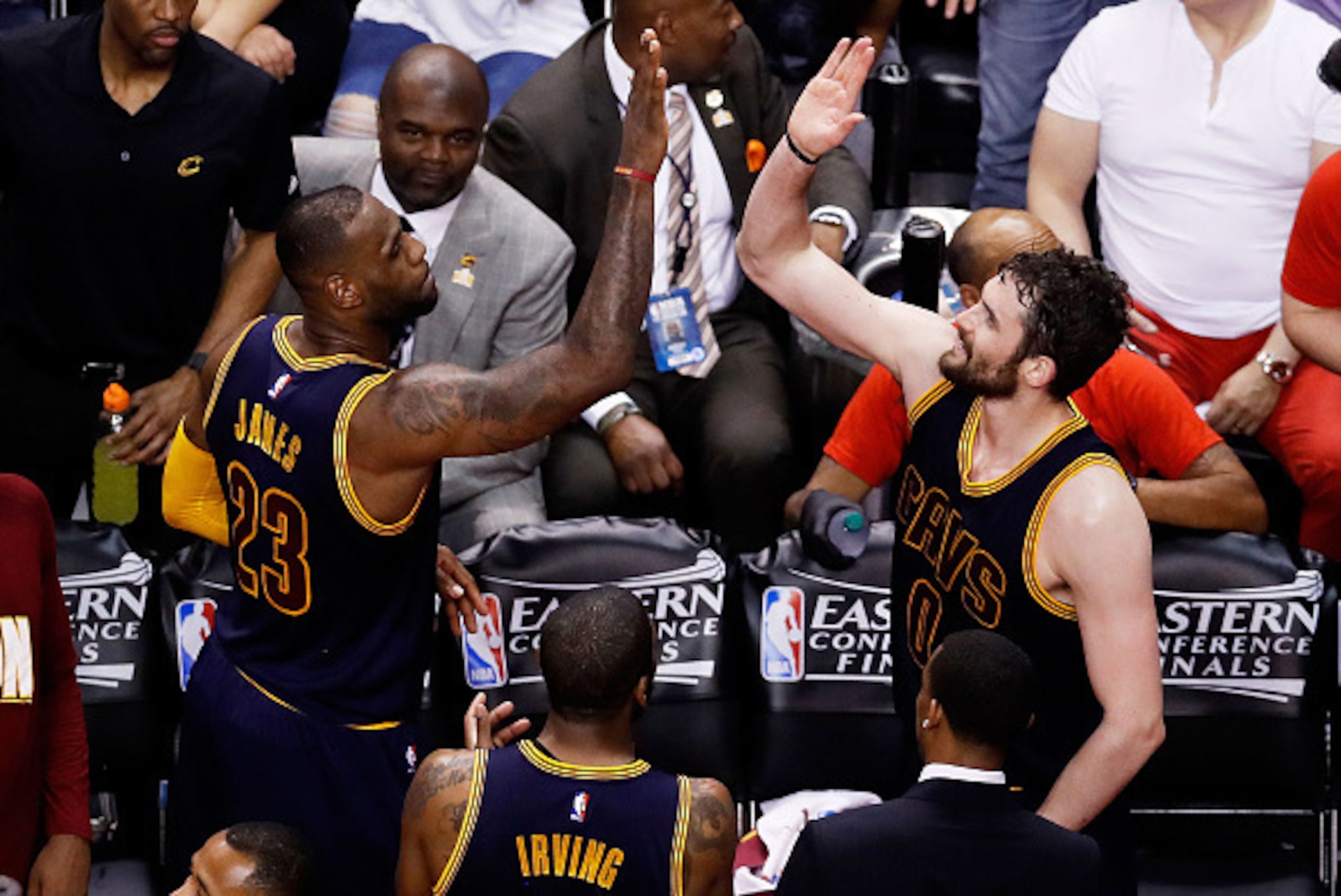
Cleveland Starters: LeBron James, Kevin Love, Tristan Thompson
Golden State Starters: Harrison Barnes, Draymond Green, Andrew Bogut
Golden State's frontcourt should pose a bigger threat to Cleveland's platoon, but Green is shrinking on offense at the most inopportune time.
He shot just 35.4 percent overall and 20.8 percent from three-point land during the Western Conference Finals. The Warriors' turnover rate jumped with him on the floor, their offensive rating improved without him and he posted the worst net rating among all their (usual) starters.
Even their defensive efficiency took a hit when he played. And while he made up for it in Games 6 and 7, limiting Oklahoma City Thunder shooters to 34.2 percent, the Warriors just aren't the same team when he isn't drawing attention away from Curry on offense.
Barnes, meanwhile, is a certified wild card. He disappears for games at a time on offense and isn't providing the same defensive punch when rolling as part of Golden State's "Death Squad." He didn't attempt more than nine shots in a single game against the Thunder, and head coach Steve Kerr yanked him from the starting lineup in Game 7 in favor of Andre Iguodala.
Andrew Bogut still brings the heat as a paint protector. Opponents are shooting 13.8 percent below their postseason average inside 10 feet of the basket when going up against him, and no one will soon forget his 15-point, 14-rebound, two-block effort during Game 5 of the conference finals. But it's impossible to count on him as a difference-maker, especially knowing how often the Warriors turn to undersized lineups that feature Green at center.
Plus, you know, the Cavaliers have James.

LBJ's 24.6 points, 8.6 rebounds, seven assists and 2.2 steals per playoff contest only tell part of the story. He is once again gauging the ebbs and flows of every game to determine what type of role—killer-instinct scorer or magical playmaker—Cleveland needs him to play on a given night.
Defenses have been unable to stop him on the move. He is shooting just 35 percent outside five feet of the basket, but more than half his looks are coming inside that range, from where he's shooting 71.6 percent, according to B/R Insights.
Love is getting killed inside the arc, finding nylon on just 34 percent of his two-point attempts. But he is making 44.6 percent of his three-pointers and wrapped the Eastern Conference Finals by shooting 13-of-21 from the field during Games 5 and 6.
Cleveland's bigger concern is finding ways to keep him on the floor. The defense allows 2.7 more points per 100 possessions than its playoff average with him in the game, a deficit he won't be able to make up as easily on offense against Golden State. As SB Nation Fear The Sword's Justin Rowan wrote:
"When it comes to combating their "death lineup," that's where things get tricky. As I mentioned before, I would have Thompson shadow Green unless that completely falls apart. Then the Cavs could try James on him. But assuming Thompson on Green is working, I would try to put Love on Barnes initially. While it's possible that the Warriors exploit that matchup, I think it's a risk worth taking given the offensive upside as well as the advantage on the boards. If Love is forced to only play when there's a traditional center on the court, I think that's a sacrifice he'll need to accept in order to give the team the best shot at winning.
"
Hiding Love on Barnes or Bogut could work. But he doesn't have the quickness to defend Green, and Barnes can occasionally be a weapon off the dribble.
Love is at his most vulnerable defending pick-and-rolls—especially when he syncs with Irving and Smith to guard them. Both two-man combinations allow more than 1.5 points per possession in those situations, according to B/R Insights, which is terrible. Golden State, however, ranks dead last among playoff teams in combined pick-and-roll usage.
Potential mismatches will be an issue anyway. The Warriors set a ton of screens to get Curry attacking against slower bigs and rank second in screen assists per game among playoff teams that made it out of the first round.
Thompson must help Cleveland bridge the gap between the times Love can and cannot be on the hardwood. He has a better chance of hanging with Green, and Golden State's starting frontcourt didn't do enough offensively against Oklahoma City to give it the edge over the Cavs, who are scoring 123.3 points per 100 possessions with their front three in action.
Advantage: Cavaliers
Bench

Key Cleveland Players: Matthew Dellavedova, Channing Frye, Richard Jefferson, Iman Shumpert
Key Golden State Players: Festus Ezeli, Andre Iguodala, Shaun Livingston, Marreese Speights
Slowly, surely, Cleveland's bench has deviated from its regular-season issues, turning into one of the team's most reliable assets. And that's a big deal.
Channing Frye is shooting 62.1 percent overall and 57.8 percent from deep. He has emerged as a more dependable option than Love in the fourth quarter, converting 57.1 percent of his shots (16-of-28) compared to Love's 26.3 percent clip (5-of-19), per B/R Insights.
Blowouts have curtailed Love's playing time in the final frame, but Cavaliers head coach Tyronn Lue often has gone with Frye over Love when it mattered most. He is doing a better job of drawing defenses outside the paint, and his added length gives him a decided edge on defense.
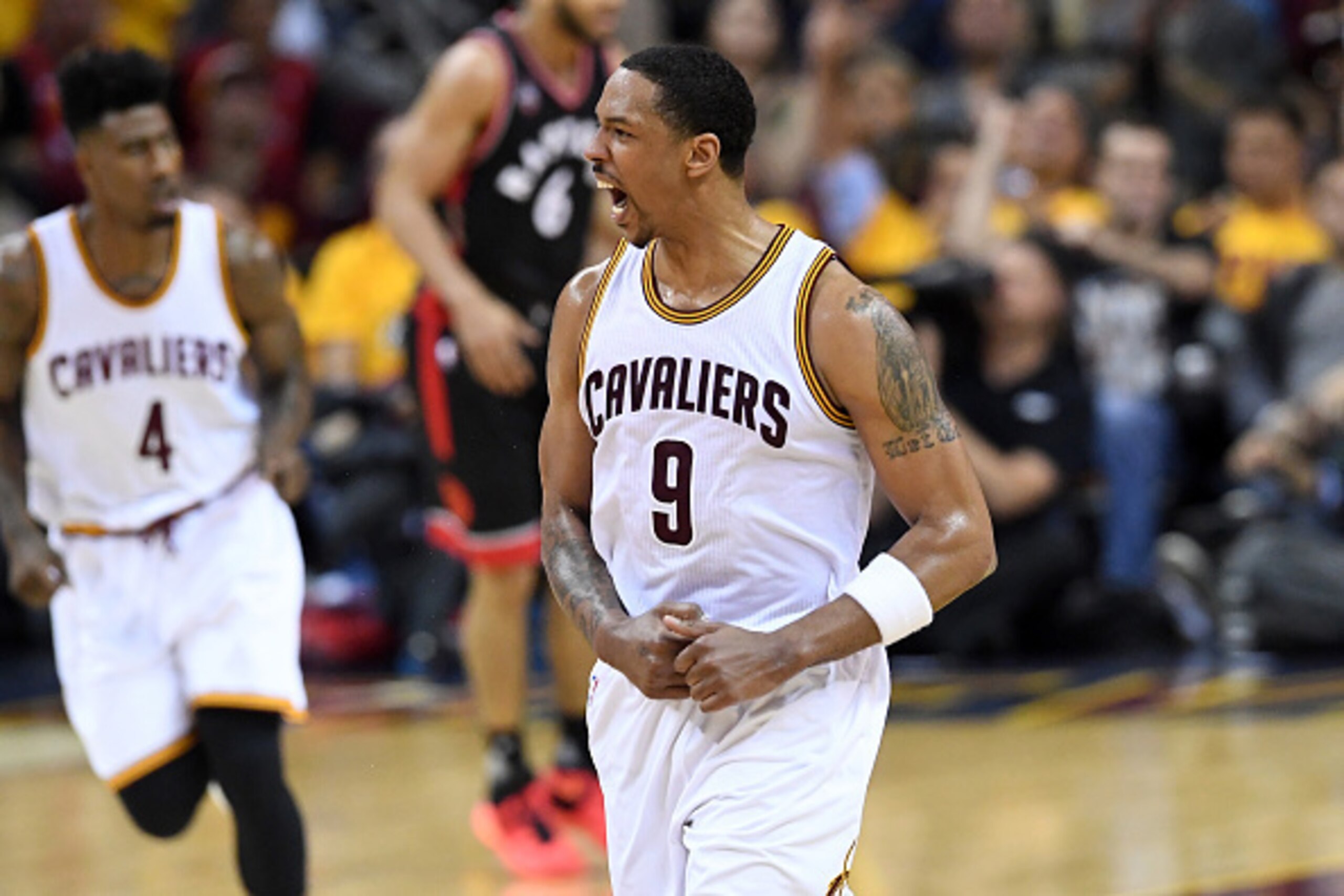
Matthew Dellavedova isn't shooting particularly well during the playoffs, but he and Frye have the two best defensive ratings among Cleveland players to log more than 35 total minutes. Shumpert and Richard Jefferson—Richard Jefferson—are burying more than 45 percent of their three-balls.
Shumpert still sees some of the toughest defensive assignments off the pine. He has sometimes struggled on close-outs and guarding pick-and-rolls, but the Toronto Raptors shot just 25 percent from three with him on their case in the Eastern Conference Finals.
Iguodala serves a similar purpose for the Warriors, only more so. He is basically a pseudo starter—someone Kerr leans on to defend any superstar wing, including Kevin Durant (and now LeBron). Without him, Golden State doesn't come storming back to beat Oklahoma City, as Nate Duncan of the Dunc'd On Basketball Podcast noted at the end of Game 6:
This, for the record, is just par for the reigning Finals MVP's course, as Warriors World's Sam Esfandiari reminded us:
The Cavaliers don't have an identical weapon. Shumpert isn't in the same defensive league as Iguodala. Any edge they might gain with Dellavedova gets matched or exceeded by Shaun Livingston, the lanky guard with the post-up game of a seasoned big and the chops to pester any of Cleveland's backcourt contributors, including Irving.
Festus Ezeli's rim protection and Marreese Speights' instant offense round out the headliners of a second unit that ranked in the top six in both offensive and defensive efficiency during the regular season, according to HoopsStats.com. And it's easy to prefer Golden State's bottom of the barrel (Leandro Barbosa, Ian Clark, Anderson Varejao) to Cleveland's (James Jones, Mo Williams, Timofey Mozgov).
If Kerr deploys Iguodala in the starting lineup to begin the Finals, the bench scales will tip ever so slightly in the Cavaliers' direction. Even then, though, the Warriors still boast more depth.
Advantage: Warriors
Head Coach
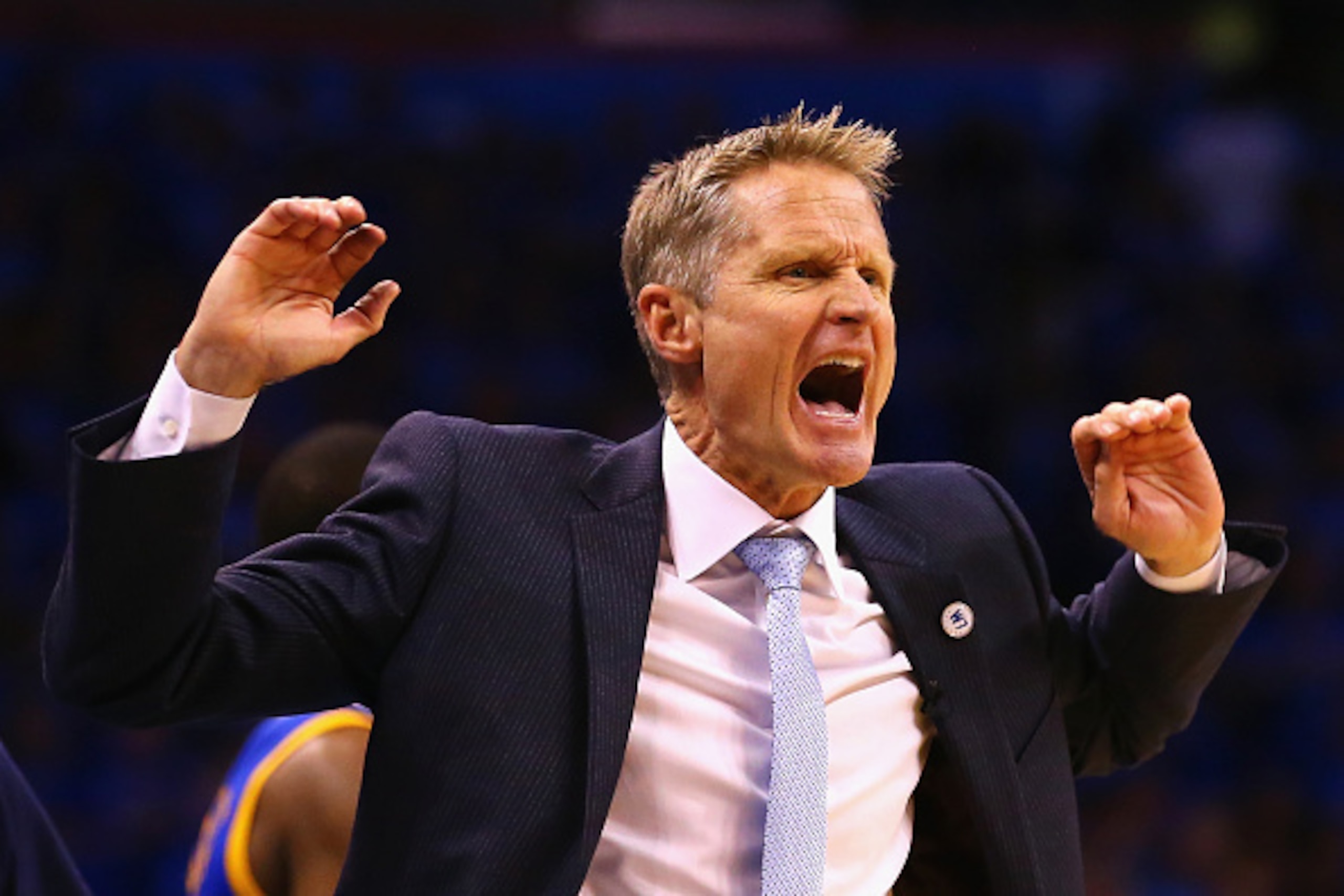
Cleveland: Tyronn Lue
Golden State: Steve Kerr
Lue has been a godsend for Cleveland. The Cavaliers aren't playing at an insane pace with him in charge, as was initially envisioned, but they are more opportunistic in transition. For the most part, the ball is moving more on offense, and he doesn't shy away from making potentially unpopular decisions, like chaining Love to the bench in favor of Frye late during games.
The difference in how the Cavaliers play and act under him is obvious too. Reports of distrust and dysfunction haven't permeated the rumor mill during his tenure. Players appear more at ease, and immeasurably happier, than they ever did under David Blatt.
"You can tell a lot about a person by the way people respond to them," Jones said, per Cleveland.com's Chris Haynes. "On this team, guys are laying it on the line. I don't know if you notice in games, but our guys are reaching levels physically that they haven't reached in two years."

Yes, Lue has been good. But Kerr is better.
It's not just that he has (slightly) more experience coaching at this level, or that he presides over one of the best teams in NBA history. He has installed a culture, both on and off the court, that rises above egos and reason—that transcends even him, as became clear when the Warriors carried out business as usual in his absence to start the 2015-16 crusade.
Kerr's mystique was on full display prior to Golden State's Game 7 win over Oklahoma City. He swapped Barnes for Iguodala in the starting lineup, giving the latter his first opening nod since Jan. 2 in the biggest game of the season after his team had rattled off two straight victories.
That takes guts, no matter what the numbers say. But no one questioned his decision, and you never got the feeling that Golden State's chemistry would suffer on the heels of such a significant change. Ever since taking over for Mark Jackson in 2014, Kerr has exuded superior command over his rotations and mid-game adjustments. The Warriors have a ton of weapons, and he knows the best ways to use them.
Advantage: Warriors
Prediction
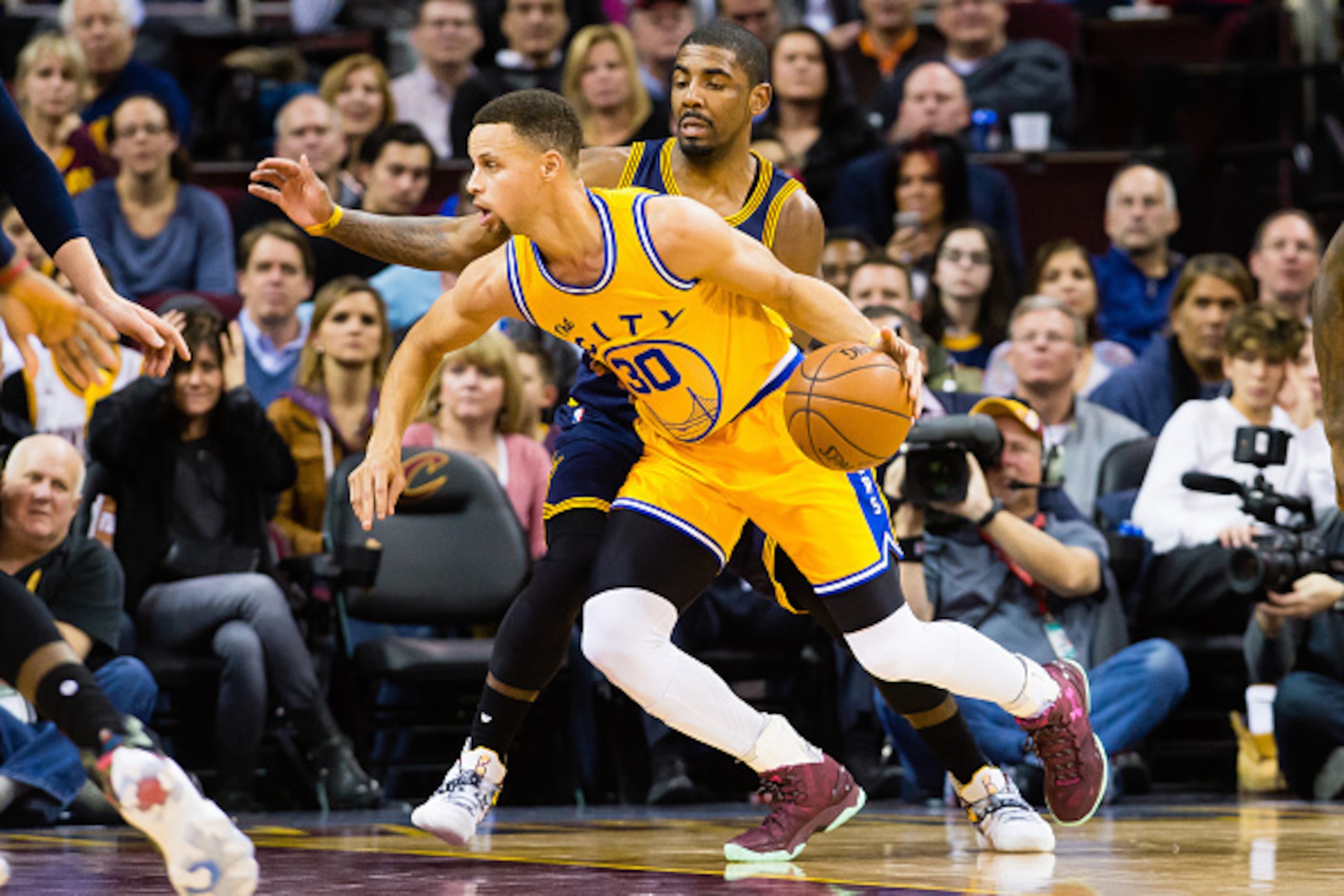
With the Cavaliers fully healthy and playing their best offensive basketball of the season, this NBA Finals rematch shouldn't mirror last year's sparring. Shouldn't. And yet, it will.
In seizing a 3-1 series lead over the Warriors, the Thunder made them look beatable. Oklahoma City still lost. Golden State, Curry included, didn't play its best until the second half of Game 7—after trailing by as many as 13 points—but it still forced that series-deciding meetup in the first place.
And that's what makes the Warriors so dangerous. They needn't be perfect for a full 48 minutes, let alone an entire best-of-seven set, to win.
Fractions of a game, of a quarter, are all it takes. That's the difference between a close contest and a complete drubbing, an evenly matched affair and a lopsided series.
Right now, the Cavaliers have the offensive firepower to make things interesting. And they have James, a matchup equalizer on his own.
The Warriors? Well, they have everything else.
Prediction: Warriors in Six
Stats courtesy of Basketball-Reference.com and NBA.com, unless otherwise cited.
Dan Favale covers the NBA for Bleacher Report. Follow him on Twitter @danfavale.
_0.png?w=2560 "Unranked Teams Cause Chaos in Rankings 📊")
.png?w=2560 "Week 8 Winners & Losers 📊")
.jpg?w=2560 "Jonathan Taylor Landing Spots 📍")



