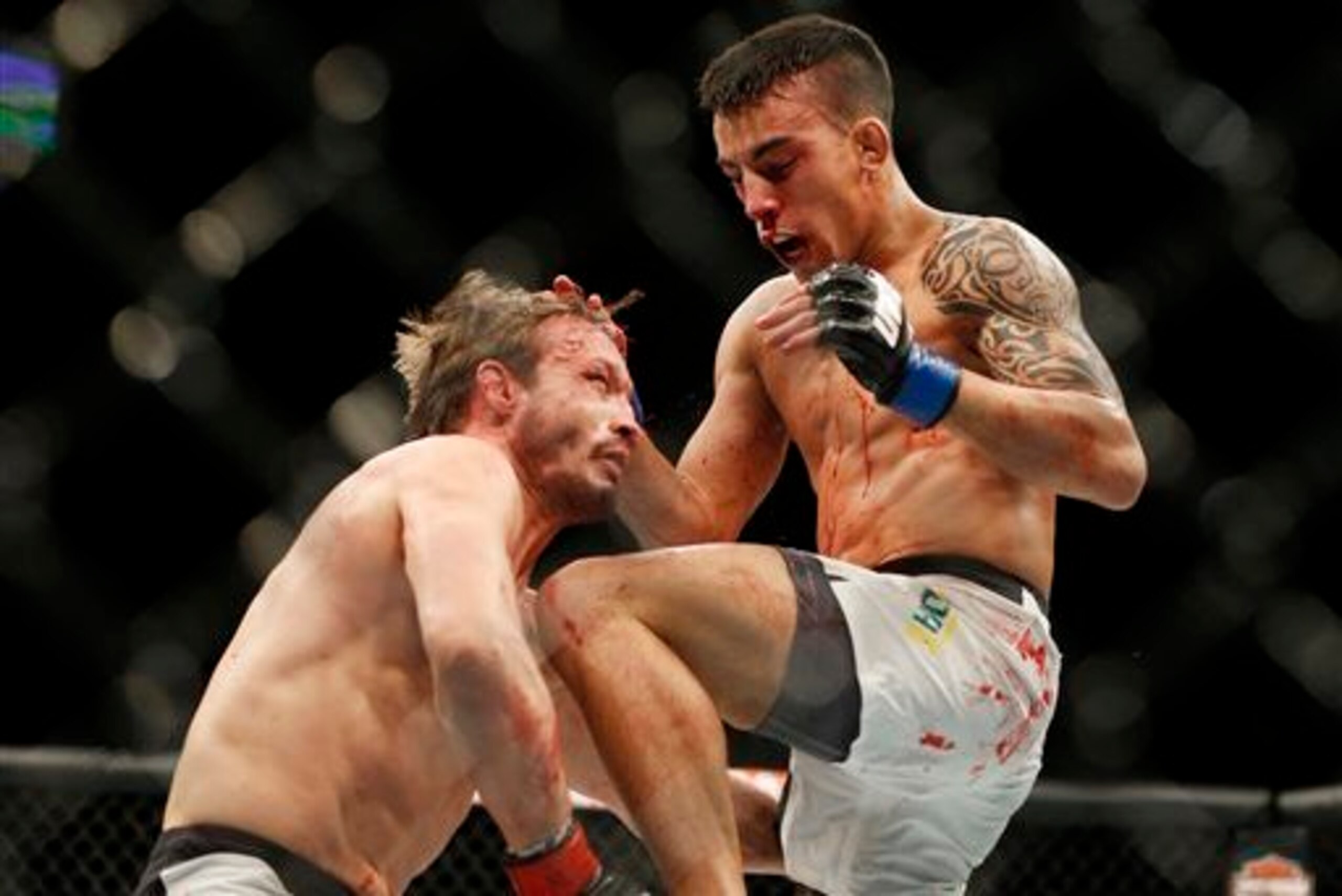

The Complete Guide to UFC Fight Night 88: Almeida vs. Garbrandt
The UFC heads to Las Vegas this Sunday night with an excellent Fight Night offering on Fox Sports 1.
In the main event, rising bantamweights Thomas Almeida and Cody Garbrandt meet in a fantastic matchup with the potential to be one of the best fights of the year. The winner will likely find himself in a top-contender matchup to face the winner of UFC 199's 135-pound title fight between Dominick Cruz and Urijah Faber.
The rest of the card is long on entertainment value. The co-main event features former bantamweight champion Renan Barao in his featherweight debut against veteran power-puncher Jeremy Stephens. Rick Story takes on Tarec Saffiedine in a well-matched welterweight bout, while another 170-pound scrap between Lorenz Larkin and Jorge Masvidal looks like a favorite for "fight of the night" honors.
The Fight Pass main event features another bantamweight star on the rise in Aljamain Sterling. He takes on Bryan Caraway in yet another well-matched fight, and if Sterling emerges victorious he will likely face the winner of Almeida-Garbrandt for a shot at the belt.
This is one of the best cards of the year in terms of matchmaking and entertainment value. Let's take a look at each matchup.
The Fight Pass Prelims
1 of 8
Heavyweights
Chris de la Rocha (4-1; 0-1 UFC) vs. Adam Milstead (7-1; 0-0 UFC)
Bottom-tier heavyweights open the card as Washington's de la Rocha takes on the debuting Milstead. De la Rocha lost his debut against Daniel Omielanczuk last July in Glasgow, while Pittsburgh's Milstead has compiled a seven-fight winning streak on the regional scene.
Milstead is a powerful and athletic fighter who likes to pressure. He has a crisp jab and throws consistent combinations, particularly on the counter, and packs real power in all his shots. Wrestling is a solid secondary skill set. De la Rocha likewise prefers to box, throwing a solid 1-2 and operating at a quick pace.
Prediction: Both fighters prefer to strike and like to be at punching distance, but Milstead is more powerful and athletically gifted. Milstead knocks out de la Rocha in the first round.
Bantamweights
Aljamain Sterling (12-0; 4-0 UFC) vs. Bryan Caraway (20-7; 5-2 UFC)
Sterling, one of the most promising young fighters in the UFC, takes one more step up the ladder against the veteran Caraway. Sterling recently signed a new contract with the UFC after taking a stab at free agency, turning a four-fight winning streak in the promotion into a substantial new payday. The 26-year-old defeated Johnny Eduardo in December to cap that run with a victory over a top 10 opponent.
The 31-year-old Caraway has only fought infrequently in the UFC, but he's been successful against quality opposition. He rebounded from a loss to Raphael Assuncao by taking a decision over Eddie Wineland last July.
Sterling, a native of New York, is the A-side of this matchup. He's the young fighter on the cusp of stardom and the one in whom the UFC just made a substantial new investment. If Sterling wins, he'll likely find himself in a top-contender matchup.
The older fighter is rugged, durable and well-rounded. Caraway is a functional striker with decent combinations, a consistent jab and surprising power, though his defense isn't great.
The real core of Caraway's game is his wrestling and grappling. He isn't an explosive finisher on takedowns, but once he gets ahold of his opponent, the Washington native is relentless. Takedown chains help him push his opponent against the fence, and if he can't finish his shot he's happy to grind in the clinch against the cage.
Once he gets the fight to the mat, Caraway shines in transitions. He excels at finding chokes in scrambles and especially getting to the back, where his rear-naked choke is outstanding.
Sterling is a smart fighter with great instincts in transition. He likes to use rangy kicks and jabs at range, sticking and moving while setting a long range. Eventually, his opponent has to telegraph a strike to come forward or his back hits the fence, and when either of those things happen, Sterling changes levels and shoots for an explosive takedown.
The New Yorker puts together crisp, relentless chains of singles, doubles and trips. Once the fight hits the mat, he throws monstrous ground strikes with great posture from the top while hunting for a topside submission. If his opponent tries to scramble, Sterling lets him move and then looks for a front headlock choke—guillotines are a specialty—or spins around to the back with lightning speed.
It's a dangerous, efficient and intelligent game that Sterling plays perfectly. He's not a confident boxer and doesn't throw a great volume of strikes, but that has yet to work against him.
Prediction: Both fighters will probably be happy to engage in a grinding war of attrition that consists of back-and-forth takedowns and scrambles. Caraway and Sterling are somewhat similar in their strengths, but Sterling is much faster, more athletic and more dynamic. Sterling takes a close, hard-fought decision.
The Fox Sports 1 Prelims
2 of 8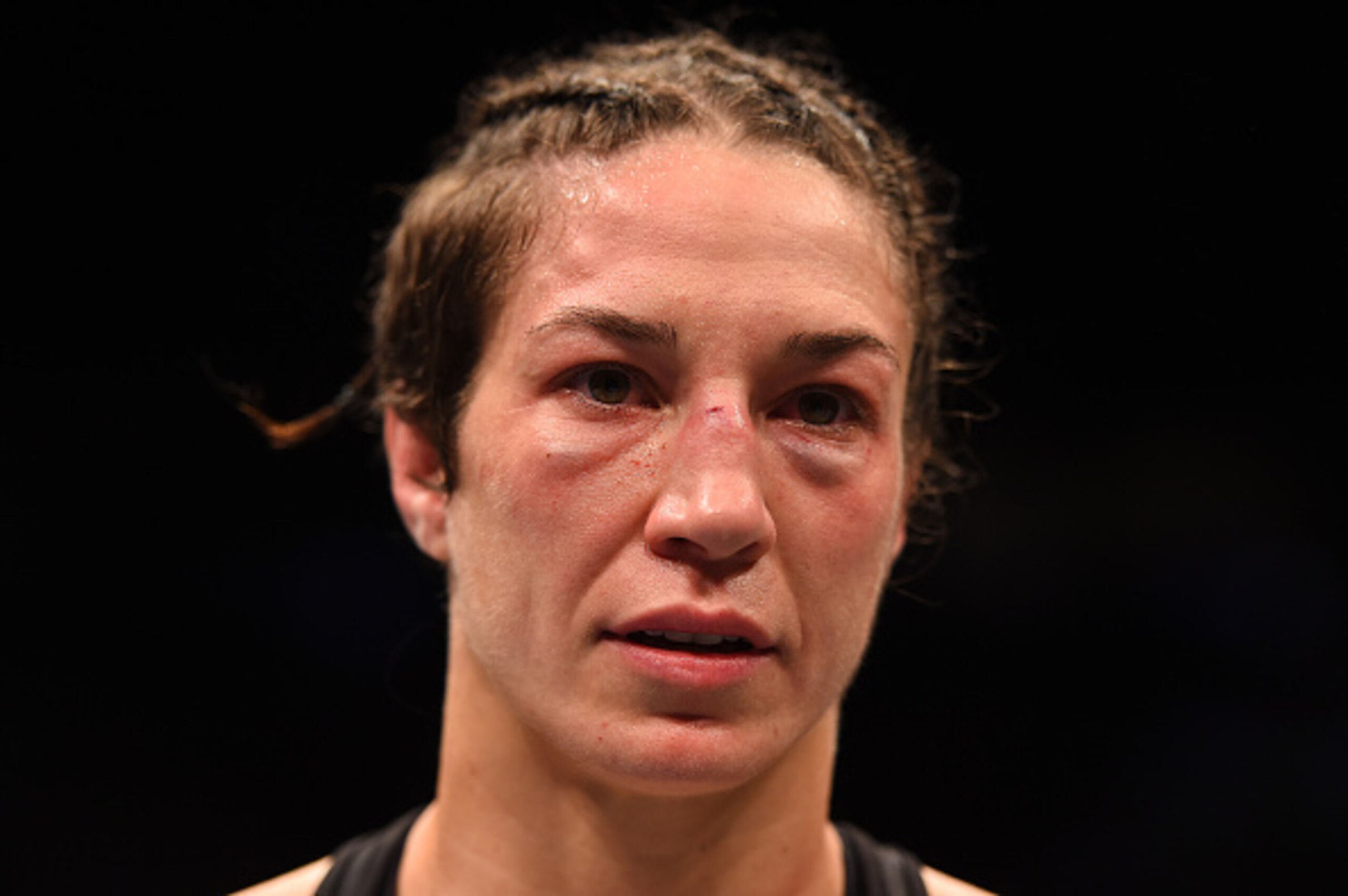
Lightweights
Erik Koch (14-4; 3-3 UFC) vs. Shane Campbell (12-4; 1-2 UFC)
Lightweight strikers meet in a great matchup as former top prospect Koch takes on Canadian kickboxer Campbell. Koch, who was once on deck to fight Jose Aldo for the featherweight belt, has not fought in more than two years, when Daron Cruickshank knocked him out. Campbell dropped a decision to James Krause in February after defeating Elias Silverio.
Campbell has a legitimate background in kickboxing and muay thai. He cracks away with high-output punch-kick combinations at range and does nasty work in the clinch with knees and elbows. The occasional takedown and period of top control gives him some variety, but he's only an average defensive wrestler.
Koch is mostly a striker himself, and the rangy (5'10"), athletic southpaw throws a vicious left kick and straight left. He's an excellent defensive wrestler and owns a dangerous guard as well. The problem is output. On the feet, he's often content to circle and feint without doing much of anything.
Prediction: Koch is more athletic and powerful, but Campbell has a deeper bag of tricks and works at a much quicker pace. The Canadian takes a decision.
Middleweights
Jake Collier (9-3; 1-2 UFC) vs. Alberto Uda (9-0; 0-0 UFC)
The American Collier faces a release from the UFC with two losses in his last three and badly needs a win here. He faces Brazilian prospect Uda, who makes his debut with an undefeated record.
Collier is well rounded and workmanlike. He likes to strike with a rangy jab and kicking game, and works at a quick pace. Good takedown defense keeps him on the feet and he hits an occasional takedown for variety. Uda is a monster in the clinch and a dangerous grappler, but isn't much of a wrestler and isn't especially sharp at range despite his background in muay thai.
Prediction: Collier is a better wrestler and more reliable at range, while Uda is better in the clinch and on the mat. It's close, but the pick is Uda by knockout in the second round.
Lightweights
Abel Trujillo (14-6, 1 N/C; 5-2, 1 N/C UFC) vs. Jordan Rinaldi (12-4; 0-0 UFC)
Former top prospect Rinaldi steps up on short notice to replace Carlos Diego Ferreira, who was flagged for a potential anti-doping violation, against Trujillo. Rinaldi has won five in a row in various regional organizations, while Trujillo defeated Tony Sims in January and had a loss to Gleison Tibau in November overturned due to his opponent's doping violation.
Rinaldi is well-rounded and does a good job of blending his strikes with his wrestling. He has a nose for the submission on the mat and can hit a variety of finishers. Speed, power and explosiveness define Trujillo's game. He likes forward-moving combinations of power punches, high-amplitude takedowns and vicious chokes.
Prediction: This is Trujillo's fight to lose; he's the better wrestler and more dangerous striker. Trujillo knocks Rinaldi out in the second round.
Bantamweights
Sara McMann (8-3; 2-3 UFC) vs. Jessica Eye (11-4, 1 N/C; 1-3, 1 N/C UFC)
Former title contender McMann tries desperately to get back on track following a two-fight losing streak and three losses in her last four. McMann was undefeated heading into her February 2014 title bout with Ronda Rousey, but has since won only one fight, a contentious decision over Lauren Murphy. Eye, too, is in need of a win with three losses in her last four. Miesha Tate and Julianna Pena both defeated Eye in her last two outings.
Eye is a striker by preference. She likes to stick and move behind her long jab and then occasionally sit down on a cross. She's a competent defensive wrestler but mostly relies on her command of distance and angles.
McMann was an Olympic silver medalist in wrestling, and that's still her bread and butter. An exceptional athlete with great speed and power, she throws one strike at a time before trying for takedowns, but isn't particularly crafty on the feet and doesn't throw much volume.
Prediction: This is a classic striker-wrestler matchup. If McMann can work takedowns, she wins; if Eye can keep it at range, she wins. The issue here is Eye's tendency to make questionable in-fight decisions, and that should tilt the balance slightly in McMann's favor. The Olympian takes a decision.
Josh Burkman vs. Paul Felder
3 of 8
Lightweights
Paul Felder (11-2; 3-2 UFC) vs. Josh Burkman (28-12, 1 N/C; 6-7, 1 N/C UFC)
Philadelphia's Felder takes on Utah's Burkman in a well-matched lightweight scrap. Felder lost two in a row against Edson Barboza and Ross Pearson, but rebounded by choking out Daron Cruickshank in January. Burkman was a welterweight for nearly the entirety of his career, but took a decision from K.J. Noons in his lightweight debut in February. That win snapped a two-fight losing streak.
Felder is a striker who mixes sound technique with a heavy dose of flash. He likes to pressure behind a crisp jab and cracking round kicks. When he works his way into the pocket, his feints draw out a response from the opponent, which Felder then counters with punches after moving his head to avoid the strike. Spinning backfists, spinning back kicks and wheel kicks add some unpredictability at range.
Stepping knees and uppercuts help to dissuade opponents from shooting takedowns, and if they get in on his hips Felder defends with excellent technique. He punishes opponents for trying to take him down with elbows and short punches as he defends. The occasional shot takedown of his own adds some variety, but those shots are mostly a change of pace.
Burkman also likes to strike. He switches stances fluidly, chopping away with heavy kicks to the legs and body at range before leaping in with punching combinations. Counterpunching is the best aspect of his game, particularly with left and right hooks in the pocket, where his durability, chin and power make him particularly dangerous.
Wrestling is another strong suit. Burkman defends takedowns well and has a nice arsenal of singles and especially doubles when the mood strikes. His ground strikes pack real power and he excels at finding submissions in transition, especially the guillotine.
Betting Odds
Felder -320 (bet $32 to win $10), Burkman +260 (bet $10 to win $26)
Prediction
While the former welterweight Burkman will have a bit of a size advantage to go along with his edge in power, Felder is the cleaner striker. He works faster, is more defensively sound and has more options at range.
There's always the chance that Felder will slip into Burkman's slower pace—mental lapses of that kind have been a problem for Felder before—but if he doesn't, Felder should take a clear decision.
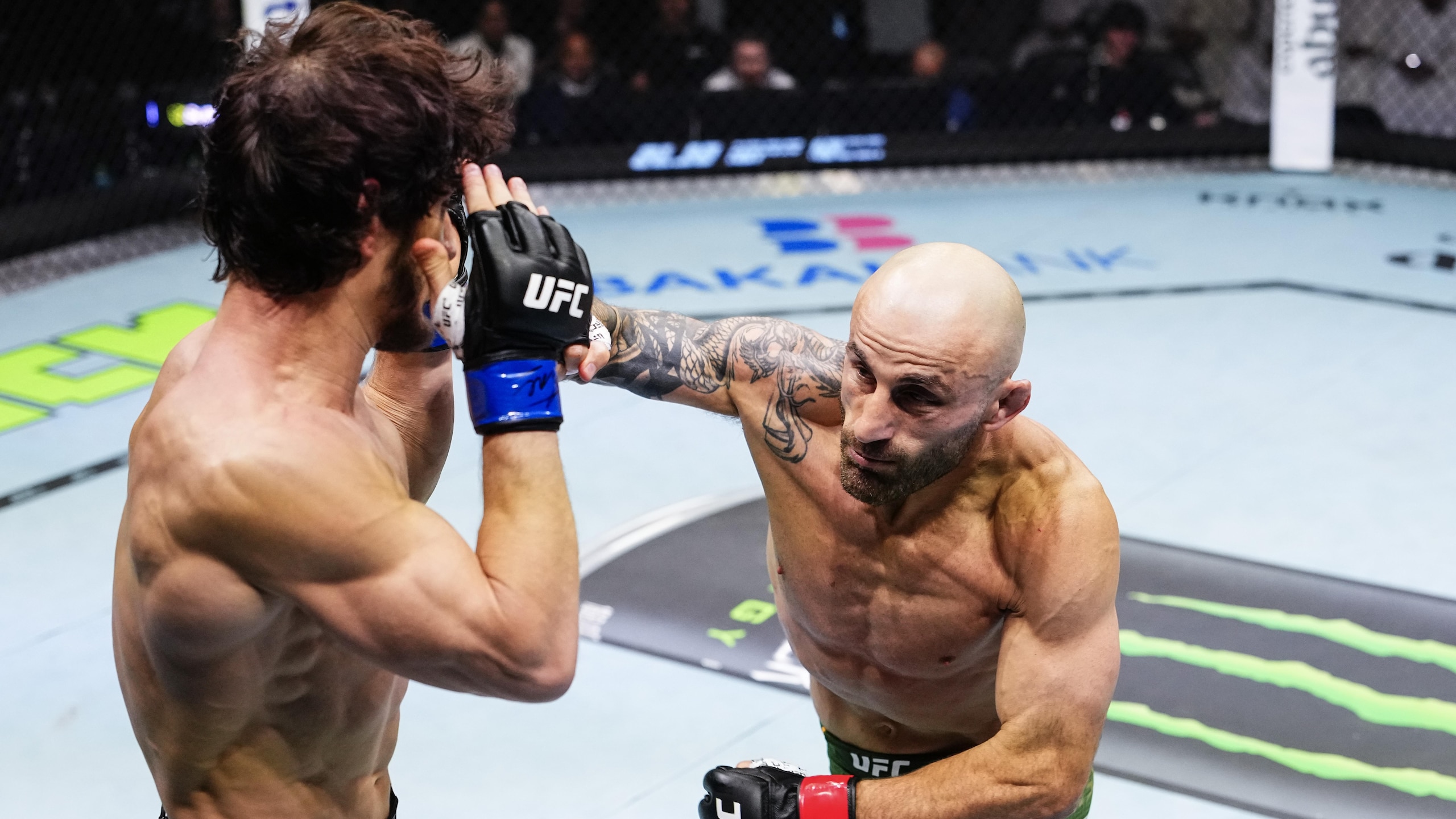


Jorge Masvidal vs. Lorenz Larkin
4 of 8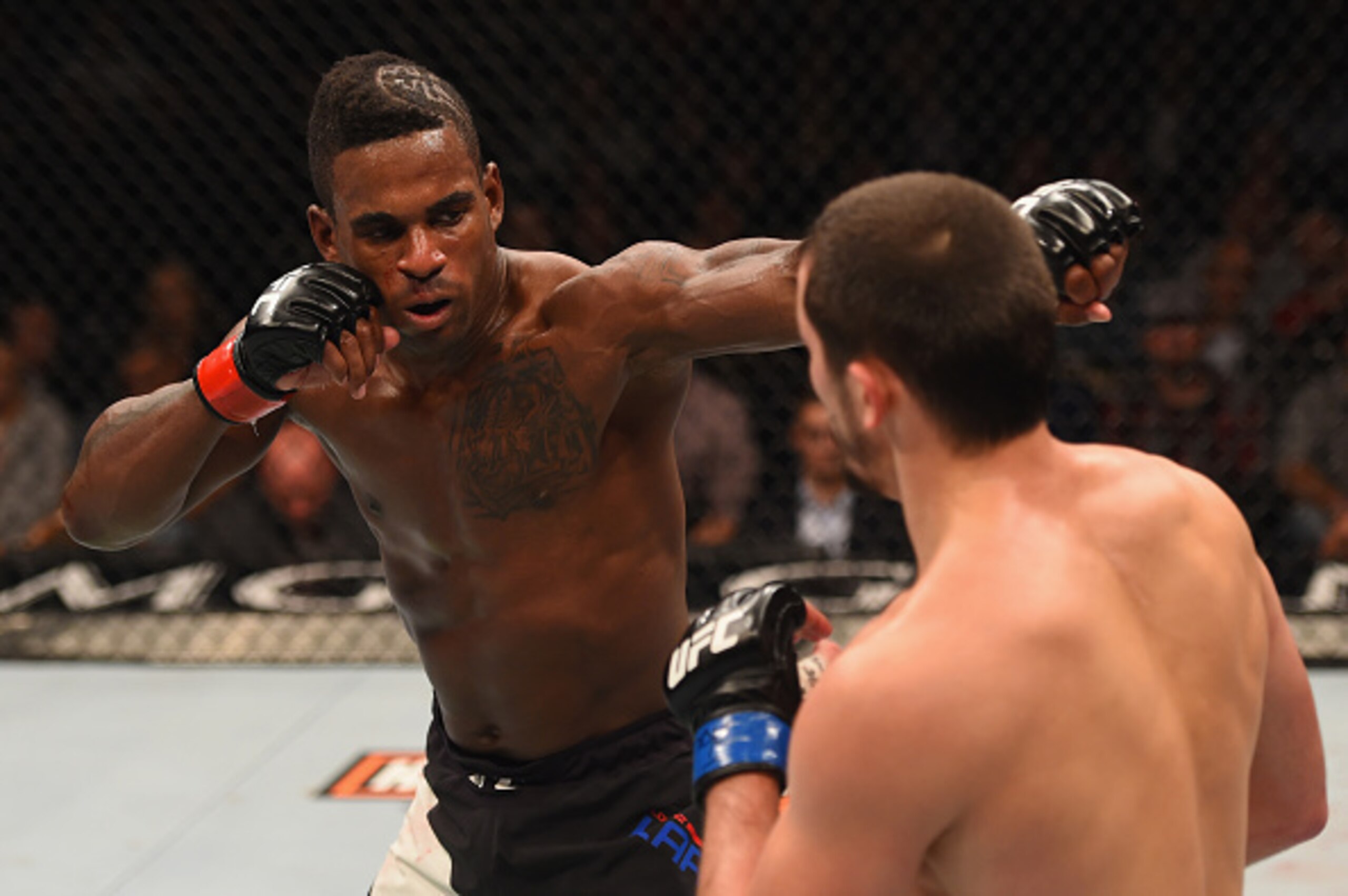
Welterweights
Jorge Masvidal (29-10; 6-3 UFC) vs. Lorenz Larkin (16-5, 1 N/C; 3-5 UFC)
The string of outstanding matchmaking continues as the veteran Masvidal takes on Larkin in a matchup of slick strikers. While Larkin's 3-5 record in the UFC looks superficially underwhelming, several of those have been close, including a loss to Albert Tumenov in January that snapped a two-fight winning streak.
Masvidal has been a professional for 13 years, but is still going strong. He dropped a late-notice decision to Benson Henderson last November after knocking out Cezar Ferreira in his UFC welterweight debut.
The winner won't quite be a contender in the stacked welterweight division, but will be a known action fighter with the potential for fights with big-name opponents.
Larkin is one of the fastest fighters in the division and packs tremendous power in his punches and especially his kicks. He's a pure striker, and a dangerous one who has made real improvements to his footwork and combination striking in recent years.
Sticking and moving at range is Larkin's preferred game. He works behind a crisp jab and slices away at his opponent's legs and body with round and front kicks, using those long strikes to set his preferred distance. Once at range, he has the space to move freely in the middle of the cage and to commit to forward-moving blitzes that meld vicious punches and kicks in long, creative combinations.
The occasional flying knee and spinning kick add some variety, and every shot has the power to finish the fight.
Good takedown defense, particularly since moving down to welterweight, allows Larkin to dictate the kind of striking matchup he prefers. His former tendency of getting pinned against the fence in the clinch has been less of an issue as well, and he has added sharp elbows and knees in close quarters. Grappling isn't his strongest suit, but he's competent and can survive on the mat if necessary.
On the down side, Larkin occasionally falls into periods of inactivity where he doesn't throw much, and his lack of secondary options can be an issue. He's a striker, plain and simple, and that's all his opponents really need to worry about.
Masvidal too prefers to strike, though he has added additional tools over the years and is no longer a one-dimensional fighter. Crisp boxing is the basis of his game, and he works behind a sharp jab that he uses both to score and to measure the distance for his laser-straight right cross. A smooth left hook, particularly as a counter, completes his meat-and-potatoes approach.
Round kicks at all levels and the occasional spinning kick serve as a strong complement to his boxing, but for the most part Masvidal is a boxer.
Outstanding takedown defense—some of the best in the division—allows Masvidal to keep it standing. He's a surprisingly crafty offensive wrestler as well with a nice arsenal of trips and single-legs. His timing is excellent and he has a gift for melding striking and wrestling.
On the mat, Masvidal mostly looks to control and defend if taken down, but he has developed an active and dangerous front headlock game in transition in recent years.
There's no denying the basic technical soundness of Masvidal's game, and he's exceptionally efficient with both his strikes and his takedowns. The other side of that is occasional periods of inactivity and a tendency to give away rounds he should otherwise win.
Betting Odds
Larkin -125, Masvidal +105
Prediction
This is a tough fight to call. Larkin is faster and has a more diverse striking arsenal but Masvidal is sharper with his hands and has the offensive wrestling game to provide another dimension for Larkin to worry about. Masvidal should pressure, and if he can pull the trigger when he backs Larkin to the fence, he should take a decision.
Chris Camozzi vs. Vitor Miranda
5 of 8
Middleweights
Chris Camozzi (23-10; 8-7 UFC) vs. Vitor Miranda (12-4; 3-1 UFC)
Mid-tier 185-pounders meet in an excellent matchup. Camozzi has now won two in a row after dropping five consecutive UFC appearances, defeating Joe Riggs and Tom Watson in February and August respectively. Miranda was a finalist on The Ultimate Fighter Brazil 3, and has won three in a row since losing the show to Antonio Carlos Jr. All three of those wins have been finishes.
The winner won't be in line for a title shot but will be ready for a matchup with a top-15 opponent.
Camozzi prefers to strike. The rangy southpaw probes with his jab and then cracks away with hard low and middle kicks at range, sticking in the straight left and right hook from time to time. Pace is a strong suit and Camozzi drops a steady stream of strikes whenever given the space to operate in the middle of the cage.
If his opponent pressures, Camozzi is happy to dive into the clinch. His 6'2" frame and long arms give him great leverage inside, and he moves fluidly from the double-collar tie to underhooks and frames. His knees are sharp and dangerous and he mixes in the occasional elbow for good measure.
While only an average defensive wrestler, Camozzi isn't easy to hold down and he's a competent grappler. He rarely shoots for takedowns, though.
Miranda is likewise a striker. The Brazilian has a legitimate pedigree as a professional kickboxer and competed in K-1's regional tournaments. That background shows up clearly in his crisp, technical striking repertoire.
The Brazilian operates behind a crisp jab that he mixes up to the body and head and throws smooth combinations at all levels. The real strength of his game is his kicks, which are sharp and well-timed. Miranda's head kicks in particular are dangerous and he never telegraphs them. Consistent movement and crisp footwork help keep him away from the fence and in open space where he prefers to be.
The clinch is a strong secondary area for Miranda. As befits a former professional kickboxer, his knees from the double-collar tie are sharp and capable of finishing the fight. It's hard to pin him against the fence for long, as he excels at breaking off and creating space.
Early in his career, Miranda struggled to defend takedowns, but he has markedly improved his technique in recent outings, particularly against the fence. He isn't an ace grappler, but he can defend from his back and is surprisingly dangerous from top position with his strikes.
Betting Odds
Miranda -210, Camozzi +175
Prediction
As the betting odds suggest, the balance of the matchup favors Miranda. Camozzi is a striker who likes to operate at range and in the clinch, precisely the areas that Miranda favors, and the Brazilian is more technically sound and more experienced there. The American doesn't have the kind of wrestling game that has troubled Miranda in the past, either. The pick is Miranda by decision.
Rick Story vs. Tarec Saffiedine
6 of 8
Welterweights
Rick Story (18-8; 11-6 UFC) vs. Tarec Saffiedine (16-4; 2-1 UFC)
A pair of ranked welterweights meet in an excellent matchup. Washington's Story has been out of action since a dominant decision win over Gunnar Nelson in October 2014, a shellacking that cemented him as one of the division's elite fighters. Saffiedine returned from a layoff of more than a year this past January, taking a decision over Jake Ellenberger.
Story is ranked tenth and Saffiedine eleventh in the division, so the winner will be primed to face one of the very best at 170 pounds in his next outing.
Saffiedine is a striker by trade, and more specifically a pure outside fighter. He operates equally well from both stances, and is effectively ambidextrous: In both orthodox and southpaw he uses mostly jabs, round kicks and front kicks, and then switches stances to create more space to escape after he throws. Saffiedine wants nothing to do with the pocket or exchanges, and rarely even sits down on a straight or hook.
With that said, Saffiedine is very good at what he does. He likes to flash the jab, cut an angle and then drop a cracking low kick before exiting on a different angle. It's difficult to catch him with counters, and his footwork is more than good enough to keep him away from the fence in open space. Pace and volume are strong suits, and given the chance Saffiedine will chew up his opponent's lead leg.
That's the extent of the Belgian's game. He's strong in the clinch and throws sharp knees, but mostly looks to break off and reestablish his preferred range. Above-average takedown defense keeps him standing and he's a competent defensive grappler.
Story is a bull of a fighter. The southpaw keeps his chin tucked and guard high as he wades forward behind his right jab and potent low kicks, and when he gets into the pocket he unleashes powerful head-body combinations of punches. His pressure footwork is technically sound and he excels at pinning his opponent against the fence.
While he does good work at range and is perfectly capable of winning fights as a striker, Story does his best work in the clinch, where he can put his absurd strength to good use. He uses constant head pressure and an underhook to hold his opponent against the fence and then unloads punches and knees for minutes at a time.
The former collegiate wrestler is a skilled takedown artist who prefers chains of singles and doubles and times his entries well. He has occasionally struggled to defend takedowns, but appears to have fixed that issue in recent fights.
On the mat, Story mostly looks to control. He packs good power in his ground strikes, maintains a heavy base and has a basic understanding of submissions.
Betting Odds
Saffiedine -110, Story -110
Prediction
As the betting odds indicate, this is an even-money fight. Story's long absence is a concern, but Saffiedine looked a bit slower and less sure of himself in his return to action last January than he had beforehand as well.
Unless Story's injury has taken a serious toll on him, this fight favors him slightly. Saffiedine will look to stick him at the end of his jabs and kicks, while Story try to take that space away and force Saffiedine to fight in the pocket and the clinch. The fight comes down to who is able to impose their game more often.
That balance slightly favors Story. He's a technically sound and durable pressure fighter and should be able to wade through Saffiedine's rangy strikes. Story takes a decision.
Renan Barao vs. Jeremy Stephens
7 of 8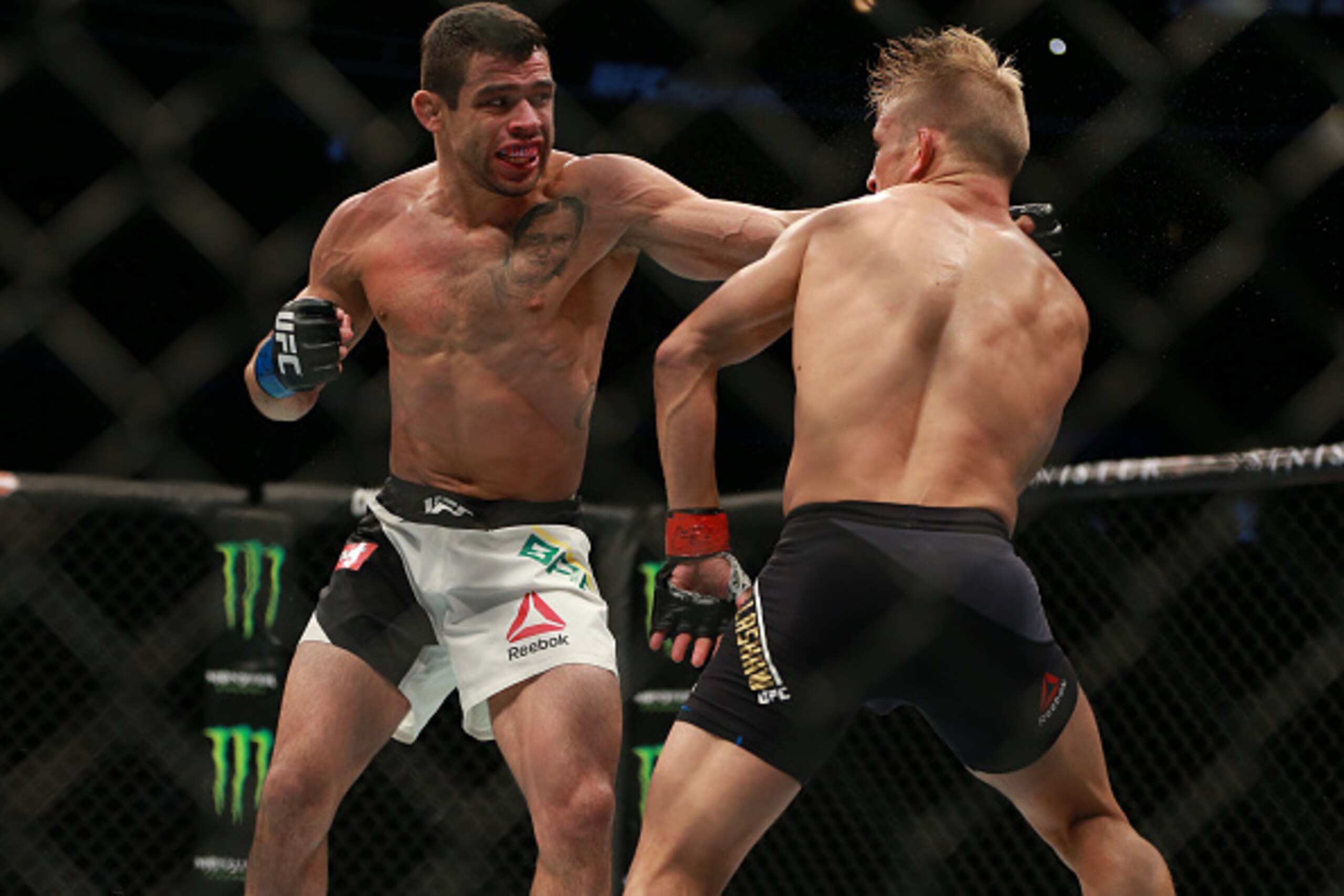
Featherweights
Renan Barao (33-3, 1 N/C; 8-2 UFC) vs. Jeremy Stephens (24-12; 11-11 UFC)
Barao moves up to 145 pounds following the loss of his title and a fruitless bid to reclaim it against T.J. Dillashaw. He meets former lightweight Jeremy Stephens in what should be an exciting and intriguing stylistic matchup.
Prior to his loss to Dillashaw two years ago, Barao had not lost a fight in more than nine years. Dillashaw dismantled him, however, and then did so again last July. In the interim, Barao scored a submission win over Mitch Gagnon. With Dillashaw ahead of him in the rankings and a truly brutal weight cut to bantamweight, Barao makes a smart move in trying his luck at featherweight.
Stephens has been up and down throughout his UFC career. He went 3-0 to start his run at 145 pounds, but has fallen to 1-3 in his last four. A pair of defeats against Cub Swanson and Charles Oliveira preceded a dramatic win over Dennis Bermudez at UFC 189 last July, but Stephens fell short against Max Holloway in December.
The winner won't be in line for a title shot, but will easily be a top-10 featherweight and in the right position to take big fights with the name opponents at 145 pounds.
Stephens is a pure puncher. He's blessed with great speed, athleticism and crushing power in his hands, and everything in his game is built around utilizing those physical gifts.
The 22-fight UFC veteran is crafty and dangerous. He doesn't throw much, but uses kicks and the occasional jab to gauge the distance and score at range. As he's aged, Stephens has come to rely more and more heavily on counters, which suit his veteran's sense of timing and willingness to stand his ground and throw. He throws fewer single shots these days and more combinations, mixing things up to the head and body.
While he can finish the fight at any time and has a great sense for when and how to land the finishing shot, Stephens is vulnerable to being outscored, and he often waits on his opponent for the sake of placing the perfect counter. He's hittable, too, and defense has never been his strong suit.
The occasional takedown adds some variety to Stephens' game, and he's more than willing to grind away in the clinch to eat up time. Strong takedown defense generally keeps him standing. Stephens rarely looks to grapple, but he's competent from top position and carries his power to the floor.
Barao is diverse and dangerous everywhere, and it wasn't long ago that he was considered one of the best pound-for-pound fighters in the sport.
While not especially tall at 5'6", Barao fights long behind a crisp jab and potent kicking game. His low kicks are consistent and powerful, and he throws the front and push kicks regularly as well. Given his choice, Barao would like to keep his opponent at this distance and score. When his opponent pressures, however, Barao is happy to plant his feet and throw counter combinations in the pocket.
Pace is a strong suit for Barao, though he couldn't keep up with Dillashaw's absurd work rate in their two matchups. He's a decent defensive fighter as well, though he struggles a bit in the pocket.
Although he's mostly been a striker in the UFC, that might be the weakest part of Barao's game. His takedown defense is impenetrable, without exaggeration some of the best in MMA, and offensively he hits beautiful trips and throws in the clinch.
A jiu-jitsu black belt under Andre Pederneiras, Barao is an exceptional grappler. He has a gift for getting to the back in transition, and on top he is impossible to shake off. His passes are smooth and topside submissions such as armbars, kimuras and arm-triangle chokes are specialties.
Betting Odds
Barao -190, Stephens +165
Prediction
This is an interesting fight. Stephens will have a substantial height advantage, standing 5'9" to Barao's 5'6", and likely an edge in weight as well. Not cutting as much weight should negate some of the cardio issues Barao has had in the past, though, and his ability to fight long should make up for some of that height gap.
The greater concern is how hittable Barao was in his fights with Dillashaw. If Stephens places one of his monstrous punches on Barao's chin, the Brazilian is going to sleep. Conversely, Barao was relatively fast at 135, and he should be faster at featherweight. Can Stephens keep up?
While Stephens could easily land a knockout punch and will succeed in landing strikes, Barao's greater volume and ability to work takedowns and top control should be the difference. Barao takes a decision.
Thomas Almeida vs. Cody Garbrandt
8 of 8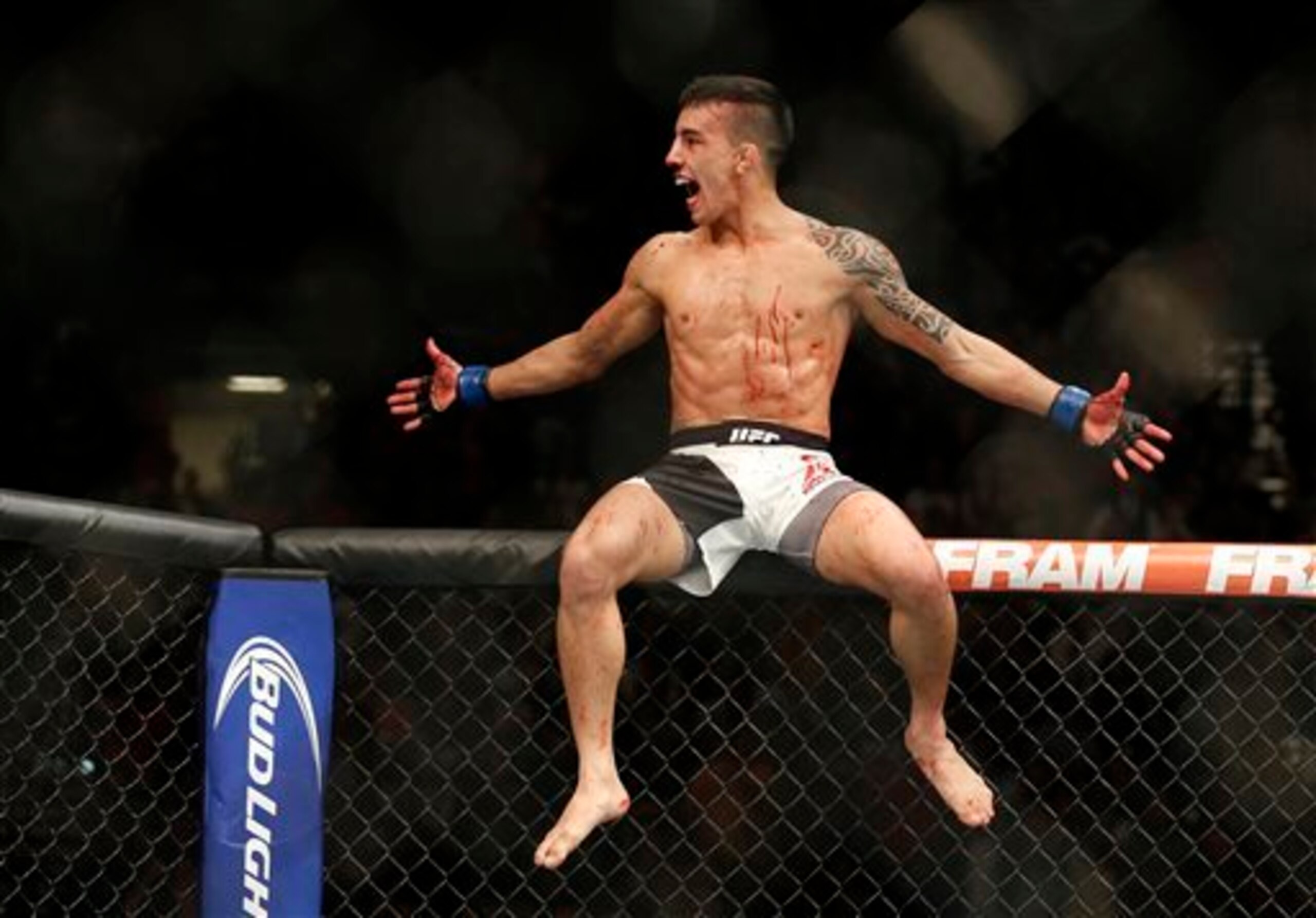
Bantamweights
Thomas Almeida (20-0; 4-0 UFC) vs. Cody Garbrandt (8-0; 3-0 UFC)
Two of the most promising young fighters in the UFC meet in a barnburner of a matchup.
Brazil's Almeida has been a wrecking machine since his debut in MMA, finishing 19 of 20 fights and three of four in the UFC. The 24-year-old has finished his last three opponents by strikes inside six minutes, most recently knocking out Brad Pickett and Anthony Birchak.
Garbrandt, who trains out of Team Alpha Male in Sacramento, has won all three of his UFC outings. Augusto Mendes succumbed to strikes in the first round in February, as did Marcus Brimage in his debut, while Enrique Briones managed to survive to a decision.
This fight is likely an eliminator for a top-contender matchup. Both Almeida and Garbrandt are on winning streaks and their talent is undeniable. With Aljamain Sterling a favorite over Bryan Caraway on the undercard, the winner of that bout seems like a probable next step for whomever emerges victorious.
Almeida is a striker by trade, and one who balances a high level of technical skill with a tremendous commitment to violence.
While he works behind sharp low kicks and a crisp jab at range, the pocket is Almeida's specialty. He pressures relentlessly but technically, pushing his way into close quarters. If his opponent's back hits the fence, Almeida unloads a flurry of strikes. If he tries to stand his ground and throw back to dissuade Almeida from pressuring, the Brazilian responds with smooth and powerful punching combinations.
Almeida shines in those kinds of exchanges. He's brilliant with his shot selection, moving his punches between the head and body and around or through his opponent's guard. Elbows add another dimension to his assault and flying knees catch opponents who try to duck or roll under his punches.
Every punch, elbow and knee carries fight-ending power. What makes Almeida all the more dangerous is his pace. He's not a headhunter who risks losing a decision while hunting for the kill shot, but a smart, consistent fighter who scores regularly while setting up the strike to finish the fight. Almeida breaks his opponents with pressure and a constant barrage of strikes.
If Almeida has a weakness, it's his defense. He's hittable, especially in the opening minutes of the fight, and his desire to operate in the pocket at a quick pace means he's consistently there to be hit. This weakness shouldn't be overstated, though; Almeida has good head movement, parries regularly and uses an effective guard to block incoming shots. He's also quite durable.
That's essentially the extent of Almeida's game. He never looks to spend much time in the clinch, but excels at landing elbows and knees on breaks. He's an excellent defensive wrestler with a great sprawl and strong limp-leg and wastes no time on his back before trying to get up. Grappling isn't something he looks to do, but he's defensively competent and dangerous on top.
Garbrandt was a decorated amateur boxer, and his hands are the centerpiece of his explosive, power-oriented MMA game. The basic soundness of his striking game is obvious in his high guard and the effortless, technical quality of his punches. He never pulls himself off balance and keeps his feet under him as he throws, which helps him to both generate power and string together combinations.
The Ohio native is aggressive but not focused on pressuring toward the fence. He likes to stick his opponent on the end of his long jab and hard kicks to the legs and body, which gives him plenty of room in open space.
At that point, Garbrandt has to options: He either explodes forward with a combination or commits to vicious counter combinations when his opponent tries to cover the distance. Garbrandt has a diverse array of counters, including backstepping left hooks and straight rights along with pull counters, where he steps back, plants and throws. All are devastating.
With all that said, Garbrandt is still a bit raw. He doesn't consistently move his head and relies heavily on his guard and distance to avoid punches, which makes him hittable as he explodes forward. His length and commitment to fighting at distance help him control the pace, but he sometimes lapses into periods of inactivity.
Wrestling forms a strong secondary skill set for Garbrandt. He has strong hips and excellent takedown defense, while his explosiveness and timing give him a great gift for hitting reactive shots as his opponent comes forward. On the mat, he's content to control and throw strikes from the top. He has yet to show anything like a submission game.
Betting Odds
Almeida -165, Garbrandt +145
Prediction
Almeida should be a bigger favorite than he is. While he's hittable early and Garbrandt has both devastating power and a knack for the early finish, Almeida works much faster, is much more technically sound in the pocket and has a more diverse arsenal of tools with which to hurt his more limited opponent.
If Garbrandt can force himself to stick and move on the outside, he has a good shot at keeping Almeida outside his wheelhouse. Problem is, that's not really Garbrandt's game. He can do it in short bursts but trying to do so for five rounds against an aggressive, experienced and patient opponent who won't get frustrated is a tall order. When the exchanges start, that will be the end for Garbrandt.
It will take Almeida some time and he'll eat a few shots along the way, but eventually he'll find his flurries. The Brazilian finishes in the third round.
All betting odds via Odds Shark.
Patrick Wyman is the Senior MMA Analyst for Bleacher Report and the co-host of the Heavy Hands Podcast, your source for the finer points of face-punching. He can be found on Twitter and Facebook.
.jpg?w=2560 "LA Premiere of \"Chad Powers\"")


.jpg?w=2560 "Ugly Jets Scoring Stat 😳")
.jpg?w=2560 "Landing Spots for Trade Candidates 📍")