The Most Loaded College Basketball Rosters of the 2016-17 Season
If college basketball teams were baked potatoes, these would be the ones that come with all the fixings.
With the NCAA's deadline for returning to school having passed Wednesday, we can start to take our first detailed look at college basketball rosters to see where the most talent exists. Through a combination of recruiting, transfer additions and (maybe most importantly) retention of existing stars, some teams are so stacked for 2016-17 it's hard to find a weakness.
This doesn't always translate into success, though, as each year some incredibly talented teams end up falling short of expectations despite seemingly everything working in their favors.
We've picked out the 20 most loaded rosters heading into the 2016-17 season, with their rankings based on what they have coming back and what's been added for this coming year.
20. West Virginia Mountaineers
1 of 20
Percentage of scoring returning: 55.4
2016 recruiting class ranking: 66th
Key additions: None
To understand how West Virginia can be considered to have a loaded roster for 2016-17 despite its roster losses requires a cursory understanding of how the Mountaineers play basketball under head coach Bob Huggins. His Press Virginia system requires a lot of energy and thus a lot of capable bodies to cycle on and off the court.
So while West Virginia may have lost its top two scorers (Jaysean Paige, Devin Williams) and two best rebounders (Williams, Jonathan Holton), there are still six others coming back who were part of the regular rotation, including three—guards Jevon Carter, Daxter Miles Jr. and Tarik Phillip—who all averaged better than nine points per game.
West Virginia can also expect greater contributions from forwards Nathan Adrian, Esa Ahmad and Elijah Macon, while a few members of the four-man recruiting class figure to also get key minutes as part of Press Virginia.
19. Louisville Cardinals
2 of 20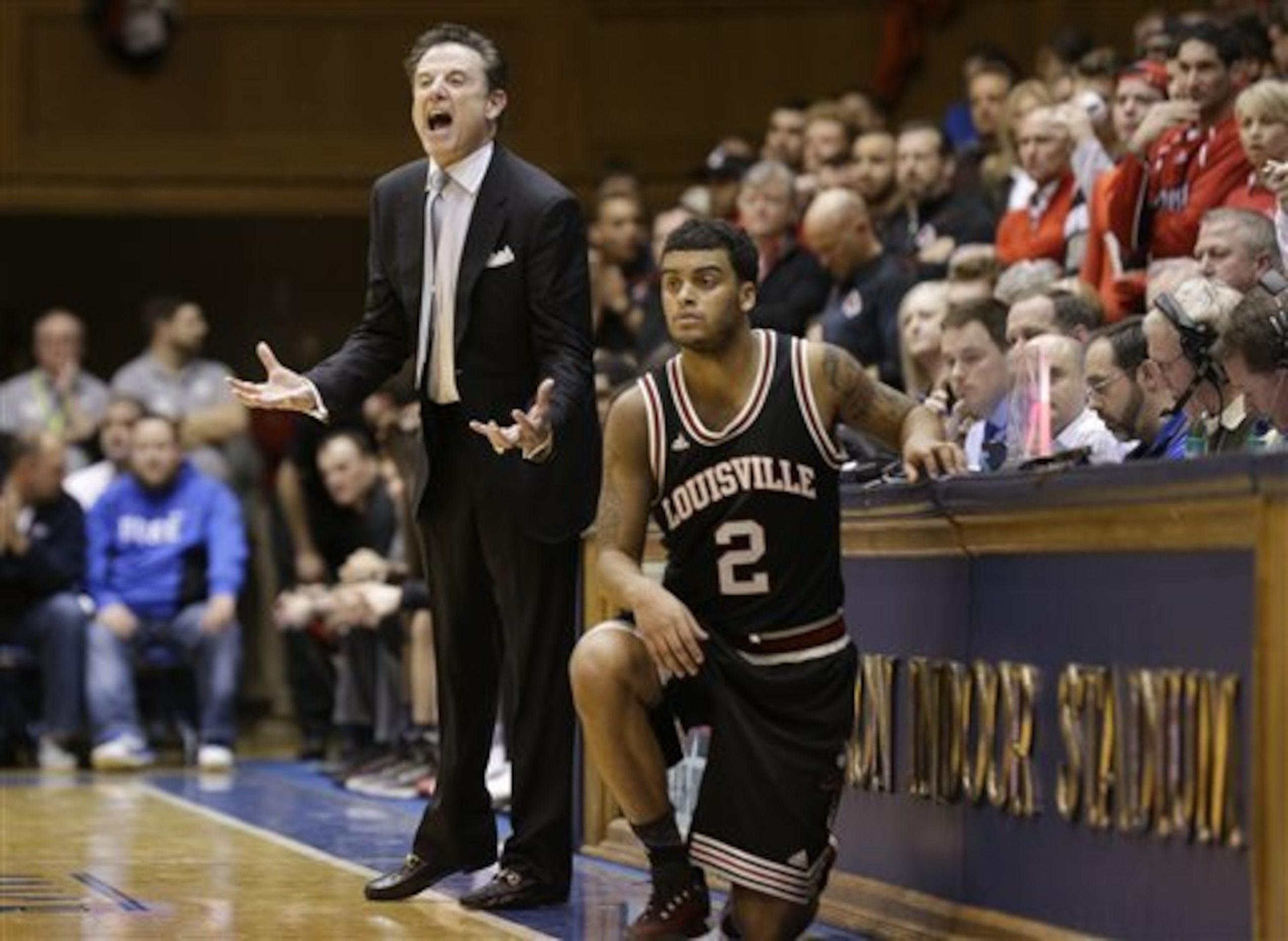
Percentage of scoring returning: 50.9
2016 recruiting class ranking: 85th
Key additions: G Tony Hicks (Sr.), F V.J. King (Fr.)
Center Chinanu Onuaku waited until late Wednesday to announce via Instagram that he was staying in the draft and giving up his final two seasons at Louisville. Had he come back to Louisville, it would have more than 64 percent of its scoring from 2015-16 coming back, but the Cardinals will be relying far more on a youth movement.
But it's a talented group of underclassmen that head coach Rick Pitino will have to work with. Forwards Deng Adel and Raymond Spalding and guard Donovan Mitchell all showed promise as freshmen but now get to take on bigger roles with leading scorers Damion Lee, Trey Lewis and Onuaku all moving on. The same goes for juniors-to-be Quentin Snider, Jaylen Johnson and Anas Mahmoud—former role players who will have greater responsibility.
Louisville's most notable additions are a mix of young and old. V.J. King was rated as the fifth-best small forward in the 2016 class, while Tony Hicks scored in double figures in all three of his seasons at Penn.
18. Virginia Tech Hokies
3 of 20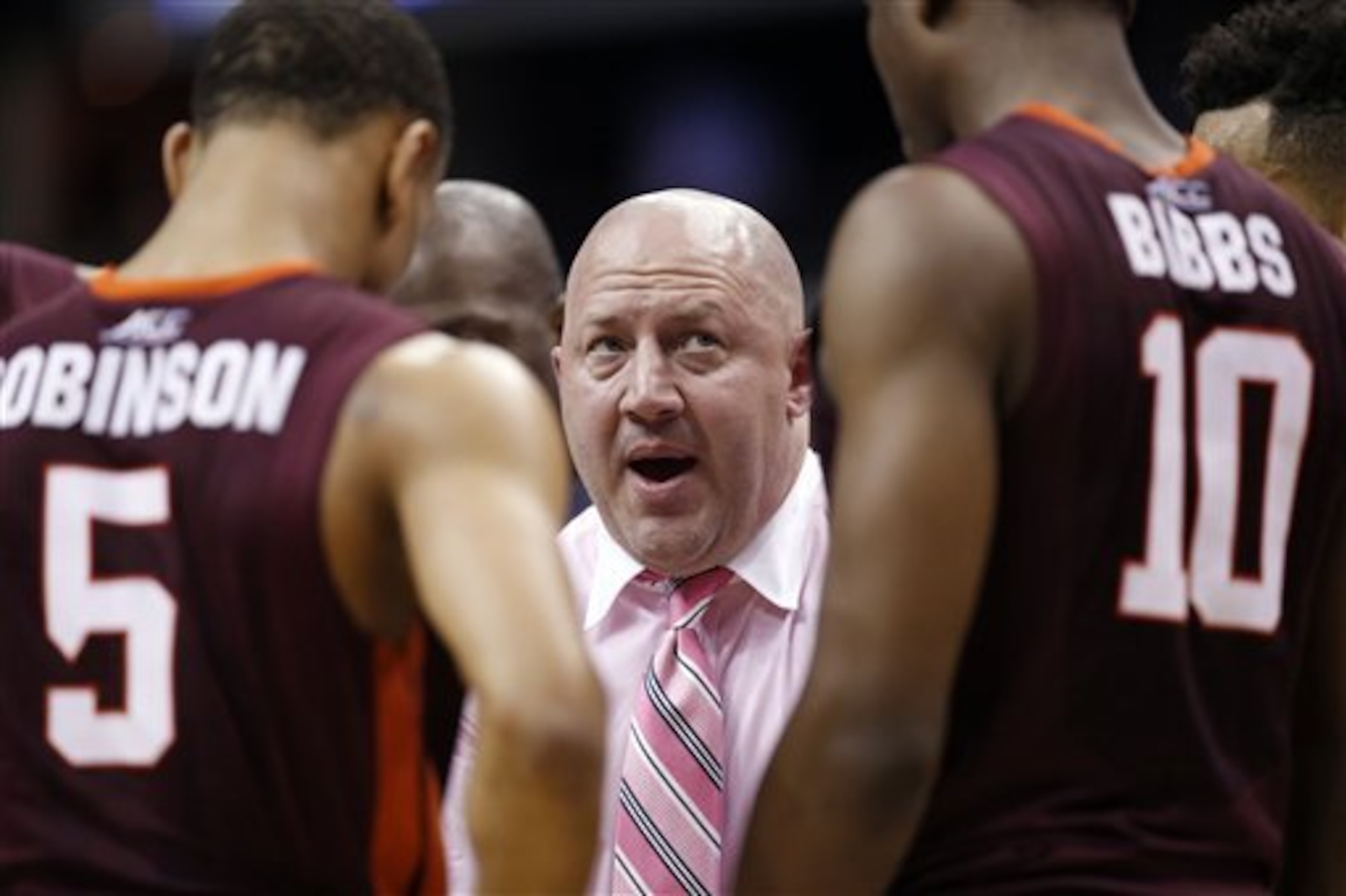
Percentage of scoring returning: 85.3
2016 recruiting class ranking: 117th
Key additions: None
Head coach Buzz Williams' surprise move from Marquette to Virginia Tech after the 2013-14 season turned quite a few heads, but after winning just 11 games in his first year, he went 20-15 in the last go-round. Most of that Hokies team is coming back, which makes the program's first NCAA tournament bid since 2007 and second in the past two decades a strong possibility.
Had guard Jalen Hudson not decided to transfer to Florida (and sit out 2016-17), we might have put Tech even higher, but it still brings back six of the top seven scorers and its five best rebounders.
If Williams can get across-the-board improvement from this group, look for Virginia Tech to make some waves in the ACC after going 10-8 in league play a year ago.


17. Connecticut Huskies
4 of 20
Percentage of scoring returning: 40.0
2016 recruiting class ranking: 7th
Key additions: F Juwan Durham (Fr.), G Alterique Gilbert (Fr.), G Terry Larrier (So.)
Since winning the national title in Kevin Ollie's second season as head coach in 2013-14, Connecticut has been searching for the right mix of returning players and new blood to make another championship run. The group Ollie has in what will be his fifth year at the helm looks to be the closest yet.
This was assured by the recent return of guard Rodney Purvis and center Amida Brimah, making it so the Huskies have three of their top six scorers (along with guard Jalen Adams) coming back. Had Purvis and Brimah both remained in the draft—joining Daniel Hamilton in that regard—UConn would have been incredibly dependent on newcomers.
But that's a good group in its own right. Four of the five freshmen are 4-star prospects, with Juwan Durham and Alterique Gilbert both in the top 50 of the 2016 class. And Terry Larrier, a 6'8” wing, was No. 33 in the 2014 class but transferred from VCU after one season.
16. Florida State Seminoles
5 of 20
Percentage of scoring returning: 55.8
2016 recruiting class ranking: 12th
Key addition: F Jonathan Isaac (Fr.)
Florida State had the best freshman duo in the country last season in guards Dwayne Bacon and Malik Beasley. The Seminoles may only be getting one back, but that was one more than head coach Leonard Hamilton probably expected as he watched them combine for 31.4 points and 11.1 rebounds.
While Beasley turned pro and could be a first-round draft pick, Bacon opted to come back for his sophomore season and thus ensured FSU won't be starting over in the backcourt. He'll get to show what he can do without Beasley, though Xavier Rathan-Mayes also averaged double figures last season while leading the team in assists.
It will be a different kind of duo for the Noles in 2016-17, as Jonathan Isaac will bring a diverse skill set to the frontcourt. Though he only has 185 pounds on his 6'10” frame, Isaac is rated as the No. 8 overall prospect from the 2016 class.
15. Saint Mary's Gaels
6 of 20
Percentage of scoring returning: 100.0
2016 recruiting class ranking: 81st
Key additions: None
When Saint Mary's fell to Gonzaga in the West Coast Conference tournament in early March, it meant the Gaels had to hope they could land an at-large bid to the NCAA tourney. They ultimately ended up in the NIT, where they reached the quarterfinals with a school-record 29 wins.
And now they bring everyone back. Seriously, everyone. All Saint Mary's needs to do with its roster for 2016-17 is update the heights, weights and class years.
The Gaels started the same five players in 34 of 35 games last year, so that will mean essentially going with the same lineup for a second consecutive season. And it's a good one, too—one that features four guys who shot at least 36.6 percent from three-point range and four who scored in double figures.
14. Xavier Musketeers
7 of 20
Percentage of scoring returning: 63.5
2016 recruiting class ranking: 28th
Key additions: None
Xavier signed three players in its 2016 recruiting class, the highest-rated of which is 4-star point guard Quentin Goodin. But while those newcomers will add to the Musketeers' depth, what gets them on this list is entirely based on what they have coming back.
Particularly, it's the return of guard Trevon Bluiett, who on Monday withdrew from the NBA draft in order to play his junior season with Xavier. In doing so, he ensured the Musketeers will be "a legitimate Final Four threat for a second consecutive season," Bleacher Report's Kerry Miller wrote in projecting Bluiett and guard Edmond Sumner as the eighth-best duo in college basketball for 2016-17.
Bluiett was the leading scorer and No. 3 rebounder from a Xavier team that won 28 games and was ranked as high as fifth in the country last season. Sumner averaged 11 points and 3.6 assists as a freshman.
Xavier also has guards Myles Davis and J.P. Macura coming back, though it does lack much size up front with Jalen Reynolds turning pro, James Farr graduating and Makinde London choosing to transfer.
13. Rhode Island Rams
8 of 20
Percentage of scoring returning: 75.2
2016 recruiting class ranking: 74th
Key addition: G Stanford Robinson (Jr.)
It's been 17 years since Rhode Island last made the NCAA tournament—the year after Lamar Odom led the Rams to the Elite Eight. This past team was supposed to be the one that broke through, but once top player E.C. Matthews went down with a knee injury just 10 minutes into the season, all that hope went down the drain.
Now it's resurfaced for 2016-17, when the Rams will have almost the same team they did a year ago save for three-point specialist Four McGlynn but also with a healthy Matthews. That's not a bad trade-off, since Matthews averaged 16.9 points per game as a sophomore in 2014-15.
Rhode Island also gets access to Stanford Robinson, a 6'5” guard who sat out last year after transferring from Indiana and could push young guards Jarvis Garrett and Jared Terrell to perform better.
12. Marquette Golden Eagles
9 of 20
Percentage of scoring returning: 75.5
2016 recruiting class ranking: 21st
Key additions: G Markus Howard (Fr.), G Katin Reinhardt (Sr.), G Andrew Rowsey (So.)
Marquette only got one season out of prized recruit Henry Ellenson, who may end up being a lottery pick after leading the Golden Eagles in scoring and rebounding in 2015-16. That wasn't enough to get them into the NCAA tournament, but what they have to work with next season could be.
Six other players who averaged at least 23 minutes per game are back for Marquette, including four guards. Now comes three key additions to the backcourt: one from the high school ranks (Markus Howard) and two others via the transfer market in Katin Reinhardt and Andrew Rowsey.
Rowsey was with the program last year but had to sit out after coming over from UNC-Asheville, where in two seasons he averaged 19.7 points per game. Reinhardt averaged 11.4 points and shot 37.3 percent from three-point range with USC last season before graduating.
11. Creighton Bluejays
10 of 20
Percentage of scoring returning: 70.9
2016 recruiting class ranking: 135th
Key addition: G Marcus Foster (Jr.)
Those strong Creighton teams from a few years ago were each heavily reliant on one player—the No. 5 all-time leading scorer in Division I college basketball, Doug McDermott. The team Greg McDermott has lined up for 2016-17 is going to be much more balanced and could be a legitimate challenger to Villanova in the Big East if its transfer-filled backcourt can play well together.
Maurice Watson Jr. showed what he's capable of in 2015-16, which was his first season with the Bluejays after coming over from Boston University. As a junior, he averaged 14.1 points and 6.5 assists while shooting 47.4 percent from the field. Now Creighton will see if it can get the same production from Marcus Foster, who averaged 14.1 points per game in two seasons with Kansas State before sitting out last year.
"It is entirely possible that Foster and point guard Maurice Watson Jr. could quickly become the conference's best backcourt," Christopher Novak of SB Nation wrote.
All told, Creighton returns five players who averaged at least six points per game last season in addition to Foster.
10. Gonzaga Bulldogs
11 of 20
Percentage of scoring returning: 30.0
2016 recruiting class ranking: 10th
Key additions: C Zach Collins (Fr.), F Johnathan Williams III (Jr.), G Nigel Williams-Goss (Jr.)
In most scenarios, saying goodbye to 70 percent of a team's scoring isn't something that would lead to high hopes for the following season. But the improved play of some returners in 2016-17 combined with all of the additions put Gonzaga in line to make a third consecutive Sweet 16.
Head coach Mark Few knew he was losing Kyle Wiltjer after 2015-16 and had to assume Domantas Sabonis would turn pro after his sophomore year, but he'd planned for this through recruiting and the transfer wire. Nigel Williams-Goss was Washington's leading scorer as a sophomore in 2014-15, while Johnathan Williams III averaged 11.9 points and 7.1 rebounds per game with Missouri in 2014-15, and each figures to be an instant contributor after getting a season to acclimate to Gonzaga's system.
Williams-Goss will be the veteran in a backcourt that features returners Silas Melson and Josh Perkins, the latter of whom was Gonzaga's top assist man a year ago. And the frontcourt will still have plenty of size, especially after 7'1” center Przemek Karnowski (who was held to just five games last year because of a back injury) opted to come back to school instead of seek a pro career.
9. North Carolina Tar Heels
12 of 20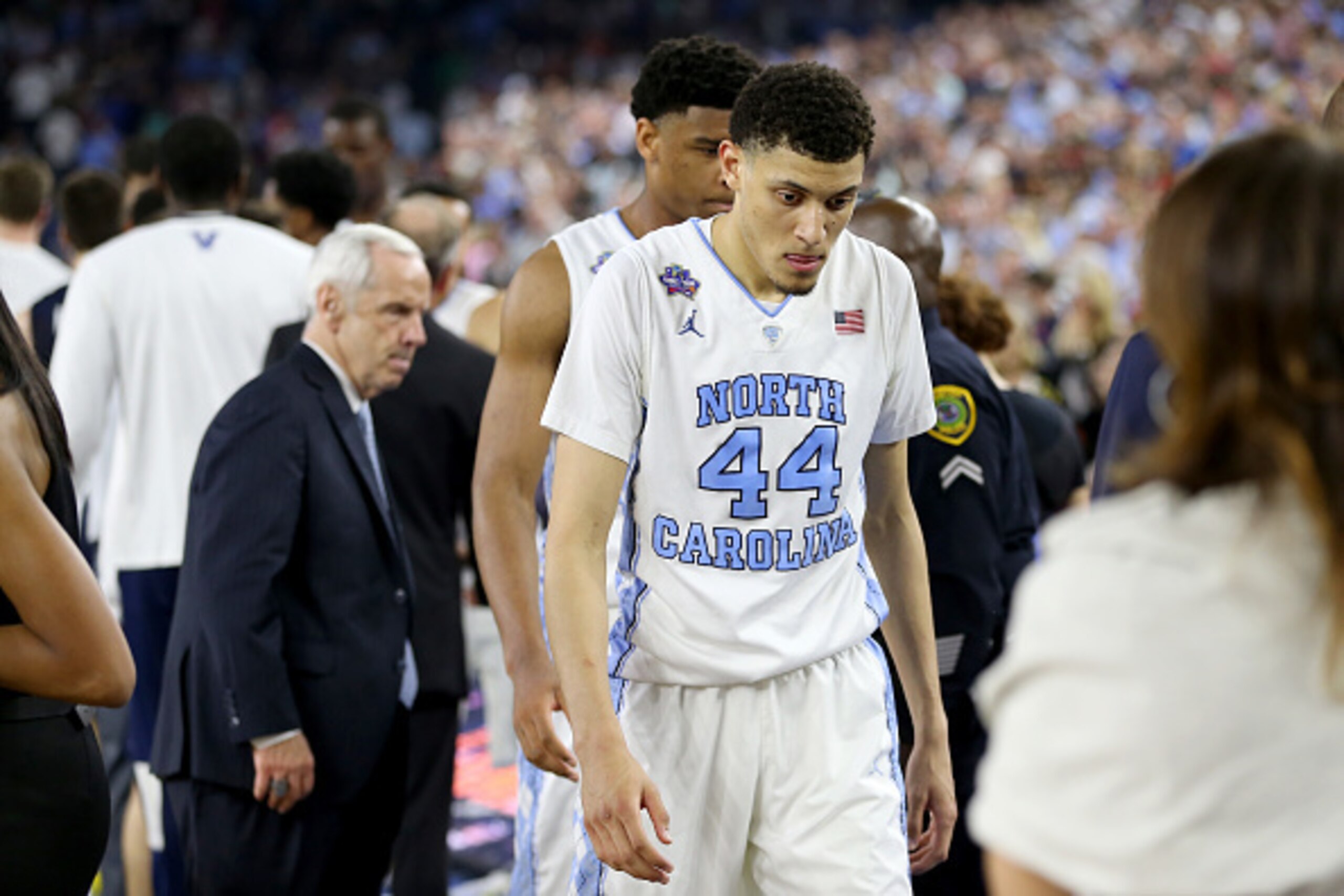
Percentage of scoring returning: 64.0
2016 recruiting class ranking: 9th
Key additions: C Tony Bradley (Fr.), G Brandon Robinson (Fr.), G Seventh Woods (Fr.)
Had North Carolina defended that final play a little better, it might have been the Tar Heels heading into 2016-17 as defending national champions instead of Villanova. Either way, the Heels have a pretty solid group of returners and some intriguing prospects who can serve as the foundation of another deep run.
Getting back forward Justin Jackson for his junior year solidified the returning group, which also features big men Isaiah Hicks and Kennedy Meeks, as well as guards Joel Berry, Nate Britt, Theo Pinson and Kenny Williams. Williams figures to have the chance to make the biggest leap, possibly stepping into Marcus Paige's role after scoring only 23 points in 122 minutes as a freshman.
If not, look for Brandon Robinson or Seventh Woods to get a shot to be a key player right away. Same goes for 6'10” Tony Bradley in the paint, where head coach Roy Williams loves having as many sizable bodies to work with as possible.
8. UCLA Bruins
13 of 20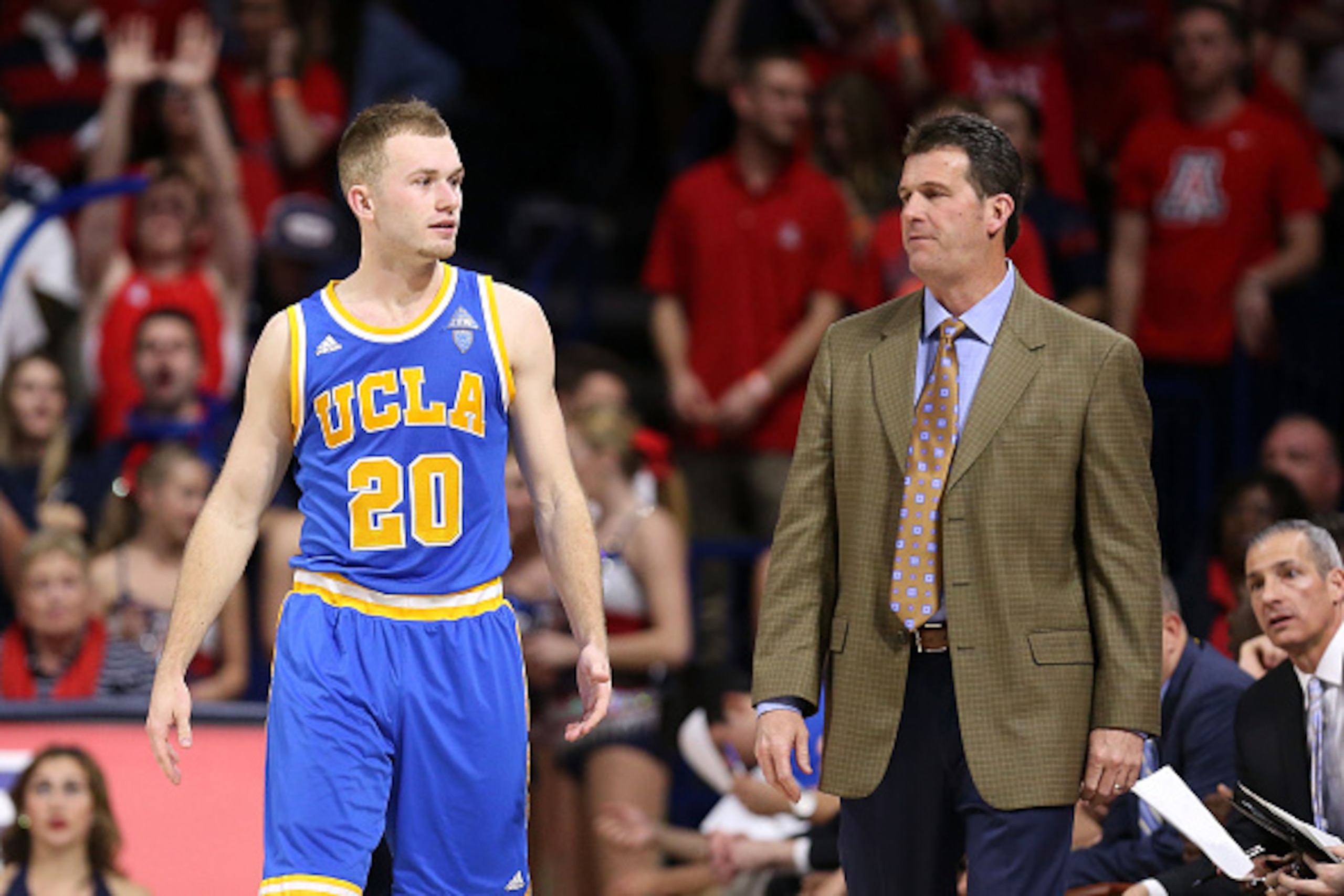
Percentage of scoring returning: 82.8
2016 recruiting class ranking: 5th
Key additions: C Ike Anigbogu (Fr.), G Lonzo Ball (Fr.), F T.J. Leaf (Fr.)
UCLA went 15-17 last season—the worst record of any team on this list. Why, then, are the Bruins considered such a loaded team after massively underachieving a year ago?
Because what they're adding to an already-talented lineup of returners should be enough to make last year's dismal performance a distant memory. If not, don't be surprised if head coach Steve Alford is looking for employment somewhere else.
The additions are highlighted by Lonzo Ball, one of the most exciting freshmen in recent memory. The top-rated point guard in the 2016 class is 6'6” and loves to pass as much as he does to score, which should make for an explosive backcourt trio alongside leading scorers Bryce Alford and Isaac Hamilton.
That's half of the four returning players who averaged at least 10.3 points per game last season, along with guard Aaron Holiday and center Thomas Welsh. Tony Parker is the most significant loss, but Welsh, Jonah Bolden and incoming freshmen Ike Anigbogu and T.J. Leaf will make up for his size and production inside.
7. Kansas Jayhawks
14 of 20
Percentage of scoring returning: 48.4
2016 recruiting class ranking: 13th
Key additions: C Udoka Azubuike (Fr.), F Josh Jackson (Fr.)
Kansas won't have Perry Ellis for what seems like the first time in a decade, and he's one of four notable departures from last year's Elite Eight team. But it's not like head coach Bill Self hasn't had to reload before, and all he's done is win 12 consecutive Big 12 regular-season titles.
Ellis and Wayne Selden Jr. were the Jayhawks' top two scorers, while Brannen Greene was their best three-pointer shooter (when not in Self's doghouse). Cheick Diallo may end up being a lottery pick despite playing only 202 minutes as a freshman. Their losses are all significant, but Kansas brings back quite a bit and has another strong recruiting class led by the top prospect of 2016.
Josh Jackson, a 6'7” wing who chose Kansas over Arizona and Michigan State, will immediately step into the lineup and be asked to replace much of Ellis and Selden's production. He won't be alone, though, since the Jayhawks also bring back both point guards (Devonte' Graham and Frank Mason III) and several promising forwards, including Svi Mykhailiuk and Carlton Bragg Jr.
6. Oregon Ducks
15 of 20
Percentage of scoring returning: 71.0
2016 recruiting class ranking: 16th
Key additions: F Kavell Bigby-Williams (Fr.), G Payton Pritchard (Fr.)
Oregon steamrolled through the Pac-12 last year and was the league's only successful team in the postseason. Now that they know Dillon Brooks and Tyler Dorsey are coming back for another go, the Ducks can get to work on repeating that performance.
Brooks and Dorsey were Oregon's first- and third-leading scorers last season, respectively, combining for 30.1 points per game while adding 9.7 rebounds and 5.1 assists. They join Casey Benson and Chris Boucher as returning starters, with only Elgin Cook and Dwayne Benjamin lost from the top seven scorers.
Boucher's return is just as big a boost because the 6'10” senior was granted an extra year of eligibility after setting a school record with 110 blocked shots. Oregon is also awaiting word on whether guard Dylan Ennis, a graduate transfer from Villanova who missed all of 2015-16 because of injury, will be given a sixth year of eligibility.
5. Villanova Wildcats
16 of 20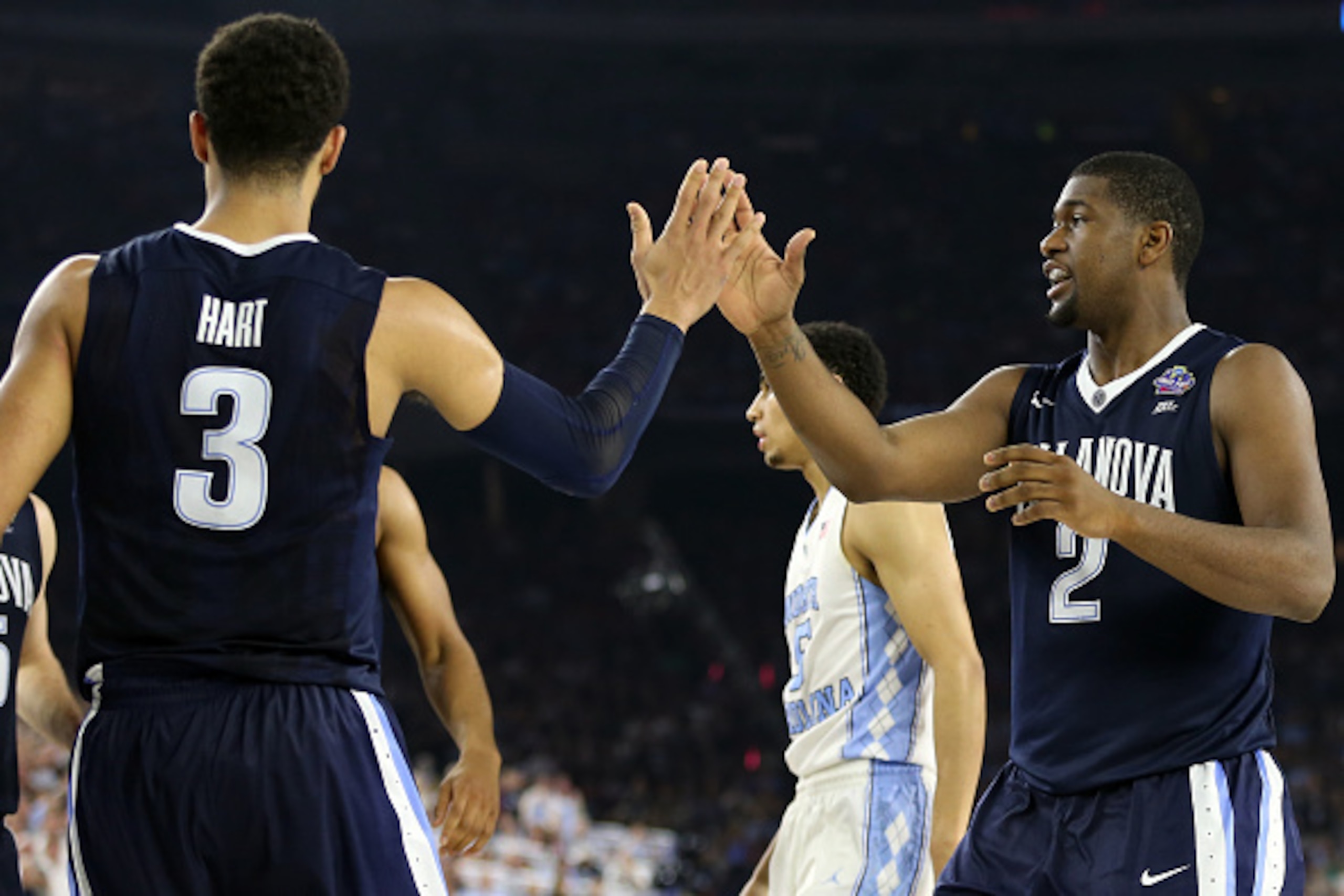
Percentage of scoring returning: 71.8
2016 recruiting class ranking: 44th
Key additions: F Eric Paschall (So.), C Omari Spellman (Fr.)
Since Florida's consecutive national titles in 2006 and 2007, no defending college basketball champion has advanced beyond the Sweet 16 the following season. Villanova might have the best shot to buck that trend after getting back its best player this week.
Guard Josh Hart made it official on Tuesday that he was returning for his senior year, joining forward and title-game hero Kris Jenkins as Wildcats who tested the NBA draft waters but opted to play another season in college. That duo combined for 29.1 points, 10.7 rebounds and 4.1 assists per game as well as 155 three-pointers.
They'll join guard Jalen Brunson as returning starters, while the spots left by graduates Ryan Arcidiacono in the backcourt and Daniel Ochefu in the paint will be taken care of by returners and newcomers, respectively. Guards Phil Booth and Mikal Bridges will see their roles increase, while 6'9”, 269-pound Omari Spellman can be the force down low, and former Fordham wing Eric Paschall becomes eligible after sitting out 2015-16.
4. Wisconsin Badgers
17 of 20
Percentage of scoring returning: 99.7
2016 recruiting class ranking: 97th
Key additions: None
What's the difference between the Wisconsin team that began last season with an embarrassing home loss to Western Illinois and the one it will have on the court in 2016-17? Other than a different head coach, not much—at least from a personnel standpoint.
The Badgers bring back every starter and all nine players who appeared in at least 30 games last season, when after Bo Ryan retired and handed the reins over to Greg Gard, they went from an unlikely NCAA tournament team to one that nearly made the Elite Eight. They were going to be in good shape no matter what Nigel Hayes decided to do, but his choice to come back for his senior year ensured they'll have their top scorer in tow.
Wisconsin reacted to getting back the 6'8”, 235-pound forward by posting an Instagram video of his 2015-16 highlights. It conveniently left out any evidence that he was coming off a dismal 36.8 percent shooting effort as a junior, though.
3. Arizona Wildcats
18 of 20
Percentage of scoring returning: 60.7
2016 recruiting class ranking: 3rd
Key additions: G Rawle Alkins (Fr.), G Terrance Ferguson (Fr.), F Lauri Markkanen (Fr.), G Kobi Simmons (Fr.)
Inconsistent play from its backcourt was Arizona's biggest flaw in 2015-16, when after consecutive Elite Eight trips, it failed to advance beyond the first round. Head coach Sean Miller addressed this deficiency in spades with his recruiting, landing three of the top guards in the country in Rawle Alkins, Terrance Ferguson and Kobi Simmons.
But the Wildcats also return their best player from a year ago in Allonzo Trier, as well as starting point guard Kadeem Allen and valuable backup guard Parker Jackson-Cartwright. For those scoring at home, that's six guards—all of whom are capable of starting—for three spots.
Four spots if Arizona opts to go super small, though the frontcourt has its own slew of weapons. It's not as deep as this past year, but there's still a solid 7-footer (Dusan Ristic) and four other guys listed at 6'8” or taller. That includes Ray Smith, a 6'8” forward who was a top-20 prospect in 2015 but missed the season recovering from a torn ACL.
2. Kentucky Wildcats
19 of 20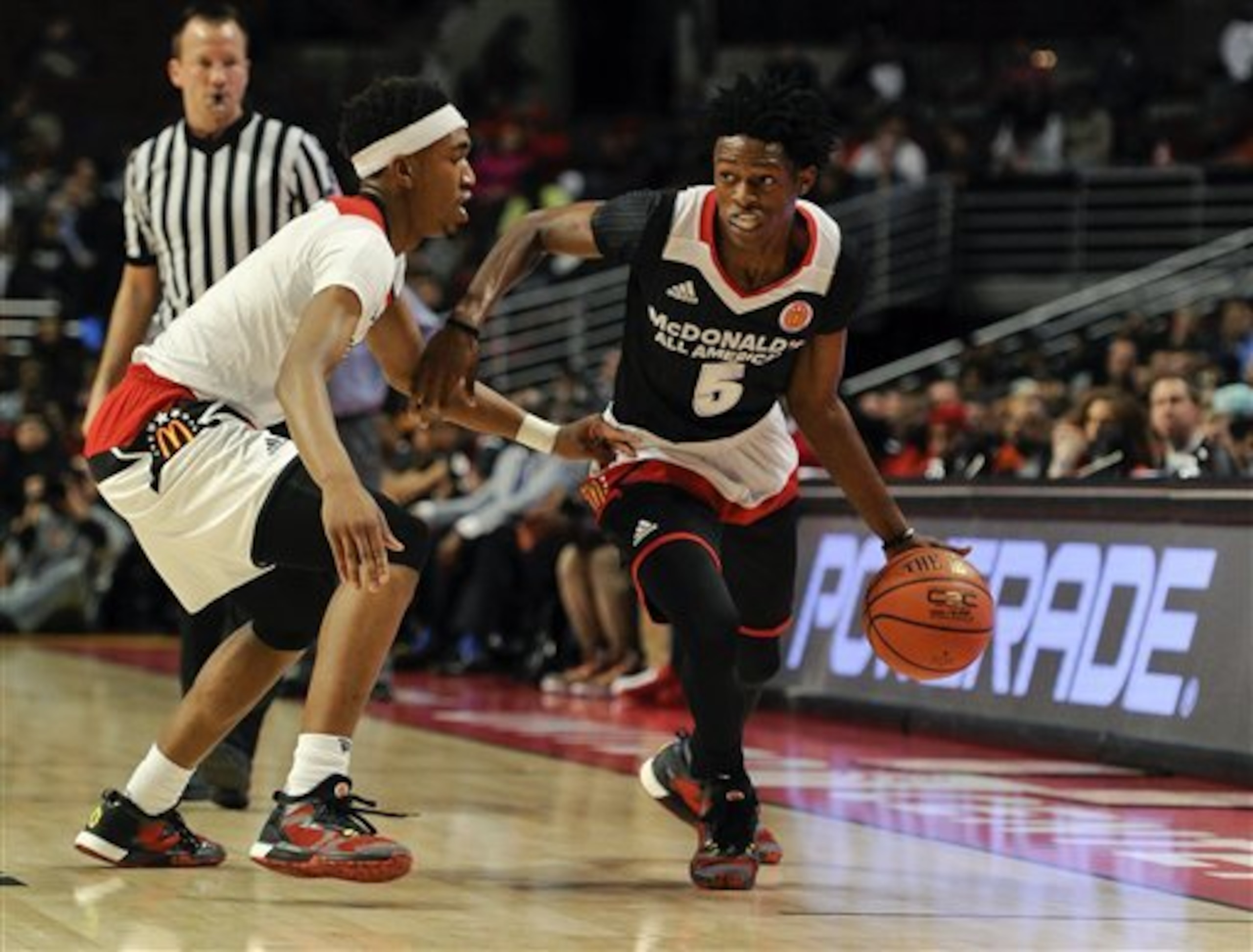
Percentage of scoring returning: 24.2
2016 recruiting class ranking: 2nd
Key additions: F Bam Adebayo (Fr.), G De'Aaron Fox (Fr.), F Wenyen Gabriel (Fr.), F Sacha Killeya-Jones (Fr.), G Malik Monk (Fr.)
Kentucky's definition of being "loaded" differs from any other school, since it's come to expect a near-complete roster turnover each season and therefore is more dependent on additions than holdovers. That's no different for 2016-17, where seven of the Wildcats' top 10 scorers have either graduated, turned pro or transferred.
But when you're bringing in five of the top 24 high school recruits in the country, you're never rebuilding. It's always about reloading.
The Wildcats batted .500 with draft-deadline decisions on Wednesday, getting back guard Isaiah Briscoe (the top returning scorer at 9.6 points per game) for his sophomore year, while center Marcus Lee backed out of the draft process but also decided to transfer for his final season. Lee joins freshman guard Charles Matthews as Kentucky players who will continue their college careers elsewhere.
Briscoe started 33 games last year but isn't a lock to do so again, since De'Aaron Fox and Malik Monk figure to be instant starters in the backcourt. Lee played 21.8 minutes per game in 2015-16 and would have struggled to get that many next season with Bam Adebayo, Wenyen Gabriel and Sacha Killeya-Jones all primed to contribute right away.
1. Duke Blue Devils
20 of 20
Percentage of scoring returning: 59.6
2016 recruiting class ranking: 1st
Key additions: C Marques Bolden (Fr.), F Javin DeLaurier (Fr.), F Harry Giles (Fr.), G Frank Jackson (Fr.), F Jayson Tatum (Fr.)
If there's one thing we know about Duke in 2016-17, it's that head coach Mike Krzyzewski won't have any trouble turning to his bench. In fact, if there's a team in Division I that might need to employ a platoon system to get minutes to everyone, it's the Blue Devils.
Whereas last year saw the early injury to forward Amile Jefferson create major depth issues, the upcoming team could be Coach K's deepest ever. Just his returning talent is enough to feel good about the upcoming year, as leading scorer Grayson Allen's return for his junior season and Jefferson being given a medical redshirt gives Duke three-fifths of its 2015-16 opening night starting lineup.
And that's before bringing in another amazing recruiting class, one that began early—Jayson Tatum committed last summer—and kept getting better. The late addition of Marques Bolden, the 2016 class' top-rated center, makes it so Duke will have 10 former 4- or 5-star prospects on the roster.
"At this point, Duke's 'starting bench' is Matt Jones, Luke Kennard, Javin DeLaurier, Chase Jeter and Marques Bolden," Bleacher Report's Kerry Miller tweeted.
All statistics courtesy of Sports-Reference.com unless otherwise noted. All recruiting information from 247Sports unless otherwise noted.
Follow Brian J. Pedersen on Twitter at @realBJP.
.jpg?w=2560 "LA Premiere of \"Chad Powers\"")
.jpg?w=2560)

.jpg?w=2560 "Landing Spots for Trade Candidates 📍")