Civil War: Chavez-De La Hoya and the Latino World's Great Divide, 20 Years Later
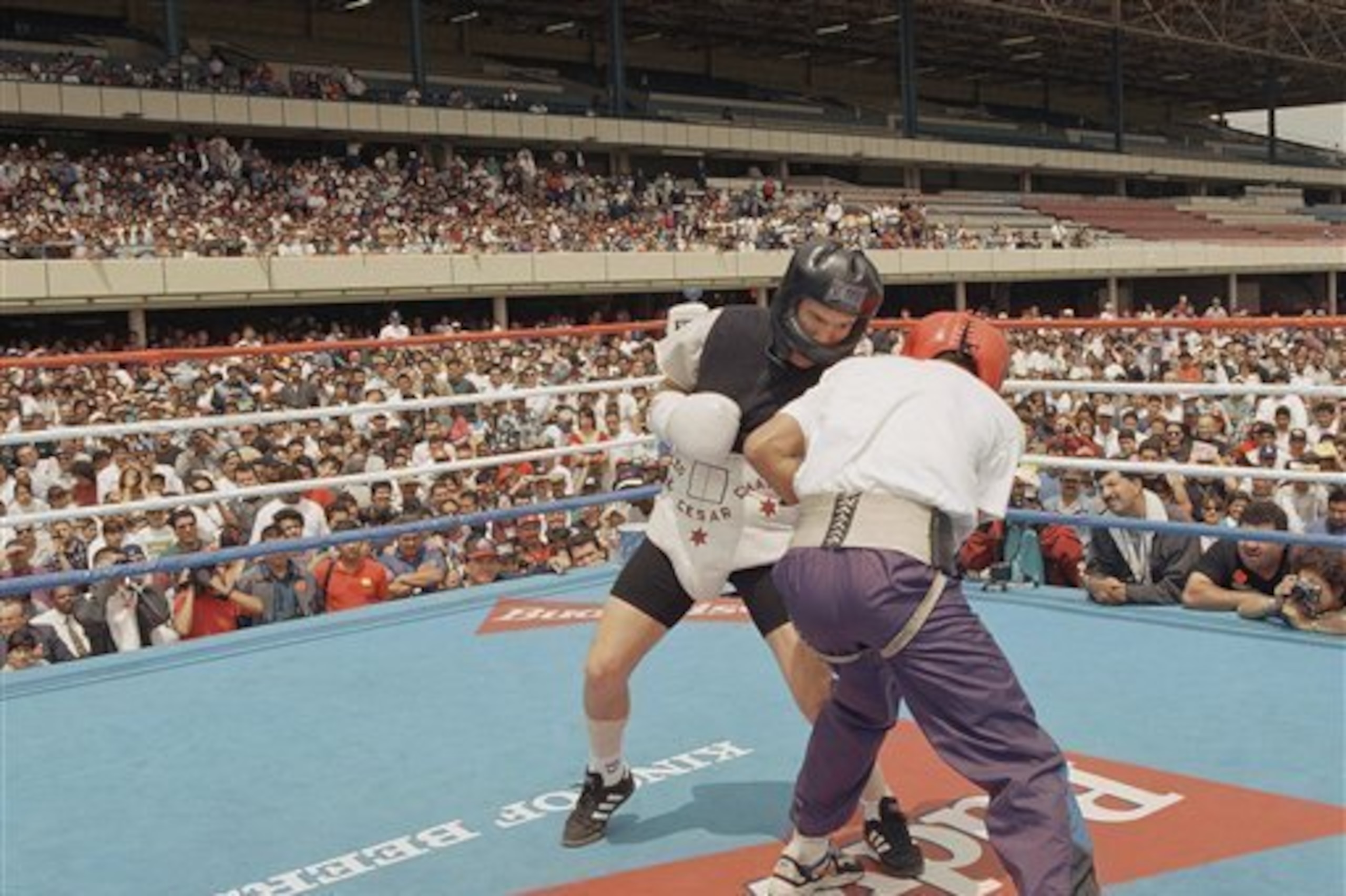
Barely a minute into his 100th professional prize fight against Oscar De La Hoya on June 7, 1996, the great Julio Cesar Chavez reached up with his bright red boxing glove to confirm a sickening fear. Blood. And not just a trickle. A deluge.
Larry Merchant, the venerable HBO commentator, interrupted his colleagues, George Foreman and Jim Lampley, to point it out. The Las Vegas crowd, more than 15,000 souls packed into bleachers in the enormous parking lot behind Caesar's Palace, saw it too. Chavez, it seemed, was the last to know.
Lampley credited a stinging right hand, the first hard blow of the young fight. The former heavyweight champion was not so sure.

.png?w=2560)
.png?w=2560 "WWE Money in the Bank 2026 Winners and Losers")
"That cut was opened in training," Foreman opined. "You can believe that."
In the early going of his 34th title defense against the 23-year-old prodigy, the challenger's length, speed and lightning jab were already proving a problem. So were Chavez's ever-sore ankle, an annoyance since way back in 1988, and a chronically painful right hand, ironically a product of a sparring session with De La Hoya five years earlier.
But this was worse than either age or infirmity. Labelled a legend, a kind word for old, the most popular boxer in the history of Mexico was already a significant underdog. Now, with blood pouring and De La Hoya's jab flitting out like an angry snake, hitting its mark again and again, he was facing what 97 of his own victims had been forced to endure over a 16-year career—overwhelming odds.
In the Beginning
It was the biggest non-heavyweight fight in the history of boxing. Chavez, Don King's popular workhorse who helped keep the promoter afloat while Mike Tyson served a jail sentence, was a proven commodity. His legend had spread, however slowly, out of the barrios and Spanish-language newspapers of the American Southwest and into the mainstream of the boxing culture.
De La Hoya, under the watchful eye of King's archenemy Bob Arum, was taking mainstream to a brand-new level for a Mexican-American fighter, presenting a different face for the sport, one much needed after Tyson's fearsome visage had left scars that seemed like they might never heal. De La Hoya smiled. He didn't have a single tattoo. And he spoke like a man who had a direct conduit with a PR specialist at all times.
"The nature of boxing lends itself nicely to the concept of personalities' becoming household names," De La Hoya's advisor Leigh Steinberg told Sports Illustrated. "Think Muhammad Ali. Boxers are individuals, not on a team. And they don't play on a huge field. And here's Oscar, handsome, bilingual, an Olympic star, with a clean reputation, who worked himself up the hard way. He'll be a major marketing force in this country."
As a result, media outlets from TV Guide to Penthouse came calling on the young star at his home in Big Bear, California, where he did the bulk of his training at altitude. Boxing fans, too, were slowly coming around on the pretty boy, packing Madison Square Garden in December 1995 to watch the young star cap a phenomenal year that saw him named the Ring Magazine's Fighter of the Year.
Despite De La Hoya's growing notoriety, Chavez was always going to be the fan favorite in this fight. After all, he was, as Nigel Collins of Ring noted in the July 1996 edition, both the popular veteran champion and the long-shot underdog rolled into one:
"The grizzled champion is customarily the fan favorite in these instances. Despite the pitiless nature of the sport, boxing devotees are a sentimental lot, and once a fighter has earned their affection, they tend to blindly support him regardless of the telltale signs of deterioration.
...In a sport where careers can be breathtakingly brief, longevity means a helluva lot. Fighters like Chavez, who win consistently at a championship level, year after year, are rare and take on reputations of mythical proportions. After a while, the natural tendency is to believe that they'll always find a way to win no matter the odds. Sometimes it almost seems like they have a guardian angel, helping them to escape from hopeless situations. But sentimentality doesn't count for much once the bell rings.
"
But something more was going on here, something bigger than just a coming-of-age tale. It wasn't just that Chavez was beloved. More startling was the ferocity with which many fans, especially those who looked so much like him, seemed to despise De La Hoya.
"Targeting Chavez actually turned many Mexicans against De La Hoya, just as many turned on Larry Holmes for doing in [Muhammad] Ali, and Rocky Marciano for doing in Joe Louis, and so forth," boxing historian Patrick Connor said. "That's always the risk with the 'passing of the torch' fights. That the guy on the way up might embarrass someone beloved and become something of a villain themselves. De La Hoya was popular throughout his career, but there seemed to be resistance from the demographic that really cherished Chavez."
The boos came everywhere the two men went on tour to promote the fight, traveling on separate planes to places like Phoenix, San Diego and even Los Angeles, where De La Hoya was born and raised. Mexican fans were intrigued by the fight—but they had also picked sides.
"This fight, and these two personalities, made it very clear that there was a big divide in the Mexican and Mexican-American communities in the United States" Samuel Regalado, a history professor at California State University, Stanislaus, told Bleacher Report. "Those differences go back to the 19th century. Mexican nationals never really consider Mexican-Americans to be true Mexicans. What boxing did was bring a lot of that tension and those internal cultural differences to the surface. It was a microcosm of all the issues that made the Mexican community so complex at the time.
"De La Hoya and Chavez also brought class into it. Julio Cesar Chavez was seen as a real, true Mexican hero. He didn't speak any English, didn't sell out. Whereas De La Hoya, though he grew up in East Los Angeles, once he got some prominence he moved out of the area. To many it was as if he'd somehow sold out his culture and lost connection to his roots.
"He was an example of an all-American success story. And he was very sensitive to the boos. He'd say 'What do you expect me to do, live in a shack all my life? Aren't we supposed to be bettering ourselves?'"
Chavez, the stoic legend, wore the white hat. De La Hoya, the Mexican-American who played golf of all things in his spare time and talked openly of a career in the movies, wore the black.
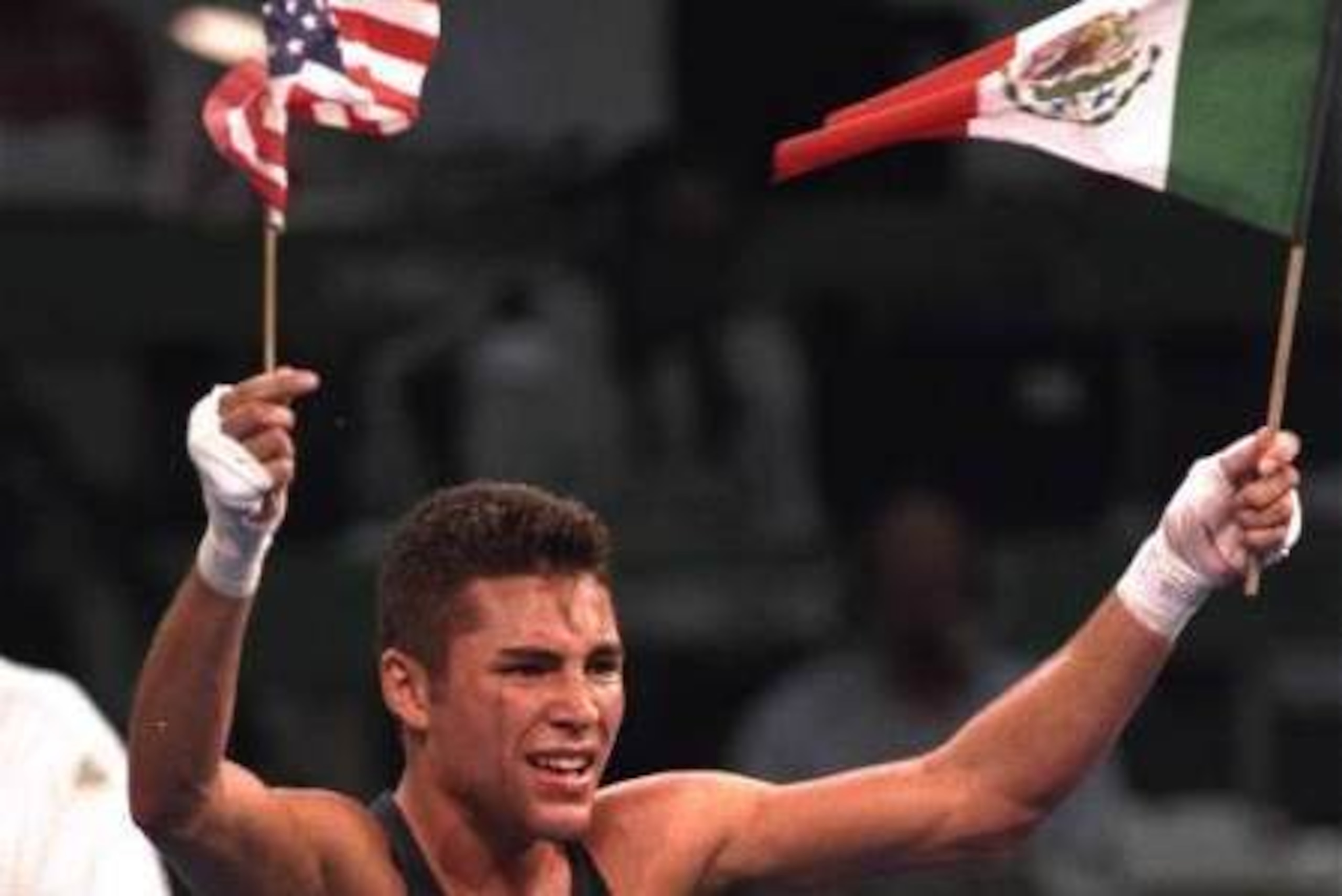
"It was a surprise to me. I was the Golden Boy who had every fan on his side," De La Hoya told Bleacher Report almost 20 years after the fight. "When I won the gold medal in Barcelona, I remember the picture where I was raising the American flag but had the Mexican flag in my other hand. I could do nothing wrong. I was the poster child for boxing. When I signed on to fight Chavez though, it was all downhill. I was receiving death threats and people egging my home."
The young Olympian was not only trying to bury a legend, but saying all the wrong things, at least to Mexican boxing fans who expected a carefully manufactured machismo from their icons.
"Of course, I could fight him, because I have a big heart, also. I know I can take his punches," De La Hoya told Tim Kawakami of the Los Angeles Times before the fight. "But I also want to be known as a great boxer. I don't want to be known as just a gladiator."
It was this nonchalant attitude toward the seemingly undeniable allure of blood and guts, Sports illustrated's Richard Hoffer wrote, that caused De La Hoya to fail as a box-office attraction in his native Los Angeles, to even be booed by his parent's countrymen as he fought more cliched Mexican warriors like Genaro Hernandez:
"That De La Hoya has been more like the matador and less like the bull is the source of long-running frustration in the Latin community. Where De La Hoya comes from, a blood-and-guts fighter like Chavez is the ideal, which means that De La Hoya's ring elegance is considered the worst kind of pretension.
"People want to see blood and bruises," he says, "but I'm not going to give them that. I love boxing, but I hate fighting."
"
Much of mainstream America saw it as just another boxing match, a clash of styles between the warrior and the dancer. A fistic tale as old as time. The Mexican people, however, knew the contest between De La Hoya and Chavez was bigger than mere sport. It was a clash, instead, of cultures.
"There was a divide with the community. There were lots of heated arguments and even fights breaking out over this boxing match," Jose Alamillo, professor of Chicana/o studies at California State University, Channel Islands, said. "I felt the tension and saw the conflict in my own family. The older family members were rooting for Julio Cesar Chavez, but I found myself drawn to Oscar. Because my experience, like his, was more as a Mexican-American.
"I think there was definitely a generational divide in that fight. There was a real distinction. Immigrants who had come from Mexico were rooting for Julio Cesar Chavez as the classic Mexican boxing hero, while second-generation Americans supported Oscar and his Mexican-American Chicano identity."
Chavez, a simple man, put it in plainer terms to Associated Press reporter Tim Dahlberg in his seminal book Fight Town.
"I'm an authentic Mexican," the champ said. "He's not a true Mexican. He has American nationality."
De La Hoya, then just 23 years old, was struggling with his new circumstances and the unfamiliar sensation of being the villain rather than the hero. He'd won the Olympic Games as a promise to his mother, who had passed away a year earlier and had always encouraged him to follow his dreams. Fighting in the ring was easy. Battling the temptations of wealth and a fickle populace? That the hard stuff.
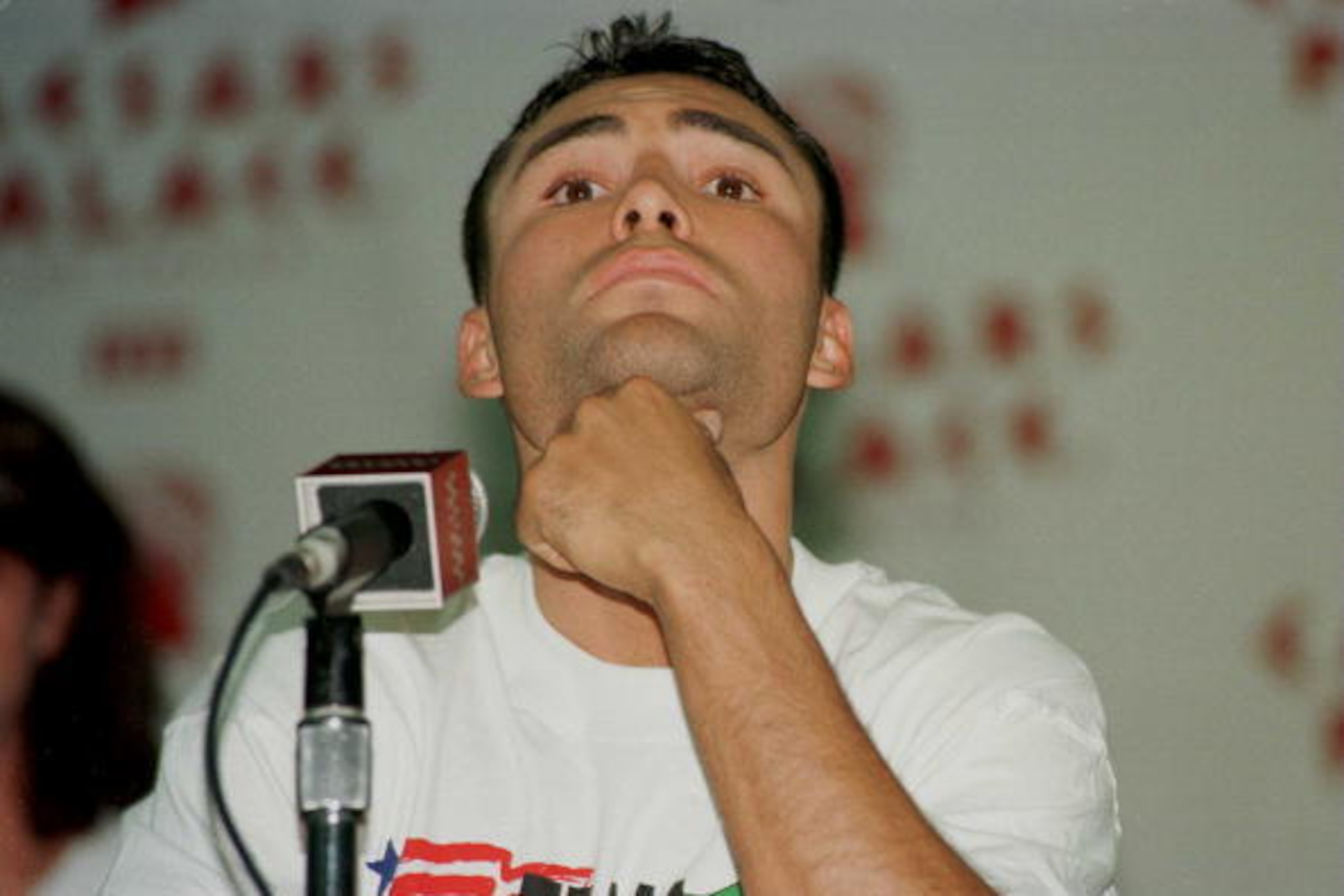
"I recall the fighting in the community, the dividing cultures, clearly," De La Hoya said. "I remember that I was considered the gringo. I was the fighter who was born here in the States. Chavez was the Mexican icon. That fight divided people. It divided families. It divided cultures. My father and a few uncles asked me, 'Why did you have to beat our hero?' Even my own family was upset.
"It was a fight that made me think 'Who am I?' My identity was lost. I was born in the United States, but with Mexican roots. So who do I claim? And who claims me? I realized I had to be proud of where I was born, the country that gave me everything I have now. But at the same time, I had to be proud and always represent the culture my family comes from. And that's Mexico. Back then it was a difficult time for me. The pressure I was feeling because of that culture clash was immense."
In the Ring
In Las Vegas, the fight was attracting unprecedented interest, both at the box office, where it became the third-biggest fight in the town's history, and at the Strip's many casinos, where more than $32 million in bets were placed, shattering the all-time record.
"Betting was so intense on the afternoon of the fight that lines for high rollers were elbow to elbow at the $5,000 and $10,000 windows," Caesar Palace's Richie Baccellieri told Jack Welsh of Ring. "The lines almost backed out of the sportsbook."
De La Hoya, a 2-1 favorite by the afternoon of the fight, fought four times in 1995, each against a current or former world champion. In the process, he learned things about himself, and his team, that he didn't like. De La Hoya had struggled badly against John John Molina in a decision win and found himself mortified when trainer Robert Alcazar, a longtime family friend, had no advice in the corner about how to counter the veteran's rough tactics.
Enter Jesus Rivera, former trainer of flyweight champion Miguel Canto, who had disappeared from the sport for more than a decade. Rivera, a bookish iconoclast who studied literature as well as fight film, returned to boxing from his window business in Mexico to instill in yet one more pupil the wisdom of both Willie Pep and William Shakespeare.
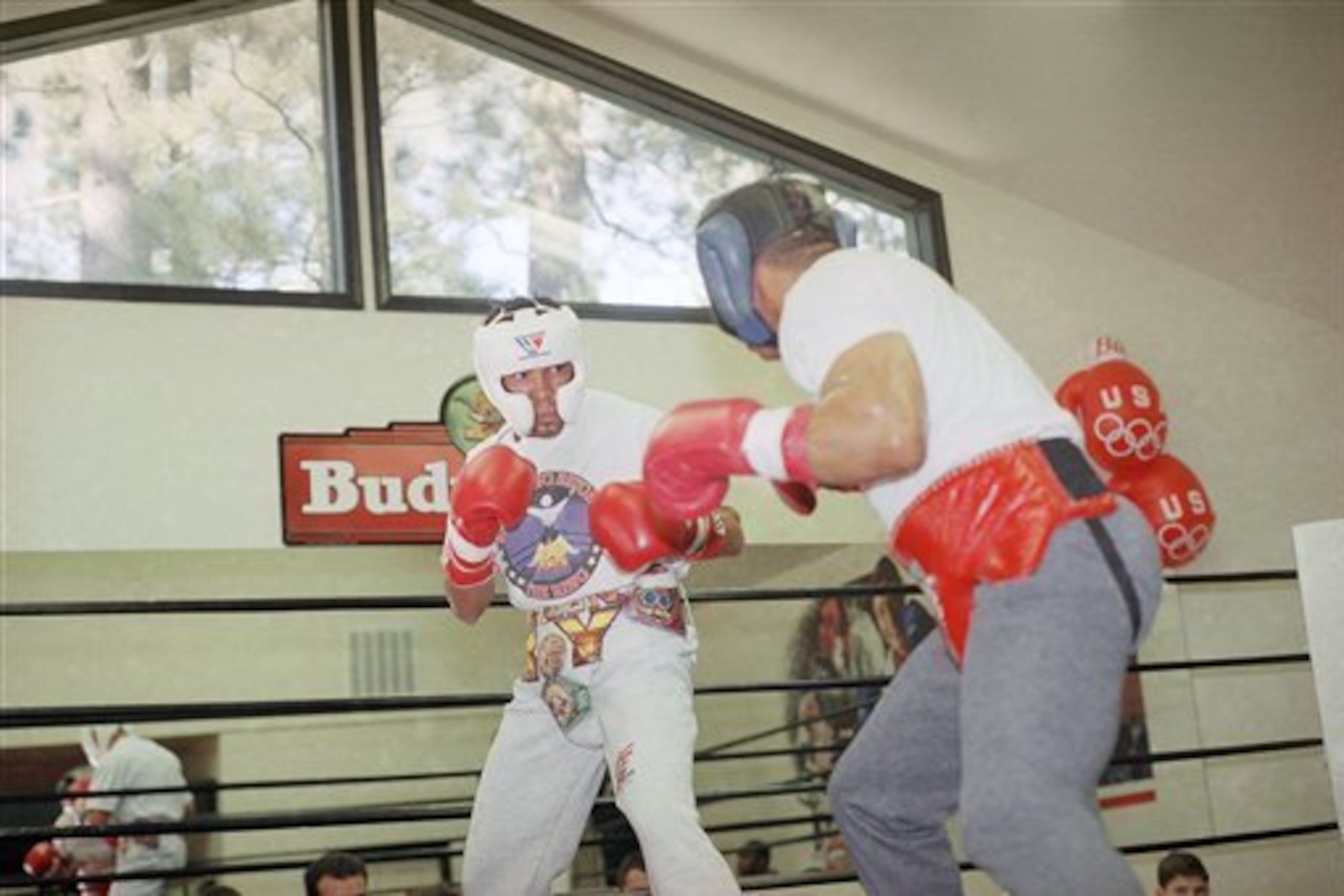
The two went to work in the gym at De La Hoya's new home in Big Bear, California, crafting a style to beat Chavez. Workmen were still putting the finishing touches on the living area—De La Hoya had insisted they finish the gym first, a sign, his new trainer thought, of a solid commitment to the sport.
The champion, of course, didn't need any additional seasoning. His was the opposite problem, a battle against time that every fighter eventually loses. His veneer of invulnerability had shown its first cracks in 1990 when it took a controversial last-second knockout to stop Meldrick Taylor. A bogus draw with Pernell Whitaker soon followed before Frankie Randall became the first to beat Chavez in his 91st fight.
It was hard to picture Chavez returning completely to form, despite claims he was working harder than ever. The legendary hard man from Culiacan had gotten soft around the middle in recent bouts. Against De La Hoya, he knew he'd have to be at his best, necessitating a prohibition on alcohol three months before the fight, though the New York Times' Tom Friend claimed "he had been seen sipping wine" during the week of the fight.
By the time the bell rang, a robust press corps had covered nearly everything that could be discussed before a fight, from De La Hoya's long fingers to Steve Farhood's ruminations on the weather in Ring:
"The heat, everyone agreed, would favor Chavez. But on fight night, the sun dipped below the bleachers about an hour before the main event and a nightmareish night turned bearable. If Father Time was in the The Golden Boy's corner, so was Mother Nature.
"
Still, it was hot enough in Las Vegas that night that ring announcer Michael Buffer wisely chose a short-sleeve shirt rather than his customary tuxedo. As referee Joe Cortez gathered the two fighters in the center to go over the rules a final time, Merchant, sitting ringside with HBO commentators Lampley and Foreman, summed the spectacle up with trademark succinctness.
"This is youth, talent, ambition, against experience, will and pride."
Will and pride, unfortunately for the fans chanting his name, weren't enough. Chavez's was a style that required time. He liked to wear his man down, slowly sucking the will out of even the most adamant foe. The first-round cut, as well as the boisterous crowd, motivated Chavez to work at a faster pace—but De La Hoya wasn't there to be hit.
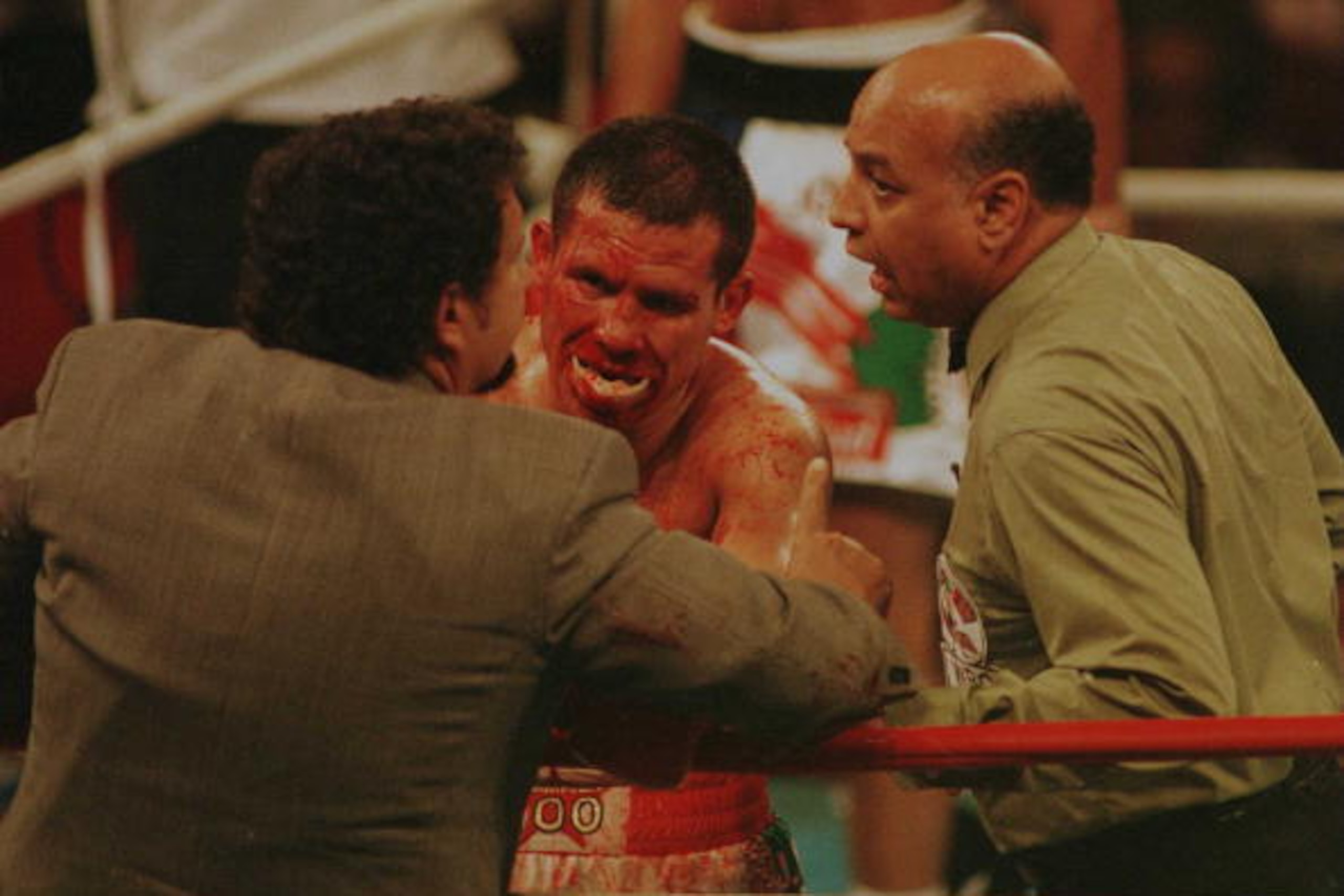
Holding his arms close to his middle to avoid Chavez's brutal body punching, De La Hoya relied on his speed, jab and improved head movement to emerge from the fight as pretty as he went into it. Chavez wasn't so lucky, as the growing cut by his left eye eventually forced ring doctor Flip Homansky to stop the fight in the fourth round.
"I saw the cut open, but I still kept my composure," De La Hoya told the press after the fight. "One thing about me, I can focus up in that ring. Julio Cesar Chavez is my idol. But my job is to win fights. Up in that ring, I had no feeling whatsoever for Chavez."
A funny thing happened as the blood poured. De La Hoya, thought to be the grinning, prim and proper face of corporate boxing, revealed the devil inside, suffocating Chavez, as Sports Illustrated's Richard Hoffer described, with uncut and unadulterated violence:
"When Chavez, who in his declining years has had to learn the taste of his own blood, became desperate and lunged forward in the fourth round, the kid unleashed an uppercut to the nose to begin a machinelike, six-punch barrage. Not one of the punches missed, and they nearly exploded Chavez's liquefying face.
It was chilling, not because of the gore. It was chilling because such killer flourishes are aspects of character, not training. A new thought occurred: Oscar De La Hoya, entering the ring, had picked up all the dancing live wires he could find and marinated himself in the amperage, and he liked it.
"
Outwardly, De La Hoya was as gracious as ever, even as Chavez chalked up the loss to bad luck, blaming his cut on an injury suffered in training weeks earlier. The proud champion, after only the second loss of a career that numbered 100 fights, gave his three-year old son Christian, who he said head butted him three days before the fight, more credit for opening the cut than De La Hoya.
Almost 20 years later, on the phone from Los Angeles, you can almost hear the anger in De La Hoya's voice as he discusses the bout. But the joy is there too, as well as a sincere appreciation for the opportunity he was granted.
"I felt extremely privileged and proud to have been in the ring with my childhood hero," he said. "Chavez was my hero. So when he started making excuses that he was already cut and it was sheer luck that I hit him in the perfect spot to open an old wound, it was a disappointment.
"It was my destiny to face Chavez. In boxing, there's something we call the passing of the torch. It was out with the old and in with the new. That catapulted my career to a whole new level. In terms of popularity, of credibility. I wouldn't change anything."
Jonathan Snowden covers combat sports for Bleacher Report.
.jpg?w=2560 "WWE Money in the Bank Grades Graphic")
.jpg?w=2560 "Cardinals Giants Football")
.png?w=2560 "Week 6 Winners & Losers 📊")
.jpg?w=2560 "DK Shades Sauce Gardner 👀")
.jpg?w=2560 "Report: Cowboys Open to More Trades")