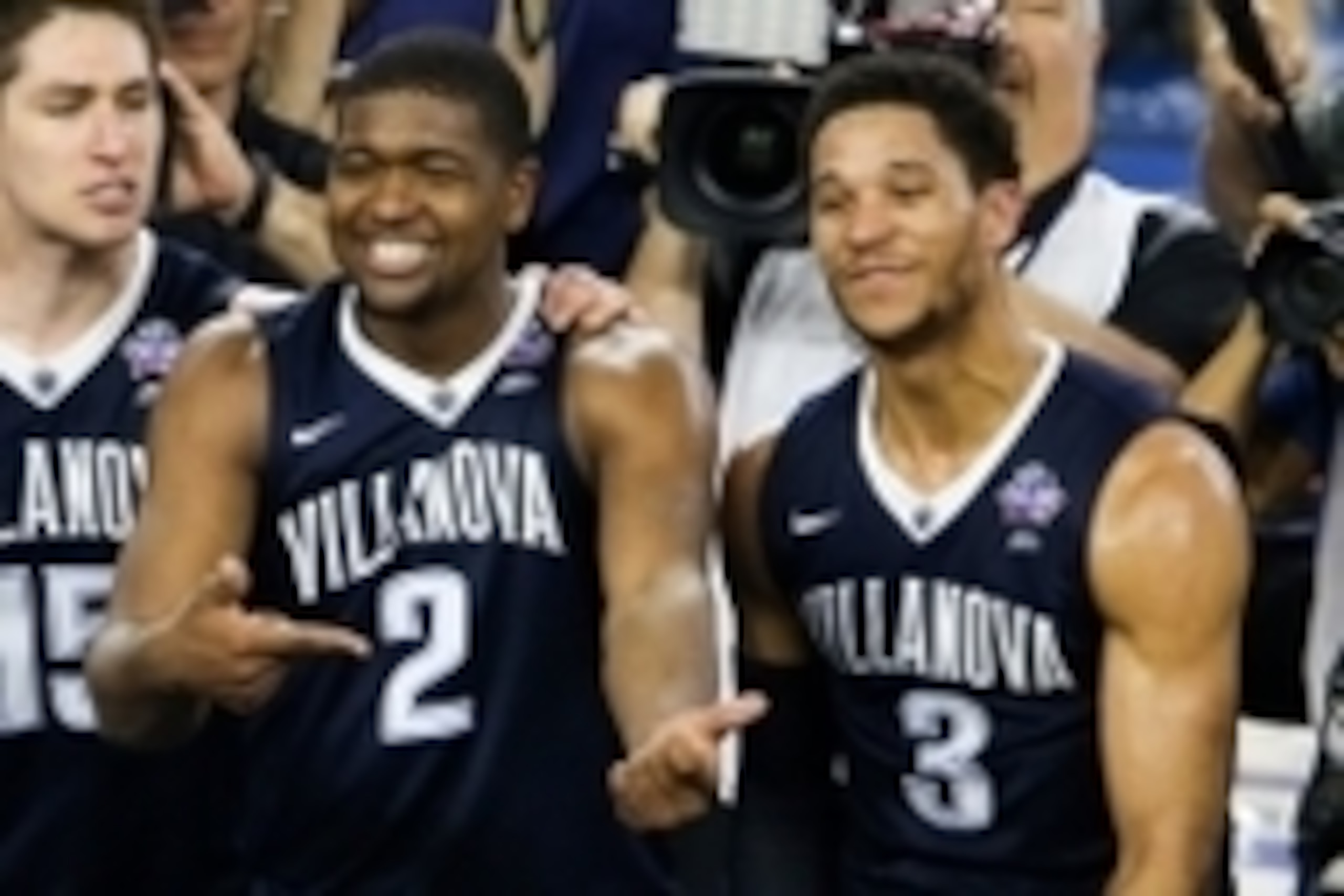

It's hard to win in college basketball without a dynamic duo, and Villanova will be looking to win a second consecutive national championship with its premium pairing of Kris Jenkins and Josh Hart.
Those Wildcats rank No. 1 on our list of the projected best duos for the 2016-17 season, but they are under heavy fire from serious challengers. Wisconsin has arguably the best frontcourt pairing in the country, while Kentucky boasts one heck of a backcourt tandem and Oregon is on a quest for another Pac-12 title with an outstanding inside-outside combo.
These 20 duos were ranked by expected individual production as well as projected team success, with the goal being the biggest contributors to the best teams finish near the top. But these aren't all monster scorers. And they are not all members of legitimate title contenders. Though it was almost impossible to rank in the top 10 without scoring well in both categories.
Honorable Mentions
1 of 21
Ivan Rabb and "To Be Determined," California
The Golden Bears struck gold with Rabb's decision to return for one more season, but it's hard to pick his second fiddle with Jaylen Brown and Tyrone Wallace both out of the picture. It's probably Jordan Mathews, but Jabari Bird, Sam Singer and Columbia transfer Grant Mullins are all viable options. Look for Cal to remain competitive in a very top-heavy Pac-12 next year.
Brett Bisping and Javion Ogunyemi, Siena
There weren't many great pairs of frontcourt players to choose from, but Siena has a strong one. Bisping and Ogunyemi combined to average 30.8 points, 16.5 rebounds and 2.5 blocks per game last season. If you've already penciled in Monmouth as the MAAC regular-season champion, know the Hawks will have serious competition.
Tucker Haymond and Thomas Wilder, Western Michigan
Haymond and Wilder each scored more than 500 points last season in just 32 games, but the Broncos lost 19 of them. It's tough to be nominated as a best duo when playing for a team that can't even make the CBI tournament.
Cameron Oliver and D.J. Fenner, Nevada
Speaking of the CBI, the reigning champions of that postseason tournament have a stout returning duo that should only put up bigger numbers with Marqueze Coleman and Tyron Criswell out of the picture. Cameron Oliver, in particular, could be a treat to watch for several years to come. He averaged 13.4 points, 9.1 rebounds and 2.6 blocks per game as a freshman.
20. Seth Allen and Zach LeDay, Virginia Tech
2 of 21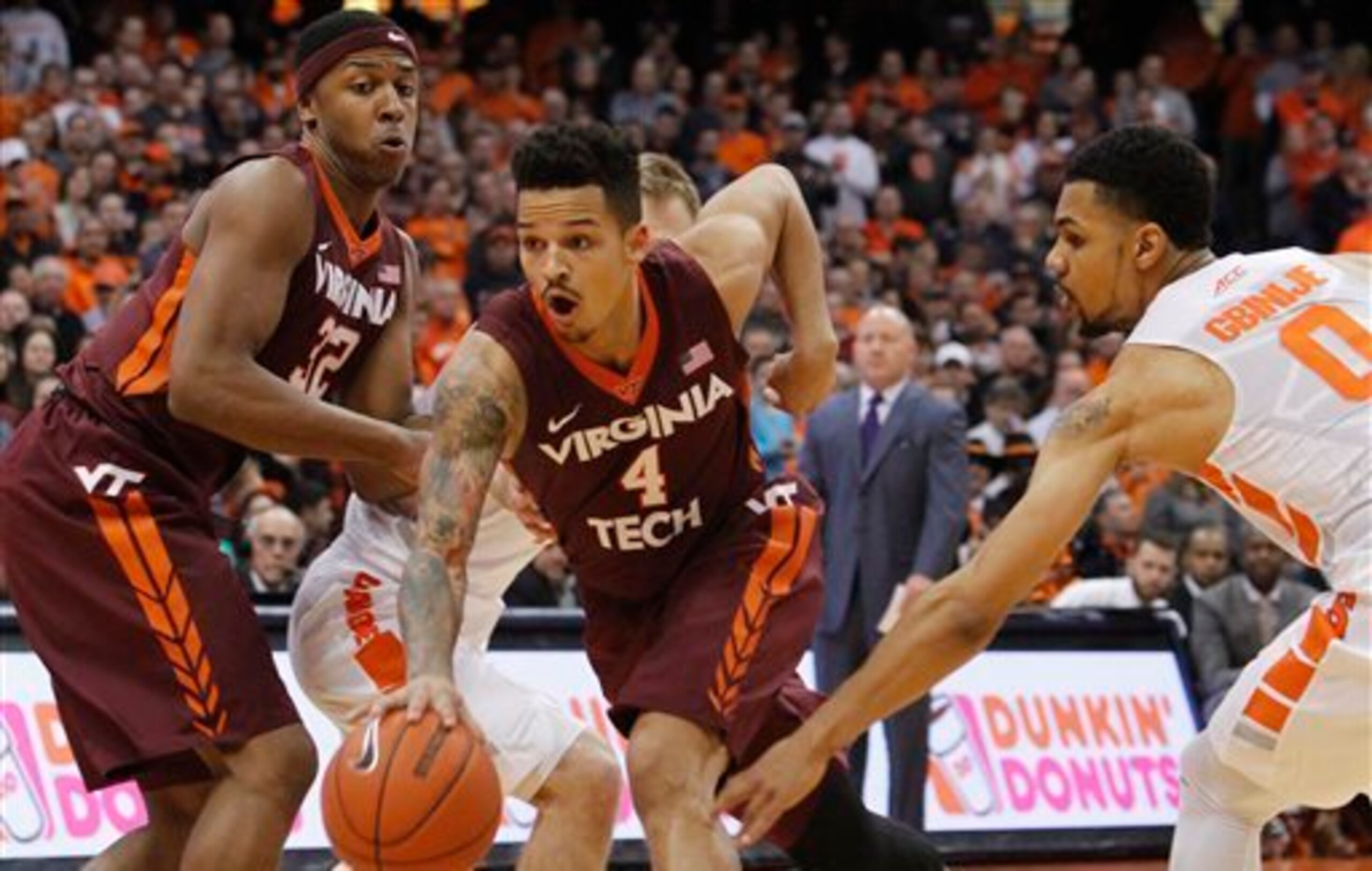
Seth Allen: 14.7 PPG, 3.0 RPG, 2.5 APG
Zach LeDay: 15.5 PPG, 7.9 RPG, 1.7 BPG, 1.4 APG
The Virginia Tech Hokies aren't quite the surefire breakout team that California was last season or that SMU was two years ago, but they're on seemingly everyone's radar after a surprising 10-8 record in ACC play last season. Granted, they went 3-11 against teams that made the NCAA tournament, but they get back all but one of last year's top nine scorers, including their primary inside-outside duo.
Neither Seth Allen nor Zach LeDay was on Virginia Tech's roster two years ago, transferring in from Maryland and South Florida, respectively, after the 2013-14 season before sitting out the following one. But it didn't take long for them to look right at home in Buzz Williams' scheme, combining for 39 points, 19 rebounds and six assists in the 2015-16 season opener.
Of the two, LeDay is undoubtedly more important to their cause. He led the team in points, rebounds and blocks last season. However, if Allen can get back to shooting three-pointers like he did in his final season with the Terrapins (38.0 percent) as opposed to how he fared in his first year with the Hokies (28.0 percent), he could be the ACC's top scorer.
19. J.J. Frazier and Yante Maten, Georgia
3 of 21
J.J. Frazier: 16.9 PPG, 4.5 RPG, 4.4 APG, 1.4 SPG
Yante Maten: 16.5 PPG, 8.0 RPG, 1.8 BPG
Few seemed to notice while Georgia sputtered to a NIT appearance, but J.J. Frazier and Yante Maten made arguably the best SEC duo outside of Kentucky's Tyler Ulis and Jamal Murray. And with both Charles Mann and Kenny Gaines out of the picture, the Bulldogs will only become that much more reliant on their pillars of points.
Maten had a surprising breakout sophomore campaign. Georgia lost Marcus Thornton, Nemanja Djurisic and Cameron Forte, leaving Maten as the only viable returning big man. As a result, we expected a significance increase in minutes and raw numbers. With the added responsibility came drastically improved efficiency, though, as his rate of points per 40 minutes doubled from 11.0 to 22.0.
Meanwhile, Frazier was one of just 13 players to average at least 16.5 points, 4.2 rebounds and 4.2 assists per game last season, and he's the only one from that list who is returning for another year. That isn't to say the 5'10" guard is a triple-double waiting to happen, but throw in his ability to force turnovers and he's one of the country's best, multifaceted players. It will be fun to watch him go up against Kentucky's new dynamic backcourt duo.


18. Monte Morris and Matt Thomas, Iowa State
4 of 21
Monte Morris: 13.8 PPG, 6.9 APG, 3.9 RPG, 1.8 SPG
Matt Thomas: 11.0 PPG, 4.4 RPG, 1.7 APG
The Iowa State Cyclones face an uphill battle with Georges Niang, Jameel McKay and Abdel Nader having expended their years of eligibility, but they still have one heck of a backcourt duo in Monte Morris and Matt Thomas.
Morris is the more well known of the two as the wildly efficient starting point guard for the past several years. He has a career assist-to-turnover ratio of 4.48 and has created 49 more steals than he has committed turnovers. Morris is also a reliable scorer, shooting better than 38 percent from three-point range in his career—despite averaging an exhausting 38.0 minutes per game this past season.
Thomas was undoubtedly the least heralded of last year's starting five, but he was their top three-point threat by a country mile, attempting more than 200 triples while converting on 43.2 percent of them. At 89-of-206, he finished the season with similar numbers to Gonzaga's Kyle Wilter (90-of-206) and Valparaiso's Alec Peters (91-of-207).
But quite unlike those primary stretch 4s, Thomas put up his numbers while serving as the last option in Iowa State's offense. If he can maintain his efficiency while becoming the secondary or tertiary scorer, he could have a monster senior year.
17. Peyton Aldridge and Jack Gibbs, Davidson
5 of 21
Peyton Aldridge: 15.5 PPG, 6.4 RPG, 2.2 APG, 1.0 BPG
Jack Gibbs: 23.4 PPG, 4.9 APG, 4.1 RPG, 1.8 SPG
Most basketball fans know Davidson as the former home of two-time NBA MVP Stephen Curry, but did you know the Wildcats still have one heck of a scoring duo?
In his first two collegiate seasons, Jack Gibbs had scored more than 22 points just three times—each within the first two months of his sophomore year. As a junior, though, he did it 15 times, including 10 games with at least 30 points and three occasions on which he topped 40. All this while having his three-point percentage plummet from 42.4 percent in 2014-15 to 33.6 percent this past season.
Gibbs' increase in scoring was largely due to former A-10 Player of the Year Tyler Kalinoski's departure, and Davidson might become even more reliant on Gibbs with Brian Sullivan also now out of the picture. The senior combo guard attempted 237 triples last season, so it wouldn't be a surprise to see Gibbs make a run at the number of attempts Curry had in 2007-08 (369).
The other player who should help fill the hole Sullivan left is Peyton Aldridge. Davidson's stretch 4 ranked in the top 110 nationally in O-rating in each of his first two seasons while playing a ton of minutes and shooting better than 38 percent from beyond the arc. If Aldridge becomes more of a focal point in the offense this season, Davidson could duplicate what Northwestern State did in 2014-15 by producing multiple players who average at least 20 points per game.
16. Antonio Campbell and Jaaron Simmons, Ohio
6 of 21
Antonio Campbell: 17.1 PPG, 10.2 RPG, 1.8 BPG
Jaaron Simmons: 15.5 PPG, 7.9 APG, 3.5 RPG
This is no doubt the most anonymous duo on the list, but we couldn't possibly omit these multi-category titans.
Antonio Campbell was one of just nine players to average at least 17 points and 10 rebounds per game, joined on that list by Ben Simmons and Domantas Sabonis, as well as minor-conference career legends Jameel Warney and Shawn Long. Adding to his allure, Campbell was the only player on that list to average 30.5 minutes per game or less (28.9), and he made more than twice as many three-pointers (43) as the second-best player. For good measure, he also blocked 63 shots and committed just 44 turnovers.
Meanwhile, Jaaron Simmons was on an even more exclusive list. Only six players averaged at least 15 points and 7.0 assists per game last season: Denzel Valentine, Tyler Ulis, Kyle Collinsworth, Kay Felder, Juan'ya Green and Simmons. And if we increase the parameters to 15.4 points and 7.8 assists, Simmons and Felder are the only players in the past nine seasons to reach those marks.
With all but one player (Treg Setty) returning from last season, the Bobcats should be the team to beat as Saul Phillips (formerly at North Dakota State) attempts to turn another team into a Cinderella story.
15. Eron Harris and Miles Bridges, Michigan State
7 of 21
Eron Harris: 9.3 PPG, 2.6 RPG, 2.1 APG
Miles Bridges: Incoming Freshman
This summer has been quite the mass exodus for Michigan State. Denzel Valentine, Bryn Forbes and Matt Costello were all seniors last year. Deyonta Davis declared for the NBA draft. Marvin Clark transferred to St. John's. As a result, five of last year's six scoring-average leaders are gone.
The only one still standing is Eron Harris, who shot 43.9 percent from beyond the arc in his first season with the Spartans. And we know he's willing and able to take on a bigger role in the offense, because he averaged 17.2 points and 12.7 field-goal attempts per game in his final season with West Virginia. Look for him to become their go-to guy this season.
Fortunately, Harris will be surrounded by new studs, as Tom Izzo's 2016 recruiting class is undoubtedly the most impressive of his coaching career. And while Harris should be this offense's top dog, Miles Bridges ought to play one heck of a second fiddle.
A perimeter player with a nose for thunderous dunks, Bridges will draw comparisons to Stanley Johnson—albeit a left-handed version of Arizona's recent freshman phenom. But while Johnson played shooting guard in that rotation, Bridges is more likely to take on the type of stretch 4 role Brandon Ingram played for Duke this past season. He probably won't average a double-double, but Bridges could be an All-B1G first-teamer with something in the vicinity of 15 points and seven rebounds per game.
14. Moses Kingsley and Dusty Hannahs, Arkansas
8 of 21
Moses Kingsley: 15.9 PPG, 9.3 RPG, 2.4 BPG, 1.2 APG, 1.1 SPG
Dusty Hannahs: 16.5 PPG, 2.4 RPG
Among teams that finished .500 or worse in 2015-16, there's likely not a better returning duo than Arkansas' Moses Kingsley and Dusty Hannahs.
Kingsley had an incredible breakout campaign. The big man averaged just 10.8 minutes in 2014-15, but the Razorbacks had no choice but to give him nearly 30 minutes per game after losing Bobby Portis, Michael Qualls and Jacorey Williams. Kingsley responded by more than quadrupling his scoring average and becoming one of the SEC's —and perhaps the country's—best rebounders.
Hannahs also had a breakout year, scoring more points as a junior at Arkansas (529) than he did in his first two seasons at Texas Tech combined (462). He had always been a good three-point shooter, but he became a much more lethal one with the Razorbacks while also improving his game inside the arc. With Anthlon Bell out of the picture, Hannahs should flirt with 20 points per game this season.
In addition to Bell, Arkansas loses stud point guard Jabril Durham, Jimmy Whitt and Keaton Miles. However, Mike Anderson got one heck of a JUCO haul in signing three of the top six junior-college transfers, as evaluated by 247Sports. With Kingsley and Hannahs leading the way, Arkansas could be a top-four SEC team.
13. Emmett Naar and Dane Pineau, Saint Mary's
9 of 21
Emmett Naar: 14.1 PPG, 6.3 APG, 3.7 RPG, 1.3 SPG
Dane Pineau: 11.3 PPG, 8.1 RPG, 1.5 BPG, 1.4 APG
It's borderline astonishing how few people were interested in discussing the job Randy Bennett did with Saint Mary's last season. From the 2014-15 roster, the Gaels lost to graduation 139 out of a possible 155 games started, leaving Emmett Naar and Dane Pineau as the only returning players who scored at least 66 points.
Somehow, they got drastically better, improving from 21-10 to 29-6. And they don't lose a single player this offseason. If you haven't yet bought stock in Saint Mary's as a 30-win, Sweet 16 team, now's your chance.
Naar and Pineau both ranked in the top 100 nationally in O-rating for one of the country's most efficient offenses. Naar averaged nearly three assists per turnover while shooting 41.8 percent from beyond the arc. Pineau connected on 68.3 percent of his two-point attempts while corralling a dozen rebounds per 40 minutes.
They may not have the notoriety of John Stockton and Karl Malone, but it's hard to ask for a more effective and efficient inside-outside duo than the one that will be leading Saint Mary's once again.
12. Elijah Brown and Tim Williams, New Mexico
10 of 21
Elijah Brown: 21.7 PPG, 5.5 RPG, 3.2 APG, 1.1 SPG
Tim Williams: 16.8 PPG, 7.4 RPG, 1.2 BPG, 1.0 APG
The last two years haven't exactly been vintage New Mexico basketball, but the Lobos will enter next season with the two best players in the entire Mountain West Conference.
A total of 11 players from the conference averaged at least 14.5 points per game last season. Six of those players (Josh Adams, Marvelle Harris, Antwan Scott, Marqueze Coleman, Chris Smith and Gian Clavell) were seniors. Three of them (James Webb III, Patrick McCaw and Jalen Moore) declared for the NBA draft—though Moore could still withdraw before the May 25 deadline. And the other two (Elijah Brown and Tim Williams) both play for New Mexico.
Neither one began his career with the Lobos. Williams played two years with Samford before bringing nearly identical numbers to New Mexico, and Brown played one lackluster season at Butler before exploding into one of the country's best mid-major players this past season.
With Cullen Neal (343 field-goal attempts last season) transferring out of the program, there's even more room in this offense for Brown and Williams to thrive. They averaged a combined 38.5 points per game last season, but anything less than 42 in 2016-17 would be a bit of a letdown. Whether their supporting cast is enough to turn all those points into wins is the bigger unknown.
11. Jordan Woodard and Khadeem Lattin, Oklahoma
11 of 21
Jordan Woodard: 13.0 PPG, 3.4 APG, 3.0 RPG, 1.6 SPG
Khadeem Lattin: 5.6 PPG, 5.3 RPG, 2.1 BPG
Compared to every other returning player's numbers from last season, Khadeem Lattin sticks out like a sore thumb. Several of these guys averaged more than three times as many points as Lattin, but he's going to be a huge piece of the puzzle if the Sooners are going to remain nationally relevant.
In addition to Buddy Hield, Oklahoma loses Isaiah Cousins and Ryan Spangler, leaving Lattin as the top returning rebounder and second-highest scorer on the roster.
When he did try to score, he was pretty effective, shooting a team-high 55.7 percent from the field. But he only played 22 minutes per game and only averaged one field-goal attempt for every 5.2 minutes spent on the court. Look for both of those numbers to improve drastically as Lattin becomes the go-to forward in this offense.
But Jordan Woodard is the biggest key to everything Oklahoma will do this season. He'll lead the team in points, assists and steals, probably without a close runner-up in each of those categories. As long as he stays healthy, it's just a question of whether Lattin will be enough of an inside presence to help carry Woodard's outside dominance.
10. Bryce Alford and Lonzo Ball, UCLA
12 of 21
Bryce Alford: 16.1 PPG, 5.2 APG, 3.8 RPG
Lonzo Ball: Incoming Freshman
Up to this point on the list, projected team success has been relatively irrelevant. Teams like Davidson, Georgia and New Mexico are represented, but they are far from locks for the NCAA tournament, despite each boasting a pair of studs.
For the top 10, though, we're just looking for dynamic duos on potential title contenders. And, yes, UCLA is in that conversation despite a 15-17 record last year.
Though the Bruins lose a key big man in Tony Parker, what they're gaining is so much more. Freshmen Lonzo Ball and T.J. Leaf should both start from day one, while Ike Anigbogu quickly becomes an important frontcourt reserve. All told, UCLA is going to have one heck of a nine-man rotation.
The two most impactful cogs in the machine will be the backcourt duo of Ball and Bryce Alford.
For the past two seasons, Alford has been a shooting guard trapped in a point guard role. He did a fine job with it, doling out slightly more than five assists per game. However—much like Marcus Paige at North Carolina once Joel Berry arrived—we're expecting even bigger things from Alford now that he can focus exclusively on putting the ball in the hoop rather than worrying about putting four other players in a position to do the same.
With Ball as the primary ball-handler, UCLA could have its most efficient offensive attack since the days of Darren Collison and Russell Westbrook in the late 2000s.
9. London Perrantes and Austin Nichols, Virginia
13 of 21
London Perrantes: 11.0 PPG, 4.4 APG, 3.0 RPG, 1.1 SPG
Austin Nichols: Incoming Transfer
A handful of transfers will make a huge impact this season. There's certainly a case to be made that Gonzaga has a duo of transfers in Nigel Williams-Goss and Johnathan Williams III worthy of a spot on this list. But new Cavalier Austin Nichols ended up as the only one to crack into our top 20.
Two years ago with Memphis, Nichols averaged 13.3 points, 6.1 rebounds and 3.4 blocks per game. The latter of those numbers is what makes him most intriguing in Tony Bennett's defensive-minded rotation, particularly given Anthony Gill and Mike Tobey are graduating, which will put Virginia in a position of needing a new frontcourt presence. It's unlikely he becomes the ACC's most dominant big man, but he'll be crucial on both ends of the court for the Wahoos.
And in the backcourt, it's now the London Perrantes show with Malcolm Brogdon off to the NBA.
A 48.7 percent three-point shooter last season, Perrantes was just about the most lethal gunner in the country. In Virginia's four NCAA tournament games, he shot 52.0 percent from beyond the arc. But he only averaged 11.0 points in those games because he wasn't even remotely the primary option in the offense. He'll never average 20 per game at Virginia's pace, but he should make a bigger dent in the scoreboard this season.
8. Trevon Bluiett and Edmond Sumner, Xavier
14 of 21
Trevon Bluiett: 15.1 PPG, 6.1 RPG, 2.2 APG
Edmond Sumner: 11.0 PPG, 3.6 APG, 3.4 RPG, 1.3 SPG
Welcome to the "If he comes back" portion of the program, where we're reminded for the umpteenth time in the past six weeks that we still have no clue what the college basketball landscape will look like in November. There are still literally dozens of players who have not yet decided whether they will be back for another season, several of which will have a massive impact on updated Top 25 rankings after the May 25 deadline to pull out of the NBA draft.
One of the biggest such decisions belongs to Xavier's Trevon Bluiett.
If he stays in the draft, the Musketeers will be in trouble. They've already lost Jalen Reynolds and James Farr, so losing Bluiett would leave them without all three of last year's top rebounders and three of their five top scorers.
Should he return to Xavier, though, he's a stone-cold lock for preseason All-Big East First Team and would join Edmond Sumner as one-half of perhaps the nation's most versatile duo. Whether you want three-pointers, dunks, rebounds, assists or aggressive on-ball defense, Bluiett and Sumner have you covered in every category. They would make Xavier a legitimate Final Four threat for a second consecutive season.
7. Isaiah Hicks and Justin Jackson, North Carolina
15 of 21
Isaiah Hicks: 8.9 PPG, 4.6 RPG
Justin Jackson: 12.2 PPG, 3.9 RPG, 2.8 APG
Like Trevon Bluiett at Xavier, North Carolina is still anxiously awaiting Justin Jackson's NBA decision—though the Tar Heels would arguably be more equipped to stomach the loss of their wing-forward.
With Brice Johnson and Marcus Paige both gone, opportunities abound in this offense. That's just a shade under 30 points per game and more than 21 field-goal attempts per game that need to be redistributed, where Jackson would figure to be one of the primary benefactors. He would need to improve his three-point stroke (29.7 percent through two seasons), but he would probably be the Tar Heels' leading scorer in 2016-17.
But the player who should most profit from North Carolina's losses is Isaiah Hicks. The former McDonald's All-American put up 19.8 points and 10.2 rebounds per 40 minutes while shooting 61.4 percent from the field, but he only played 18.1 minutes per game. Occasionally, that was due to foul trouble, but it was primarily because the Tar Heels simply had too many mouths to feed.
At long last, Hicks should be a full-time starter this season, and he could be the ACC's best power forward.
6. Nigel Hayes and Ethan Happ, Wisconsin
16 of 21
Nigel Hayes: 15.7 PPG, 5.8 RPG, 3.0 APG, 1.1 SPG
Ethan Happ: 12.4 PPG, 7.9 RPG, 1.3 APG
We have yet another pending draft decision in Wisconsin, where Nigel Hayes could ultimately decide whether the Badgers open the 2016-17 as a top-10 team or as one the Top 25's outer fringe.
Despite per-game numbers that would seem to suggest otherwise, Hayes experienced a challenging junior-year campaign. After shooting 54.1 percent from inside the arc and 39.6 percent beyond it in 2014-15, his numbers in those categories were 40.0 and 29.3, respectively. His effective field-goal percentage plummeted from 55.7 to 41.2 as he struggled to make the transition to Wisconsin's primary offensive weapon.
But that's what makes Wisconsin so scary if he comes back. We know Hayes is better than what he showed us last season, and everyone else on the roster is one year older and wiser, as the Badgers don't lose a single senior this offseason.
Take your pick between Bronson Koenig and Ethan Happ as the second half of Hayes' duo, but we're going with Happ, if only because this list is otherwise devoid of frontcourt pairs. (Unless you count both Josh Hart and Kris Jenkins as frontcourt guys.)
Happ had a phenomenal freshman year after redshirting the 2014-15 season. Better yet, he was still heating up at the finish line. In Wisconsin's four postseason games between the Big Ten and NCAA tournaments, Happ averaged 16.0 points and 8.8 rebounds. He had 10 double-doubles and led the Badgers in rebounds and blocks.
5. Josh Jackson and Frank Mason, Kansas
17 of 21
Josh Jackson: Incoming Freshman
Frank Mason: 12.9 PPG, 4.6 APG, 4.3 RPG, 1.3 SPG
Kansas skyrocketed in the various projected Top 25 rankings when the Josh Jackson signing was announced, so the highest-rated player in this year's recruiting class was a no-brainer inclusion as one-half of one of the country's best duos—even though it pained us to break up the Jayhawks' already-great returning duo of Frank Mason and Devonte' Graham.
If you're looking for the country's best trios, here's your No. 1 team.
Forced to pick between Mason and Graham, though, it only makes sense to go with the one who had more points, assists and rebounds, right? Graham had a phenomenal sophomore season shooting the ball (44.1 percent from three), but Mason has been the steady hand in this offense in each of the past two seasons.
He has been overshadowed by the likes of Andrew Wiggins, Joel Embiid, Wayne Selden and Perry Ellis, but there's no chance Kansas becomes the best team during the 2015-16 regular season without Mason. Pairing his veteran experience with Jackson's ridiculous athleticism undoubtedly gives Kansas the inside track for a 13th consecutive Big 12 title.
4. De'Aaron Fox and Malik Monk, Kentucky
18 of 21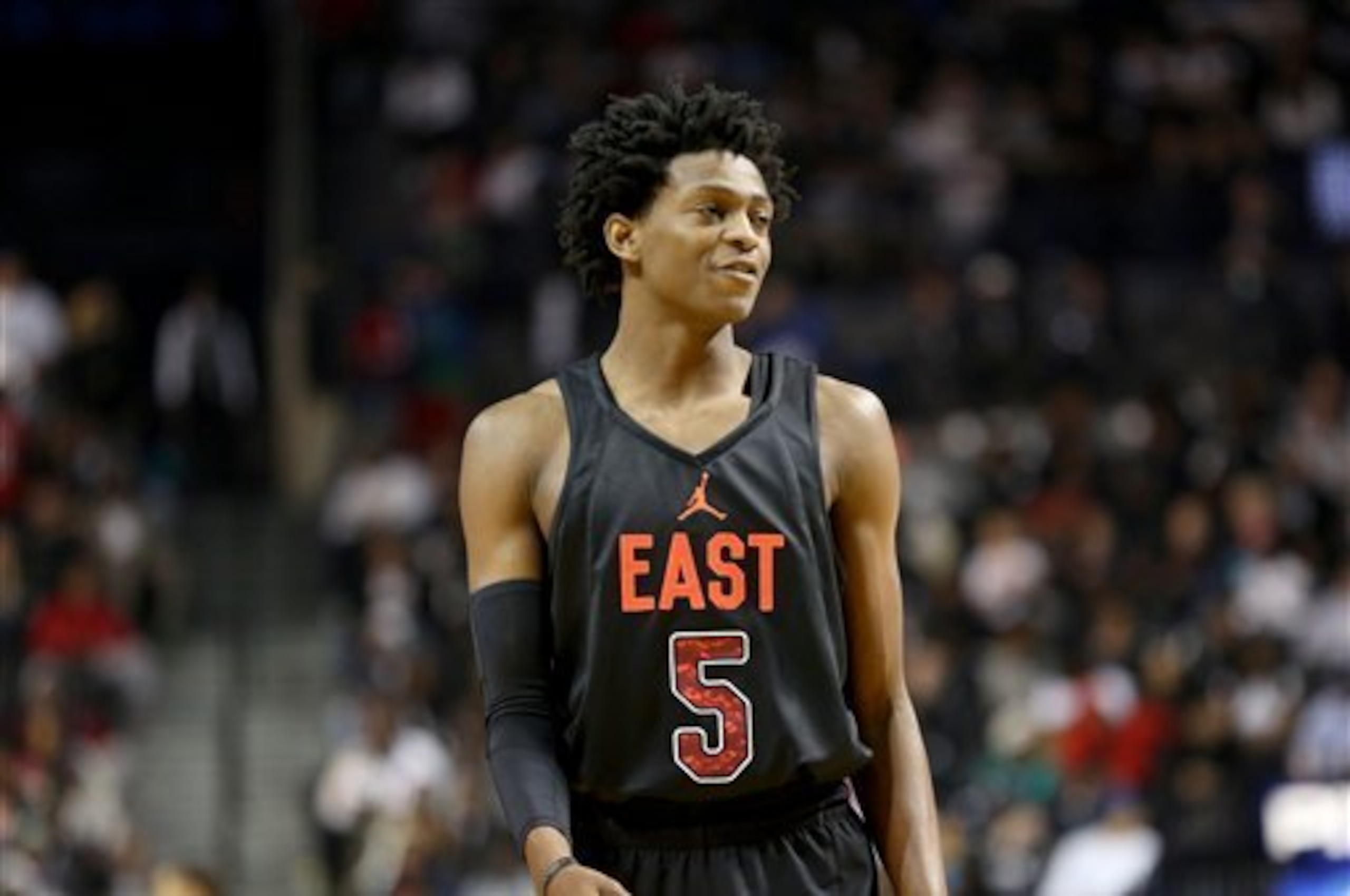
De'Aaron Fox: Incoming Freshman
Malik Monk: Incoming Freshman
It's the only all-freshman duo on our list, but would you expect any less from Kentucky?
The Wildcats just had arguably the best backcourt duo in recent memory in Tyler Ulis and Jamal Murray, so their replacements have an awful lot to live up to—as well as Isaiah Briscoe to compete with. But the Wildcats are in a great position to fill those shoes with two of the country's best incoming guards.
Fox and Monk will both be nightly highlight reels—the former for his speed and decision-making on the fly and the latter for his leaping ability and monstrous dunks. Tiki Barber and Ron Dayne already own the nickname in football, but these Wildcats could be basketball's version of "Thunder and Lightning."
With Murray, Ulis and Skal Labissiere all in the draft, Alex Poythress graduating and Marcus Lee leaning toward staying in the draft, according to Sports Illustrated's Brian Hamiltion, this could be John Calipari's least experienced roster yet.
He'll only be a sophomore, but Briscoe has played 384 more minutes than anyone else left on the roster. So even though Fox and Monk are both freshmen, they should immediately become the leaders of a team expected to compete for a national championship, per usual.
3. Dillon Brooks and Chris Boucher, Oregon
19 of 21
Dillon Brooks: 16.7 PPG, 5.4 RPG, 3.1 APG, 1.1 SPG
Chris Boucher: 12.1 PPG, 7.4 RPG, 2.9 BPG
If you thought Oregon was going to be a one-hit wonder with last year's No. 1 seed, think again. In fact, the Ducks might be even better this season with Chris Boucher and Jordan Bell fully entrenched as the primary frontcourt weapons.
Boucher put up impressive numbers in his first season of Division I basketball, ranking 16th in the nation in two-point percentage and sixth in block percentage. But the shot-blocking wizard with legitimate three-point range (33.9 percent on 115 attempts) only averaged 25.8 minutes per game while sharing frontcourt time with seniors Elgin Cook and Dwayne Benjamin. If Boucher plays closer to 33 minutes per game this season while becoming more assertive on offense, his senior-year numbers could be downright ridiculous.
And he still wouldn't be the best player on the roster. That title belongs to Dillon Brooks, who led the Ducks in points and assists while ranking second in rebounds and steals. It's a crime Sporting News was the only major outlet to name Brooks an All-American for the 2015-16 season, and even at that, he was only a third-team AA in their book.
It's difficult to get proper recognition while playing for a non-blue-blood program like Oregon, but let's all agree to pay a little more attention to Brooks (and Boucher) this season. The Ducks have earned our respect.
2. Grayson Allen and Jayson Tatum, Duke
20 of 21
Grayson Allen: 21.6 PPG, 4.6 RPG, 3.5 APG, 1.3 SPG
Jayson Tatum: Incoming Freshman
Duke is overrun with potential impact players. Put the names of Frank Jackson, Grayson Allen, Jayson Tatum, Amile Jefferson, Harry Giles, Luke Kennard and Matt Jones in a hat, pull two of them out and you've got a top-10 duo for this list.
(If you were surprised by Derryck Thornton's decision to transfer out of the program last month, you shouldn't have been. Regardless of the rotation, Duke is still going to have the nation's best sixth man and maybe the best seventh man of the past decade.)
Of the 21 possible combinations of Blue Devils, we're going with Allen and Tatum, if only because we're looking forward to finding out what nickname they are given. There's bound to be something much better than "the Ayson Bros," but that's the starting point we're giving you. Post your (G-rated) ideas in the comments for what we should plan on calling the two leading scorers for the country's preseason No. 1 team.
1. Josh Hart and Kris Jenkins, Villanova
21 of 21
Josh Hart: 15.5 PPG, 6.8 RPG, 1.9 APG, 1.2 SPG
Kris Jenkins: 13.6 PPG, 3.9 RPG, 2.2. APG
Duke has a litany of great options, but when the defending national champions get back their two leading scorers—provided Josh Hart does actually return for his senior year—that's tough to beat.
Like Malcolm Brogdon over the past few years for Virginia, Hart has been the tireless jack-of-all-trades for Villanova who will enter his senior season as the undisputed team leader. The only returning player who ranked in the Top 10 in the KenPom.com Player of the Year standings, Hart is the Wildcat most likely to appear near the top of preseason Wooden Watch lists.
But you're crazy if you don't consider Kris Jenkins a serious candidate for 2017 Player of the Year awards.
Given where he was early in the year, Jenkins' evolution into the country's most cold-blooded three-point assassin was both unexpected and incredible. He was just 29-of-99 from downtown through his first 16 games, but he shot 71-of-160 (44.4 percent) from that point forward, including the shot heard 'round the world to win the title.
It wasn't just his three-point stroke, either. Jenkins became a much-improved all-around player, as well, seemingly cramming four years of development into a span of one week. When the Wildcats lost Daniel Ochefu to a concussion for three games, it was as if a light came on in Jenkins' head that he needed to do more for his team to succeed. Another few months of that version of Jenkins and Villanova could be repeating as champs.
Stats and rankings are courtesy of KenPom.com, unless noted otherwise. Recruiting information is courtesy of 247Sports.
Kerry Miller covers college basketball for Bleacher Report. You can follow him on Twitter @kerrancejames.
.jpg?w=2560 "LA Premiere of \"Chad Powers\"")



.jpg?w=2560 "Ugly Jets Scoring Stat 😳")
.jpg?w=2560 "Landing Spots for Trade Candidates 📍")