The Pac-12's Most Indispensable Players for the 2016-17 CBB Season
The Pac-12 Conference loses most of its top players from this past season, when it got seven teams into the NCAA tournament. If Stanford forward Rosco Allen and Oregon forward Dillon Brooks remain in this year's NBA draft, all 10 of the first-team all-Pac-12 selections will be gone.
There is a good chance that both Brooks and Allen will return for another year of college ball, but determining the other indispensable players in the conference for 2016-17 requires projections of how much certain players will improve and what their teams need.
Typically, the most indispensable player on a team is its best player, although that is not always the case. Because of a coach's approach or the loss of a certain type of player, another player may be more important to the team's success. The most indispensable player is the one the team can least afford to lose.
We present nine Pac-12 players who are projected to be the most indispensable to their teams next season. We listed no more than one player per team and presented them in inverse order of their importance, with the most indispensable player listed last.
9. George King, Colorado
1 of 9
2015-16 statistics: 13.6 PPG, 4.7 RPG, 45.6% 3PT
Two players who did not play for Colorado this past season figure prominently in the Buffaloes' plans for next season. Derrick White, a transfer from Division II Colorado-Colorado Springs, should augment the Colorado offense from the wing position, and Xavier Johnson, a 6'7" forward who averaged 10.3 points and 5.6 rebounds in 2014-15 before sitting out this past season with a torn Achilles tendon, will help fill the sizable void left by Josh Scott's departure.
Nonetheless, the player the Buffaloes can least afford to lose is George King, a 6'6" shooting guard who rose to prominence this past season. He was second on the team in scoring at 13.6 points per game, which represented a major improvement. King had played sparingly while averaging 1.5 points as a freshman in 2013-14 before redshirting his second season with the Buffaloes. Then he made a major impact as a third-year sophomore.
Nick Kosmider of the Denver Post wrote of King, "His is a fire that burns inside, and it has helped him go from mid-career redshirt to the Pac-12's most improved player."
His 21 and 22 points in the Buffaloes' two conference tournament games suggest the Buffaloes will get even more production from King in 2016-17.
What is particularly significant is that King led the Pac-12 in three-point shooting this past season at 45.6 percent. The Buffaloes led the conference in three-point accuracy last season at 38.9 percent, and King's perimeter threat is essential to coach Tad Boyle's approach.
With King providing firepower from long range while helping out on the boards, Colorado should be in position for its fifth NCAA tournament berth in six years. Without King, an NCAA tournament berth would probably be a long shot.
8. Kyle Kuzma, Utah
2 of 9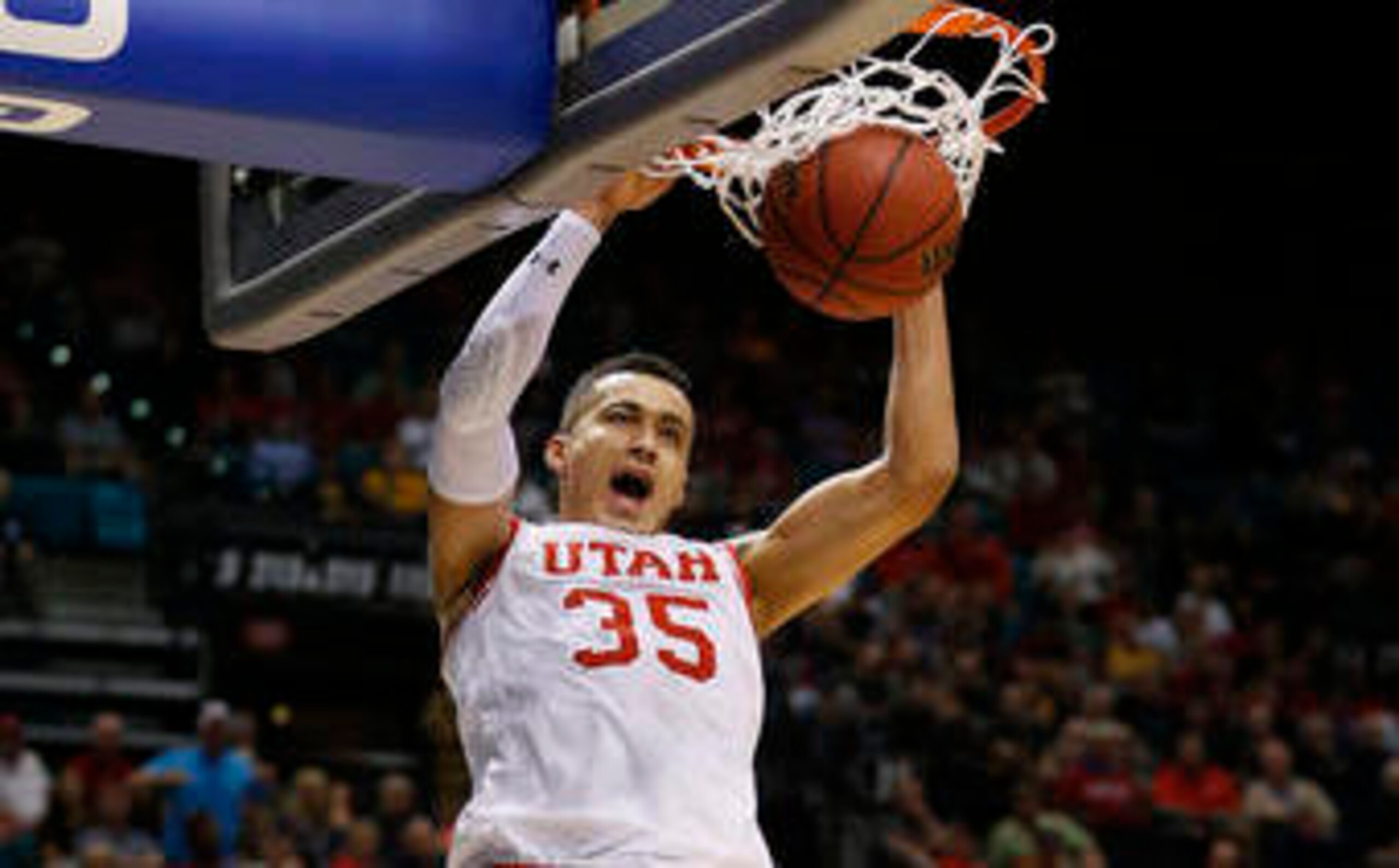
2015-16 statistics: 10.8 PPG, 5.7 RPG, 52.2% FG
Of all the personnel losses in the Pac-12, the departure of 7'1" Utah center Jakob Poeltl to the NBA may be the most significant. Poeltl was the conference player of the year and was a reliable rebounder and low-post threat. Utah and coach Larry Krystkowiak are left with a gaping hole in the middle.
Utah will depend of 6'9" Kyle Kuzma to fill some of that void. Kuzma's improvement from 2014-15 to 2015-16 suggests the best is yet to come for him. After redshirting his first season at Utah, he averaged just 8.1 minutes, 3.3 points and 1.8 rebounds in 2014-15. This past season, he raised those numbers to 24.1 minutes, 10.8 points and 5.7 rebounds, making him the team's No. 3 scorer and No. 2 rebounder.
Kuzma is a different player from Poeltl. While Poeltl liked to catch the ball on the block with his back to the basket, Kuzma is more of a power forward type who is more apt to face the basket and shoot an occasional three-pointer. In that sense, Kuzma also has to help make up for the loss of 6'6" forward Jordan Loveridge, who was the Utes' second-highest scorer this past season.
Kuzma needs to develop his inside game so he is a threat on the block, and he needs to be more consistent. He scored two points against Wichita State and then went five consecutive games with 14 points or more before ending that streak with another two-point effort against California. Later in the season, he went scoreless against Colorado one game before he scored 23 points against USC in the next game.
Krystkowiak will have to tweak his offensive approach next season without Poeltl, and Kuzma will be the key to what he comes up with.
7. Josh Hawkinson, Washington State
3 of 9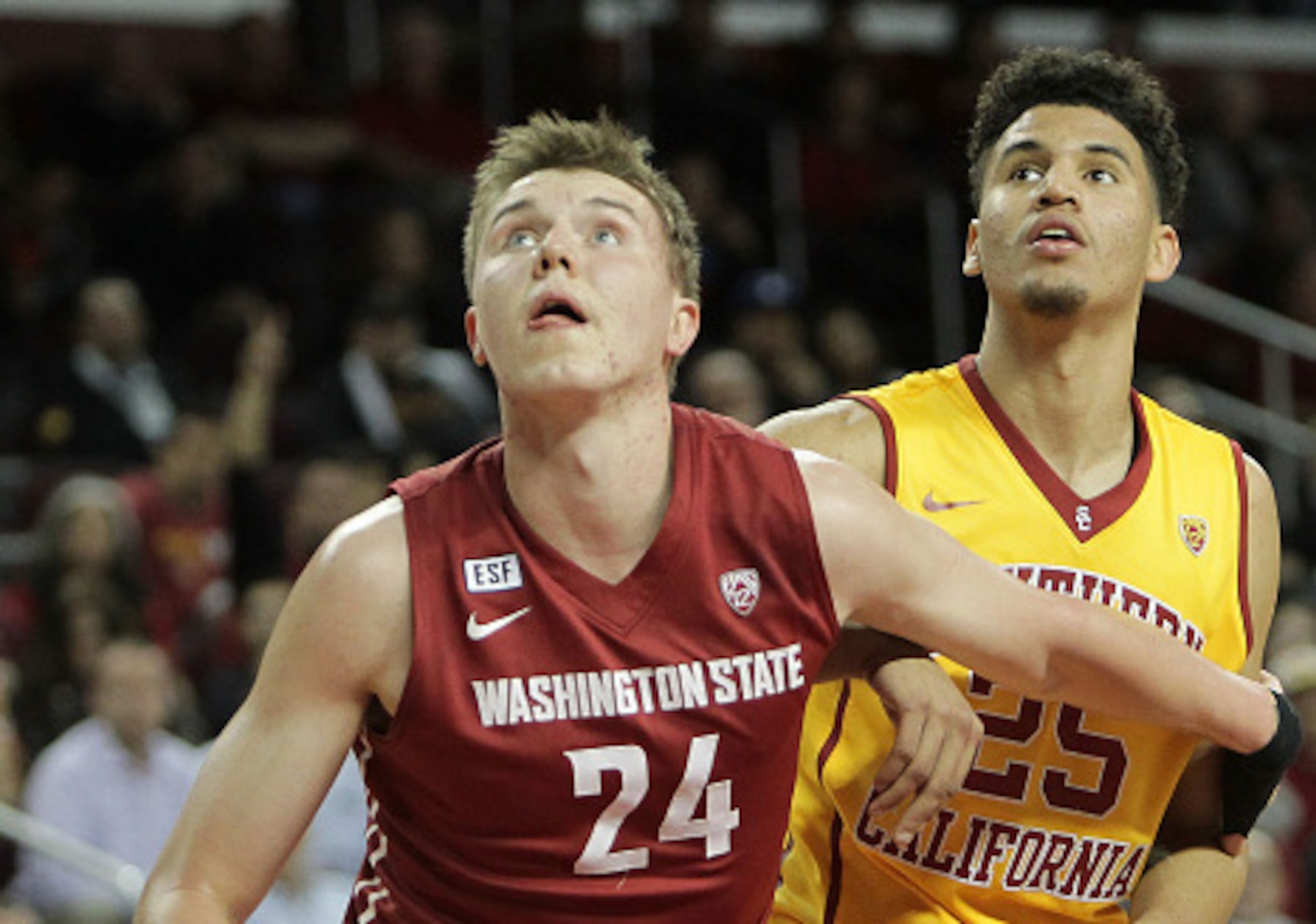
2015-16 statistics: 15.4 PPG, 11.1 RPG, 1.1 BPG
As bad as Washington State was last season, it is scary to think how awful it would have been without Josh Hawkinson. He ranked 10th in the Pac-12 in scoring and led the conference by a comfortable margin in rebounding. The 6'10" Hawkinson even hit 38.5 percent of his three-point attempts.
The Cougars finished 1-17 in the conference, but it is no accident that their best games coincided with Hawkinson's best games. In their one conference win, Hawkinson had 20 points, 10 rebounds and four blocks in a victory over UCLA. In Washington State's two overtime losses, to Washington and Colorado, Hawkinson had 21 points, 20 rebounds and three blocks against the Huskies, and 18 points and 13 boards against Colorado.
Hawkinson entered his name for the NBA draft, but he is expected to return to Washington State for his senior season since he hasn't hired an agent. The Cougars will need him, especially with four players—including Que Johnson, the team's third-leading scorer, and Valentine Izundu, who started 13 games—transferring out after this past season.
Guard Ike Iroegbu and Hawkinson will provide whatever success the Cougars have in Ernie Kent's third year as head coach. And Hawkinson gives Washington State something special in the middle that cannot be replaced.


6. Allonzo Trier, Arizona
4 of 9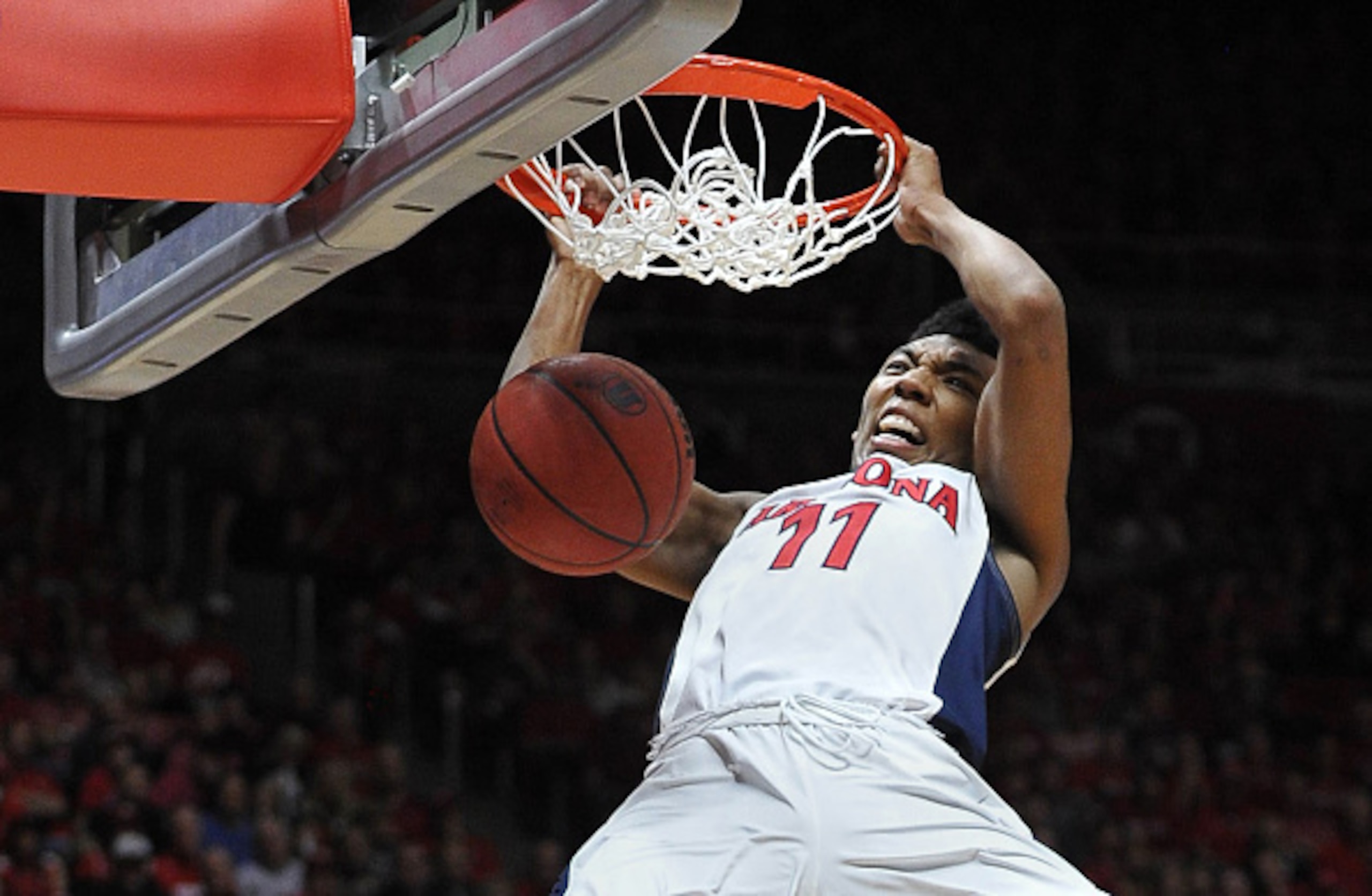
2015-16 statistics: 14.8 PPG, 3.3 RPG, 36.4% 3PT
With its significant personnel losses from this season's team, Arizona will rely heavily on its highly touted incoming freshmen and the return of Ray Smith, who sat out his freshman season with a knee injury suffered last fall. However, the only proven scorer who will be back is guard Allonzo Trier.
Trier is the only Arizona player who averaged more than nine points who will be back next season. His 14.8 scoring average as a freshman ranked third on the team. His scoring improved to 16.2 points per game against Pac-12 opponents, indicating a rise in his level of play that figures to continue next season.
It is probably no coincidence that Arizona's only home defeat last season (a loss to Oregon that ended the Wildcats' 49-game home winning streak) came while Trier was sidelined with a broken hand.
With Ryan Anderson no longer around to patrol the middle and Gabe York no longer available to provide a perimeter threat, it will be up to the versatile 6'5" Trier to set the standard of play for an Arizona team that will have the talent to win another Pac-12 title but will be short on experience.
Trier will get plenty of help from incoming freshmen Lauri Markkanen and Terrance Ferguson, part of a recruiting class ESPN.com ranks as the third best in the country. But Trier is the proven commodity.
5. Isaac Hamilton, UCLA
5 of 9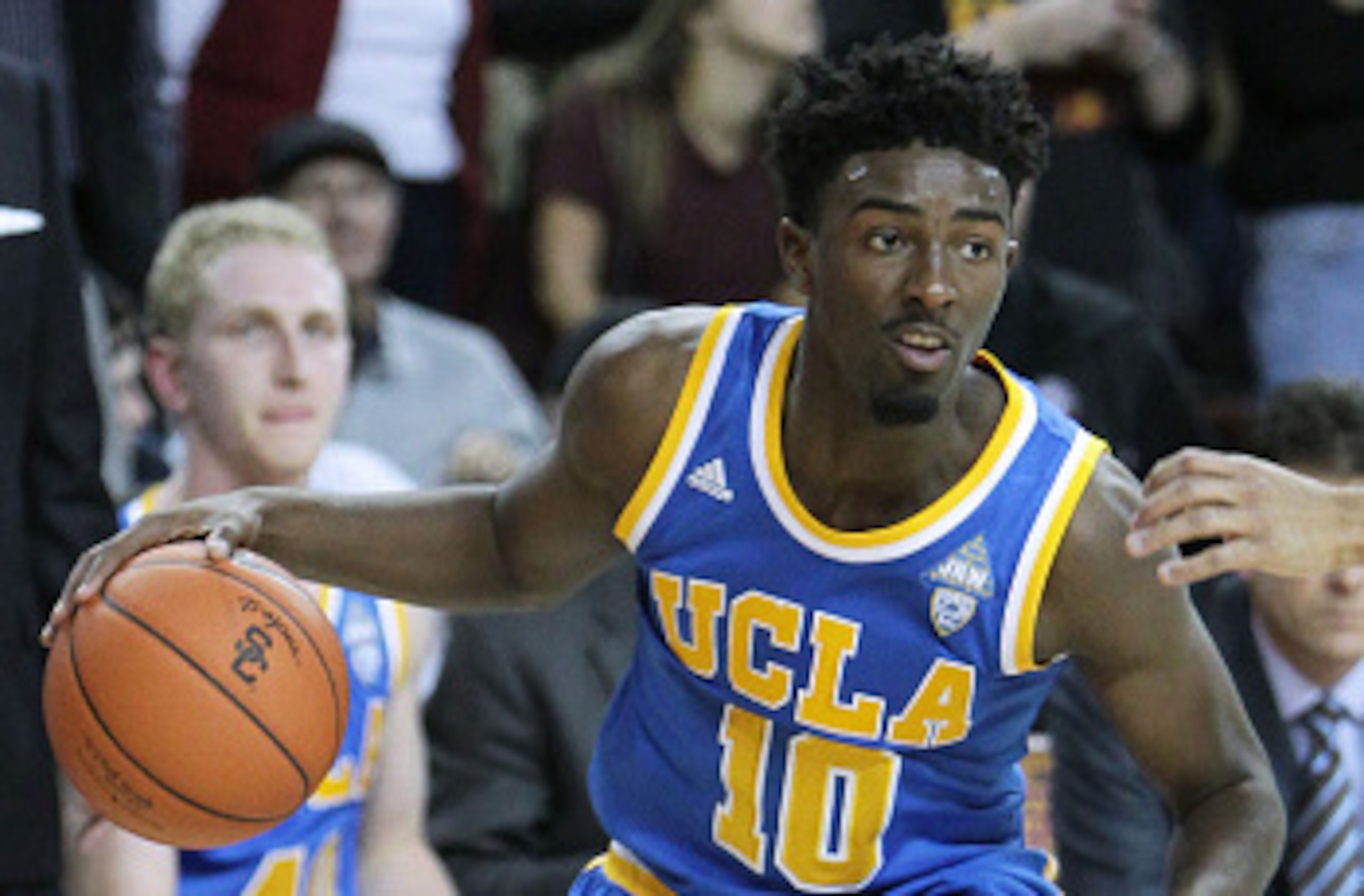
2015-16 statistics: 16.8 PPG, 4.2 RPG, 3.3 APG
The high hopes for UCLA's return to Pac-12 prominence rest with the Bruins' outstanding recruiting class. It is tempting to proclaim incoming freshman point guard Lonzo Ball as the team's most indispensable player, because he could affect so many aspects of Bruins basketball in a positive way. However, the operative word there is "could." Ball has not played a minute of college basketball, and until he does, it is premature to label him as indispensable.
A player who has proved his value is Isaac Hamilton, and his improvement over the course of the 2015-16 season suggests he is the pivotal character in UCLA's chances to challenge for a Pac-12 title. He was UCLA's leading scorer at 16.8 points per game, but the more revealing statistic is that he averaged 18.8 points in Pac-12 play, second best in the conference.
With most of the key players returning from the Bruins' woeful 10th-place conference finish and the addition of incoming freshmen Ball and T.J. Leaf, UCLA should be a contender next season. But Hamilton must continue his improvement for that to happen. How he will fit into a backcourt that figures to include Ball and Bryce Alford is an issue coach Steve Alford must work out. But it is clear he needs Hamilton to be a focal point with his ability to score from the perimeter or off the dribble.
A measure of Hamilton's significance came in the Bruins' 24-point victory over NCAA-tournament-bound Colorado on Feb. 20. Hamilton had one of his best games of the season, scoring 22 points on 9-of-12 shooting, including 4-of-6 from three-point range. It is also noteworthy that it was UCLA's only victory in its final seven games of the season.
4. Jordan McLaughlin, USC
6 of 9
2015-16 statistics: 13.4 PPG, 3.8 RPG, 4.7 APG
With Julian Jacobs deciding to turn pro, the onus falls on Jordan McLaughlin to continue USC's climb up the Pac-12 ladder next season.
Jacobs and McLaughlin formed a backcourt that was instrumental in the Trojans' 21-13 record and their first NCAA tournament berth in five years. In the Trojans' best win of the season, a four-overtime victory over Arizona, the two combined for 35 points, 11 rebounds and 13 assists. Many expected them to be the centerpiece of Andy Enfield's 2016-17 squad, which appeared ready to advance to the upper echelon of the conference.
When Jacobs was not invited to the NBA combine, many assumed he would withdraw his name from the NBA draft and return to USC for his senior season. But on May 6, Jeff Goodman of ESPN tweeted: "USC guard Julian Jacobs told ESPN last night that he will sign with an agent and forgo remaining college eligibility. Huge hit for Trojans."
A huge hit indeed.
With the loss of Jacobs, who was USC's only first-team all-conference pick, and the transfer of guard Katin Reinhardt to Marquette, the Trojans' success is now in the hands of McLaughlin. He will take over the playmaking duties after the Trojans operated out of a system with two point guards this past season.
The Trojans will be aided if 6'11" Nikola Jovanovic withdraws his name from the NBA draft and returns for his senior season, but McLaughlin is the key. He led the team in scoring while ranking fifth in the conference in assists (4.7 per game) and fourth in three-point shooting (42.4 percent). Consistency was a problem, as indicated by his three-point effort in the loss to Oregon and his two-point game in the 20-point loss to Stanford. However, McLaughlin was particularly productive late in the season, averaging 19.0 points on 54.1 percent shooting in the Trojans' final three games against UCLA, Utah and Providence.
McLaughlin's experience as a third-year starter at the critical point guard position will be valuable, and the Trojans would be in serious trouble if they were to lose him.
3. Ivan Rabb, California
7 of 9
2015-16 statistics: 12.5 PPG, 8.6 RPG, 61.5% FG
Ivan Rabb surprised many people when he announced he would return to California for his sophomore season. More than one NBA executive had told him he would be an NBA lottery pick this year and was unlikely to fall below the No. 10 pick in the draft, according to ESPN.com's Jeff Goodman. Likely top-10 picks almost never remain in college.
Rabb did.
Now coach Cuonzo Martin will have a player who seemed destined to be a lottery pick in 2016 in his starting lineup for 2016-17.
Last season, the 6'11" Rabb had to share scoring opportunities with the Bears' two other stars, Tyrone Wallace and Jaylen Brown. With Wallace out of eligibility and Brown heading to the NBA, Rabb becomes the centerpiece of Cal's attack. He has shown he has the size, athleticism and basketball know-how to dominate play in the paint, and with two outstanding outside shooters (Jabari Bird and Jordan Mathews) providing a perimeter threat, Rabb should have room to work.
If Rabb had left for the NBA, the vital inside threat in the three-pronged attack would have been absent.
A second-team all-conference selection this past season, Rabb figures to improve as his comfort level rises. He was a somewhat reluctant star this past season, often being too unselfish. When he decided to look for his own shot, Cal benefited. That was the case when Rabb scored 17 of his team-high 19 points in the second half of a 13-point victory against Utah and Jakob Poeltl.
If Cal makes it to the NCAA tournament again, Rabb might be the Pac-12 Player of the Year.
2. Rosco Allen, Stanford
8 of 9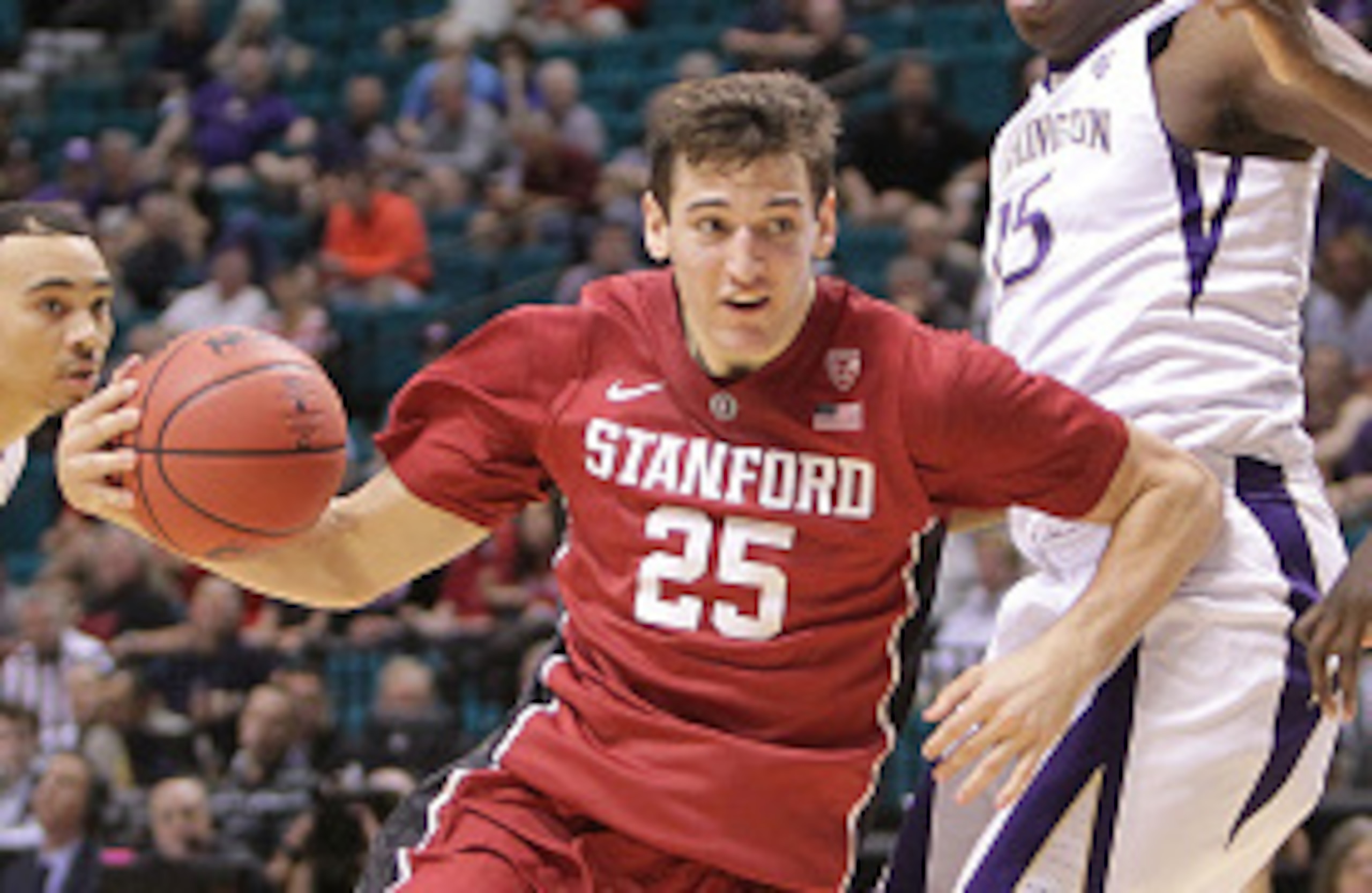
2015-16 statistics: 15.6 PPG, 6.5 RPG, 33.7% 3PT
The first issue with Rosco Allen is whether he will be back next season. He is scheduled to graduate from Stanford this spring, and he entered his name in the NBA draft. Neither NBADraft.net nor DraftExpress has him ranked among its top 100 pro prospects, so he is unlikely to get drafted this year if he stays in the draft. It would make sense for him to return, and that is what he is likely to do.
Even though he will have graduated, Allen hasn't hired an agent, implying that he would play for Stanford next season if he does not turn pro. He would be a fifth-year senior after missing all but one game during the 2013-14 season with a leg stress fracture that led to a medical redshirt.
Assuming he does return, Allen would be the key piece of the offense installed by new coach Jerod Haase. Virtually the entire 2015-16 Cardinal roster returns next season, and Allen would be the proven standout around which Stanford would be built.
Allen was a first-team all-conference selection, and no one else from Stanford was even an honorable mention. But a better indication of Allen's indispensability this past season was the correlation between his performance and the team's success. Allen averaged 18.3 points in the Cardinal's 15 wins and 13.7 points in their 15 losses. In Pac-12 play, Allen averaged 19.9 points in Stanford's eight victories. That includes 25 points in the Cardinal's best win of the season against Oregon, 22 points in the victory over California, and 21 points in the road win over Oregon State.
When Allen scored more than 16 points, the Cardinal were 10-3, and that includes a 19-point effort when the Cardinal nearly beat Texas, losing by two points on an Isaiah Taylor basket with 1.1 seconds left.
When Allen had a big game, Stanford generally won. And with much the same cast next season, that should be the trend again.
1. Dillon Brooks, Oregon
9 of 9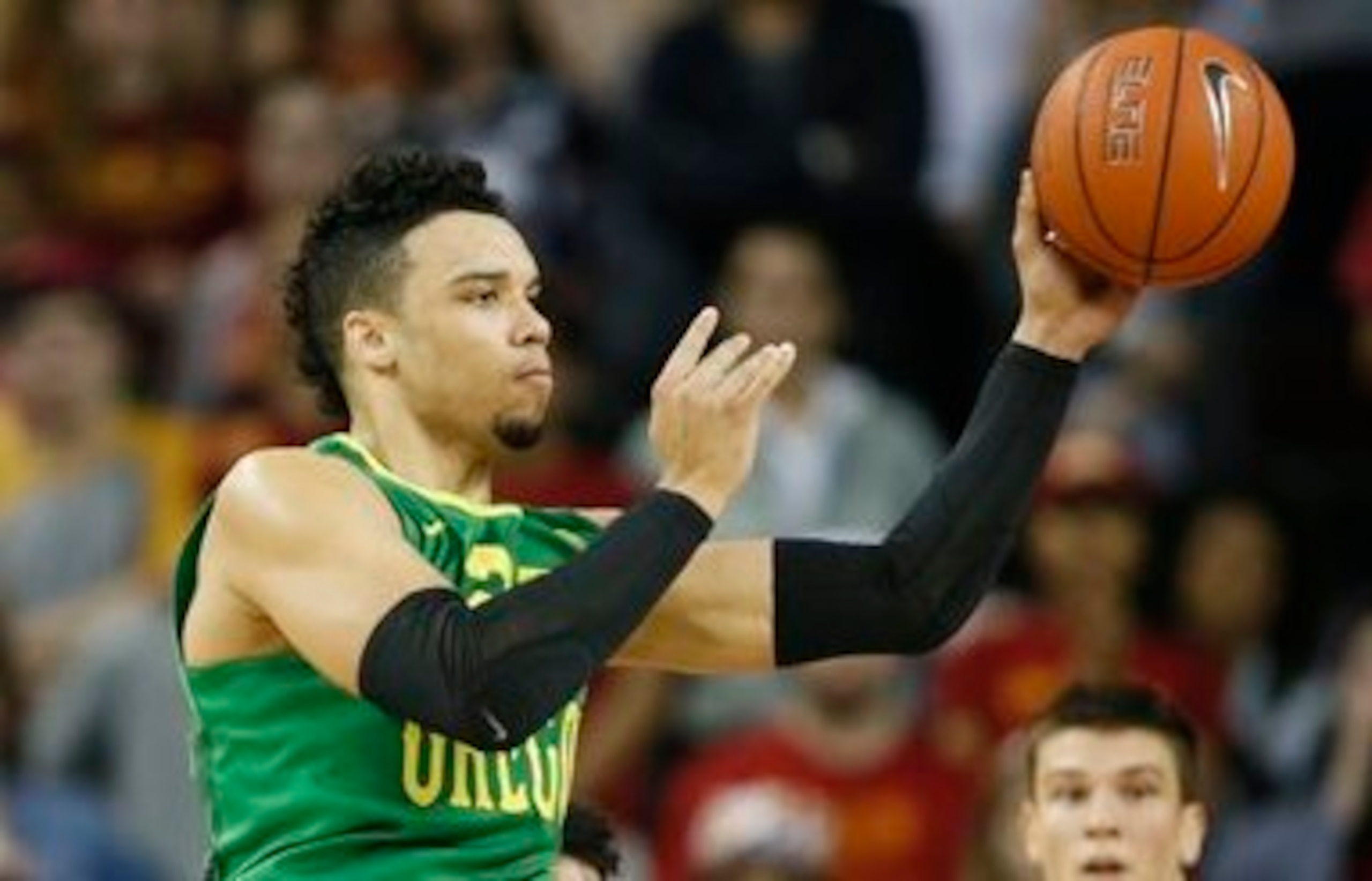
2015-16 statistics: 16.7 PPG, 5.4 RPG, 3.1 APG
If forward Dillon Brooks returns to Oregon for his junior season, he would probably be one of just two of this season's 10 first-team all-conference selections back next season. He would join Stanford's Rosco Allen, assuming Allen returns for his final season of college eligibility.
There is a difference between the situations Allen and Dillon would face next season, though. Allen's return would give Stanford a reasonable shot at finishing in the top half of the Pac-12 standings and getting an NCAA tournament berth. If Dillon comes back, Oregon would be favored to win the Pac-12 title for the second straight season and might be ranked in the top 10 of the preseason Associated Press poll.
With Dillon, the Ducks remain a national powerhouse, losing only Elgin Cook from a team that received a No. 1 NCAA tournament seed and reached the Elite Eight. Without Dillon, the Ducks would remain a conference contender, but greatness on a national level would be elusive.
The same assessment may be true of freshman Tyler Dorsey, who, like Brooks, has submitted his name for the NBA draft without hiring an agent. Since Brooks is rated only No. 74 by NBADraft.net and No. 75 by DraftExpress in their rankings of the top 100 NBA prospects, we assume Dillon will be inclined to return to the Ducks.
The 6'7" Brooks is the epitome of Oregon basketball under Dana Altman. He is a versatile, athletic swingman who can create scoring opportunities for himself or teammates, score on the break or in the half court, guard multiple positions on defense and collect his share of rebounds. The Ducks are a collection of interchangeable parts, with Brooks being the chief cog.
Brooks led the Ducks and was fourth in the conference in scoring at 16.7 points a game, but he also led the team in assists, at 3.1 per game, and was second on the team in rebounds, at 5.4 per contest. Although the Ducks will have considerable talent whether Brooks returns or not, none of the others can satisfy as many needs as Brooks. He might be the preseason favorite to win Pac-12 Player of the Year if he comes back.
If Brooks does not return to Oregon next season, Dorsey or junior college transfer Kavell Bigby-Williams would become the most indispensable player for the Ducks, who would remain Pac-12 title contenders but might not be a top-10 team without Brooks.
.jpg?w=2560 "LA Premiere of \"Chad Powers\"")
.jpg?w=2560)

.jpg?w=2560 "Landing Spots for Trade Candidates 📍")