
The Big Ten's Most Indispensable Players for the 2016-17 CBB Season
Michigan State's Denzel Valentine defined the term "indispensable" this past season. The fact that he was named AP National Player of the Year tells you how productive he was. However, his importance to the team was demonstrated during the period he was sidelined.
The Spartans were unbeaten and ranked No. 1 when Valentine suffered a knee injury that kept him out for three weeks. They barely beat Oakland in overtime at home in the first game Valentine missed, and they lost to Iowa, which was unranked at the time.
Michigan State clearly struggled without Valentine and had trouble regaining its rhythm for a few games after Valentine returned when he was rusty. The Spartans dropped as low as 12th in the rankings in late January. However, after Valentine regained his comfort level and things returned to normal, Michigan State re-established its dominance and was ranked No. 2 in the final AP poll.
Without Valentine's multifaceted talents, the Spartans were a decent team, but with him, they were among the nation's best.
No Big Ten player next year is expected to be as indispensable as Valentine was this past season, but there are several players teams cannot afford to lose. Usually a team's most important player is its best player, although that is not always the case. The most indispensable player is the one whose absence would hurt the team most.
We selected 10 Big Ten players projected to be the conference's most indispensable players next season. We present them in inverse order of their importance to their teams, with the most indispensable player listed last.
10. JaQuan Lyle, Ohio State
1 of 10
2015-16 statistics: 11.2 ppg, 4.7 rpg, 4.2 apg
Marc Loving, Keita Bates-Diop or Jae'Sean Tate might be considered Ohio State's best returning players. But the one who will make or break the Buckeyes' 2016-17 season is JaQuan Lyle. The fact he plays the most important position on the floor, point guard, is the main reason, but Lyle's capacity to improve is part of it as well.
The 6'5" Lyle had some outstanding games late in his freshman season, averaging 17.4 points, 8.6 rebounds and 3.6 assists in games played in March. He still showed the immaturity of a freshman at times, though, especially in the March 11 loss to Michigan State when coach Thad Matta lit into him for showing his frustration, as Cleveland.com's Bill Landis noted.
Lyle owned up to his mistakes after the game. "As y'all can see, we're 30-something games in, and it's the same old me," Lyle said, according to the Cleveland.com article. "I wasn't ready to play this game. He chewed me out, and I deserved every bit of it."
His late-season production suggests he is feeling more comfortable on the court and could put up big numbers next season. More importantly, a second year of college basketball may provide the maturity needed to be the floor leader of a team that has enough talent to do some damage next season. Next season is a pivotal one for Matta and the Buckeyes, and a lot rests on Lyle's development.
9. Eron Harris, Michigan State
2 of 10
2015-16 statistics: 9.3 ppg, 2.1 apg, 43.9 3P%
You could make an argument that incoming freshman forward Miles Bridges will be Michigan State's most indispensable player next season. Ranked as the nation's eighth-best prospect in the 2016 class, according to ESPN.com, Bridges is expected to soften the blow of the Spartans' substantial personnel losses. However, incoming freshmen are unproven commodities, making it impossible to proclaim any freshman indispensable.
Gone from the team that was ranked No. 2 in the final AP poll are Big Ten Player of the Year Denzel Valentine as well as Bryn Forbes, Matt Costello and freshman Deyonta Davis, who will try his luck in the NBA.
It leaves Eron Harris as the only returning starter and the only returning player who averaged more than 20 minutes a game. A number of freshmen figure to get significant playing time for the Spartans next season, and they need someone who has been through the Big Ten wars. Harris' experience as a fourth-year starter (one season at Michigan State and two at West Virginia before transferring) is the main reason his presence is vital to the Spartans' 2016-17 success.
The other factor is that Harris hit 43.4 percent of his three-point attempts this past season. The Spartans led the nation in three-point shooting this past season, hitting 43.4 percent as a team. However, their top two long-range threats, Forbes and Valentine, will not be around next season, and Michigan State needs the perimeter threat Harris provides.
Harris, the only returning Michigan State player who averaged more than eight points a game this past season, figures to be a focal point of much what Michigan does on offense. This will be a team that needs experienced hands on the floor.
8. Caleb Swanigan, Purdue
3 of 10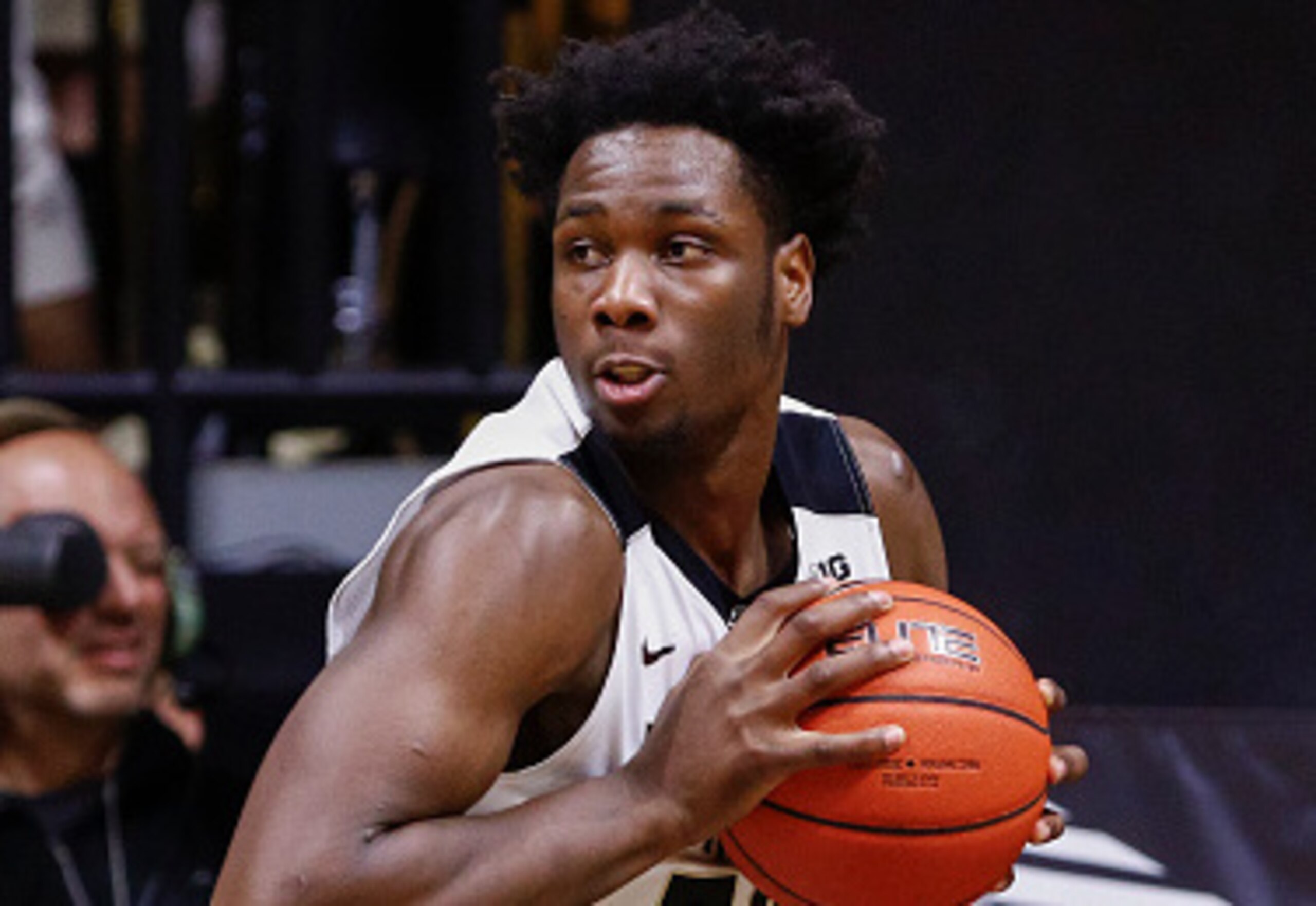
2015-16 statistics: 10.2 ppg, 8.3 rpg, 1.8 apg
Caleb Swanigan could have a breakout season as a sophomore, assuming he has a sophomore season. He entered his name in for this year's NBA draft, but he should eventually realize he is not ready for the pros.
Draft Express ranks him as the 71st-best prospect in the draft, and NBADraft.net does not have him among its top 100 pro prospects. As Sam Vecenie of CBSSports.com noted, Swanigan would "likely be benefited by returning another year, improving his frame yet again and continuing to expand his repertoire."
So unless Swanigan shows scouts something unexpected in the combine to improve his status significantly, Swanigan will probably return to Purdue next season.
And the Boilermakers will need him. Losing center A.J. Hammons and swingman Rapheal Davis will put the focus on Swanigan, whose inside game will be instrumental in anything the Boilermakers do next season.
An excellent rebounder who led the conference in that category, Swanigan should continue to expand his game after a solid freshman season. A second college season should help eliminate the inconsistency that was evident this season. That shortcoming was exemplified by his performances in his two games against Wisconsin. In the Dec. 29 game against the Badgers, Swanigan went scoreless for the only time this past season. In the March 6 game against Wisconsin, Swanigan scored a season-high 27 points.
Swanigan has the body and latent talent that could turn him into a dominant force in the Big Ten, which is something the Boilermakers desperately need if they are to duplicate their 2015-16 success.


7. James Blackmon Jr., Indiana
4 of 10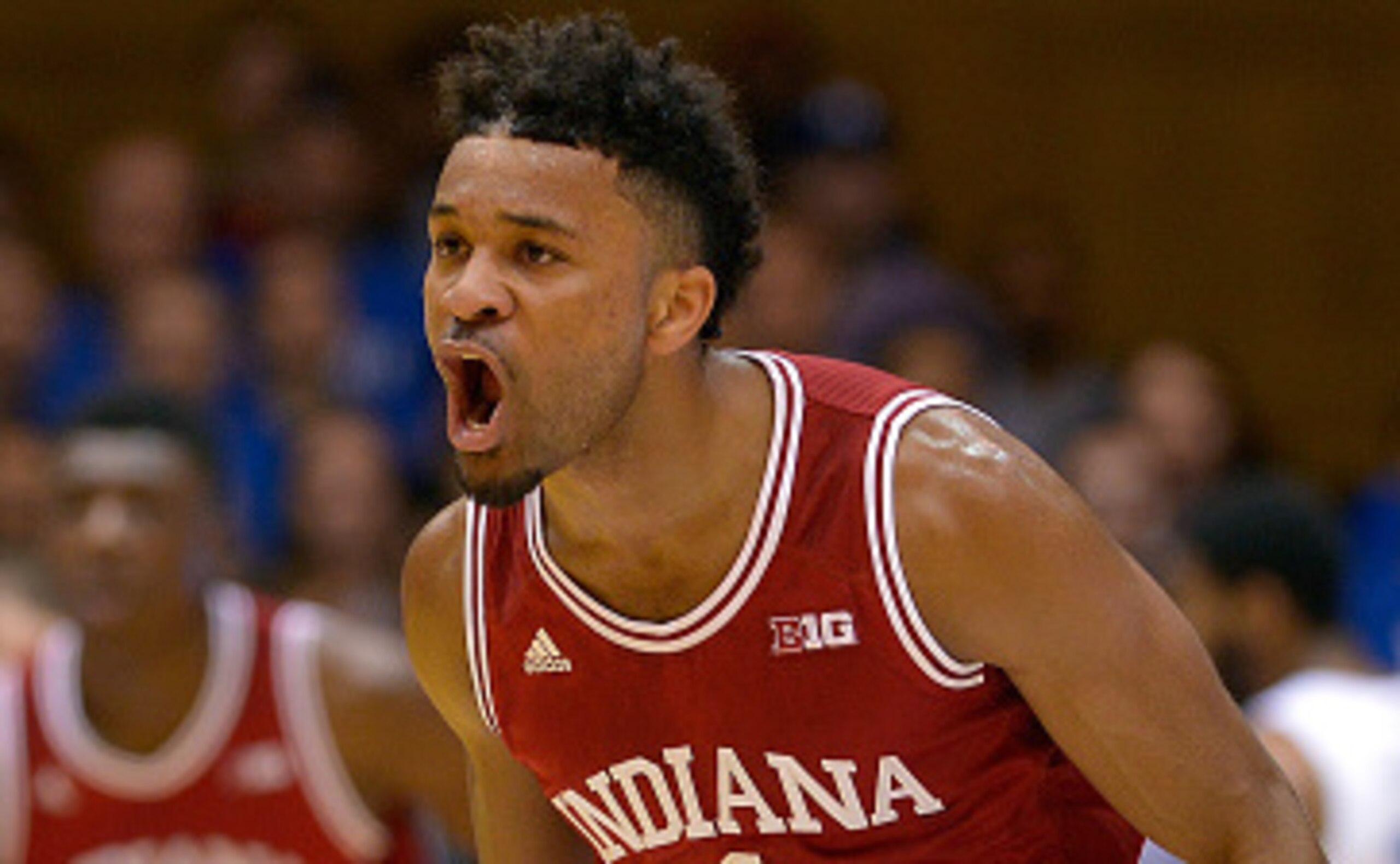
2015-16 statistics 15.8 ppg, 4.2 rpg, 46.3 3P%
With the team's best player, point guard Yogi Ferrell, definitely gone, and athletic forward Troy Williams possibly gone, Indiana coach Tom Crean needs to fill some big holes in a hurry for the Hoosiers to repeat as Big Ten regular-season champs next season.
Crean said recently he believes Williams will remain in the NBA draft, according to Anthony Anderson of the Elkhart Truth. If that's the case, the Hoosiers will be without their top two scorers from this season's 27-8 team. Freshman center Thomas Bryant's decision to return next season was welcome news, but the Hoosiers still need both perimeter and off-the-dribble scoring.
That's where James Blackmon Jr. comes in. Certainly there are questions surrounding Blackmon. The first question is whether Blackmon will be back next season since he currently is entered in the NBA draft. But in Anderson's story, Crean said he believes Blackmon will return to Indiana.
The second question is Blackmon's health. He had knee surgery on January 5, costing him all but 12 games of the 2015-16 season, and only time will tell if he has lost any speed or athleticism. The final question is this: How indispensable can Blackmon be if the Hoosiers won the conference title without him?
The simple answer to the final question is that the circumstances are different. Ferrell and Williams provided the needed perimeter scoring and penetration threats that will now be missing. Bryant is an improving force in the paint, but he cannot venture outside and be effective, and no other player besides Farrell, Williams and Bryant averaged better than 8.2 points this season.
Blackmon must fill that perimeter/penetration void, and he must do it on a consistent basis. His numbers in his shortened sophomore season were similar to his freshman statistics, when he averaged 15.7 points and 5.3 rebounds per game. But his long-range shooting improved as a sophomore after he hit 38.7 percent of his three-pointers as a freshman. He can also help on the boards.
Blackmon is a shooting guard and not much of a playmaker, so someone else will have to handle the point guard duties. But the Hoosiers will desperately need what Blackmon can provide.
6. Malcolm Hill, Illinois
5 of 10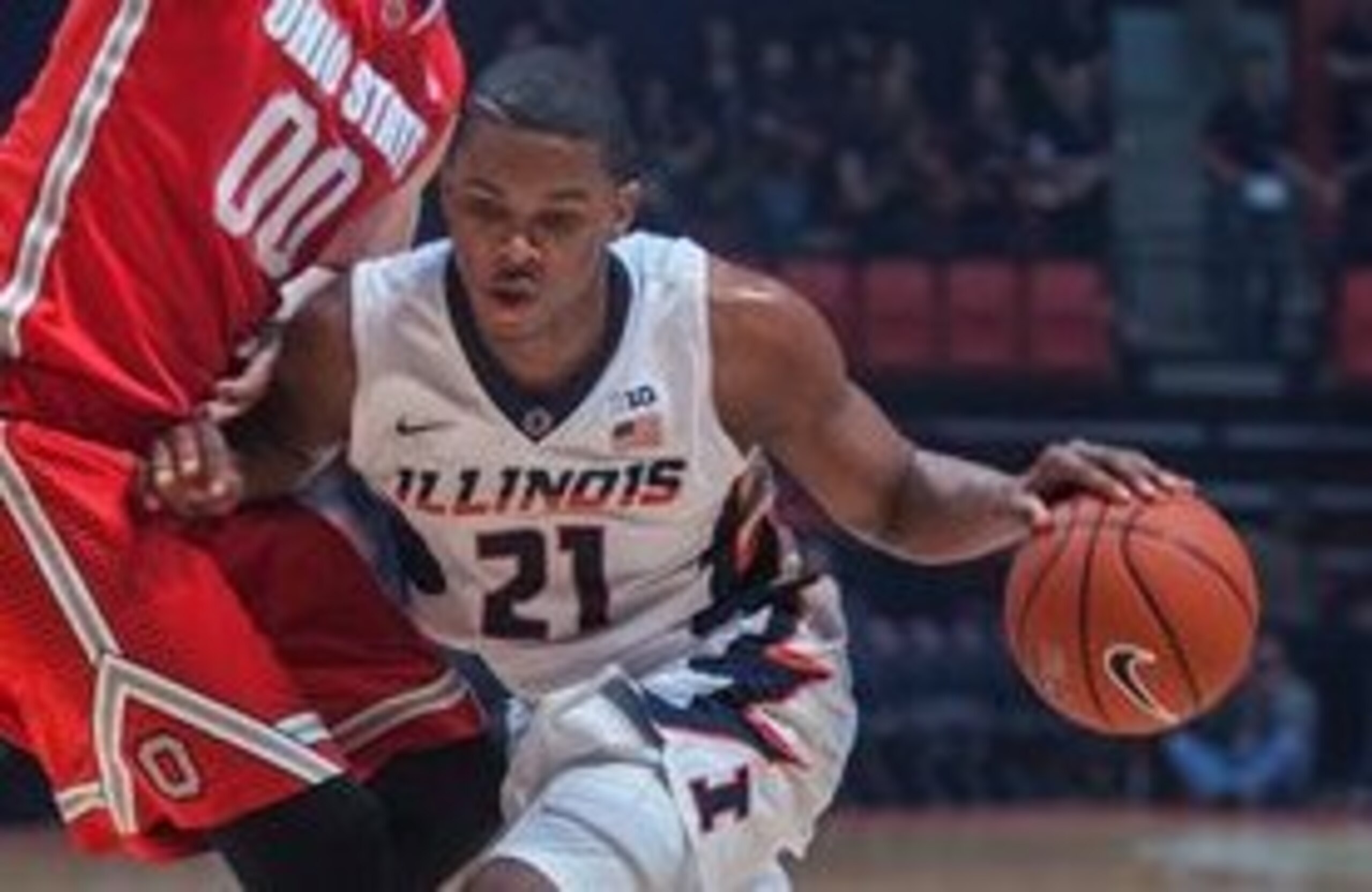
2015-16 statistics: 18.1 ppg, 6.6 rpg, 3.3 apg
Injuries and off-court problems conspired to make a mediocre Illinois team even worse this past season. Lost amid the Illini's disappointing season was the play of Malcolm Hill. Few outside of the Big Ten know anything about Hill because he played on a team that finished 5-13 in the conference. Those who follow the Big Ten, however, know Hill has the talent and versatility to be a Big Ten player of the year if coach John Groce gets things straightened out in Champaign, Illinois.
The Illini's chances of challenging for the conference title next year are slim, but those chances would disappear entirely if the Illini lose Hill for any reason.
It's not just Hill's production that makes him indispensable; it's also his versatility, something that became evident this past season when holes popped up repeatedly because of the loss of players. The 6'6" Hill was able to plug a lot of those holes, which otherwise might have led to a last-place finish.
Hill was named to the second-team all-conference team—a significant honor for a player on a team that finished 12th in the conference. And he did it all. He led the team in scoring and assists and was second in rebounding.
Hill finished third in the conference in scoring (18.1 points per game), ninth in rebounding (6.6) and fifth in minutes played per game (35.1). His scoring and rebounding numbers were even higher in conference games, when he averaged 18.6 points and 7.3 boards. He was a bit inconsistent—an issue that should improve next season as a senior. His outside shooting (31.4 three-point percentage) left a little to be desired, but his versatility more than made up for that shortcoming.
This past season, Hill played point guard, shooting guard, small forward and power forward, and he even guarded opposing centers at times. Players like that don't came along often, and they are invaluable in a sport where injuries can rob a team of an important component at any time.
5. Bronson Koenig, Wisconsin
6 of 10
2015-16 statistics: 13.1 ppg, 2.4 apg, 39.0 3P%
Bronson Koenig will probably be the third-best player on next season's Wisconsin team, which will feature 2016 first-team all-conference selection Nigel Hayes (assuming he withdraws his name from the NBA draft) and 2016 Big Ten Freshman of the Year Ethan Happ. Nonetheless, Koenig is the player the Badgers can least afford to lose.
Wisconsin may have the Big Ten's best frontcourt with Hayes and Happ controlling things inside. But the Badgers need Koenig's steady hand and accurate outside shot at the point guard spot to be the consistent team they will need to be to win the Big Ten title.
Guard play is essential to success in college basketball, and Koenig is the rock around which the Badgers' backcourt is built. He also seems to come up with big shots at the most important moments in the most important games. His 20 points and game-winning shot against Xavier in the NCAA tournament was a perfect example. He also had 27 points in the victory over Michigan State, hit four three-pointers in the road victory over Iowa and had 16 points, five assists and six rebounds in the road win over Maryland.
The Badgers went 21-2 in 2014-15 after Koenig took over the starting point guard job from injured Traevon Jackson. That included the national semifinal victory over previously undefeated Kentucky when Koenig had 12 points and no turnovers against the Wildcats' fearsome defense.
This past season, Koenig was a third-team all-conference selection by the Big Ten coaches, who recognize how important Koenig is to the team's success. Koenig will be a third-year starter at the critical point guard position next season, and that makes him particularly valuable.
4. Bryant McIntosh, Northwestern
7 of 10
2015-16 statistics: 13.8 ppg, 6.7 apg, 3.6 rpg
If Northwestern reaches the NCAA tournament for the first time in school history next season, point guard Bryant McIntosh will be the reason.
McIntosh will be without his backcourt partner, Tre Demps, who led the team in scoring at 15.7 points per game as a senior. But Demps was inconsistent, as his 39.8 field-goal percentage can attest. A lot will be left to McIntosh, who will be in his third year as the Wildcats' starting point guard next season.
An excellent floor general and distributor who was second in the Big Ten in assists this past season at 6.7 per game, McIntosh also has the ability to score in a variety of ways. He needs to cut down on his turnovers after turning the ball over 11 times in Northwestern's final three games, and he also must be a more consistent scorer. McIntosh is the only returning starter who averaged double figures in scoring this season, so he must be productive.
In short, McIntosh must do a little bit of everything for Northwestern next season, but he is capable of providing it.
The Wildcats won 20 regular-season games for the first time in school history this past season, and they finished 8-10 in the conference, as they inch closer to their first winning conference record since 1963. They can get there next season, but only if McIntosh stays healthy and has an all-conference-caliber season.
3. Peter Jok, Iowa
8 of 10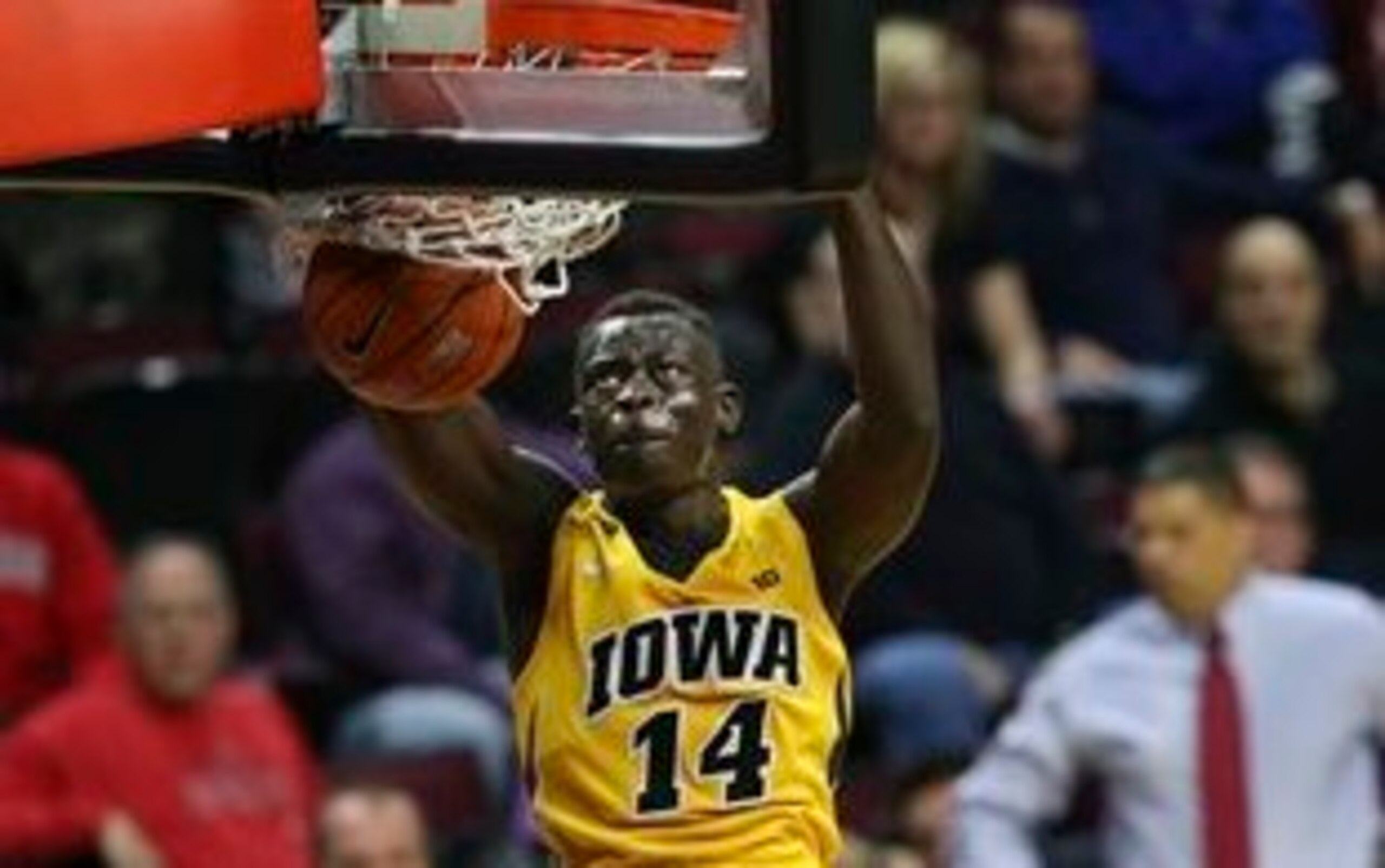
2015-16 statistics: 16.1 ppg, 3.5 rpg, 1.4 apg
As impressive as Peter Jok was this past season, he will need to be even more productive next season for Iowa to come close to matching its 2015-16 performance.
Of course, that assumes Jok will be back. He has declared for the NBA draft without hiring an agent, so if he does not wow NBA scouts at the combine, he is likely to return for his senior season with the Hawkeyes. DraftExpress does not rank Jok among its top 100 NBA prospects, so it would seem silly for Jok to enter this year's draft when he can improve his draft prospects with a big senior season at Iowa.
And he would be the unquestioned leader of the Hawkeyes next season, when they will lose first-team all-conference forward Jarrod Uthoff as well as four-year starters Mike Gesell and Adam Woodbury.
Jok, a second-team all-conference pick this past season, will be the only fourth-year senior on next season's team and will be asked to increase his scoring while providing leadership. He will also be the backbone of the team's defense after averaging 1.3 steals per game, which led the team and was tied for sixth in the Big Ten.
Jok's production has improved significantly each season, going from 4.4 points per game as a freshman to 7.0 as a sophomore to 16.1 as a junior. His scoring must increase further for the Hawkeyes to continue to challenge for the Big Ten title. Jok is capable of doing exactly that.
2. Derrick Walton Jr., Michigan
9 of 10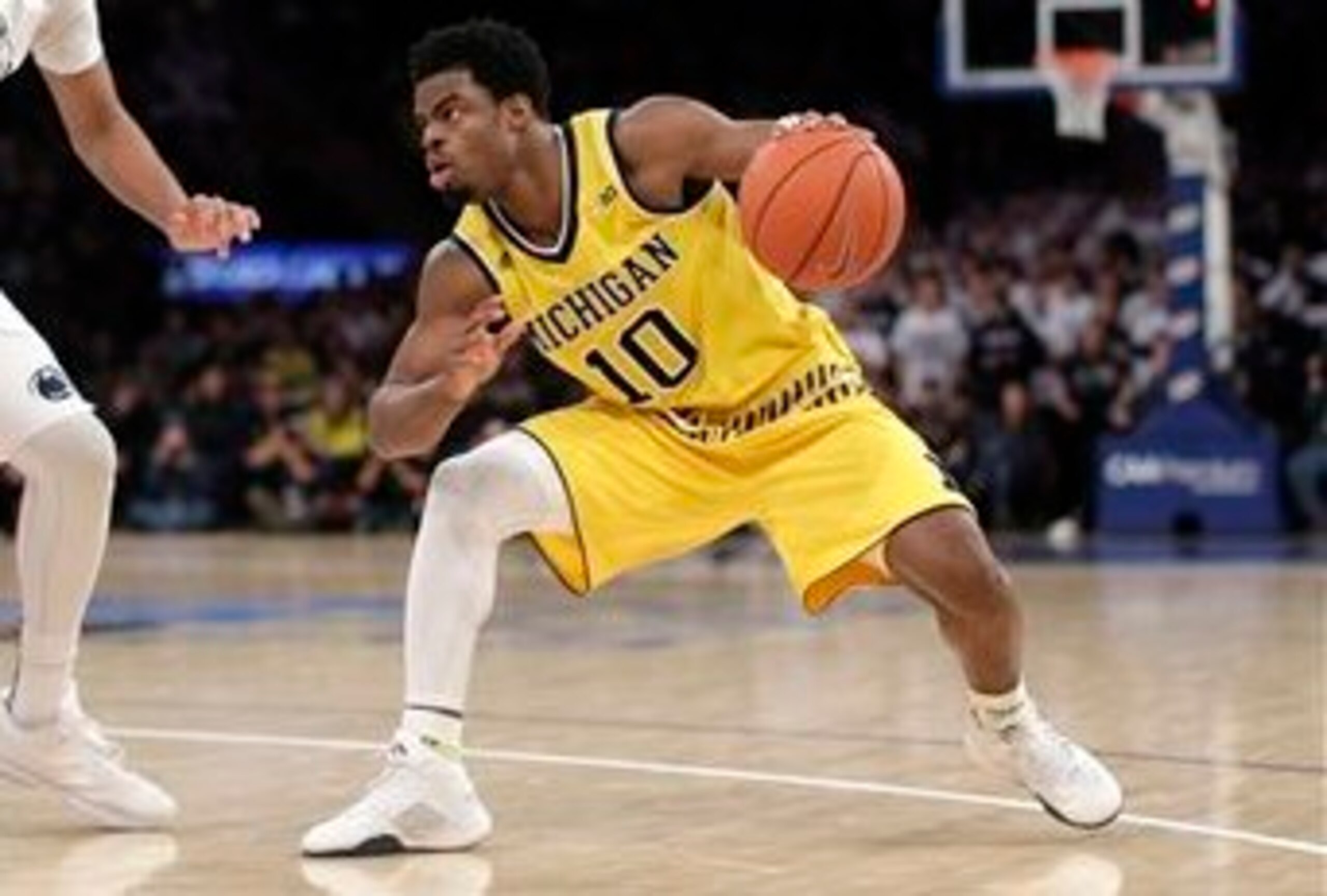
2015-16 statistics: 11.6 ppg, 5.4 rpg, 4.5 apg
Derrick Walton Jr. controlled the pace of the Michigan offense and was the linchpin of its defense in 2015-16. And, as Adam Biggers of USports put it, "He is the brain of Beilein's team."
Coach John Beilein will rely even more heavily on Walton next season, because the multitalented senior point guard will be at the center of everything Michigan does. This past season was like a training session for Walton, who was thrust into the on-court leadership role with both Caris LeVert and Spike Albrecht limited because of injuries. Next season Walton will be the team's unquestioned guiding force on the floor.
The trick for Beilein will be deciding how to best utilize Walton's skills. He is capable of scoring 20 points a game, as he did several times this past season, but that may not be the best use of Walton—an excellent distributor. In what may have been Michigan's biggest win of the season, Walton took just three shots and scored only two points but dished out 12 assists in the victory over regular-season champion Indiana in the Big Ten tournament.
Walton will not be Michigan's top returning scorer—an honor that goes to Zak Irvin, who averaged a fraction more than Walton at 11.8 points per game. But, discounting LeVert, who played just 12 games, Walton was second in scoring while leading the team in both assists and rebounds. The latter is particularly impressive since Walton is just 6'1".
In Big Ten play only, Walton led the team in all three categories, plus steals, upping his scoring to 13.3 points a game, while collecting 6.2 rebounds, 4.1 assists and 1.4 steals in those 18 games.
The Wolverines have the ingredients to challenge for a Big Ten title, but if they lose Walton for any reason, this team might fall apart. Michigan's chances for success next season increased when Walton opted not to enter the NBA draft this year.
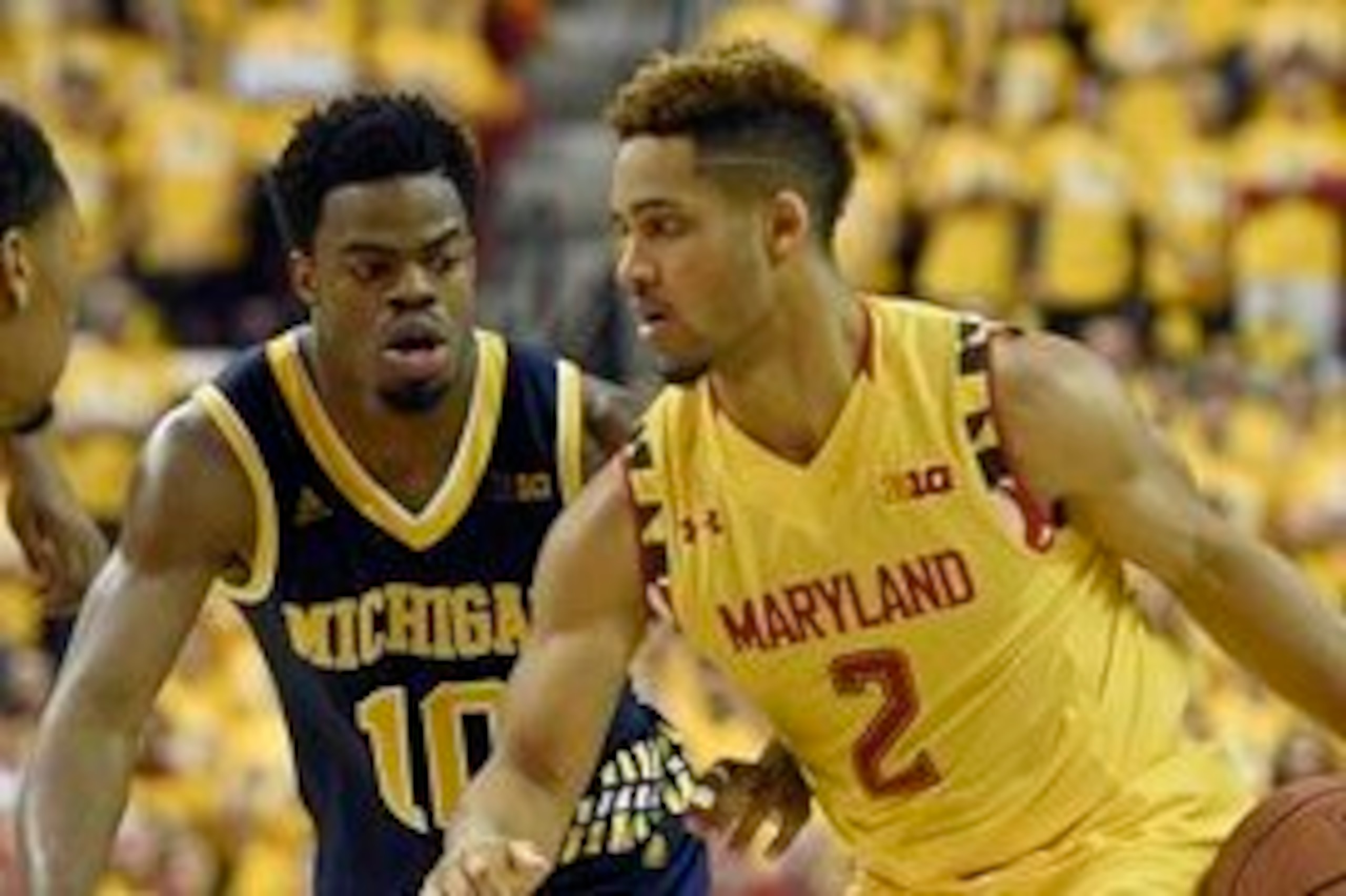
1. Melo Trimble, Maryland
10 of 10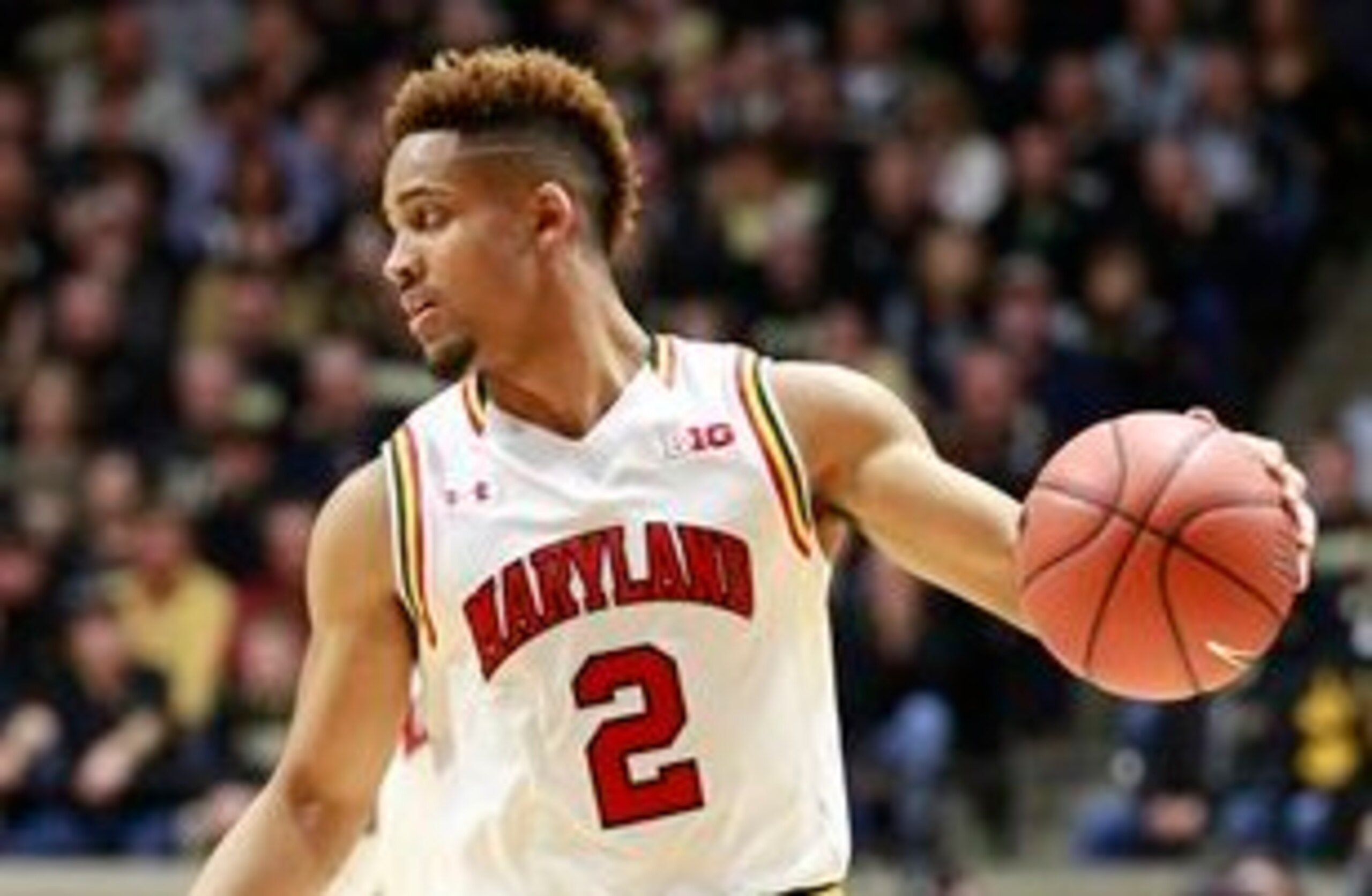
2015-16 statistics: 14.8 ppg, 3.6 rpg, 4.9 apg
Maryland fans are probably hoping Melo Trimble's performance in the NBA combine is less than spectacular.
At the moment, NBADraft.net lists him as the No. 43 pro prospect, and DraftExpress projects him to be taken early in the second round. ESPN.com does not have Trimble among its top 30 prospects, according to a CBS-DC story. Gary Parrish projects Trimble as a late first-round pick in his CBSSports.com mock draft, but CBSSports.com's Sam Vecenie does not.
It appears Trimble is on the cusp of being a first-round pick. If he plays well in the combine and is convinced he will be taken in the first round, he may decide to stay in the draft and turn pro. If scouts are not impressed with what they see in Trimble and he seems destined for the second round, he is likely to return to Maryland.
He has some things to prove to himself and to the NBA after what was a solid, yet disappointing, 2015-16 season, based on the expectations for him. He was the preseason Big Ten Player of the Year, but he did not even earn first-team all-conference honors at the end.
In many ways he regressed from his breakout freshman season, when he averaged 16.2 points and shot 41.2 percent from three-point range. His assists were up by 1.9 per game as a sophomore, but his scoring was down by 1.4 points, and his three-point shooting slipped to 31.5 percent.
However, he was still clearly the team's floor leader, and as a third-year starting point guard, he would be the star player and stabilizing force on which the Terps would lean. If Trimble decides to return to Maryland, the Terps will continue to be a factor in the Big Ten race despite their heavy personnel losses. If he stays in the NBA draft, Maryland might struggle to make the NCAA tournament. That is pretty much the definition of an indispensable player.
.jpg?w=2560 "LA Premiere of \"Chad Powers\"")


.jpg?w=2560 "Ugly Jets Scoring Stat 😳")
.jpg?w=2560 "Landing Spots for Trade Candidates 📍")