

The 2016 NFL draft has been over since Saturday. However, this does not mean NFL teams are finished adding rookie talent.
Since the moment the draft ended, teams have been working around the clock, scooping up undrafted free agents for tryouts and signing some to contracts. There's a good reason for this, too—many a top-tier player has come from the ranks of the undrafted.
Just last year, we saw undrafted running back Thomas Rawls help pave the way for a Seattle Seahawks playoff appearance. We also witnessed undrafted receiver Willie Snead rack up nearly 1,000 yards for the New Orleans Saints. Two years ago, undrafted safety Tashaun Gipson was named to the Pro Bowl, as was undrafted defensive end Cameron Wake.
Of course, before an undrafted player can think about racking up gaudy statistics or all-star honors, he has to make an NFL roster. Fortunately, there are several players from this year's undrafted crop who stand a good chance of doing exactly that.
We're going to select a handful we believe have the best chances of making a team in 2016. Our choices are not only based on individual talent, but on factors like landing spot, scheme fit, positional competition and coaching.
Mike Matthews, C, Texas A&M
1 of 7
Former Texas A&M center Mike Matthews was overlooked during draft weekend because he doesn't possess the size NFL teams desire along the offensive line. However, the 6'2", 290-pound lineman should have a good shot at earning a roster spot now that the Cleveland Browns have added him.
After losing both Alex Mack and Mitchell Schwartz in free agency, Cleveland isn't exactly loaded with offensive line depth. In fact, the only players who likely have secure roles are perennial Pro Bowler Joe Thomas and third-year pro Joel Bitonio. Matthews may not be able to walk into a starting guard or center job, but he has a good chance of earning a backup spot.
Matthews is an excellent technician along the line, and he knows how to maximize the skills and size he does have. He rarely succumbs to interior pressure and is one of the top pass-blocking centers in this year's class. Pro Football Focus named Matthews to its 2015 All-SEC team earlier this year and rated him higher than eventual 18th overall selection Ryan Kelly.
Even if Matthews doesn't find a home in Cleveland, his NFL pedigree should keep him in the spotlight and earn him opportunities this summer. His father is Hall of Famer Bruce Matthews, and his brother is Atlanta Falcons offensive tackle Jake Matthews.
"Matthews might be a late-round pick or an undrafted free agent," David Ching of ESPN.com wrote before the draft. "But surely his family’s NFL history will be a point in his favor. Matthews will be battling for a roster spot in somebody’s camp this summer."
Given the talent pool in Cleveland, there's a good chance Matthews will stick there.
Ron Thompson, DE, Syracuse
2 of 7
Former Syracuse defensive lineman Ron Thompson may have fallen through the cracks on draft weekend because teams weren't sure exactly how to project his future role. The 6'3", 253-pound Thompson played both defensive tackle and defensive end at Syracuse, but he may be better suited as a pass-rushing linebacker in the NFL.
A pass-rushing outside linebacker is definitely something the Indianapolis Colts could use on their defense, which is why the team nabbed Thompson after the draft.
As a team, Pro Football Focus rated the Colts just 23rd overall in pass rush last season.
Last year at defensive end, Thompson produced 7.0 sacks and 9.5 tackles for a loss. If he can trim down a bit and add some burst to his game, Thompson could be even more productive as a part-time edge-rusher in the Colts' 3-4 base defense. His experience as a down lineman may even give him added value in sub-packages.
Bleacher Report NFL Draft Lead Writer Matt Miller graded Thompson as the 14th-best edge-rusher in this draft class, and Miller explained why his versatility brings value:
"Versatility is a positive for Thompson, who played inside as a pass-rushing defensive tackle in 2014. He's comfortable playing inside, on or outside the tackle. Thompson is an intelligent player against the run and pass and actually has some experience in zone coverage in the flats and box.
Working against an offensive tackle, Thompson has quick, active hands to swat, slap and go up to bat down balls. In quarterback pursuit, he makes extended plays thanks to his motor and closing speed.
"
Thompson should have a good shot at making the roster in Indianapolis as a situational pass-rusher, but the potential for him to develop into a regular contributor is definitely there.
Keyarris Garrett, WR, Tulsa
3 of 7
Former Tulsa wideout Keyarris Garrett led the nation with a whopping 1,588 yards receiving in 2015. Yet, he slipped through the cracks of the draft and landed with the Carolina Panthers as an undrafted free agent.
In Carolina, Garrett should have the perfect opportunity to earn a role. At 6'3" and 220 pounds, he should fit right in with big-bodied receivers like Devin Funchess and Kelvin Benjamin on the Carolina offense. He can provide another big, physical target for quarterback Cam Newton, and he should be an asset as a perimeter blocker in the running game.
Considering what Garrett can be and what the Panthers do offensively, this signing looks like a potential steal.
"He was projected to go as high as the fifth round," David Newton of ESPN.com wrote of Garrett. "Route running was considered his weakness entering the draft, but he’ll be working with one of the best teaching coaches in Ricky Proehl."
Garrett is raw, but his size and large catch radius should give him some value as he learns to adapt to the pro game. Garrett should also bring some special teams value. If Garrett doesn't stick with the Panthers, another team will almost certainly scoop him.


Jhurell Pressley, RB, New Mexico
4 of 7
Former New Mexico running back Jhurell Pressley likely fell out of the draft because of his level of collegiate competition and because the perception that he offers nothing as a pass-catcher. However, when you examine his skills as a runner, it becomes clear he can find a home in the NFL.
Pressley amassed 1,990 yards rushing and 23 touchdowns over the past two seasons with New Mexico. He is a powerful and quick runner who can excel inside or outside the tackle box. The 5'10", 206-pound Pressley further proved his skills at his pro day. There, he ran a 4.38-second 40, produced a 33.5-inch vertical jump and put up 25 reps of the 225-pound bench press.
Pressley wasn't invited to the scouting combine.
According to both Pressley and his agent, Glen Wallace, a lack of attention from league scouts has kept the running back under the radar.
“I think a lot of scouts did not have the chance to watch me play,” Pressley said, per Rick Wright of the Albuquerque Journal. “They’ve seen my highlights, but not in person.”
“If there would have been more scouts at his pro day, his stock would be even higher,” Wallace added. “The knock on him was he can’t catch. If you were at his pro day or if you know Jhurell, you’d know he can.”
The Minnesota Vikings have grabbed Pressley for now and will give him the opportunity to prove he can be a complete back. At the very least, Pressley's speed and vision should give him an opportunity to become the change-of-pace back behind Adrian Peterson.
If the Vikings pass on him, Pressley should quickly land with another team looking to boost its ground attack.
Jonathan Jones, CB, Auburn
5 of 7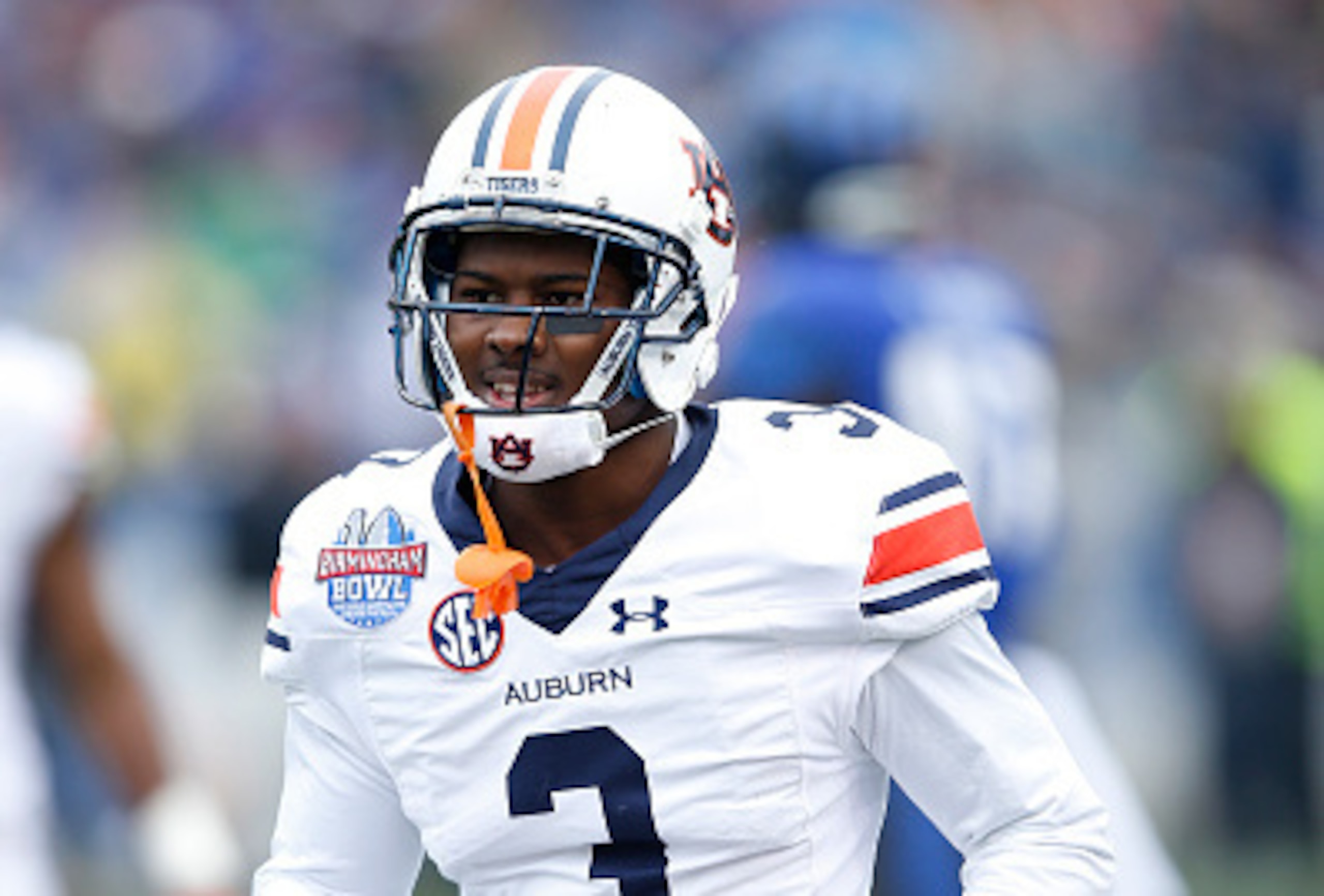
If you're simply looking at former Auburn cornerback Jonathan Jones, it's easy to understand why NFL teams were unwilling to spend a draft pick on him. At just 5'9" and 186 pounds, Jones is incredibly undersized for the position at the NFL level.
The fact that Jones also has a fairly lengthy injury history didn't help his draft stock, either.
However, when you examine Jones' measurables and his game film, it's easy to see why the New England Patriots were willing to give him a free-agent opportunity. He ran a 4.33-second 40 and produced 19 reps of the 225-pound bench press at the scouting combine. During his past two seasons at Auburn, Jones racked up seven interceptions and 25 passes defended.
Bleacher Report's Matt Miller recently explained why Jones can be an effective cornerback in the NFL:
"Jones has the quickness and agility you want from an inside or outside corner. ... He has closing speed to make a play on the ball on breaking routes and was excellent tracking the ball deep.
For some reason, Auburn never used Jones as a return man, but he showcased his skills there at Senior Bowl practices and looked like a natural. With 4.3 speed, he'll be asked to field some punts in NFL training camp to see if he can be an asset there.
"
Ideally, Jones projects as a shifty slot corner with some tremendous special teams value. However, we've learned over the years that Patriots head coach Bill Belichick often looks at athletic marvels like Jones and comes up with completely different roles for them. It honestly wouldn't be that big of a shock to see Jones playing running back or receiver for New England next season.
If the Patriots decide not to hang on to Jones, some other team will. The upside here is too great.
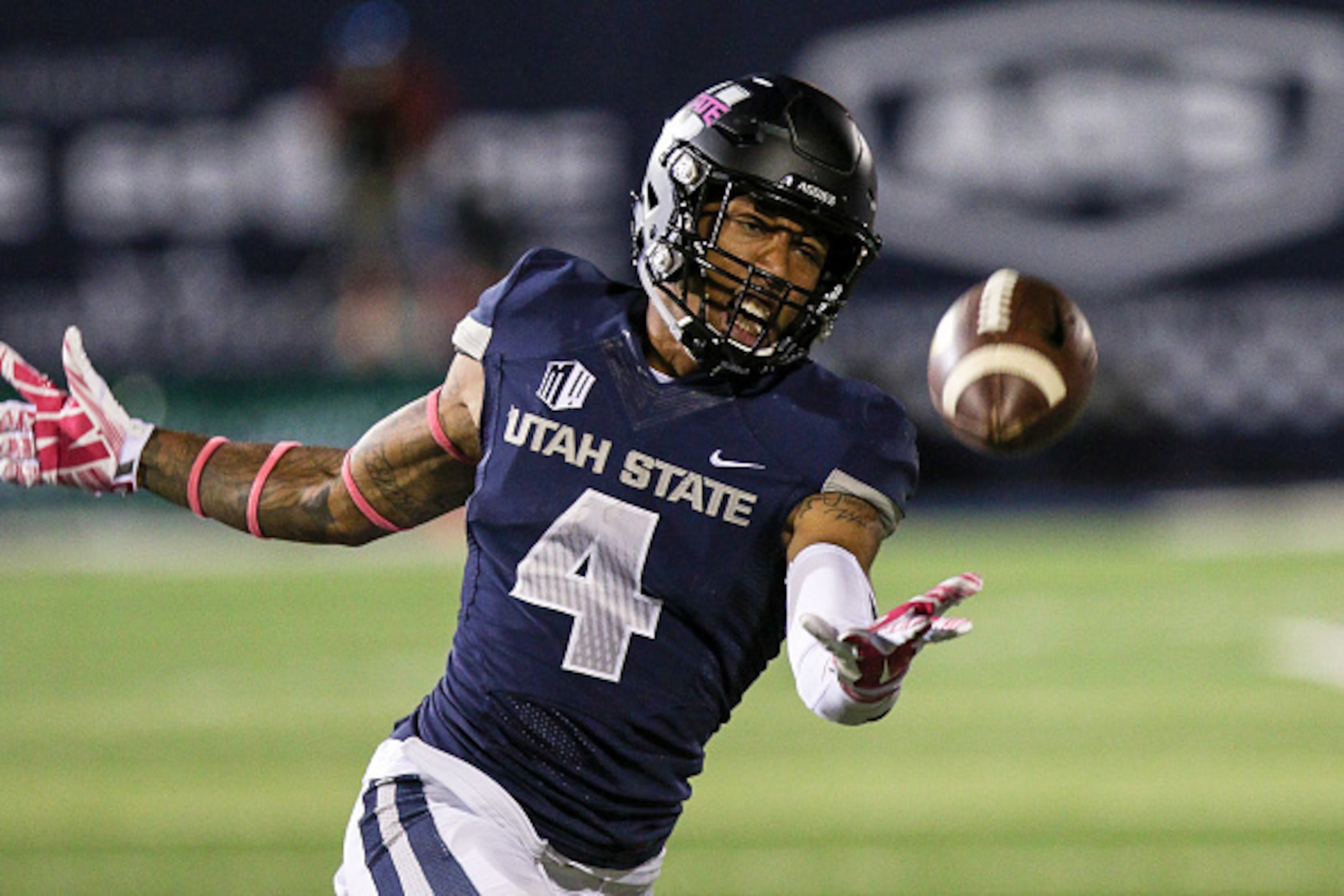
Hunter Sharp, WR, Utah State
6 of 7
It's difficult to tell exactly why former Utah State receiver Hunter Sharp fell entirely out of the draft. A two-game suspension he served at the start of the 2015 season might have been part of the issue. A lack of ideal size and an absence of elite production might also be pieces of the equation.
The 5'11", 198-pound Sharp caught 71 passes last season, but he only produced 839 yards and nine touchdowns with them. His 11.8 yards-per-reception average doesn't exactly paint him as a deep threat.
However, there is a lot to like about Sharp as a weapon in the short and intermediate passing games. He is tough, physical and quick off the line. He also has good top-end speed for the position, as evidenced by a 4.51-second 40 at his pro day. This is why the Philadelphia Eagles were willing to grab him as a free agent.
Bleacher Report's Matt Miller actually rated Sharp as his 12th-best receiver in this draft class. He also explained why on-field skills are more important than measurables for Sharp:
"Sharp finishes runs with zest and will lower his pads to pick up tough yards after the catch. He doesn't shy away from defenders as a route-runner or ball-carrier and is a feisty player. Sharp is fluid working back to the ball and has confidence in his hands to make the catch at full extension. He's flexible enough to get low and snag the ball off the turf.
"
Sharp is stout enough that he should be able to work both inside and outside as a receiver. His combination of agility, speed and physicality should also give him value on special teams. If the Eagles don't decide to keep him around as a weapon for new quarterback Carson Wentz, some team will undoubtedly give him an opportunity.
Devon Cajuste, WR, Stanford
7 of 7
It's actually a bit surprising that no NFL team decided to take a chance on former Stanford receiver Devon Cajuste over draft weekend.
It would seem the main issue with Cajuste is that he is physically stuck in the limbo between tight end and wide receiver. At 6'4" and 234 pounds, he is undersized for the tight end position, yet he lacks the explosiveness and fluidity in and out of breaks most teams want out of a receiver.
Yet, Cajuste is intriguing as a hybrid prospect, which is exactly why the San Francisco 49ers moved to scoop him up after the draft.
While Cajuste isn't the best athlete in this draft class, he possesses excellent long speed and short-area quickness for a player his size. He logged a 6.49-second three-cone time at the scouting combine and a 4.55-second 40 at his pro day.
If Cajuste can bulk up a bit and find a role as an H-back or tight end-receiver hybrid, he could develop into a valuable offensive weapon. He caught 27 passes for 383 yards and three scores last year at Stanford. In a non-traditional pass-catcher role, he could be even more productive.
“He would be a matchup problem for most linebackers and safeties in the NFL who don’t play for the Seattle Seahawks," agent Ryan Downey said, per Zach Braziller of the New York Post. "It’s going to be a question of which teams are most creative.”
We've seen new 49ers head coach Chip Kelly get creative with his offenses in the past, so San Francisco could wind up being the perfect home for Cajuste. If Cajuste can't stick with the 49ers, his unique combination of traits should quickly earn him a chance elsewhere.
.jpg?w=2560 "LA Premiere of \"Chad Powers\"")


.jpg?w=2560 "Ugly Jets Scoring Stat 😳")
.jpg?w=2560 "Landing Spots for Trade Candidates 📍")