
The Biggest Position Battles in College Basketball for 2016-17
The position-battle concept isn't as big of a deal in college basketball as it is in other sports. While the starters at each spot tend to play the most minutes, and generally are the ones in there during clutch moments, it's actually beneficial for a team to have more than one option at key positions.
Still, this is the offseason, and we need something to discuss during the seven-plus months between the national championship and when the 2016-17 season begins in November.
There are a handful of notable position battles that will occur during the summer and fall when teams get together for workouts and preseason practice. The teams involved will want to have these solved before the real games begin, though ideally having multiple players capable of being able to win the job is a bonus.
Here's our look at eight of college basketball's biggest position battles for 2016-17.
Arizona Backcourt
1 of 8
Players involved: Rawle Alkins, Kadeem Allen, Terrance Ferguson, Parker Jackson-Cartwright, Kobi Simmons, Allonzo Trier
So many guards...so few minutes. It might seem like a fun “problem” to have, but with college basketball players so quick to transfer nowadays—unless they plan to turn pro after a year—it's difficult to keep everyone happy while not letting it affect the team's overall play.
Arizona coach Sean Miller is facing a major dilemma as to how to find playing time for his overabundance of backcourt players—a number that could have been higher had little-used freshman Justin Simon not opted to transfer after the 2015-16 season. Then again, his departure likely contributed to 5-star recruits Alkins, Ferguson and Simmons all choosing the Wildcats.
All three of those players are shooters, though Simmons can also handle the point, but Arizona has returning starters at both spots. Allonzo Trier was the top-rated freshman—based on his recruiting ranking—not to declare for the NBA draft, and he's the Wildcats' top returning scorer at 14.8 points per game. The returning point guards, Allen and Jackson-Cartwright, combined for 13.6 points and 7.0 assists per game.
With a comparatively thin frontcourt, Arizona will very often play three guards and might occasionally run four out there to maximize its talent. How Miller rotates the minutes early on will be quite intriguing.
Arizona State Point Guard
2 of 8
Players involved: Shannon Evans, Tra Holder
Bobby Hurley's first season coaching Arizona State wasn't an overall success, with the Sun Devils finishing under .500 and second-to-last in the Pac-12, but along the way he found his point guard of the future in Holder. Problem is, Hurley had already discovered a similar future piece in Evans—his former star at Buffalo.
Evans announced his transfer to Arizona State not long after Hurley was hired away from Buffalo after the 2014-15 season, and he sat out this past year with two years of eligibility remaining. The 6'1" guard averaged 15.4 points, 4.6 assists and 1.7 steals while shooting 38.2 percent on threes in his sophomore season.
The 6'1" Holder is coming off a breakout year for ASU, also his sophomore campaign, when he more than doubled his scoring average to 14.2 points per game along with 3.7 assists.
A more accomplished defender, Evans figures to get on the floor either at the one or at shooting guard, if necessary. Holder doesn't shoot well enough to play off the ball, so his best route is trying to retain his old job.
Florida Shooting Guard
3 of 8
Players involved: KeVaughn Allen, Canyon Barry
Florida scored a big pickup off the graduate transfer market on Monday when College of Charleston's Barry announced via Twitter he would finish his career as a Gator. As Jeff Eisenberg of Yahoo Sports noted: "He is a significant addition for a Florida program looking to rebound after missing the NCAA tournament the past two years."
Picking his school was the easy part, now the 6'6" guard has to show he's fully recovered from a shoulder injury that knocked him out of most of the 2015-16 season and that he's good enough to get major minutes with Florida.
Barry plays the same position as Allen, a 6'2" shooting guard who as a freshman averaged 11.6 points per game and is Florida's top returning scorer. Barry might be able to play at the three if the Gators use a three-guard lineup, but that would impact the minutes of returning wings Devin Robinson and Justin Leon, who combined for 14.3 points and 8.7 rebounds last season.
Before getting hurt, Barry averaged 19.7 points per game but was just a 40.2 percent shooter, hitting at a 37.4 percent clip in three seasons.


Iowa State Wing
4 of 8
Players involved: Darrell Bowie, Deonte Burton, Naz Mitrou-Long, Matt Thomas
Bleacher Report's Kerry Miller listed Iowa State as one of the "winners" of the first month of college basketball's offseason thanks to the return of a pair of much-needed guards: injured senior Mitrou-Long was given a medical redshirt, and Burton withdrew from NBA draft consideration.
That moves the Cyclones from being a team that might once again be struggling to have enough capable players in 2016-17 to one that has four fighting for two starting spots. And considering how thin they were a year ago after Mitrou-Long got hurt, it's in ISU coach Steve Prohm's best interests to have all four candidates for the two and three be able to cross train.
Thomas took over Mitrou-Long's starting job in December and 11.0 points per game, but he was almost strictly a jump-shooter, though his defensive work on some opponents' best guards was notable. Burton averaged 9.7 points per game but often found himself in the frontcourt playing as a 6'4" forward, while Bowie sat out after transferring from Northern Illinois.
In 2014-15 with the Huskies, the 6'7" Bowie averaged 9.8 points and 5.4 rebounds.
Had guards Jordan Ashton and Hallice Cooke not transferred there'd be even more of a logjam at those positions, but that duo combined for only 539 minutes in 2015-16 despite ISU's thin lineup.
Louisville Small Forward
5 of 8
Players involved: Deng Adel, V.J. King
Once Louisville had sealed its fate by self-imposing a postseason ban in early February, coach Rick Pitino began to tinker with his starting lineup to see what some players could do in different situations. Consider it a tryout for his returning players, who have to take on greater roles in 2015-16 with leading scorers Damion Lee and Trey Lewis graduating.
Adel started Louisville's final five games, averaging 7.2 points and 3.2 rebounds in that span, which gave him an early start on what will be a tough competition to hold off top incoming recruit King.
King, a 6'7" wing who was rated as the No. 27 player in the 2016 recruiting class, "will be counted on from day one," according to Matt Hladik of CollegeSpun.com.
That puts the onus on the 6'7" Adel to improve during the summer if he wants to have a shot to beat out King. He averaged 4.0 points and 2.1 rebounds in 22 games as a freshman, scoring 12 points on four different occasions on 20-of-31 shooting, but he was 11-of-37 in the other 18 appearances.
"He’s got to learn to finish" Pitino told Jeff Greer of the Louisville Courier-Journal. "He’s the kind of guy who will make an incredible move and miss the shot inside."
Marquette Backcourt
6 of 8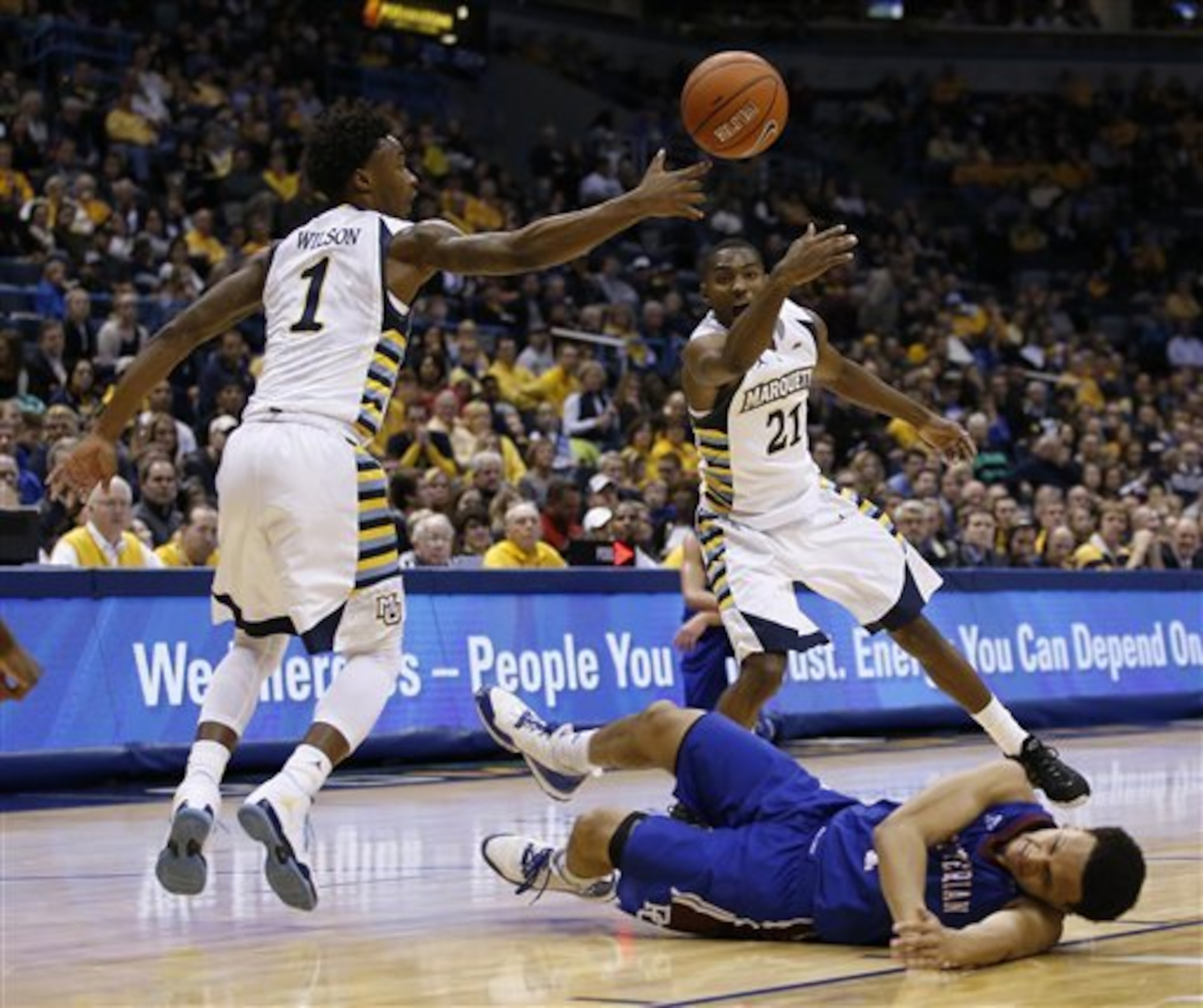
Players involved: Traci Carter, Haanif Cheatham, Markus Howard, JaJuan Johnson, Katin Reinhardt, Andrew Rowsey, Duane Wilson
Marquette started four different players at the 2-guard spots in 2015-16, but the quartet of Carter, Cheatham, Johnson and Wilson actually logged more than 103 minutes per game to match up with the backcourts of the Golden Eagles' opponents. Now imagine what it's going to be like with three more guards joining the mix.
Even if coach Steve Wojciechowski moves to a three-guard lineup, he'll still have to spread minutes to seven players, including a pair of transfers and a well-regarded freshman.
That first-year player, 5'11” point guard Howard, recently won the three-point contest at the BallIsLife All-American Game, but transfer Rowsey made 208 threes in his two seasons at UNC-Asheville before sitting out 2015-16.
Also joining Marquette's backcourt is Reinhardt—a 6'6" grad transfer from USC who shot 37.3 percent from three-point range last year.
Syracuse Point Guard
7 of 8
Players involved: Tyus Battle, John Gillon
Michael Gbinije reinvented himself as a 6'7" point guard during his final two years at Syracuse, and his heady play late last season helped spearhead the Orange's surprise run to the Final Four. Now they have to hope his successor can be just as adept, though it's not a done deal as to who will inherit the job.
Battle is Syracuse's top recruit—a 6'6" combo guard who was previously committed to Michigan. Battle told Sean Keeley of SB Nation: "They said I'm definitely going to have to come in and score, handle the ball. I'm playing the point guard/ two guard, switching on and off."
Those are the same roles Gillon, a 6'0" graduate transfer, played last year at Colorado State. He averaged 13.2 points and 3.9 assists while making 60 three-pointers—a style that should fit in nicely with a Syracuse team that took nearly 24 threes per game.
It's very likely Syracuse will feature both Battle and Gillon at the same time, though the competition remains for who will be the primary ball-handler and who will work to get open for perimeter shots.
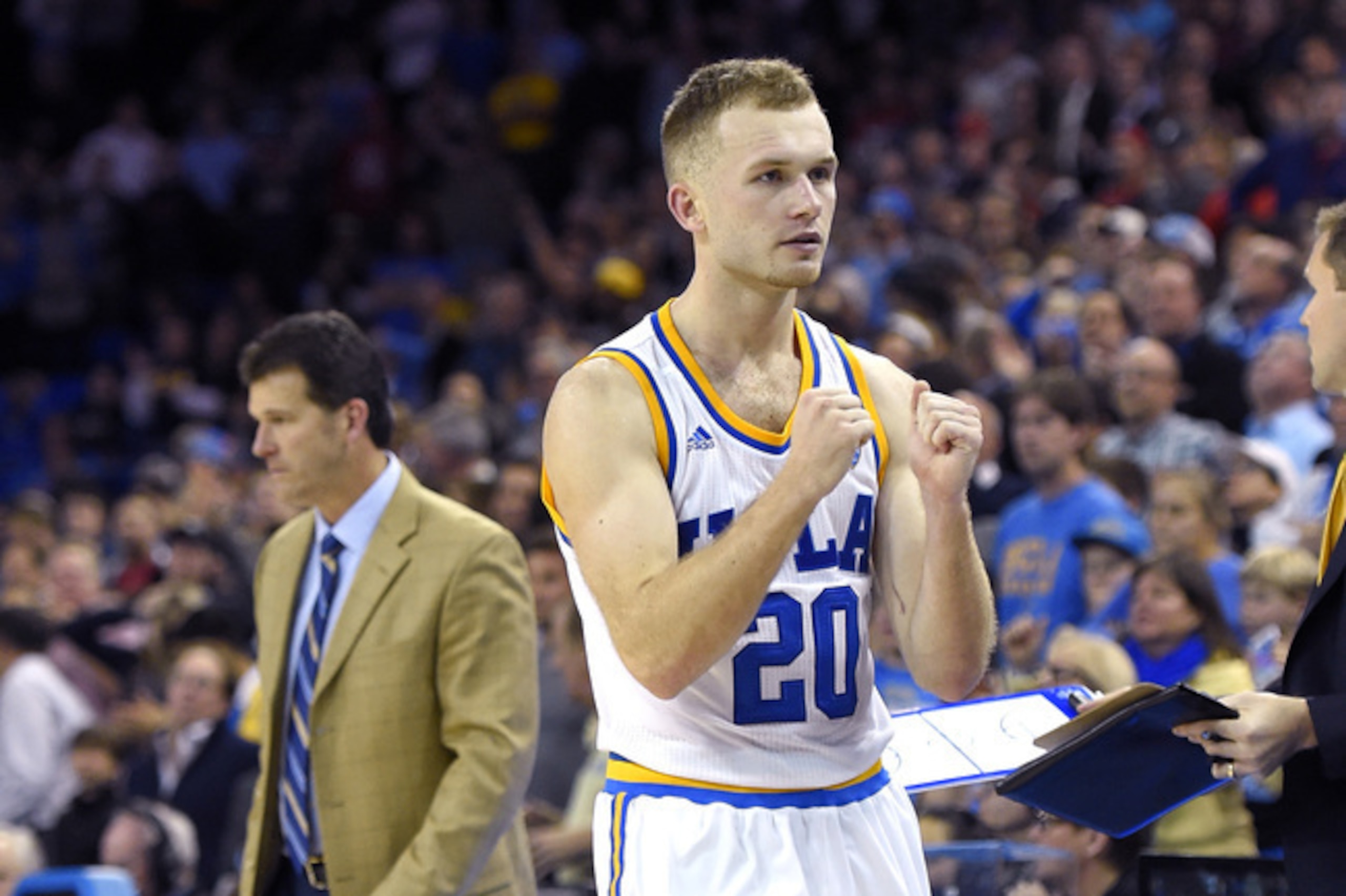
UCLA Point Guard
8 of 8
Players involved: Bryce Alford, Lonzo Ball
UCLA's looming battle for the staring point guard job sounds like the plot of a very special episode of something on the CW. And how it plays out could resemble a daytime soap's storyline, though instead of a character being pushed off a cliff, it could lead to a coach getting fired.
On one side is Alford, the son of coach Steve Alford who has started every game the past two seasons. Though he's made some huge shots during that time, Bryce Alford can also run very cold yet will keep on shooting. He was 2-of-11 in UCLA's final game last season—a third loss to rival USC in the Pac-12 tournament that finished off a 15-17 season.
And on the other side is Ball, the No. 5 prospect in the 2016 recruiting class and an electrifying ball-handler. At 6'6" he's three inches on the 6'3" Alford and is quicker, along with the ability to score effectively from more than just the perimeter.
Ball might have stoked the flames of this upcoming competition when he told Bleacher Report: "Right now they don't really have a set point guard; they don't really have that leader on the floor."
Alford averaged 16.1 points and 5.0 assists per game last year, ranking second in the Pac-12 in assists.
All statistics courtesy of Sports-Reference.com, unless otherwise noted. All recruiting information from 247Sports, unless otherwise noted.
Follow Brian J. Pedersen on Twitter at @realBJP.
.jpg?w=2560 "LA Premiere of \"Chad Powers\"")
.jpg?w=2560)

.jpg?w=2560 "Landing Spots for Trade Candidates 📍")