


Malachi Richardson and London Perrantes might not be the best players in the ACC, but they are more indispensable to their schools than any other players in this conference.
There’s a fine line between being valuable and being indispensable, and it’s important not to confuse the two. These are not necessarily the 10 players we would nominate for preseason All-ACC honors but rather the ones their respective rosters could least afford to lose.
Ranking these 10 players boiled down to a matter of picturing what each team would look like if that player were suddenly no longer on the roster. For example, Grayson Allen is arguably a better college basketball player than Richardson. However, Syracuse’s drop in expectations without its starting shooting guard is much steeper than it would be for Duke, so Richardson ranks higher on our list.
The interesting part of this exercise is that we may yet find out just how poorly some of the teams fare without these players, as several of them are still testing the NBA draft waters. (Thankfully, there are less than three weeks until we can stop using that phrase for another 10 months.)
10. Bryant Crawford, Wake Forest
1 of 10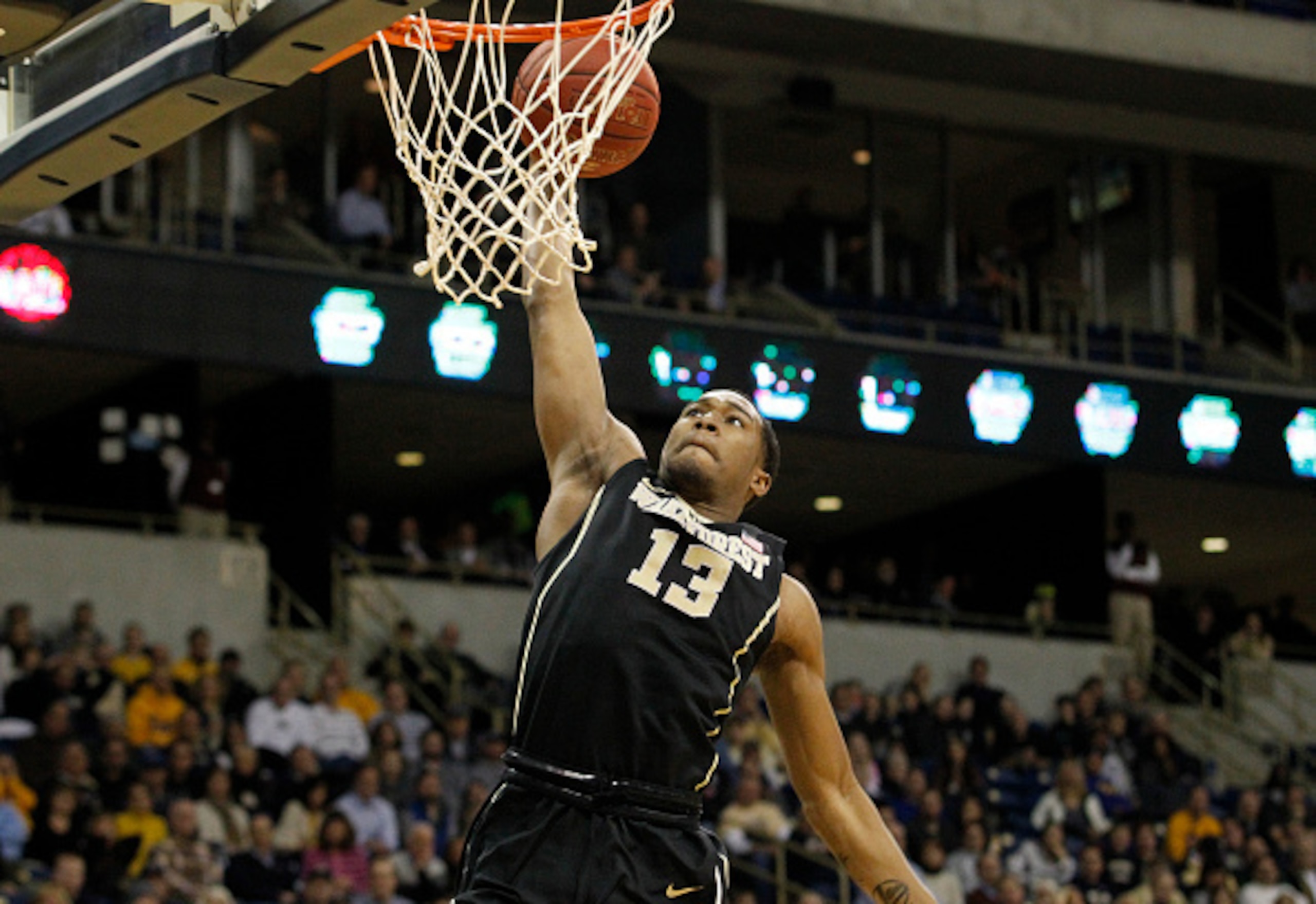
2015-16 Stats: 13.8 PPG, 4.4 APG, 3.0 RPG, 1.7 SPG
Can a player be indispensable to a team that’s going nowhere?
Bryant Crawford is going to put up huge numbers this season. He committed a few too many turnovers last year (3.5 per game), but it’s tough to expect much else from a freshman point guard who wasn’t even supposed to start before Codi Miller-McIntyre suffered a foot fracture in October. Aside from that, though, Crawford did just about the best that he could for a team that went 2-16 in ACC play.
And therein lies the problem with ranking him any higher than this.
With Devin Thomas and Miller-McIntyre both out of the picture, Crawford could put up 18 points and six assists per game and still only lead the Demon Deacons to 14th place in the ACC standings. They need a full, healthy year from Crawford in order to accomplish anything, but we can’t see him making that much of a difference on their season outlook in either direction.
In what ought to be another rebuilding year for Wake Forest, though, Crawford will be a critical piece of the long-term picture for a team that should display signs of a breakout 2017-18 season.
9. Chinanu Onuaku, Louisville
2 of 10
2015-16 Stats: 9.9 PPG, 8.5 RPG, 2.0 BPG, 1.6 APG, 0.8 SPG
Chinanu Onuaku quietly had an exceptional sophomore season. Though he played fewer than 25 minutes per contest for a team that only played 31 games, he nearly averaged a double-double while racking up more than 50 assists (51) and more than 60 blocks (62)—the only player from a major conference to hit both of those plateaus.
Among non-seniors who appeared in at least 10 games, his 13.9 box plus/minus was the highest in the country. Only Denzel Valentine (16.5) and Thomas Walkup (14.1) were worth more to their teams in that regard. Onuaku is almost unarguably the most valuable big man in the ACC and should put up incredible numbers—if he decides to come back.
But it’s tough to make the case that he’s indispensable to Louisville, because he’s just one of six players on the roster 6’9” or taller. Should Onuaku decide to remain in the NBA draft, the Cardinals would be able to get by with some combination of Raymond Spalding, Mangok Mathiang, Jaylen Johnson and Anas Mahmoud.
There’s a difference between a dominant player and an indispensable one. Be sure to keep that in mind before you freak out about who’s No. 8 on our list.
8. Grayson Allen, Duke
3 of 10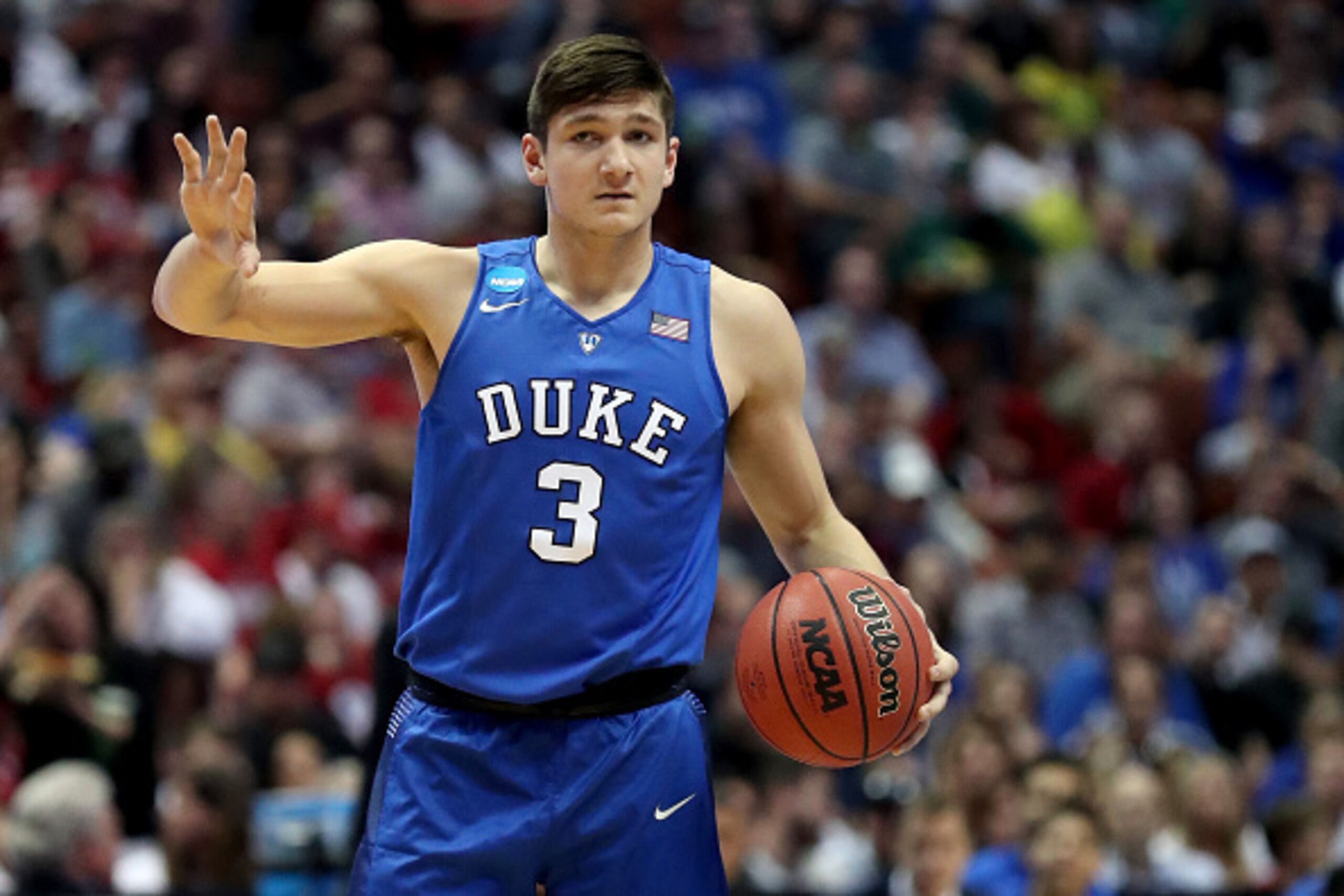
2015-16 Stats: 21.6 PPG, 4.6 RPG, 3.5 APG, 1.3 SPG
Few players in the country were more valuable than Grayson Allen in 2015-16. He was one of just eight players to record at least 7.0 win shares and a box plus/minus of 9.0 or greater. The other seven players from that list are each finished playing college basketball, meaning there’s a compelling case to be made that Allen should be the preseason favorite for the Wooden Award.
Though he attempted more than 14 shots per game, Allen averaged 1.52 points per field-goal attempt. He shot 41.7 percent from beyond the arc and got to the free-throw line with regularity, averaging 7.0 attempts per game and converting on 83.7 percent of them.
But if he were to vanish tomorrow, wouldn’t Duke still open the season ranked No. 1 in the nation?
Even without Allen, the Blue Devils would have a starting five of Frank Jackson, Matt Jones, Jayson Tatum, Amile Jefferson and Harry Giles with Luke Kennard, Chase Jeter and Javin DeLaurier coming off the bench. Most coaches would kill for that eight-man rotation.


7. Jonathan Isaac, Florida State
4 of 10
2015-16 Stats: N/A (freshman)
Even with Devon Bookert graduating and Malik Beasley declaring for the NBA draft, the Seminoles have more than their fair share of guards. Dwayne Bacon and Xavier Rathan-Mayes will lead the way, with Terance Mann, Benji Bell and incoming freshman Trent Forrest providing valuable contributions.
Their frontcourt situation is substantially grimmer. Boris Bojanovsky was one of Florida State’s more valuable players last season, but the 7’3” center is out of years of eligibility, leaving incoming freshman Jonathan Isaac as the clear-cut first option among big men.
The problem is that Isaac is anything other than a conventional big man. He spent most of his youth as a guard before reportedly growing six inches between his sophomore and junior years, as he told NBADraft.net's Evan Tomes, so he’s still learning how to be a power forward on both ends of the court.
If he gets there, though, it could make Florida State a legitimate contender in the ACC. Jonathan Givony of Draft Express wrote in April, “Isaac has about as high of an upside as any player to participate in the 2016 Nike Hoop Summit.”
6. Austin Nichols, Virginia
5 of 10
2015-16 Stats: N/A (transfer)
Austin Nichols’ decision to leave Memphis rocked the college basketball world last July, but he could make even bigger waves as the primary big man on a Virginia roster built for another deep run.
Though guards such as Malcolm Brogdon, Justin Anderson and Joe Harris have received a ton of praise for making Virginia nationally and annually relevant for the first time in three decades, the unsung heroes of Tony Bennett’s pack-line defense have been the power forwards. Akil Mitchell, Darion Atkins, Anthony Gill and Mike Tobey were the stars in the trenches, serving as the last line of defense with their rim protection and as the first line of offense with their defensive rebounding.
Nichols will need to get a little bit stronger on the glass to fall into that lineage, but he ranked eighth in the nation in block percentage two seasons ago, swatting one out of every eight two-point shots attempted while he was on the court. And he did so while rarely getting into foul trouble and serving as the primary interior offensive weapon for the Tigers.
With Gill, Tobey and even Evan Nolte all graduating, Jack Salt is the only returning Cavalier taller than 6’7”—and the 6’11” freshman didn’t do much of anything last season. Thus, this is Nichols’ frontcourt show to run, so the Wahoos would be in big trouble if they were to lose him.
5. Joel Berry II, North Carolina
6 of 10
2015-16 Stats: 12.8 PPG, 3.8 APG, 3.3 RPG, 1.5 SPG
Though the Tar Heels should be one of the 10 best teams in the nation, it’s difficult to pick an indispensable player from their roster.
For example, if Kennedy Meeks were to go down, they would still have Isaiah Hicks, Luke Maye and Tony Bradley in the frontcourt, with Justin Jackson and/or Theo Pinson available to play more forward than guard in a pinch. Or if Jackson were to leave or get injured, there would still be Pinson, Kenny Williams, Nate Britt or incoming freshmen Seventh Woods and Brandon Robinson who can fill in on the wing.
But if Joel Berry II were to vanish, North Carolina’s ceiling for 2016-17 would plummet. There are plenty of players on the roster who can score or defend, but Berry is the rudder of this ship and perhaps the only one capable of running the show.
Britt, Pinson and Woods will undoubtedly fill in at times when Berry needs a breather, but he was quietly North Carolina’s second-most valuable player last season (behind Brice Johnson). He led the team in steals and assists, ranked second in points scored and was the best three-point shooter by a fairly wide margin.
Berry is still just starting to tap into his potential. If he continues to develop as a junior, he might be the best point guard in the country.
4. Jaron Blossomgame, Clemson
7 of 10
2015-16 Stats: 18.7 PPG, 6.7 RPG, 1.5 APG, 1.3 BPG
Jaron Blossomgame may have been the most versatile player in the entire country in 2015-16. He joined Duke’s Brandon Ingram and Iowa’s Jarrod Uthoff as the only players to record at least 575 points, 200 rebounds and 40 blocks while shooting at least 37.5 percent from three-point range.
Individually, those plateaus are nothing special. There were more than 100 players who did better than Blossomgame in each of the four categories. But the combination of those skill sets is what makes him so indispensable to Clemson.
However, he is one of the many players on the precipice between college and the NBA, testing the draft waters without yet hiring an agent. The Tigers may well be forced to figure out how to carry on without him.
If he does return, though, Clemson is a strong candidate to reach the NCAA tournament. The Tigers lose Landry Nnoko and Jordan Roper to graduation, but they still have a handful of key returning players in addition to incoming transfers Marcquise Reed and Shelton Mitchell.
With Blossomgame leading the way, this is a 20-win roster. But Clemson would be lucky to go .500 without him.
3. Dennis Smith Jr., North Carolina State
8 of 10
2015-16 Stats: N/A (freshman)
This could have been a magical season for the Wolfpack. There was not a single outgoing senior who scored a point in 2015-16, and they would have added Terry Henderson and Dennis Smith Jr. to that rotation.
Instead, Cat Barber declared for the draft, Caleb Martin and Cody Martin are transferring elsewhere, and it doesn’t sound like Abdul-Malik Abu has any interest in going back to Raleigh, according to ESPN's Jeff Goodman. That leaves Maverick Rowan as the only returning player who averaged so much as 5.0 points per game last year.
And yet, NC State could make some noise if Smith is all he’s cracked up to be.
The Wolfpack still have a pair of wings in Rowan and Henderson, a pair of bigs in BeeJay Anya and Lennard Freeman, and what could be the best freshman point guard in the country. Unlike Bryant Crawford’s situation in which Wake Forest is likely destined for a down year regardless of what he does, Smith might be the biggest pendulum in the ACC.
If he struggles or suffers an injury, NC State will be battling Boston College for last place in the conference. But if he has the type of first (and only) season that Tyler Ennis had for Syracuse or Tyus Jones had for Duke, NC State should be right in the middle of the ACC pack, vying for an NCAA tournament bid.
2. London Perrantes, Virginia
9 of 10
2015-16 Stats: 11.0 PPG, 4.4 APG, 3.0 RPG, 1.1 SPG
Virginia is our only double dip on the ACC list, which should serve as a testament to how much the Cavaliers need from their dynamic duo of Austin Nichols and London Perrantes.
The Wahoos do have some options in the backcourt. Will-be juniors Devon Hall, Darius Thompson and Marial Shayok each scored at least 150 points last season, and incoming freshmen Kyle Guy and Ty Jerome are good enough to contribute immediately.
However, like Joel Berry II at North Carolina, there’s no doubting that Perrantes is the best leader and best three-point shooter on the roster. Heck, he was one of the best in the country in both categories last season, shooting 48.8 percent from beyond the arc and seeming to always hit the clutch buckets for one of the best teams.
With Malcolm Brogdon (as well as Anthony Gill and Mike Tobey) out of the picture, Virginia needs Perrantes now more than ever before. He had the luxury of picking his spots last season, but look for him to become more of a volume scorer and full-time impact player en route to All-ACC first-team honors.
1. Malachi Richardson, Syracuse
10 of 10
2015-16 Stats: 13.4 PPG, 4.3 RPG, 2.1 APG, 1.1 SPG
Where Dennis Smith Jr. could be what decides whether NC State is terrible or marginally above average, Malachi Richardson could dictate whether Syracuse is a .500 team or one that makes a run at another Final Four appearance.
From what already was a thin rotation, the Orange lose Michael Gbinije, Trevor Cooney and DaJuan Coleman to graduation. They still have a couple of great frontcourt options in Tyler Lydon and Tyler Roberson, but Richardson is clearly their best (presumably) returning player, especially in the backcourt.
Aside from him, it’s just Franklin Howard, Kaleb Joseph and the hope that Tyus Battle can be a major contributor as a freshman.
Richardson is a streaky scorer. One night, he can be the guy who lit up Virginia in the second half in the Elite Eight. The next night, he can be the guy who shot 0-of-11 from three-point range in the inexplicable loss to St. John’s early in the season. But if he comes back and consistently has more of the former than the latter, he would be the most important player in the ACC.
Stats courtesy of Sports-Reference.com and KenPom.com unless otherwise noted.
Kerry Miller covers college basketball for Bleacher Report. You can follow him on Twitter @kerrancejames.
.jpg?w=2560 "LA Premiere of \"Chad Powers\"")



.jpg?w=2560 "Ugly Jets Scoring Stat 😳")
.jpg?w=2560 "Landing Spots for Trade Candidates 📍")