
Players Worth Reaching for in the 2016 NFL Draft
The NFL draft is one giant gamble. As much as we like to break down what we believe does and doesn't translate at specific positions from the college level, it's still a transition that is an inexact science.
Sometimes, a safe pick like Aaron Curry, the fourth overall selection from 2009, only spends two-and-a-half years with the team that drafted him and leaves the league after 48 games as a bust. Other times, a high-risk player like Justin Houston, who was athletic but had holes in his game and failed a combine drug test, ends up as one of the steals of the decade.
Play the Draft is a website that attempts to composite draft stock in a ranking system. Using that as a tool for where players are projected to come off the board, we'll take a look at which prospects are worth taking significantly earlier than most are slating them, for various reasons.
Trying to find the next Houston-like steal doesn't mean that players have to possess the all-encompassing label of "off-field concerns," though. Based on athleticism, positions played, specific traits being overlooked or financial implications, there are eight future professionals who stand above the rest at the top of the draft as players to highlight as potential steals.
Sheldon Rankins, DL, Louisville
1 of 8
Play the Draft ranking: 11th overall prospect
In 2016, the majority of defensive alignments will come from formations with five or more defensive backs. Nickel defense is the new base defense, which makes it hard for true 3-4 schemes to thrive. It's why teams are now running hybrid looks and making 3-4 defenses function more like 4-3 under schemes.
What all this means is that every defense in the league now needs a starting-caliber under tackle—a pass-rushing defensive tackle in the mold of Ndamukong Suh or Aaron Donald. In today's NFL, you need both pass-rushers off of the edge and an interior pressure player to get to the quarterback consistently.
Sheldon Rankins of Louisville will likely be the highest-drafted 3-technique in this class, but he needs to be considered a top-eight lock. At Louisville, he played both as a 3-tech and as a two-gap 3-4 defensive end. As a quality run defender, don't rule him out as a 1-technique nose tackle, either, in a scheme similar to the Carolina Panthers', where they play their defensive tackles at both 3-tech and 1-tech.
His versatility makes him extremely valuable, as most defensive linemen are limited to one role. Rankins can realistically play three, which is a big bonus for hybrid schemes. Between his Swiss Army knife style of play and the explosion he's able to generate off the line of scrimmage, a comparison to Carolina's Kawann Short, who finished second in the NFL in interior sacks, is fair.
At the combine, his 118-inch broad jump and 34.5-inch vertical jump were good for the 98th percentile and 95th percentile, respectively, at the defensive tackle position, per Mock Draftable. He checks every box. He is talented, has position flexibility, can play both the run and pass well, and is a plus athlete. That's an elite prospect.
Shaq Lawson, EDGE, Clemson
2 of 8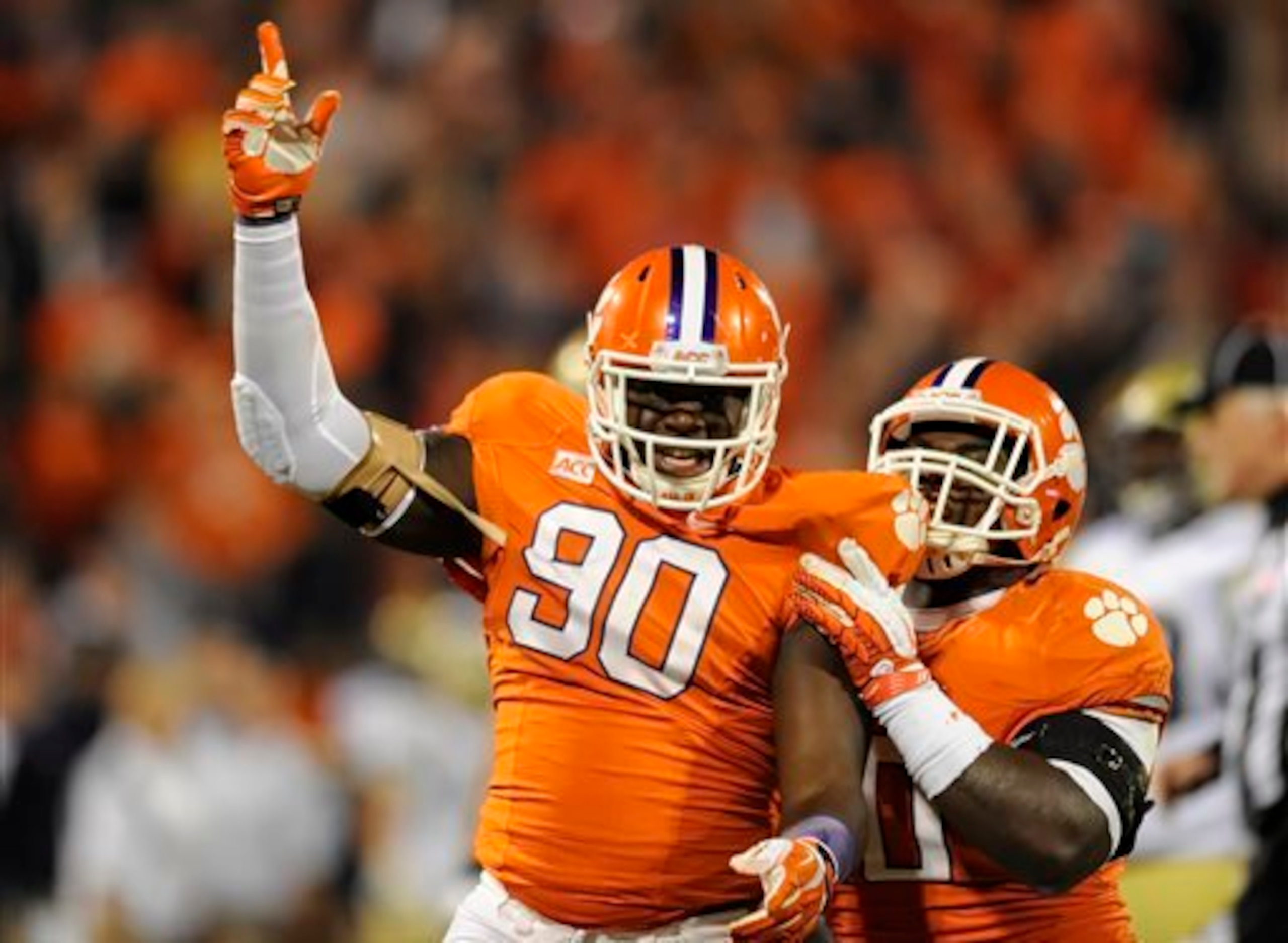
Play the Draft ranking: 12th overall prospect
Shaq Lawson led the FBS in tackles for losses in 2015, but some may be concerned with the defensive end's upside. He was a one-year starter at Clemson, and, even then, he wasn't really a sack artist. It should be noted, though, that the Tigers often asked him to be a run-first defender, which is one reason he was such a quality edge-setter for the team that reached the national championship.
On paper, his easiest combine comparison is Chris Long, who was a second overall pick, not a mid-first-rounder. He also isn't too far from Ezekiel Ansah athletically. Ansah is the athlete who was drafted fifth overall in 2013 and led the NFC in sacks in 2015.
Lawson is a good run defender who has the upside to be a 10-sack player after a few years of development. Some might like his teammate, Kevin Dodd, more, but Dodd is two years older than Lawson, and he's not the athlete Lawson is, even when accounting for the size difference between the two.
If you're looking for a Michael Bennett type of player, Lawson has the first-step explosion and the TFL numbers you'd look for from a kickdown end. All things considered, he should be a top-10 lock.
Josh Doctson, WR, TCU
3 of 8
Play the Draft ranking: 16th overall prospect
One mistake teams have made during recent drafts is letting the excellent receiver fall due to not having a 4.4-second 40-yard dash. This can apply to Laquon Treadwell of Mississippi, too, but Josh Doctson of TCU is generally viewed as a lesser prospect for the same reason.
He's not slow by any means—he ran a 4.5-flat in Indianapolis—but his speed will be used against him. You're hard-pressed if you want to find projections of Doctson being drafted in the top 10 of this class, even though it's thin at the top in terms of talent.
Doctson has sure hands and insane body control. On draft day, his corner-of-the-end-zone touchdown against Texas and his dipping sideline touchdown against West Virginia, plays that no other receiver in this class can make, will be on repeat when his name is called.
In recent years, a player who fits that mold of a step-slow balanced target is DeAndre Hopkins, who was the 27th overall pick in the 2013 class. At the combine, he ran a 4.57-second 40-yard dash—even slower than Doctson.
Hopkins has since posted back-to-back 1,000-yard seasons, including a 1,521-yard 2015 when four different quarterbacks—Brian Hoyer, Ryan Mallett, T.J. Yates and Brandon Weeden—started games for the Houston Texans.
If you ever watched either Hopkins or Doctson in college, you came away astonished with some of their acrobatics. Don't let a 40 time, which doesn't take into account how fast a target can get in and out of breaks or how fast a prospect can get off of press coverage, dissuade you from football talent.


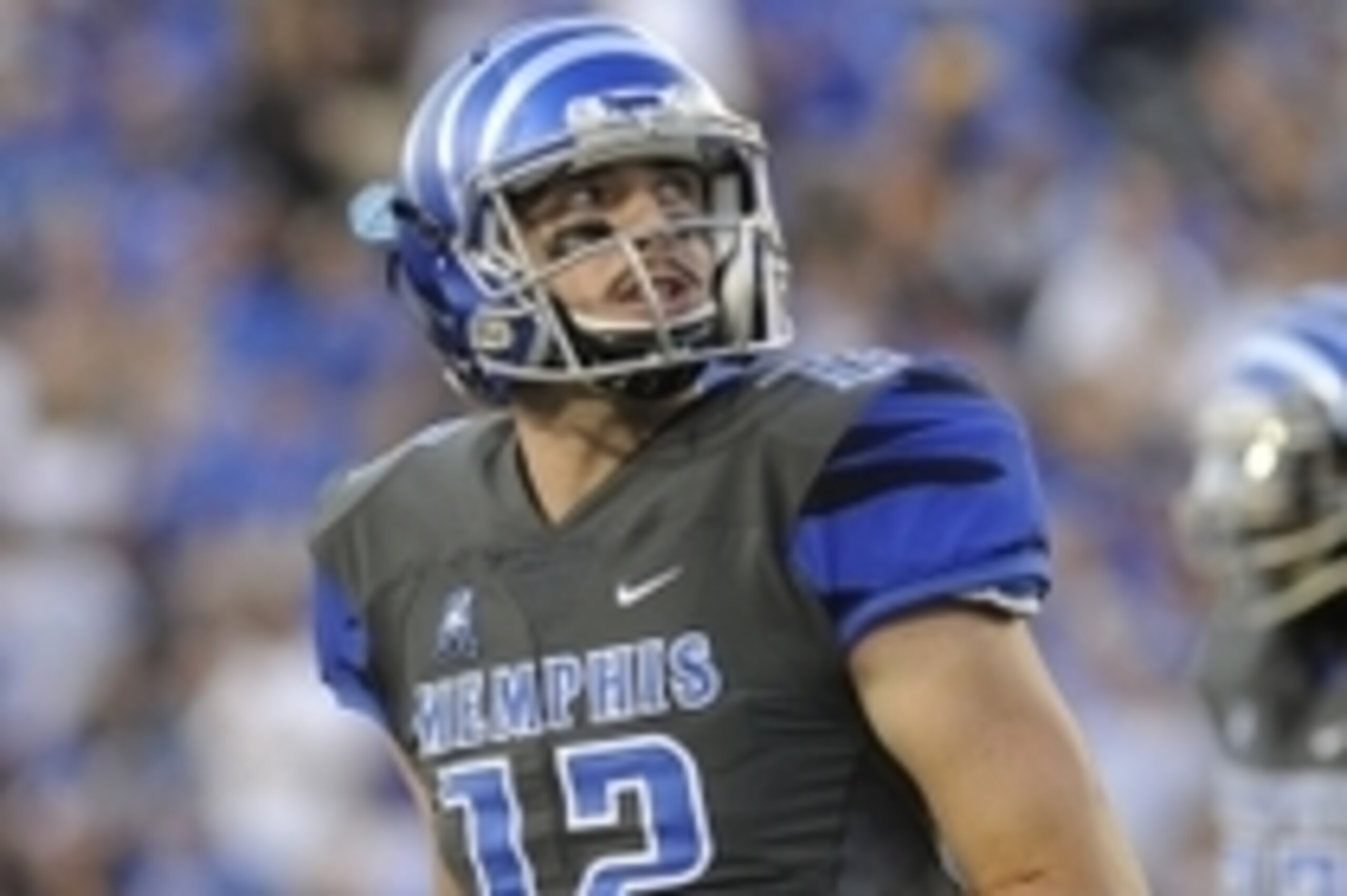
Paxton Lynch, QB, Memphis
4 of 8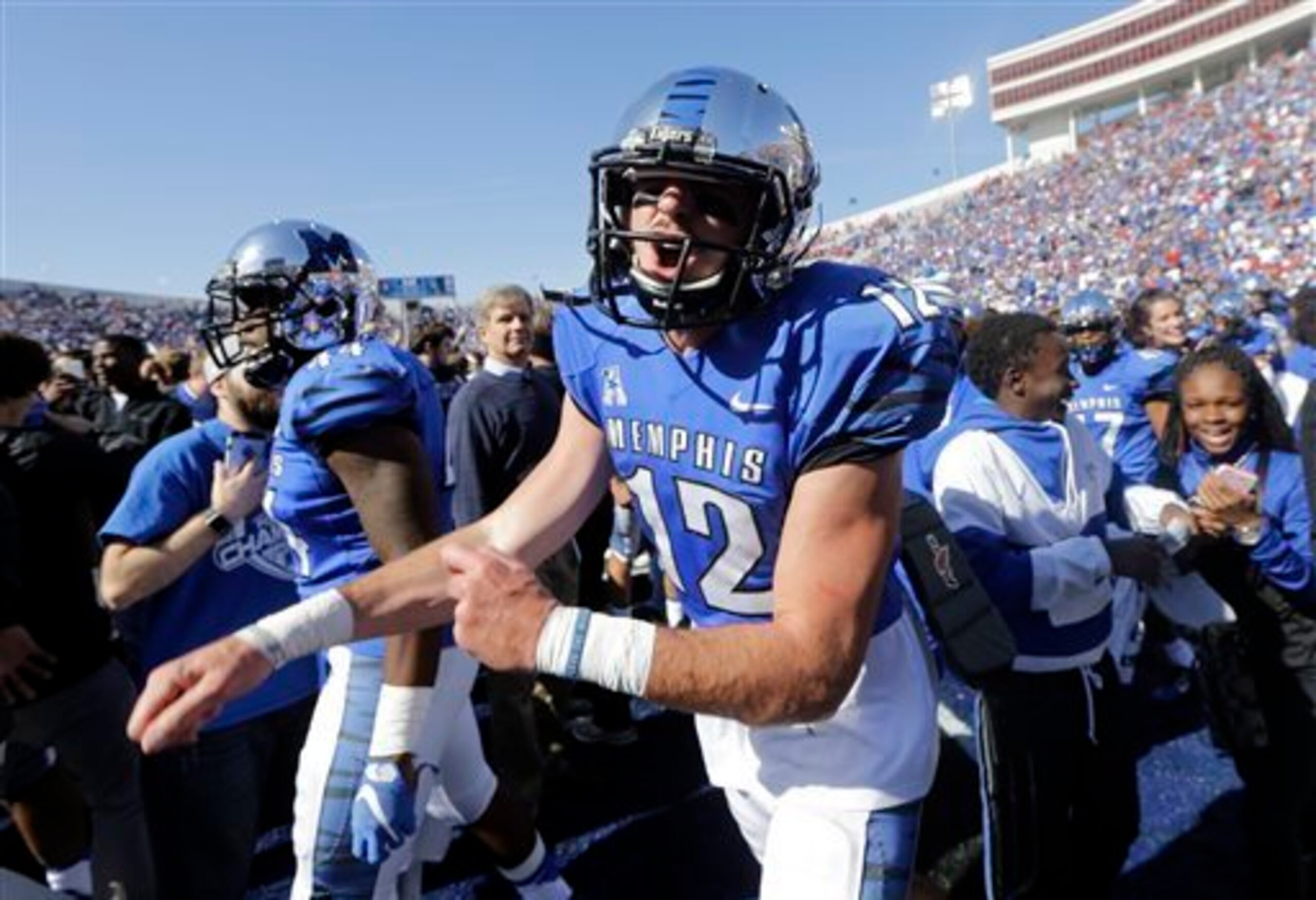
Play the Draft ranking: 31st overall prospect
The go-to comparison for Memphis' Paxton Lynch is Brock Osweiler. One of the main reasons for this is their similarities in height and mobility, as there aren't many 6'7" passers who can move like Lynch in the NFL.
After leading the Denver Broncos through the last stretch of the regular season in 2015, Osweiler, a middle-of-the-road on-field talent, was benched for the team's playoff run. Peyton Manning returned to the starting lineup, which led to the Broncos leaving Santa Clara, California, with the Lombardi Trophy.
Unfortunately for Denver, Super Bowl 50 was the last game Osweiler would put on a Broncos uniform. This offseason, he signed a four-year, $72 million deal with the Houston Texans. For reference, Jameis Winston, the NFL's top draft choice in 2015, signed a four-year, $25 million deal with the Tampa Bay Buccaneers.
If Lynch really is equal to Osweiler, then based on the NFL's quarterback free-agency market, landing Lynch on even the biggest rookie contract in the league would save $47 million over four years (about $12 million per season). Keep in mind, this is a player who has a big arm, big legs and torched Ole Miss—the one team that beat Alabama in 2015.
Finding a quality starting quarterback on a rookie contract is the new cheat code in the NFL. Players like Nick Foles, Chase Daniel and Robert Griffin III are making a higher average salary than Winston or Marcus Mariota, who were selected first and second, respectively, in the 2015 draft. Foles makes nearly double what the rookie maximum is, on a per-year average, on his current deal.
Lynch's situation reminds me of Ryan Tannehill's in 2012. Everyone discussed Andrew Luck and Griffin to death, but the NFL wasn't going to let a talented quarterback prospect under its current collective bargaining agreement slip too far. For this class, California's Jared Goff and North Dakota State's Carson Wentz are the one-two punch at the top of the draft, but recent history would suggest that Lynch is a player who should be more likely a top-10 pick, due to salary implications, than a late first-rounder.
Robert Nkemdiche, DL, Mississippi
5 of 8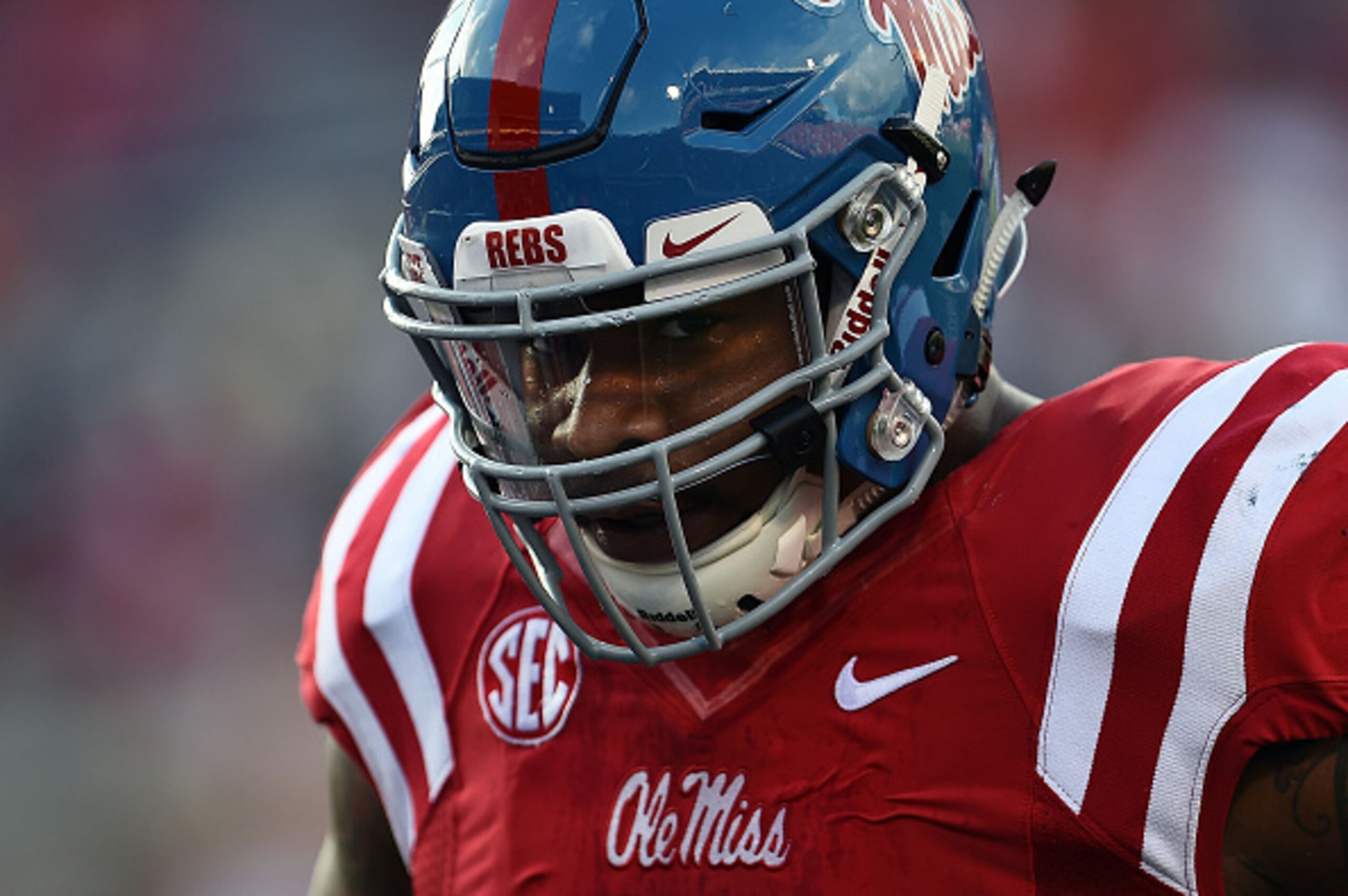
Play the Draft ranking: 37th overall prospect
On paper, Robert Nkemdiche is the top defensive lineman in the draft. Sure, he only posted six sacks in his college career, but Sheldon Richardson also hit that mark at Missouri, and Clay Matthews, an edge defender, only had 5.5 sacks in his USC career. Production has never been the standard that front seven players have been judged by; athleticism has always been the box that linemen need to check.
Now, it would have been nice if Nkemdiche made more plays at Mississippi, but when you see how often he's double-teamed, you can put two and two together and realize why there's a gap between his on-field talent and his stat sheet. There are times, like when he played Alabama, that he was beating every block imaginable—base blocks, zone blocks, you name it. He even showed the ability to game offensive linemen one-on-one, taking advantage of countermoves that few edge defenders have, let alone interior defensive linemen.
Nkemdiche went from a top-five pick to a non-first-rounder when he fell out of an Atlanta hotel and was charged with marijuana possession. There's no excuse for that, but, as a general manager, are you worried that he's going to repeat that same episode? I'm willing to bet he's not going to fall out of another window anytime soon.
If his drastic fall is because he was around marijuana, then why isn't Laremy Tunsil, whom Nkemdiche has claimed was also in the room, being pinned with the same knock? Tunsil is still the No. 2 prospect on Play the Draft's big board. Why is Noah Spence, who failed two drug tests for ecstasy, was suspended by the Big Ten and was arrested after transferring out of Ohio State, still being mocked in more first rounds than Nkemdiche?
He's a known risk, but so were players like Randy Moss, Warren Sapp and even Justin Houston. If you want a top-five talent, Nkemdiche's your only chance to snag one outside of the top 10 in this class. That's where the value in his selection lies.
Chris Jones, DL, Mississippi State
6 of 8
Play the Draft ranking: 39th overall prospect
Chris Jones might be the late riser of this draft class. He has the potential to play as a 5-technique defensive end or a nose tackle at the next level. At 6'6" and 310 pounds, you're never going to mistake him as undersized. He needs work to get to where DeForest Buckner of Oregon is at as a run defender, but he's already a better pass-rusher.
According to 247Sports, Jones was a 5-star recruit coming out of his small town of Houston, Mississippi. From there, he went on to be a Freshman All-American before a sophomore slump and an eventual rise back to the top as a junior in 2015.
The prospect he reminds me the most of is Muhammad Wilkerson coming out of Temple. Last year, Wilkerson recorded the most sacks for an NFL player over 300 pounds since Warren Sapp, who's a Pro Football Hall of Fame inductee.
Per Mock Draftable, Jones' top two athletic comparisons in the league are Leonard Williams, who was drafted sixth overall in 2015, and Wilkerson. When you take into account his size, he's the best nose tackle athlete at the top of the draft class.
He's one of the rare nose tackles, like Dontari Poe and B.J. Raji, who can rush the passer early in his career. He's a 3-technique in a nose guard's body. Typically, you find those players in the top 10 more than you do in the later first round.
Sterling Shepard, WR, Oklahoma
7 of 8
Play the Draft ranking: 42nd overall prospect
"Just a slot receiver" is a term you might hear tossed around with Sterling Shepard of Oklahoma. The former Sooner isn't big at 194 pounds, he isn't tall at 5'10" and he isn't blazing fast with a 4.48-second 40-yard dash. You could have made the same case for Randall Cobb coming out of Kentucky, though.
Cobb was a 5'10", 191-pounder with 4.46 speed. Looking less than spectacular on his Mock Draftable spider chart, you wouldn't call him a high-upside player on paper. In 2015, Cobb signed a deal worth $10 million as the average salary, making him a top-10 receiver in the league, per Spotrac. That's not bad for "just a slot receiver."
On film, you see a lot of similarities between Shepard and Cobb. They're advanced route-runners, with Shepard being the best in this particular draft class. They catch the ball well. They also are tough enough to take a hit when testing the seams—an area usually reserved for tight ends.
Some are going to fall in love with Michael Thomas' size or Will Fuller's speed, but Shepard's film shows a potential game-changing receiver—one with the same potential of being the top wideout in the draft by the time the class' second contracts come around.
Cobb was one of 26 Pro Bowlers drafted in 2011. He was the seventh receiver off the board after names like Jonathan Baldwin, Titus Young and Greg Little. He was drafted 64th overall. Teams should have learned their lessons on the impact of Cobb-like slot receivers a half-decade ago. There's no reason why Shepard shouldn't be a top-30 pick.
Darian Thompson, S, Boise State
8 of 8
Play the Draft ranking: 60th overall prospect
There seems to be a recent stigma between the split of the free safety and strong safety positions in the media. A lot of that has to do with how the Seattle Seahawks' Legion of Boom has taken over the league, but the Seahawks aren't the prototype.
They are for a Cover 3 scheme, but if you want to play two-high coverages, Cover 2 or Cover 4, that would play Kam Chancellor, who looks like a defensive end, way out of position. Not every scheme can utilize a combo of a small, rangy free safety and a big, violent strong safety.
To be honest, playing with two high safeties is a more efficient way of football, as they both can contribute in the ground and air games, instead of dedicating one safety to each split of defensive football. The problem is there aren't many safeties in the league who are quality enough players to be put in a position to constantly be in a run-pass conflict. That's where Darian Thompson of Boise State comes in.
Thompson ran a disappointing 4.69-second 40-yard dash at the combine, but, according to NFL Draft Scout, he improved his time to 4.58 seconds at his pro day. He's not great at anything, but he's baseline quality at everything, which is more than enough to hold down a career as an NFL safety for a long time.
A similar player to him is another Boise State graduate, George Iloka. A fifth-round pick in 2012, Iloka was underrated due to his 4.66 speed. This past year, he signed a five-year, $30 million contract with the Cincinnati Bengals. That, according to Spotrac, makes him the fifth-highest-paid strong safety in football in terms of average salary—only about $1 million per year behind Chancellor in the second slot.
Boise State played two-high. The Broncos rolled Thompson down to the line of scrimmage, and they rolled him into the middle of the field as a single-high safety. His flexibility allowed the defense to disguise itself until right before the ball was going to be snapped, and this flustered quarterbacks who threw the ball to him 19 times in his college career.
In a non-Cover 3 scheme, Thompson just might be viewed as the top safety in the draft class. The 6'2", 208-pounder has everything on his resume to consider him a top-30 pick.
.jpg?w=2560 "LA Premiere of \"Chad Powers\"")



.jpg?w=2560 "Landing Spots for Trade Candidates 📍")
.jpg?w=2560 "Ugly Jets Scoring Stat 😳")