

How Roy Williams' Resilience Helped Restore UNC Program to Greatness Once Again
HOUSTON — The day before Saturday’s 83-66 win over Syracuse in the Final Four—inching him one step closer to his third NCAA title—North Carolina’s Roy Williams made a confession.
“I’m thin-skinned,” the Tar Heels coach said during a press conference, and everyone in the room had the same reaction.
Duh!


Whether it’s aimed at his players or himself—and no matter if it comes from a journalist or a heckler in the nosebleeds—Williams has never learned to laugh off criticism. He’s easy to needle, defensive to a fault.
Knowing that, it’s understandable why the past few years have been particularly taxing on the 65-year-old Hall of Famer.
Multiple times he lost out to Duke and Kentucky for high-profile, one-and-done-caliber recruits. His teams were labeled “soft” after going three straight years without advancing beyond the Sweet 16—a shortcoming that wasn’t nearly as bothersome as the department-wide cheating scandal that has muddied North Carolina’s image.
Williams continued to insist he had no knowledge of any wrongdoing by his players, but that never softened the sting of the darts that, for a time, seemed to come daily.
“He heard what people were saying,” Tar Heels assistant C.B. McGrath said. “Roy can’t recruit elite talent anymore. Roy’s too old. He’ll never catch up with Duke and Kentucky. Roy should retire.”

McGrath paused and chuckled.
“I mean, seriously,” he said, “think about how ridiculous that sounds.”
Especially after Saturday, when it became clear that age and adversity haven’t caused Ol’ Roy to lose his edge.
If anything, he’s gotten sharper.
And saltier.
As the Tar Heels trotted toward the locker room after dismantling Syracuse on Saturday, Williams attempted to locate a group of fans who had screamed insults at him at halftime.
“Their rear ends weren’t there when I came off the court at the end of the game,” he said. “I was looking for them.”
A short time later, Williams reminded reporters that he’s “a hell of a lot smarter about basketball than you guys are.” After he retires, he said he wants to spend a year calling games on TV so he can be “the only announcer [in history] to never criticize coaches.”
Clearly, Williams is operating with a chip on his shoulder. While so many others may flounder in the face of adversity, he is letting it fuel him.
He’s using it to flourish.
“I couldn’t be having a more fantastic ride than I’m having right now,” Williams said.
It’s a ride that’s even more gratifying, he said, because of the difficult journey he and his players endured to reach this point.
After all, for a time it seemed improbable that Williams would ever coach another team to a Final Four.
Much of the pessimism stemmed from North Carolina’s struggles—or rather, perceived struggles—on the recruiting trail.
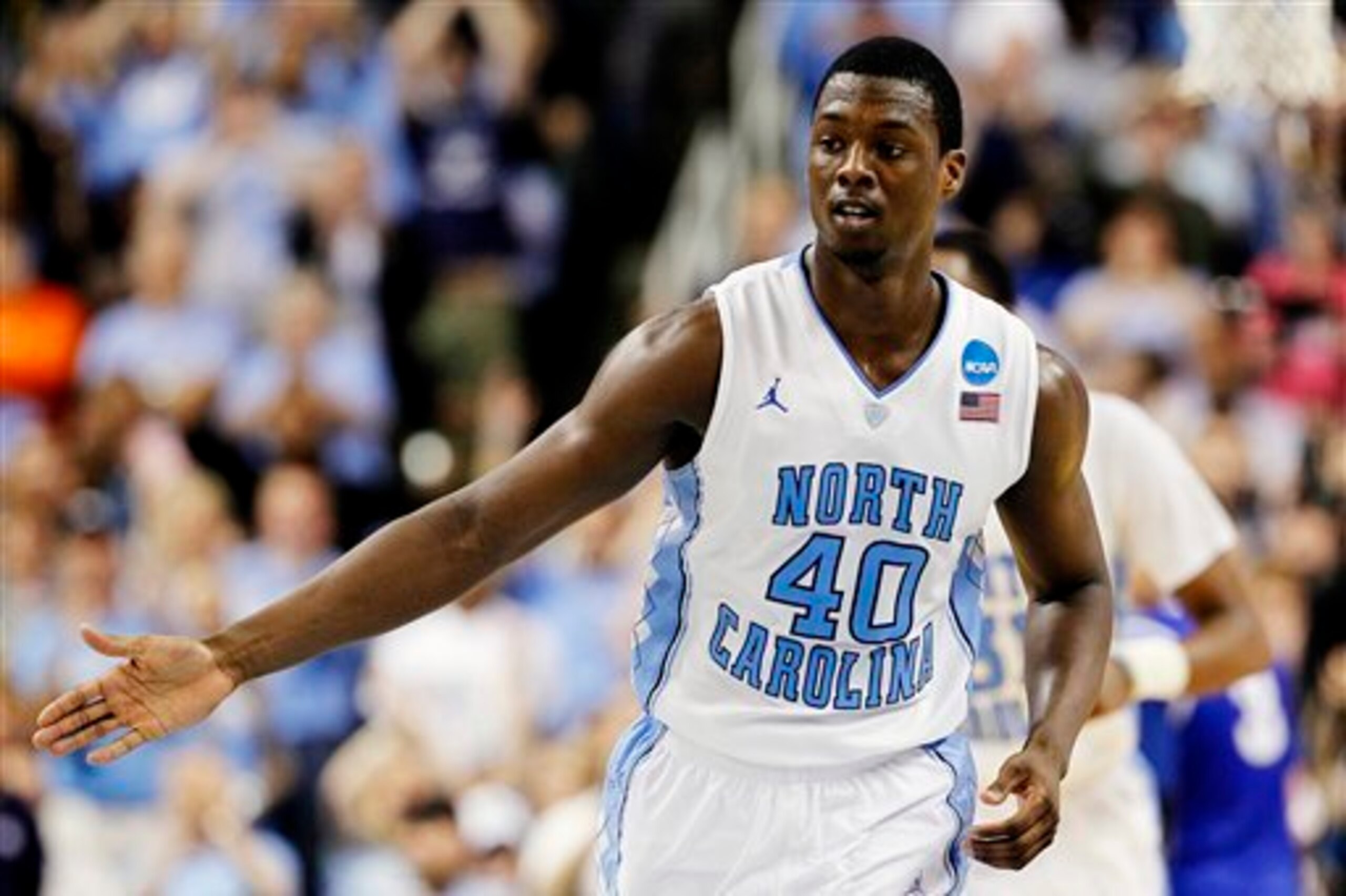
Harrison Barnes, the nation’s No. 1 overall recruit, signed with the Tar Heels before the 2010-11 season. But since then, North Carolina has signed just three players (James Michael McAdoo, Justin Jackson and Theo Pinson) who were ranked among the nation’s top 10 prospects by ESPN.com.
As recently as last week, Williams was asked about recruiting against Kentucky’s John Calipari.
“He recruits the same guys I do,” Williams said. “He just gets them.”
Still, while outsiders panicked, Williams’ philosophy never changed. Yes, he may have gone after—and whiffed on—one-and-done players such as Andrew Wiggins and Brandon Ingram. But even in his pursuit of such standouts, his intent was never to let them rule his program. He always believed in building from the ground up. He knows the importance of a strong foundation.
“He’s always stayed true to who he is,” said Sean May, a member of North Carolina’s 2005 national championship team who is now on Williams’ staff. “He stayed true to the program that Coach [Dean] Smith and Coach [Bill] Guthridge built. That’s allowed us to get to this point this season.
“He hasn’t changed for anybody. You’ve seen different coaches change their styles or the way they recruit. We run the same system that I ran and George Lynch ran and Eric Montross ran. It works. If you buy into it, great things will happen.”
As up and down as things often were on the court—this is North Carolina’s first Final Four since 2009—nothing tested Williams’ mettle like the reports of a cheating scandal that first surfaced nearly two years ago.
An investigation revealed that, for years, athletes in multiple sports, including basketball, took bogus “paper classes” and received credit for coursework they never completed. The NCAA has yet to dole out punishment for the infractions, which is one of the reasons the topic has continued to hover over Williams and his program.
“People ask [our players] about it, but they had nothing to do with it,” McGrath said. “Roy has appreciated their character and their perseverance through the whole thing. He wants to make sure they reap some kind of reward. They’ve been through a lot.”
And so has Williams.
As if the issues involving his program weren’t burdensome enough, in the past two years he’s endured the deaths of coaching mentors Dean Smith and Bill Guthridge and close friend/golfing buddy Ted Seagroves.
He had knee surgery last summer and continues to experience pain, causing him to walk with a hitch. Even during this week’s Final Four, he’s dealt with migraines and a head cold.
You wouldn’t know it, though, watching Williams on the court.
The 2015-16 Tar Heels are far from his best team, but he is as proud of this group as any he’s ever coached. Williams won his first NCAA title in 2005 with a squad that featured four players who were selected among the top 14 picks in the NBA draft—and they were recruited by Williams’ predecessor, Matt Doherty.
Four years later, North Carolina won the NCAA title thanks, in large part, to National Player of the Year Tyler Hansbrough, a senior who set the tone for a squad that featured three first-rounders.
Those were special teams, but this group feels different.
There are no one-and-dones on the current roster, and only small forward Justin Jackson is projected as a first-round draft pick (in 2017). Senior guard Marcus Paige is one of Williams’ all-time favorite players because of his leadership, and Brice Johnson, a first-team All-American, has improved more than anyone Williams has ever coached.
“If they aren’t our type of kids, he’s not going to go after them,” McGrath said. “Coach is only going to go after the types of guys he wants to coach. I guess the media just thinks you’re supposed to have a roster full of one-and-dones because Kentucky did it one time. It’s a hard thing to do.
“Roy got here by doing it his way.”
North Carolina opened the 2015-16 season ranked No. 1 in the Associated Press poll and then justified that honor by capturing both the ACC regular-season championship and the conference tournament title.
Tar Heels fans are hoping Williams’ approach works for one more game. If North Carolina beats Villanova on Monday, Williams will become just the sixth coach in history to win at least three NCAA titles. Win or lose, whatever happens against the Wildcats won’t alter the course of his career.
“He’s never acted to us like he might not want to do it anymore, or that he wasn’t enjoying it, or that he might retire,” said McGrath, who has been with Williams since his days at Kansas. “He’s been the same to us. When he’s coaching, he doesn’t have to butt heads with anyone. It’s more about pure joy and doing what he likes to do and getting away from the outside world.
“It’s still fun for him, but his work isn’t done yet. Hopefully, there’s one more.”
Jason King covers college sports for Bleacher Report. You can follow him on Twitter, @JasonKingBR



.jpg?w=2560 "Latest Peyton-Colts Rumors")


