
Djokovic and Azarenka Dominate Winners and Losers at 2016 Miami Masters
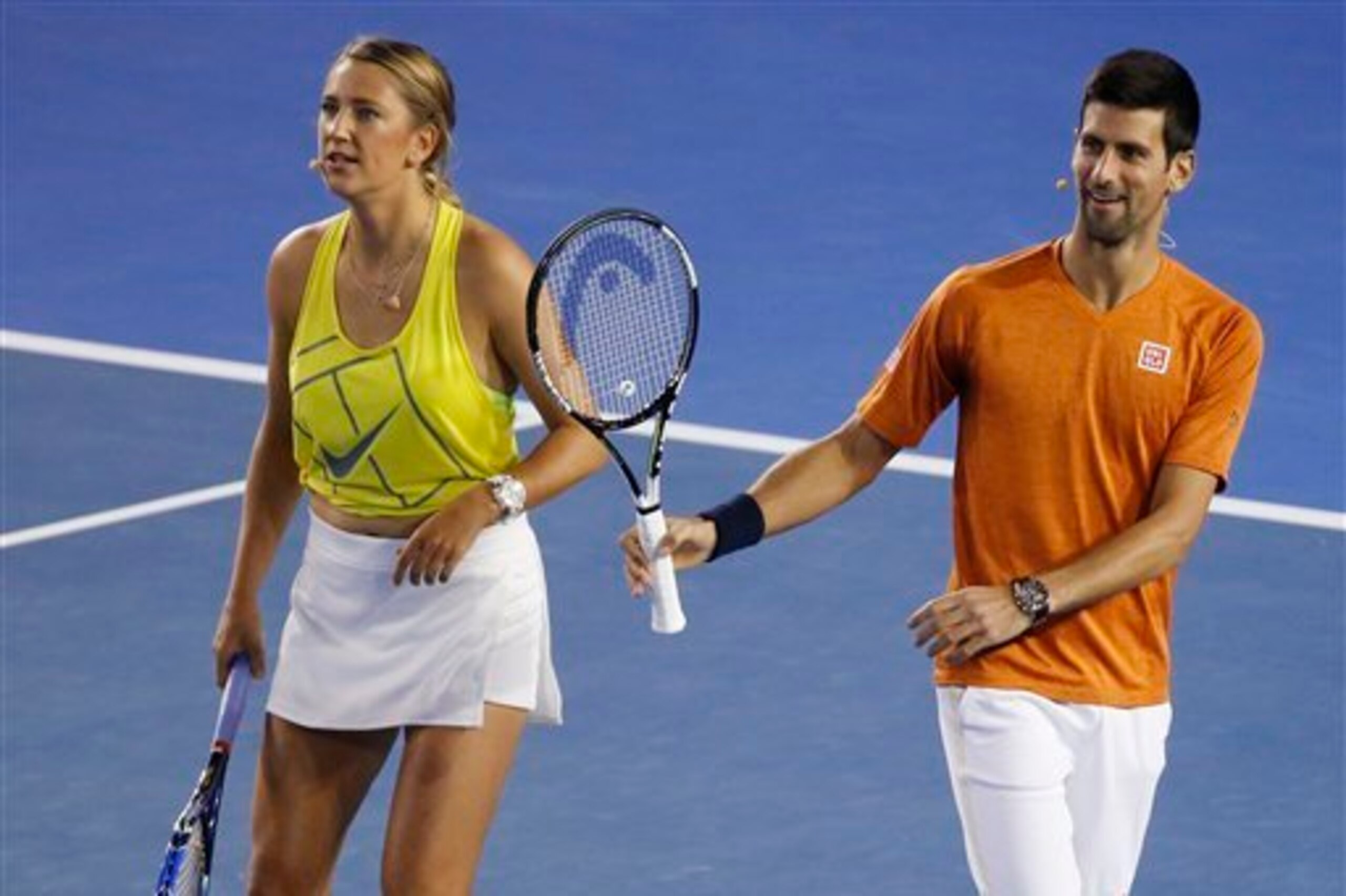
The 2016 Miami Masters was another championship showcase for Novak Djokovic and Victoria Azarenka. They each backed up their titles at Indian Wells to complete the “Sunshine Double,” but just how impressive is this feat?
This is only the third time in history that the ATP and WTA both saw a champion sweep these tournaments (1994, Pete Sampras and Steffi Graf; 2005 Roger Federer and Kim Clijsters). If history is a guide, it’s a strong indicator both players will win major titles this year.
The past week produced other “winners,” including a strong effort from tennis’ “Lost Generation.” How did they collectively outperform tennis legends not named Djokovic?
There was also a “loser” who continues to garner attention with his tiresome antics despite his best showing to date at a Masters 1000 tournament. Is this good for tennis?
All of this and more as the tours fly from the southern hard-courts in the United States to the clay-court swing in Europe.
Winner: Victoria Azarenka
1 of 8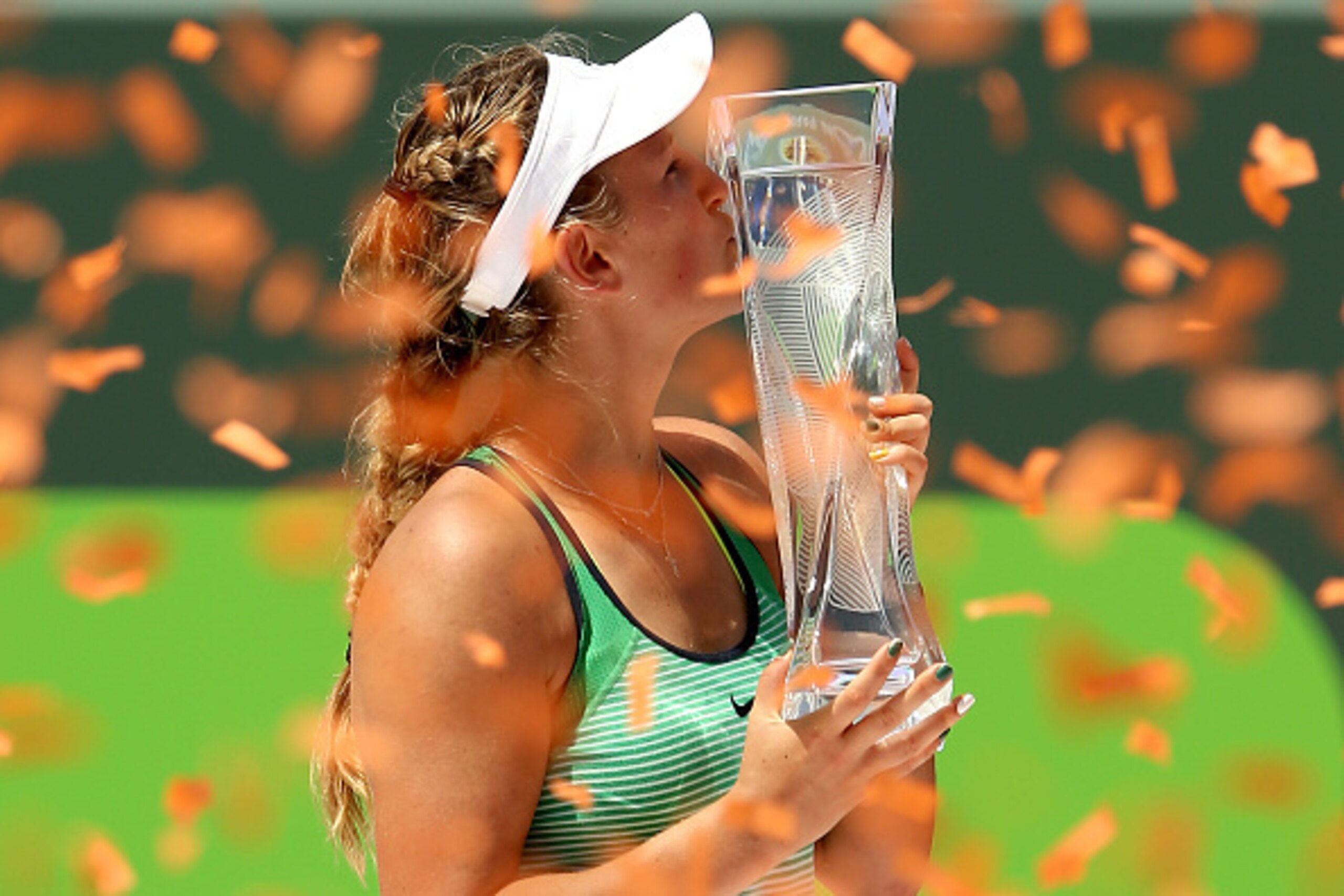
Right now, the best player in women’s tennis is Victoria Azarenka, and it only seems like the beginning of her renaissance. She captured the “Sunshine Double” by winning Indian Wells and Miami in consecutive tournaments, something only historically accomplished by Kim Clijsters and Steffi Graf.
Her grunts are louder, shots harder and attitude fiercer. She’s a blur of green and white power, knocking down her opponents with physical assertiveness. It’s the best she’s played since 2013, when she had polished off her second Australian Open title and got to her second consecutive U.S. Open final.
Azarenka’s game is suited well for hard courts, but can she adapt to the red clay’s sliding footwork and higher ball bounce? She will be the one to watch when examining the power structure in the WTA.
She is now up to No. 5 in the WTA Rankings, which means her upcoming draws will be more favorable than fighting through masses of high-quality players in early rounds. All she needs is to keep her momentum flying full throttle after mowing down big rivals like Serena Williams, Garbine Muguruza and Angelique Kerber.
Will this be the reign of Queen Victoria? Stay tuned.
Loser: Serena Williams
2 of 8
Anything less than a championship is certainly a disappointment for Serena Williams. She has been so dominant for so long that it’s a shock when she comes up flat.
More often, it’s an early-round surprise, and at the Miami Masters, one of her strongest tournaments, Williams lost in the fourth round to star veteran and eventual finalist Svetlana Kuznetsova.
She’s now lost in all three big tournaments thus far in 2016, and her chase for the Calendar Slam last September seems like ancient history.
Does this mean Williams is entering a noticeable decline the way Rafael Nadal did beginning with Wimbledon 2014? Does she have enough game and strength to win two more career majors, tying and passing the great Steffi Graf?
Yes, but it won’t be easy.
The clay-court season is grueling, and the surface mitigates Williams’ serve somewhat. Youthful challengers have a better chance to hang in with her, and she has looked more fatigued in three-set matches lately.
Wimbledon could be the panacea, with shorter matches and a fast surface to augment her serve. Williams might be down right now, but she’s far from out, and maybe watching Victoria Azarenka streak along will give her another big challenge and target to raise her game again.
Winner: Svetlana Kuznetsova
3 of 8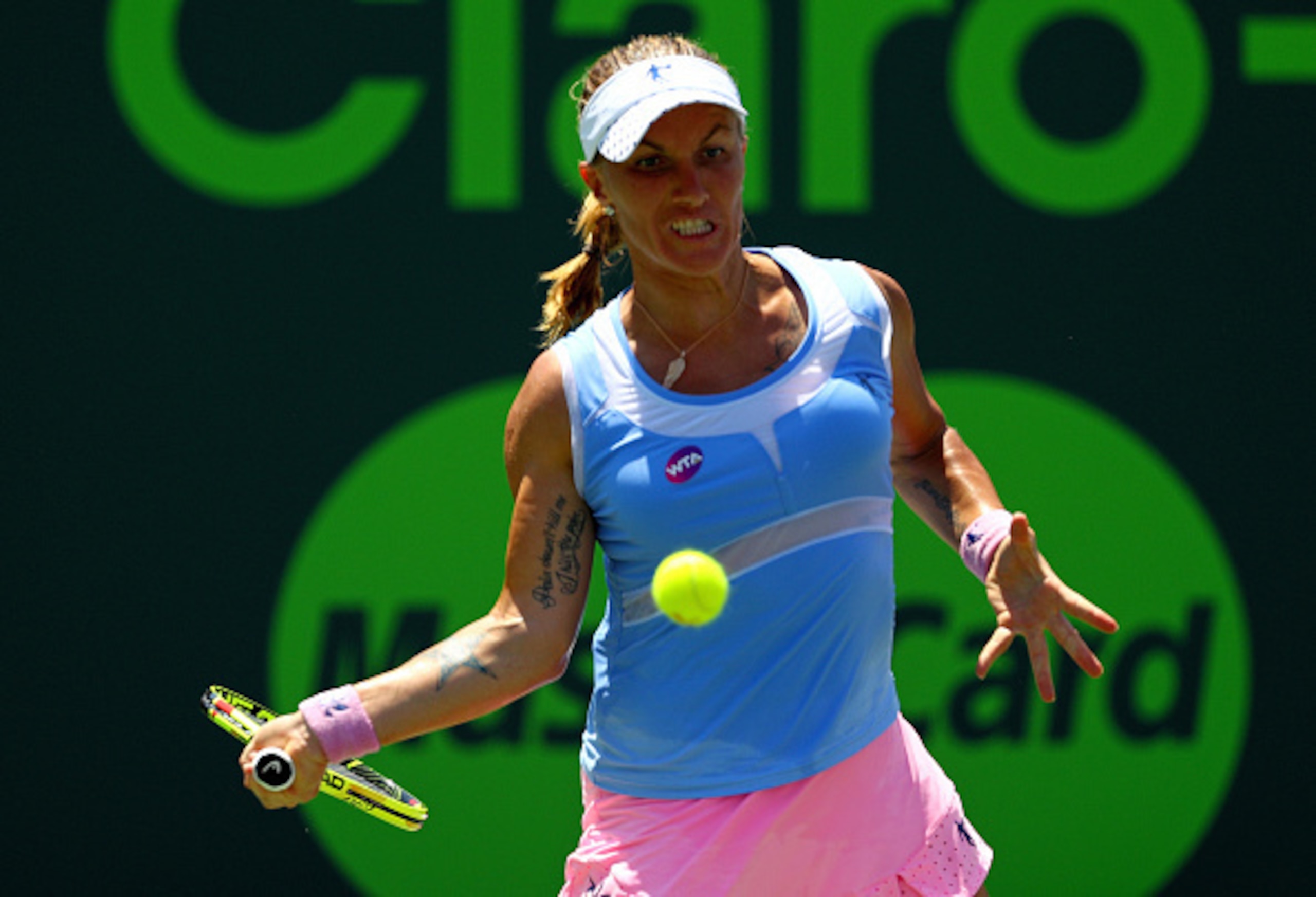
A tip of the cap to Miami finalist Svetlana Kuznetsova. The Russian veteran brought back memories of her youthful talent and success when she was a two-time major champion (2004 U.S. Open and 2009 French Open) with all the promise of so much more.
Kutznetsova is a sound player with excellent control, topspin and underrated speed and footwork. She is a complete player, adept at doubles and representing the kind of 21st-century star who can play with power and athleticism, although it’s been years since she peaked.
By 2010, a few injuries, loss of confidence and the changing rotations of star players in the WTA were too much for Kuznetsova to overcome as she faded from her time as the No. 2 player on tour.
Had Kuznetsova won Miami, it would have bookended her Miami title in 2006. It’s nice to see her playing well at age 30, and if this is the closest she gets to another big title, then she deserves praise for her career and for helping open more doors for Russian tennis.

Losers: Aging ATP Legends
4 of 8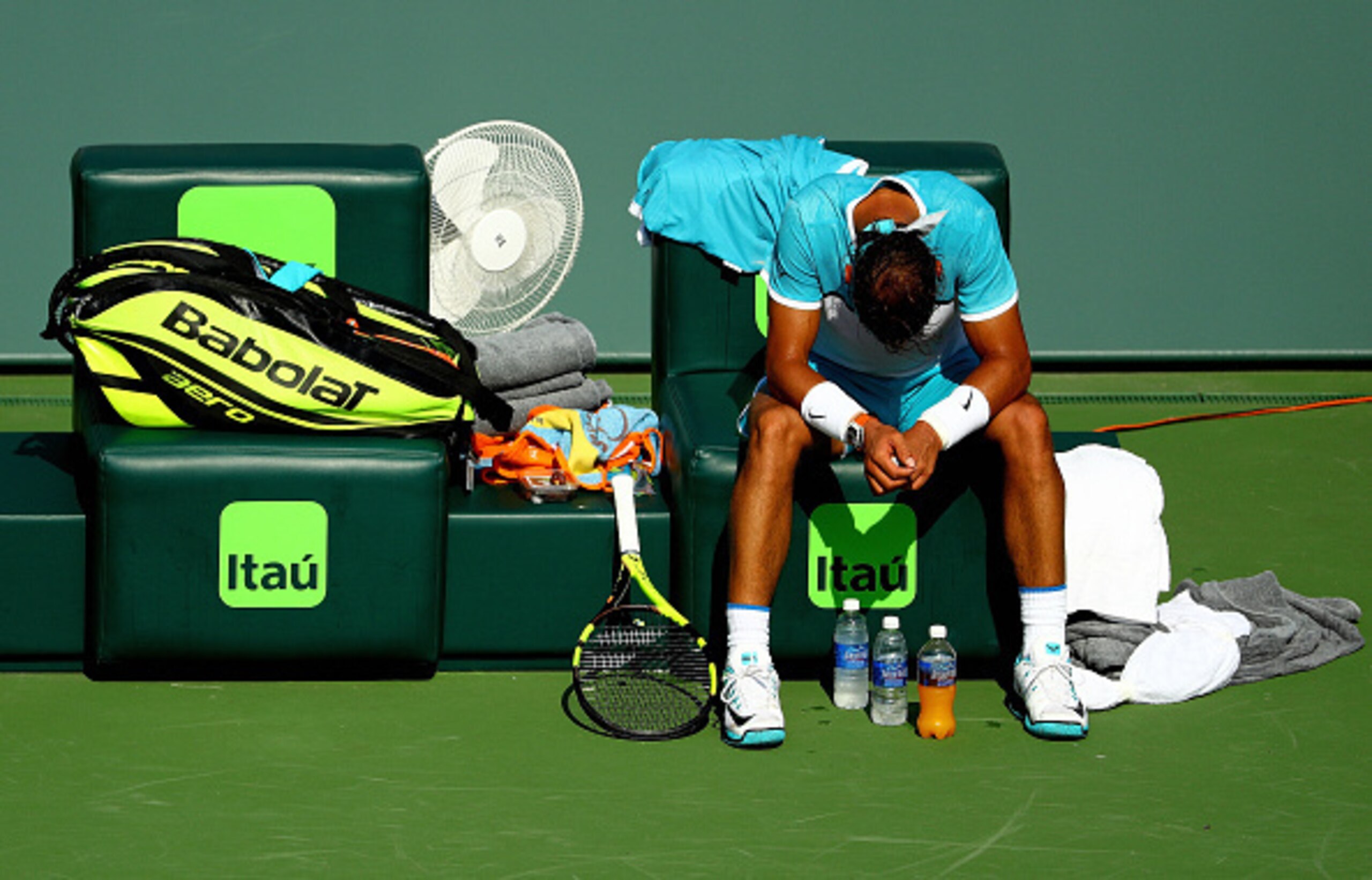
For a decade the “Big Three” of Roger Federer, Rafael Nadal and Novak Djokovic dominated majors. There was proven seasoning with Andy Murray and a late-maturing Stan Wawrinka.
Now there is only Djokovic and everybody else, and the Miami Masters only reiterated this gap.
- Federer withdrew because of illness, and this followed two months of being sidelined after knee surgery.
- Nadal lost in the first round, perhaps more due to the weather than his unheralded opponent. The King of Clay buckling beneath muggy heat and illness? Times are different.
- Murray got past his opener in Miami, but then he was promptly booted out by Grigor Dimitrov. So much for his familiar training grounds.
- Wawrinka was a bust once again, but he’s often had these throwaway tournaments before coming back for better results. One day he will find the return door locked and sealed.
These extraordinary but aging legends are no longer a lock, but a combined 1-3 record and one withdrawal? It’s no wonder Djokovic has lapped the field.
Winners: The Lost Generation
5 of 8
While the aging legends were blotted out like the sun on a cloudy day, the much-maligned Lost Generation put together their best collective effort in a Masters 1000 tournament. Maybe it’s no coincidence the feeble results of the former meant opportunity for the latter.
- Kei Nishikori, born three days before the 1990s, streaked to his second Masters 1000 final. More on his excellence later in the column.
- David Goffin followed up his Indian Wells semifinal appearance with the same result in Miami. The last time Rafael Nadal made at least the semifinals in back-to-back Masters 1000 tournaments was Madrid 2014. Roger Federer last did this at Shanghai in 2014. Stan Wawrinka has never accomplished this.
- Milos Raonic nearly made it back-to-back semifinals, but he was finally broken by Nick Kyrgios, who represents the “Next Generation.”
- Grigor Dimitrov defeated Andy Murray, his biggest win in a long time and a ray of light as he tries to build his confidence and consistency to prove he can return as a top-10 player.
- Bernard Tomic did not generate headlines or lose a match. Then again, he did not play because of a wrist injury.
Can this group of mid-20-somethings continue to build more consistency on European clay? Nishikori is the two-time defending Barcelona champion, who is on the shortlist of candidates who could win a clay-court Masters 1000 title.
We profiled Goffin’s rise at the start of April, and if he can keep evolving, clay is a good surface for his game.
Now it’s up to Raonic and Tomic to get completely healthy, and we will see if the talented Grigor Dimitrov can get an encouraging breakthrough.
Loser: Nick Kyrgios
6 of 8
You can say this about Nick Kyrgios: He moves the meter. After he defeated Milos Raonic in the quarterfinals, the bombastic young Aussie was on more than 10 articles or social media photos and links near the top of Bleacher Report’s home tennis page. Meanwhile, semifinalist David Goffin was placed in one feature article.
It’s a prime example of how sports fans are fascinated with someone who has oodles of talent and charisma, but who acts arrogantly and temperamentally when things go awry. He’s a lightning rod for attention, and whether or not any of this is choreographed, it certainly sells.
Kyrgios is a polarizing potential star however you look at him. Many of us want to see him succeed because it would be tragic if he wasted his tennis talent. Beyond his power and athleticism, he can create fantastic shots with daring flicks of his wrist and bending topspin that looks like a streaking comet.
On the other hand, many tennis fans do not appreciate his argumentative manners towards chair umpires (see the latest example in the Miami Open fourth round), lewd distractions towards opponents (see 2015 Rogers Cup comments vs. Stan Wawrinka) and ranting about changing his socks during Wimbledon.
His first Masters 1000 semifinal this week in Miami landed him into the world rankings at No. 20, but it’s only the beginning of fan discussions about whether or not they care that Kyrgios acts the way he does.
We've decided this week his ridiculous rant in the fourth round is more disgraceful than celebrating his semifinal. Too bad. He can chew on our "Burnt Bagel" award.
Winner: Kei Nishikori
7 of 8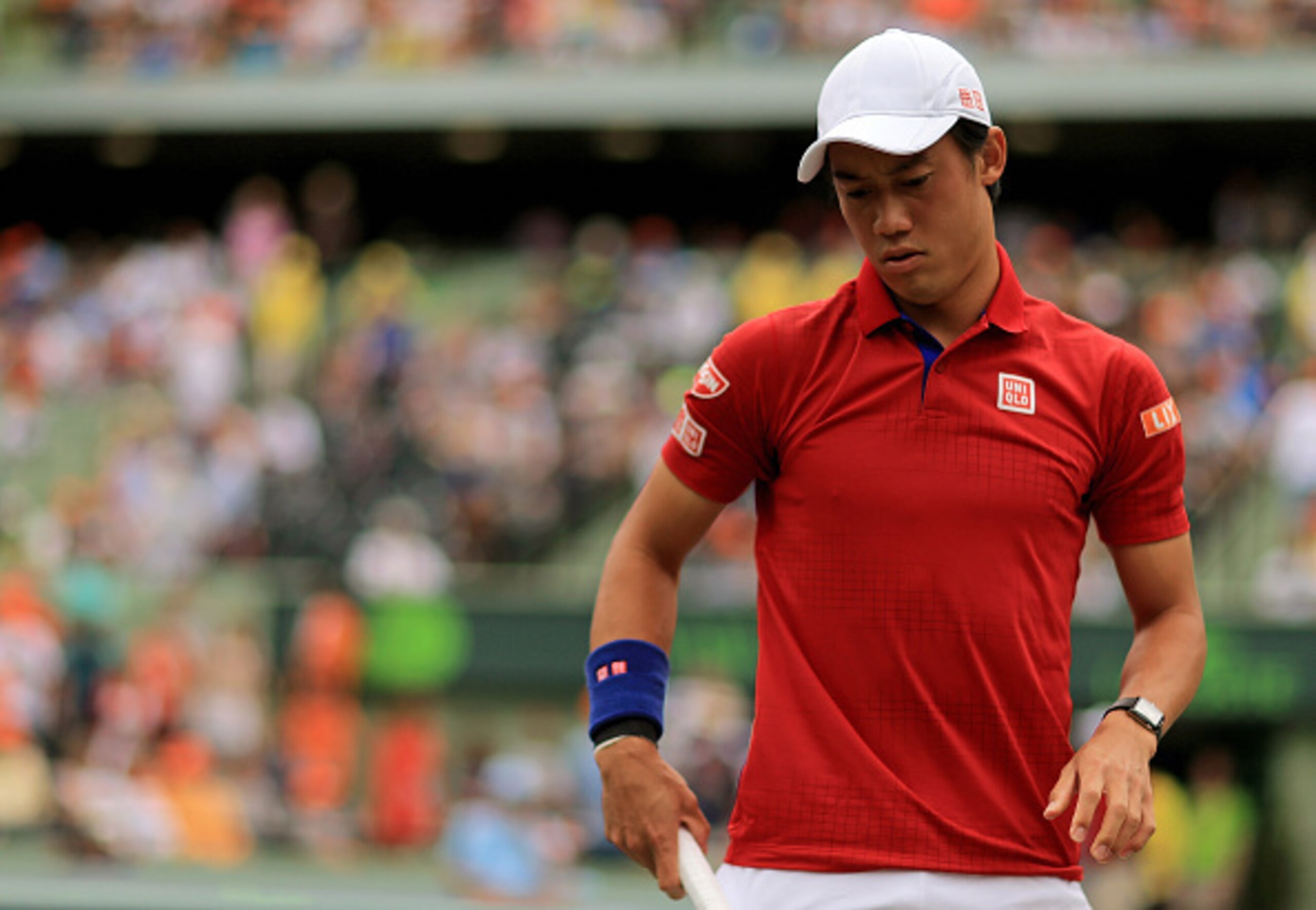
Until the final, Kei Nishikori had imposed his game successfully on a variety of opponents. He was back to angling his shots to both corners, taking time away from his opponents and leaving so little room to win the baseline war.
For most of the first set against Djokovic, he looked good, breaking the great Serb twice and forcing him to scramble from well beyond the baseline. But he couldn’t follow up either break with a hold, and you could see the confidence crumble. In the end, a medical timeout, racket toss, pair of double-faults and too many tentative points sealed his fate.
This should be a time to celebrate his second run to a Masters 1000 final—the other a loss to Rafael Nadal in Madrid 2014. He won a thriller in the quarterfinals against Gael Monfils, and he stymied powerful young Nick Kyrgios, running him ragged from corner to corner.
Now it’s on to the red clay where he is certainly one of the top-five contenders on the road to the French Open. There will be bigger opportunities to come.
Extra Winner: Novak Djokovic
8 of 8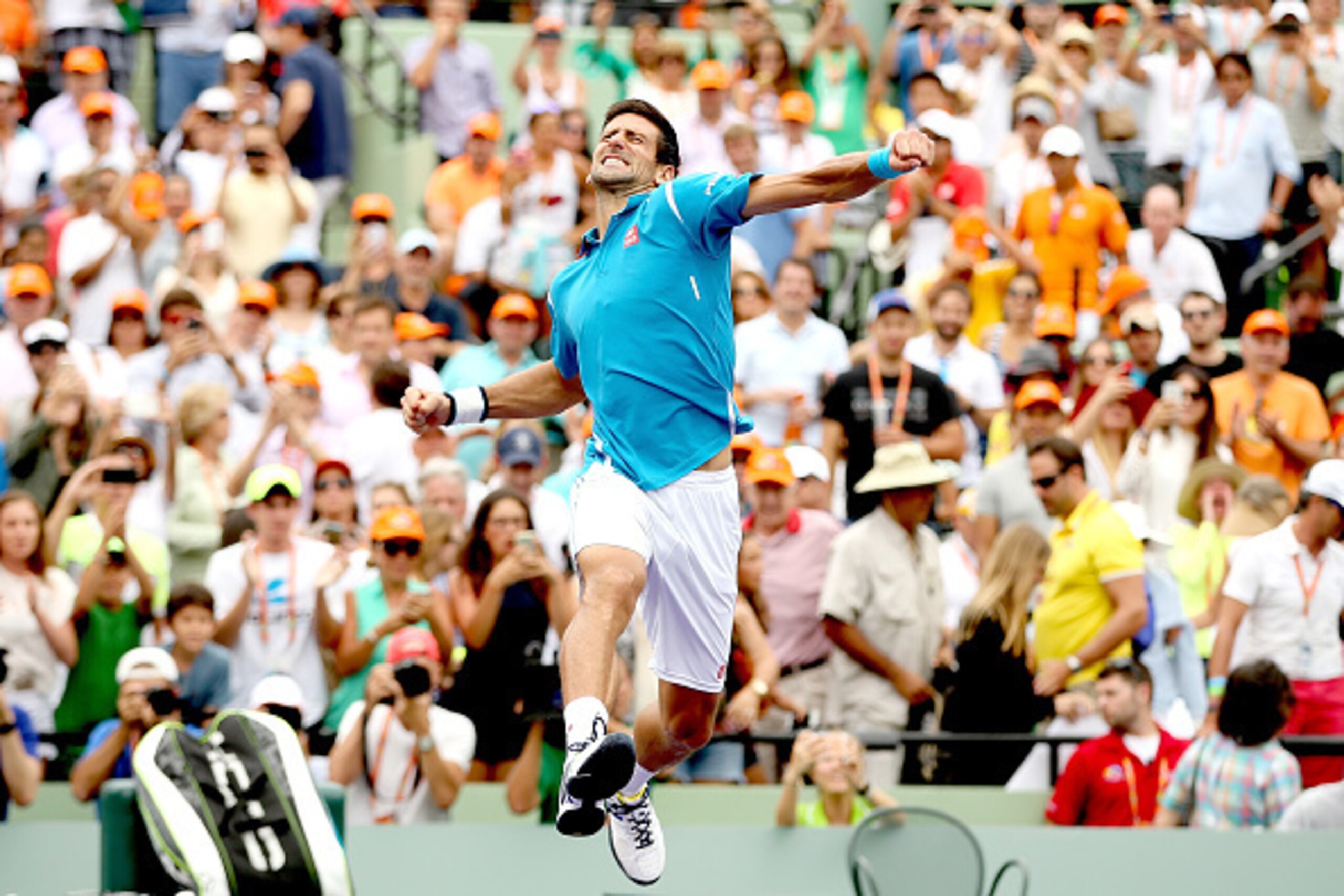
There’s been a growing trend for tennis fans to complain about the way Novak Djokovic wins. Somehow, despite his unprecedented streak of 11 Masters 1000 finals, winning nine, many grumble that Djokovic is playing more of a passive, defensive, pushing style rather than being the aggressor.
Somehow, it’s not OK with everyone that Djokovic plays with an increasingly conservative margin until the opponent misses a few times on key points and ultimately self-destructs. There are plenty of strange box scores that do not overwhelm the stat sheet with dominant offensive numbers.
But isn’t that missing the point? Tennis has almost always been about forcing the opponent into mistakes one way or the other.
- Rule one is not to give away cheap points; make the opponent earn his point.
- Rule two is that if the opponent is willing to press and self-destruct, keep setting it up.
- Then, and only if needed, it might be time to go for a few more lines with those spectacular shots. The purpose being to disrupt the other’s rhythm or to find the zone needed to get ahead once more.
We used to watch Djokovic go through these incredible offensive streaks where he looked unstoppable for about a set and a half, only to unravel when he could not sustain perfect brilliance.
The 2013 U.S. Open final was a prime example. He beat down Rafael Nadal in the second set and looked ready to close out the third, but he came undone, and it was Nadal who patiently stayed the course of his steadier game plan.
Understandably, much of the criticism toward Djokovic is that he wins nearly everything, and so antagonists need to poke holes in how he wins. If this were Roger Federer or Nadal, perhaps many would say they were geniuses for reinventing ways to force opponents into self-destruction.
Make no mistake about it. Djokovic is the best-ever at winning like this, with the possible exception of Bjorn Borg's approach on clay. If it were really that easy, why doesn’t everyone else do it, too?
Maybe not everyone can be the best returner in history and move around the baseline like a deer while executing near-flawless defensive angles.
It takes all-time talent, durable toughness and cerebral ingenuity to win a record 28 Masters 1000 titles and 11 majors. King Novak is a winner, the winner in today's ATP.


.jpg?w=2560 "Latest Peyton-Colts Rumors")