

NCAA Tournament 2016: 16 Things to Know Heading into the Sweet 16
After a weekend filled with buzzer-beaters, insane comebacks, incredible individual performances and more drama than an entire season of Game of Thrones, we're somehow left with a pretty chalky Sweet 16.
Usually, to have that much chaos, it means the second weekend of the tournament is inundated with middling seeds that few people care to actually watch again. However, we got four straight days of heart-pounding, breath-holding action and still have phenomenal Sweet 16 pairings. We'll see how next weekend shakes out, but we're well on our way to one of the greatest tournaments in NCAA history.
Let's be honest, though: Your bracket is busted.
Unless you're like my lovely wife and you picked Syracuse to beat Michigan State after watching approximately zero seconds of college basketball this season, the Spartans' first-round loss likely ruined any hope you had of winning your (totally not-for-cash) bracket pools. And now you're looking for a reason to care about what's left of the 2016 NCAA tournament.
Well, you're in luck, because we have 16 things you need to know about the Sweet 16. Between the players, coaches, teams and conferences involved, there is no shortage of intrigue for the regional semifinals.
If nothing else, you can still tune in to root against Duke.
That usually unites people, right?
The Crean Rises to the Top
1 of 16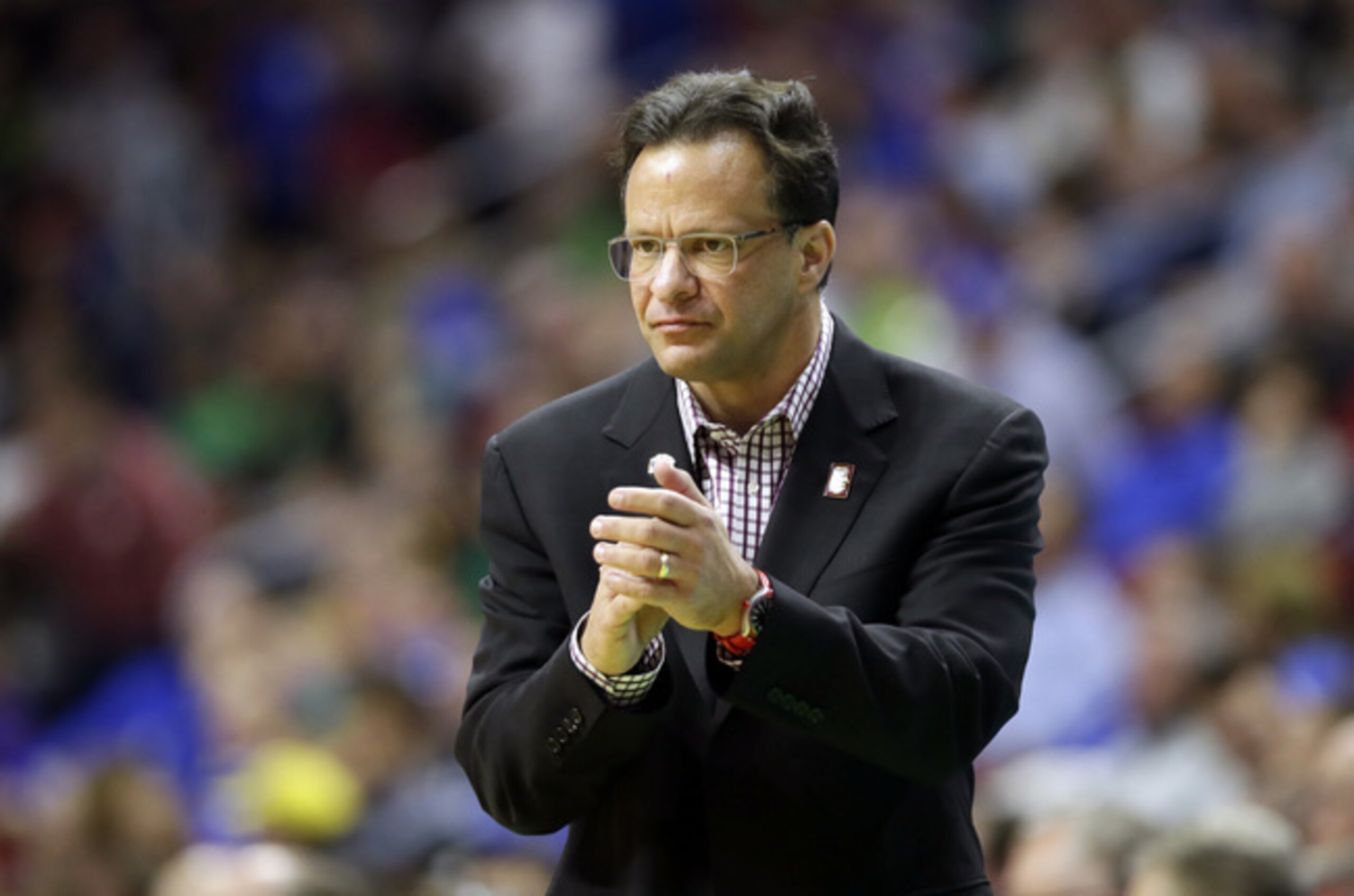
Indiana beat Kentucky to reach the 2016 Sweet 16.
Just let those words wash over your brain for a moment.
There has been no shortage of wildly unpredictable things about this season and NCAA tournament, but that sentence was unfathomable in early December. The Wildcats were ranked No. 1 in the nation at 7-0 with an 11-point win over Duke. The Hoosiers were 5-3 with a 20-point loss to the Blue Devils.
Hours after watching the Hoosiers get run out of Cameron Indoor Stadium, B/R's C.J. Moore concluded: "Tom Crean is a lame duck in Bloomington."
Moore wasn't alone in that stance.
Hoosiers fans had been calling for Crean's head for years, and after consistently horrendous defense led to a disappointing start to the season, just about everyone in the national media also acknowledged the ticking clock behind Crean's hot seat. When James Blackmon Jr. went down for the count with a torn ACL less than a month later, it became even more unlikely that Indiana's forlorn head coach would survive the season.
Yet, after winning 22 of his last 26 games, Crean is in the Sweet 16, while Michigan State and head coach Tom Izzo were on the receiving end of arguably the biggest upset in tournament history. Whether this is a sign of a long-term swing of power in the Big Ten is yet to be determined, but it's kind of crazy that an oft-maligned coach is still standing while a coach who has owned March in recent years couldn't get out of the first round.
Better yet, defense was the reason the Hoosiers got here, as they held the nation's most efficient offense to just 67 points in a 71-possession game.
Rob Dauster of NBC Sports summed up the turnaround about as well as anyone could: "If anyone tells you they saw this coming from the Hoosiers, slap them in the face and call them a liar."
No Matter the Coach or Roster, Wisconsin Remains a Factor
2 of 16
The Wisconsin Badgers became a Sweet 16 fixture over the past few years under former head coach Bo Ryan. In addition to reaching the Final Four in 2014 and 2015, they made it to the regional semifinals in 2011 and 2012.
But Ryan isn't the coach anymore, and this team was never supposed to dance.
Indiana in the Sweet 16 was unforeseeable early in the season, but if you had given me even odds in mid-December on either Indiana or Wisconsin reaching the Sweet 16, I would have wagered an unhealthy amount of money on the Hoosiers. That's how far Wisconsin had fallen since last year's national championship game.
After losing five of last year's seven leading scorers, the Badgers infamously lost a home game to Western Illinois on the opening day of the season. They subsequently lost home games to Milwaukee and Marquette. Five games into conference play, their only win was a home game against Rutgers—which shouldn't even count for a half-win, given how bad Rutgers was.
Moreover, Ryan announced his retirement in the middle of the season after an otherwise nondescript home game against Texas A&M-Corpus Christi.
These guys were dead in the water, but Greg Gard somehow revived them and got a five-year contract out of the deal.
They trailed Pitt 22-16 at the half (pause for gag reflex) in the first round before rallying for a 47-43 win. They trailed Xavier 33-30 at the half before a pair of late Bronson Koenig three-pointers gave them the 66-63 win.
Just like that, this Wisconsin roster is two wins away from entering into a nine-way tie for the fourth-most consecutive Final Four appearances in NCAA history, according to TourneyTravel.com.
There Are Seniors Everywhere
3 of 16
After a few years of being dominated by one-and-done freshmen, 2015-16 was the year of the senior in college basketball.
There are at least a dozen elite fourth-year guys every season, but we were particularly well-endowed with outstanding upperclassmen this year. Just from the teams that made the Sweet 16 on Saturday, there were Angel Rodriguez, Sheldon McClellan, Malcolm Brogdon, Marcus Paige, Yogi Ferrell, Georges Niang, Anthony Gill, Perry Ellis, Kyle Wiltjer, Brice Johnson and Marshall Plumlee.
A blind squirrel could coach a team to 40 straight wins with that 11-man rotation, and that doesn't even include Sunday senior additions Buddy Hield, Ryan Arcidiacono, Zach Auguste, Michael Gbinije, Danuel House, Jake Layman and Rasheed Sulaimon.
Of course, they can't all win a national championship.
That means we'll still have to watch a ton of gut-wrenching postgame interviews, which, in a twisted way, is what makes the tournament so great. Peyton Manning took more than a month after winning the Super Bowl to decide to retire, but after almost every single tournament game, players get about 10 minutes to try to come to grips with the fact their collegiate careers just ended. And the coaches are often even more emotional than the players.
Let's make sure to appreciate what little time we have left with these guys who have given us their all for the past four (or more) years.

Rock Chalk Is Looking Good
4 of 16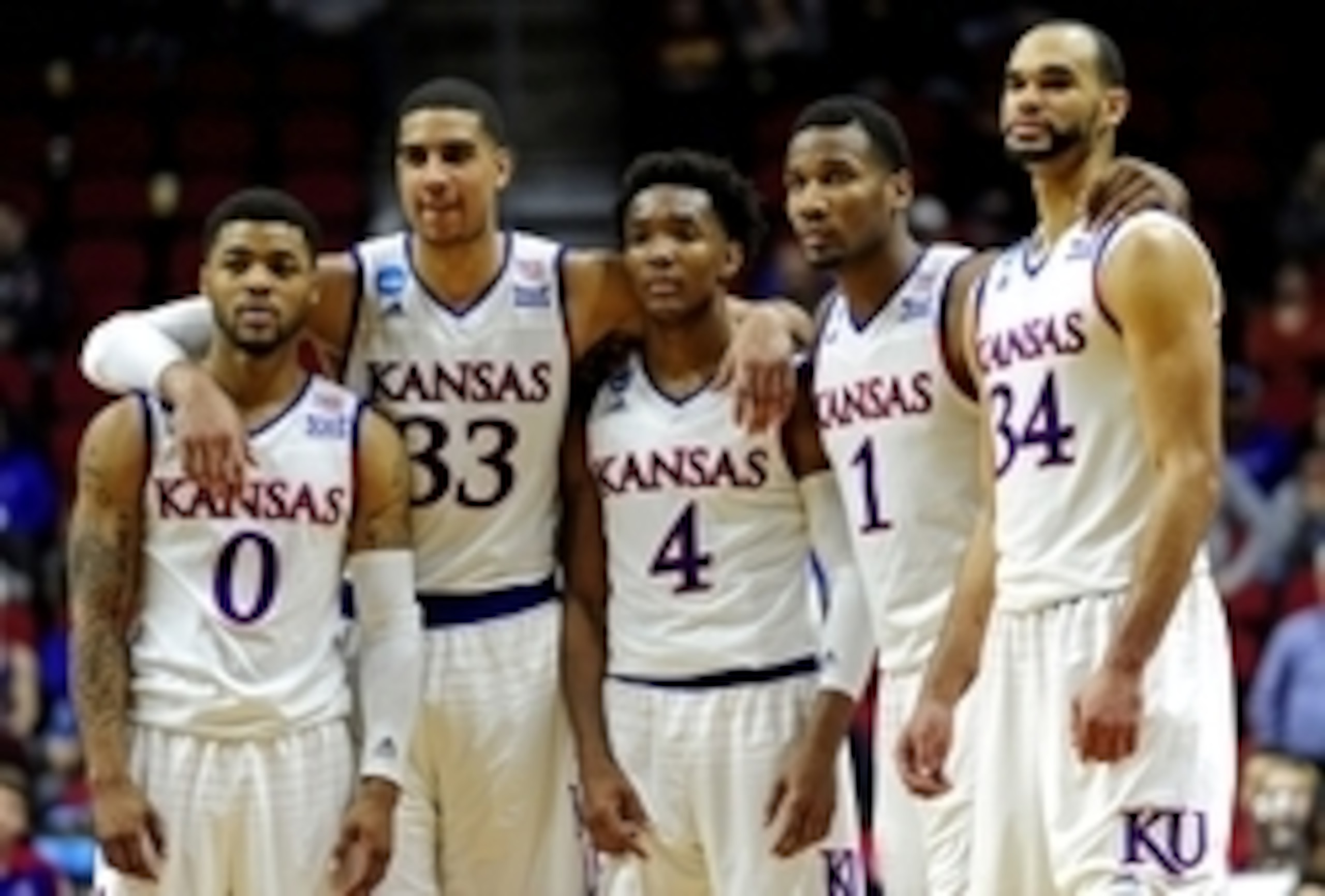
Never mind Sweet 16, because we're more impressed with "straight 16." That's how many consecutive games Kansas has won since losing to Iowa State in late January and making us foolishly wonder if this might finally be the year the Big 12 reign comes to an end.
The Jayhawks didn't have the longest winning streak heading into the tournament—that would belong to Stephen F. Austin (20 straight), which hadn't lost since 2015—but Kansas had the most impressive one, filled with wins over Baylor (two), West Virginia (two), Oklahoma, Kentucky, Iowa State, Texas and Texas Tech.
Speaking of streaks of 16, that was the lesser of Kansas' two unanswered scoring runs in the first half against Connecticut on Saturday night. The Jayhawks utilized runs of 16-0 and 19-0 to jump out to a 20-point halftime lead, from which they coasted into the Sweet 16.
And don't look now, but Wayne Selden is doing things again. The star of the first month of the season was a disaster in February (8.3 PPG, 23.8% 3PT), but he has averaged 19 points per game while shooting 42.9 percent from downtown over his last three games.
These guys were the favorites to win it all well before the tournament began, and there's no good reason for that to change as a result of their early returns.
One 'Not Chalk' Is Looking Good, Too
5 of 16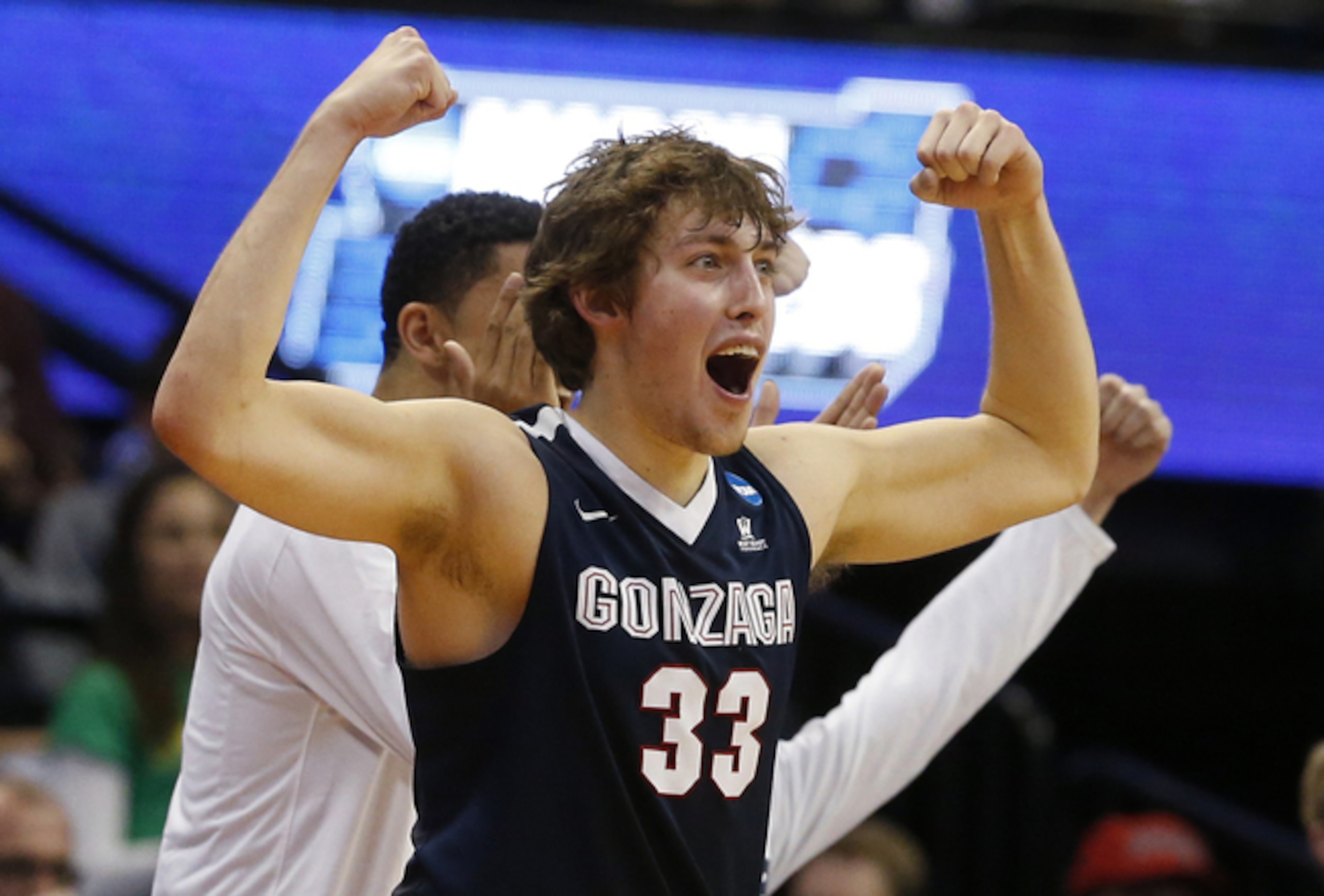
After an upset-filled first two days of the tournament, order was restored Saturday. Among the eight winners were three No. 1 seeds, a No. 3, a No. 5 and a pair of No. 4s.
And, oh yeah, a No. 11 seed (Gonzaga) that knows a thing or two about being a Cinderella story.
As far as seeds were concerned the Bulldogs were underdogs (Vegas disagreed) in the first two rounds of the tournament against Seton Hall and Utah, but they did not get that message, beating the Pirates by 16 before stomping the Utes by a 23-point margin. They may be a No. 11 seed, but they've looked better than most of the No. 1 seeds thus far.
Like Iowa State and Duke, the Zags don't go deep into their bench. Silas Melson gets better than 20 minutes per game as the sixth man, but that's it. The only other reserves to score in the past four games were Dustin Triano and Jack Beach, each of whom made one bucket at the end of a tournament game when head coach Mark Few had the luxury of emptying his bench.
But it's a six-man rotation that can beat any team in the country. Though Gonzaga fell short in early-season games against Texas A&M, Arizona and UCLA, an opponent has not soundly beaten this team. Even on a night where Kyle Wiltjer scored four points on 17 field-goal attempts, the Zags came close to scoring a road win over SMU.
Gonzaga will be a favorite to reach the Elite Eight and might finally be headed to the Final Four for the first time in school history.
Benches Are Overrated
6 of 16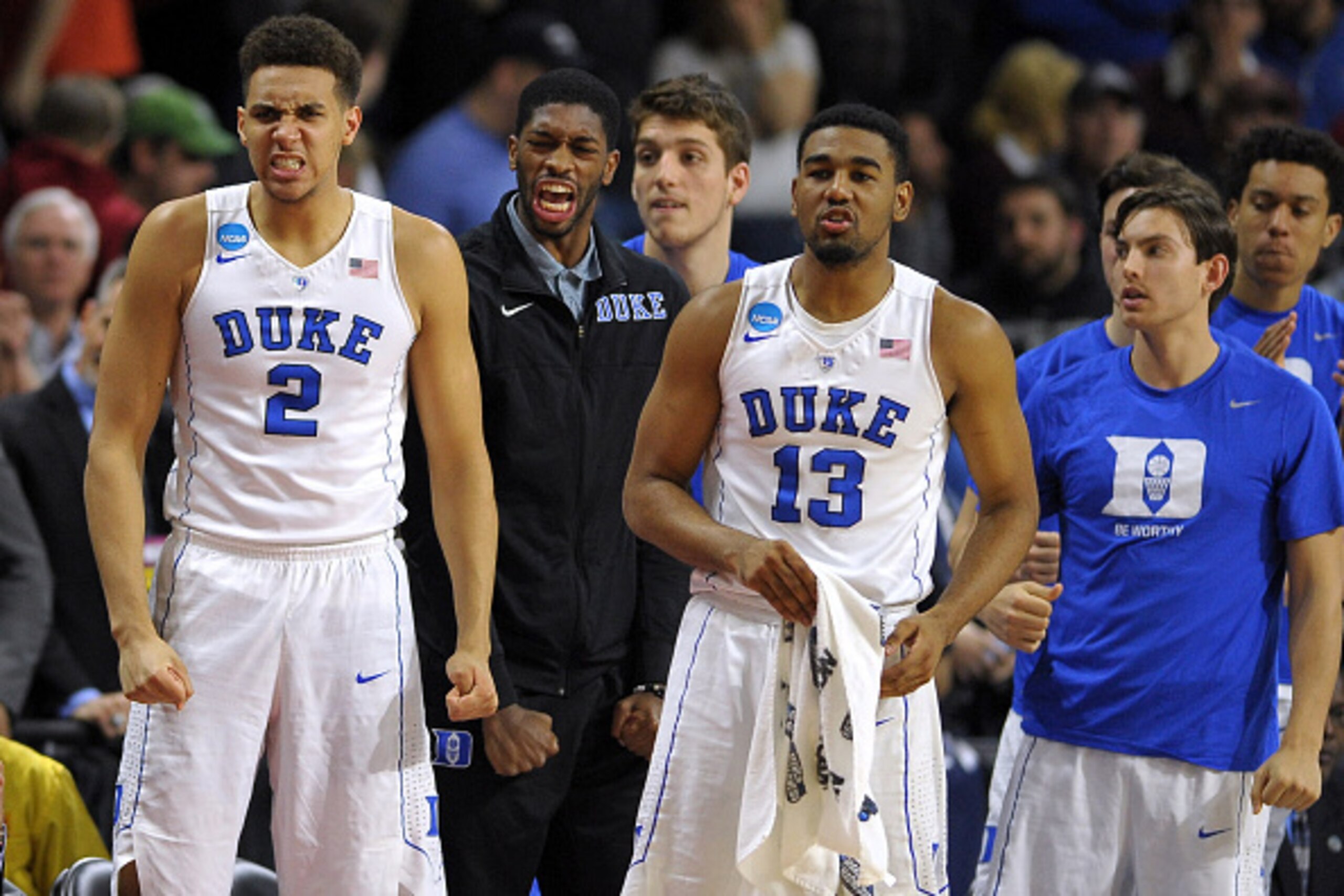
Lack of depth was a major concern for both Duke and Iowa State for most of the season, but it hasn't been a problem yet in the NCAA tournament.
In Thursday's 94-81 win over Iona, the Cyclones got just two points from their bench—a pair of free throws from Deonte Burton midway through the first half. And in Saturday's 71-64 win over Yale, Duke got 94.4 percent of its scoring from three players (Grayson Allen, Brandon Ingram and Luke Kennard).
To be fair, they have had the easiest paths to the Sweet 16, with each facing a No. 13 and No. 12 seed. Duke and Iowa State don't get much out of their reserves, but their early foes weren't bringing McDonald's All-Americans off the bench, either.
Still, did we make too much of the fatigue factor?
By bowing out in the quarterfinals of their respective conference tournaments, the Cyclones and Blue Devils each earned a full week off before their first NCAA tournament game and will each get another prolonged respite before taking the court again. And while foul trouble can rear its ugly head at a moment's notice, Iowa State and Duke respectively rank fifth and 10th in the nation in defensive free-throw rate.
Duke won it all with an eight-man rotation last year.
Is six the new eight?
ACC FTW; Pac-12 Not so Much
7 of 16
If we use regular-season success to determine the nation's best conference, there's almost no argument for any conference other than the Big 12 over the past few years. In sending 70 percent of its teams to the NCAA tournament for three straight seasons, the 10-team conference has proved that bigger isn't necessarily better.
March, however, has belonged to the ACC.
The East Coast power went 17-5 in last year's dance and produced the national champion. Things are going just as swimmingly this season with a combined record of 12-1 and six teams into the Sweet 16—including a pair of No. 1 seeds seated near the top of our odds to reach the Final Four. It's a new NCAA tournament record for teams into the Sweet 16 from one conference, according to Nicole Auerbach of USA Today.
At the opposite end of the spectrum is the Pac-12. As noted back in late February, there was a sizable gap between how the RPI viewed the Conference of Champions and how KenPom saw it. Teams like Utah, Colorado and Oregon State had strong computer resumes, but they hadn't done much to prove they had the strength or talent to make deep tournament runs.
As it turns out, the data whiz was right. Seven Pac-12 teams made the tournament, but five lost in the first round, and Gonzaga annihilated Utah in the round of 32. In total, the Pac-12 is 1-6 against teams seeded No. 13 or better, and No. 1 Oregon needed some late-game heroics just to survive against No. 8 Saint Joseph's.
Most of the losses can be easily written off by a Pac-12 apologetic—California and Oregon State were playing without a primary scorer, Arizona ran into an under-seeded buzzsaw (Wichita State), Colorado didn't get a much better draw (Connecticut) and USC lost by one on a last-second baseline out-of-bounds play.
However, it wasn't a good look for the primary metric we still use to select and seed the field that Oregon was the only Pac-12 team to survive the first weekend.
Villanova and Virginia Are Silencing Critics
8 of 16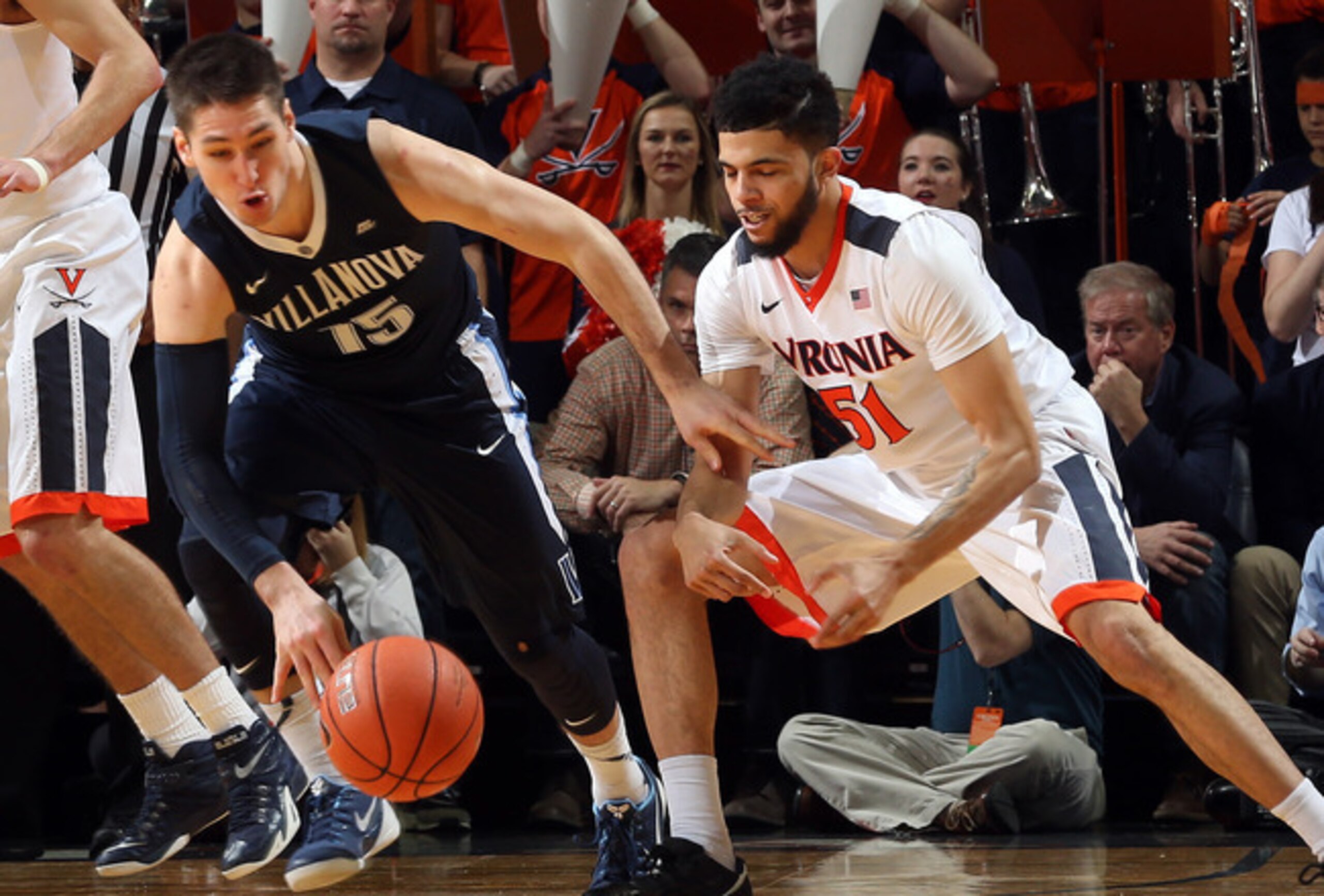
Fool us once, shame on you. Fool us twice, shame on us. And a lot of us weren't willing to let our brackets get busted by Villanova and Virginia for a third straight year.
The irony is our brackets might be garbage because we refused to believe in either team after back-to-back disappointing exits from the 2014 and 2015 NCAA tournaments.
Despite each earning a No. 1 and a No. 2 seed in those tournaments, they went a combined 5-4 and woefully failed to live up to the inherent expectations of their rankings. We spoke with both head coaches in advance of their nonconference showdown in December, and each one acknowledged the recent letdowns but was not concerned about it becoming a prolonged trend.
With good reason, too, because these two teams have been extremely talented for the past three years. And with four combined tournament games completed, it looks like they're finally ready to turn some of that regular-season success into postseason glory.
"This team could win it all, but this team could lose to anybody, too. That's the beauty of this tournament," Villanova head coach Jay Wright told CBS' Allie LaForce after the win over Iowa on Sunday.
The Wildcats still have one heck of an uphill battle against Miami and (likely) Kansas just to reach the Final Four, but the Cavaliers might be the most likely team to reach the Final Four with the No. 2 (Michigan State) and No. 3 (Utah) seeds in their region each out of the picture.
If you had the guts to match these teams up in your national championship game, you just might be handsomely rewarded.
Jim Larranaga's Back Again
9 of 16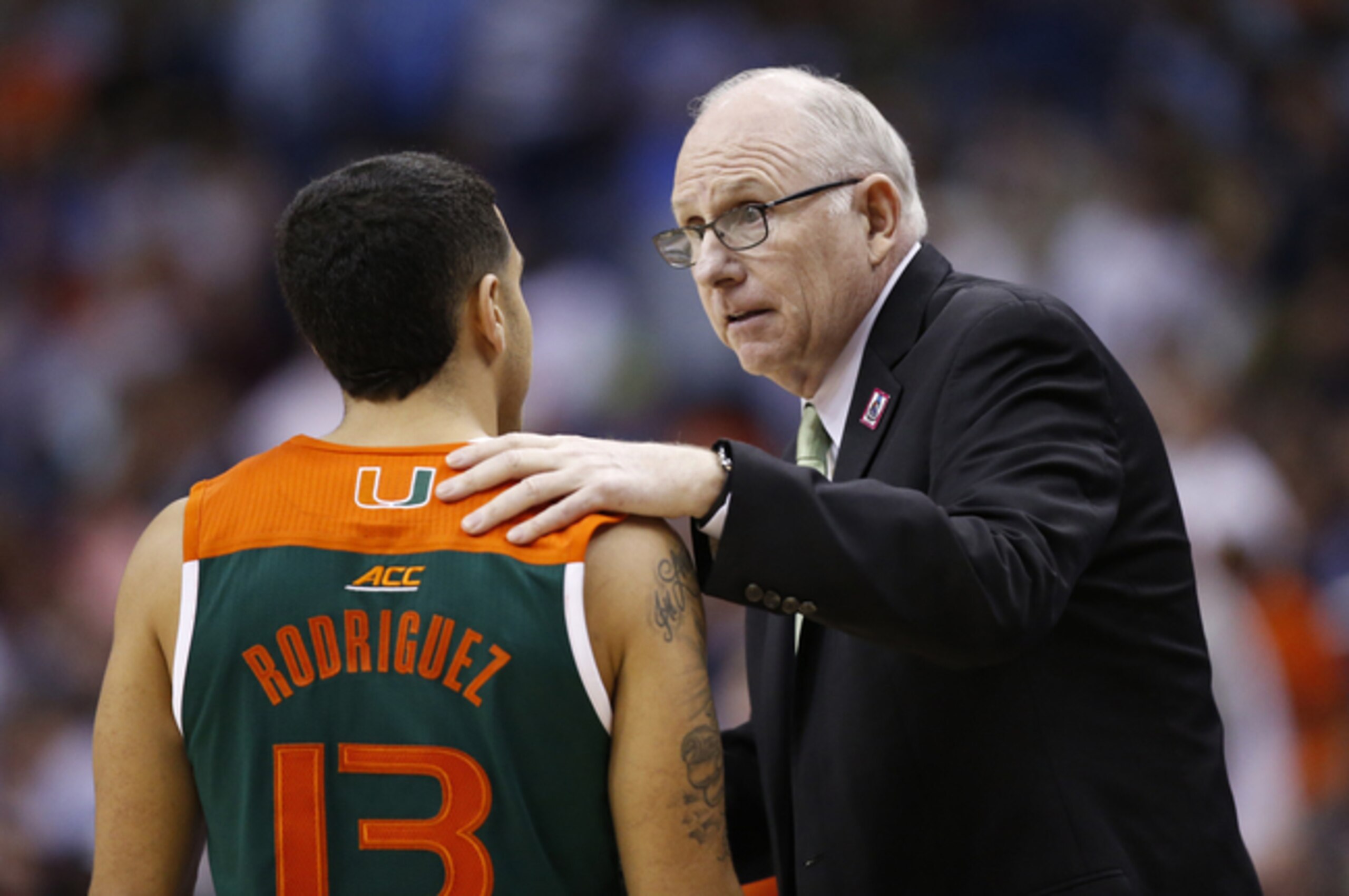
Is there a better coach who gets less national respect than Jim Larranaga?
On the 10th anniversary of George Mason's improbable run to the 2006 Final Four, Larranaga is back in the Sweet 16 for the third time. In just five seasons at Miami, he has led the program to more regional semifinals (two) than all previous Miami coaches combined (one).
Larranaga is now one win away from taking the Hurricanes further into the NCAA tournament than they have ever been.
That's what is perhaps most remarkable about his coaching career. Most of the greats have spent the bulk of their careers at programs where winning is expected. Yet, despite coaching at off-the-radar programs in Bowling Green, George Mason and Miami, Larranaga is currently No. 42 on the all-time wins list and No. 12 among active coaches.
And this is almost unarguably his best team ever assembled.
Led by a pair of fifth-year seniors in the backcourt who are averaging a combined 45 points per tournament game in Angel Rodriguez and Sheldon McClellan, the Hurricanes are the most experienced squad remaining in the field. That veteran poise showed in wins over Buffalo and Wichita State, as they managed to come out on top despite not playing their best for the majority of either game.
Miami spent almost the entire season ranked in the AP Top 25, but not much was said or written about the Canes this year. Between injury (Duke), scandal (Louisville), defying low expectations (Virginia) or trying to live up to high ones (North Carolina), there wasn't much room in the ACC to talk about steady, old Miami.
That doesn't make the Hurricanes any less likely to string together four more wins for a national championship.
Syracuse Has an NIT Resume and a Sweet 16 Banner
10 of 16
When a team does poorly in the NCAA tournament, that doesn't mean it should have been left out. Vice versa, when a team does well in the NCAA tournament, that doesn't validate the bid it received. A team's bid/seed is based on what it did during the season, not what it should do in the tournament.
And just like UCLA one season ago, Syracuse exited Selection Sunday as one of the more curious inclusions before finishing the first Sunday of the tournament as one of 16 teams still standing.
Allow me one final miniature soapbox rant to note that Syracuse had one good week in the Battle 4 Atlantis and had the luxury of playing at Duke when the Blue Devils were at their absolute worst, playing their third game in six days and losing each one of them. That's the extent of the good the Orange did this season, while the bad included going 3-8 in true road games, including a 12-point loss to St. John's.
But that's ancient and irrelevant history, because there won't be an asterisk on their Sweet 16 banner to indicate that bracketologists didn't much care for their resume.
Say what you will about the opponents—Dayton entered the tournament as one of the coldest teams in the field, and Middle Tennessee earned its No. 15 seed before catching fire from everywhere on the court for one game against Michigan State—but few teams have been more dominant through two rounds. The Orange beat the Flyers by 19 and topped Middle Tennessee by a margin of 25 points.
The only other team to win each of its first two games by a margin of at least 17 points was Villanova, and the Wildcats' first half against Iowa was quite possibly the best 20 minutes of basketball any team played this season. Villanova is also shooting 48.9 percent from three-point range, while Syracuse is doing its damage with defense. The Orange held MTSU to 50 points two days after the Blue Raiders dropped 90 on the Spartans.
At least Syracuse didn't advance on a controversial goaltending call in the first round like UCLA did last year. The Orange are straight up taking names out there.
We Could Get a Repeat of 2008
11 of 16
The seeds wouldn't be exactly the same because of the No. 6 Notre Dame-No. 7 Wisconsin game in the East Region, but we could end up with an Elite Eight nearly identical to the one we had in 2008.
If you'll recall, that was the year that all four No. 1 seeds made the Final Four and No. 10 seed Davidson made it to the Elite Eight. In addition to Davidson, the seeds facing the No. 1 teams in the Elite Eight were a No. 2 and a pair of No. 3s. And with either a No. 2 or a No. 3 coming out of the bottom halves of the South and West regions and either a No. 10 or a No. 11 emerging from the Midwest, that would be bizarrely similar.
Of course, that's operating under the foolish assumption that all of the No. 1 seeds will win Thursday or Friday, but don't let what you saw this weekend convince you it's impossible.
No. 1 Oregon barely got by No. 8 Saint Joseph's, and No. 1 Virginia only beat No. 9 Butler by a single-digit margin, but in 2008, No. 1 Memphis and No. 1 UCLA each won their second-round games by just a one-possession margin before absolutely destroying their would-be foes in the Sweet 16 and Elite Eight.
Maybe one or more No. 1 seeds lose in the Sweet 16, but at least they're all there for a change. In five of the past six years, one No. 1 seed failed to reach the second weekend of the tournament (2012 was the one exception).
Fear the Turtle
12 of 16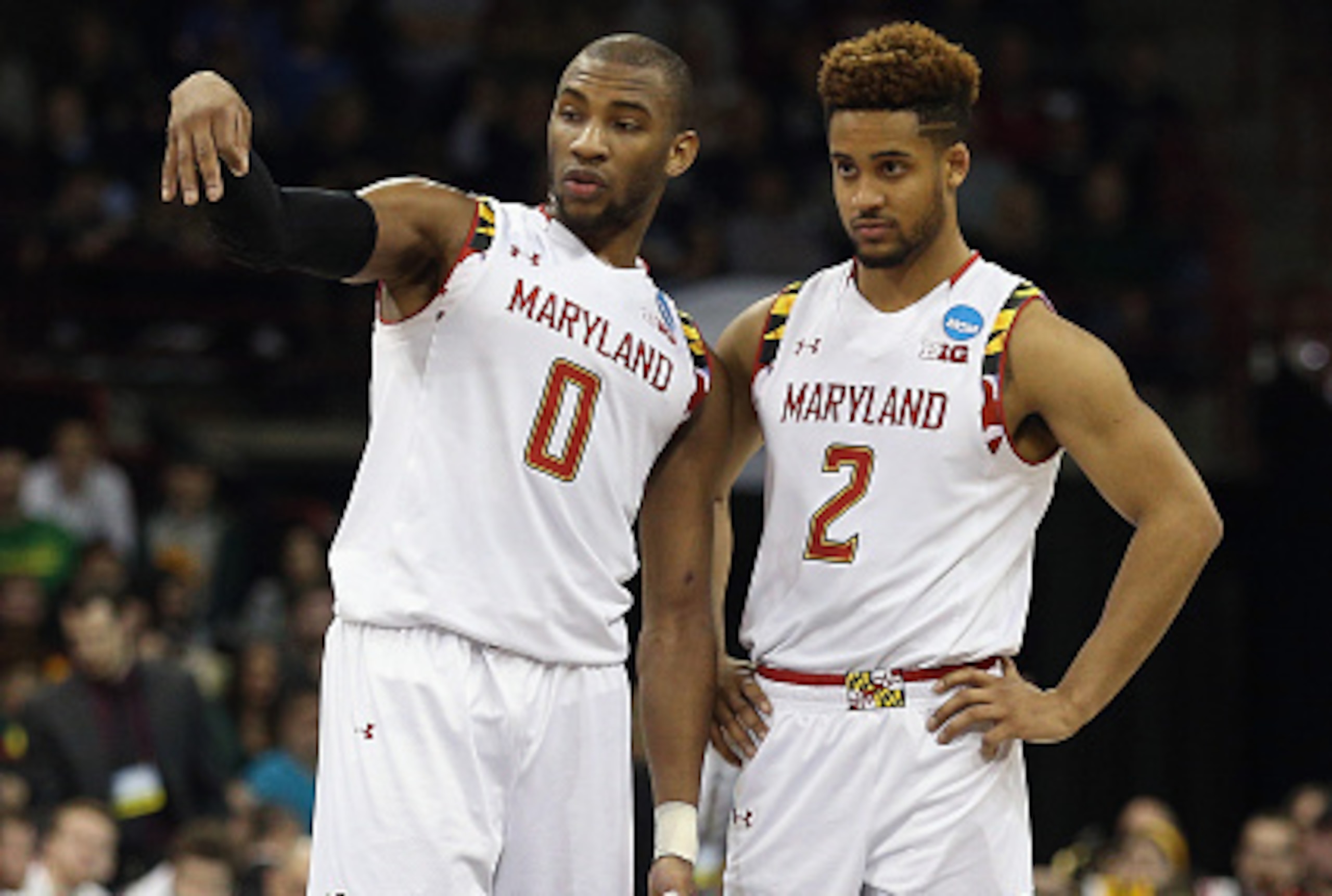
For a team that was never ranked lower than No. 18 in the AP Top 25, Maryland had just about the most disappointing regular season a team could possibly have.
Reid Forgrave of Fox Sports tweeted early in Sunday's game against Hawaii: "Maryland will give LSU & Georgetown a run as this year's most disappointing team if they don't make Sweet 16."
As someone who picked Maryland to win it all before the season began, I'm inclined to agree with that assessment. So much was expected of this team, but it never lived up to that potential and stumbled to the finish line with losses in five of its final eight games before the tournament began.
And yet, here the Terrapins stand, loaded with talent and a mere four wins from glory after playing 33 games with its full complement of players—the one exception being the loss to Minnesota for which Diamond Stone was suspended.
They can win with offense, like they did against South Dakota State. They can win with defense, like they did against Hawaii.
Can they beat an elite team like Kansas, though? Maryland's best win of the season was a home game against Purdue. Its best win away from home came against Wisconsin.
But success in March is all about getting hot at the right time. At the start of the WCC championship game, Gonzaga had not beaten a single RPI top 50 team (Connecticut was outside the top 50 at the time), but the Bulldogs have since beaten Saint Mary's, Seton Hall and Utah.
If the Terrapins are ever going to flip the proverbial switch, now would be the time.
Texas A&M Accomplished Mission Impossible
13 of 16
We've all been conditioned to expect the unexpected in the NCAA tournament, but even a lifetime of March Madness viewing couldn't possibly prepare any of us for what happened at the end of regulation in Texas A&M versus Northern Iowa.
The Panthers led by 12 points with 34 seconds remaining, but after committing four turnovers and a bone-headed foul, they allowed the Aggies to force overtime. If it wasn't the most unbelievable comeback in college basketball history—regular season or otherwise—it's definitely in the top five of that list.
Next time someone who doesn't watch much college basketball asks you why a team is still fouling when down by a dozen points in the final minute, tell that person about this game. Most coaches do call off the dogs at that point, but not with the end of the season on the line.
Northern Iowa again led by a bucket with less than 10 seconds remaining in overtime only to watch Alex Caruso hit a jumper before Paul Jesperson fired up a half-court heave four seconds earlier than necessary.
Once the Aggies took the lead in the second overtime, though, they never gave it back and won 92-88.
Adding to the utter madness of the comeback, Texas A&M's leading scorer had a great big goose egg in the points column until 5:14 remained in regulation, yet Danuel House finished the night with 22 points, as the team scored as many points (46) in the final 16 minutes as it did in the first 34.
Best of luck beating the unbeatable, Oklahoma.
Buddy Hield Is King
14 of 16
Last March, we entered the NCAA tournament with two clear-cut favorites for the Wooden Award: Duke's Jahlil Okafor and Wisconsin's Frank Kaminsky. As luck would have it, they ran into each other in the national championship game with the Wooden Award winner finishing on the wrong side of the scoreboard.
A repeat with Oklahoma's Buddy Hield and Michigan State's Denzel Valentine meeting for the title would have been incredible, but Middle Tennessee had other ideas and knocked the Spartans out in the first round.
Hield, however, is doing his darnedest to shoot Oklahoma to a championship.
The Sooners got more than they bargained for in each of their first two games against Cal State Bakersfield and VCU. With nine minutes remaining against the Roadrunners, Oklahoma led by just six. At the same juncture against the Rams, it was all tied up. Hield scored 32 points to close out those games, while his teammates combined for 14.
Not since Connecticut's Kemba Walker and BYU's Jimmer Fredette in 2011 have we seen a legitimate title contender so hopelessly reliant on one player.
Can you blame the Sooners, though? Hield is shooting 55.9 percent from the field, 45 percent from three and 84.2 percent from the free-throw line in the tourney.
I wrote in early March: "When you have an advantage, you exploit it, and Oklahoma isn't doing that nearly enough. ... Hield should be taking no fewer than 20 shots per game. And if he has a bad night in the tournament, so be it. At least go down with no regrets."
With Hield averaging 31.5 points on 17 shots per game in the tournament, it seems the Sooners have finally seen the light. Ride that thoroughbred as long as you can.
Oregon Is Better Than You Probably Realize
15 of 16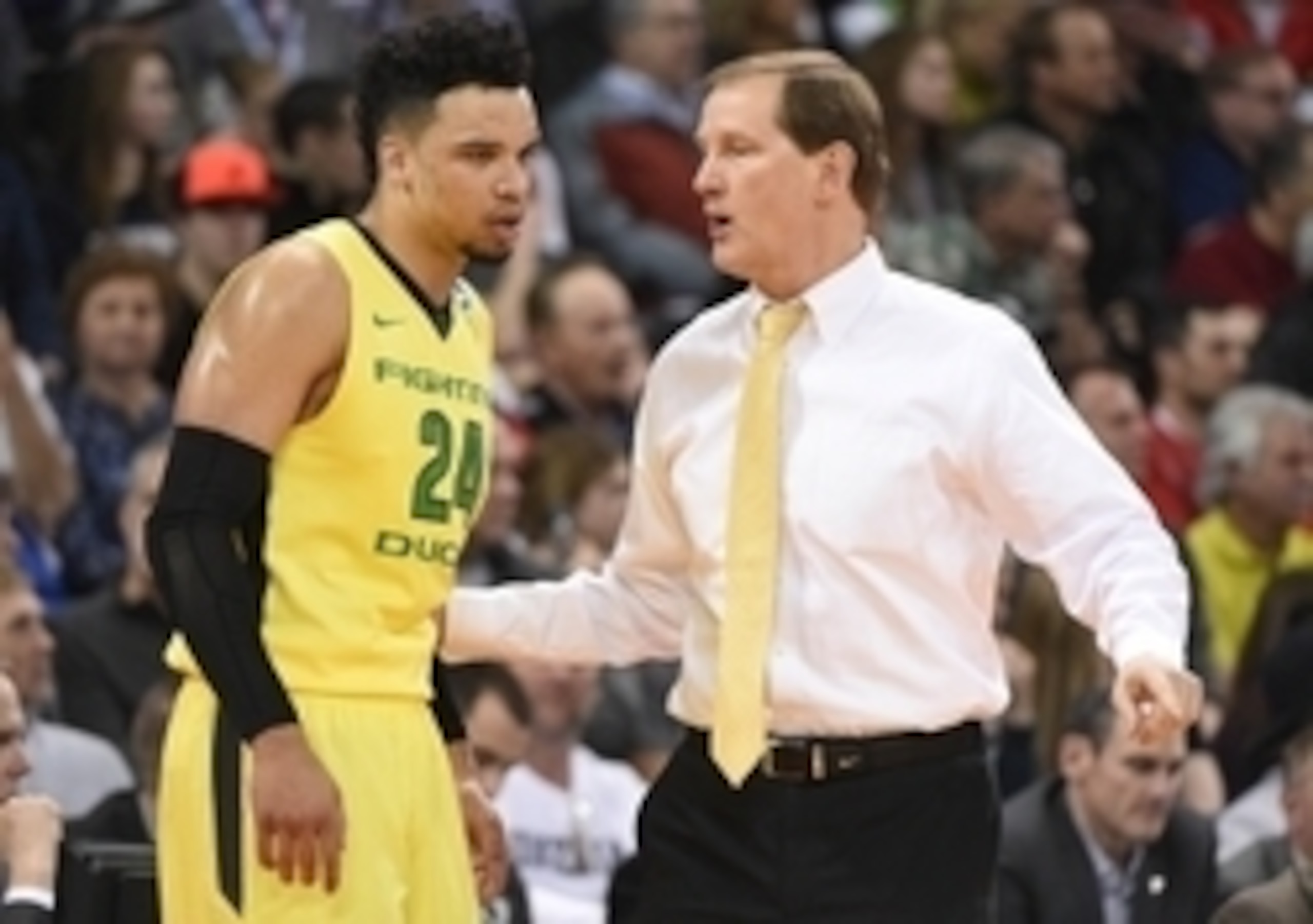
Outside of being asked for Final Four picks, the one constant in my sports radio segments over the past several weeks has been people not appreciating just how good Oregon was this season.
The nail-biter against Saint Joseph's didn't do the Ducks any favors in that regard—nor did the rest of the Pac-12 going a combined 1-6 with just one win over a No. 14 seed—but I still believe this is the best seven-man rotation in the country.
Dillon Brooks should be in the conversation for first-team All-American, and he showed that with 15 second-half points against the Hawks on Sunday night. Outside of maybe Gary Payton II and Thomas Walkup, Chris Boucher is the best two-way player in the country. The dude led the Pac-12 in both block percentage and true shooting percentage while also ranking ninth in offensive and defensive rebounding percentage.
Tyler Dorsey is the best freshman guard in the country not named Jamal Murray. Elgin Cook and Dwayne Benjamin are underappreciated defensive weapons who are fully capable of making a three. Jordan Bell might be the best off-the-bench shot-blocker in the country. And Casey Benson is the glue that brings it all together.
Those aren't household names east of the Rockies, but that will inevitably change to a certain degree if the Ducks are able to take care of business against Duke on Thursday night in a battle between college basketball's first national champion and its most recent one.
And go ahead and start scouting Oregon for next year, because Cook and Benjamin are the only guys who won't be back next year—and they'll even be adding Villanova transfer Dylan Ennis to the mix. Head coach Dana Altman has built something special in Eugene.
Preseason No. 1 Still Standing as a No. 1 (Seed)
16 of 16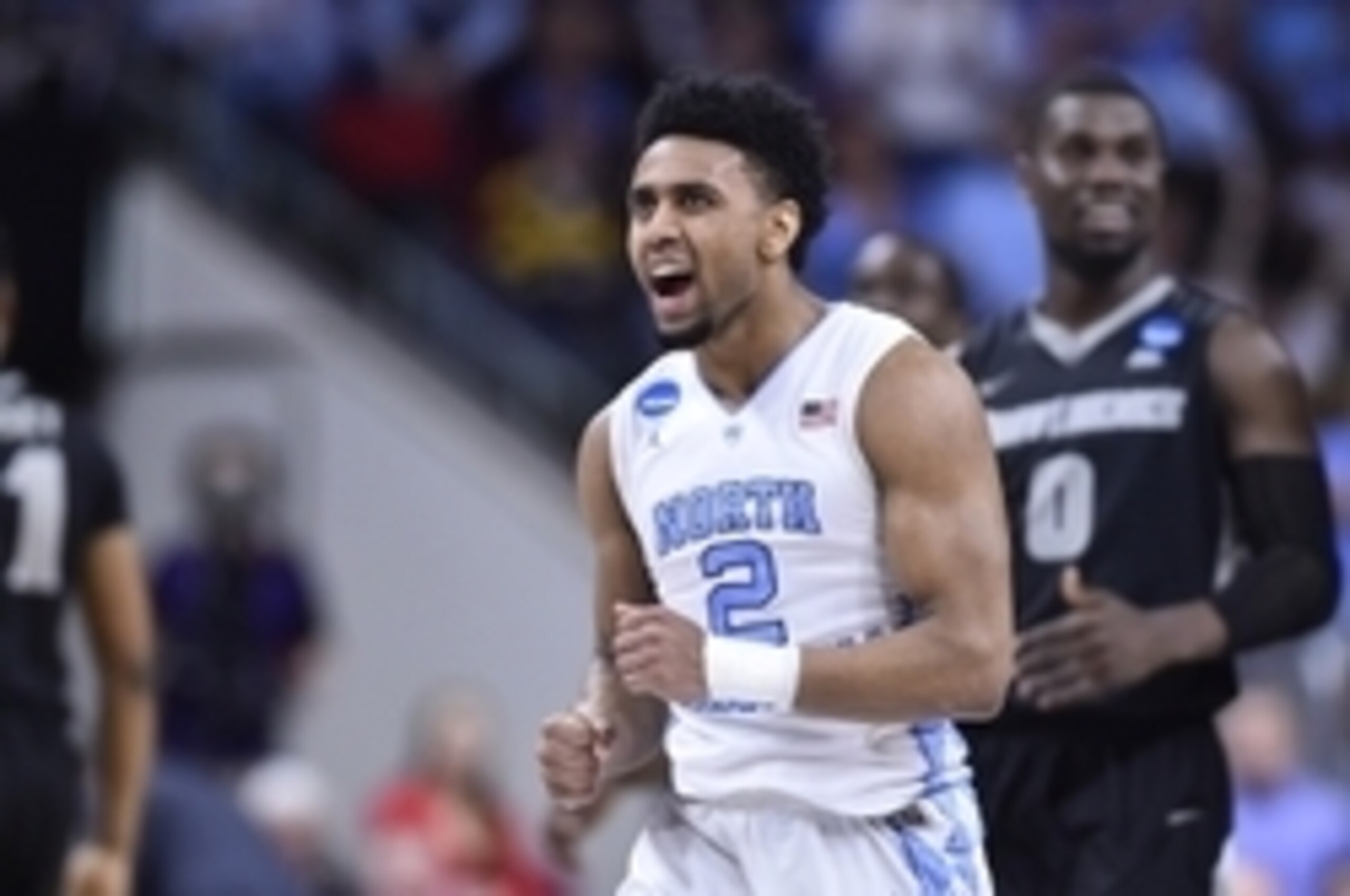
The North Carolina Tar Heels opened the season ranked No. 1 in the AP Top 25 before spending all but one week ranked No. 9 or higher.
They won the ACC regular-season and conference tournament championships, which rarely ever happens for them. In fact, since the days of Michael Jordan in Carolina blue, the only other times North Carolina swept those titles were in 2007 and 2008.
Because of that, they earned a No. 1 seed in the NCAA tournament, which always means a deep run for the Tar Heels.
Though teams like Gonzaga, Villanova, Virginia and Wichita State have let us down in recent years, the Tar Heels haven't. Prior to this year, North Carolina had earned seven No. 1 seeds in the past two decades. They went a combined 30-5 in that position, won two national championships, made five Final Fours and reached the Elite Eight each and every time.
(Good luck, Indiana.)
But what those other teams didn't have hanging over their heads like a tornado cloud was the impending fallout of the Wainstein Report. Remember that thing? It's been about 18 months since word first broke about North Carolina's epidemic of paper classes in African and Afro-American studies, but something has to happen this summer, right?
The additional self-reported violations from mid-August effectively paused the clock until April, and we haven't heard much more than a peep since then. At some point not long after the tournament ends, though, expect to hear something and to see underclassmen like Justin Jackson, Isaiah Hicks, Joel Berry II, Kennedy Meeks and Theo Pinson declare for the NBA draft—especially if the Tar Heels do win the national championship this year.
This will likely be North Carolina's last deep run for a few years.
Will it end in a title?
Kerry Miller covers college basketball for Bleacher Report. You can follow him on Twitter @kerrancejames.

.jpg?w=2560 "Dak to Stroud: Get Some Wins 💯")
.jpg?w=2560 "5 NFL Players Getting Trade Buzz")

.jpg?w=2560 "NFL Won't Fine 'Beverage' Celebrations 🍻")