Houllier's Decision Not to Sign Nicolas Anelka Proved His Undoing at Liverpool
Liverpool have finished second three times in the Premier League era—most recently in 2013/14 under Brendan Rodgers, in 2008/09 under Rafael Benitez, and in 2001/02 under Gerard Houllier.
On each occasion, the respective managers have gone on to fail to build on the second-place finish, ending the following season fifth (2002/03), seventh (2009/10) and sixth (2014/15). Indeed, Benitez was sacked 12 months after almost lifting the elusive Premier League title, while Rodgers lasted just five months longer.
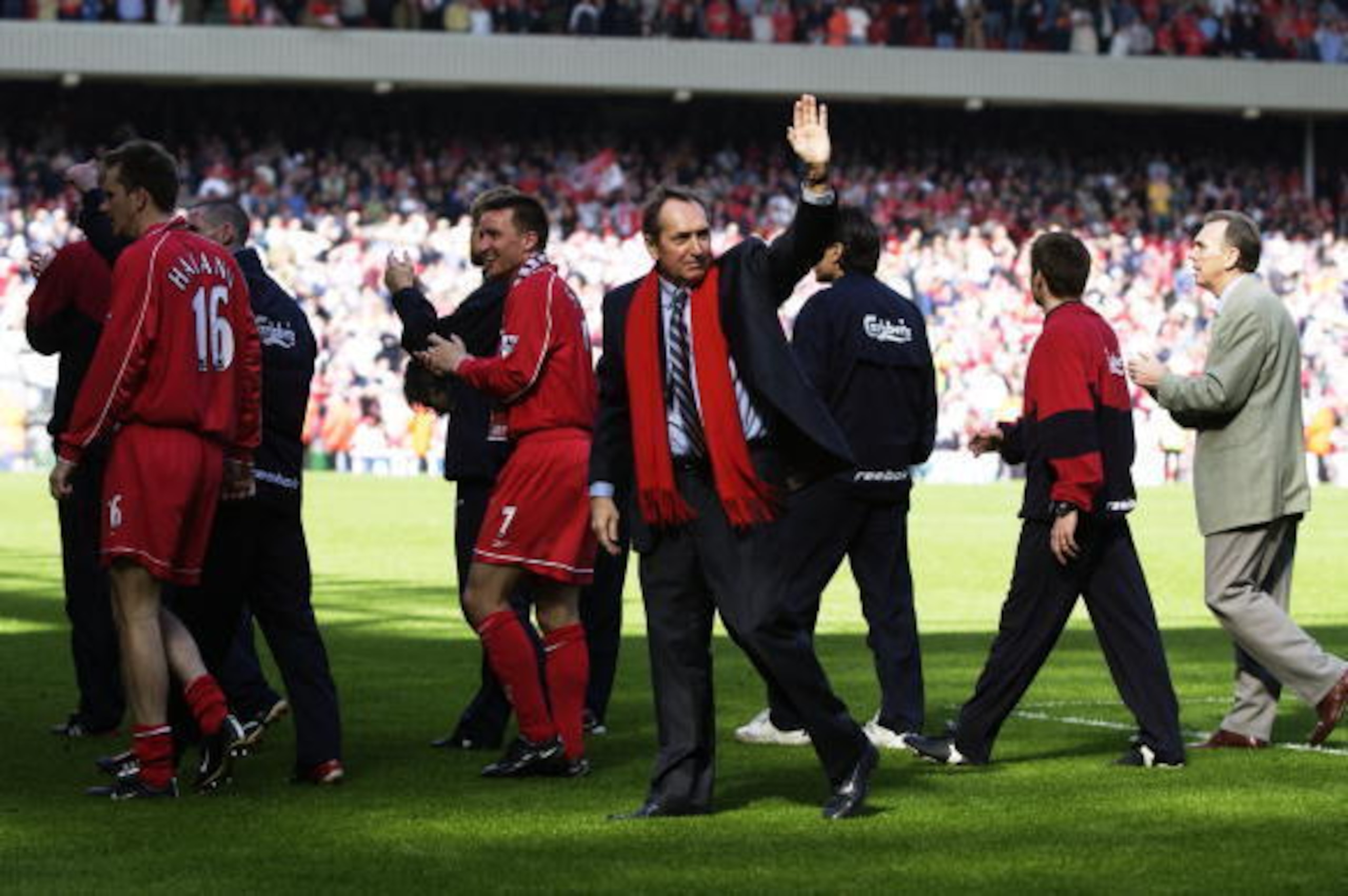
Houllier lasted a full season longer, leaving Liverpool in 2004, having helped the club achieve Champions League qualification by securing fourth place on the final day of the 2003/04 season. The Frenchman left in the most dignified manner—even with a press conference and photoshoot at Anfield as he said goodbye.


The similarities with each of these three is remarkable. Under Houllier, the Reds' end-of-season points total went from 80 to 64, Benitez went from 86 to 63 and Rodgers went from 84 to 62.
The biggest similarity, though, is how each respective manager failed to acquire the players needed to take the club that one step further, with each having unmitigated failures in the transfer market the summer following their second-place finish.
Rodgers, of course, lost Luis Suarez and signed Mario Balotelli, among others. Benitez's headline was the sale of Xabi Alonso and signing of Alberto Aquilani.
For Houllier, it was the decision not to make Nicolas Anelka's move to Merseyside permanent, and instead opt for El Hadji Diouf as the club's new No. 9.
It was nightmare summer for Houllier, who also signed Bruno Cheyrou and Salif Diao, allowing Jari Litmanen and Nicky Barmby to leave. There has never been a more disastrous transfer window for Liverpool.
Having won an unprecedented cup treble the season before, Liverpool's squad for the 2001/02 season was packed full of solid players with a good mix of youth and experience.
Houllier had at his disposal the following attackers: Michael Owen, Robbie Fowler, Emile Heskey, Jari Litmanen and Patrik Berger. In midfield there was a young Steven Gerrard, along with the experienced Dietmar Hamann, Gary McAllister, Jamie Redknapp and Danny Murphy. The defence featured Sami Hyypia, Jamie Carragher, John Arne Riise, Stephane Henchoz and Markus Babbel. This was a supremely talented squad with plenty of depth and variety.
Alas, with fan favourite Robbie Fowler controversially sold to Leeds United in November after a training ground row with assistant manager Phil Thompson, Houllier signed Anelka on loan from Paris St. Germain.

Anelka ensured Houllier had four quality centre-forwards to choose from, as the Reds pushed for trophies at home and in Europe. Indeed, Houllier—who had missed five months of the season after having taken ill at half-time of the Reds' match against Leeds that October and undergoing heart surgery—said ahead of their Champions League quarter-final with Bayer Leverkusen that his side were "10 games from greatness."
That match was to be the undoing of his season, with the substitution of Hamann for Vladimir Smicer with a half-hour to go proving pivotal. The Reds were 2-1 ahead on aggregate, with an away goal. A Michael Ballack-inspired Leverkusen scored three, with Litmanen adding another for Liverpool, to progress 4-3 on aggregate. A Champions League semi-final showdown against Manchester United had been somehow thrown away.
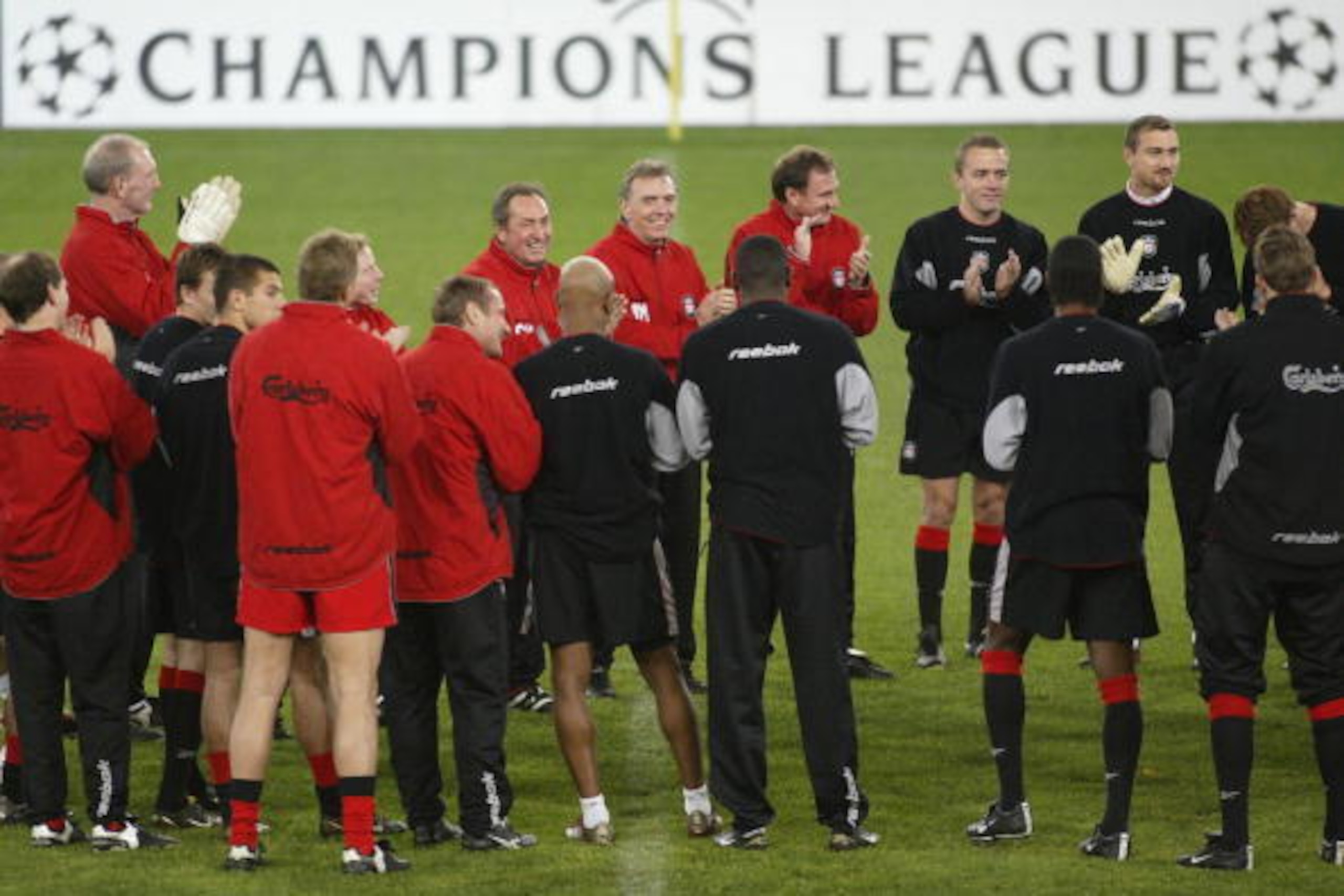
"We were six minutes from the semi-final of the European Cup, where we would have expected to meet Manchester United—a team who in our last six games we have drawn with once and beaten five times," said Houllier after.
Defeat at Tottenham three games from the end of the season then saw Liverpool and Houllier's title dream fade as Arsenal won their games in hand to overhaul the Merseysiders.
The final day saw Houllier's side emphatically beat Ipswich Town 5-0 at Anfield, with Anelka adding the fifth. They finished the campaign seven points behind Arsene Wenger's title winners.
While there was a huge feeling of what might have been, there was a sense of optimism around Liverpool still. The club had won five pieces of silverware the season before and gone on to achieve their best Premier League finish—beating their previous best points total by six. Owen and Gerrard were flourishing. Next step the title, surely.
Anelka > Diouf
If that substitution of Hamann for Smicer was to be Houllier's biggest mistake on the pitch, the decision not to make Anelka's move permanent and instead sign Diouf was to be his biggest mistake off the pitch.
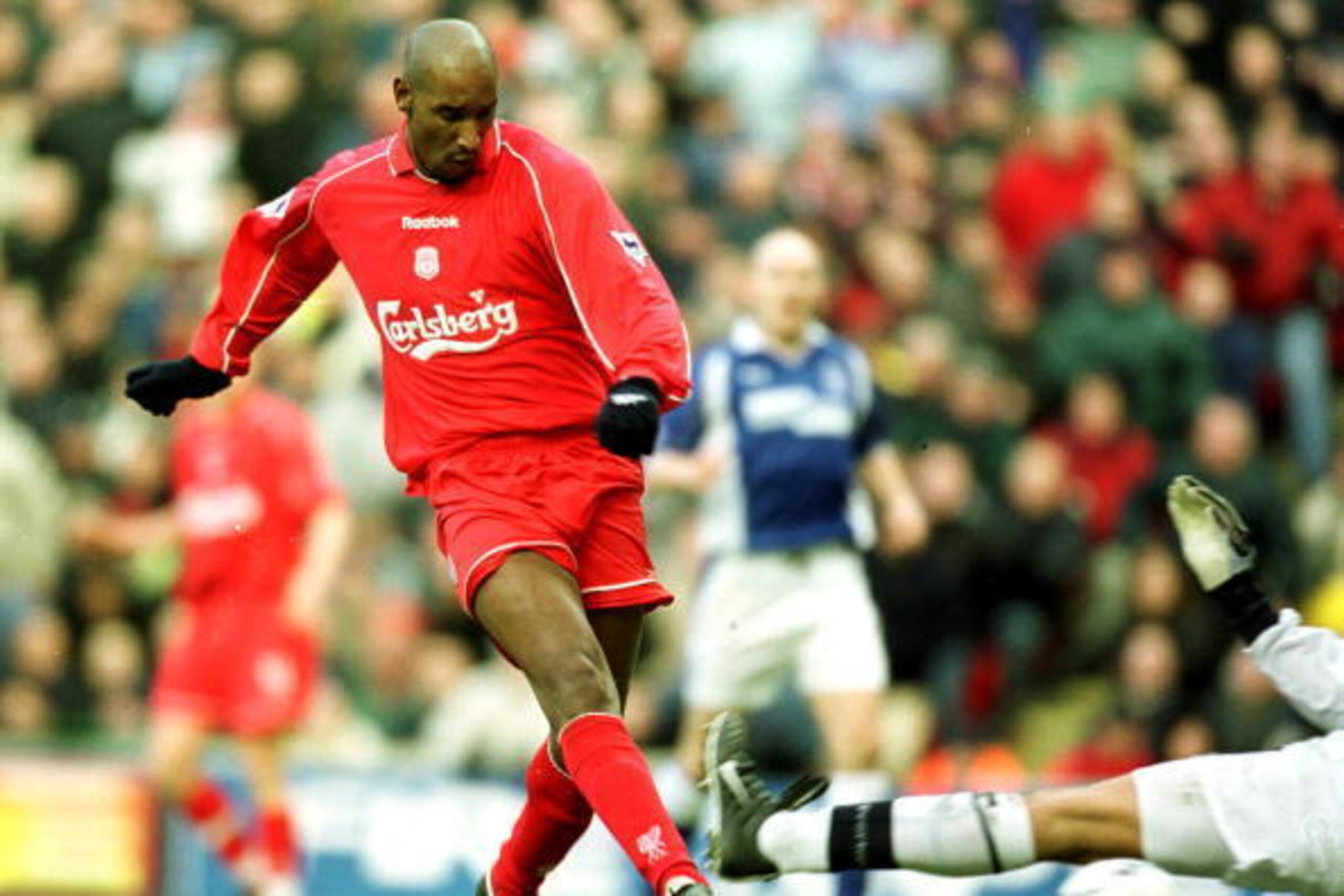
The former Arsenal forward hadn't been prolific, but he was a proven goalscorer, aged 24, who had attributes that were suited to the Premier League. He'd started 15 games in total for the Reds, with seven more from the bench, scoring five times. Two of those goals arrived in the final two games of the season, perhaps providing a fresh reason to make the deal permanent.
Anelka looked at home at Liverpool, but Houllier had other ideas, with the player himself later claiming, "I did not sign for Liverpool because Gerard Houllier did not like my personality."
Instead, Houllier had a deal for Lens' Diouf secured before the Senegalese forward impressed at the World Cup. Playing a key role for Senegal as they reached the quarter-finals, and being named in the World Cup All-Star team, perhaps Liverpool would have a bargain £10 million signing instead of Anelka.
Two goals for Diouf on his Anfield debut against Southampton and Liverpool fans weren't thinking of Anelka—who had moved to Manchester City for a club-record £13 million.
That opening double though was as good as it got for Diouf in a Liverpool shirt. His next goal didn't arrive until two months later, again against Southampton (in the League Cup), and he ended the season with six goals and a tarnished reputation after he spat at a Celtic fan during a UEFA Cup game in March 2003.
The following season he made 33 appearances, failing to score in any.
Meanwhile, Anelka scored 37 goals for City in the two seasons Diouf was at Liverpool.
Providing insight into Houllier's decision to sign Diouf instead of Anelka, the Independent's Ian Herbert wrote:
"Many at Liverpool feel Houllier returned too early after heart surgery and did not investigate the big claims about the player being made by Patrice Bergues, his former assistant, who was managing the striker at Lens. ...
If Houllier had only inquired, he would have found that Diouf was already a liability at Lens. There had been spitting incidents there before he left for Merseyside.
"
Liverpool ended the season fifth, taking a huge backwards step after the two previous campaigns' progress. The standard of football was poor, Owen and Gerrard carried the team, Heskey no longer scored goals, Diouf courted controversy more and Houllier made error after error tactically.

Perhaps things would have been different had Houllier gone with his compatriot Anelka. His pace alongside Owen would have terrorised Premier League defences, with Gerrard supplying the ammunition from midfield.
Diouf was eventually loaned to Bolton Wanderers, but controversy followed him wherever he went—he was charged by the police for spitting at an 11-year-old Middlesbrough fan, was accused of racially abusing an Everton ball boy, was accused of taunting a player with a broken leg, had a touchline altercation with Neil Lennon while at Glasgow Rangers and was arrested following reports of a nightclub brawl in Manchester in 2012. He even went on to accuse Steven Gerrard of racism.
For Houllier and Liverpool, instead of signing players to turn them into title winners, they signed one player who put them in the headlines for all the wrong reasons.
Who knows how things may have turned out had Anelka been the man adorning Liverpool's No. 9 shirt instead of Diouf. We can be pretty certain it would have been far more successful for all involved.

.jpg?w=2560 "Dak to Stroud: Get Some Wins 💯")
.jpg?w=2560 "5 NFL Players Getting Trade Buzz")