

Projecting MLB's Most Dominant Offenses in 2020
The most dominant offense in Major League Baseball this season will probably belong to the Toronto Blue Jays. After what they did last year, call it a hunch.
But in the year 2020? Now that's a good question.
Let's answer it like we did with starting rotations last week and round up a list of 10 teams. They were chosen based on the established hitters they have locked up through 2020, as well as what they have down on the farm and/or any future spending flexibility.
Because 2020 is a long time from now, the same caveat from last week's projection of the top rotations applies: there's a limit to how much we can predict. Rather than predict each team's 2020 starting lineup down to the last player, we'll merely be providing outlines for what could be there.
There's also a second caveat this time. The Colorado Rockies may seem like an obvious choice, but you won't find them here. We have to account for the fact that Rockies offenses are too spoiled by Coors Field, and also for the fact that the organization's future is currently about as up in the air as its home ballpark.
As for how the rankings work, we're looking to make our way toward the team that has the best chance of having a lineup loaded with in-their-prime stars come 2020. So, let's get to it.
10. Pittsburgh Pirates
1 of 10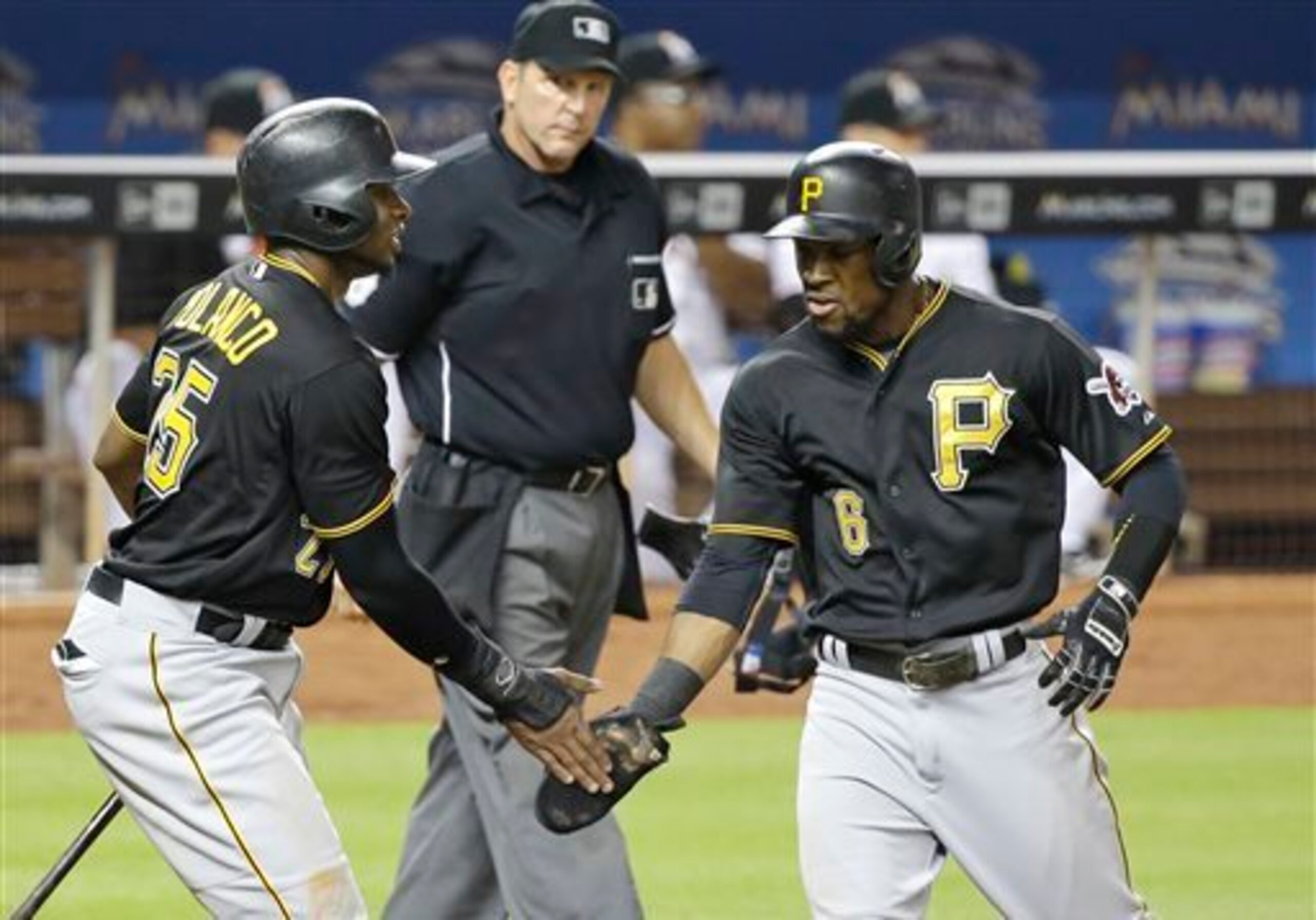
The Pirates' two best hitters in 2015 were Andrew McCutchen and Jung Ho Kang, and both are likely to be gone by 2020. McCutchen is only controlled through 2018; Kang through 2019.
The Pirates will be saying "ouch" when they leave, but it won't be all bad. At least they control Starling Marte, Gregory Polanco and Josh Harrison through 2020, and the oldest will be Harrison at 32.
Between now and then, they could develop into a solid offensive trio. Marte's offense has been quite good over the last three years. Polanco is a former top prospect who seemed to figure things out in the second half of 2015. Likewise, Harrison shook off a slow start to turn back into the wrecking ball he was in 2014.
As far as building around this trio, the Pirates are a small-market team that likely won't be competing for any big-name free agents. It's a good thing, then, that their farm system is stacked.
Keith Law of ESPN.com ranks it as the No. 8 system in baseball, and its position player depth is arguably its defining characteristic. Law and MLB.com see outfielder Austin Meadows and first baseman Josh Bell as top-100 talents who could debut in 2016, and eventually be followed by Reese McGuire (C), Ke'Bryan Hayes (3B), Harold Ramirez (OF), Alen Hanson (2B) and Kevin Newman (SS) in the coming years.
And though PNC Park's huge dimensions make for a built-in disadvantage, the Pirates showed in 2015 that's not necessarily a deal-breaker. They had one of the National League's top run-scoring offenses, a trick they accomplished with their sheer depth.
Between the talent they already have in place and all the additional talent waiting in the wings, the Pirates should be able to repeat that formula come 2020.
9. San Francisco Giants
2 of 10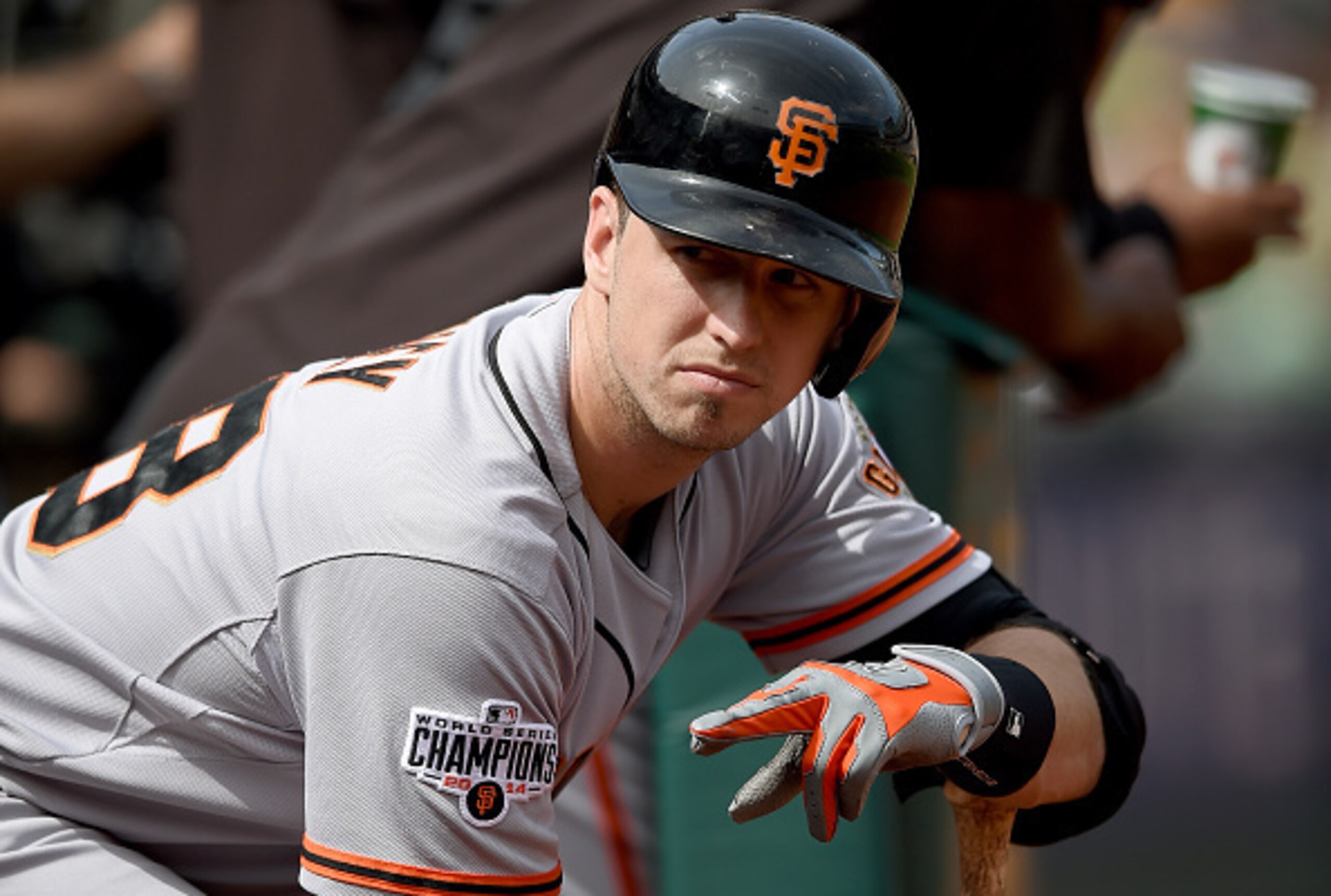
We're used to looking at the Giants' arms first and their bats second, but they flipped the script in 2015. Their pitching largely struggled, and their offense posted the NL's fourth-best OPS.
That had a lot to do with Buster Posey continuing to be his excellent self and an infield that featured above-average hitters across the board in Brandon Belt, Joe Panik, Matt Duffy and Brandon Crawford. And with only Belt not locked up through 2020, the core of the Giants' offense is sticking around for a while.
Rather than let him hit free agency after 2017, the Giants could always extend Belt. But they'd arguably be better served letting him walk and transitioning Posey into a full-time role at first base. With his age-30 season now just a year away, it is indeed time for the Giants to take that idea seriously.
Besides which, passing on an extension for Belt could pay off the following winter.
Bryce Harper, Josh Donaldson, Manny Machado, Andrew McCutchen, A.J. Pollock and quite a few others are slated for free agency after 2018. With only $83 million in guaranteed dollars on their books for a 2019 payroll that could easily exceed $180 million, that could be the Giants' cue to write some big checks. If Johnny Cueto opts out after his deal after 2017, that'll be another $21.8 million off the club's books.
And don't count out the Giants also producing some gems from their farm system. Though this is the sixth straight year it's been in the bottom half of Baseball America's rankings, players like Panik, Crawford and Duffy highlight the club's knack for turning unremarkable bats into impact bats.
If the Giants keep that up, their 2020 lineup should feature a delightful mix of established veterans, store-bought talent and homegrown youths. You know, sort of like what they have now.
8. Minnesota Twins
3 of 10
If the Twins lineup isn't on your radar for 2016, it should be. FanGraphs projects them to score as many runs as the New York Yankees.
And in the long run, that could be just a warm-up for 2020.
The most exciting aspect of Minnesota's current lineup is its duo off 22-year-olds: center fielder Byron Buxton and right fielder Miguel Sano. Sano teased with a .916 OPS and 18 homers in just half a season last year that his thunderous bat is fit for the majors. Buxton is a legit five-tool prospect who's widely seen as the American League's top prospect.
The two of them could form one of the top offensive tandems in the AL as soon as this season, and they'll still be in their primes when 2020 rolls around. And they won't be alone. Eddie Rosario and his solid mix of power and speed will also still be around in 2020. Byung Ho Park could be as well, and he could still be mashing dingers if the power he showed in Korea translates to the majors.
The Twins also figure to produce even more talent from within in the coming seasons. Law rates their farm system as the third-best in baseball, with outfielder Max Kepler and infielders Jorge Polanco and Nick Gordon giving the club three more top-100 position player prospects after Buxton.
And with a grand total of $500,000 in salary commitments for 2020, the Twins may also be able to spend some money in the future. While they'll surely need to commit a significant amount of payroll space to their own in-house stars, there could be enough left over for additional bats from outside.
So after you put the Twins lineup on your radar, keep it there. It's a powerhouse in the making.

.jpg?w=2560 "MLB playoffs")

7. Los Angeles Dodgers
4 of 10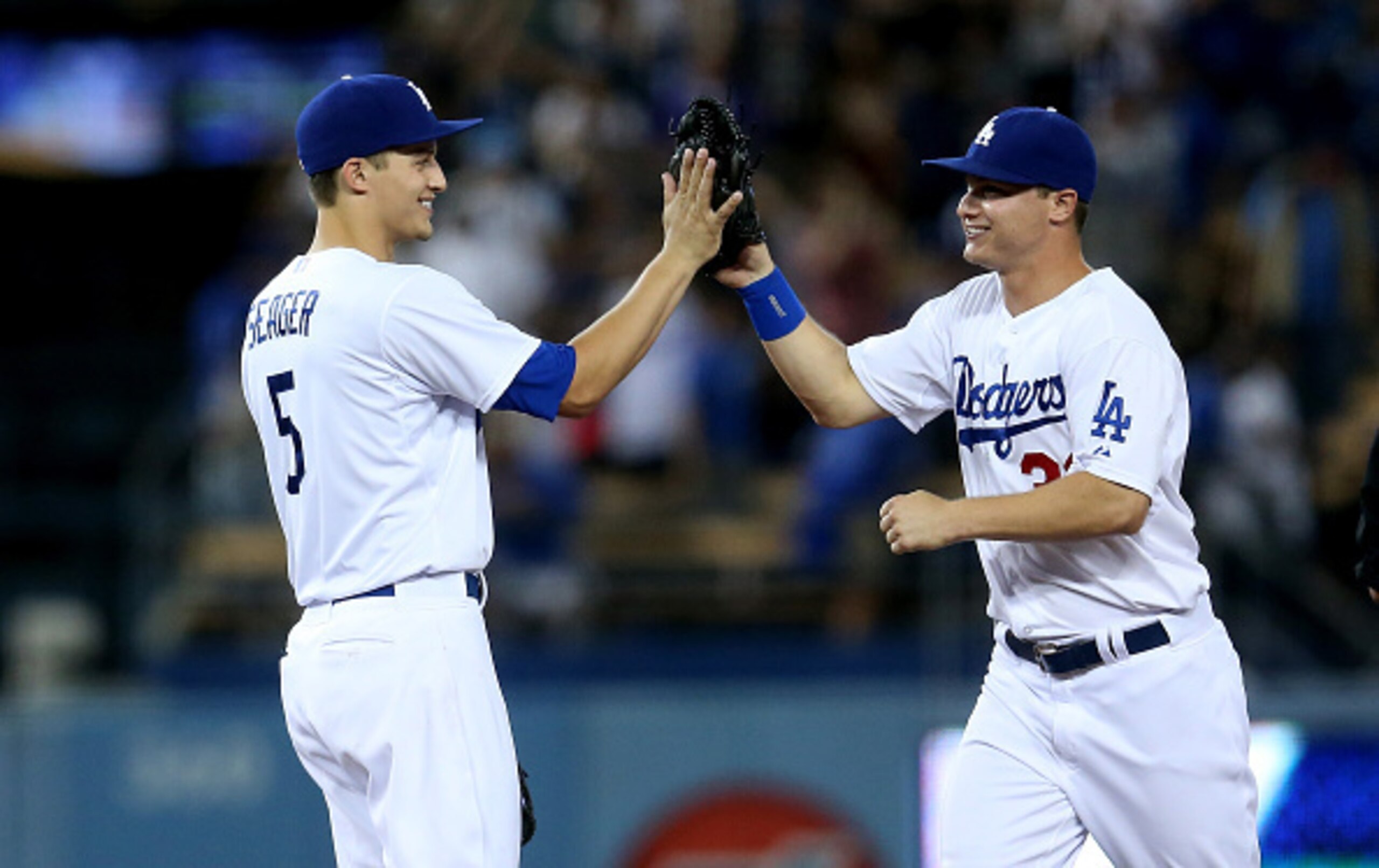
The Dodgers lineup will be changing a lot in coming years, but one constant should be one of the sport's most promising young tandems.
Center fielder Joc Pederson, who is going into his age-24 season off a rookie campaign in which he mashed 26 home runs, constitutes one half. The other half is 21-year-old shortstop Corey Seager, who Dodgers first baseman Adrian Gonzalez knew was an elite talent before everyone else did.
“We were talking about prospects," Gonzalez told Doug Padilla of ESPN.com, recalling a 2015 conversation with Rockies first base coach Eric Young, "and I told him that [Seager] was a special kid, that he’s a kid that I could see being a Hall of Famer, and that was before anybody put him as a No. 1 prospect."
Building around Pederson and Seager won't be as simple as the Dodgers promoting more impact talent from within. Baseball America may rate their farm system as baseball's best, but it's almost all pitching depth after Seager. Additional bats may have to come from outside the organization.
That may not be a problem, though. Clayton Kershaw's $215 million megadeal is the only expensive contract the Dodgers have on their hands past 2018, and that could change if he exercises his opt-out. That would take $34.6 million off the club's books for 2019.
Either way, the team with the deepest pockets in baseball will be there to pounce on Harper, Donaldson, Machado, McCutchen, Pollock or whoever else it may desire. That's a scary thought, and there could even be some money left over for Jose Abreu or Paul Goldschmidt the following winter.
It's admittedly difficult to draw a clear picture of the Dodgers' 2020 lineup. But since it could feature Seager, Pederson and some of the best hitting stars money can buy, it should be something to behold.
6. Texas Rangers
5 of 10
In 2020, the Rangers lineup is probably going to look a lot like it does right now.
That wouldn't seem to be a bad thing, as the Rangers used a well-balanced attack to finish third in the American League in runs last season. Prince Fielder, Shin-Soo Choo, Elvis Andrus, Rougned Odor and Delino DeShields all did their part, and the Rangers control all of them through 2020.
And though Andrus will be past 30 while Fielder (36) and Choo (37) will be ancient by then, Odor and DeShields should still be a pesky top-of-the-order tandem. That'll help the Rangers downplay the geezer-y corners of their lineup, and Odor and DeShields shouldn't have to do that all on their own.
Baseball America sees the Rangers as having the No. 7 system in baseball, and their three best prospects happen to be position players: third baseman Joey Gallo and outfielders Nomar Mazara and Lewis Brinson. They also happen to be really good, as all three check in among MLB.com's top 20.
To boot, they constitute a well-rounded trio. Gallo's claim to fame is 80-grade power. Mazara should hit for both average and power. By MLB.com's reckoning, Brinson has enough power and speed to be a 30-30 player. Those have become a rare breed, you know.
What complicates matters somewhat is that the Rangers may not be able to participate in the huge 2018-19 free-agent class. Between Fielder, Choo, Andrus and Cole Hamels, they could have $74 million tied up in four players in 2019.
But if need be, the Rangers could open their spending window again the following winter. Hamels will be off their hands, and they'll be one step closer to parting with Fielder and Choo after 2021. They could have enough to buy one impact bat. And by then, that's all their lineup could need.
5. Houston Astros
6 of 10
If nothing else, the Astros' 2020 lineup will have Carlos Correa. After he OPS'd .857 with 22 homers and 14 steals in only 99 games as a 20-year-old rookie in 2015, it's impossible not to leak a bit of drool thinking about what he could do as a 25-year-old.
“I don’t put limitations on him, in terms of what’s possible,” Astros manager A.J. Hinch told Ted Berg of USA Today. “He has got a lot of talent. He has good makeup. He has tremendous drive. I think he can be as good as anyone expects.”
Not to be forgotten, right fielder George Springer is a pretty good combination of power and speed in his own right. He'll also still be around in 2020, at which point he should still be in his prime at the age of 30.
Other notables from Houston's present-day offense—which posted the AL's second-best OPS in 2015—aren't controlled as far as 2020. Carlos Gomez, Colby Rasmus and Jason Castro are due for free agency at the end of 2016. Jose Altuve is only controlled as far as 2019.
But as more established veterans leave, the more money is going to come off Houston's hands. As it is, they have only $500,000 in guaranteed dollars on their books for 2019. Between that and their healthy market size, they're a good candidate to get involved in the 2018-19 free-agent frenzy.
There's also more talent where Correa and Springer came from. Baseball America rates Houston's farm system as the No. 2 system in baseball, and there are four impact bats at the forefront of it: first baseman A.J. Reed, infielder Alex Bregman and outfielders Kyle Tucker and Daz Cameron.
The way their stars are aligned, it'll be an upset if Houston's lineup isn't loaded from top to bottom in 2020.
4. Philadelphia Phillies
7 of 10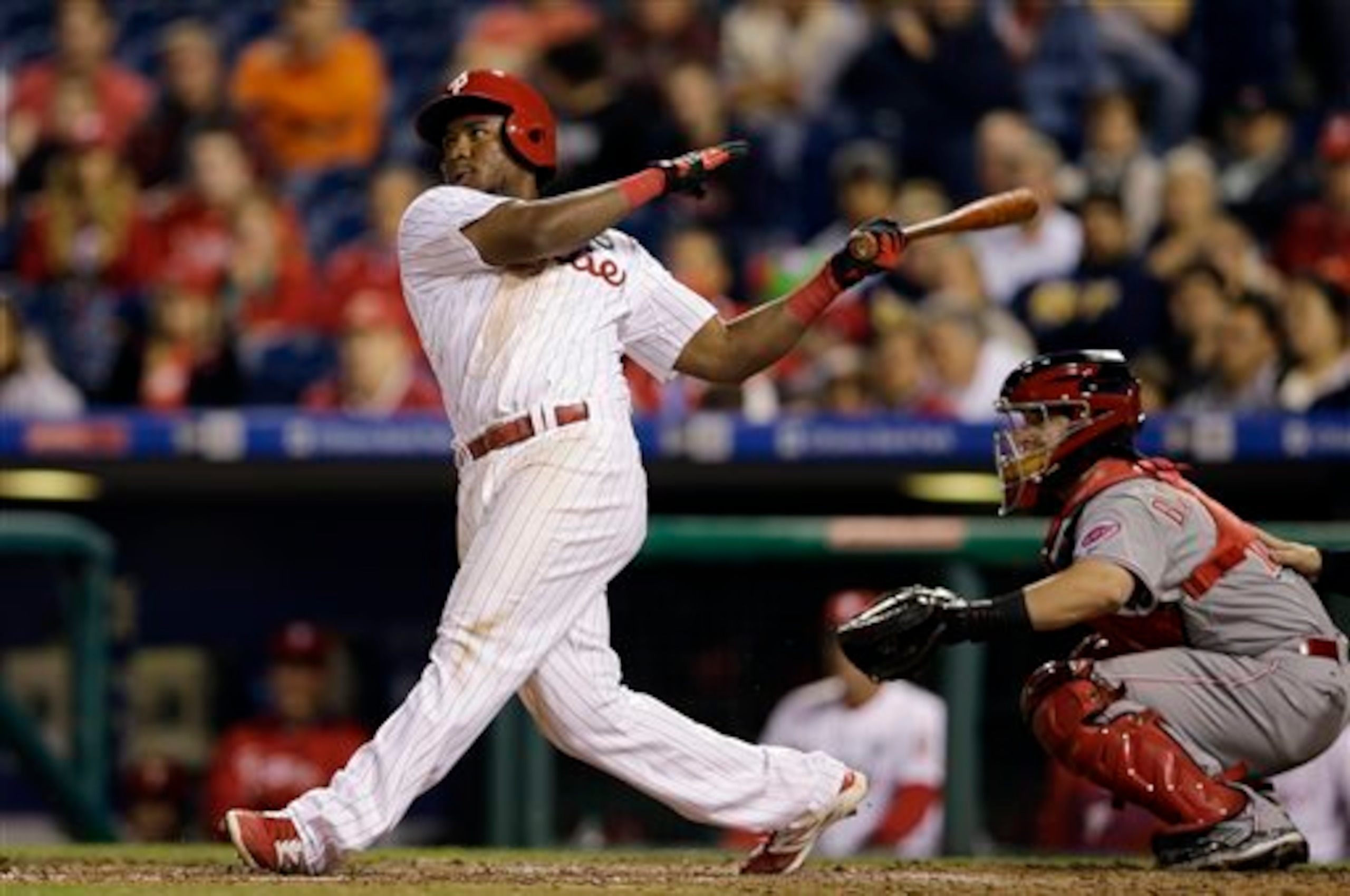
The Phillies offense was one of the worst in baseball in 2015, but there were silver linings.
They appear to have something in center field, where 24-year-old Odubel Herrera hit .297 with a .762 OPS. They also appear to have something at the hot corner, where 23-year-old Maikel Franco OPS'd .840 with 14 homers in only 80 games.
The Phillies can look forward to those two further establishing themselves as a duo in 2016, and more help should soon be arriving from their well-regarded farm system. MLB.com rates shortstop J.P. Crawford and outfielder Nick Williams as top-100 prospects, and both should debut this year.
Between the two, Crawford is the big prize. He's widely regarded as a top-five prospect, and the Phillies appreciate his swagger just as much as they appreciate his bat and glove.
“This kid does not lack confidence,” Phillies bench coach Larry Bowa told Gabe Lacques of USA Today, “but he’s not arrogant. He’s one of those kids who thinks, ‘I can play.’ I think he respects who he’s playing against, but I don’t think he’s in awe of anybody."
Two more top Phillies prospects who could filter in over the next several years are catcher/first baseman Jorge Alfaro and outfielder Cornelius Randolph. But lest anyone think a big-market team like the Phillies is going to rebuild its lineup entirely with homegrown talent, well, think again.
This is a team that used to push its payroll close to $200 million annually. And after 2017, it'll be finished paying Ryan Howard, Matt Harrison and Carlos Ruiz. With all that extra payroll space, the Phillies are likely to start throwing their weight around in free agency again.
Remember when the Phillies were the class of the NL on offense? They should be like that again before long.
3. Boston Red Sox
8 of 10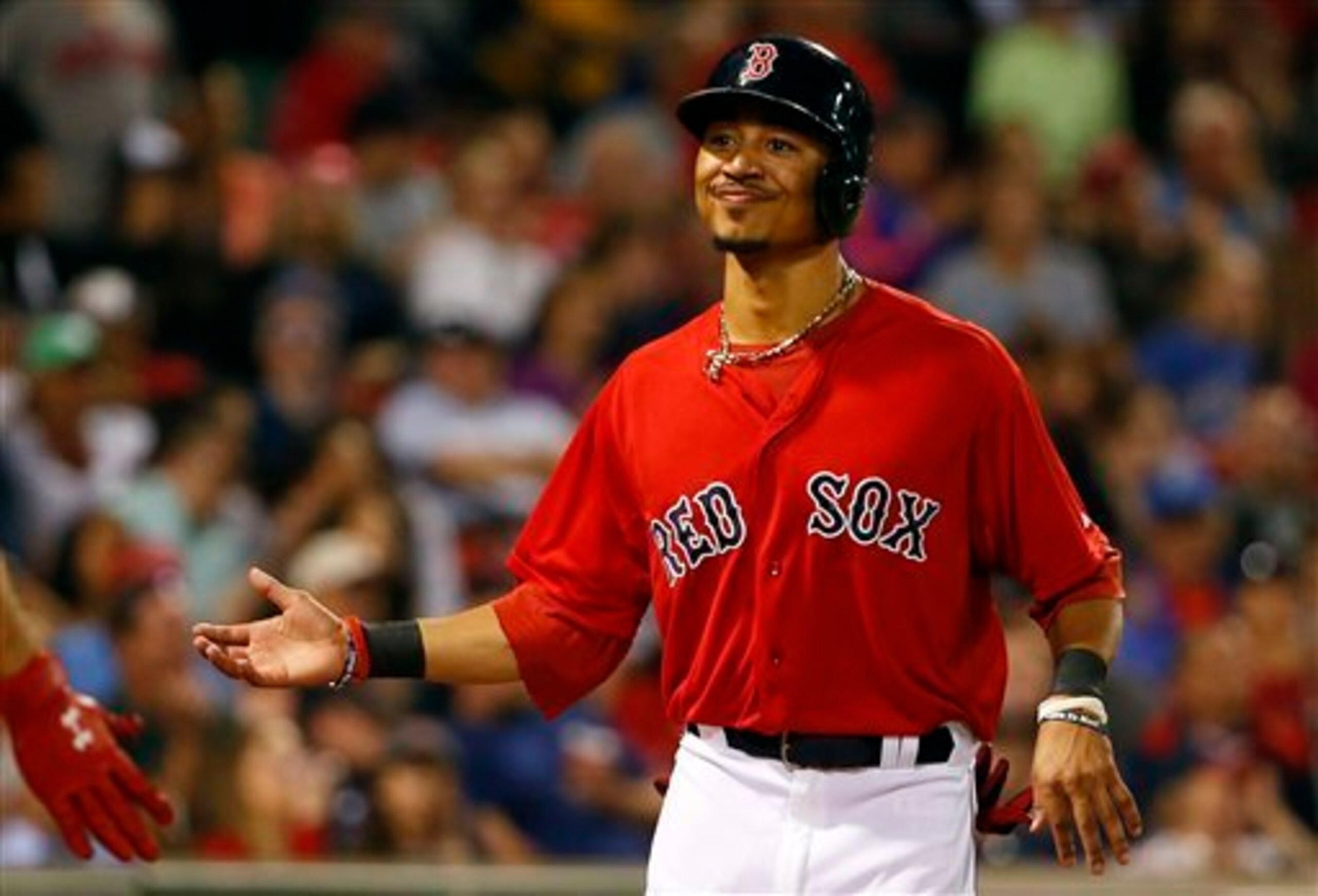
With David Ortiz retiring at the end of 2016 and Dustin Pedroia being 36 years old in 2020, now is a good time to look forward to the young core the Red Sox are already building.
Boston's offense took off in the second half of 2015, and that had a lot to do with young players like Mookie Betts, Xander Bogaerts, Blake Swihart and Jackie Bradley Jr. finding their footing. Betts was especially impressive, hitting .340 with a .941 OPS over the season's final two months.
The elephant in the room is that Bogaerts, who hit .320 last season, is only controlled as far as 2019. But rather than being worried about one cornerstone piece they stand to lose, the Red Sox should be excited about the several cornerstone pieces they stand to gain.
The Red Sox's farm system is top-heavy in a way that heavily favors the future of their offense. Infielder Yoan Moncada, third baseman Rafael Devers and outfielder Andrew Benintendi rank among MLB.com's top 25 prospects. Moncada, in particular, stands out as an impressive specimen for a mere 20-year-old.
"He looks like he should be playing in the Super Bowl," one scout told B/R's Danny Knobler last month. "It's a 26-27-year-old body. He was a man among boys in the South Atlantic League."
The Red Sox could also augment their impressive young core by signing a few checks. If David Price opts out of his contract after 2018, more than $30 million a year would come off Boston's books. Some of that could be reinvested in a free-agent bat or two. Or, it could be used to extend Bogaerts.
Whatever path they choose, the Red Sox can look forward to a future where their lineup is loaded with homegrown bats. In this day and age, that's a good way to go.
2. New York Yankees
9 of 10
Only the Blue Jays scored more runs than the Yankees in 2015, but virtually all the key members of that offense will be gone by 2020. The Yankees will soon be turning the keys over to a new generation.
One player who already looks like a potential impact hitter is Greg Bird. The 23-year-old will miss 2016 recovering from shoulder surgery, but he showed with an .871 OPS and 11 homers in just 46 games last year that he's a worthy successor to Mark Teixeira at first base.
And the Yankees have more young talent on the way. Their farm system isn't terribly deep, but at the top are three position players in MLB.com's top 100: shortstop Jorge Mateo, outfielder Aaron Judge and catcher Gary Sanchez. The 6'7" and 275-pound Judge certainly looks the part of a beastly hitter, and he could establish himself as the heir apparent for Carlos Beltran in right field as soon as this season.
The notion of the Yankees developing a core of young hitters over the next few seasons is exciting enough. That's something they haven't done since the days of Derek Jeter, Bernie Williams and Jorge Posada. But just as exciting is the possibility of them going big in free agency in the near future.
As of now, the Yankees' salary commitments drop down to $57 million in 2018, $45.1 million in 2019 and just $5 million in 2020. Recently, Jeff Passan of Yahoo Sports said what everyone was already thinking when he wrote that some of that payroll space is earmarked for Harper after 2018. That does indeed seem inevitable, and he may only be part of a larger influx of free-agent talent in coming years.
So in a few years' time, there will only be one thing to say: Bronx Bombers, indeed.
1. Chicago Cubs
10 of 10
On paper, the Cubs are going into 2016 with the National League's most loaded offense. The computers are also big fans, as FanGraphs projects them to score more runs than any other NL team.
And now for the cool part: Virtually all of the top hitters in this year's Cubs offense will not only be around in 2020, but they also will still be in their primes.
That includes Chicago's middle-of-the-order trio of Kris Bryant, Anthony Rizzo and Kyle Schwarber. They combined to hit .272 with an .872 OPS in 2015, and that should prove to be just the beginning of their reign of power as one of the league's most formidable offensive trios.
Elsewhere, shortstop Addison Russell and outfielder Jorge Soler have offensive potential well beyond their modest outputs in 2015. And don't forget about Javier Baez. Once an elite prospect, he may be on the verge of blossoming into baseball's next great utility player.
One key piece the Cubs could be missing by 2020 is Jason Heyward, who can and probably will opt out of his contract after 2018 to join that winter's free-agent bonanza. But that would save the Cubs north of $20 million per year, which they could choose to reinvest in a free-agent bat or two.
Meanwhile, the Cubs' farm system is a gift that's not done giving yet, as Gleyber Torres (SS), Willson Contreras (C), Ian Happ (2B), Albert Almora (CF) and Billy McKinney (OF) give the Cubs five prospects in MLB.com's top 100. The Cubs can either try to work each of them as potential upgrades over the young talent they already have established, or perhaps use them to pull off some blockbuster trades.
Really, there's basically no way the Cubs won't have a dominant lineup in 2020. It's almost as if long-term offensive excellence is something they planned on.
Stats courtesy of Baseball-Reference.com and FanGraphs. Contract and payroll data courtesy of Cot's Baseball Contracts.

.jpg?w=2560 "Dak to Stroud: Get Some Wins 💯")
.jpg?w=2560 "5 NFL Players Getting Trade Buzz")

.jpg?w=2560 "NFL Won't Fine 'Beverage' Celebrations 🍻")