Iowa State's Monte Morris Is the Ultimate Giver on and off the Court
AMES, Iowa — Eleven tractor trailers filled with gallons of water jugs and water bottles pulled up to a food bank in Flint, Michigan, at 10 a.m. on Feb. 18. The No. 11, the jersey number of Iowa State point guard Monte Morris, was painted on the side of a red-colored trailer at the front of the line.
LaTonia Morris knew the trucks were coming, but the tears started falling down her face as her son's No. 11 came into view. Hy-Vee, a large grocery chain based out of Iowa, had decided to send the water after the company's CEO saw a news story of Morris asking ISU fans to help his hometown of Flint. The 46,646 gallons of water was the largest donation anyone has made to Flint since the water crisis began.


LaTonia felt overwhelmed. She felt pride. But when someone asked her if she was surprised, she was not.
"Because Monte is just a giving person anyway," LaTonia said. "I didn't know it would be so big, but I wasn't surprised that it happened, because he's always looking out for the next person."
So many players in the city of Flint wanted to play with Monte Morris when he was the point guard at Beecher High School that coach Mike Williams had to essentially close the doors of the school. "We literally were turning kids away," he said. "You can't transfer over here."
Morris was notorious on the floor for his vision and pinpoint passes, but it was his personality that attracted his peers. "He is every kid's hero around here," Williams said. "Not just because of his basketball talent, but the way he carries himself."
There's one story, in particular, that Williams will pass on to his teams for years to come.
Before each season, Williams buys several bags of plain white Hanes socks to distribute to his players to go along with their team-issued Nike shoes. Individuality, in the form of players expressing themselves with fancy kicks or socks, wasn't allowed.
The Buccaneers, knowing their coach's policy, had begged him to allow them to wear matching Nike socks heading into Morris' junior season.
Without telling his teammates, Morris approached Williams before the first game to get the coach's blessing on the sock change. Williams told Morris it was OK with him as long as everyone had a pair, and he knew it wasn't possible for each player to go out and buy their own.
"We had kids who were living in a shelter on that team that I had to go pick up and drop off at the homeless shelter," Williams said. "We had that much of a spectrum as far as kids that had and kids that didn't."
Morris is one who had, thanks to LaTonia, who is a regional manager for low-income apartment complexes in Flint. LaTonia would give her son a weekly allowance, and he decided he was going to spend his money on socks for his teammates. This wasn't the first time Morris had decided to share his footwear either. LaTonia once discovered that three pairs of his basketball shoes were in the coach's office at the school for teammates to wear.
Before the opener, Morris walked in with several bags of Nike socks to the delight of his teammates. Beecher went undefeated that season and won the school's first state championship since the mid-1980s.
"They never wanted to let him down," Williams said.
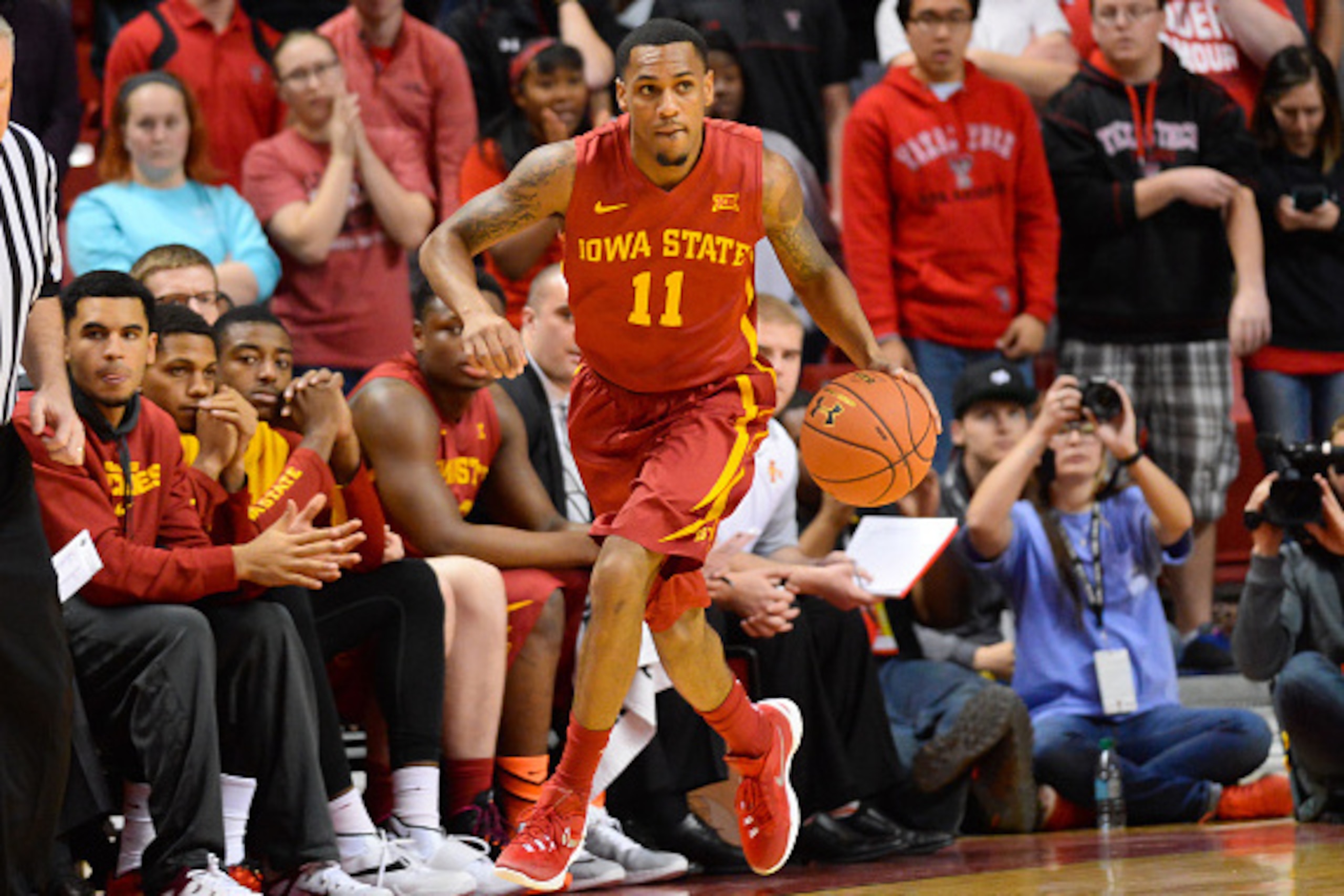
Morris' unselfishness translates to the court as well.
He set the single-season record for assist-to-turnover ratio as a college freshman (4.79), led the nation in the statistic as a sophomore and sits at No. 5 this season. Morris could turn the ball over 56 straight times without recording an assist, and he'd still be on pace to break former Wisconsin point guard Jordan Taylor's NCAA record for the best career assist-to-turnover ratio.
"When he has more than one turnover in a game, it's really shocking," Iowa State first-year coach Steve Prohm said.
Much like at Beecher, where Morris made it to the Michigan state playoff semifinals all four years in school and is the state record holder for games played, the Cyclones have experienced unprecedented success with Morris as their point guard.
With three more wins, Iowa State will have recorded the most victories over a three-season span in school history. The Cyclones have already won back-to-back Big 12 tournaments with Morris—a first in school history—and they've ranked in the top 11 in adjusted offensive efficiency each of the last three years, per KenPom.com. The only other schools to do that during that time are Duke and Kentucky.
Former Iowa State coach Fred Hoiberg received a lot of credit for ISU's efficiency—Morris calls Hoiberg an offensive genius—but the Cyclones rank higher in efficiency this year (second nationally) than they ever did under Hoiberg.
That's not entirely Morris' doing—the Cyclones have other gifted offensive players, most notably star forward Georges Niang—but playing close to a perfect point guard doesn't hurt.
"There's never a time where Monte is passing me the ball in a spot where I don't feel like that's one of my best areas to make a play," Niang said.
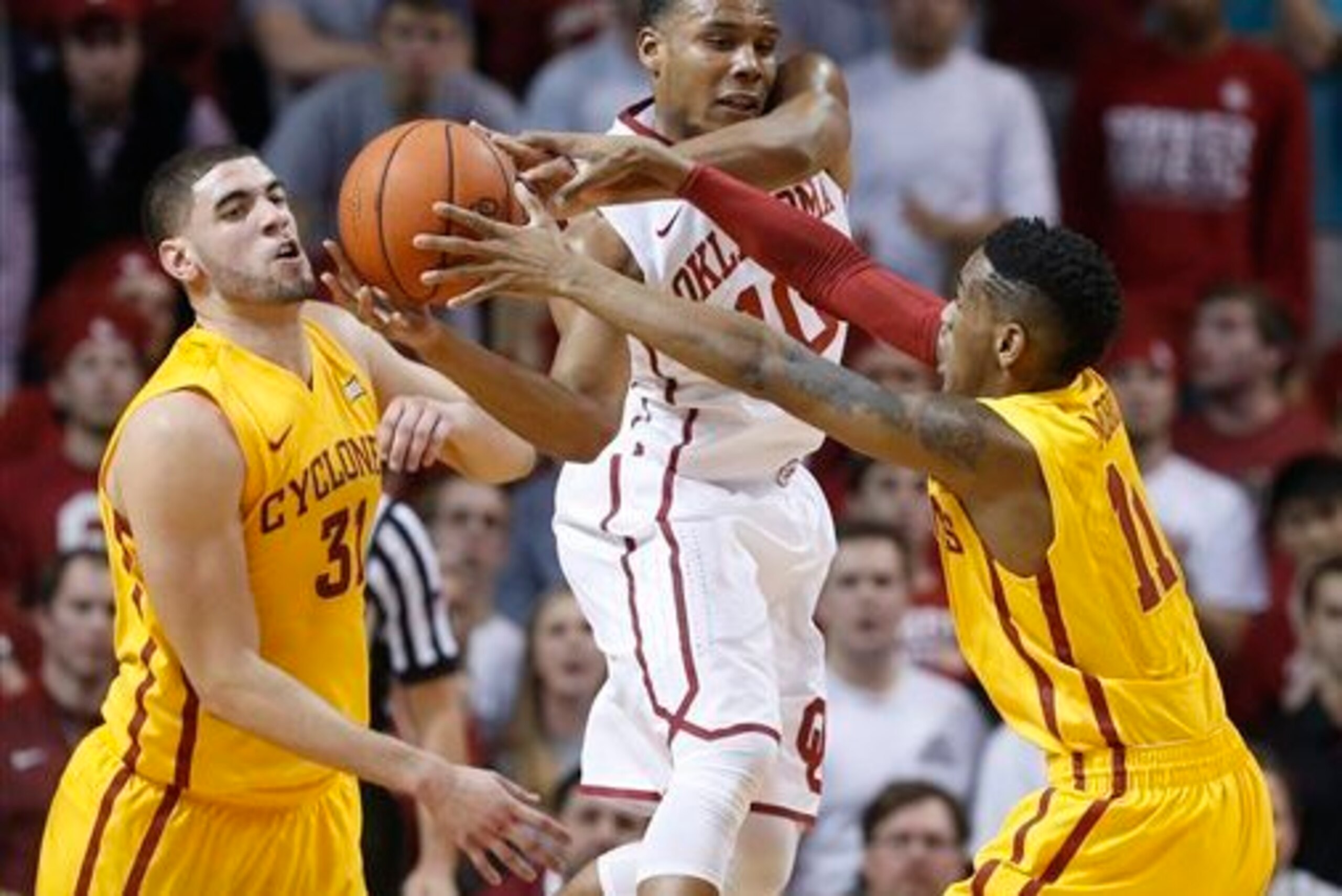
That isn't a surprise when you consider his upbringing. LaTonia was a great point guard herself, winning a state title at Beecher in 1987 and scoring over 1,000 points in her high school career, and she started teaching her son the game from a young age.
When LaTonia moved back to Flint after Monte was born, she started coaching at Beecher for both the middle school and high school girls teams. Morris would accompany his mom to basketball practice from the time he was a toddler, joining her players on the baseline in running sprints by the time he was three. When Morris could get the ball to the basket—around the age of five—he was participating in a make-or-run free-throw drill.
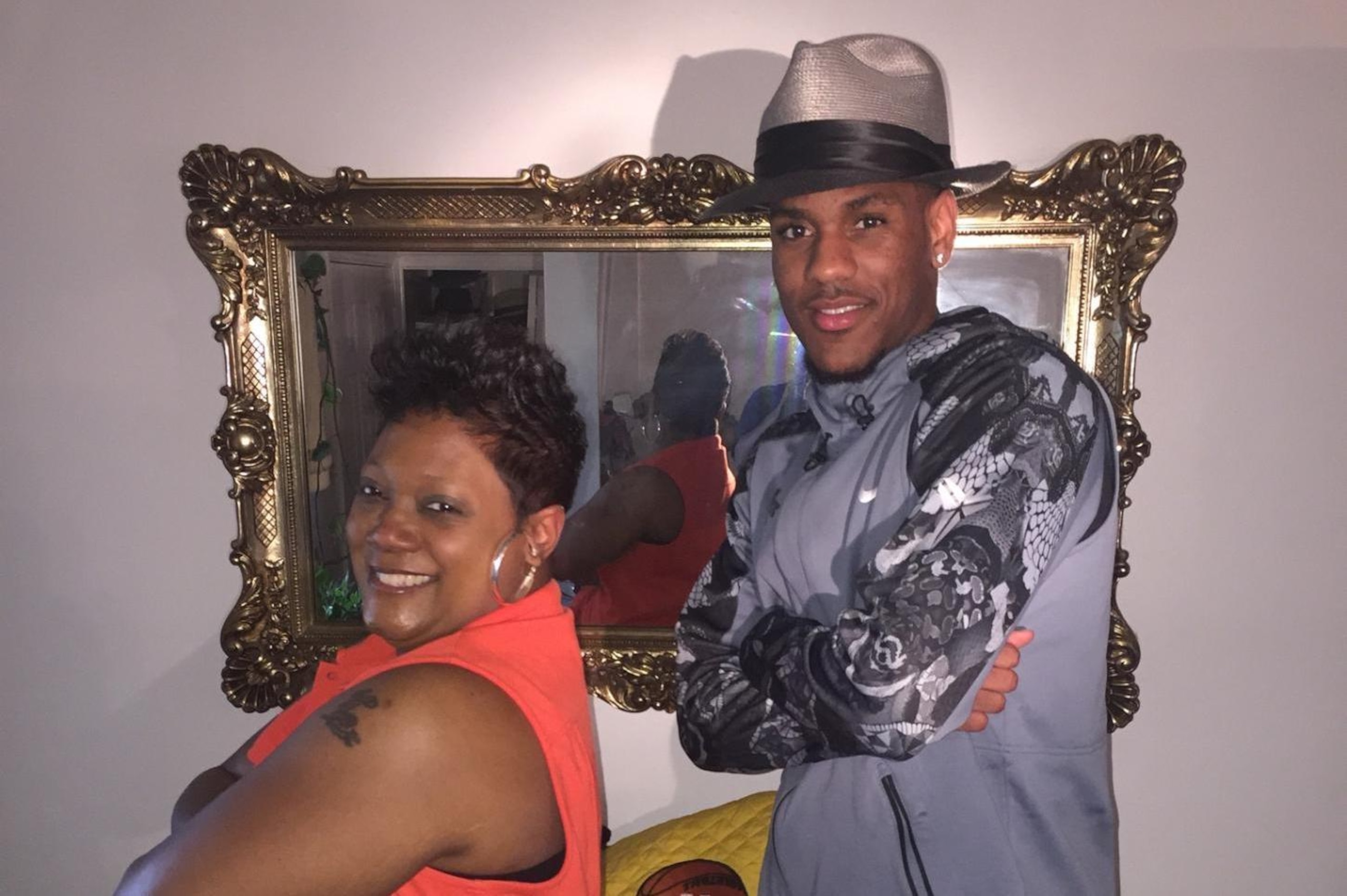
Eventually, Morris started attending high school boys practices as well.
"By the time he was in the sixth grade, he could run our offense," Williams said.
In the summer between his sixth- and seventh-grade years, Williams had Morris running point guard for the varsity during a team camp when he was short on players.
"We put him out there, and to my surprise, he was one of the better players on the floor," Williams said. "He knew how to run the offense. You couldn't take the ball from him. He was patient. All the attributes that he shows now, he showed then. Just the poise and composure beyond his years."
Morris was a coach's dream, caring for his teammates' success more than his own and rarely making a mistake—traits he also picked up from his mother.
"Would you want someone taking my purse?" she'd ask Monte. "Well, treat that ball like my purse."
"That's what I go by," Morris says, grinning.
Early in his career at Iowa State, Morris was simply the table-setter for ISU's offense.
| 2013-14 | 6.8 | 3.7 |
| 2014-15 | 11.9 | 5.2 |
| 2015-16 | 14.3 | 7.2 |
The last two years, he's become much more, picking his spots to score and setting up his teammates.
"When I was a freshman, I couldn't tell you what I was reading coming off pick-and-rolls. I was just going," Morris said. "But now it's so slow. I can [get a] pick; I can come off and see the open man on the edge with my peripherals."
And if he isn't seeing the game like he should, LaTonia is there to correct him. She uses FaceTime to speak with Morris after every game, and she also records all of his games. When he returns home to Flint, they sit and break down film.
"Sometimes I don't like hearing what she has to say," Morris said. "It comes with the territory of having a mom as a coach."
So how does he do it? How does Morris hand out 7.2 assists a game with so few passes finding their way into an opponent's hands?
It starts with being happy.
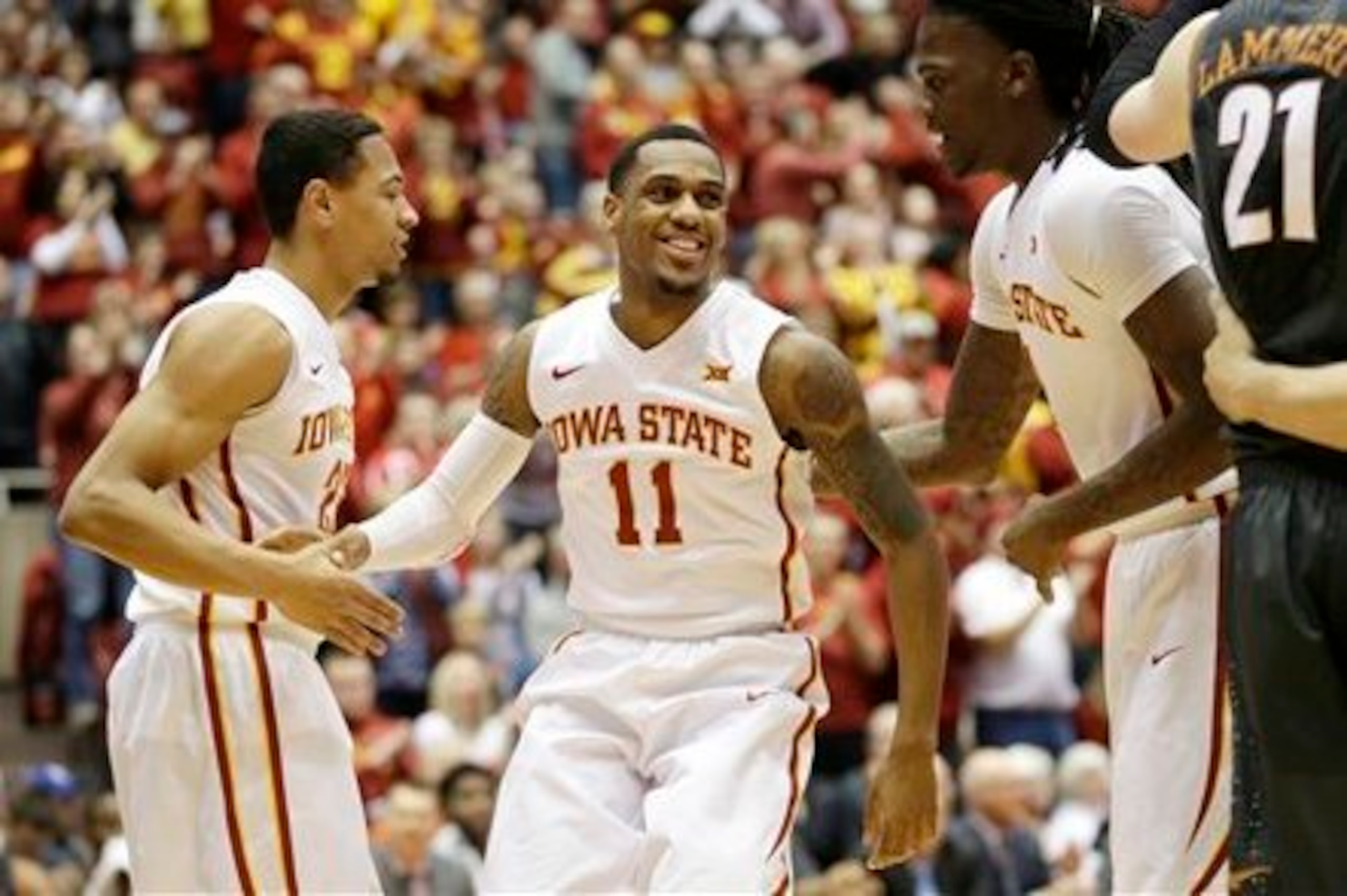
"When I'm smiling and got my groove going, I'm not going to turn the ball over," Morris said. "I think most of my turnovers come when I'm frowning and not having fun or just ain't excited to be out there."
The more technical explanation comes down to Morris knowing where his teammates want the ball and not putting them in spots to fail.
Niang, for instance, wants a bounce pass when he rolls off the pick-and-roll. ISU three-point specialist Matt Thomas likes passes coming in low when he's spotted up on the perimeter.
"If me and you were on the same team, we'd have open gym about three times, and I'd know your tendencies," Morris said. "I really just need two days."
Morris is just as good at reading emotions. Williams marveled at his point guard's ability to get a player out of a cold streak. "If a teammate missed a shot, he would be the first person to set him up for another shot and made sure he got the shot to boost his confidence," Williams said.
Last season, when Iowa State played South Carolina at the Barclays Center in Brooklyn, Niang had one of the worst games of his career in what was sort of a homecoming for the star, who grew up nearby in Methuen, Massachusetts. Niang felt sick before the game and struggled throughout, finishing with 10 points on 3-of-13 shooting.
During a timeout, Morris put his arm around Niang and told him not to forget how good he was.
"Your shot is not falling, but you do a lot of things great for us. Don't take yourself out of this game," Niang remembers Morris telling him.
"It was one of those things where Morris, even on the basketball court, is putting people ahead of him," Niang said. "It just really hit me this guy really cares about everybody else's well-being."
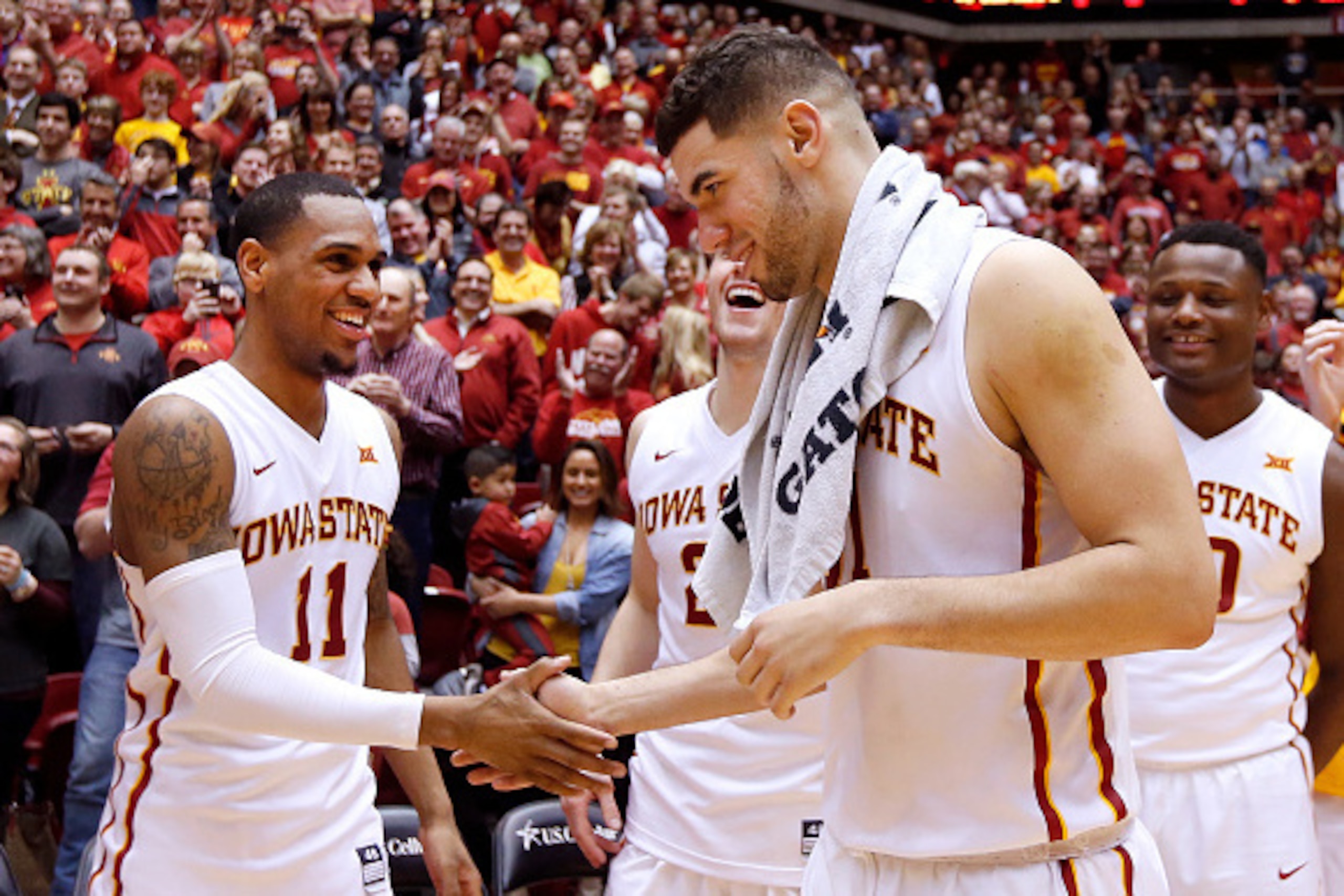
These are the types of things that got lost on the recruiting trail and allowed one of Michigan's best point guards in years to get out of the state.
When he arrived at Beecher as a freshman, he was 5'9" and 115 pounds "soaking wet," by Williams' estimation. That fall, the program's two best players transferred out, and Williams was crushed. They were the backbone of a state tournament team, and now he would be relying on underclassmen, including an undersized Morris.
"I just remember him putting his arm around me, and he said, 'Coach, don't worry about them leaving. They left to get out of my way,'" Williams said.
The Buccaneers would lose their first six games that season, then go on to win 11 straight and ultimately make it to the state semifinals.
Morris eventually was a star on the high school scene and chosen as the state's Mr. Basketball his senior season, but Michigan State, the program Morris idolized growing up, didn't recruit him.
"I take that upon myself," Morris said. "I never played good in front of [Tom] Izzo."
Michigan showed interest, but when Morris tried to commit during the summer before his junior year, current Michigan point guard Derrick Walton beat him to it.
"I wore my Michigan hat to practice," Morris said. "I called, like, at 6:25. No one answered. Called back and [they] finally picked up. They're like, 'Ah, Monte, we've got some bad news. Derrick Walton took the scholarship, man.'
"He committed at 6:17. I called at like 6:25."
Both schools are kicking themselves now.

"This summer, I was sitting with a Michigan State assistant, and they said their one biggest mistake was not signing Monte Morris," Prohm said.
By the time Morris arrived in Ames, he was 6'2" but only 148 pounds. Hoiberg was hesitant to hand over the keys to Morris that season. The former Iowa State coach brought Morris off the bench the first 19 games. After a midseason slump that saw the Cyclones lose four of five, Morris was inserted into the starting lineup and the 'Clones won seven of their next eight games.
Now up to 175 pounds (after losing five from the beginning of the season), Morris has become the backbone of the Cyclones, playing 39.88 minutes per game during conference play, which leads the Big 12. He’s also become one of the most effective scoring point guards in the country.
As a freshman, Morris, a righty, released the ball from near his left ear. "I wasn't that strong, and the [three-point] line was far back, so I had to kind of heave it," he said.
Last year after a loss at Oklahoma, when Morris went 3-of-10 from the field, he decided it was time to change his shot. Morris got back to the gym in Ames that night at 1:36 a.m. and went to work. (He was such a gym rat in high school that Williams used to have to turn the lights out to get him to leave at night. Eventually, Morris got a key from his uncle, who was a security guard at the high school.)
For the next five days after the OU loss, Morris was in the gym every night from midnight until 2 a.m., perfecting the correct mechanics. In ISU's next game against West Virginia, he hit all four three-pointers he attempted.
This season, Morris is averaging 14.3 points despite taking only 19.1 percent of his team's shots when he's on the floor. That's a usage rate that pales in comparison to the players who have joined him as a finalist for the Bob Cousy Award, given annually to the nation's best point guard.
| Kay Felder, Oakland | 32.2 | 29.9 |
| Kris Dunn, Providence | 29.3 | 26.1 |
| Kyle Collinsworth, BYU | 28.1 | 22.4 |
| Gary Payton II, Oregon State | 27.0 | 26.8 |
| Melo Trimble, Maryland | 25.7 | 23.4 |
| Yogi Ferrell, Indiana | 25.0 | 24.3 |
| Demetrius Jackson, Notre Dame | 24.4 | 23.9 |
| Nic Moore, SMU | 23.6 | 25.2 |
| Tyler Ulis, Kentucky | 23.6 | 22.4 |
| Monte Morris, Iowa State | 20.0 | 19.1 |
Prohm has tried to get Morris to be more aggressive, adding sets throughout the season that are made for Morris to get a basket.
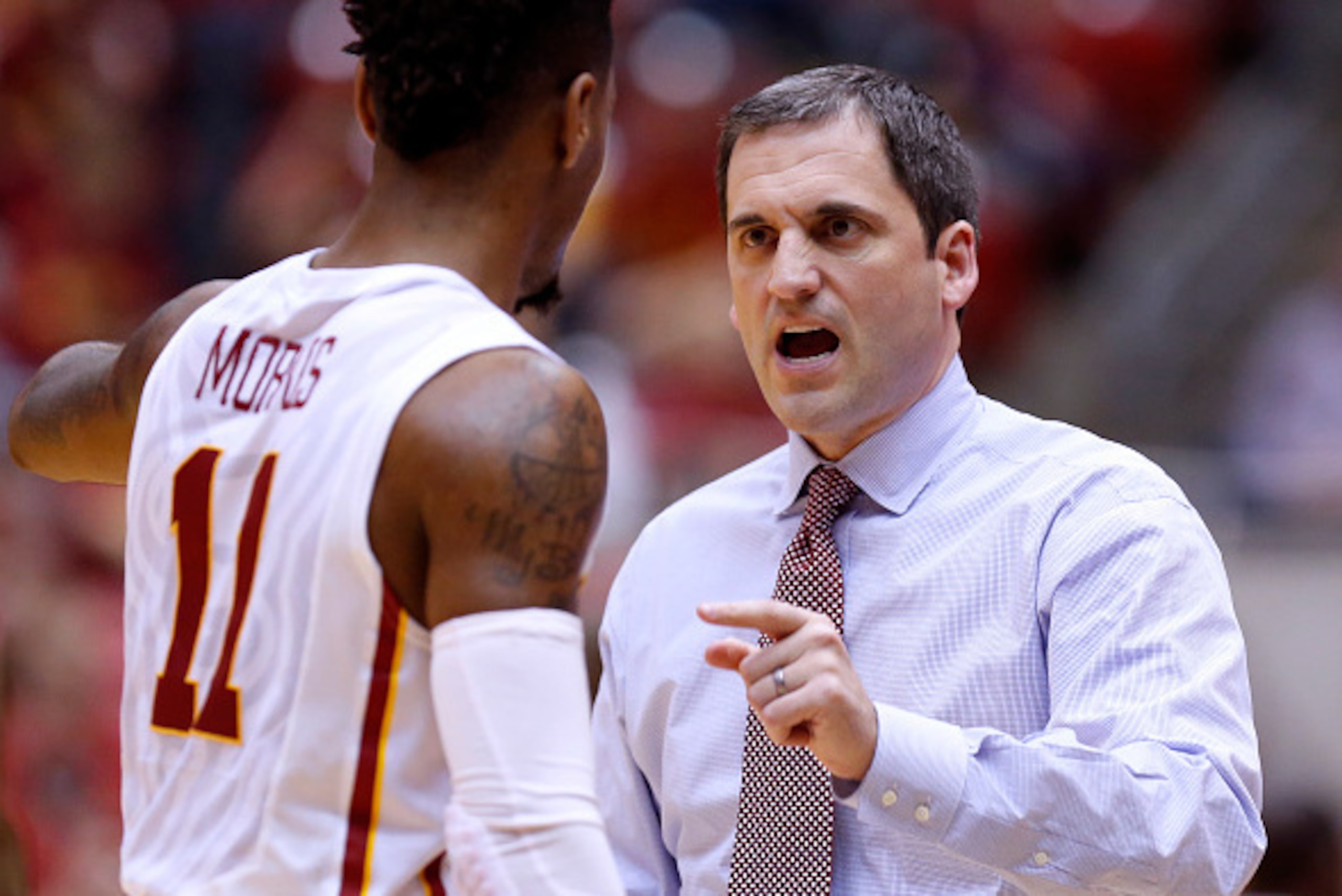
"I think he's got another level in there," Prohm said. "I don't think people realize he can score at a high level."
During his freshman year at Beecher, Williams and his assistant once cornered Morris in the locker room at halftime during a game against the top-ranked team in the state, yelling at Morris to shoot the ball.
"He's telling us, 'But, Coach, everyone else is open,'" Williams said. "We're telling him, 'But you're the one who can put it in the hole. You've gotta shoot.'
"He's the most unselfish player. He wants to play the game the right way. His dream game is to score zero points, to dish out over 20 assists, to have 10 steals and 10 rebounds. He'd like to get a triple-double without scoring a point."
When Prohm was hired at Iowa State in June, he made a trip to Flint to visit LaTonia. Prohm also called former Michigan State point guard and Flint native Mateen Cleaves, asking him to call Morris on his behalf to let Morris know Prohm would take care of him.
"All of those guys really pull for each other," Prohm said of players from Flint.
The coach knew making it a priority to show he was Flint-approved would sell Morris.
Morris has a lot of pride in where he's from—"That guy is Flint to the bone," Niang said. During a 50-minute interview in Ames last week, Morris repeatedly said he wishes other players from his hometown could experience his journey with him.
Morris did everything he could to try to take others along for the ride. During the recruiting process, he kept more schools on his list than he was really considering.
"He had friends who he wanted to have the college coaches look at so he entertained a lot of college coaches and invited his friends to come work out, so they'd at least get looked at by some of the D-I schools that were looking at him," LaTonia said.
This is why players have always wanted to play with Morris. He’s looking to set up others, on the court and off. Especially when it comes to anyone from his hometown.
"That Flint tag stamped on you, man, there's so many people riding with you. That's how I'm able to play so well. Play for a reason. Not just play for my family, but play for people that can't live the dream with you."
Morris pauses and thinks back to the water situation.
"I think we'll bounce back," he says. "Because we're strong. Real strong."
C.J. Moore covers college basketball for Bleacher Report. You can follow him on Twitter, @CJMooreBR.

.jpg?w=2560 "Dak to Stroud: Get Some Wins 💯")
.jpg?w=2560 "5 NFL Players Getting Trade Buzz")
.jpg?w=2560 "Vikings HC Called OBJ Before Release ☎️")