
The Next 25: Ranking the College Basketball Teams Currently Unranked
There are so many D-I teams in college basketball (351), the AP Top 25 doesn't even cover the top 10 percent of programs, so we've taken it upon ourselves to rank the next 25 at roughly the midway point of the 2015-16 season.
Everyone loves to focus on the Top 25, but let's not forget that 68 teams make the NCAA tournament. Sure, the bottom 20 or so are teams that only get in by winning their conference tournaments, but that still leaves quite the collection of squads that are good enough to make the Big Dance but aren't quite good enough to crack the AP Top 25.
We aren't ranking these teams based on any sort of bracketology principles—how you're playing right now is far more important to us than your RPI and your nonconference strength of schedule—but an awful lot of these teams would be in the Nos. 7-12 seed range if the season ended today.
Thus, you might want to start getting acquainted with them before the time comes to fill out those brackets.
Also considered: Alabama, Colorado, Florida, Florida State, Georgia, Marquette, Ohio State, Saint Bonaventure, Saint Joseph's
Nos. 25-21: Northwestern-Cincinnati
1 of 17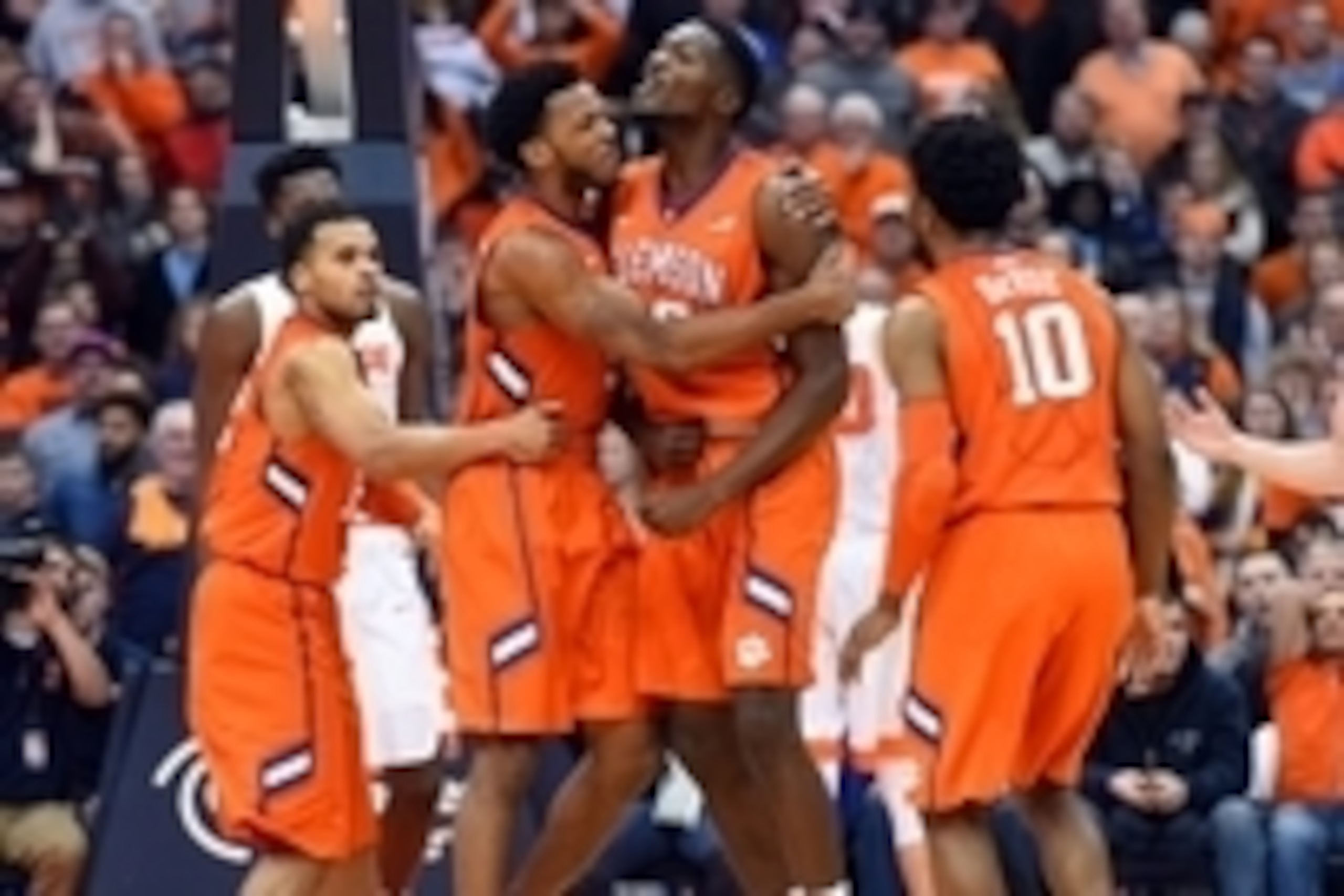
25. Northwestern (15-3)
Sorry, but I'm not buying it. Yet.
The Wildcats are 0-3 against teams in the KenPom Top 65 and have yet to score a convincing win against a team in the KenPom Top 195 (three overtime wins; four regulation wins by single-digit margins).
But it's kind of hard to just disregard a three-loss team from a major conference. The Wildcats still have an awful lot to prove, but they are well on their way to the first season with 21 or more wins in school history.
24. Kansas State (11-5)
These Wildcats are very solid on defense and could very realistically be a Top 25 team if they could just make a three-pointer every once in a while. In their five losses—each of which came by a margin of 10 points or less, and each of which was either played on the road, against a ranked opponent or both—the Wildcats shot a combined 27-of-100 from three-point range.
23. Clemson (11-6)
Where in the world did this team come from?
Clemson entered ACC play with an 0-5 record against teams in the KenPom Top 200, and three of those losses were to teams outside the Top 100. Yet, after Wednesday night's upset of the No. 9 Blue Devils, the Tigers have now reeled off four straight wins over Florida State, Syracuse, Louisville and Duke.
22. Evansville (15-3)
By losing to Providence in the Wooden Legacy, getting blown out at Arkansas and falling just short of winning at Wichita State, Evansville has effectively blown every chance to make a statement. But we're still paying attention.
Led by D.J. Balentine and Egidijus Mockevicius, the Purple Aces are among the best in the nation at moving the ball, scoring in bunches, getting to the free-throw line and crashing the defensive glass. It hasn't manifested into a marquee win yet, but this is a team that is quietly lurking on the fringe of the bubble conversation.
If Evansville can avoid picking up any ugly losses in Missouri Valley play, it just might be in the NCAA tournament when it finally scores a big victory.
21. Cincinnati (13-5)
The Bearcats went through quite the rough patch where they forgot how to play defense, but they've gotten back to their roots in 2016 by holding four straight opponents to less than 60 points. They did lose one of those games and scored just 54 in another, but it's a promising sign that they're forcing turnovers and blocking shots like they did early in the season—as well as in each of the past five years.
Nos. 20-16: Vanderbilt-Michigan
2 of 17
20. Vanderbilt (9-7)
Do you know The Price Is Right game, "That's too much?" For those of you who haven't fruitlessly tried to find something better to watch at 11 a.m. on a weekday, it's really just a matter of Drew Carey flipping over potential prices for a car in ascending order, and you're supposed to stop him when he gets to the first one that's more than the price of the car.
Well, with seven losses, it feels like we should be yelling "That's too much!" at Vanderbilt. No one in the AP Top 25 has more than four losses, and only one other team under consideration for this "Next Top 25" has more than six. But we just can't quit the Commodores.
Yes, they have seven losses, but there's not a bad or ugly one in the bunch. Four of those opponents (Kansas, Baylor, Purdue and South Carolina) are in the AP Top 25, two (LSU and Dayton) are in our top 15 on this list, and the other one (in overtime at Arkansas) is a result of something that's just going to occasionally happen in SEC play.
Luke Kornet just recorded a triple-double on Tuesday night, but the 7'1" junior was out of the lineup with a knee injury for three of Vanderbilt's losses. Starting shooting guard Matthew Fisher-Davis was injured in Saturday's loss to South Carolina. Amid the remaining losses was a close one against Kansas, a closer one at Baylor and the aforementioned hiccup against Arkansas.
The tournament resume isn't looking so hot, but this is still a pretty good team that just hasn't been able to get over the hump for a marquee win. Consecutive games against Kentucky, Florida, Texas and Texas A&M as January bleeds into February could be what brings Vanderbilt back to life.
19. Utah (12-4)
The win over a battered and bruised Duke team in mid December looks pretty great on Utah's resume, but what else have the Utes done this season? Close home wins over BYU and San Diego State aren't carrying even a fraction of the weight we would have expected in the preseason, so a neutral-court win over Texas Tech is somehow the second-best thing Jakob Poeltl and company have done this year.
But there's a lot of talent on this roster. They just desperately need to get Brandon Taylor going.
The senior combo guard entered this season shooting 41.8 percent from three-point range in his career, but he has made just 23.7 percent of his attempts against D-I opponents this season. In Utah's first three losses, his total line was 114 minutes, 22 points, 12 turnovers, eight assists and 3-of-15 from three-point range.
Utah has a strong big three in Poeltl, Jordan Loveridge and Lorenzo Bonam, but Taylor has been an albatross around the Utes' necks this season. If he can turn it around, though, so can Utah.
18. Texas (10-6)
After surrounding a narrow home win over Kansas State with losses to TCU and Texas Tech, the Longhorns had no hope of cracking our Next Top 25 without the win over Iowa State on Tuesday night.
Now—just like Northern Iowa, strangely enough—Texas has marquee wins over both North Carolina and Iowa State. And it would only be fair if we put an asterisk next to its three most recent losses, as Cameron Ridley has been sidelined by a broken foot.
Given that injury and the fact their three early losses could be at least somewhat chalked up to adjusting to new head coach Shaka Smart, the Longhorns aren't looking too bad. But they need Ridley back as soon as possible in order to reach their full potential.
17. Notre Dame (11-5)
The defense is suspect at best on most nights, but Notre Dame's offense is every bit as efficient as last year.
If it's possible to have an under-the-radar Player of the Year campaign, Demetrius Jackson is doing it. After flirting with a triple-double against Georgia Tech on Wednesday night, he's now averaging 17.1 points, 5.4 assists and 3.7 rebounds per game and shooting 40.0 percent from three-point range. Perhaps if the Fighting Irish upset Duke this weekend, more people will notice how great this offense has been.
16. Michigan (13-4)
When they lose, the Wolverines lose badly. All four losses came against quality opponents, but each also came by a margin of at least 14 points. (Not surprising, considering the rebounding margin in their four losses is minus-62.)
And yet, playing without Caris LeVert, who is nursing a leg injury, Michigan somehow managed to upset Maryland on Tuesday night. Zak Irvin finally had a good game against a quality opponent, scoring a season-high 22 points in the win.
If Irvin is finally ready to start playing like the guy he was before having offseason back surgery, Michigan could be a serious contender once LeVert is back in the lineup.
15. Saint Mary's Gaels
3 of 17
Record: 14-2
Three Best Wins: 85-74 vs. BYU; 78-61 vs. Stanford; 70-60 vs. UC Irvine
Three Worst Losses: 67-64 at Pepperdine; 63-59 at California
It's tough to know what to make of the Gaels, given the lack of quality opponents they have faced.
BYU and Stanford weren't even listed among the next eight out on ESPN Joe Lunardi's latest bracket projection, but those home wins are as impressive as it gets for Saint Mary's. In their one opportunity to make a statement against a likely tournament team, Emmett Naar and company fell just short of a big road win over the Golden Bears.
So, how much should we make of the fact that Saint Mary's is No. 1 in the nation in effective field-goal percentage when it has faced what KenPom.com evaluates to be the 312th-most difficult schedule?
Granted, the Gaels shot, defended and rebounded well in the loss to Cal, so it's not as if their blowout wins over Southern Utah, Manhattan and San Diego are entirely to blame/thank for their impressive shooting percentages. Still, this young team has clearly benefited from an easy schedule.
To make a long story short, the jury is very much out on Saint Mary's until we see what happens in the games against Gonzaga (Jan. 21 and Feb. 20). But prior to last weekend's loss to Pepperdine, the Gaels were 14-1 with all 14 wins by a margin of double digits.
There might be something here.


14. UCLA Bruins
4 of 17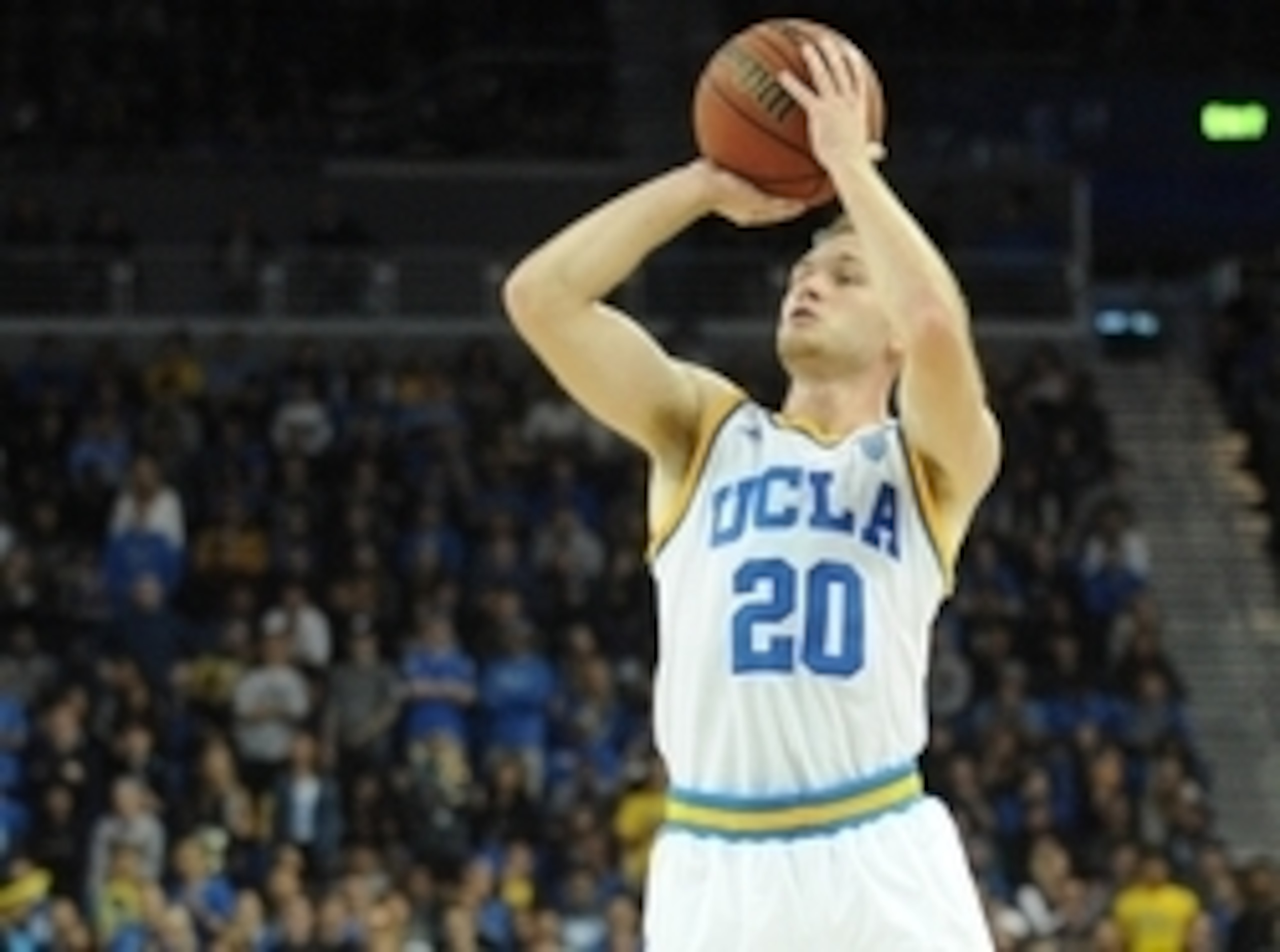
Record: 11-7
Three Best Wins: 87-84 vs. Arizona; 87-77 vs. Kentucky; 71-66 at Gonzaga
Three Worst Losses: 85-78 at Washington State; 80-77 vs. Wake Forest; 96-93 at Washington
There are a lot of maddeningly inconsistent teams around the country, but perhaps none more so than UCLA.
The Bruins have five guys who average at least 10 points per game. They have played six games against teams in the KenPom top 50, going 3-3 in those games.
So, how in the world do they have seven losses?
The biggest culprits seem to be poor defense and ball movement.
The opposition has scored at least 80 points in each of UCLA's seven losses, even though the Bruins play at an average tempo. And they have forced an average of just 9.3 turnovers in those losses. Moreover, UCLA is 9-1 when recording at least 14 assists, and 2-6 when tallying 13 or fewer—and 14 assists aren't that much to ask from a team that averages more than 80 points per game.
What do the Bruins do with that information, though? Defend harder? Pass more?
Maybe they should just shoot more three-pointers?
Bryce Alford, Isaac Hamilton and Aaron Holiday all shoot better than 38 percent from beyond the arc, but UCLA ranks 342nd in the nation in percentage of field-goal attempts coming from three-point range.
In the three wins over Arizona, Arizona State and Kentucky, the Bruins shot a combined 25-of-51 from downtown. And if you're going to give up 80 points in a game, it only makes sense to score points three at a time to keep pace, right?
13. Virginia Commonwealth Rams
5 of 17
Record: 12-5
Three Best Wins: 85-82 at Saint Joseph's; 76-67 vs. Old Dominion; 80-68 vs. North Florida
Three Worst Losses: 74-73 vs. Wisconsin; 77-64 at Georgia Tech; 76-71 vs. Florida State
"Best team in the Atlantic 10" doesn't carry nearly as much weight as it has in recent years, but VCU is very much in the conversation for that title.
The Rams are lacking in the "quality wins" department, with a come-from-behind win against Saint Joseph's serving as their best victory to date.
Quality play against quality opponents, though?
VCU has plenty of that.
Outside of the 13-point loss at Georgia Tech—which was a one-point game with 10 minutes remaining before the Yellow Jackets shot 13-of-14 from the free-throw line down the stretch—each of VCU's losses has been by a single-digit margin. In addition to the games against Wisconsin and Florida State listed above, the Rams also put up a good fight against Cincinnati and Duke.
In the end, though, rebounding was their biggest foe, as they were minus-five or worse on the glass in each of their losses. They also had some trouble forcing turnovers in those games. VCU averaged 6.8 steals per game in its losses but has averaged 11.8 in its 12 wins.
But those losses came early in the season with a new head coach. The Rams have now won seven in a row and looked dominant in most of those victories.
They don't play Dayton until the final game of the regular season, but that might be the one that determines the No. 1 seed in the A-10 tournament.
12. Dayton Flyers
6 of 17
Record: 13-3
Three Best Wins: 82-77 vs. Iowa; 72-67 at Vanderbilt; 73-70 vs. Monmouth
Three Worst Losses: 61-57 at La Salle; 61-59 vs. Chattanooga; 90-61 vs. Xavier
How does one evaluate a team with no real identity?
The Flyers seem hellbent on playing at the level of their competition. Of their last 14 games, 10 have been decided by eight points or less—included in those 10 games are several opponents in the KenPom top 50, as well as multiple opponents who don't rank in the KenPom top 200.
Their pace and quality of play have been all over the map. Dayton looked great in eking out wins over Iowa and Vanderbilt but looked terrible in fumbling away close losses to Chattanooga and La Salle.
However, we still haven't seen this team at full strength, which almost certainly explains the lack of an identity.
Dyshawn Pierre missed the first 11 games of the season due to a suspension and didn't start to look like his normal self until his third game back. Kendall Pollard missed two games with an Achilles tendon strain, and leading scorer Charles Cooke missed Tuesday's game against Davidson with an oblique injury.
If and when all three of those guys get on the court together again, Dayton should be a real force in a weak A-10.
11. Monmouth Hawks
7 of 17
Record: 12-4
Three Best Wins: 84-81 at UCLA; 83-73 vs. USC; 70-68 vs. Notre Dame
Three Worst Losses: 96-86 at Canisius; 91-84 at Army; 73-70 vs. Dayton
The bench-mob hysteria has finally dissipated, so now we can view Monmouth for what it truly is: one of the best non-major basketball teams in the country.
Justin Robinson isn't quite in the same layer of the stratosphere as Buddy Hield, but you better believe his 20.1 points, 3.4 assists and 2.0 steals per game while shooting 40.7 percent from three-point range would get some National Player of the Year recognition if he played at a bigger program. And don't even think about blaming the level of competition in the MAAC for those numbers, because he averaged 25.7 points per game against Notre Dame, Dayton and USC in the Advocare Invitational.
But we expected big things from the little guy, as 5'8" Robinson was our runner-up for preseason MAAC Player of the Year.
What we didn't expect was for the whole team to be this efficient.
Last year was their best yet, but the Hawks entered this season having never posted an adjusted offensive efficiency better than 98.5 in the KenPom.com era. Through 16 games, though, they're sitting at 106.7 and are also on pace to set a team record in adjusted defensive efficiency.
As great as Robinson has been, he's no one-man show. Redshirt freshman Micah Seaborn has been an excellent backcourt running mate, and Deon Jones and Chris Brady have done outstanding work down low for what is otherwise an undersized team. Toss in stretch-4 Collin Stewart and Oklahoma transfer Je'lon Hornbeak and you have a stout rotation of capable scorers and defenders.
Obsess over the various scripted celebrations if you want, but try to not be surprised if the Monmouth bench mob is still doing its thing in the second weekend of the NCAA tournament.
10. Arkansas-Little Rock Trojans
8 of 17
Record: 14-1
Three Best Wins: 64-60 at Tulsa; 49-43 at San Diego State; 66-44 at DePaul
Three Worst Losses: 65-53 at Texas Tech
We must not have gotten the memo the AP voters sent out to forget all about Arkansas-Little Rock after Texas Tech put an end to its quest for a perfect season, because the Trojans are still high on our radar.
Though they're rather helpless on the glass and not good at all from three-point range, the Trojans continue to win games on the back of one of the most stagnant defenses in the country.
According to KenPom.com, they have now held nine consecutive opponents to less than 1.0 points per possession and rank 16th in the nation in adjusted defensive efficiency. Even in the loss to Texas Tech, the pesky defense was there. UALR simply couldn't overcome a minus-16 rebounding margin.
To be fair, the level of competition certainly doesn't hurt their ability to defend. Texas Tech was the only team the Trojans faced during that stretch that ranks in the top 125 in adjusted offensive efficiency, and the Red Raiders aren't exactly 2014-15 Notre Dame or Wisconsin in that category, either.
However, this team has already won seven true road games, including three against major conference competition. Their one-loss record isn't nearly as legitimate as that of Oklahoma or Michigan State's, but the Trojans haven't just been sitting at home and feasting on cupcakes. These guys can play, and we already pity the No. 2 or No. 3 seed in the NCAA tournament who is going to find that out the hard way.
9. California Golden Bears
9 of 17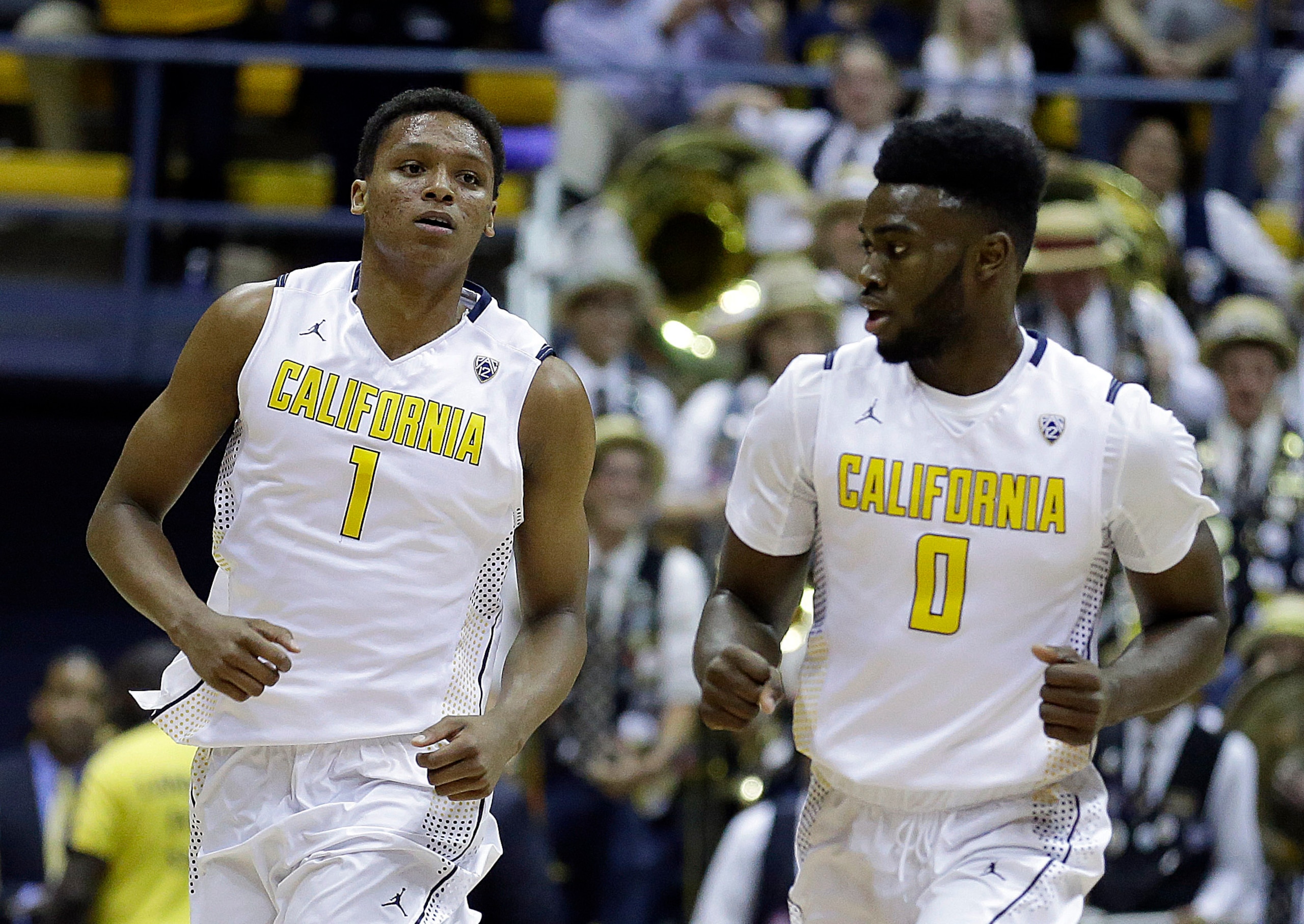
Record: 12-5
Three Best Wins: 71-58 vs. Utah; 63-59 vs. Saint Mary's; 79-65 vs. Colorado
Three Worst Losses: 72-58 vs. San Diego State; 94-90 vs. Richmond; 77-71 at Oregon State
Very much like the next team on our list, California paid the early price of needing to be overly dependent upon freshmen by suffering a pair of not-great, neutral-court losses in late November. The Golden Bears have clearly turned a corner since then, but a weak nonconference schedule featuring a handful of losses is likely going to hurt this team on Selection Sunday.
For these rankings, however, the season-to-date resume means nothing compared to how the team is playing right now. And despite losing three of its last six games, it's hard not to like what California is bringing to the table as of late.
The surge began with the overtime loss at Virginia, where the Golden Bears really frustrated a pair of great players in Malcolm Brogdon and Anthony Gill. Though Tyrone Wallace struggled on offense, it was the game that proved California is finally ready to hang with teams on both ends of the court. There were some good offensive outbursts and some strong defensive efforts in the first month of the season, but the Virginia game was the first time the Golden Bears put it all together.
They built on that momentum with convincing wins over Davidson, Colorado and Utah before a pair of close losses at the Oregon schools in which losing the turnover battle cost them the war. (Shooting 0-of-12 from three-point range against the Ducks didn't help, either.)
If and when California gets a little more careful with the ball, it will be ready to do the type of damage in Pac-12 play that we were anticipating in the preseason.
8. LSU Tigers
10 of 17
Record: 10-6
Three Best Wins: 85-67 vs. Kentucky; 90-82 at Vanderbilt; 90-81 vs. Ole Miss
Three Worst Losses: 70-58 at Charleston; 105-98 at Houston; 81-80 vs. Marquette
Like so many others on this list, a combination of injuries, midseason transfers and a dependency upon freshmen to immediately deliver led to a brutal start for the Tigers.
It's one thing to play a weak nonconference schedule, but it's another thing to lose five of the six games you play against teams in the KenPom top 150. That awful start to the season is going to be a hot topic for discussion as we inch toward Selection Sunday.
But if LSU can continue this hot start in SEC play, those ugly losses in nonconference play should just affect the seed the Tigers get rather than keep Ben Simmons out of the tournament altogether.
Here's the big thing you need to keep in mind with LSU: Neither Keith Hornsby (injury) nor Craig Victor (transfer) appeared in the first seven games of the season. Now, though, Hornsby might be the Tigers' best offensive weapon, while Victor has been a much-needed interior presence on both ends of the court to help take some of the pressure and attention off Simmons.
Just look at LSU's two biggest wins of the season if you need to know how sorely the teams missed those two guys in November. Hornsby had 23 points in the win over Vanderbilt, and Victor had 15 points and 12 rebounds in the process of fouling out Kentucky's entire frontcourt.
Moreover, with Hornsby and Victor in the mix, LSU has been able to get away from relying on guys like Elbert Robinson III and Brandon Sampson to play 20 ineffective minutes per game. And the Tigers no longer need Antonio Blakeney to jack up 15 shots per game for lack of better options.
All of a sudden, the team that suffered horrible losses to College of Charleston and Houston has one of the better starting fives in the country.
LSU's RPI and strength of schedule are irreparable disasters, but with one or two more games like they had against Vanderbilt and Kentucky, the Tigers should be back in the AP Top 25.
7. Oregon State Beavers
11 of 17
Record: 11-4
Three Best Wins: 70-57 vs. Oregon; 77-71 vs. California; 76-71 vs. Tulsa
Three Worst Losses: 78-72 vs. Stanford; 71-54 at Colorado; 63-57 vs. Valparaiso
It's kind of astounding that Oregon State isn't getting more national attention.
With one of the nation's most versatile and explosive players (Gary Payton II) headlining a list of returning players from last year's senior-less roster, the Beavers were a fairly logical and popular pick for a breakout season. But it has actually been the freshmen who have impressed, as Tres Tinkle, Stephen Thompson Jr. and Drew Eubanks rank second, third and fourth on the team in points per game.
Of course, Payton is still the star of the show. He's averaging 17.7 points, 8.7 rebounds, 5.2 assists and 2.5 steals per game, leading the Beavers in each of those categories. In fact, he ranks top seven in the Pac-12 in each category.
The biggest difference from last year, though, is the help he's getting on offense.
In 2014-15, the Beavers had one of the worst offenses in the country. At 96.6, their adjusted offensive efficiency was worst among all major conference teams other than Nebraska and Rutgers. Yet, they went 17-14 because of great defense.
Prior to Wednesday night's poor showing against Colorado, Oregon State had an adjusted offensive efficiency of 111.3, good for 40th in the nation. If that's not the most improvement in the country, it has to be close.
To recap: This was supposed to be a breakout team, and it has been.
So, why aren't more people noticing?
6. Wichita State Shockers
12 of 17
Record: 11-5
Three Best Wins: 67-50 vs. Utah; 67-64 vs. Evansville; 56-50 vs. UNLV
Three Worst Losses: 64-60 vs. Alabama; 77-67 at Tulsa; 80-76 at Seton Hall
Remember these guys?
We were head over heels in love with Wichita State before the season began. I even went so far as to curse the Shockers by saying they could flirt with perfection for a second time in three seasons.
But then, playing without Fred VanVleet or with an injured version of him, Wichita State lost four of its first six games and quickly dropped from potential No. 1 seed in the NCAA tournament to potential No. 4 seed in the NIT.
The Shockers have played much better since getting VanVleet back, getting Anton Grady healthy after a terrifying injury in the loss to Alabama and getting Conner Frankamp eligible after he missed the first seven games as a midseason transfer.
They're 9-1 since the beginning of December and have won five of their last six games by a margin of at least 16 points. The offense is still a bit hit-or-miss, but the defense has been nothing short of tenacious. Entering Wednesday's game against Missouri State, Wichita State has held its last nine opponents to a combined 0.88 points per possession and forced at least 17 turnovers in all but one of those games.
The quest for a 40-0 season went up in flames in a hurry, but the Shockers could still realistically go 18-0 in Missouri Valley Conference play. It just took some time for them to hit their stride.
5. Valparaiso Crusaders
13 of 17
Record: 13-3
Three Best Wins: 63-57 at Oregon State; 58-55 at Rhode Island; 84-67 at Oakland
Three Worst Losses: 69-66 at Ball State; 85-81 at Belmont; 73-67 at Oregon
At no point in the past nine months has there been any doubt about which minor conference team is most likely to write a Cinderella story this year.
The Crusaders of Valparaiso dropped off the national radar after their loss to Ball State in late November, but let's not forget they entered that game with road wins over Rhode Island and Oregon State, a blowout home win over Iona and a hard-fought loss at Oregon in which a late second-half scoreless spell of nearly six minutes cost them dearly.
Akin to a minor-conference Kyle Wiltjer, Alec Peters is simply doing his thing once again this year, as the 6'9" forward is averaging 17.9 points and 7.9 rebounds per game while shooting 43.5 percent from three-point range. Also conducting business as usual is Vashil Fernandez, who ranks 11th in the nation in block percentage after finishing sixth in that category last year.
But the one thing that changed and makes Valparaiso extra scary this year is the turnover-forcing defense.
The Crusaders ranked 33rd in the nation last year in adjusted defensive efficiency, but that was mostly due to the shot-blocking presence of Fernandez. They were below average in turnovers forced. This year—thanks in large part to a healthy Keith Carter and the addition of LSU transfer Shane Hammink—Valpo is No. 1 in adjusted defensive efficiency and ranks in the top 50 in steal percentage.
The Crusaders have won each of their last three games by a margin of at least 17 points, including routing Oakland on the road—which was supposed to be their toughest game in Horizon League play. There are still a few seats available on the Valparaiso bandwagon, but you better hurry.
4. Oregon Ducks
14 of 17
Record: 13-3
Three Best Wins: 74-67 vs. Baylor; 73-67 vs. Valparaiso; 68-65 vs. California
Three Worst Losses: 80-69 at UNLV; 74-72 at Boise State; 70-57 at Oregon State
The early struggles of high-profile freshmen around the country have been well documented, but Oregon—which was also one of the two finalists to acquire Jamal Murray's services—has been the beneficiary of two of the best instant-impact additions in the country.
The freshman in that equation is Tyler Dorsey, and if you haven't been paying attention to what he's doing, perhaps this will be a helpful illustration.
Dorsey (per 40 minutes): 19.8 points, 6.2 rebounds, 3.7 assists, 1.5 steals, 46.8 3P%, 7.7 free-throw attempts, 120.2 O-rating, 96.1 D-rating
2014-15 Melo Trimble (per 40): 19.4 points, 4.6 rebounds, 3.6 assists, 1.5 steals, 41.2 3P%, 8.2 free-throw attempts, 120.7 O-rating, 99.1 D-rating
A lot of people hate comparisons using per-40-minutes stats because they think it's meant to conceal a drastic difference in playing time, but we just use it here since Dorsey had a few early games where he didn't play a ton because Oregon was winning in a blowout or because he was recovering from a knee injury. He has logged at least 30 minutes in his last four games, though, so he's out there doing everything for the Ducks just like Trimble was for the Terps last year.
The other big addition for Oregon is JUCO transfer Chris Boucher. The big man is fifth in the nation in block percentage. He has multiple blocks in 14 of 16 games this season, and Oregon lost the two games in which he failed to reject at least two shots. Boucher is more than just a defensive stopper, though, as he also averages 12.1 points and 8.1 rebounds per game.
Particularly given the injury trouble this team has already dealt with, Dorsey and Boucher have been invaluable assets for a legitimate threat to win the Pac-12 title.
3. Connecticut Huskies
15 of 17
Record: 11-4
Three Best Wins: 74-60 vs. Michigan; 71-66 at Texas; 75-55 vs. Ohio State
Three Worst Losses: 55-53 vs. Temple; 79-76 vs. Syracuse; 73-70 vs. Gonzaga
With Daniel Hamilton's production and efficiency dropping off a cliff over the last four games and Amida Brimah missing the past six with a broken finger, Connecticut isn't even remotely firing on all cylinders.
And yet, with SMU ineligible, the Huskies are on the path to becoming the AAC's top seed in both the conference and NCAA tournaments.
The home loss to Temple was bad. It was worse than bad. But it was a perfect storm where Hamilton, Sterling Gibbs and Rodney Purvis all struggled from the field while Kentan Facey played a scoreless 23 minutes.
That was one heck of a group hiccup, but this is normally one of the more potent offenses in the country. Purvis and Gibbs are shooting a combined 42.4 percent from three-point range, while Shonn Miller has been unstoppable in the paint en route to 10 consecutive games of scoring in double figures. Hamilton has cooled off, but he's still averaging 12.9 points, 8.5 rebounds and 5.1 assists per game.
All that's missing is Brimah. Facey is doing what he can, but he's nowhere near the weapon on both ends of the court that Brimah is, and the defense has really struggled without him. We're not yet halfway through his initial six-to-eight-week recovery timeline, but the Huskies have got to be counting down the hours until their rim protector returns.
2. Indiana Hoosiers
16 of 17
Record: 14-3
Three Best Wins: 80-73 vs. Notre Dame; 85-60 vs. Ohio State; 86-65 vs. Creighton
Three Worst Losses: 82-78 vs. Wake Forest; 72-69 vs. UNLV; 94-74 at Duke
Left for dead after the blowout loss to Duke, Indiana has stormed back with a vengeance in its last nine games.
The funny thing about this resurgence is that—with the exception of offensive rebounding—the Hoosiers are actually playing worse on offense.
Through eight games, they were averaging 86.5 points per contest, shooting 54.3 percent from the field and 44.6 percent from three-point range. In the last nine, though, those numbers have dropped to 85.3, 51.2 and 44.0, respectively. Their assist average has also plummeted from 18.5 to 15.4 per game.
Those are still strong numbers, but they have certainly decreased.
Instead, it's on the defensive end where they have shown significant improvement, which is huge news for an offense this potent.
After allowing 72.6 points per game through the first eight, that number has dropped by 10 percent to 65.3 over the last nine. Opponents were shooting 45.5 percent from the field and 36.7 percent from beyond the arc, but those percentages are 40.8 and 31.2, respectively, since the Duke loss.
Lucky breaks from primarily facing teams with little hope of making the NCAA tournament? Perhaps. But the Hoosiers couldn't even slow down Austin Peay and St. John's in November, and now they're keeping Notre Dame, Wisconsin and Ohio State under wraps.
We may need to wait until February games against Michigan, Iowa, Michigan State and Purdue to determine how much value is actually in this stock, but you're certainly looking like a genius if you invested right after the Duke game.
1. USC Trojans
17 of 17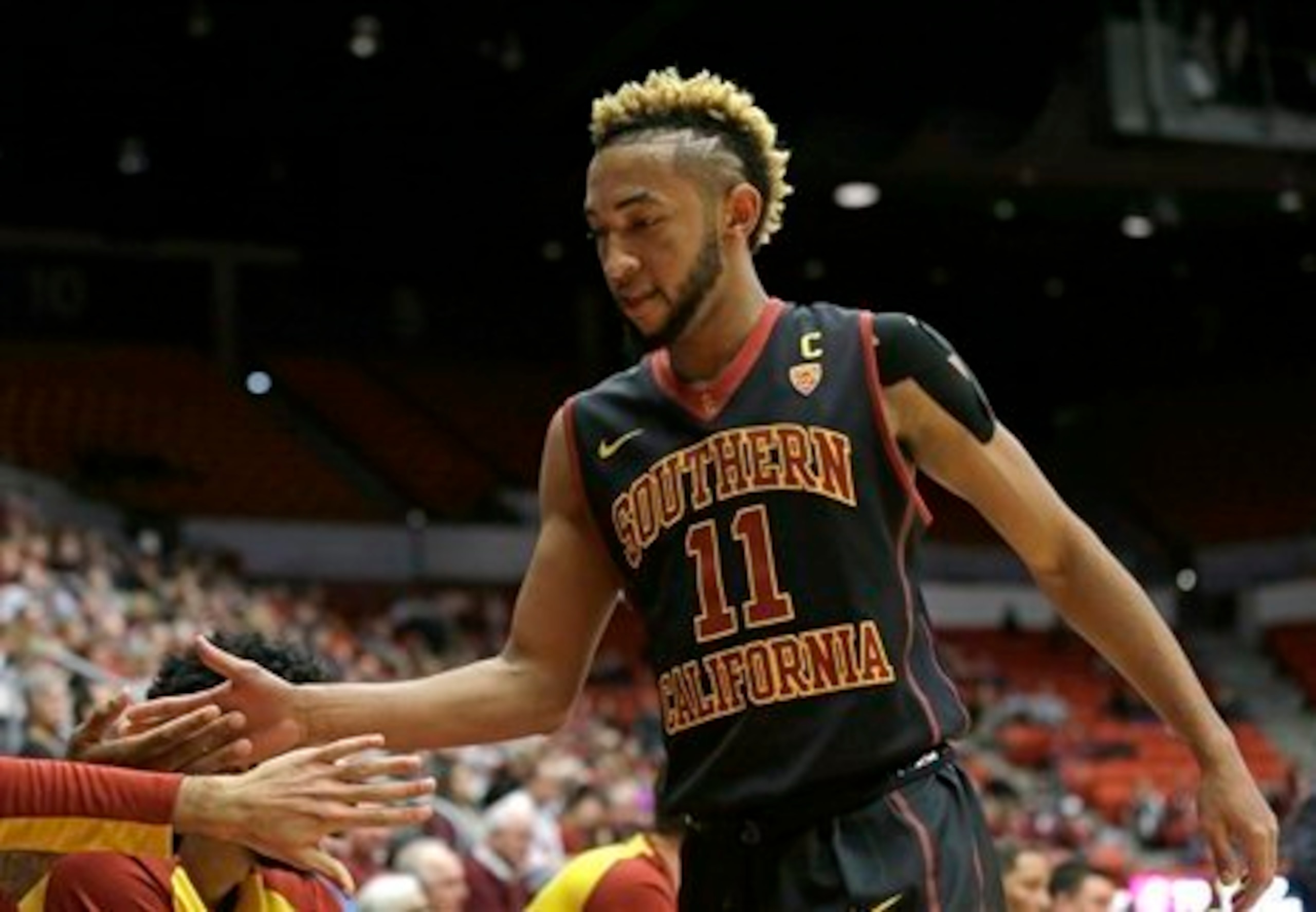
Record: 15-3
Three Best Wins: 103-101 vs. Arizona; 89-75 at UCLA; 72-69 vs. Wichita State
Three Worst Losses: 87-85 at Washington; 83-73 vs. Monmouth; 87-77 vs. Xavier
"This looks like an entirely different USC team than we saw last year," said Dave Pasch during the ESPN2 broadcast of Wednesday night's game against UCLA.
Considering how bad the Trojans were over the past four years, entirely different is exceptional news.
It's probably why they have already won three more games than all of last season.
Like Oregon State, we expected positive growth here. USC was the fourth-youngest team in the country last season. All eight Trojans who averaged at least 15 minutes per game were freshmen or sophomores, and they played much better than their 12-20 record indicated. Eleven of those losses came by a margin of eight points or less, and they nearly had marquee wins over Oregon and Stanford.
But that young bunch needed another year of seasoning and a couple of more impact players.
Jordan McLaughlin, Elijah Stewart and Julian Jacobs have been outstanding, but it would be difficult to overstate how important Bennie Boatwright and Chimezie Metu have been on both ends of the court as freshmen—each youngster played a huge part in the win over UCLA.
If you've been sleeping on this team, it's time to stop hitting the snooze button. USC has a legitimate eight-man rotation—none of whom is a senior. This football school is going to be a serious factor in at least the next two NCAA tournaments.
Kerry Miller covers college basketball for Bleacher Report. You can follow him on Twitter @kerrancejames.
.jpg?w=2560 "Rams Eagles Football")
.jpg?w=2560 "Texans-Mixon Released Football")
.jpg?w=2560 "2 NFL Officials Suspended")


.jpg?w=2560 "Mahomes' Wife Trolls Kubiak 💀")

.jpg?w=2560 "Grading WWE Raw 🔠")